
Spartan Agoge: Forging Warriors Through Ancient Greece's Toughest Training

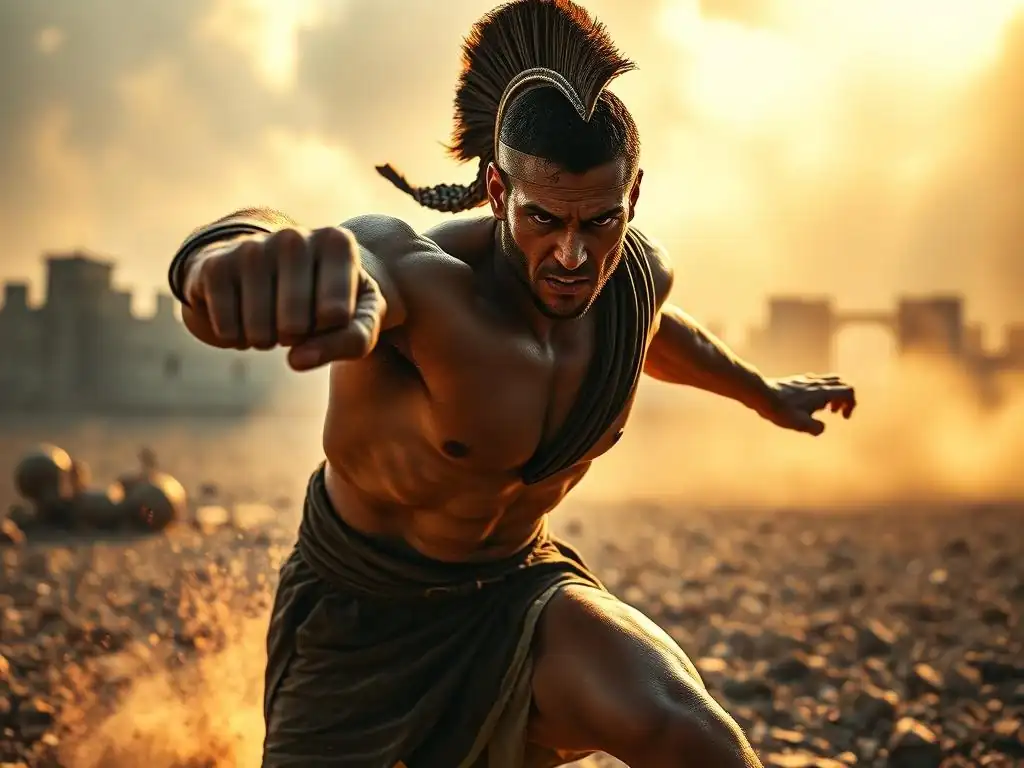
Welcome to Martial Arts Mastery, where we delve into the rich tapestry of combat traditions worldwide. Ever wondered how legends are forged? Today, we journey back to ancient Greece to uncover the brutal and effective secrets of Ancient Spartan warrior training methods. Prepare to be captivated by the Spartan Agoge and discover how this rigorous system shaped some of history's most formidable warriors. Intrigued? Let's explore the training that transformed boys into unwavering soldiers…
- Introduction to the Spartan Agoge: The Crucible of Warriors
- Origins and Historical Context of Spartan Military Training
- The Stages of the Agoge: A Young Spartan's Journey
- Core Principles of Ancient Spartan Warrior Training Methods
- Key Training Techniques Employed in the Agoge
- The Psychological Warfare Aspects of Spartan Training
- The Legacy of the Agoge: Influence on Military Training Today
- Conclusion: The Agoge as the Ultimate Warrior Training Program
-
Frequently Asked Questions
- What was the Spartan Agoge and its primary purpose?
- What were some of the key elements of the physical training in the Agoge?
- How did the Agoge instill discipline and obedience in Spartan youths?
- Did the Agoge only focus on physical training, or were there other aspects to it?
- How relevant are the lessons from the Spartan Agoge to modern martial arts training and self-defense?
- Final Reflection: Enduring Lessons of Spartan Resilience
- Embrace the Spartan Spirit: Your Journey Starts Now!
Introduction to the Spartan Agoge: The Crucible of Warriors
Understanding the Agoge's Place in Ancient Spartan Society
The Agoge was not merely a military school; it was the cornerstone of Spartan society, a mandatory, state-sponsored educational system designed to produce loyal, disciplined, and formidable warriors. Beginning around the age of seven, Spartan boys were removed from their families and entered this rigorous program, which aimed to strip away individual identity and forge an unwavering dedication to the state and the collective good.
This system permeated every aspect of life, shaping not just military prowess but also social hierarchy and political power within Sparta. Unlike other Greek city-states that relied on citizen militias trained only during wartime, Sparta maintained a professional, standing army forged through this lifelong process of the Agoge.
This intensive training ensured a constant supply of highly skilled soldiers dedicated solely to the defense and expansion of Spartan interests. The system's success meant that Sparta, despite its relatively small population (estimated peak Spartiates around 8,000), could field an army renowned throughout the ancient world for its discipline, courage, and effectiveness in phalanx warfare. The very structure of Spartan life, from marriage customs to land ownership, was subservient to the needs of maintaining the Agoge and the military machine it produced, highlighting its central, indispensable role in the Laconian way of life.
The Significance of Rigorous Training in Spartan Culture
Rigorous training was not just a means to an end in Sparta; it was a cultural imperative, a defining characteristic that separated Spartans from other Greeks and indeed, other peoples. The harshness of the Agoge was intentionally designed to weed out the weak and cultivate resilience, obedience, and martial skill in those who survived. This relentless physical and psychological conditioning instilled a deep-seated sense of duty and a willingness to face death without fear, qualities essential for maintaining the stability of a state that relied on a large subjugated population (the Helots) and faced constant external threats.
The emphasis on austerity, physical hardship, and collective identity over individual comfort or glory fostered a unique warrior ethos. Spartan youths were deliberately underfed to encourage resourcefulness (including theft, if undetected), given minimal clothing and bedding to build tolerance to cold, and subjected to constant physical trials and punishments. This relentless pressure cooker environment ensured that those who emerged were not just physically capable but possessed an iron will and an ingrained understanding of the sacrifices required for the state, embodying the ideal of the disciplined, fearless Spartan warrior.
Origins and Historical Context of Spartan Military Training
The Legendary Lycurgus and the Foundation of the Agoge
The traditional account attributes the foundation of the Agoge and the entire Spartan constitution (the Great Rhetra) to the legendary lawgiver Lycurgus, said to have lived around the 9th or 8th century BCE. While his historical existence is debated, the system ascribed to him represents a radical restructuring of Spartan society towards a military focus. According to ancient sources like Plutarch, Lycurgus designed the Agoge to eliminate luxury, foster equality among citizens (at least, male citizens), and prioritize the needs of the state above all else, specifically through the creation of an unparalleled military force.
Lycurgus's reforms aimed to transform Sparta from a potentially unstable society into a militarized polis capable of asserting dominance and maintaining internal control. The institution of communal messes (syssitia), the redistribution of land, and the systematic, state-controlled upbringing of children via the Agoge were all part of this comprehensive plan. Though shrouded in myth, the figure of Lycurgus serves as the symbolic architect of the unique ancient Spartan warrior training methods that would define the city for centuries.
Evolution of Spartan Warrior Training Methods Through the Centuries
While the core principles of the Agoge remained remarkably consistent for centuries, its specific methods and societal context evolved. Initially, Sparta may have been more culturally similar to other Greek states, but internal strife and the need to control the Helot population led to a gradual hardening and militarization, culminating in the formalized Agoge system by the 6th century BCE. This period saw Sparta rise to prominence as the dominant military power in Greece.
Over time, the Agoge adapted slightly to changing military tactics and political realities. For instance, while the phalanx remained central, later periods might have seen increased emphasis on skirmishing or siege warfare depending on external threats. However, the fundamental structure – communal living, physical hardship, obedience training, and martial skill development from a young age – persisted until the decline of Spartan power in the Hellenistic period, long after the classical era battles of Thermopylae or Plataea had cemented their reputation, demonstrating the enduring nature of their unique ancient Spartan warrior training methods.
The Stages of the Agoge: A Young Spartan's Journey
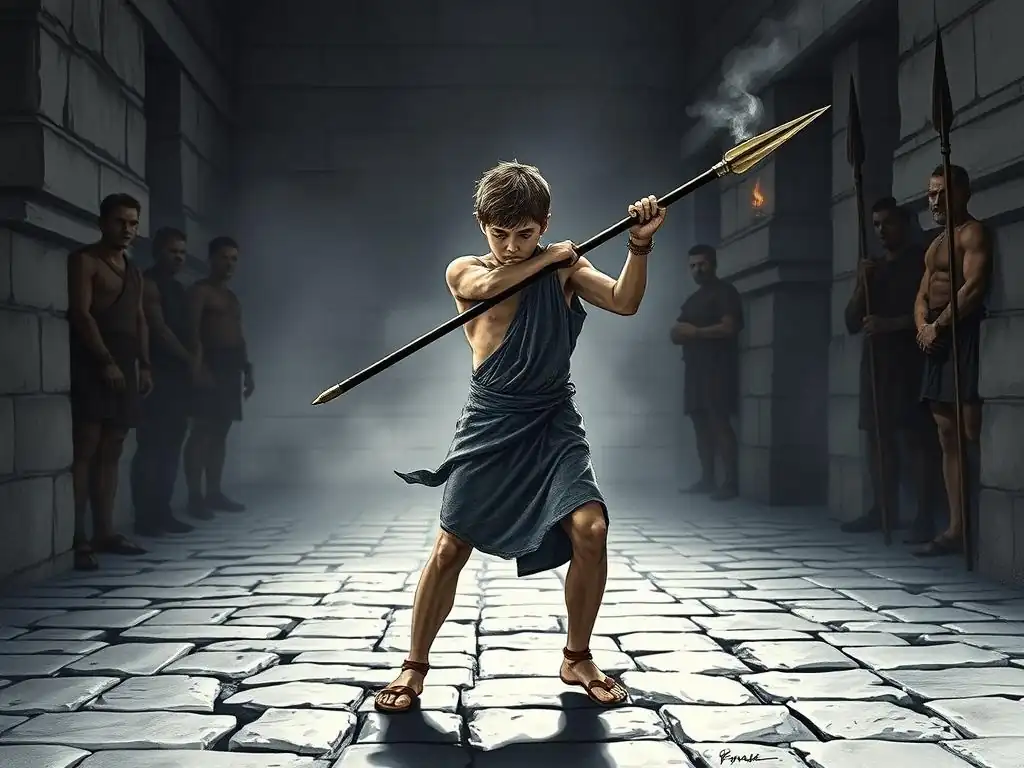
From Childhood to the Agoge: Preparing for the Warrior's Path
Life for a Spartan boy was dictated by the state from birth. Upon being born, infants were examined by the elders at the Lesche (council of elders). If deemed frail or deformed, they were traditionally left to die, often on Mount Taygetus, though the exact frequency and location of this practice are debated by historians. Only those deemed healthy and robust were permitted to live and eventually enter the Agoge. This brutal selection process reflected the state's absolute priority: the production of capable future warriors and mothers of warriors.
For the first seven years, boys remained with their mothers, but even this period was not without preparation. Spartan mothers were known for their sternness and independence, raising their sons to be hardy and self-reliant. They were discouraged from coddling their children, instead fostering early signs of courage and discipline. This early environment, while familial, was intentionally designed to lay a basic psychological foundation for the detachment and hardship that awaited them upon entering the state-controlled system at age seven, the formal beginning of the ancient Spartan warrior training methods.
Paides: The Initial Years of Spartan Youth Training
From approximately ages 7 to 12, boys were classified as Paides. This initial stage of the Agoge was overseen by a Paidonomos (boy-herder), a senior Spartan citizen, often assisted by older youths ( Irenes). Life was communal and Spartan in its austerity. Boys were given minimal food, thin cloaks (even in winter), and slept on beds made of reeds they had to gather themselves. The aim was to build resilience, tolerance to hardship, and resourcefulness.
Training at this stage focused on basic physical conditioning, running, wrestling, and rudimentary combat games. They learned to obey commands instantly and were encouraged to fight amongst themselves to develop toughness and competitive spirit. Education was minimal, primarily focused on essentials like basic literacy and music, but with a strong emphasis on laconic speech – speaking concisely and pointedly. This phase was about breaking down the boy's former identity and instilling the core values of obedience, endurance, and loyalty to the group.
Paidiskoi: Advancing Skills and Discipline in the Agoge
From roughly ages 12 to 17, the youths were known as Paidiskoi. This stage marked an increase in the intensity and danger of the training. Physical demands escalated significantly, involving more strenuous exercises, mock battles, and competitive sports. They were taught to fight as a unit and introduced to the basic formations of the Spartan phalanx. Discipline became even stricter, with severe punishments administered for disobedience or perceived weakness.
During this phase, resourcefulness was actively tested. Boys were encouraged, or even expected, to steal food to supplement their meager rations. However, they were punished severely not for the theft itself, but for getting caught. This was intended to develop stealth, cunning, and the ability to operate undetected – skills crucial for survival and potential future roles in state security operations like the Krypteia. They also began to mentor younger boys, learning leadership and responsibility under the supervision of the Irenes.
Hebontes and Proeirenes: The Final Stages of Warrior Development
The final formal stages of the Agoge encompassed the Hebontes (ages 18-19) and Proeirenes (ages 20-29). The Hebontes served as assistants to the Paidonomos, supervising younger boys and participating in more advanced military exercises. This period was a transition into full adulthood and military service. They underwent intense physical conditioning, including forced marches and endurance trials, and honed their combat skills with actual weapons.
Upon reaching age 20, a Spartan male became a Proeirenes and was considered a full citizen and a front-line soldier, though still under rigorous state discipline. They joined a syssition (communal mess), a crucial social and military unit, and continued training daily. This period solidified their identity as Spartan warriors, ready for active military duty. While technically graduated from the core Agoge structure, the life of a Spartan male remained one of constant training, discipline, and service to the state until age 60, ensuring their ancient Spartan warrior training methods were a lifelong commitment.
Core Principles of Ancient Spartan Warrior Training Methods
Endurance and Physical Conditioning in the Agoge
Endurance and physical conditioning were paramount in the ancient Spartan warrior training methods. From the earliest years, boys were pushed to their physical limits. They ran, wrestled, jumped, and threw javelins and discus, not for athletic glory in the pan-Hellenic games (though some Spartans did compete), but purely to build the physical foundation necessary for sustained combat and campaigning. The deliberate deprivation of food, clothing, and comfortable shelter was a constant test of their ability to endure hardship.
This focus on raw physical toughness ensured that Spartan soldiers could undertake grueling marches, fight for extended periods in heavy armor under the Mediterranean sun, and withstand the physical strain of close-quarters phalanx combat. Their bodies were hardened through constant exposure to the elements and relentless exercise, making them exceptionally resilient compared to soldiers from less rigorously trained city-states. This commitment to physical conditioning was a defining characteristic of their military success.
Developing Unparalleled Stamina for Battle
The development of stamina was critical because ancient battles, particularly phalanx clashes, were physically exhausting. Spartan training involved long-distance running, forced marches across challenging terrain, and prolonged physical exercises designed to build aerobic capacity and muscular endurance. They were trained to fight while fatigued, pushing through pain and exhaustion to maintain the integrity of the phalanx formation, which required immense collective effort and stamina.
Accounts suggest Spartans could march further and faster than many of their contemporaries, arriving at battlefields in better condition. This superior stamina allowed them to execute maneuvers effectively, sustain charges, and hold their ground even when outnumbered. The Agoge's emphasis on enduring physical discomfort from a young age directly translated into soldiers who possessed the unparalleled stamina needed to prevail in the brutal reality of ancient warfare, a key outcome of their ancient Spartan warrior training methods.
Mastering Pain Tolerance and Resilience
Beyond mere physical strength, a core component of Spartan training was the mastery of pain tolerance and psychological resilience. The Agoge deliberately inflicted discomfort and pain through harsh living conditions, physical punishments, and grueling trials. This constant exposure was intended to desensitize the youths, teaching them to suppress reactions to pain and injury, a vital trait on the battlefield where wounds were common and medical care limited.
The infamous ritual flogging at the altar of Artemis Orthia, where youths were whipped sometimes to the point of death without crying out, exemplifies this extreme focus on pain tolerance. While the specifics and frequency are debated, the practice highlights the cultural value placed on enduring suffering stoically. This deliberate cultivation of resilience ensured that Spartan warriors would not break under pressure, injury, or fear, maintaining their composure and effectiveness in the face of death.
Discipline and Obedience: Pillars of Spartan Military Culture
Discipline and absolute obedience were arguably the most critical components of ancient Spartan warrior training methods. From the moment a boy entered the Agoge, his life was governed by strict rules and hierarchies. The authority of the Paidonomos, the Irenes, and later, military commanders was absolute. Questioning orders was unthinkable; instant and unquestioning compliance was demanded and enforced through severe punishment.
This relentless emphasis on discipline created a military force that could execute complex maneuvers in battle with precision and unity. The success of the Spartan phalanx relied entirely on each soldier maintaining his position and acting in concert with his neighbors. Individual initiative was suppressed in favor of collective action directed by command. This ingrained obedience made the Spartan army a highly predictable and reliable fighting force, capable of holding formation even under extreme duress.
Instilling Unquestioning Loyalty and Teamwork
The Agoge fostered an intense sense of loyalty, not primarily to individual leaders, but to the state and the collective of fellow warriors. Communal living, shared hardship, and constant group activities blurred individual identity, replacing it with a powerful bond of fraternity within the syssition and the army. Boys were taught that the group's survival and success were paramount, and individual needs or desires were secondary.
Teamwork was not just encouraged; it was essential for survival within the Agoge and on the battlefield. Mock battles and exercises emphasized coordinated action. In the phalanx, a soldier's life literally depended on the man next to him maintaining his shield and position. This interdependence forged incredibly strong bonds of loyalty and trust among soldiers, ensuring that they would fight not just for Sparta, but for the man standing beside them, a powerful motivator in combat.
Suppressing Individuality for the Sake of the State
A core tenet of Spartan training was the systematic suppression of individuality. Boys were given similar food, clothing, and sleeping arrangements, minimizing personal possessions and distinctions. They were discouraged from developing unique talents or interests outside of martial pursuits and state service. Even their hair was grown long in a uniform style once they reached a certain age, further emphasizing conformity.
This deliberate erasure of individual identity served to strengthen the collective. A Spartan was first and foremost a citizen-soldier of Sparta, his personal ambitions subsumed by his duty to the state. This made the army a cohesive, single-minded entity, devoid of internal rivalries or personal agendas that could undermine military effectiveness. The state's needs were paramount, and the ancient Spartan warrior training methods were designed to produce individuals who embodied this principle above all else.
Stealth and Survival Skills: Essential for Spartan Warriors
Beyond direct combat and discipline, ancient Spartan warrior training methods included crucial elements of stealth and survival. While often portrayed as purely heavy infantry, Spartans were also trained in operating independently and living off the land. This was particularly emphasized in the later stages of the Agoge and the infamous Krypteia. Resourcefulness and the ability to move unseen were valuable assets in a variety of military scenarios.
The practice of encouraging youths to steal food, as mentioned earlier, directly taught stealth and evasion. They learned to navigate the terrain, find sustenance, and avoid detection. These skills were not just useful for personal survival during harsh training but were essential for reconnaissance, raiding, and operations in enemy territory, adding a layer of versatility to the Spartan military capabilities beyond the famed phalanx charge.
Mastering Camouflage and Tracking Techniques
While not as documented as their heavy infantry tactics, elements of camouflage and tracking were integrated into Spartan training, particularly for operations like the Krypteia. Youths tasked with patrolling the countryside and observing (or eliminating) Helots needed to move stealthily and remain undetected. This required understanding how to use terrain for cover, move silently at night, and potentially track individuals.
Though specific manuals or detailed accounts of these techniques are scarce, the emphasis on resourcefulness and operating independently suggests practical instruction in fieldcraft. Spartans were intimately familiar with the Laconian landscape, and their training likely included learning how to move through it effectively, using natural cover, and perhaps even rudimentary tracking skills necessary for their internal security roles and potential scouting missions during campaigns.
Living Off the Land and Enduring Harsh Conditions
The Spartan Agoge deliberately accustomed youths to minimal provisions, forcing them to find alternative sources of food and shelter. This practical survival training ensured that soldiers could operate effectively even when supply lines were stretched or non-existent. They learned which plants were edible, how to find water, and how to shelter themselves from the elements with minimal equipment.
This ability to endure harsh conditions and live off the land was a significant advantage in prolonged campaigns or when operating in hostile territory. It reduced the logistical burden on the army and made them more adaptable. By making hardship a normal part of their upbringing through their ancient Spartan warrior training methods, Spartans became uniquely capable of sustaining operations in environments that would cripple less prepared armies.
Key Training Techniques Employed in the Agoge
Krypteia: A Rite of Passage and a Test of Survival
The Krypteia was a shadowy and controversial institution, often considered a brutal rite of passage and a test of survival for the most promising Proeirenes (youths aged around 20). It involved sending young men into the countryside with minimal supplies and weapons, tasked with surviving on their own and, according to some ancient accounts, terrorizing or even killing Helots who seemed too independent or potentially rebellious.
This practice served multiple purposes: it provided a final, extreme test of an individual's survival skills, stealth, and ruthlessness; it instilled fear and maintained control over the Helot population; and it offered a practical application of the stealth and fieldcraft skills learned during the Agoge. While the exact nature and frequency of the killings are debated by historians, the Krypteia undeniably highlights the harsh realities of Spartan society and the extreme measures integrated into their ancient Spartan warrior training methods to maintain internal security and produce hardened individuals.
Mock Battles and Tactical Drills: Preparing for Real Warfare
Mock battles and tactical drills were fundamental to preparing Spartan youths for the realities of warfare. From a young age, boys engaged in competitive games that simulated combat scenarios. As they progressed through the Agoge, these exercises became more complex, involving formations, maneuvers, and the use of mock weapons. They practiced fighting in the phalanx, learning how to maintain alignment, push as a unit, and use their shields to protect themselves and their comrades.
These drills were not just physical exercises; they were crucial for instilling the discipline and coordination required for effective phalanx warfare. By repeatedly practicing formations, advances, and retreats, Spartans developed an almost instinctive understanding of battlefield movement and teamwork. This constant rehearsal of tactical scenarios ensured that when faced with actual combat, their movements were fluid, coordinated, and deadly, a direct result of their ancient Spartan warrior training methods.
Weaponry and Combat Training: Mastering the Spear and Shield
The core of Spartan combat training revolved around mastering the dory (spear) and the hoplon (shield), the principal weapons of the hoplite phalanx. While other weapons like the sword ( xiphos) were carried, the spear was the primary offensive tool, used for thrusting in formation, and the shield was the essential defensive piece, providing protection and enabling the phalanx's characteristic "push."
Training involved extensive practice with these weapons, learning proper grip, stance, thrusting techniques with the spear, and how to effectively use the heavy shield for defense and to exert pressure on the enemy line. Proficiency was measured not just by individual skill but by the ability to use these weapons effectively within the tight confines of the phalanx, coordinating movements with the men on either side.
Proficiency with the Dory (Spear) and Hoplon (Shield)
Mastery of the dory, a spear typically 2-3 meters long, was essential for the initial clash of the phalanx. Spartans trained extensively in thrusting techniques, aiming to penetrate enemy armor or find gaps in their formation. The spear allowed them to engage the enemy at a distance before closing in. Their training emphasized keeping the spear pointed forward, maintaining a wall of points that was difficult for opponents to penetrate.
The hoplon, a large, heavy bronze-faced wooden shield (estimated weight 7-15 kg), was equally, if not more, important. Training focused on holding the shield correctly to protect the left side of their body and the right side of the man next to them, creating the interlocking shield wall. They learned to brace against enemy pushes, use the shield's rim offensively, and maintain the wall even when under extreme pressure, showcasing the defensive aspects of their ancient Spartan warrior training methods.
Close-Quarters Combat Techniques of Spartan Warriors
While the spear was primary, Spartan training also included close-quarters combat with the xiphos, a short sword, used when the spear broke or the phalanx devolved into a mêlée. Training involved using the xiphos for stabbing and cutting in tight spaces, often while still holding the hoplon. They also practiced hand-to-hand techniques, wrestling, and using their bodies to break the enemy's formation or defend themselves if disarmed.
This secondary training ensured that Spartans were not helpless if the phalanx broke or the fight became personal. Their physical conditioning and resilience made them formidable opponents even in chaotic, close-range fighting. The ability to transition effectively from coordinated phalanx combat to individual mêlée highlights the comprehensive nature of their ancient Spartan warrior training methods, preparing them for the multifaceted realities of battle.
The Psychological Warfare Aspects of Spartan Training
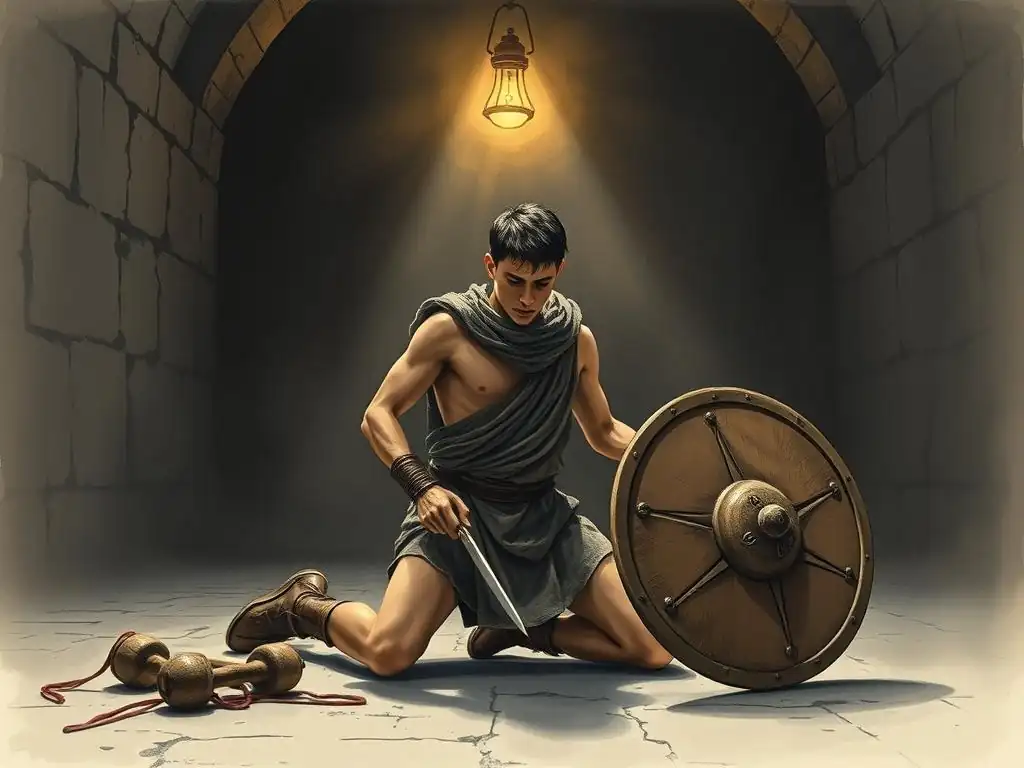
Cultivating Fearlessness and Aggression in Battle
A key psychological outcome of the Agoge was the cultivation of fearlessness and controlled aggression. Through constant exposure to hardship, pain, and mock combat, Spartan youths became desensitized to the fear that crippled less trained soldiers. They were taught that retreat was dishonorable and death in battle for Sparta was the highest glory. This ethos created warriors who were not only willing but eager to engage the enemy.
The structured, disciplined environment of the Agoge also channeled natural aggression into a focused, collective force. Instead of individual rage, Spartan aggression was expressed through the relentless, unified push of the phalanx. They advanced towards the enemy line with chants and music, a deliberate psychological tactic to bolster their own courage and intimidate their opponents. This training produced soldiers who faced death with remarkable calm and determination.
Developing a Stoic Mindset: Controlling Emotions Under Pressure
Spartan training instilled a form of practical stoicism. Youths were taught to suppress outward displays of emotion, particularly fear, pain, or sorrow. Crying out during punishment or showing weakness was met with scorn and further discipline. This constant pressure to maintain composure under duress cultivated an internal resilience and the ability to function effectively in high-stress situations.
This stoic mindset was invaluable on the battlefield. While other armies might panic or break formation under pressure, Spartans were trained to remain calm, focused, and obedient even when facing overwhelming odds or heavy casualties. This emotional control allowed them to execute complex tactics, maintain discipline, and fight effectively until the very end, a hallmark of their ancient Spartan warrior training methods.
The Importance of Psychological Strength in Ancient Spartan Military Strategy
Psychological strength was not just a byproduct of training; it was a deliberate component of Spartan military strategy. The reputation of the Spartan warrior as fearless and invincible often intimidated opponents before a battle even began. Their disciplined formations, unwavering advance, and refusal to retreat were psychologically devastating to less resolved armies.
Furthermore, their internal psychological fortitude allowed them to endure the hardships of campaigning, the terror of battle, and the pain of wounds with minimal disruption to their effectiveness. This mental toughness, forged in the crucible of the Agoge, was as crucial to their military success as their physical prowess or tactical skill, demonstrating how deeply psychological conditioning was integrated into the ancient Spartan warrior training methods.
The Legacy of the Agoge: Influence on Military Training Today
Lessons from Ancient Spartan Warrior Training Methods for Modern Military
While modern military training is vastly different from the ancient Agoge, several core principles of ancient Spartan warrior training methods still resonate. The emphasis on physical conditioning, discipline, teamwork, and mental resilience remains fundamental to producing effective soldiers. Modern boot camps, though far less brutal, share the goal of breaking down civilian identity and building a cohesive unit through shared hardship and rigorous physical demands.
The Spartan focus on small-unit cohesion, epitomized by the syssitia and the phalanx's interdependence, is mirrored in modern military emphasis on fire teams and squads. The understanding that soldiers fight for each other as much as for abstract ideals is a direct parallel. While the social and political context is entirely different, the core lessons about forging unbreakable bonds, instilling unwavering discipline, and building extreme physical and mental toughness continue to inform military methodologies globally.
The Enduring Image of the Spartan Warrior: A Symbol of Discipline and Courage
The image of the Spartan warrior has endured through millennia, becoming a powerful symbol of discipline, courage, and sacrifice. Stories of Thermopylae, where 300 Spartans held off a massive Persian army, encapsulate this legacy, even if the historical reality is more complex. This enduring image is a testament to the effectiveness of the Agoge in creating a formidable fighting force and a powerful cultural identity.
This symbol continues to inspire not only military organizations but also athletes, martial artists, and individuals facing extreme challenges. The idea of "Spartan discipline" or a "Spartan workout" evokes a sense of extreme rigor, endurance, and mental toughness. The Agoge, through its demanding ancient Spartan warrior training methods, created a legend that transcends history, representing the ultimate commitment to training and the pursuit of martial excellence.
Conclusion: The Agoge as the Ultimate Warrior Training Program
Reflecting on the Impact of the Agoge on Spartan Society and Military Prowess
The Spartan Agoge was a unique and profoundly impactful system that shaped every facet of Spartan society. By removing boys from their families and subjecting them to a lifelong regimen of physical hardship, strict discipline, and martial training, Sparta created a society utterly dedicated to military readiness and collective identity. This system produced an army that was arguably the most feared and respected fighting force in ancient Greece for centuries.
The unwavering discipline, physical endurance, and psychological resilience instilled by these ancient Spartan warrior training methods allowed Spartans to achieve remarkable victories against numerically superior foes. While the Agoge's harshness and disregard for individual life are rightly criticized by modern standards, its effectiveness in producing highly trained, cohesive, and fearless warriors for the specific needs of the Spartan state is undeniable. It stands as history's most extreme example of a society prioritizing military training above all else, with profound consequences for its culture, its people, and its place in the ancient world.
Frequently Asked Questions
What was the Spartan Agoge and its primary purpose?
The Agoge was the state-sponsored education and training program in Sparta, designed to produce disciplined and formidable warriors. Its primary purpose was to ensure the survival and dominance of Spartan society.
What were some of the key elements of the physical training in the Agoge?
Agoge physical training involved rigorous exercises like running, wrestling, and javelin throwing, all aimed at building strength, endurance, and combat proficiency. This created warriors capable of withstanding harsh conditions.
How did the Agoge instill discipline and obedience in Spartan youths?
Discipline was enforced through constant supervision, harsh punishments, and a culture of unquestioning obedience to authority. This created a mindset of absolute loyalty and adherence to the Spartan code.
Did the Agoge only focus on physical training, or were there other aspects to it?
While physical training was central, the Agoge also included education in reading, writing, music, and Spartan ideology. This ensured warriors understood the values and principles of their society.
How relevant are the lessons from the Spartan Agoge to modern martial arts training and self-defense?
The Agoge's emphasis on discipline, physical conditioning, and practical combat skills remains relevant. Modern martial artists can learn from its focus on mental fortitude and unwavering commitment to training.
Final Reflection: Enduring Lessons of Spartan Resilience
The rigorous and often brutal training methods of the Spartan Agoge, as explored in this article, are not merely historical curiosities; they represent a profound commitment to discipline, resilience, and collective strength. In a world increasingly focused on individual achievement and comfort, the Spartan emphasis on self-sacrifice and unwavering dedication to a greater purpose offers a stark, yet compelling, contrast. The principles underlying their training, though extreme, continue to resonate in modern leadership programs, military academies, and even personal development strategies.
The enduring legacy of the Agoge lies not just in its creation of formidable warriors, but in its cultivation of a mindset – a relentless pursuit of excellence, a willingness to endure hardship, and an unwavering loyalty to one's comrades. This article has reminded me of the power of pushing beyond perceived limitations and the importance of fostering a sense of community and shared purpose. The Spartans do not ask how many are the enemy, but where are they.
This quote encapsulates the fearless spirit and unwavering commitment that the Agoge instilled, a spirit that continues to inspire awe and admiration centuries later.
As we reflect on the ancient Spartan warrior training methods, let us consider how we can incorporate elements of their philosophy into our own lives. Can we cultivate greater discipline, resilience, and a stronger sense of community? Can we challenge ourselves to push beyond our comfort zones and embrace the challenges that lie ahead? Let us strive to embody the Spartan spirit of unwavering dedication and relentless pursuit of excellence, not for the sake of war, but for the betterment of ourselves and the world around us.
Embrace the Spartan Spirit: Your Journey Starts Now!
Thank you for exploring the rigorous world of the Spartan Agoge. You’ve now gained insight into the legendary training that forged warriors. It's time to translate that inspiration into action!
- Commit to a Daily Physical Challenge: Push your limits with a high-intensity workout routine, even if it's just for 15 minutes a day.
- Research historical martial arts forms: Uncover the techniques and philosophies behind the martial arts of the past.
- Share this article: inspire your community on the importance of discipline and resilience.
What one small, Spartan-inspired discipline will you adopt into your daily routine starting today?