
The Concept of "Listening" (Ting Jin) in Southern Mantis Close Encounters

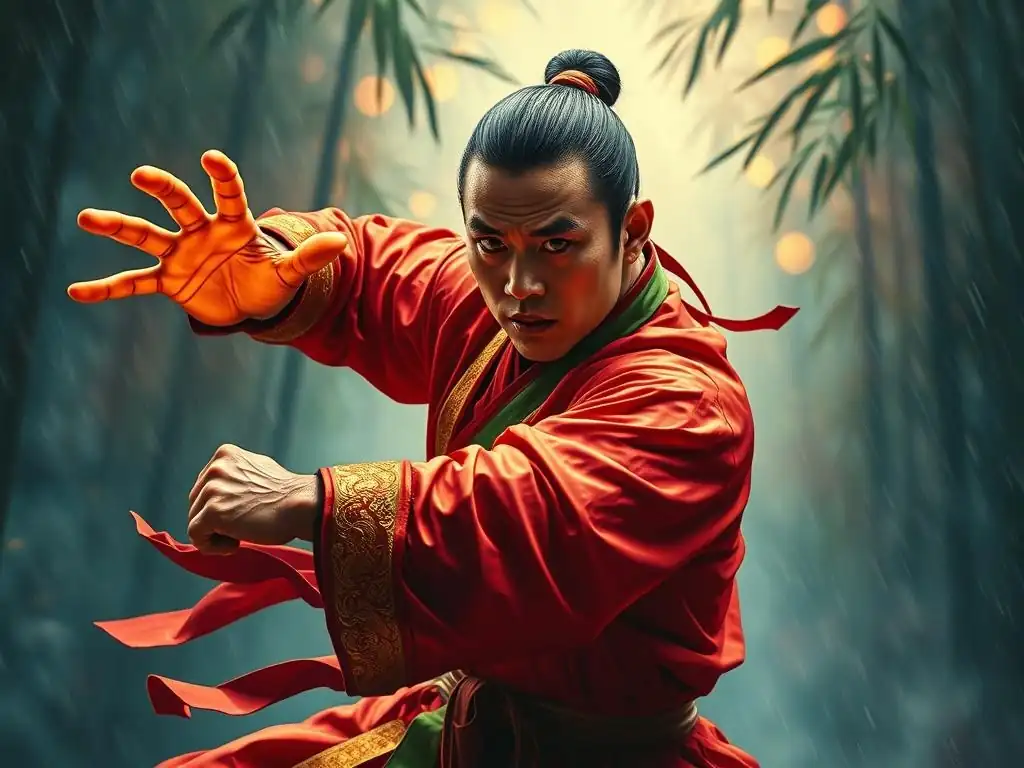
Welcome to Martial Arts Mastery, where we delve into the rich tapestry of global combat traditions. Are you ready to unlock the secrets behind the subtle power of Ting Jin? This article explores the fascinating concept of " Listening" (Ting Jin) in the intricate close-quarters combat system of Southern Mantis Kung Fu. Prepare to discover how this refined sensitivity to an opponent's intentions can become your most powerful weapon, and begin your journey into the heart of Southern Mantis's unique approach to self-defense. Intrigued? Read on to master the art of "listening" and elevate your martial arts understanding.
- Introduction to Southern Mantis Kung Fu and Ting Jin
- The Core Principles of Ting Jin in Southern Mantis
- Applying Ting Jin in Southern Mantis Close-Range Combat Techniques
- Drills and Exercises to Cultivate Southern Mantis Ting Jin
- Ting Jin and Specific Southern Mantis Techniques
- The Role of Ting Jin in Southern Mantis Strategy
- Drills and Exercises to Cultivate Southern Mantis Ting Jin
- Ting Jin and Specific Southern Mantis Techniques
- The Role of Ting Jin in Southern Mantis Strategy
- Advanced Concepts of Ting Jin in Southern Mantis
- Common Mistakes in Ting Jin Training and How to Avoid Them
- The Benefits of Mastering Ting Jin in Southern Mantis
- Conclusion: Ting Jin as the Key to Southern Mantis Mastery
- Frequently Asked Questions
- Final Reflection: The Resonance of Ting Jin
- Ignite Your Ting Jin: Hear the Unspoken!
Introduction to Southern Mantis Kung Fu and Ting Jin
What is Southern Praying Mantis Kung Fu? A Brief Overview
Southern Praying Mantis Kung Fu, known in Mandarin as Nán Tángláng Quán, is a distinct martial art originating from Southern China, specifically attributed to the Hakka communities of Guangdong province. Unlike its Northern counterpart (Bei Tanglang Quan), Southern Mantis emphasizes close-range combat, rooted stances, powerful forearm techniques, and intricate hand movements designed for simultaneous blocking and striking.
The style is characterized by its compact structure, reliance on "short power" (寸勁 - Cun Jin), and a focus on controlling the opponent's space and structure through tactile sensitivity. Its techniques often mimic the aggressive, yet precise, actions of a praying mantis, employing hooks, chops, and trapping movements.
The historical development of Southern Mantis is often shrouded in mystery, with various lineages tracing their origins back to figures like Zhou Jia (周家) or Wong Tong (黄堂). Regardless of the specific lineage, core principles remain consistent across the style, emphasizing internal cultivation alongside external techniques. Training typically involves rigorous conditioning, solo forms (套路 - Taolu) like Som Geng (三庚) or Bong Sau (崩手), and partner drills focusing on tactile sensitivity and close-quarters applications. The goal is to develop a highly effective, efficient, and adaptable fighting system suited for cramped environments where long-range techniques are impractical.
Understanding "Ting Jin": The Art of Listening Power
"Ting Jin" (聽勁), often translated as "listening power" or "listening energy," is a fundamental concept in many internal Chinese martial arts, including Southern Mantis Kung Fu. It refers to the highly refined tactile sensitivity and awareness developed through dedicated training, allowing a practitioner to feel, interpret, and respond instantaneously to the force, direction, and intention of an opponent's movements upon physical contact. It's not about hearing with the ears, but sensing with the body – primarily through the hands, arms, and torso – detecting the subtle changes in pressure, tension, and structure as contact is made.
Developing Ting Jin is crucial because it provides a practitioner with real-time feedback during an exchange. Instead of relying solely on visual cues, which can be deceptive or too slow, Ting Jin allows one to understand what the opponent is doing and intending to do through physical connection. This sensitivity enables preemptive action, allowing the practitioner to neutralize incoming force, disrupt the opponent's balance, or exploit openings the moment they appear. It's a skill that moves beyond choreographed techniques into the realm of spontaneous, adaptive response based on immediate physical input.
The Significance of Ting Jin in Southern Mantis Close-Range Combat
In the close-quarters environment characteristic of Southern Mantis Kung Fu, Ting Jin is not merely a desirable skill; it is absolutely essential for effectiveness. When opponents are within arm's reach, there is little time or space to react to visual cues alone. Engagements happen rapidly, often involving simultaneous block-and-strike actions, trapping, and joint control. Southern Mantis Ting Jin provides the practitioner with the ability to maintain continuous contact (粘手 - Nian Shou, or sticky hands) and read the opponent's structure and force dynamics through that connection.
This tactile feedback loop allows a Southern Mantis practitioner to stay "ahead of the curve." By feeling the subtle shift in an opponent's weight distribution or the direction of their force, they can adjust their own structure, yield or redirect force, and launch an attack before the opponent can fully commit or recover.
For example, feeling a slight tension in an opponent's arm might indicate an impending strike, allowing the Southern Mantis practitioner to neutralize it instantly using a technique like Bong Sau (崩手 - Wing Arm) while simultaneously launching their own counter-attack. Without this acute sensitivity, the practitioner would be reacting to the attack rather than acting upon the initiation of force, a critical difference in close combat.
The Core Principles of Ting Jin in Southern Mantis
Sensitivity and Awareness: Developing the "Listening" Skill
The cornerstone of Southern Mantis Ting Jin lies in cultivating profound sensitivity and awareness throughout the body, particularly in the arms and hands. This isn't just about physical touch; it's about training the nervous system to recognize subtle changes in pressure, tension, direction, and intent transmitted through physical contact. Practitioners spend countless hours in drills designed to heighten this tactile perception, moving beyond gross motor skills to perceive minute shifts in an opponent's structure or energy flow. It's akin to learning Braille – initially, it's just pressure, but with training, patterns emerge, conveying complex information.
Developing this "listening" skill requires deliberate practice that moves beyond merely executing techniques. Partner drills like Cheung Sau (sticky hands) are vital, where practitioners maintain light contact and learn to feel each other's movements without relying on sight. The focus is on feeling the opponent's root, balance, and the direction of their force.
For example, a slight upward pressure might indicate the opponent is lifting their weight, potentially compromising their root. A subtle lateral shift might signal an impending step or angle change. Learning to interpret these signals allows the Southern Mantis practitioner to anticipate and respond effectively, often before the opponent is consciously aware of their own action.
Rooting and Structure: The Foundation for Effective Ting Jin
Effective Southern Mantis Ting Jin is inextricably linked to a strong root and stable body structure. Ting Jin isn't just about feeling the opponent; it's also about having the structural integrity to receive, interpret, and respond to that information without being uprooted or collapsed oneself. A practitioner with a weak stance or poor alignment cannot effectively "listen" to an opponent's force, as their own structure will buckle under pressure, distorting the feedback received. The body must be aligned vertically, with weight grounded through the legs and feet, creating a stable base from which to operate.
Training in Southern Mantis heavily emphasizes developing this foundational strength and stability. Stance training, like the Sei Ping Ma (四平馬 - Four Level Stance), and solo forms build leg strength and body unity. When contact is made, a well-rooted practitioner can act like a sensitive antenna, feeling the opponent's force vectors without being pushed off balance.
This stable structure allows them to absorb or redirect force efficiently. For instance, if an opponent pushes, a practitioner with good rooting and structure can use their stable base to feel the direction of the push and then yield or divert it using minimal muscular effort, relying instead on structural integrity and body unity.
Relaxation and Yielding: Softness Within Hardness
A crucial, often counter-intuitive, principle for Southern Mantis Ting Jin is the cultivation of relaxation and the ability to yield. While Southern Mantis is known for its powerful, explosive techniques, the underlying mechanism for effective listening and force neutralization is rooted in Song (鬆) – a state of relaxed readiness, not limpness. Tension in the body, particularly in the shoulders and arms, acts like static, obscuring the subtle signals received through contact. A tense practitioner cannot feel the nuances of an opponent's force; they can only register gross pressure.
Learning to relax allows the practitioner's body to become a more sensitive instrument. It also enables the principle of yielding (化勁 - Hua Jin), where instead of meeting an incoming force head-on with rigidity, the practitioner subtly moves with the force, diverting its energy and disrupting the opponent's balance. This "softness within hardness" is key to Southern Mantis Ting Jin applications.
By yielding slightly, the practitioner maintains contact while dissolving the opponent's power, much like a wave flowing around a rock. This yielding is not retreat; it is a dynamic redirection that keeps the practitioner in a dominant position, ready to counter-attack the moment the opponent's force is neutralized and their structure compromised.
Applying Ting Jin in Southern Mantis Close-Range Combat Techniques
Feeling the Opponent's Intent: Reading Body Language and Energy
Applying Southern Mantis Ting Jin in combat extends beyond merely feeling physical pressure; it involves learning to interpret that pressure as an indicator of the opponent's immediate intention. Through consistent contact drills, a practitioner develops an intuitive understanding of how different tensions and directional forces correspond to specific actions. For example, a sudden tensing in the wrist might signal an impending grab or strike, while a shift of weight forward combined with upward pressure might indicate a push or lift. This ability to "read" the opponent's body language through touch is a direct result of refined Ting Jin.
This tactile reading allows the Southern Mantis practitioner to react preemptively. Instead of waiting for a punch to fully extend, they can feel the initiation of the force in the opponent's structure and intercept it at its weakest point. Consider a scenario where an opponent begins to coil their arm for a hook punch.
A practitioner with developed Ting Jin will feel the subtle tension and shift in the opponent's shoulder and arm before the punch is thrown, allowing them to move inside the arc or disrupt the coiling action instantly. This makes Southern Mantis Ting Jin a powerful tool for anticipating and neutralizing threats at the earliest possible moment in close quarters.
Intercepting Force: Neutralizing Attacks with Ting Jin
One of the primary applications of Southern Mantis Ting Jin is the interception and neutralization of incoming force. Rather than relying on hard blocks that meet force with equal force, which can lead to jamming or injury, Ting Jin enables the practitioner to subtly redirect or absorb the opponent's power. By feeling the direction and intensity of the incoming force, the practitioner can adjust their structure and use minimal effort to guide the force away from their center or dissipate its energy. This is often done while maintaining contact, setting up a counter-attack.
For instance, if an opponent delivers a straight punch, a Southern Mantis practitioner using Ting Jin wouldn't necessarily execute a rigid block. Instead, they might use a soft, guiding motion like a Bong Sau (Wing Arm) or Lau Sau (Scooping Hand), feeling the line of force and subtly shifting their body weight and arm position to deflect it. The key is to stay connected and feel the opponent's balance.
As the opponent's force is neutralized through this yielding and redirection, their structure is momentarily compromised, creating an opening. This ability to intercept and neutralize force efficiently is a hallmark of advanced Southern Mantis Ting Jin application.
Generating Power: Using Ting Jin to Amplify Striking Force
While often discussed in terms of sensitivity and neutralization, Southern Mantis Ting Jin also plays a critical role in generating explosive power (Fa Jin - 發勁). By maintaining tactile connection and sensing the opponent's structure, a practitioner can identify moments of instability or weakness in the opponent's base or posture.
Ting Jin allows the practitioner to feel exactly when and where the opponent is most vulnerable to a sudden release of force. The power generated through Ting Jin-informed strikes is not just muscular; it is rooted in the ground and channeled through a unified body structure, released at the precise moment of opportunity.
Consider a close-range strike like the Chop Chui (插捶 - Inserting Punch) in Southern Mantis. Through Ting Jin, the practitioner feels the opponent momentarily shift their weight, creating a slight gap or a momentary lack of rootedness. At that precise micro-second, the practitioner releases their rooted power through the connected limb, amplifying the impact significantly.
This is not just a fast punch; it's a punch delivered with full body integration and released into a detected weakness. The sensitivity developed through Ting Jin allows for this perfect timing and targeting, making the strike far more effective than a purely visual or muscularly driven attack.
Drills and Exercises to Cultivate Southern Mantis Ting Jin

Sticky Hands (Cheung Sau) Training for Sensitivity
Sticky Hands, or Cheung Sau (粘手), is perhaps the most fundamental and widely practiced drill for developing Southern Mantis Ting Jin. This two-person exercise involves maintaining continuous, light contact with a partner's arms while moving, yielding, and seeking openings. The goal is not to wrestle or use brute force, but to relax, stay rooted, and feel the partner's movements, pressure, and intention through the point of contact. Drills start simply, perhaps just maintaining contact while moving in a circle, and progress to more complex patterns involving simultaneous attack and defense.
During Cheung Sau, practitioners learn to distinguish between different types of force – pushing, pulling, pressing, lifting – and how these forces originate from the partner's structure. They practice yielding to incoming force while maintaining contact, redirecting the energy without disconnecting. A key aspect is learning to feel the partner's center of gravity and their connection to the ground.
For example, if a partner slightly shifts their weight forward, the sensitive touch allows the practitioner to feel this imbalance and potentially exploit it. Consistent Cheung Sau practice is indispensable for refining the tactile awareness central to Southern Mantis Ting Jin.
Partner Drills for Developing Rooting and Structure
Beyond general Cheung Sau, specific partner drills in Southern Mantis are designed to test and develop the practitioner's rooting and structural integrity under pressure – skills essential for effective Ting Jin. These drills often involve one partner applying controlled pressure or force while the other maintains their structure and root, using their body alignment to absorb or redirect the force without being moved.
For instance, a drill might involve one partner pushing steadily on the other's chest or arm while the recipient maintains a solid Sei Ping Ma stance, focusing on channeling the force down through their legs into the ground rather than resisting with muscular tension in the upper body.
Another type of drill involves one partner attempting to disrupt the other's balance through pushes, pulls, or attempts to collapse their structure. The practitioner receiving the force must use their understanding of body mechanics and rooting to remain stable, feeling the direction of the attack through contact and making subtle adjustments to their posture or weight distribution. These drills directly train the body to act as a unified, rooted structure capable of receiving information (Ting Jin) and responding effectively without losing its base, reinforcing the physical foundation required for applying sophisticated listening power in combat.
Solo Forms and Exercises to Internalize Ting Jin Principles
While partner drills are essential for developing interactional sensitivity, solo forms (套路 - Taolu) and specific exercises in Southern Mantis Kung Fu also play a vital role in cultivating the internal awareness and body unity necessary for Ting Jin. Forms like Som Geng (三庚) or Bong Sau (崩手) contain movements that embody the core principles of Southern Mantis, including rooted stances, unified body power, and the transitions between yielding and explosive force. Practicing these forms diligently helps to internalize the feeling of proper structure, relaxation within power, and the flow of energy throughout the body.
Specific solo exercises might focus on cultivating "silk reeling energy" (纏絲勁 - Chán Sī Jìn), a concept found in many internal arts that involves spiral movements designed to develop connected, flowing power throughout the body. While not always explicitly named "silk reeling" in all Southern Mantis lineages, the principle of unified, spiraling force is present.
Practicing movements that require whole-body coordination and smooth transitions helps build the proprioceptive awareness needed to feel one's own body structure and energy, which is a prerequisite for feeling and interpreting an opponent's. These solo practices build the internal foundation upon which external Southern Mantis Ting Jin skills are built.
Ting Jin and Specific Southern Mantis Techniques
Using Ting Jin in Som Geng Form
The Som Geng (三庚) form is a foundational solo set in many Southern Mantis lineages, and it is rich with movements that embody the principles of Ting Jin. While practicing Som Geng alone, the practitioner visualizes an opponent and focuses on the feeling of each transition – the yielding, the coiling, the sudden release of power. The form emphasizes rooted stances, precise hand and arm movements, and the integration of the entire body. Practicing Som Geng with an awareness of potential contact points helps internalize the tactile sensitivity required for Southern Mantis Ting Jin.
For example, movements within Som Geng often involve simultaneous blocking and striking actions, or rapid transitions from a yielding motion to an explosive strike. By focusing on maintaining a stable root while executing these complex movements, and imagining the pressure points during theoretical contact, the practitioner trains their body to maintain structural integrity and internal connection.
The rapid, whipping actions characteristic of Som Geng, such as the "dragon's head" strike, require a relaxed yet connected state to generate power, mirroring the relaxation needed for sensitive Southern Mantis Ting Jin. The form serves as a physical blueprint for applying listening power in dynamic sequences.
Ting Jin Applications in Bong Sau (Wing Arm)
Bong Sau (崩手 - Wing Arm) is a signature technique in many Southern Mantis lineages, and it is a prime example of Ting Jin application. It is typically a short, powerful forearm motion used for simultaneous blocking and striking or bridging the gap. When executing Bong Sau in a close encounter, Ting Jin is crucial. The practitioner uses the tactile feedback from initial contact to determine the precise angle, force, and timing for the Bong Sau action. It's not a pre-planned movement; it's a response informed by immediate physical information.
Imagine an opponent launching a straight punch or a hook. A Southern Mantis practitioner using Bong Sau relies on Ting Jin to feel the line of force the instant contact is made (or even slightly before). They use this information to angle their forearm precisely, utilizing their rooted structure and body unity to redirect the incoming force while simultaneously delivering a powerful, short-range strike with the same arm. The effectiveness of the Bong Sau comes from its timing and precision, which are dictated by the practitioner's ability to accurately "listen" to the opponent's force through contact.
Ting Jin in Close-Range Grappling and Chin Na
Southern Mantis Kung Fu includes elements of close-range grappling and Chin Na (擒拿 - joint locks and controls), and Ting Jin is equally vital in these applications. Unlike striking, grappling and Chin Na involve sustained, intricate physical contact where moment-to-moment tactile feedback is paramount. Feeling an opponent's subtle shifts in weight, muscle tension, and joint alignment through contact allows the practitioner to apply or escape locks and controls effectively.
When attempting a Chin Na technique like a wrist lock, the Southern Mantis practitioner uses Ting Jin to feel the opponent's resistance and the precise point where their joint is vulnerable. Applying force blindly is inefficient and easily countered.
By "listening" to the opponent's body through the grip, the practitioner can adjust the angle and pressure of the lock for maximum effect with minimal effort, or feel the opponent's attempt to escape and counter it instantly. Similarly, in close-range grappling exchanges, Ting Jin allows the practitioner to feel the opponent's attempts to grab, unbalance, or throw, enabling them to maintain their root, defend against the attack, and transition into their own techniques based on real-time tactile information.
The Role of Ting Jin in Southern Mantis Strategy
Anticipating the Opponent's Movements
Beyond reacting to immediate force, a refined sense of Southern Mantis Ting Jin allows a practitioner to anticipate an opponent's future movements. By feeling the subtle preparatory actions – a slight shift in weight, a tensing of muscles, a change in breathing (felt through body contact) – the practitioner gains insight into what the opponent is about to do. This is not mind-reading; it is a sophisticated interpretation of physical cues transmitted through touch. This level of anticipation moves the practitioner from reacting to pre-empting the opponent's actions.
For example, in a sticky hands exchange, if the opponent begins to gather tension in their shoulder and elbow, Ting Jin can alert the practitioner to an impending push or strike in that direction. This early warning, often milliseconds before the opponent consciously commits to the movement, provides a crucial advantage. The Southern Mantis practitioner can then initiate their counter-action – a yield, a redirection, or a preemptive strike – before the opponent's attack gains full momentum, effectively disrupting their plan before it fully unfolds.
Controlling the Centerline with Listening Power
Controlling the centerline is a vital strategic principle in many martial arts, including Southern Mantis, and Ting Jin is instrumental in achieving and maintaining this control in close quarters. The centerline is the imaginary line running vertically through the center of the body, representing the most direct line to vital targets and the axis of balance. In Southern Mantis, practitioners constantly seek to protect their own centerline while attacking the opponent's. Ting Jin helps achieve this by providing continuous feedback on the opponent's position relative to the centerline.
By maintaining contact and using Southern Mantis Ting Jin, the practitioner can feel when the opponent attempts to deviate from or attack their centerline. They can feel the pressure changing as the opponent tries to angle off or penetrate their guard. This allows for immediate, subtle adjustments to maintain a dominant position relative to the centerline. Conversely, by feeling weaknesses or openings in the opponent's structure through contact, the practitioner can identify the precise moment and angle to penetrate the opponent's centerline with their own techniques, using their listening power to guide their actions into the most vulnerable path.
Exploiting Weaknesses Revealed Through Ting Jin
Perhaps the most powerful strategic application of Southern Mantis Ting Jin is the ability to detect and instantly exploit weaknesses in the opponent's structure, balance, or intention. As practitioners maintain contact and "listen," they are constantly receiving information about the opponent's physical state. They can feel moments of imbalance, points of structural weakness, or instances where the opponent is momentarily committing their weight or force in a way that creates an opening.
For instance, during a pushing exchange, the Southern Mantis practitioner using Ting Jin might feel a slight instability in the opponent's leg or hip as they exert force. This fleeting moment of weakness, undetectable visually, is instantly felt through the tactile connection. The practitioner can then immediately capitalize on this weakness with a push that further disrupts balance, a sweep, or a rapid strike directed at the newly vulnerable area. Ting Jin transforms close combat into a dynamic conversation where the practitioner is constantly reading the opponent's "tells" and exploiting them instantaneously.
Drills and Exercises to Cultivate Southern Mantis Ting Jin
Sticky Hands (Cheung Sau) Training for Sensitivity
Sticky Hands, or Cheung Sau (粘手), is the quintessential drill for developing Southern Mantis Ting Jin. It involves two practitioners maintaining continuous contact, usually forearm to forearm, while moving. The primary objective is to relax and feel the partner's movements, pressure, and intention through touch, rather than relying on sight or brute force. Drills progress from simple, static contact to dynamic movements involving simultaneous yielding, redirecting, and attacking. For instance, partners might practice circular motions, maintaining light contact and feeling the subtle shifts in pressure as they move.
A core element of Cheung Sau is learning to maintain contact without becoming rigid or disconnected. Practitioners learn to yield to incoming force, allowing it to pass without resisting directly, much like water flowing around an obstacle. At the same time, they learn to maintain enough connection to feel the partner's structure and intentions.
Through countless hours of this drill, the practitioner's tactile sensitivity is honed to a remarkable degree, allowing them to feel subtle changes in muscle tension, weight distribution, and direction of force that are imperceptible to the untrained touch. This foundational sensitivity is the bedrock of Southern Mantis Ting Jin.
Partner Drills for Developing Rooting and Structure
Effective Southern Mantis Ting Jin requires a stable and well-rooted structure capable of receiving and interpreting force without collapsing. Partner drills specifically designed to test and develop this rooting are crucial. These drills often involve one partner applying controlled pressure or force against the other, whose task is to maintain their stance and structure, channeling the force into the ground rather than resisting with tension. An example might be one partner pushing steadily against the other's chest or shoulder while the recipient focuses on sinking their weight and aligning their body to remain stable in their Southern Mantis stance.
Other drills involve attempting to unbalance the partner through pushes, pulls, or attempts to collapse their posture. The defender must use their understanding of body mechanics, weight distribution, and connection to the ground to maintain their stability, feeling the direction and intensity of the attack through the contact point. These exercises build the physical foundation necessary for Southern Mantis Ting Jin – a body that is both sensitive enough to feel minute pressures and stable enough to act upon that information without being easily moved or disrupted.
Solo Forms and Exercises to Internalize Ting Jin Principles
While partner work is essential for interaction, solo practice in Southern Mantis Kung Fu also cultivates the internal awareness and body unity required for Ting Jin. Forms like Som Geng (三庚) or Bong Sau (崩手) contain sequences of movements that embody the principles of yielding, redirecting force, and explosive power generation from a stable base. Practicing these forms with focused intention helps internalize the feeling of correct body alignment, relaxation within power, and the coordinated movement of the entire structure.
Specific solo exercises might focus on developing Song (鬆 - relaxed power) and body unity. For example, exercises involving slow, deliberate movements that connect the hands, torso, and legs help the practitioner become acutely aware of how force is generated and transmitted through their own body.
This internal awareness is crucial because one must first understand how their own body moves and generates force before they can effectively feel and interpret these same dynamics in an opponent. Solo practice builds the refined proprioception that complements the tactile sensitivity developed through partner drills, creating a complete foundation for Southern Mantis Ting Jin.
Ting Jin and Specific Southern Mantis Techniques
Using Ting Jin in Som Geng Form
The Som Geng (三庚) form is a cornerstone of many Southern Mantis lineages and serves as a living repository of the style's principles, including Ting Jin. Although practiced solo, the form is inherently designed for partner application, and understanding its movements through the lens of Ting Jin is vital. Each transition, block, strike, and stance within Som Geng can be interpreted as a response to or initiation of force, and practicing the form helps internalize the physical sensations associated with these interactions.
Consider the rapid, simultaneous blocking and striking movements found throughout Som Geng. When practicing, one visualizes an opponent and focuses on the feeling of meeting force, yielding, and redirecting while maintaining root and structure. The quick changes in direction and power within the form train the practitioner to transition smoothly between receiving (listening) and issuing (acting) force.
For example, a movement might involve a yielding Lau Sau (Scooping Hand) followed instantly by an explosive Chop Chui (Inserting Punch). Practicing this transition in the form helps internalize the timing and body mechanics needed to feel an opponent's force being neutralized and immediately capitalize with a powerful counter, which is the essence of Southern Mantis Ting Jin application in dynamic sequences.
Ting Jin Applications in Bong Sau (Wing Arm)
Bong Sau (崩手 - Wing Arm) is a characteristic Southern Mantis technique, often used in close range for simultaneous defense and offense. Its effectiveness is heavily reliant on Ting Jin. When an opponent attacks, a practitioner using Bong Sau doesn't just throw their arm out; they use tactile sensitivity to feel the incoming force and angle their forearm precisely to deflect it while maintaining contact and readiness to strike. The Bong Sau isn't a rigid block; it's a dynamic structure that interacts with the opponent's force.
Through Southern Mantis Ting Jin, the practitioner feels the direction and intensity of the opponent's strike upon contact. This allows them to adjust the angle and tension of their Bong Sau to optimally redirect the force. For example, if an opponent's punch has a slight downward trajectory, the Bong Sau might angle slightly upwards to guide the force off-line.
If the force is coming from the side, the Bong Sau adjusts laterally. This micro-adjustment, guided by Ting Jin, ensures the incoming force is neutralized efficiently while the practitioner maintains their root and structure, enabling them to immediately follow up with a strike or other technique from the same position, often amplifying their counter based on the opponent's reaction to the Bong Sau.
Ting Jin in Close-Range Grappling and Chin Na
Southern Mantis Kung Fu incorporates grappling and Chin Na (擒拿 - joint locks) techniques, and Ting Jin is arguably even more critical here than in striking. In grappling and Chin Na, there is continuous, intricate physical contact, providing a constant stream of tactile information. Ting Jin allows the practitioner to navigate this complex interaction, feeling the opponent's balance, muscle tension, joint alignment, and attempts to resist or escape.
When applying a Chin Na lock, for example, feeling the opponent's subtle movements and resistance through Ting Jin allows the practitioner to adjust the pressure and angle of the lock for maximum effectiveness and control. They can feel exactly how the opponent is trying to escape and counter that escape attempt instantly.
Similarly, in close-range grappling exchanges, such as controlling an opponent's arms or attempting a throw, Southern Mantis Ting Jin enables the practitioner to feel the opponent's weight distribution, their attempts to gain leverage, and moments of imbalance. This sensitivity allows for precise, energy-efficient application of techniques, ensuring the practitioner stays one step ahead in the physical chess match of close-quarters control.
The Role of Ting Jin in Southern Mantis Strategy
Anticipating the Opponent's Movements
A highly developed sense of Southern Mantis Ting Jin provides a strategic advantage by allowing the practitioner to anticipate an opponent's actions before they fully manifest. While visual cues are important, tactile feedback through contact offers a more immediate and often more reliable source of information in close proximity. By feeling the subtle shifts in an opponent's weight, the tensing of muscles, or the direction of preparatory movements through touch, the practitioner gains insight into their opponent's intentions moments before they commit to an attack or defensive action.
This pre-emption ability is crucial in the rapid exchanges of Southern Mantis close combat. For instance, if maintaining contact with an opponent's arm, the practitioner might feel a sudden increase in tension in their shoulder and forearm, indicating an impending strike or push. This tactile warning allows the practitioner to initiate their defensive or offensive maneuver microseconds earlier than if they were relying solely on visual cues. This small time advantage, gained through Southern Mantis Ting Jin, can be the difference between successfully neutralizing an attack and being hit, allowing the practitioner to dictate the flow of the engagement.
Controlling the Centerline with Listening Power
Controlling the centerline – the vital central axis of the body – is a fundamental strategic goal in Southern Mantis, and Ting Jin is a key tool for achieving this in close encounters. The centerline is the shortest distance to vital targets and the axis of balance. By maintaining contact and using Southern Mantis Ting Jin, the practitioner constantly monitors the opponent's position and force relative to their own centerline. This allows for dynamic adjustments to protect one's own center while simultaneously seeking opportunities to attack the opponent's.
Through tactile feedback, the practitioner feels when the opponent is attempting to penetrate their guard or move off-line to attack their center. This immediate information allows them to make precise, subtle adjustments to their structure and position to maintain control. Conversely, by feeling weaknesses or openings in the opponent's structure through contact, Southern Mantis Ting Jin guides the practitioner in finding the optimal path to attack the opponent's centerline. It's a continuous process of tactile assessment and adjustment, ensuring the practitioner maintains strategic dominance in the critical central zone.
Exploiting Weaknesses Revealed Through Ting Jin
One of the most potent strategic benefits of Southern Mantis Ting Jin is the ability to detect and instantaneously exploit fleeting weaknesses in the opponent's structure, balance, or intention that are often invisible to the eye. Through continuous tactile contact, the practitioner is constantly receiving a stream of information about the opponent's physical state. They can feel moments of instability, points of structural compromise, or instances where the opponent's weight is momentarily misaligned.
For example, in a close-range push-hands type of drill, the practitioner might feel a slight leaning or a momentary lack of rootedness in the opponent's stance as they exert force. This subtle vulnerability, detected through sensitive touch, provides a perfect opportunity. The Southern Mantis practitioner can immediately capitalize on this weakness with a sudden push, pull, sweep, or strike directed precisely where the opponent is weakest. Ting Jin enables the practitioner to fight based on real-time physical reality rather than just visual appearances, making their attacks highly efficient and their defense incredibly responsive.
Advanced Concepts of Ting Jin in Southern Mantis
Developing "Fa Jin" (Explosive Power) Through Ting Jin
While Ting Jin focuses on sensitivity and listening, it is inextricably linked to the development and application of Fa Jin (發勁) – explosive, short-range power. Fa Jin in Southern Mantis is not brute muscular force; it is power generated from the ground, channeled through a unified body structure, and released instantaneously at the point of contact. Ting Jin acts as the trigger and the guide for this explosive power. By maintaining contact and "listening," the practitioner feels exactly when and where the opponent's structure is most vulnerable or when a critical opening appears.
This sensitivity allows the practitioner to time the release of Fa Jin perfectly. Instead of throwing a powerful strike hoping it lands, the practitioner uses Ting Jin to feel the precise moment the opponent is off-balance or their structure is compromised, and then releases their rooted power into that weakness.
This makes the Fa Jin significantly more effective, as it is delivered with perfect timing and directed at a point of least resistance. The ability to transition instantaneously from the relaxed, sensitive state of Ting Jin to the explosive release of Fa Jin is a hallmark of advanced Southern Mantis Ting Jin mastery.
Using Ting Jin for Evasive Maneuvers and Footwork
Southern Mantis Ting Jin is not solely about offensive or defensive actions upon contact; it also informs evasive maneuvers and footwork in close quarters. By feeling the opponent's force and direction through contact, the practitioner can make subtle, efficient adjustments to their position to evade an attack or improve their angle. This isn't large, obvious movement, but rather small, precise shifts guided by tactile feedback.
For example, if an opponent is pushing forward, the practitioner using Ting Jin feels the direction and intensity of the push. Instead of rigidly resisting, they might make a small, almost imperceptible step or shift their weight slightly off-line, guided by the feeling of the opponent's force vector. This allows the force to pass by harmlessly while maintaining contact and balance, positioning the practitioner for a counter-attack. Ting Jin makes footwork less about pre-planned steps and more about fluid, responsive adjustments based on the immediate dynamics of the physical interaction.
The Mental Aspect of Ting Jin: Focus and Intention
Beyond the physical techniques and drills, the development of Southern Mantis Ting Jin has a profound mental aspect. It requires intense focus, a calm mind, and clear intention. The practitioner must be fully present in the moment of contact, free from distraction or excessive tension. The mind must be quiet enough to "listen" to the subtle information received through touch. This state of focused awareness is often referred to as Yi (意) – intention or mind-power.
Cultivating this mental stillness and focus is as important as the physical training. A cluttered or tense mind inhibits sensitivity, just as physical tension does. The intention must be to feel and understand, not just to resist or attack. Through practices like meditation or mindful movement within the forms, practitioners train their minds to remain calm and focused under pressure, allowing their physical sensitivity to operate unimpeded. This integration of mind and body is essential for achieving true mastery of Southern Mantis Ting Jin.
Common Mistakes in Ting Jin Training and How to Avoid Them
Over-Reliance on Muscular Strength
One of the most common mistakes in training Southern Mantis Ting Jin is relying too heavily on muscular strength rather than sensitivity and structure. Beginners often try to feel the opponent's force by tensing their muscles and resisting, which actually hinders the development of true listening power. Muscular tension creates rigidity, blocking the subtle flow of information transmitted through contact. It's like trying to hear a whisper in a noisy room.
To avoid this, practitioners must consciously focus on relaxing their muscles while maintaining structural integrity. Drills should emphasize feeling and yielding rather than pushing or resisting with force. Instructors often guide students to "sink" their weight and use body unity rather than isolated muscle strength. Consistent feedback from a skilled partner in Cheung Sau is crucial, as they can immediately identify and correct instances of excessive tension, helping the student develop the necessary relaxed awareness for effective Southern Mantis Ting Jin.
Lack of Sensitivity and Awareness
Another significant hurdle in cultivating Southern Mantis Ting Jin is a lack of genuine sensitivity and internal awareness. Some students go through the motions of drills without truly engaging their tactile sense or paying attention to the subtle feedback they are receiving. They might be physically present but mentally disconnected from the feeling aspect of the training. This prevents them from developing the ability to interpret the information their body is receiving.
Overcoming this requires dedicated, mindful practice. Students must be encouraged to slow down and consciously focus on the sensations of contact – the direction of pressure, the changes in tension, the feeling of the partner's structure. Asking specific questions during partner drills, such as "What direction is the force coming from?" or "Where do you feel their weight? ", can help direct the student's attention and deepen their awareness. Consistent, focused practice over a long period is necessary to refine this inherent sensitivity into skilled Southern Mantis Ting Jin.
Improper Rooting and Structure
Poor rooting and unstable body structure are fundamental impediments to developing effective Southern Mantis Ting Jin. Without a stable base and aligned structure, the practitioner cannot effectively receive or interpret the forces transmitted through contact; their own body will simply collapse or be easily moved. Trying to develop listening power without a solid foundation is like trying to build a sensitive antenna on a shaky platform – it won't work correctly.
Addressing this mistake requires rigorous foundational training in stances, body alignment, and the concept of sinking weight. Solo forms and specific rooting drills must be practiced diligently to build leg strength, develop body unity, and internalize the feeling of being strongly connected to the ground. Partner drills focusing on maintaining structure under pressure are also essential. Instructors must constantly check and correct students' posture and alignment, reinforcing the principle that a stable, rooted body is the prerequisite for cultivating powerful and effective Southern Mantis Ting Jin.
The Benefits of Mastering Ting Jin in Southern Mantis
Enhanced Combat Effectiveness
The most direct and significant benefit of mastering Southern Mantis Ting Jin is a substantial enhancement in combat effectiveness, particularly in close-range encounters. Ting Jin provides a practitioner with a real-time feedback system that allows for instantaneous, adaptive responses. By feeling the opponent's intentions and weaknesses through contact, the practitioner can neutralize attacks more efficiently, exploit openings with greater precision, and generate power at the optimal moment.
This heightened sensitivity and responsiveness reduce reliance on brute force or pre-planned techniques, allowing for more fluid, energy-efficient, and unpredictable actions. A practitioner with refined Southern Mantis Ting Jin can navigate the chaotic environment of close combat with greater control, maintaining their balance and structure while disrupting the opponent's. The ability to feel and respond to subtle cues gives them a crucial advantage, making their defense near-impenetrable and their offense devastatingly precise within close quarters.
Improved Body Awareness and Coordination
Training Southern Mantis Ting Jin fosters a profound improvement in overall body awareness and coordination. The process of learning to feel and interpret subtle physical sensations requires a deep connection to one's own body – understanding how it moves, how force is generated, and how its structure responds to external pressure. This heightened proprioception extends beyond martial applications into general physical literacy.
Practitioners become more attuned to their own posture, balance, and movement patterns. They develop a greater sense of unity within their body, learning to move and generate force from their core and legs rather than relying solely on isolated limbs. This improved body awareness translates into better balance, increased agility, and more efficient movement in all physical activities. The coordination developed through intricate Ting Jin drills enhances fine motor control and the ability to integrate complex movements smoothly.
Deeper Understanding of Southern Mantis Principles
Mastering Southern Mantis Ting Jin provides the practitioner with a deeper, more intuitive understanding of the fundamental principles of the style. Concepts like rooting, yielding, simultaneous defense and offense, and generating short power move from theoretical ideas to lived, physical realities. Ting Jin training forces the practitioner to engage with these principles on a tactile and kinesthetic level.
Through the process of learning to "listen" and respond based on physical feedback, the practitioner gains a visceral understanding of how structure, relaxation, and sensitivity interact to create effective martial art. They learn why maintaining a strong root is essential when yielding, or how relaxation enables explosive power. This deep, embodied understanding makes the techniques and forms of Southern Mantis come alive, revealing the underlying logic and interconnectedness of the system. Ting Jin becomes not just a technique, but a lens through which the entire art of Southern Praying Mantis Kung Fu is understood and practiced.
Conclusion: Ting Jin as the Key to Southern Mantis Mastery
The Importance of Continued Practice and Refinement
Mastery of Southern Mantis Ting Jin is not a destination but a continuous journey requiring lifelong dedication and practice. While foundational sensitivity can be developed relatively early, the refinement of "listening power" to its highest levels demands years, if not decades, of consistent, mindful training. The ability to feel increasingly subtle cues, interpret them accurately, and respond instantaneously under pressure is a skill that deepens with experience.
Continued practice involves revisiting fundamental drills like Cheung Sau with greater attention to detail, exploring more complex partner exercises, and applying Ting Jin principles within the context of Southern Mantis forms and applications. Seeking feedback from experienced practitioners and instructors is vital for identifying subtle errors and areas for improvement. The journey of refining Southern Mantis Ting Jin is one of constant learning, pushing the boundaries of one's physical and mental sensitivity in the pursuit of true mastery.
Ting Jin: A Lifelong Pursuit in Southern Praying Mantis Kung Fu
In Southern Praying Mantis Kung Fu, Ting Jin is more than just a technique or a drill; it is a core philosophy and a central pillar of the art. It represents the cultivated ability to engage with an opponent not just through visual reaction, but through a deep, tactile understanding of their physical state and intentions in the critical range of close combat. It is the bridge between static technique and dynamic, adaptive application.
From feeling the opponent's root to timing the release of Fa Jin, Southern Mantis Ting Jin permeates every aspect of the style. It is the key to unlocking the full potential of Southern Mantis techniques and strategy, enabling a practitioner to move beyond mere physical execution to a state of spontaneous, highly effective response based on immediate, intuitive understanding. The pursuit of Southern Mantis Ting Jin is therefore synonymous with the pursuit of mastery within the Southern Praying Mantis system itself, a lifelong dedication to refining sensitivity, structure, and power for unparalleled effectiveness in close encounters.
Frequently Asked Questions
What is Ting Jin in the context of Southern Mantis Kung Fu?
Ting Jin, often translated as "listening energy" or "listening power," refers to the ability to feel and understand an opponent's force, intention, and structural weaknesses through tactile sensitivity. It's crucial for close-quarters combat in Southern Mantis.
Why is Ting Jin so important in Southern Mantis?
Southern Mantis emphasizes close-range techniques. Ting Jin allows practitioners to react instinctively to an opponent's movements and exploit openings that might otherwise be missed in a dynamic, fast-paced encounter.
How does one develop Ting Jin skills?
Developing Ting Jin requires dedicated sensitivity training, often involving partner drills like sticky hands (Chi Sau). The goal is to refine one's ability to feel subtle shifts in balance and force.
What are some common exercises used to cultivate Ting Jin?
Common exercises include two-person drills, focusing on maintaining contact and feeling the opponent's structure. These drills emphasize relaxed awareness and avoiding the use of excessive force.
How does Ting Jin contribute to self-defense strategies in Southern Mantis?
Ting Jin gives the practitioner the ability to anticipate and react to an attacker's movements, allowing them to deflect attacks, disrupt their balance, and effectively apply counter-techniques in a close-quarters self-defense situation.
Final Reflection: The Resonance of Ting Jin
The exploration of Ting Jin, or "listening energy," within Southern Mantis Kung Fu transcends mere physical technique; it's a profound engagement with the present moment, a skill increasingly vital in our hyper-connected, often disconnected, world. In a society saturated with noise, both literal and metaphorical, the ability to truly listen – to feel, anticipate, and respond with nuanced precision – becomes not just an advantage in combat, but a cornerstone of meaningful interaction.
The journey into Ting Jin has profoundly shifted my understanding of martial arts, moving beyond the purely physical to embrace a deeper, more intuitive connection with my opponent and, indeed, with the world around me. This concept resonates far beyond the dojo, reminding us that true understanding comes not from speaking louder, but from listening more intently. The quieter you become, the more you can hear.
- Ram Dass
As we conclude this exploration of Southern Mantis Ting Jin, I invite you to consider how you can cultivate this "listening energy" in your own life. Can you quiet the internal noise and truly hear the needs of those around you? Can you anticipate the subtle shifts in energy and respond with grace and precision? Embrace the spirit of Ting Jin, not just in martial arts, but in every interaction, and discover the profound power of truly listening.
Ignite Your Ting Jin: Hear the Unspoken!
Thank you for diving into the subtle world of Ting Jin. We hope this exploration has sparked a deeper understanding of listening in your martial arts practice. Now, it's time to translate knowledge into action!
Here are a few steps you can take to further your journey:
- Immediately dedicate your next training session to consciously feeling and interpreting subtle shifts in your partner's energy. Focus intently on their breathing, posture, and intention before any physical contact.
- Challenge a training partner to a blindfolded sensitivity drill. Concentrate on the Ting Jin aspect of only "listening" with your body.
- Share your insights! What subtle cues have you learned to recognize in training? Join the discussion below and help others refine their "listening" skills.
What previously unnoticed signals are you now ready to "hear" in your martial arts encounters?