
Training HEMA Grappling: Drills for Strength, Skill, and Flow

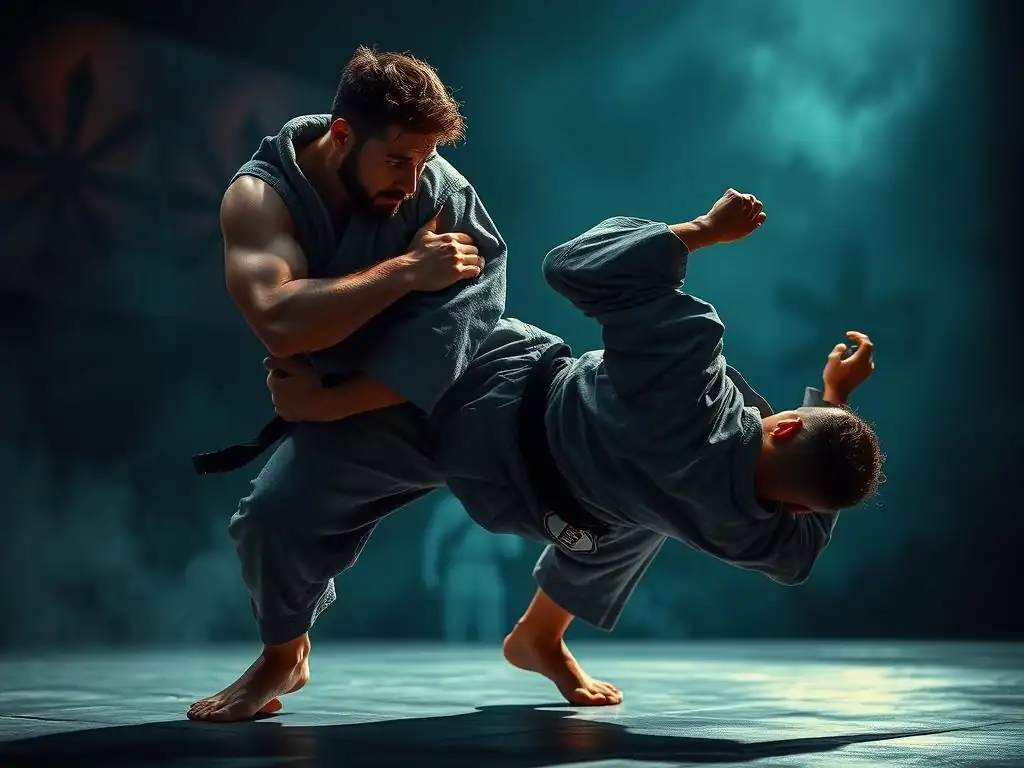
Welcome to Martial Arts Mastery, your definitive resource for exploring the rich tapestry of martial arts. Ever wondered how historical European martial arts (HEMA) seamlessly blend with the grappling arts? Discover how HEMA grappling drills improve flow, boosting your strength, skill, and overall combat fluidity. Dive in to unlock the secrets of this powerful synergy and elevate your training to the next level!
- Introduction to HEMA Grappling Drills
-
Frequently Asked Questions
- How can HEMA grappling drills improve my overall HEMA performance?
- What types of strength training are most beneficial for HEMA grappling?
- What specific grappling techniques are typically incorporated into HEMA training?
- How important is footwork in HEMA grappling drills?
- How do I find historical resources on grappling techniques relevant to HEMA?
- Final Reflection: Embracing the Flow State in HEMA Grappling
- Unleash Your Inner HEMA Grappler!
Introduction to HEMA Grappling Drills
Grappling's Role in HEMA
Historical European Martial Arts (HEMA) encompasses far more than just sword fighting; grappling, known historically as Ringen or wrestling, was a foundational element across many periods and weapon systems. Treatises from masters like Fiore dei Liberi (early 15th century) and Johannes Liechtenauer's tradition extensively detail unarmed and armed grappling techniques.
This indicates that the ability to control, throw, and submit an opponent at close range was considered essential, whether fighting in armor on the battlefield or in civilian clothes with a dagger. Grappling was not merely a fallback but an integral part of the combat system, often used to close distance, negate an opponent's weapon, or set up a finishing blow or submission.
The historical sources dedicate significant portions to grappling. Fiore dei Liberi's Flos Duellatorum, for instance, includes distinct sections on unarmed wrestling (Abrazare), dagger combat (Daga), and armored combat (Armazare), all heavily featuring grappling techniques like joint locks, throws, and controls. These texts demonstrate sophisticated systems for entering the clinch, executing takedowns, defending against them, and applying submissions both standing and on the ground. While specific numbers vary by treatise, it's common to find dozens, sometimes well over a hundred, distinct grappling plays and counter-plays described, highlighting the depth and importance of this skill set in historical combat.
Benefits of Grappling Drills
Regular engagement in HEMA grappling drills provides a multitude of physical and technical advantages for practitioners. Physically, these drills build significant functional strength, particularly in the core, back, grip, and legs, essential for powerful clinches, throws, and controls. The dynamic nature of grappling also dramatically improves cardiovascular endurance, flexibility, and body awareness. A typical hour-long HEMA grappling drill session can be highly demanding, potentially burning calories at a rate comparable to other high-intensity sports, sometimes exceeding 600-800 calories depending on intensity and body weight.
Beyond the physical conditioning, HEMA grappling drills are indispensable for developing critical martial skills. They refine timing, distance management at close range, balance, and the ability to generate and absorb force effectively. Repetitive drilling helps build muscle memory for executing complex techniques like hip throws or arm bars under varying levels of resistance. Furthermore, working with partners allows for the development of sensitivity and responsiveness to an opponent's movements and weight distribution, skills that are difficult to acquire through theoretical study alone. Consistent drilling translates directly into improved performance during free play and sparring.
Improving Flow and Technique
One of the primary goals of consistent practice is to make techniques feel natural and effortless, a concept often referred to as "flow." HEMA grappling drills improve flow by systematically training the transitions between different positions and techniques. Instead of just practicing isolated moves, drills focus on linking them together – moving from a clinch entry to a takedown attempt, or from defending a takedown to securing a dominant position on the ground. This deliberate practice of transitions eliminates hesitation and allows practitioners to move seamlessly through the phases of a grappling exchange.
Dedicated HEMA grappling drills improve flow significantly by providing a structured environment to practice responses to common scenarios. For example, drilling sprawl defense followed immediately by a counter-takedown attempt trains a reactive chain of movements. As practitioners become more comfortable with these sequences through repetition, they develop the ability to adapt and chain techniques together spontaneously, rather than having to consciously think through each step. This leads to a more fluid, intuitive, and effective grappling game, where techniques blend together into a continuous, dynamic exchange.
Frequently Asked Questions
How can HEMA grappling drills improve my overall HEMA performance?
HEMA grappling drills improve flow by integrating grappling techniques into your weapon-based combat. This helps bridge the gap between weapon range and close-quarters engagements, making you a more well-rounded fighter.
What types of strength training are most beneficial for HEMA grappling?
Strength training focusing on grip strength, core stability, and explosive power are key. Exercises like pull-ups, deadlifts, and medicine ball throws will directly translate to improved grappling ability in HEMA.
What specific grappling techniques are typically incorporated into HEMA training?
HEMA grappling often includes techniques like takedowns, joint locks, and throws, adapted from historical sources. These are frequently modified to account for the presence of HEMA weaponry.
How important is footwork in HEMA grappling drills?
Footwork is crucial for maintaining balance, creating angles, and executing takedowns effectively. Good footwork allows you to control the distance and dictate the pace of the grappling exchange.
How do I find historical resources on grappling techniques relevant to HEMA?
Look for translations of historical fencing manuals that include grappling sections, such as Fiore dei Liberi's Flos Duellatorum. Also, research period wrestling styles that may have influenced HEMA grappling techniques.
Final Reflection: Embracing the Flow State in HEMA Grappling
The preceding exploration of HEMA grappling drills underscores a crucial point: the pursuit of flow is not just a desirable outcome, but a fundamental aspect of effective swordsmanship. By meticulously crafting drills that build strength, hone technique, and cultivate seamless transitions, we move beyond rote memorization and enter a realm where intuition and adaptability reign supreme. This is not merely about winning bouts; it's about embodying the principles of historical martial arts in a dynamic and responsive way.
The impact of HEMA grappling extends far beyond the training hall. It fosters a deeper understanding of historical combat, cultivates mental resilience, and promotes a holistic approach to physical and intellectual development. It's a journey of self-discovery, where the pursuit of technical mastery intertwines with the cultivation of inner peace and unwavering focus. As Miyamoto Musashi wisely stated: Perception is strong and sight weak. In strategy it is important to see distant things as if they were close and to take a distanced view of close things.
This quote encapsulates the essence of flow, where heightened awareness allows us to anticipate and adapt with grace and precision.
Now, consider how you can integrate these principles into your own training and life. Embrace the challenge of mastering new techniques, cultivate the discipline to refine your skills, and strive for the flow state in all your endeavors. Let the lessons learned from HEMA grappling empower you to move with greater confidence, clarity, and purpose, both on and off the mat. The path to mastery is a continuous journey, and the pursuit of flow is the compass that guides us forward.
Unleash Your Inner HEMA Grappler!
Thanks for diving into the world of HEMA grappling with us! We hope you've gained some valuable drills and insights to elevate your training. Now, let's put that knowledge into action:
- Prioritize consistency: Dedicate just 15 minutes, 3 times a week, to specifically drilling one or two of the grappling techniques covered.
- Share this article with your training partners to ignite discussions and explore new strategies together.
- Experiment: Incorporate elements from other grappling styles (BJJ, wrestling, Judo) to see how they complement your HEMA techniques and discover hybrid approaches.
What unexpected grappling connection did you discover during your last HEMA session?