
Choy Li Fut Drills for Smooth Range Shifting: Building Instinctive Muscle Memory


Welcome to Martial Arts Mastery, your gateway to the world's most compelling fighting systems. Delve into the rich tapestry of martial arts history, philosophy, and practical application. Ever wonder how masters seamlessly close the gap or create distance in a fight? Our exploration of Choy Li Fut range shifting unlocks the secrets to this elusive skill, revealing drills and techniques to build instinctive muscle memory. Prepare to elevate your understanding of movement and strategy and discover the power of adaptable footwork that will transform your martial arts practice.
- Understanding Choy Li Fut Range Shifting
-
Drills for Developing Choy Li Fut Range Shifting Skills
- Drill 1: The Stepping and Striking Drill for Long Range
- Drill 2: Bridging the Gap: Transitioning from Long to Medium Range
- Drill 3: Close-Range Trapping and Elbow Strikes in Choy Li Fut
- Drill 4: The Choy Li Fut Chain Punching Drill for Medium Range
- Drill 5: The "Circling Hands" Drill for Evasive Range Shifting
- Building Instinctive Muscle Memory for Range Shifting
- Advanced Concepts in Choy Li Fut Range Manipulation
- Integrating Range Shifting into Your Choy Li Fut Fighting Style
- Mastering Choy Li Fut Range Shifting: A Path to Martial Arts Excellence
-
Frequently Asked Questions
- What is Choy Li Fut range shifting and why is it important?
- How do Choy Li Fut drills help in developing instinctive range shifting?
- What are some examples of common Choy Li Fut drills that improve range shifting?
- What makes Choy Li Fut range shifting unique compared to other martial arts styles?
- How often should I practice Choy Li Fut range shifting drills to see improvement?
- Final Reflection: Embracing Flow in Motion
- Ignite Your Flow: Train Smarter, Not Harder!
Understanding Choy Li Fut Range Shifting
The Importance of Range Control in Choy Li Fut Kung Fu
Range control is a fundamental pillar in Choy Li Fut Kung Fu, dictating the effectiveness of every technique and strategy employed. Unlike systems that might primarily focus on a single fighting distance, Choy Li Fut is renowned for its versatility across long, medium, and close ranges. Mastering the ability to control the distance between yourself and your opponent is paramount for offensive execution and defensive integrity. Without precise range control, even the most powerful strike can miss its target or leave you vulnerable to counter-attack.
Effective Choy Li Fut range shifting allows a practitioner to dictate the terms of engagement. It enables you to position yourself optimally to deliver your own techniques while simultaneously denying your opponent their preferred distance. This strategic advantage can be the deciding factor in a confrontation, allowing you to exploit weaknesses, manage threats, and conserve energy. Developing keen awareness of range is an ongoing process, honed through dedicated practice and application.
Defining Range: Long, Medium, and Close Combat in Choy Li Fut
In Choy Li Fut, ranges are typically categorized based on the types of techniques that are most effective at that distance. Long range involves techniques executed with full extension, often utilizing wide, sweeping motions characteristic of the style, such as the Gwa Choi (Back Fist) or Sow Choi (Sweeping Fist). Footwork like deep stances and long steps are crucial here to cover distance or maintain it.
Medium range is the distance where most hand techniques, including straight punches ( Jik Choi), hooks, and various palm strikes, become highly effective. Kicking techniques, particularly mid-level and low kicks, are also prominent. This range often involves shorter steps and more intricate footwork to adjust position quickly. Close range, or in-fighting, is where techniques like elbows, knees, headbutts, shoulder strikes, and short-range punches thrive. Trapping hands and sticky bodywork become essential, requiring sensitivity and rapid, compact movements. Understanding the optimal techniques for each range is the first step in mastering Choy Li Fut range shifting.
Why Smooth Transitions are Crucial for Effective Fighting
Smooth transitions between ranges are not merely about moving from one point to another; they are about maintaining balance, power, and defensive structure throughout the movement. A jerky or predictable shift in range can expose a practitioner to counter-attacks. For instance, awkwardly closing distance might leave you open to a jab, while retreating poorly could allow an opponent to pursue and overwhelm you. Seamless Choy Li Fut range shifting ensures that you are always in a position to attack or defend effectively, regardless of the distance.
Furthermore, fluid transitions disrupt an opponent's timing and rhythm. If you can rapidly and unpredictably shift from long-range attacks to close-range trapping, your opponent will struggle to anticipate your actions and mount an effective defense or offense. This fluidity is developed through consistent drilling that integrates footwork with hand and body techniques, building the muscle memory required to move instinctively and efficiently under pressure.
Drills for Developing Choy Li Fut Range Shifting Skills
Drill 1: The Stepping and Striking Drill for Long Range
This drill focuses on establishing and maintaining long range while delivering characteristic Choy Li Fut strikes. It begins with practicing fundamental long steps, such as the Gung Ji Ma (Bow and Arrow Stance) step, focusing on covering significant ground while maintaining a low center of gravity and stable base. The goal is to move forward or backward smoothly over distances of 2-3 meters, ensuring balance at the end of each step.
Once the basic footwork is solid, integrate long-range strikes like the Gwa Choi or Sow Choi at the end of the step. The power of these strikes comes from the transfer of weight and the rotation of the waist, synchronized with the completion of the step. Practice stepping forward and striking, then stepping backward and striking, ensuring the strike lands with full power and proper structure at the intended long range. This repetition builds the coordination between large-scale movement and powerful extension.
Focusing on Footwork for Optimal Distance Management
Optimal distance management at long range in Choy Li Fut relies heavily on powerful and precise stepping. Drills should emphasize stepping just the right distance to place your strike on target while remaining out of your opponent's immediate effective range for their primary weapons. This requires sensitivity to distance and the ability to adjust step size dynamically.
Practice varying the length and speed of your steps. Use markers on the floor to practice stepping exactly 1.5 meters, then 2 meters, then 2.5 meters, always ending in a strong stance. This precision footwork allows you to enter or exit the optimal long range with control, preventing over-extension or leaving yourself too close after a retreat. Consistent practice of this fundamental stepping is the bedrock of effective Choy Li Fut range shifting at this distance.
Integrating Hand Techniques for Long-Range Attacks
Long-range hand techniques in Choy Li Fut are designed to maximize reach and generate significant power through body mechanics. Drills should focus on executing techniques like the Gwa Choi (Backfist) or Sow Choi (Sweeping Fist) with full body integration, ensuring the power originates from the ground, travels through the legs and waist, and culminates in the strike. The timing of the strike relative to the footwork is critical.
Practice combining a long step forward with a Gwa Choi, ensuring the strike lands as your front foot settles. Similarly, practice stepping backward and delivering a long-range technique simultaneously to create distance while attacking. This dual-purpose movement is key to effective Choy Li Fut range shifting. Another variation is the Biu Jee (Thrusting Fingers), which requires precise stepping to enter just within range for a quick, penetrating strike.
Drill 2: Bridging the Gap: Transitioning from Long to Medium Range
This drill specifically targets the crucial transition from the relative safety of long range into the more engaged medium range. It often starts from a long-range stance. The goal is to close the distance quickly and safely, ready to engage with medium-range techniques.
Begin by practicing a rapid forward step or combination of steps (like a shuffle step followed by a power step) designed to cover 1-2 meters instantly. As you close the distance, integrate a defensive action, such as a parry ( Pak Choi or Lan Choi) or a block ( Gon Choi), to protect yourself from a potential incoming attack your opponent might launch as you enter their range. Immediately upon entering medium range and completing the defensive action, launch a rapid medium-range strike, such as a straight punch ( Jik Choi) or a hook ( Kao Choi).
Using Footwork and Body Mechanics to Close Distance Safely
Closing the distance from long to medium range requires explosive footwork and protective body mechanics. The technique often involves a quick forward burst, keeping the lead hand and body positioned to intercept or deflect potential incoming strikes. The body should remain balanced and coiled, ready to unleash power upon arrival at the desired range.
Practice variations of closing steps: a simple forward step, a shuffle-step, or even a short leap, depending on the context and the speed required. Simultaneously, practice keeping your guard up and your lead shoulder forward to minimize targets. The transition should feel like a controlled, dynamic entry, not a simple walk forward. This disciplined approach to closing distance is vital for minimizing risk during Choy Li Fut range shifting.
Combining Parries and Strikes for a Seamless Transition
A seamless transition from long to medium range often involves integrating defense with offense. As you close the gap, an opponent might try to meet you with a strike. Using a parry or block as you move allows you to simultaneously negate their attack and position yourself for your own.
Practice stepping forward rapidly while executing a Pak Choi (Slapping Block) or Lan Choi (Barring Block) with your lead hand. Immediately after the parry, follow up with a medium-range technique like a Jik Choi or Kao Choi with your rear hand, or a combination. This drill trains you to flow directly from defense into offense during the critical phase of Choy Li Fut range shifting, ensuring you don't have a vulnerable pause between moving and striking.
Drill 3: Close-Range Trapping and Elbow Strikes in Choy Li Fut
This drill focuses on developing proficiency and sensitivity in the tight confines of close combat. It involves entering the opponent's personal space, where traditional long or medium-range techniques are ineffective, and utilizing specialized close-quarters tools.
Start by practicing entering close range safely, perhaps after a parry or by slipping past a guard. Once in close, practice maintaining contact (sticking) or controlling the opponent's limbs using trapping techniques ( Lap Sau, Kao Sau). Simultaneously, practice delivering powerful, short-range techniques like elbow strikes ( Jik Jang, Wai Jang), knee strikes ( Sai Gerk), short punches, and headbutts. The drill should emphasize rapid, explosive actions within minimal space.
Developing Sensitivity and Reflexes for Close Quarters Combat
Close-quarters combat in Choy Li Fut demands highly developed sensitivity and lightning-fast reflexes. Unlike longer ranges where visual cues are primary, close range often relies on tactile feedback – feeling the opponent's movements and intentions through contact. Drills should incorporate partner work focusing on 'sticky hands' principles, learning to maintain contact and feel shifts in pressure or tension.
Practice drills where partners maintain light contact on forearms or shoulders and react instantly to pushes, pulls, or attempts to break contact. This develops the sensitivity needed for trapping and maintaining control. Combine this with rapid-fire execution of close-range techniques upon feeling an opening or imbalance. This reflexive action is key to effective Choy Li Fut range shifting into and within the close range.
Utilizing Elbows, Knees, and Short-Range Punches
The arsenal of techniques at close range in Choy Li Fut is compact but devastating. Elbows and knees are powerful weapons that require minimal space to generate force, often leveraging bodyweight and short, sharp movements. Short-range punches, like vertical fist jabs or shovel hooks, are delivered with tight mechanics.
Drills should isolate the mechanics of these close-range weapons. Practice delivering rapid-fire elbow strikes from various angles (upwards, sideways, downwards), focusing on generating power from hip rotation and body mass even in a confined space. Practice knee strikes, focusing on driving the knee upwards or forwards with hip thrust. Combine these with short, explosive punches thrown with tight fists and minimal wind-up. Integrating these techniques into trapping and control drills is crucial for effective Choy Li Fut range shifting at this distance.
Drill 4: The Choy Li Fut Chain Punching Drill for Medium Range
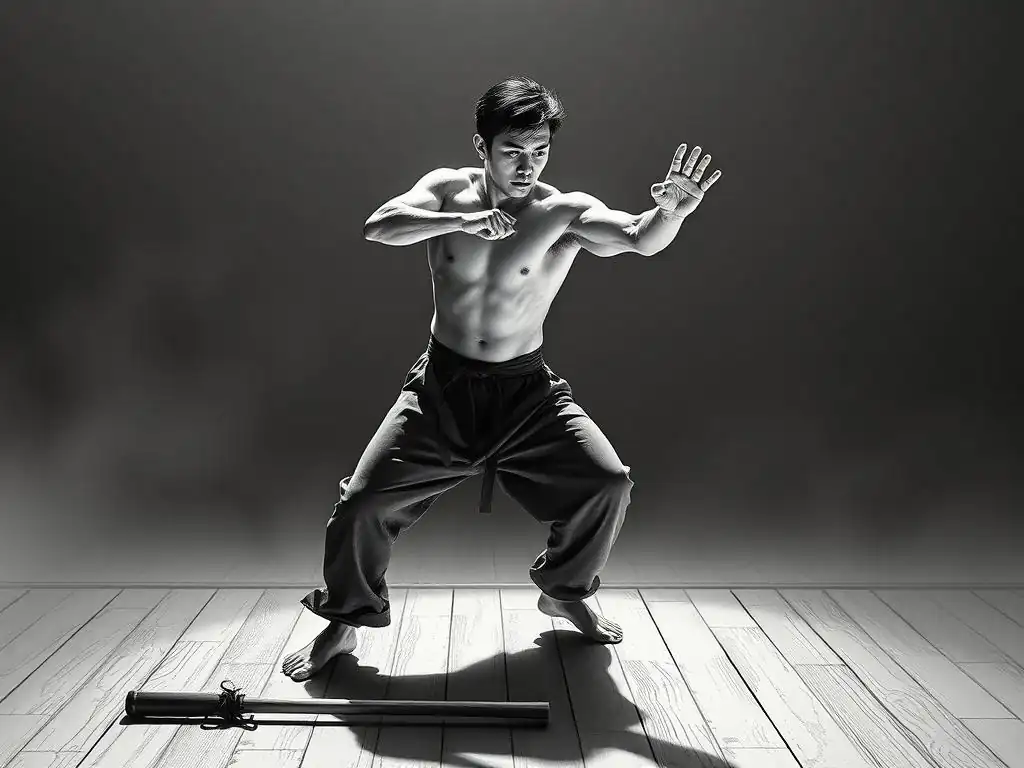
The chain punch ( Lin Wan Choi) is a hallmark technique often associated with close to medium range in various Kung Fu styles, including certain applications in Choy Li Fut. This drill focuses on developing the ability to deliver a rapid, continuous stream of punches from a stable medium-range stance.
Start from a solid stance, typically Sei Ping Ma (Four Level Stance) or a slightly forward-weighted variation. Practice extending one fist directly forward, retracting it as the other fist extends, creating a continuous, linear barrage. The power comes from relaxed speed, proper hip rotation, and driving force from the ground. The focus is on speed, accuracy (hitting the same target point), and maintaining rhythm.
Generating Power and Speed in a Confined Space
Generating significant power in medium-range techniques like the chain punch requires efficient use of body mechanics within limited movement. Unlike long-range techniques that use large arcs, medium-range power relies on sharp, coordinated movements of the hips, waist, and shoulders, synchronized with the extension and retraction of the arms.
Practice focusing on the 'snap' of the punch, ensuring the force is delivered at the point of impact rather than through a long, winding motion. Use resistance bands or water bags for feedback on power generation. Emphasize speed of retraction as much as speed of extension; the faster one hand returns, the faster the other can strike. This continuous, powerful flow is essential for overwhelming an opponent at medium range during Choy Li Fut range shifting.
Maintaining Balance and Stability While Punching
Delivering a rapid series of punches like the chain punch can easily compromise balance if the stance and body structure are not solid. This drill emphasizes maintaining a strong, rooted base throughout the execution. The feet should remain firmly planted, and the body's core engaged.
Practice the chain punch while consciously checking your stance and balance. Avoid leaning too far forward or backward. The movement should primarily be rotational from the waist upwards, with the lower body providing stability. Drills can involve punching while slightly off-balance (e.g., on a balance beam or uneven surface) to build corrective reflexes, ensuring you can maintain stability even when under pressure or during dynamic Choy Li Fut range shifting.
Drill 5: The "Circling Hands" Drill for Evasive Range Shifting
This drill, inspired by principles found in many southern Kung Fu styles, focuses on using circular hand movements and subtle footwork to evade incoming attacks while simultaneously positioning for a counter or shifting range. It is less about direct blocking and more about deflecting, redirecting, and flowing around obstacles.
Start by having a partner throw simple, committed attacks (e.g., a straight punch or hook). Practice using circular hand movements ( Wan Choi - Circling Fist applications, Lao Sau - Scooping Hand) to redirect the force of the attack away from your center line. Combine this hand technique with subtle footwork – pivots, side steps, or angled retreats – to shift your body slightly off the line of attack while maintaining balance and proximity for a follow-up.
Improving Agility and Reaction Time
The "Circling Hands" drill significantly enhances agility and reaction time by requiring continuous, dynamic adjustment to incoming force. It trains the body to respond reflexively to pressure and movement rather than relying on pre-planned blocks. The circular nature of the hand movements, combined with evasive footwork, forces rapid changes in direction and position.
Practice this drill at increasing speeds, starting slowly to understand the mechanics of redirection and evasive stepping, then gradually increasing the pace. Use a partner who varies the speed and angle of their attacks slightly to challenge your adaptability. This constant need to read and react improves the neural pathways associated with rapid, fluid movement, crucial for unpredictable Choy Li Fut range shifting.
Combining Footwork and Hand Movements for Defense and Offense
The essence of this drill is the seamless integration of upper and lower body movements. The hand techniques redirect the attack, while the footwork simultaneously removes the target (your body) from the line of fire and positions you for a counter-attack or a shift to a different range.
Practice variations where redirecting an attack with a circling hand leads directly into a step forward to close range for an elbow, or a step sideways to create an angle for a medium-range hook, or a step backward to reset to long range. The goal is to use the opponent's energy and movement against them, transitioning smoothly from defense to offense or range control using coordinated hand and footwork. This integrated approach is a sophisticated form of Choy Li Fut range shifting.
Building Instinctive Muscle Memory for Range Shifting
Repetition and Consistency in Choy Li Fut Training
Building instinctive muscle memory for Choy Li Fut range shifting is primarily achieved through relentless repetition. Performing drills correctly thousands of times engraves the movements into the nervous system, allowing the body to react automatically under pressure without conscious thought. Consistency is key; short, frequent training sessions are often more effective than infrequent, long ones.
Dedicate specific portions of every training session to range shifting drills. Don't just go through the motions; focus on precision, speed, and power delivery at the correct range. Track your progress, perhaps noting how quickly and smoothly you can transition or how effectively you can land techniques at different distances. This consistent, focused repetition transforms conscious technique into unconscious skill, making your Choy Li Fut range shifting truly instinctive.
Visualization Techniques for Enhanced Performance
Visualization is a powerful mental training tool that complements physical practice in developing muscle memory for Choy Li Fut range shifting. By mentally rehearsing the drills and techniques, you reinforce the neural pathways associated with the movements, even when you are not physically training.
Spend time each day visualizing yourself performing the range shifting drills perfectly. See yourself stepping smoothly, feeling the power of your strikes at the correct distance, and transitioning effortlessly between ranges. Visualize real combat scenarios where you successfully apply your Choy Li Fut range shifting skills, reacting instinctively to an opponent's movements and controlling the distance to your advantage. This mental rehearsal enhances physical performance and builds confidence.
Partner Drills and Sparring to Simulate Real Combat Scenarios
While solo drills build fundamental mechanics, applying Choy Li Fut range shifting in a dynamic context requires partner work and sparring. Partner drills allow you to practice reacting to an opponent's unpredictable movements and intentions, which is impossible to replicate alone.
Engage in drills with a partner where one person initiates an attack, and the other practices transitioning to the appropriate range to defend and counter. Start slowly, focusing on timing and positioning, then gradually increase speed and intensity. Sparring, under controlled conditions, provides the ultimate test, forcing you to apply your Choy Li Fut range shifting skills against live resistance. It quickly reveals where your transitions are weak or your range control is lacking, providing invaluable feedback for further training.
Advanced Concepts in Choy Li Fut Range Manipulation
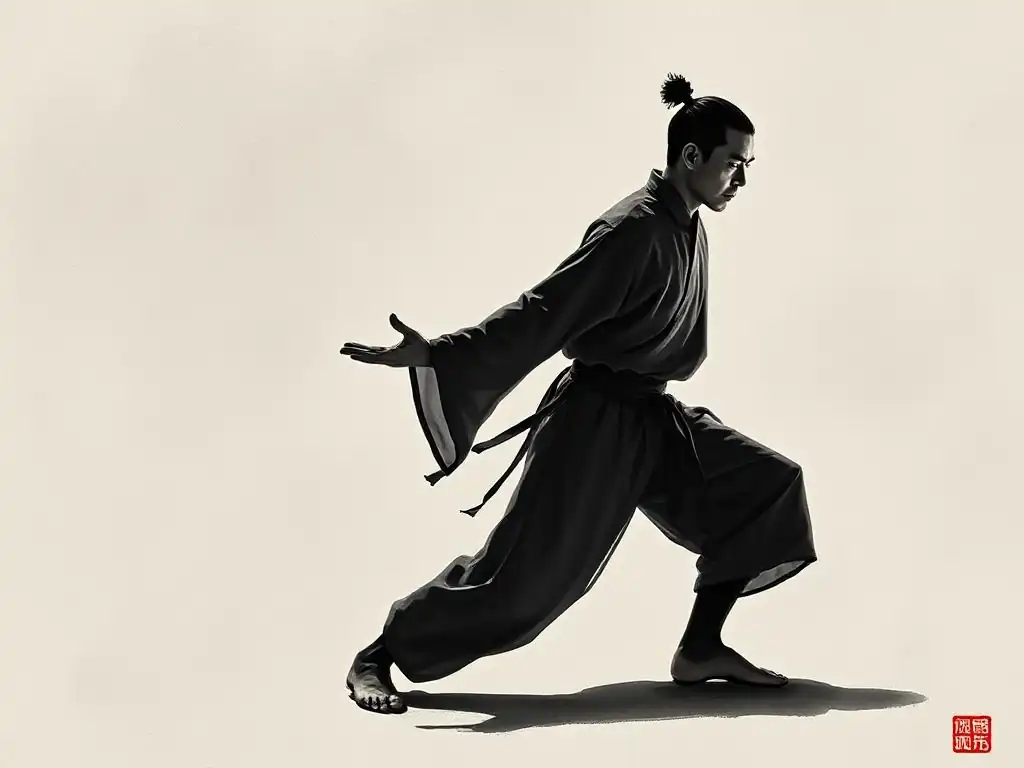
Feinting and Deception to Control Distance
Advanced Choy Li Fut range shifting involves not just moving effectively but also manipulating the opponent's perception of distance through feints and deception. A feint is a deceptive maneuver designed to draw a reaction from the opponent, creating an opening or influencing their positioning.
Practice initiating a movement or strike that looks like an entry to medium range, but pulling back at the last moment to gauge the opponent's reaction. Or, feint a long-range strike to make them retreat, then quickly close the distance to medium or close range. These deceptive tactics disrupt the opponent's timing and defensive structure, allowing you to control the engagement and execute your desired Choy Li Fut range shifting strategy with greater success.
Reading Your Opponent's Movements and Intentions
Effective Choy Li Fut range shifting is highly dependent on the ability to read your opponent. Paying attention to their stance, foot placement, weight distribution, and subtle shifts in posture can provide clues about their intentions – whether they are preparing to attack, defend, or retreat.
Develop your observational skills during partner drills and sparring. Practice identifying an opponent's tells for specific techniques or range preferences. Does their weight shift onto their front leg before they punch? Do they lean back slightly before retreating? Learning to read these signals allows you to anticipate their actions and initiate your Choy Li Fut range shifting proactively, positioning yourself optimally before they even commit to their move.
Adapting Your Strategy Based on Range and Opponent
True mastery of Choy Li Fut range shifting lies in the ability to adapt your strategy on the fly based on the current range and the specific opponent you face. A strategy effective against a tall, long-limbed opponent at long range might be disastrous against a short, stocky opponent who excels in close quarters.
Continuously evaluate the situation during sparring. Ask yourself: What is the current range? What techniques are available to me here? What techniques is my opponent likely to use? How can I shift to a range that favors my strengths and exploits their weaknesses? This requires flexibility and a deep understanding of the Choy Li Fut arsenal across all distances. Constant adaptation is the hallmark of sophisticated Choy Li Fut range shifting.
Integrating Range Shifting into Your Choy Li Fut Fighting Style
Developing a Personalized Approach to Combat
While Choy Li Fut provides a comprehensive framework, integrating range shifting effectively means developing a personalized approach that leverages your unique physical attributes and strengths. Are you naturally fast and agile? You might favor rapid transitions and evasive range shifting. Are you strong and powerful? You might focus on dominating specific ranges and using powerful entries.
Experiment during training to discover which techniques and transitions feel most natural and effective for you. Don't just copy drills; understand the underlying principles of Choy Li Fut range shifting and apply them in ways that suit your body and temperament. Your personal style will emerge through this process of exploration and self-discovery.
The Importance of Sparring and Application
Sparring is non-negotiable for integrating Choy Li Fut range shifting into a functional fighting style. Drills build the components, but sparring requires you to assemble them under pressure, against an uncooperative opponent. It is where theoretical understanding meets practical application.
Engage in regular sparring sessions with different partners to experience a variety of fighting styles and reactions. Focus specifically on applying your range shifting drills – consciously try to control the distance, transition smoothly, and land techniques at the optimal range. Analyze your performance afterward: Where did you struggle with range? Were your transitions fluid? What opportunities did you miss due to poor positioning? This analysis fuels further targeted training.
Constant Evaluation and Refinement of Your Skills
Mastering Choy Li Fut range shifting is a lifelong journey requiring constant evaluation and refinement. There is always room for improvement, whether it's making your transitions faster, your entries safer, your close-range sensitivity sharper, or your long-range footwork more precise.
Regularly assess your strengths and weaknesses in Choy Li Fut range shifting through self-reflection, feedback from instructors and partners, and analysis of your sparring performance. Identify areas that need work and design specific drills or training goals to address them. This iterative process of training, application (sparring), evaluation, and refinement is the path to truly mastering Choy Li Fut range shifting and achieving martial arts excellence.
Mastering Choy Li Fut Range Shifting: A Path to Martial Arts Excellence
Frequently Asked Questions
What is Choy Li Fut range shifting and why is it important?
Choy Li Fut range shifting refers to the ability to fluidly move between different engagement distances during combat. It's crucial for adapting to your opponent's actions and maintaining an advantageous position. Mastering this skill allows for effective offense and defense.
How do Choy Li Fut drills help in developing instinctive range shifting?
Choy Li Fut drills are designed to ingrain range shifting movements into muscle memory. By repeatedly practicing specific footwork patterns and techniques, practitioners develop the reflexive ability to close or widen the gap as needed. This removes hesitation in actual combat.
What are some examples of common Choy Li Fut drills that improve range shifting?
Drills often involve combinations of steps, stances, and hand techniques that emphasize forward and backward movement. Examples include Sui Sao (following hand) drills, Biu Sao (thrusting hand) drills, and partnered drills that simulate dynamic combat scenarios, forcing reactive range adjustments.
What makes Choy Li Fut range shifting unique compared to other martial arts styles?
Choy Li Fut is known for its long-range power and circular movements, making range shifting a core component. The style employs a wide arsenal of techniques to control distance, including sweeping kicks and long-range punches, requiring constant adjustment of position.
How often should I practice Choy Li Fut range shifting drills to see improvement?
Consistency is key. Aim for at least 2-3 dedicated practice sessions per week, focusing on proper form and technique. Progressive overload, gradually increasing the difficulty and intensity of the drills, will also accelerate skill development in Choy Li Fut range shifting.
Final Reflection: Embracing Flow in Motion
The principles of Choy Li Fut range shifting, as explored in this article, are not merely historical techniques; they represent a profound understanding of adaptability and instinctive response that resonates deeply in our fast-paced world. Just as a martial artist must seamlessly transition between close and long-range combat, we too must cultivate the ability to navigate the ever-shifting landscapes of our personal and professional lives with grace and precision.
The influence of Choy Li Fut extends beyond the dojo, shaping a mindset that values fluidity and responsiveness. This exploration has reinforced my belief in the power of consistent practice to cultivate not just physical skill, but also mental agility. The best fighter is never angry,
as Bruce Lee famously said, encapsulating the calm focus and adaptability that Choy Li Fut drills aim to instill. This philosophy encourages us to approach challenges not with rigid plans, but with a flexible and open mind, ready to adjust our strategy as needed.
Now, consider how you can apply the principles of Choy Li Fut range shifting to your own life. Are you clinging to outdated strategies, or are you embracing the opportunity to adapt and evolve? Take a moment to reflect on the areas where you can cultivate greater fluidity and responsiveness. By embracing the flow, you can unlock your full potential and navigate the complexities of life with newfound confidence and grace.
Ignite Your Flow: Train Smarter, Not Harder!
Thanks for diving into the world of Choy Li Fut drills! We hope you've gained some valuable insights into how these exercises can revolutionize your range shifting and build instinctive muscle memory. Now, it's time to put that knowledge into action!
Here's how you can take your training to the next level:
- Dedicate 15 minutes each day to practicing one specific Choy Li Fut drill focusing on a problematic range. Consistency is key to building lasting muscle memory!
- Record yourself performing the drills and analyze your movements. What can you improve? Compare your form to instructional videos for insights.
- Share your training progress and any insights you discover with a training partner or on social media using #MartialArtsMastery. Building a community of learners is empowering and promotes accountability.
What's one small adjustment you can make to your current training routine to immediately incorporate the power of Choy Li Fut drills?