
Creating Diversions: Ninjutsu Tactics for a Clean Getaway

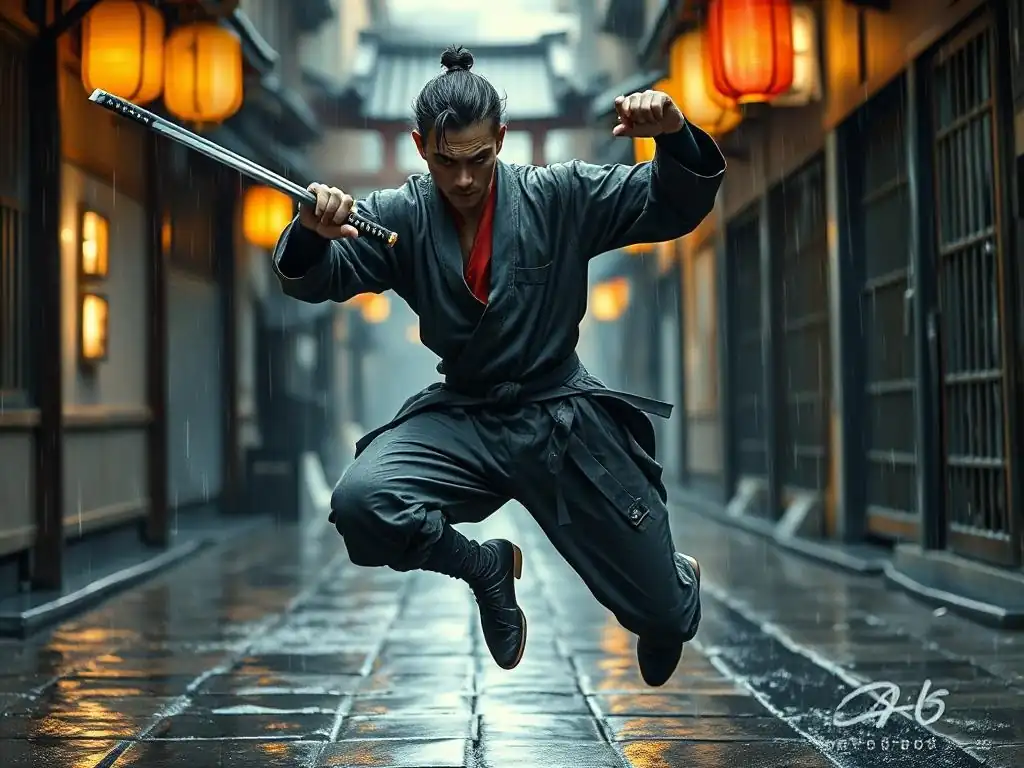
Welcome to Martial Arts Mastery, where we delve into the rich tapestry of combat traditions worldwide. Ever wondered how a seemingly impossible escape could be orchestrated? In this article, we pull back the curtain on the ancient art of Ninjutsu escape and evasion. Discover the secrets behind creating diversions that allow for a clean getaway, a skill refined over centuries. Are you ready to unlock the techniques that transform vulnerability into an advantage? Let's begin...
- Creating Diversions: Ninjutsu Tactics for Evasion
- Ninjutsu Escape and Evasion: Mastering the Art of Disappearance
- Essential Ninjutsu Diversion Tactics for Evasion
- Advanced Ninjutsu Evasion Techniques: Blending In and Vanishing
- Ninjutsu Escape and Evasion Training: Practical Drills
- Case Studies: Successful Ninjutsu Escape and Evasion in Historical Accounts
- The Modern Relevance of Ninjutsu Escape and Evasion Techniques
- Mastering Ninjutsu Escape and Evasion: A Path to Self-Preservation
-
Frequently Asked Questions
- What is the core principle behind Ninjutsu escape and evasion techniques?
- How does Ninjutsu differ from other martial arts in its approach to escape?
- What are some common tools or techniques used in Ninjutsu for creating diversions?
- How important is environmental awareness in Ninjutsu escape and evasion?
- Can Ninjutsu escape and evasion skills be applied in modern-day self-defense scenarios?
- Final Reflection: The Art of Vanishing
- Ignite Your Inner Ninja: Master the Art of Disappearing!
Creating Diversions: Ninjutsu Tactics for Evasion
Ninjutsu Escape and Evasion: Mastering the Art of Disappearance
Understanding the Importance of Evasion in Ninjutsu
Ninjutsu, often misunderstood as solely focused on combat, places an equally significant emphasis on survival, which includes the critical skills of Ninjutsu escape and evasion. The ability to disengage from a threat, disappear from pursuit, and avoid confrontation altogether is paramount. Unlike martial arts primarily focused on direct engagement, Ninjutsu views evasion not as retreat, but as a strategic maneuver to preserve life, gather intelligence, or complete a mission without unnecessary conflict. This philosophy underpins much of the training, focusing on awareness, timing, and the creative use of the environment and available tools.
Historically, the shinobi operated in environments where direct confrontation with larger forces was often suicidal. Their survival depended on their ability to move unseen, gather information discreetly, and, when detected, employ tactics for immediate Ninjutsu escape and evasion. This necessity forged a deep understanding of how to manipulate perception, utilize distractions, and exploit weaknesses in pursuit. The skills developed weren't about fighting better, but about not fighting when possible, making the art of vanishing a core competency.
The Philosophy Behind Ninjutsu Escape Techniques
The philosophical underpinnings of Ninjutsu escape and evasion are deeply rooted in principles of adaptability, non-resistance, and the concept of "winning without fighting." It's not about overpowering an opponent, but about becoming like water – flowing around obstacles, finding the path of least resistance, and ultimately, disappearing into the larger environment. This involves a profound understanding of human psychology, exploiting natural tendencies like focusing on noise or movement, and the limitations of sensory perception, especially in challenging conditions like darkness or fog.
At its heart, the philosophy teaches that true mastery lies in avoiding the need for conflict. Evasion techniques are not just physical movements or the use of tools; they are applications of strategic thinking. It's about controlling the situation by removing yourself from it on your terms. This requires a calm mind under pressure, the ability to assess a situation rapidly, and the willingness to prioritize survival and mission completion over ego or direct engagement. It embodies the principle of kyojitsu (truth and falsehood), where creating a convincing illusion is as potent as physical skill.
Essential Ninjutsu Diversion Tactics for Evasion
Smoke Pellets: Concealment and Escape
Smoke pellets, known as sokutō-jutsu or enten, are perhaps one of the most iconic, albeit sometimes exaggerated in popular culture, Ninjutsu tools for Ninjutsu escape and evasion. Their primary function is to create a sudden, dense cloud of smoke, momentarily obscuring vision and providing precious seconds to break line of sight and change direction. The effectiveness of smoke lies in its ability to cause confusion and hesitation in pursuers, exploiting the human reliance on visual tracking. A well-timed deployment can turn an open space into a temporary sanctuary for disappearance.
While often depicted as magical vanishing acts, the reality is that smoke provides a window for evasion, not instant teleportation. The density and duration of the smoke cloud were crucial. Historical accounts and modern approximations suggest a typical dense smoke cloud might last anywhere from 10 to 30 seconds, depending on wind conditions and the composition of the pellet. This limited timeframe demands immediate action – a quick change of direction, finding cover, or blending into surrounding terrain within the smoke.
Creating Effective Smoke Pellets: Materials and Techniques
Historically, the composition of Ninjutsu smoke pellets varied, often utilizing readily available natural materials combined with substances that produced dense smoke when ignited. Common ingredients might have included mixtures of sulfur, charcoal, potassium nitrate (saltpeter, often derived from bat guano or other sources), and sometimes powdered iron or other metallic compounds to enhance the effect or color. These were often wrapped in paper or cloth, sometimes with a slow-burning fuse or designed for impact ignition. The key was a material that would combust quickly and produce a large volume of opaque smoke with minimal flame.
Modern approximations for creating smoke for training or demonstration often involve simpler chemical reactions, such as mixing potassium nitrate and sugar (a common amateur smoke bomb formula). The proportions and packing density were critical to ensure a reliable ignition and sufficient smoke volume. Techniques involved grinding the materials to a fine powder, mixing them thoroughly, and packing them tightly into a container or wrapping. Some historical variants reportedly included irritants like ground pepper or ash to further disorient pursuers.
Smoke Pellet Deployment Strategies for a Quick Escape
Effective deployment of smoke pellets is a tactical skill requiring practice and timing for successful Ninjutsu escape and evasion. Simply dropping one at your feet might obscure you, but it also gives away your immediate location within the cloud. A more strategic approach involves throwing the pellet away from your intended direction of travel or throwing multiple pellets to create a larger, more confusing smoke screen. Throwing one slightly behind you as you round a corner, for example, can create a barrier that pursuers must navigate or wait for.
Another technique is to throw the pellet ahead into an area you intend to move through, allowing you to enter the smoke and potentially exit from a different point than expected. Deployment also considers wind direction – throwing upwind allows the smoke to drift towards pursuers, while throwing downwind can clear your path more quickly. The goal is always to break the pursuer's line of sight and create a moment of confusion, enabling you to vanish by changing speed, direction, or finding immediate cover.
Spiked Balls (Makibishi): Hindering Pursuit and Creating Opportunities
Makibishi, often translated as spiked balls or caltrops, are another classic Ninjutsu tool designed specifically to impede pursuit and facilitate Ninjutsu escape and evasion. These small, sharp objects, traditionally made of iron or shaped from dried seed pods or wood with spikes, are designed so that no matter how they land, at least one spike points upward. Scattering them in a pursuer's path, particularly in areas where footing is difficult or visibility is poor, can effectively slow or halt pursuit.
The effectiveness of makibishi relies on their ability to cause injury or force pursuers to slow down significantly to avoid them. In historical contexts, where straw sandals or thin-soled footwear were common, makibishi were particularly devastating. Scattering just a handful could cover several square meters, creating a dangerous obstacle zone. Modern variants might use hardened plastic or metal and remain effective against many types of contemporary footwear, though their primary use today is in training demonstrations or historical study rather than practical application against modern tactical footwear.
Crafting and Deploying Spiked Balls for Maximum Impact
Traditional iron makibishi were often forged into a shape resembling a four-pointed star or tetrahedron, ensuring one point was always upright. They could be relatively small, fitting in the palm of the hand in significant numbers. Non-metallic versions were crafted from natural materials like the seed pods of the water caltrop plant ( Hishi) or shaped from wood and sharpened. The key was a material that was hard enough to penetrate footwear and cause pain or damage, and a shape that was reliably effective upon scattering.
Deployment techniques involved carrying makibishi in pouches or pockets for quick access. They would be scattered strategically in areas where pursuers were expected to follow closely, such as narrow passageways, doorways, staircases, or trails. Scattering them just behind oneself while running, especially when rounding a corner or entering a dark area, maximized their surprise effect. The goal was not necessarily to incapacitate, but to delay the pursuer, forcing them to stop, check their footing, or deal with potential injuries, thereby gaining crucial time for evasion.
Using Spiked Balls to Control Pursuit and Enable Evasion
Makibishi are not just random obstacles; they are tools for controlling the flow and pace of pursuit, directly aiding Ninjutsu escape and evasion. By scattering them in specific patterns or locations, a ninja could funnel pursuers into desired areas, slow down faster individuals, or even split up a group. For instance, scattering a dense cluster at a choke point would force pursuers to navigate it slowly, while scattering a thinner line might simply cause hesitation or minor injury, allowing the ninja to maintain distance.
The psychological impact was also significant. Knowing that makibishi might be present could make pursuers hesitant, reducing their speed and aggressiveness even if none were encountered. This mental edge further aided the evader. A ninja might carry different types – some designed for maximum pain, others perhaps less injurious but still visually alarming – to adapt their tactics. The ability to deploy them quickly and accurately while in motion was a skill honed through rigorous training.
The Art of Misdirection: Illusion and Deception in Ninjutsu
Beyond physical tools, the art of misdirection is a cornerstone of Ninjutsu escape and evasion, relying on psychological manipulation to confuse and deceive pursuers. This involves creating false cues that draw attention away from the evader's true location or intention. It's about controlling the pursuer's perception of reality, making them believe you are somewhere you are not, or doing something you are not. This requires a deep understanding of how people react under stress and how to exploit sensory input.
Misdirection can be as simple as making a sudden noise in one direction before moving silently in another, or as complex as creating a decoy or leaving false trails. The goal is always to buy time and create distance by sending the pursuer on a tangent. This aspect of Ninjutsu highlights that evasion is not just a physical act but a mental and psychological battle, where the mind of the evader works against the assumptions and expectations of the pursuer.
Utilizing Sound and Movement to Confuse Pursuers
Sound and movement are powerful tools for misdirection in Ninjutsu escape and evasion. A ninja might throw a rock or object to create a loud noise away from their intended path, drawing the pursuer's attention and potentially their pursuit in that direction. Similarly, making a sudden, exaggerated movement visible from a distance before quickly dropping low or changing direction can trick observers into focusing on the initial movement.
Even subtle sounds can be used. Mimicking animal sounds, causing a small rustle in bushes away from one's location, or creating a brief, distinct sound like snapping a twig can serve as effective auditory decoys. The key is that the sound or movement must be convincing enough to momentarily distract or redirect the pursuer's focus, allowing the ninja to exploit that brief window for disappearance. This requires precise timing and a keen awareness of the surrounding environment.
Creating False Trails and Decoys for Successful Evasion
Creating false trails and decoys is a more involved form of misdirection aimed at sustaining the deception over a longer period or distance. A ninja might deliberately leave obvious footprints leading in one direction before carefully backtracking and moving in another. They could drop items of clothing or equipment along a false path to make it appear as though they continued that way.
Decoys, historically, could range from simple bundles of clothing arranged to look like a person hiding, to more elaborate traps designed to trigger a noise or movement when approached, further solidifying the illusion that the ninja is still in the area. The effectiveness of false trails and decoys lies in their believability. They must align with what the pursuer expects to find, leading them on a fruitless search while the ninja makes their true Ninjutsu escape and evasion.
Advanced Ninjutsu Evasion Techniques: Blending In and Vanishing

Chameleon Techniques: Adapting to the Environment for Stealth
Advanced Ninjutsu escape and evasion moves beyond simple diversions to becoming an integral part of the environment – the "chameleon technique." This involves not just hiding in the environment but becoming indistinguishable from it. It requires detailed knowledge of natural surroundings, urban landscapes, and the principles of visual concealment. It's a passive form of evasion, relying on not being seen in the first place, or fading from view even if initially spotted.
This level of stealth is achieved through careful study of light, shadow, texture, and form. It's about understanding how the human eye perceives shapes and movements, and how to minimize one's own detectability. This goes beyond wearing appropriate clothing; it involves controlling one's breathing, minimizing scent, moving silently, and knowing precisely where to position oneself to blend seamlessly into the background.
Camouflage and Concealment Strategies in Different Environments
Effective camouflage and concealment are fundamental to chameleon techniques. In natural environments, this means utilizing foliage, rocks, and terrain features to break up the human outline. Understanding seasonal changes and local flora is crucial for selecting appropriate natural cover. Lying prone in tall grass, using the dappled light under trees, or positioning oneself behind rocks can render a person almost invisible to a casual observer.
In urban settings, camouflage shifts to blending with architecture, shadows, and the flow of crowds. Wearing neutral, unremarkable clothing, utilizing doorways, alleys, and the lines of buildings for concealment, and moving confidently but discreetly are key. The principle remains the same: minimize contrast, break up the silhouette, and position oneself where the eye is least likely to look. Mastering this requires extensive practice in varied settings.
Mastering the Art of Mimicry for Effective Blending
Mimicry in Ninjutsu escape and evasion is about adopting the appearance or behavior of something else in the environment to avoid detection. This could involve mimicking the stillness of a statue, the slow sway of a branch in the wind, or even the behavior of animals to avoid appearing unnatural. It's not just about physical concealment but also about behavioral concealment.
For instance, if hiding amongst trees, mimicking the stillness of the trunks or the gentle movement of leaves can make one less likely to be perceived as a foreign object. In an urban environment, this might involve mimicking the gait and posture of a casual pedestrian to avoid looking like someone trying to hide. This psychological aspect of blending requires observing and understanding the typical patterns of the environment and inserting oneself into them seamlessly.
Utilizing Natural Elements for Escape and Evasion
Ninjutsu escape and evasion techniques extensively utilize natural elements – darkness, water, terrain, and even weather – as allies. These elements can provide cover, impede pursuers, or create opportunities for movement that would otherwise be impossible. A deep understanding of the natural world and its rhythms is essential for exploiting these advantages. This requires observation, knowledge of local geography, and the ability to adapt plans based on environmental conditions.
Using natural elements is often the most effective form of evasion because it is inherently difficult for pursuers to counter. Darkness makes visual tracking nearly impossible without artificial light. Water can erase scent trails and slow down pursuers. Difficult terrain favors someone skilled in navigating it stealthily. These elements provide natural barriers and concealment far more effective than any manufactured tool.
Exploiting Darkness, Water, and Terrain for Tactical Advantage
Darkness is perhaps the ninja's most classic ally. Moving at night, utilizing shadows, and understanding how light sources (like the moon or lanterns) affect visibility are fundamental skills. Darkness reduces the effective range of vision dramatically, allowing an evader to close distance, change position, or disappear entirely simply by stepping into shadow.
Water, whether rivers, lakes, or even heavy rain, can be used to break pursuit. Entering water can mask scent trails from tracking animals and slows down most pursuers. Wading through a stream or swimming across a river can create a significant obstacle. Uneven or difficult terrain – forests, mountains, swamps, urban rooftops – can also be exploited. Someone skilled in navigating such environments silently and efficiently gains a significant advantage over less prepared pursuers, using obstacles as cover and routes that are impassable or unknown to others.
Understanding Weather Patterns and Their Role in Evasion
Weather patterns play a critical role in advanced Ninjutsu escape and evasion. Rain, fog, snow, and wind can all be used to an evader's advantage. Heavy rain can reduce visibility and muffle sounds, making silent movement easier. Fog provides natural, widespread concealment. Snow can reveal tracks, but also allows for specialized footwear or techniques to move more easily than pursuers.
Wind affects sound transmission and can disperse smoke or other deployed diversions. A ninja would pay close attention to weather forecasts and current conditions, adapting their timing and route accordingly. A sudden downpour might be the perfect opportunity to make a move across an open area, while a strong wind could make it easier to move silently in one direction while distracting sounds are carried away in another. Exploiting weather is about timing and adapting to dynamic environmental conditions.
Ninjutsu Escape and Evasion Training: Practical Drills
Training for Ninjutsu escape and evasion is multifaceted, combining physical conditioning, environmental awareness, and the practical application of specific techniques. Drills are designed to build proficiency under pressure and simulate real-world scenarios. Repetition and feedback are crucial, as these skills must be instinctive when needed.
Training often involves nighttime exercises, navigating challenging terrain, practicing silent movement, and deploying tools like smoke pellets or makibishi while on the move. Scenarios are designed to test decision-making under pressure, forcing the practitioner to choose the best evasion tactic based on the situation, environment, and available resources.
Drills for Mastering Smoke Pellet Deployment
Drills for smoke pellet deployment focus on timing, accuracy, and seamless integration into movement. A common exercise involves running along a path and, upon a signal, quickly retrieving, activating (if necessary), and throwing a practice pellet (often using inert substances or low-smoke training aids) while maintaining speed and changing direction.
- Timed retrieval and deployment from various carrying positions.
- Throwing accuracy drills, hitting designated spots while running.
- Scenario drills: Deploying smoke while rounding corners, crossing open spaces, or entering simulated cover.
- Deployment in varying wind conditions.
These drills aim to make the act of deploying smoke a fluid, automatic response that enhances, rather than hinders, the escape attempt.
Spiked Ball Placement and Evasion Exercises
Training with makibishi (or safe training equivalents like plastic versions) focuses on deployment while maintaining balance and speed, and understanding the tactical placement for maximum effect.
- Scattering drills: Practicing spreading a handful of makibishi evenly over an area while running.
- Precision placement: Targeting specific narrow points or areas where pursuers are likely to step.
- Movement drills: Navigating areas where makibishi have been scattered, practicing careful foot placement.
- Scenario exercises: Using makibishi deployment to cover a retreat through a doorway or down a simulated corridor.
These exercises build the skill of using makibishi as a tool to control the environment and impede pursuit without breaking one's own stride or becoming entangled.
Misdirection and Deception Training Scenarios
Training in misdirection involves practicing techniques to manipulate a pursuer's attention. This often uses simulated scenarios where one practitioner acts as the evader and others as pursuers.
- Sound diversion drills: Practicing throwing objects or creating noise away from the intended escape route.
- Movement feint drills: Making sudden, visible movements in one direction before rapidly changing course.
- False trail exercises: Deliberately leaving misleading signs or trails.
- Decoy placement scenarios: Setting up simple visual decoys to distract pursuers.
These drills emphasize the psychological aspect of evasion, requiring the evader to think strategically about how their actions will be perceived by someone trying to follow or find them.
Case Studies: Successful Ninjutsu Escape and Evasion in Historical Accounts

While concrete, verifiable data points on specific Ninjutsu escape and evasion incidents are scarce due to the secretive nature of the practice and the passage of time, historical accounts and legends offer insights into the application of these tactics. Tales often describe shinobi vanishing into thin air, using uncanny abilities to elude capture against overwhelming odds.
These accounts, though sometimes embellished, highlight the core principles: exploiting the environment, using diversions, and relying on speed and stealth over force. Analyzing these narratives, even those bordering on myth, helps illustrate the intent and application of Ninjutsu evasion strategies in a historical context.
Analyzing Historical Examples of Ninjutsu Evasion
One common historical theme involves a ninja being discovered within an enemy compound and using a combination of speed, knowledge of the layout, and deployed diversions to escape. Accounts might describe throwing smoke bombs to cover their retreat through a garden, scattering makibishi on staircases to slow guards, or using grappling hooks to scale walls and vanish onto rooftops. While a specific example might lack precise numbers (e.g., "how many guards were evaded? "), the method – using smoke, makibishi, and vertical movement – aligns with documented Ninjutsu tactics for Ninjutsu escape and evasion.
Another type of account details ninja operating behind enemy lines who successfully evade patrols or search parties. These stories often emphasize blending into the environment, using camouflage, moving through difficult terrain like forests or swamps, and waiting silently in hiding for hours. For instance, a legend might describe a ninja hiding submerged in water for extended periods, breathing through a reed, while searchers passed nearby. Such accounts underscore the reliance on environmental mastery and patience as key evasion tools.
Lessons Learned from Successful and Unsuccessful Escape Attempts
Examining historical narratives, both successful and unsuccessful, provides valuable lessons. Successful Ninjutsu escape and evasion attempts often relied on rapid assessment of the situation, decisive action, and the synergistic use of multiple tactics (e.g., smoke and running for cover, using terrain and waiting for darkness). Timing was almost always critical – deploying a diversion at the precise moment of detection or exploiting a momentary lapse in the pursuer's attention.
Unsuccessful attempts, conversely, often occurred when a ninja was caught in an unfavorable environment with limited options, when a diversion failed to create sufficient confusion, or when they were simply overwhelmed by sheer numbers or better-prepared opposition. Sometimes, failure resulted from predictable behavior or relying on a single tactic. The lesson reinforced was the need for adaptability, creativity, and having multiple layers of evasion planning. For example, relying solely on speed might fail against mounted pursuers, emphasizing the need for obstacles like makibishi or terrain.
The Modern Relevance of Ninjutsu Escape and Evasion Techniques
While the historical context of feudal Japan is vastly different from today, the core principles of Ninjutsu escape and evasion remain remarkably relevant. In a modern world, the threats might change – from armed assailants to active shooters, or even just navigating potentially dangerous urban situations – but the fundamental human responses and environmental factors that Ninjutsu exploited are still applicable.
The ability to be aware of one's surroundings, avoid confrontation when possible, and have methods for disengaging and creating distance are invaluable self-preservation skills. Modern applications don't necessarily involve iron makibishi or historical smoke pellets, but the underlying concepts of distraction, breaking line of sight, using the environment, and psychological manipulation are highly adaptable.
Adapting Ninjutsu Principles for Contemporary Self-Defense
Modern self-defense often focuses on physical confrontation, but Ninjutsu principles offer a vital pre- or post-conflict layer: avoidance and evasion. Adapting Ninjutsu escape and evasion means applying its concepts to contemporary scenarios. This could involve:
- Situational Awareness: Constantly scanning the environment, identifying potential threats and escape routes (modern "terrain").
- De-escalation and Avoidance: Using verbal skills or simply walking away to prevent a physical confrontation from starting.
- Creating Distance: If confrontation is unavoidable or has begun, using movement and obstacles to disengage and retreat safely.
- Improvised Diversions: Using everyday objects (dropping keys, throwing a bag, setting off a car alarm) to create a momentary distraction or sound cue, similar to historical smoke or sound diversions, to facilitate escape.
- Urban Camouflage: Blending into crowds or using urban architecture (doorways, alleys) for concealment, mirroring historical environmental adaptation.
- Utilizing Environmental Factors: Using poor lighting, busy areas, or natural barriers (bushes, fences) for cover during an escape.
These adaptations show that the strategic thinking behind Ninjutsu evasion is timeless and highly practical for modern personal safety.
The Ethical Considerations of Using Diversion Tactics
The use of diversion tactics in Ninjutsu escape and evasion raises important ethical considerations, particularly regarding their potential to cause harm or panic to innocent bystanders. While historically intended against specific adversaries, modern self-defense applications must be carefully considered.
Using a diversion, whether historical or modern (like an improvised distraction), should ideally be employed only when necessary for self-preservation and proportionate to the threat. Creating widespread panic in a crowded area to escape a single assailant, for example, could be ethically questionable. The principle should always be to use the minimum necessary force or disruption required to achieve a safe escape.
Training often includes discussions on responsible application, emphasizing that these are techniques for evasion and self-preservation, not for causing indiscriminate chaos or harm. The goal is a clean getaway, ideally without negatively impacting those not involved in the threat.
Mastering Ninjutsu Escape and Evasion: A Path to Self-Preservation
Mastering Ninjutsu escape and evasion is a journey that goes beyond learning specific techniques; it's about cultivating a mindset focused on survival and adaptability. It requires integrating physical skills with mental discipline, environmental awareness, and strategic thinking. True mastery means being able to assess a situation instantly, access a range of potential responses, and execute the most effective evasion strategy seamlessly.
This path is one of continuous learning and practice. The environment is constantly changing, and threats evolve. Therefore, the ability to adapt Ninjutsu principles to new contexts is paramount. It's a holistic approach to personal safety, viewing evasion not as a last resort, but as a primary, proactive strategy.
Combining Physical and Mental Disciplines for Effective Evasion
Effective Ninjutsu escape and evasion relies equally on physical and mental conditioning. Physically, it requires speed, agility, balance, and the ability to move silently and efficiently through varied terrain. This is built through dedicated physical training, including running, climbing, jumping, and practicing movement techniques.
Mentally, it requires calmness under pressure, acute situational awareness, rapid decision-making skills, creativity in problem-solving, and the ability to control fear. Training includes mindfulness exercises, scenario-based learning that forces quick assessments, and psychological conditioning to remain focused when stressed. The combination ensures that the body is capable and the mind is clear and strategic, allowing for optimal performance during an evasion attempt.
Continuing the Study and Practice of Ninjutsu Evasion Techniques
The art of Ninjutsu escape and evasion is not something learned once and then forgotten. It requires ongoing study and practice. This involves refining physical techniques, exploring environmental factors in different settings (urban, rural, etc. ), and staying current on potential modern threats and countermeasures.
Continuing the study might involve historical research, practicing with training partners, and engaging in realistic drills that simulate challenging evasion scenarios. The goal is to maintain proficiency, adapt skills to new contexts, and deepen the understanding of the principles of disappearance and strategic withdrawal. This dedication ensures that the skills remain sharp and applicable, providing a robust layer of self-preservation capability.
Frequently Asked Questions
What is the core principle behind Ninjutsu escape and evasion techniques?
The core principle is to disrupt an opponent's focus and create opportunities for a swift and unnoticed exit. Diversion and deception are key.
How does Ninjutsu differ from other martial arts in its approach to escape?
Ninjutsu emphasizes stealth and misdirection, prioritizing evasion over direct confrontation. Other martial arts may focus more on blocking and counter-attacking before escaping.
What are some common tools or techniques used in Ninjutsu for creating diversions?
Common tools include flash bombs (metsubushi), smoke bombs, and noisemakers. Techniques involve creating distractions through movement, sound, or manipulating the environment.
How important is environmental awareness in Ninjutsu escape and evasion?
Extremely important. Ninjutsu practitioners are trained to observe their surroundings and use them to their advantage, finding cover and escape routes.
Can Ninjutsu escape and evasion skills be applied in modern-day self-defense scenarios?
Yes, the principles of awareness, diversion, and swift movement are highly applicable to self-defense. Learning to de-escalate and escape is often the safest option.
Final Reflection: The Art of Vanishing
The principles of Ninjutsu escape and evasion, once relegated to the realm of historical warfare, are surprisingly relevant in our modern, hyper-connected world. The ability to strategically disappear, to control one's visibility and presence, remains a powerful asset, not just in physical confrontations, but in navigating the complexities of digital life and personal boundaries. This article has explored the core tactics of Ninjutsu escape, revealing their enduring value beyond the battlefield.
The influence of Ninjutsu extends far beyond its historical context, shaping our understanding of stealth, deception, and self-preservation. The lessons learned from these ancient techniques resonate deeply, reminding us of the importance of adaptability and resourcefulness in the face of adversity. The ultimate aim of the art of war is not to fight, but to win before fighting.
This quote, though often attributed to Sun Tzu, perfectly encapsulates the essence of Ninjutsu escape – avoiding confrontation altogether through skillful maneuvering and strategic disappearance.
Now, consider how you can apply these principles of "Ninjutsu escape and evasion" in your own life. Are there situations where strategic withdrawal, calculated misdirection, or skillful blending into the background could serve you better than direct confrontation? Embrace the art of vanishing, not as an act of cowardice, but as a powerful tool for self-preservation, boundary setting, and ultimately, achieving your goals with grace and strategic foresight.
Ignite Your Inner Ninja: Master the Art of Disappearing!
Thanks for exploring the subtle yet powerful tactics of Ninjutsu for creating diversions. You've unlocked valuable knowledge to enhance your awareness and strategic thinking. Now, put that knowledge into action!
- Practice the Art of Misdirection: Dedicate 15 minutes daily to honing your ability to draw attention away from yourself. Start with simple exercises like creating a small, controlled "accidental" distraction and observing the reactions.
- Share Your Insights: What unexpected situations have you used similar tactics in? Contribute to the discussion and inspire others!
- Explore Advanced Ninjutsu Techniques: Delve deeper into advanced Ninjutsu methods beyond diversions to understand the philosophy and holistic nature of this ancient art.
What small, unexpected distraction can you create today to become more aware of your surroundings and how people react?