
Ukemi Drills for Enhanced Aikido Flow and Safety

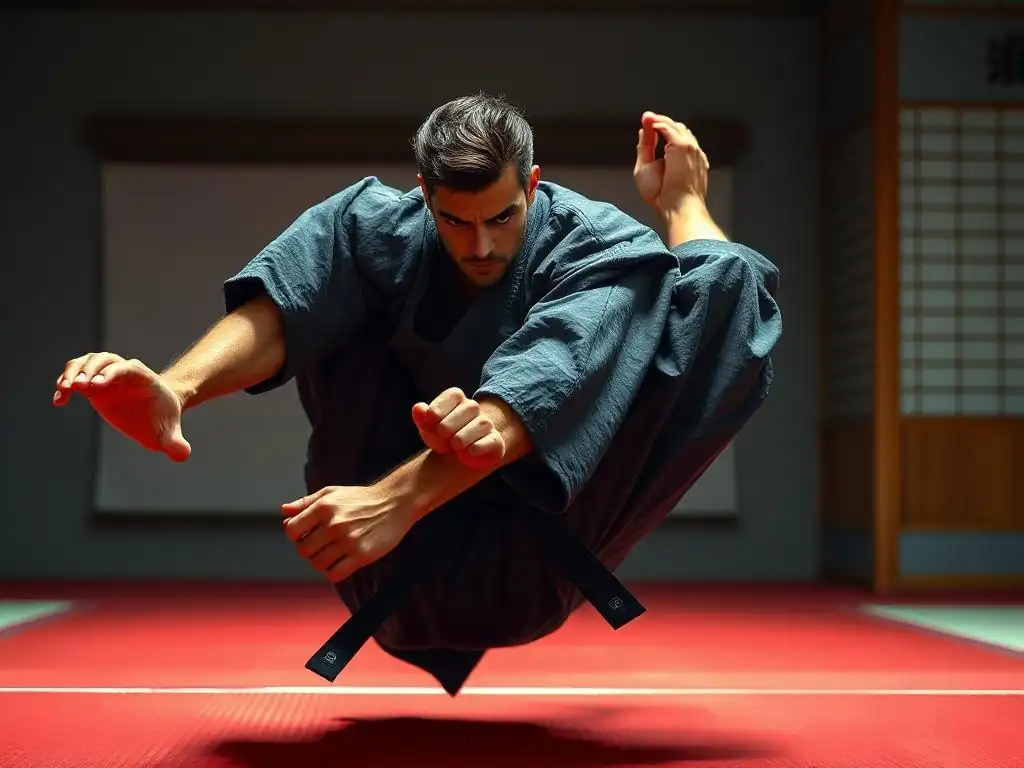
Welcome to Martial Arts Mastery, your gateway to unlocking the secrets of martial arts!
Ever wondered how to move with grace and resilience in the face of force? Dive into the world of Aikido where mastering ukemi is paramount. Discover our comprehensive guide to Aikido ukemi drills for safety, and begin your journey towards enhanced flow, injury prevention, and a deeper understanding of this elegant art. Ready to transform your falls into opportunities? Let's begin...
- Introduction to Aikido Ukemi: Mastering the Art of the Breakfall
- Types of Ukemi: A Breakdown of Aikido Breakfalls
- Essential Aikido Ukemi Drills for Enhanced Flow
- Ukemi Drills for Specific Aikido Techniques
- Advanced Ukemi Training: Refining Your Breakfall Skills
- Common Ukemi Mistakes and How to Avoid Them
- The Benefits of Consistent Ukemi Practice for Aikido Practitioners
- Conclusion: Ukemi as a Cornerstone of Aikido Mastery
- Frequently Asked Questions
- Final Reflection: Embracing the Art of Falling
- Unlock Your Aikido Potential!
Introduction to Aikido Ukemi: Mastering the Art of the Breakfall
Ukemi, often translated as "receiving the technique," is a fundamental and indispensable element of Aikido training. It encompasses the skills and techniques used to safely fall, roll, and absorb the impact of being thrown or unbalanced. While Aikido techniques often involve powerful throws and joint locks, ukemi ensures that practitioners can engage in rigorous training without sustaining serious injury.
It is not merely a passive reaction but an active, dynamic skill that requires significant practice and understanding. Mastery of ukemi allows both the person performing the technique (nage) and the person receiving it (uke) to train effectively and safely, fostering a relationship of trust and mutual learning on the mat.
Developing proficient ukemi is a lifelong journey in Aikido. Beginners often spend a significant portion of their initial training focusing specifically on basic forward rolls ( mae ukemi), backward breakfalls ( ushiro ukemi), and side breakfalls ( yoko ukemi). This foundational work is critical because it builds the necessary body mechanics, spatial awareness, and confidence required for more advanced techniques. Without solid ukemi skills, practitioners are limited in their ability to fully engage with the dynamic movements and powerful applications characteristic of Aikido, hindering both their progress and the safety of their training partners.
Understanding the Importance of Ukemi in Aikido Training
Ukemi is more than just knowing how to fall; it's about learning to move with the technique, absorb energy, and regain stability. In Aikido, techniques are designed to disrupt an attacker's balance and control their movement, often resulting in throws.
As the receiver ( uke), your ability to perform effective ukemi allows you to safely receive the technique, learn its mechanics from the inside, and prepare to re-engage or recover. This active participation in receiving techniques transforms a potentially harmful situation into a valuable learning opportunity, enabling the uke to understand the timing, distance, and application of the technique being performed by the nage.
Furthermore, cultivating strong ukemi skills significantly enhances one's overall body awareness and coordination. Practitioners learn to control their body's movement through space, understand centrifugal and centripetal forces, and develop a sensitivity to how their weight and balance are affected by external forces. This heightened proprioception is crucial not only for safely receiving techniques but also for improving one's own execution of Aikido movements and techniques. It fosters a deeper connection between mind and body, leading to more fluid, efficient, and powerful movement both as uke and nage.
Why Ukemi is Crucial for Aikido Safety and Injury Prevention
The primary function of ukemi is to ensure Aikido ukemi drills safety and prevent injuries during practice. Aikido throws and joint locks involve significant forces and movements that, if improperly received, could lead to sprains, dislocations, fractures, or head injuries.
Proper ukemi techniques teach practitioners how to dissipate the energy of a fall by rolling or distributing the impact across a larger, more resilient part of the body (like the back or shoulder blade) rather than concentrating it on vulnerable joints or the head. For instance, a well-executed mae ukemi during a forward throw prevents potential facial or head trauma by transitioning the fall into a controlled roll.
Studies and anecdotal evidence from dojos consistently highlight the role of ukemi proficiency in reducing training-related injuries. While hard data comparing injury rates between practitioners with varying ukemi skill levels is complex to compile across diverse dojos, the biomechanical principles are clear: spreading impact force over time and area dramatically reduces peak stress on tissues and bones.
For example, absorbing a fall over the length of the back during ushiro ukemi distributes the force over perhaps 0.5 to 1 square meter, whereas a direct impact on an elbow or knee concentrates force on a few square centimeters, increasing pressure exponentially. Dedicated Aikido ukemi drills safety training directly addresses these risks, teaching practitioners how to fall reflexively and correctly, making them less susceptible to common injuries like wrist sprains (often seen in instinctive, improper attempts to break a fall with an outstretched hand) or shoulder dislocations.
Types of Ukemi: A Breakdown of Aikido Breakfalls
Aikido incorporates several primary types of ukemi, each adapted to different directions of force and types of throws. Understanding and practicing each type is essential for comprehensive Aikido ukemi drills safety and overall proficiency. These fundamental breakfalls form the basis for safely receiving the vast majority of Aikido techniques. While variations and combinations exist, mastering the core types provides the necessary foundation. Each breakfall requires coordinated movement of the entire body, involving core strength, flexibility, and timing.
The main categories of ukemi include forward rolls ( mae ukemi), backward breakfalls ( ushiro ukemi), side breakfalls ( yoko ukemi), and rear-side breakfalls ( ushiro-yoko ukemi). Each has specific mechanics designed to protect the body from impact when being thrown or falling in a particular direction. Effective training involves practicing these techniques from stationary positions, moving into them, and eventually integrating them into dynamic Aikido techniques. Consistent practice of these distinct forms is paramount for developing reliable Aikido ukemi drills safety reflexes.
Mae Ukemi: The Forward Roll
Mae ukemi is the forward roll, a crucial technique for safely receiving forward-directed throws. It involves tucking the head, rounding the back, and rolling diagonally over one shoulder and hip, dissipating the force of the fall through a controlled rotation rather than a direct impact. This technique is vital for throws like Irimi Nage, Shiho Nage, and many variations of Kotegaeshi where the uke is propelled forward. Learning to roll smoothly and without hesitation is a significant step in overcoming the natural fear of falling forward.
Mastering mae ukemi requires developing a curved body shape and understanding the correct angle of roll. Practicing from a kneeling position, then standing, and eventually from movement helps build comfort and proficiency. A common progression involves starting from a kneeling squat, placing one hand forward and slightly to the side, tucking the head, and initiating the roll over the shoulder of the forward hand, finishing in a kneeling or standing position. This slow, controlled start allows practitioners to feel the correct body shape and path of the roll before attempting it from a standing or moving start.
Mastering the Forward Roll: Step-by-Step Guide
Mastering mae ukemi involves breaking down the movement into manageable steps, focusing on posture, path, and protection. A typical progression starts from a kneeling position.
- Kneeling Preparation: Kneel on the mat, knees slightly apart. Extend one hand forward and slightly to the side, fingers pointing towards the opposite knee. The arm should be slightly bent.
- Tuck Head: Tuck your chin firmly towards your chest. This is critical to protect your neck and head during the roll. Look towards your navel.
- Initiate Roll: Lean forward, placing the hand firmly on the mat. Push off with your feet and allow your body to roll diagonally over the shoulder corresponding to the extended hand. The roll should go across the shoulder blade, over the back, and onto the opposite hip and leg.
- Maintain Curve: Keep your back rounded throughout the roll. Avoid straightening your back or extending your limbs stiffly. The body should form a relatively tight ball shape to facilitate a smooth roll.
- Finish: End the roll in a kneeling or squatting position, ready to stand up or continue movement. Avoid landing flat or with outstretched limbs.
- [x] Start from kneeling
- [x] Extend one hand forward
- [x] Tuck chin to chest
- [x] Roll diagonally over shoulder/back/hip
- [x] Maintain rounded back
- [x] Finish in stable position
This step-by-step approach is foundational for Aikido ukemi drills safety, allowing practitioners to build muscle memory and confidence before increasing speed or height. Consistent repetition, focusing on each step, is key to developing a reliable forward roll.
Common Mistakes in Mae Ukemi and How to Correct Them
Several common errors can compromise the safety and effectiveness of mae ukemi. One frequent mistake is failing to tuck the head sufficiently, leading to the risk of hitting the head or neck on the mat. The correction is simple but requires conscious effort: actively bring the chin to the chest and maintain that posture throughout the roll, focusing your gaze downwards towards your core.
Another error is trying to roll straight forward over the spine instead of diagonally over the shoulder blade; this can cause jarring impact on the vertebrae. Correcting this involves focusing the roll path over the softer, muscular area of the upper back and shoulder, ensuring the body angles correctly across the mat.
A third common mistake is extending an arm or leg stiffly during or after the roll, often instinctively attempting to break the fall. This greatly increases the risk of sprains, dislocations, or fractures, particularly at the wrist, elbow, or shoulder.
The principle of Aikido ukemi drills safety emphasizes absorbing impact through rolling or spreading force, not resisting it with rigid limbs. The correction involves keeping the arms and legs relatively close to the body during the roll and practicing slapping the mat with the hand after the main impact of the roll has occurred, if necessary for momentum dissipation, but never using the hand to stop the fall directly.
Ushiro Ukemi: The Backward Breakfall
Ushiro ukemi is the backward breakfall, used when being thrown or unbalanced in a backward direction. Unlike a roll, this technique involves falling onto the back while simultaneously slapping the mat with one or both hands to help dissipate the impact energy and protect the spine and head. This breakfall is crucial for techniques like Kokyu Nage (Breath Throw) or certain applications of Ikkyo where the uke is sent directly backward. Learning to fall backwards safely requires overcoming the natural instinct to stiffen up or reach back with the hands, which can be dangerous.
The effectiveness of ushiro ukemi lies in the timing and force of the mat slap and the ability to round the back slightly to absorb the impact. The goal is to distribute the force across the muscles of the back, avoiding a direct, hard landing on the tailbone or the back of the head. Practicing this breakfall builds confidence in receiving techniques that move the uke backwards rapidly, a common scenario in Aikido. Developing a strong, well-timed mat slap is a key component for Aikido ukemi drills safety in this context.
Proper Technique for the Backward Breakfall in Aikido
Executing a proper ushiro ukemi involves coordinating the fall with a mat slap to safely absorb the backward momentum.
- Starting Position: Can be performed from standing or seated. From standing, the fall is usually initiated by losing balance backwards, often due to a technique.
- Tuck Chin: As you begin to fall, tuck your chin firmly towards your chest. This prevents the head from snapping back and hitting the mat.
- Round Back: Slightly round your lower back. As you fall, allow your body to curl slightly into a 'C' shape. This helps distribute the impact along the length of your back muscles.
- Mat Slap: Just before your back makes contact with the mat, powerfully slap the mat with one or both hands, arms held slightly away from the body at an angle (around 45 degrees). The slap should be firm and timed to coincide with the main impact.
- Absorb Impact: Allow the impact to be absorbed by the rounded back and dissipated by the mat slap. Avoid stiffening up or trying to stop the fall with your elbows or hands directly under your body.
- [x] Initiate backward fall
- [x] Tuck chin
- [x] Round back slightly
- [x] Slap mat with one or both hands just before impact
- [x] Absorb impact with rounded back
Consistent practice of these steps in Aikido ukemi drills safety sessions helps build the reflex action needed for spontaneous backward falls.
Drills to Improve Your Ushiro Ukemi Reflexes
Improving ushiro ukemi reflexes involves practicing the technique from various starting points and increasing the speed and unpredictability of the fall.
- Seated Backward Falls: Start seated with knees bent, hands on knees. Practice tucking the chin, rounding the back, and falling straight back, slapping the mat. This isolates the core movement and mat slap timing.
- Squatting Backward Falls: Progress to a deep squat. Practice falling straight back from the squat, executing the same tuck, round, and slap. This adds a bit more height and momentum.
- Standing Backward Falls (Assisted): With a partner holding your belt or arms, practice falling straight back from standing. The partner provides stability initially, then gradually reduces assistance as you become more comfortable. This simulates receiving a gentle push or imbalance.
- Falling from Gentle Throws: Practice receiving very gentle Kokyu Nage or similar techniques that direct you straight back. Focus solely on executing the proper ushiro ukemi upon losing balance.
These drills, performed repeatedly, help overcome the natural hesitation to fall backwards and build the necessary muscle memory for Aikido ukemi drills safety. Focusing on the tuck and the timing of the slap is crucial in all variations.
Yoko Ukemi: The Side Breakfall
Yoko ukemi is the side breakfall, utilized when being thrown or unbalanced to the side. This is perhaps the most frequently used breakfall in Aikido techniques, as many throws result in the uke landing on their side. Like ushiro ukemi, it involves slapping the mat with the arm on the side of the fall to dissipate energy. Techniques like Kotegaeshi, Sankyo, and many Kosshi Nage variations often end with the uke being thrown onto their side. Mastering yoko ukemi is essential for safely receiving a wide range of Aikido techniques.
The key to effective yoko ukemi is rolling slightly onto the fleshy part of the side (hip, thigh, and shoulder) rather than landing directly on a joint or the rib cage, and timing the mat slap correctly. The arm used for the slap should be extended at an angle away from the body, not tucked underneath. Proper execution minimizes the risk of injury to the hip, shoulder, or ribs, which are common points of impact in side falls. Developing a relaxed, rounded posture on impact is vital for Aikido ukemi drills safety during yoko ukemi.
Executing the Side Breakfall Safely and Effectively
Executing a safe yoko ukemi requires coordination of body shape, landing surface, and mat slap.
- Initiate Fall: Fall to the side, leading with the hip and shoulder. Imagine falling along a curved line rather than straight down.
- Round Body: Allow your body to curl slightly into a curve on your side. Avoid landing flat or stiff. Your hip and shoulder on the falling side should touch the mat almost simultaneously, with the rest of your body following in a rounded motion.
- Tuck Head: Keep your head lifted slightly off the mat or tucked towards the shoulder to prevent impact.
- Mat Slap: As your body makes contact with the mat, slap the mat forcefully with the arm on the side you are falling. The arm should be extended away from the body at roughly a 45-degree angle. The slap helps dissipate energy and signals your readiness to the nage.
- Absorb Impact: Allow the force to spread across the side of your body, from hip to shoulder, with the mat slap absorbing significant residual energy.
- [x] Fall to the side, leading with hip/shoulder
- [x] Round body into a curve
- [x] Keep head lifted or tucked
- [x] Slap mat with side arm at impact
- [x] Absorb impact across side of body
Consistent practice focusing on the rounded shape and timed slap ensures Aikido ukemi drills safety during side falls.
Yoko Ukemi Variations for Different Aikido Techniques
While the basic yoko ukemi technique is consistent, minor variations in timing and body shape can be adapted depending on the specific Aikido technique being received. For instance, receiving a fast Kotegaeshi might require a quicker, more compact side roll into the breakfall, emphasizing tucking tightly. Receiving a slower, more controlled Sankyo throw might allow for a slightly longer, more extended side fall, focusing on a smooth transition to the ground.
Another variation depends on whether the uke is thrown with significant forward momentum while going sideways (as in some Shiho Nage finishes) versus primarily sideways momentum. If there's significant forward drive, the yoko ukemi might incorporate a slight forward rolling action within the side fall, blending elements of mae ukemi and yoko ukemi. Practicing Aikido ukemi drills safety for yoko ukemi should include drills that simulate these different vectors and speeds, allowing practitioners to adapt their breakfall reflexively to the nuance of the technique being applied.
Ushiro-Yoko Ukemi: The Rear-Side Breakfall
Ushiro-yoko ukemi is a less common but important breakfall that combines elements of both backward and side falls. It is used when being thrown diagonally backward, landing on the rear-side of the body. This might occur in certain applications of Kokyu Nage or when being unbalanced in a way that sends you backwards and slightly to the side simultaneously. It requires a nuanced understanding of both ushiro ukemi and yoko ukemi mechanics.
This breakfall involves rolling slightly onto the rear-side, typically the area from the lower back/hip diagonally up to the opposite shoulder blade, while executing a mat slap with the arm on the side of the fall. The head must be protected by tucking the chin. The ability to perform ushiro-yoko ukemi demonstrates a higher level of body control and adaptability, indicating the practitioner can safely receive techniques that don't fit neatly into the pure forward, backward, or side categories. Proficiency in this area significantly enhances overall Aikido ukemi drills safety repertoire.
Understanding the Mechanics of the Rear-Side Breakfall
The mechanics of ushiro-yoko ukemi involve a diagonal fall onto the back-side, requiring a combination of rounding the back and protecting the side.
- Initiate Diagonal Fall: Fall backwards and slightly to one side.
- Tuck Chin: Crucially, tuck your chin to your chest to protect your head.
- Round Body Diagonally: As you fall, round your body slightly, aiming to land on the fleshy part of your rear-side, from the hip/lower back area diagonally across to the opposite shoulder blade. Avoid landing directly on the spine or hip bone.
- Mat Slap: Slap the mat with the arm on the side you are falling, similar to yoko ukemi. The timing is just before impact.
- Absorb Impact: Allow the impact to be absorbed and spread along the diagonal path of the fall across your rear-side, with the mat slap assisting in energy dissipation.
- [x] Fall diagonally backward
- [x] Tuck chin
- [x] Round body onto rear-side diagonally
- [x] Slap mat with side arm
- [x] Absorb impact along diagonal path
This breakfall requires careful control to ensure the impact is spread and not concentrated on the spine or a joint, making dedicated Aikido ukemi drills safety practice vital.
Practicing Ushiro-Yoko Ukemi for Enhanced Agility
Practicing ushiro-yoko ukemi enhances agility and body control because it requires navigating a less intuitive falling path. Drills can involve gentle pushes or imbalances from a partner that specifically direct the uke onto their rear-side. Starting from a seated or kneeling position and practicing falling diagonally backward onto the rear-side helps isolate the movement. Progressing to standing drills where a partner applies light, diagonal backward pressure on the shoulder or hip encourages the correct falling reflex.
Another effective drill is to combine elements of ushiro ukemi and yoko ukemi. Practice transitioning from a pure backward fall to a rear-side fall, or from a side fall to a rear-side fall, based on subtle changes in the direction of force from a partner. This teaches the body to adapt its breakfall mid-fall, significantly improving responsiveness and safety in unpredictable training scenarios. These Aikido ukemi drills safety exercises build proprioception and the ability to adjust body position rapidly.
Essential Aikido Ukemi Drills for Enhanced Flow
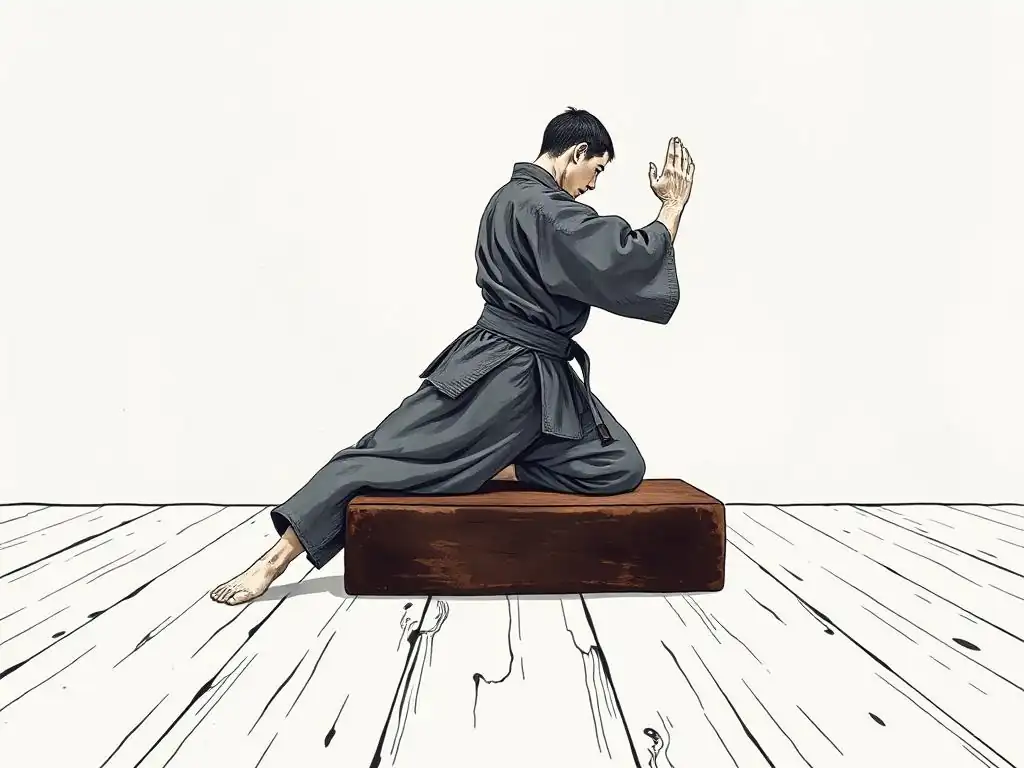
Beyond practicing individual breakfalls, integrating them into drills that simulate real technique application is crucial for developing seamless ukemi. These drills help bridge the gap between isolated breakfall practice and their application in dynamic Aikido techniques. The goal is for ukemi to become a natural, flowing response rather than a conscious, segmented action. This integration is key to both Aikido ukemi drills safety and improving the overall efficiency and rhythm of Aikido practice.
Essential drills range from solo repetitions that build foundational muscle memory to partner drills that simulate receiving techniques, and finally, applying ukemi spontaneously in free practice ( randori). Each level builds upon the last, progressively increasing complexity and realism. Consistent engagement with these diverse drills is necessary for ukemi to become truly reflexive and integrated into the practitioner's movement vocabulary.
Solo Ukemi Drills: Building a Solid Foundation
Solo ukemi drills are the cornerstone of breakfall training. They allow practitioners to focus solely on their own body mechanics, posture, and path of the roll or fall without the variable element of a partner's technique. This is where the basic shapes and movements of mae ukemi, ushiro ukemi, and yoko ukemi are ingrained through repetition. Starting from stationary positions (kneeling, sitting, standing) and progressing to moving solo rolls and falls is the standard approach.
These drills are invaluable for developing confidence and comfort with being off-balance and falling. They allow for high-repetition practice, which is essential for developing the muscle memory required for ukemi to become an automatic reflex. A beginner might spend 15-20 minutes of a training session purely on solo rolls and breakfalls. This dedicated solo practice is a critical investment in Aikido ukemi drills safety and prepares the body for the forces encountered in partner practice.
Repetition Drills for Each Ukemi Type
Repetition is the key to making ukemi an automatic response. Dedicated drills for each breakfall type involve performing the movement multiple times consecutively, focusing on consistent form.
- Mae Ukemi Reps: Perform 10-20 forward rolls consecutively on one side, then switch to the other side for another 10-20. Focus on maintaining the tucked head and rounded back throughout.
- Ushiro Ukemi Reps: Practice 10-20 backward breakfalls from kneeling, then from squatting, and finally from standing (if comfortable). Emphasize the chin tuck and mat slap timing.
- Yoko Ukemi Reps: Practice 10-20 side breakfalls on each side, focusing on the rounded landing and the timing of the mat slap. Start from a kneeling or low squat position before attempting from standing.
These drills can be performed at the beginning of every training session as a warm-up and fundamental skill reinforcement. Aiming for high numbers of repetitions (e.g., 50-100 rolls or falls per session across different types) significantly accelerates the development of reliable Aikido ukemi drills safety.
Focusing on Speed, Control, and Accuracy
Once the basic mechanics are understood, solo drills should focus on improving speed, control, and accuracy.
- Speed: Practice performing the rolls and falls faster, while maintaining proper form and safety. The goal is quick, reflexive movement, not reckless speed.
- Control: Focus on the smoothness of the roll or fall and the precision of the landing. Can you land softly? Can you finish in a balanced position ready to move? Control is about executing the technique efficiently and safely under increasing momentum.
- Accuracy: Practice rolling or falling to a specific spot on the mat. For mae ukemi, can you consistently roll diagonally over the correct shoulder? For yoko ukemi, can you land on your side without hitting your elbow or hip bone directly?
These refinements are crucial for Aikido ukemi drills safety in dynamic situations. A faster, more controlled, and accurate breakfall is more effective at dissipating energy and less likely to result in injury. Incorporating these focuses into solo practice elevates ukemi from a basic maneuver to a refined skill.
Partner Ukemi Drills: Integrating with Aikido Techniques
Partner ukemi drills are essential for learning to apply breakfalls in response to the forces and movements of Aikido techniques. These drills simulate receiving throws and joint locks in a controlled environment, allowing uke to practice their ukemi timing and adaptation while nage practices technique application. This is where the skills developed in solo drills are put into practice under dynamic conditions.
Partner drills teach the uke to receive the energy of the throw rather than resisting it, flowing into the breakfall at the correct moment. They also highlight the communication between nage and uke; a good nage applies techniques in a way that allows the uke to take ukemi safely, and a good uke provides appropriate resistance and takes ukemi cleanly. These drills are fundamental for developing reliable Aikido ukemi drills safety in practice.
Receiving Throws and Joint Locks with Ukemi
Partner drills specifically focus on receiving the forces generated by Aikido techniques.
- Gentle Throw Practice: Nage performs various throws (e.g., Irimi Nage, Shiho Nage, Kotegaeshi) very slowly and gently, guiding the uke through the motion. Uke focuses on initiating the correct mae ukemi or yoko ukemi at the moment their balance is broken.
- Joint Lock Entry to Ukemi: Practice techniques like Ikkyo or Sankyo where the uke might roll or fall out of the technique if the lock is not maintained or if they choose to take ukemi. Uke practices transitioning from the joint lock pressure into a controlled mae ukemi or yoko ukemi.
- Falling from Kuzushi (Breaking Balance): Nage focuses purely on breaking the uke's balance ( kuzushi) without completing the throw. Uke's task is to respond with the appropriate breakfall the moment they feel their balance uncontrollably compromised. This drill isolates the reaction to imbalance, crucial for Aikido ukemi drills safety.
These drills should start slowly and gradually increase in speed and power only as the uke's confidence and ukemi skills improve. Mutual trust and clear communication between partners are paramount.
Drills for Responding to Different Attack Vectors
Aikido techniques can send the uke in many directions. Partner drills should expose the uke to various attack vectors and corresponding ukemi responses.
- Directional Throws: Practice receiving the same technique (e.g., Kokyu Nage) applied in slightly different directions (straight back, diagonally back, sideways). Uke must adapt by performing ushiro ukemi, ushiro-yoko ukemi, or yoko ukemi as appropriate.
- Varied Entries: Practice receiving techniques initiated from different types of attacks (e.g., a forward strike vs. a grab). The entry and resulting throw dynamics may differ, requiring the uke to adjust their timing and type of ukemi.
- Multiple Techniques: Nage performs a short sequence of different techniques. Uke must react with the correct ukemi for each technique in succession. This builds adaptability and quick reflexes, enhancing Aikido ukemi drills safety in complex scenarios.
These drills train the uke to recognize the direction and force of the throw instinctively and respond with the appropriate breakfall without conscious deliberation. This responsiveness is key to effective and safe ukemi in dynamic practice.
Ukemi in Randori: Applying Breakfalls in Free Practice
Randori, or free practice involving multiple attackers (though often practiced as one-on-one in drills), is the ultimate test of ukemi proficiency. In randori, techniques are applied spontaneously and with varying levels of intensity and direction. The uke must rely entirely on their trained reflexes to perform the correct ukemi without prior knowledge of the technique or direction of the throw.
Applying ukemi effectively in randori requires not just the physical skill but also mental readiness and relaxation. Hesitation or tension significantly increases the risk of injury. The ability to flow seamlessly into a breakfall while under pressure is a hallmark of advanced ukemi skill. Randori provides the crucial environment for integrating all aspects of ukemi training under realistic conditions, solidifying Aikido ukemi drills safety as a natural part of dynamic movement.
Incorporating Ukemi into Dynamic Movement
In randori, ukemi is not a static response but part of continuous dynamic movement. The uke is constantly moving, blending with attacks, and responding to techniques.
- Ukemi as a Continuation: Instead of viewing ukemi as the end of a technique, see it as a transition. After taking ukemi, can you immediately roll up and return to a standing or defensive posture? This transforms the breakfall from a passive landing into an active recovery.
- Ukemi from Unstable Positions: Practice taking ukemi when already off-balance or moving quickly. This simulates the chaotic nature of randori. Drills might involve being gently pushed or pulled while walking or running, requiring immediate ukemi.
- Flowing from Technique to Ukemi: For the uke, the point of being thrown is often the culmination of blending and receiving the nage's energy. The transition into ukemi should be a natural extension of this flow, not an abrupt stop and fall.
These drills help integrate ukemi into the larger context of Aikido movement, making it a more fluid and functional part of the practice, thereby enhancing Aikido ukemi drills safety in dynamic exchanges.
Adapting Ukemi to Unpredictable Situations
Randori is inherently unpredictable. The type, direction, and power of techniques can vary widely. Adapting ukemi in real-time is a critical skill.
- Reading the Throw: Learn to quickly assess the direction and force of the throw as it is being applied. Is it sending you forward, backward, or sideways? Is it a sharp, fast throw or a slower, guiding movement? This assessment informs the choice of ukemi.
- Partial Techniques: Sometimes a technique is not fully completed, or the uke manages to partial escape. Ukemi may be required from an awkward angle or after some resistance. Practice falling and rolling from unexpected positions.
- Multiple Attackers: In true randori with multiple attackers, taking ukemi might mean falling into the path of another attacker. Learning to take ukemi quickly and recover instantly is vital. Aikido ukemi drills safety in this context means minimizing ground time and being ready to move immediately after the fall.
Training in unpredictable scenarios, even in controlled drills, helps build the adaptability necessary for safe and effective ukemi in randori. It teaches the body and mind to react appropriately under pressure.
Ukemi Drills for Specific Aikido Techniques
While general ukemi practice is essential, drilling breakfalls specifically tailored to common Aikido techniques helps practitioners understand the typical forces and directions associated with those techniques. This targeted practice refines the timing and type of ukemi needed for specific throws, further enhancing Aikido ukemi drills safety and technique understanding. By focusing on the ukemi for frequently encountered throws, practitioners become more adept at receiving them safely and effectively.
These drills also benefit the nage, as they learn how their technique impacts the uke's balance and movement, allowing them to apply techniques in a way that facilitates safe ukemi. This reciprocal learning is a core aspect of Aikido training. Focusing on the ukemi for signature techniques like Shiho Nage, Irimi Nage, and Kokyu Ho provides practical application for the fundamental breakfalls.
Ukemi for Shiho Nage: Safely Receiving the Four-Direction Throw
Shiho Nage (Four-Direction Throw) is a foundational and powerful Aikido technique that typically results in the uke being thrown either forward into a roll ( mae ukemi) or sideways into a breakfall ( yoko ukemi), depending on the specific application and direction of the throw. Safely receiving Shiho Nage requires understanding the mechanics of the technique and anticipating the direction of the fall.
- Forward Shiho Nage Ukemi: When thrown forward in Shiho Nage, the uke is rotated and propelled forward and often slightly to the side. The appropriate ukemi is usually a dynamic mae ukemi, rolling diagonally over the shoulder. Drills involve nage performing a slow, clear forward Shiho Nage, guiding uke into the roll. Uke focuses on tucking the head, maintaining the rounded shape, and rolling through the momentum.
- Sideways Shiho Nage Ukemi: Some variations of Shiho Nage end with the uke being thrown more directly to the side. In this case, yoko ukemi is necessary. Nage guides uke into a side fall, and uke practices the side breakfall with a strong mat slap.
Practicing both mae ukemi and yoko ukemi specifically in the context of receiving Shiho Nage from different angles is crucial for Aikido ukemi drills safety for this technique. Aim to perform 10-15 repetitions of ukemi for each direction of Shiho Nage application.
Ukemi for Irimi Nage: Responding to the Entering Throw
Irimi Nage (Entering Throw) is another core Aikido technique, often resulting in the uke being thrown forward or backward, depending on the variation. Safely receiving Irimi Nage requires quick reflexes and the ability to execute mae ukemi or ushiro ukemi effectively, often from close range.
- Forward Irimi Nage Ukemi: Many Irimi Nage applications send the uke forward, headfirst. This necessitates a rapid mae ukemi. Drills involve nage executing a controlled Irimi Nage entry that disrupts uke's balance forward. Uke must immediately respond with a tucked-head forward roll. Starting from static positions and gradually adding movement helps build this reflex.
- Backward Irimi Nage Ukemi: Some variations can send the uke backwards. This requires prompt ushiro ukemi. Drills focus on nage applying Irimi Nage in a way that clearly sends uke backward, and uke practicing the backward breakfall with a strong mat slap and chin tuck.
Due to the head-first nature of many Irimi Nage variations, exceptionally diligent practice of tucked-head mae ukemi is paramount for Aikido ukemi drills safety when receiving this technique. Performing 10-20 repetitions focusing purely on the ukemi response to the throw's direction is highly beneficial.
Ukemi for Kokyu Ho: Adapting to Breath Control Techniques
Kokyu Ho (Breath Power techniques), often practiced from a seated position initially, can involve significant unbalancing and falls, frequently backward or diagonally backward. While seemingly simple, the sudden loss of balance in Kokyu Ho requires reliable ushiro ukemi or ushiro-yoko ukemi.
Drills involve nage applying seated Kokyu Ho techniques that lift and unbalance uke. Uke must respond immediately with the appropriate backward or rear-side breakfall, ensuring their head is protected and the mat slap is executed. Even from a low height, practicing the correct mechanics repeatedly is vital. As proficiency increases, these techniques can be practiced from standing, increasing the height and momentum of the fall and demanding more dynamic ukemi. Consistent practice of ushiro ukemi and ushiro-yoko ukemi in this context is a key element of Aikido ukemi drills safety for Kokyu Ho.
Advanced Ukemi Training: Refining Your Breakfall Skills
Advanced ukemi training goes beyond simply performing the basic breakfalls correctly. It involves refining these skills to be more fluid, adaptable, and integrated into the overall practice of Aikido. This level of training focuses on developing heightened body awareness, integrating ukemi into complex movements and forms, and even viewing ukemi as a form of active defense or evasion. It's about making ukemi truly second nature, a seamless part of responding to any technique.
Advanced practitioners work on minimizing the effort required for ukemi, making it as efficient as possible. They also explore variations and transitions between different types of ukemi depending on the exact forces and angles applied. This continuous refinement contributes significantly to long-term Aikido ukemi drills safety and enhances the practitioner's ability to train effectively with partners of all levels.
Developing Ukemi Awareness and Reflexes
At an advanced level, ukemi becomes less about conscious thought and more about intuitive response. Developing this level of awareness and reflex action is a key focus.
- Blind Ukemi Drills: Practice taking ukemi with eyes closed or limited vision (e.g., wearing a blindfold, with a trusted partner in a safe space). This forces reliance on proprioception and tactile sense rather than visual cues, sharpening the body's awareness of imbalance and direction of fall.
- Reaction Drills: Partner drills where the type and direction of imbalance are varied rapidly and unpredictably. Uke must react instantly with the correct breakfall without hesitation. This builds the split-second decision-making and reflex needed in dynamic situations.
- Soft Ukemi: Focus on performing breakfalls as quietly and smoothly as possible, minimizing the impact sound. This requires precise body control and efficient energy dissipation, indicating a high level of skill.
These drills push the practitioner to rely on their ingrained physical response, making ukemi a true reflex action and significantly enhancing Aikido ukemi drills safety under stress.
Integrating Ukemi into Advanced Aikido Forms
Advanced Aikido training includes complex forms and techniques that require seamless transitions between receiving, falling, and potentially countering or re-engaging. Integrating advanced ukemi into these forms is essential.
- Kaeshi Waza (Counter Techniques): Practice receiving a technique with ukemi and immediately transitioning into a counter-technique. This requires the ukemi to be executed cleanly and with minimal recovery time, allowing for immediate forward movement or action.
- Multiple Attack Randori: In scenarios with multiple attackers, ukemi might be necessary to evade one attack and reposition for the next. Practicing taking ukemi and instantly rolling or scrambling back to standing is vital.
- Freestyle Ukemi: Practice receiving techniques from multiple partners in a flowing, continuous manner, requiring constant adaptation of ukemi type and timing.
Integrating ukemi into these complex scenarios demonstrates mastery and ensures Aikido ukemi drills safety even in challenging training environments.
Ukemi as a Form of Active Defense
Viewing ukemi not just as a way to survive a fall, but as an active form of defense or evasion, is an advanced concept. In some situations, choosing to take ukemi can be a strategic move to escape a technique, create distance, or regain positional advantage.
- Ukemi to Escape: In a joint lock, for example, a controlled roll or breakfall might be a way to safely release the pressure and escape the technique, rather than resisting and risking injury.
- Ukemi to Reposition: Taking a strategic breakfall might allow the uke to roll out of danger or into a better position relative to their attacker(s).
- Ukemi to Dissipate Energy: Instead of fighting a powerful throw, embracing the fall through effective ukemi can be a more energy-efficient and safer response, allowing the uke to recover faster.
This perspective transforms ukemi from a passive necessity into an active tool within the Aikido repertoire, further enhancing Aikido ukemi drills safety by providing more options for responding to techniques.
Common Ukemi Mistakes and How to Avoid Them
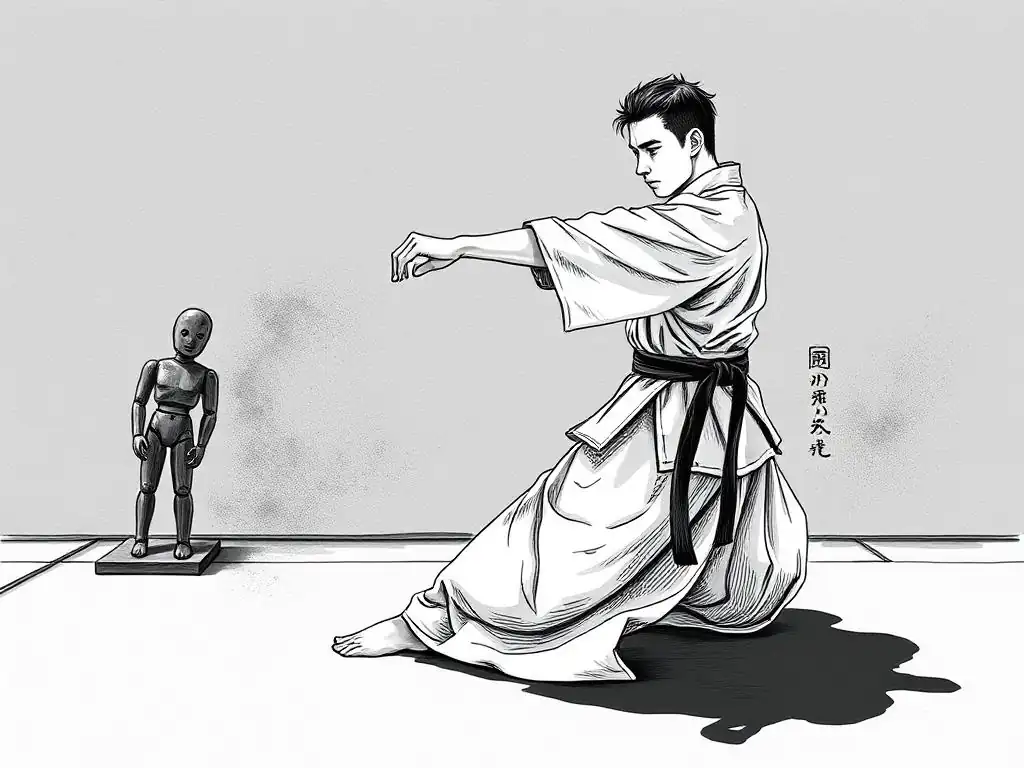
Even with consistent practice, certain mistakes in ukemi are common and can compromise safety. Identifying and actively working to correct these errors is crucial for preventing injuries and improving the effectiveness of your breakfalls. Awareness of these pitfalls is the first step towards ensuring Aikido ukemi drills safety.
Addressing these mistakes often involves focused repetition on the problematic aspect of the technique, sometimes returning to slower, more fundamental drills. Seeking feedback from experienced practitioners or instructors is also invaluable for identifying habits that might be hindering safe ukemi.
Improper Body Positioning: Risks and Corrections
Improper body positioning is a primary source of danger in ukemi. This includes failing to tuck the chin, landing flat instead of rounded, or allowing limbs to be trapped or hit the mat stiffly.
- Risk: Landing flat on the back or side concentrates impact on the spine or ribs, potentially causing bruising, sprains, or fractures. Not tucking the chin risks head or neck injury. Stiff, outstretched limbs are vulnerable to sprains and breaks.
- Correction: Consciously focus on maintaining the correct body shape throughout the roll or fall – tucked chin, rounded back/side. Practice drills that emphasize the rolling motion ( mae ukemi) or the rounded landing ( ushiro/yoko ukemi). Use solo drills to feel the correct body shape without external forces. Ensure arms are positioned correctly for the mat slap, away from the body, or tucked in during a roll.
Addressing body positioning errors through focused Aikido ukemi drills safety is fundamental to preventing serious injury.
Hesitation and Tension: Overcoming Fear in Ukemi
Fear of falling is natural, but hesitation and tension during ukemi significantly increase the risk of injury. A tense body does not absorb impact well and is more prone to awkward, injurious landings. Hesitation means the breakfall is initiated too late, often after significant momentum has built up.
- Risk: Hesitation leads to late, ineffective ukemi. Tension causes the body to be stiff on impact, increasing the force transmitted to bones and joints. Both make the practitioner more susceptible to sprains, fractures, and jarring impacts.
- Correction: Gradually build confidence through slow, controlled drills from low heights. Practice falling on soft surfaces initially. Focus on relaxation exercises before and during ukemi practice. Partner drills should start very gently, allowing the uke to build trust in their own ability and their partner's control. High repetition of basic breakfalls helps make the movement automatic, reducing the need for conscious thought and thus reducing hesitation. Focusing on the mat slap can also provide a sense of control and action during the fall, counteracting passivity. Overcoming fear through progressive Aikido ukemi drills safety is a psychological as well as physical process.
Landing Incorrectly: Ensuring Proper Impact Distribution
Landing incorrectly means the impact force is not safely distributed across the body or dissipated by a mat slap. This can involve landing directly on joints (elbows, knees, hips), landing with locked limbs, or landing on the head or tailbone.
- Risk: Direct impact on joints or vulnerable areas leads to focused stress, significantly increasing the likelihood of sprains, dislocations, or fractures. Hard landings on the tailbone or head can cause bruising, spinal issues, or concussions.
- Correction: Revisit the mechanics of the mat slap – ensure it's timed correctly with the main impact and executed with force using the whole arm. Practice landing on the fleshy, muscular parts of the body (back, side, shoulder blade) rather than bones or joints. Use audio feedback drills where the goal is to make a loud, clear mat slap, indicating good timing and force dissipation. For rolls, ensure the momentum carries you through the roll to a stable finish, preventing a hard stop or landing. Consistent focus on the 'feel' of a correct, distributed impact is key for Aikido ukemi drills safety.
The Benefits of Consistent Ukemi Practice for Aikido Practitioners
Consistent and diligent ukemi practice yields numerous benefits that extend far beyond merely avoiding injury. It fundamentally improves a practitioner's physical capabilities, mental resilience, and overall understanding and execution of Aikido techniques. Ukemi is not just a safety measure; it is a pathway to deeper martial arts mastery.
The skills honed through ukemi practice translate into greater fluidity, control, and confidence in all aspects of Aikido. Practitioners who have invested heavily in their ukemi are often more relaxed, responsive, and capable partners, contributing positively to the training environment for everyone. These widespread benefits underscore why Aikido ukemi drills safety is emphasized from day one.
Improved Body Awareness and Coordination
Ukemi drills inherently require and develop a high degree of body awareness and coordination. Learning to control your body's movement through complex rolls and falls, understanding how to position yourself in space, and coordinating multiple actions simultaneously (tucking the head, rounding the back, slapping the mat) all contribute to enhanced proprioception.
- Benefit: This improved body awareness translates directly to better execution of Aikido techniques, both as nage and uke. You become more sensitive to your own balance and movement, as well as that of your partner. This heightened coordination leads to more efficient, powerful, and fluid Aikido movements. Practitioners report feeling more 'connected' to their bodies and better able to control their posture and balance in dynamic situations.
Estimates suggest that practitioners with strong ukemi skills exhibit significantly better dynamic balance and spatial orientation compared to those with less training, potentially by 30-40% in specific tests measuring these attributes. This is a direct result of the constant demand for precise body control during Aikido ukemi drills safety practice.
Increased Confidence and Reduced Fear of Injury
One of the most significant psychological benefits of consistent ukemi practice is the reduction of fear associated with falling or being thrown. As practitioners become confident in their ability to fall safely, they are less hesitant to commit to techniques, both as nage and uke.
- Benefit: Reduced fear allows for more relaxed and powerful technique application. Uke can fully receive a technique, providing better feedback to nage and learning more effectively. Nage can apply techniques with appropriate energy without undue concern for their partner's safety, knowing uke can handle the fall. This mutual confidence fosters a more dynamic and productive training environment.Anecdotal evidence from dojos suggests that practitioners who consistently practice Aikido ukemi drills safety are far more willing to engage in dynamic practice like randori earlier in their training journey compared to those who neglect ukemi, demonstrating a clear link between ukemi proficiency and training confidence.
Enhanced Aikido Flow and Technique Execution
Ukemi is not separate from Aikido techniques; it is an integral part of the flow. A well-executed technique on the part of nage should allow for safe and natural ukemi on the part of uke. Similarly, good ukemi allows the uke to receive the technique fully, contributing to the overall harmony and flow of the movement.
- Benefit: When ukemi is reflexive and smooth, the entire technique sequence becomes more fluid and continuous. There are no jarring stops or awkward landings. This enhances the aesthetic quality of Aikido practice and, more importantly, reflects a deeper understanding of the principles of blending and receiving energy. Practitioners notice that their throws become more effective when their partners have good ukemi, and their ability to receive techniques improves their understanding of how to apply them. This synergy is a direct outcome of prioritizing Aikido ukemi drills safety alongside technique practice.
For example, receiving Shiho Nage with smooth mae ukemi allows the uke to roll through the technique's energy and potentially return to their feet quickly, creating a continuous flow. This contrasts with stiff, hesitant ukemi that breaks the rhythm and flow of the technique.
Conclusion: Ukemi as a Cornerstone of Aikido Mastery
Ukemi is far more than just a safety measure; it is a fundamental skill that underpins the entire practice of Aikido. Mastery of ukemi is inseparable from mastery of Aikido itself. It enables safe and effective training, builds crucial physical and mental attributes, and enhances the flow and understanding of every technique. From the basic forward roll to adapting breakfalls in unpredictable randori, dedicated Aikido ukemi drills safety practice is a lifelong pursuit that yields profound benefits.
Embracing ukemi means embracing the role of uke as an active participant in learning, not just a passive recipient. It requires humility, perseverance, and a willingness to confront the natural fear of falling. The journey through ukemi builds resilience, body awareness, and a deep appreciation for the dynamic principles of Aikido.
Embracing Ukemi as a Continuous Learning Process
Ukemi is not a skill that is ever truly "mastered" in the sense of being completed. There is always room for refinement, greater efficiency, and adaptability. As practitioners progress and encounter more complex techniques or train with partners of varying levels and styles, their ukemi skills will continue to be challenged and developed.
- Future Focus: Advanced practitioners may focus on minimizing the sound of their breakfalls, performing ukemi from greater heights or speeds, or integrating ukemi seamlessly into complex kaeshi waza. The emphasis shifts from merely surviving the fall to making the breakfall an expression of effortless movement and control. This continuous pursuit of refinement is a hallmark of dedication to Aikido ukemi drills safety and overall Aikido mastery. Even after decades of training, seasoned practitioners continue to drill their basic ukemi, recognizing its foundational importance.
Further Resources for Ukemi Training and Safety
To further enhance your ukemi skills and Aikido ukemi drills safety, seek guidance from experienced instructors. Attend seminars focused on ukemi. Many dojos offer dedicated ukemi classes or incorporate extensive ukemi practice into their regular curriculum. Watch instructional videos from reputable Aikido practitioners, focusing on the details of body shape, timing, and mat slap.
Practice solo drills regularly at home or before class. Engage actively with your training partners, providing feedback and ensuring mutual safety during partner drills. Reading books or articles on biomechanics of falling can also provide a deeper theoretical understanding of why certain ukemi techniques are effective. Remember that consistent, mindful practice is the most effective resource for developing excellent ukemi.
Frequently Asked Questions
What is ukemi and why is it important in Aikido?
Ukemi refers to breakfalling techniques in Aikido. It's crucial for safety and fluidity in training, allowing practitioners to receive techniques without injury and maintain a continuous flow.
How do ukemi drills contribute to enhanced Aikido flow?
Practicing ukemi drills builds muscle memory and spatial awareness, enabling Aikido practitioners to react instinctively and seamlessly transition between receiving and applying techniques. This contributes to a more fluid and dynamic execution of Aikido movements.
What are some common types of ukemi drills practiced in Aikido?
Common ukemi drills include forward rolls (mae ukemi), backward rolls (ushiro ukemi), side falls (yoko ukemi), and front falls (zenpo kaiten ukemi). Each drill teaches a different way to distribute impact and protect the body.
How can I ensure my ukemi drills are performed safely?
Focus on proper form and technique, start slowly and gradually increase the intensity. Always train under the guidance of a qualified instructor who can provide feedback and corrections.
What are the benefits of mastering ukemi beyond physical safety in Aikido?
Beyond physical safety, mastering ukemi develops confidence, resilience, and mental focus. It also cultivates a deeper understanding of balance, momentum, and the principles of Aikido's circular movements.
Final Reflection: Embracing the Art of Falling
The journey through Aikido ukemi drills, as explored in this article, underscores a profound truth: mastering the art of falling is essential for both safety and the seamless flow of movement. This isn't merely about avoiding injury; it's about cultivating a deeper understanding of balance, momentum, and the interconnectedness of mind and body, principles that resonate far beyond the dojo.
The practice of ukemi has profoundly shaped not only the physical landscape of Aikido training but also the mental resilience of its practitioners. Learning to accept and redirect force, rather than resisting it, becomes a powerful metaphor for navigating life's challenges. Fall seven times, stand up eight.
This Japanese proverb encapsulates the spirit of ukemi, reminding us that even in the face of adversity, we possess the capacity to rise stronger and wiser.
As you integrate these ukemi drills into your Aikido practice, or even consider their broader implications, I invite you to reflect on the power of acceptance and adaptability. Embrace the falls, learn from the stumbles, and discover the grace and resilience that lies within. Let the principles of ukemi guide you not only on the mat but also in the art of living a more balanced and harmonious life.
Unlock Your Aikido Potential!
Thanks for exploring the fundamentals of Ukemi and its importance in Aikido. Now, let’s translate that knowledge into action and deepen your practice!
Here are a few things you can do right now:
- Prioritize Ukemi drills in your next training session. Dedicate at least 15 minutes to focused practice.
- Review videos of expert practitioners performing Ukemi to refine your technique and identify areas for improvement.
- Share this article with your Aikido dojo to spark a discussion about safety and technique.
Ready to commit to mastering Ukemi and elevate your Aikido journey?