
From Pattern to Protection: How Taekwondo Hyung Translate to RealWorld Defense

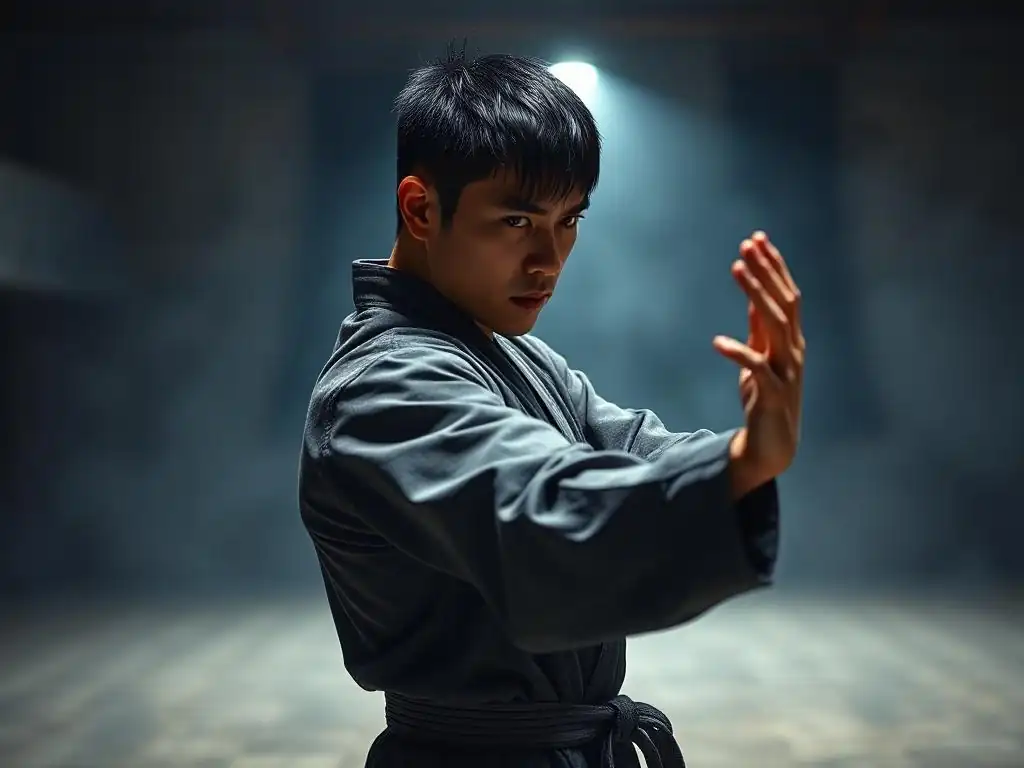
Welcome to Martial Arts Mastery, your gateway to understanding the profound depth of martial arts! Ever wondered if those intricate patterns of Taekwondo hyung are more than just graceful movements? This article, "From Pattern to Protection: How Taekwondo Hyung Translate to Real-World Defense," delves into the practical applications behind these forms, revealing how they can bridge the gap between the dojang and actual self-defense. Discover the hidden combat techniques embedded within each sequence and unlock their potential to protect you. Intrigued? Let's begin the journey from pattern to power!
- From Pattern to Protection: How Taekwondo Poomsae Translate to Real-World Defense
- Understanding Taekwondo Poomsae: The Foundation of Practical Application
- Bridging the Gap: From Taekwondo Form to Functional Self-Defense
- Taekwondo Poomsae and Real-World Scenarios: Practical Applications
- The Importance of Drills and Sparring in Applying Poomsae Techniques
- Developing Real-World Self-Defense Skills Through Taekwondo Patterns
- Advanced Considerations: Adapting Poomsae for Individual Effectiveness
- Taekwondo Poomsae: A Path to Effective Self-Defense
-
Frequently Asked Questions
- ### What exactly are hyung in Taekwondo, and why are they important?
- ### How do hyung practice contribute to real-world self-defense skills?
- ### The article mentions "From Pattern to Protection: How Taekwondo Hyung Translate to RealWorld Defense". Can you provide examples of how specific hyung movements translate to practical self-defense?
- ### What are some common misconceptions about the application of Taekwondo hyung in real-world situations?
- ### Besides self-defense, what other benefits can one gain from diligently practicing Taekwondo hyung?
- Final Reflection: The Enduring Legacy of Taekwondo Hyung
- Unleash Your Inner Warrior: Take Action Now!
From Pattern to Protection: How Taekwondo Poomsae Translate to Real-World Defense
Understanding Taekwondo Poomsae: The Foundation of Practical Application
What are Taekwondo Poomsae? A Detailed Exploration
Taekwondo Poomsae, often referred to as "forms" or "patterns," are prearranged sequences of fundamental Taekwondo movements, including stances, blocks, strikes, and kicks, performed against imaginary opponents. These intricate routines are not merely aesthetic dances but serve as the cornerstone for understanding and executing Taekwondo techniques effectively. Each Poomsae represents a specific philosophical principle or historical event, embedding the art's rich heritage within its physical execution. For instance, the first student Poomsae, Taegeuk Il Jang, symbolizes the principle of Keon (Heaven, light, strength), reflecting its foundational nature with simple yet powerful movements executed over approximately 20 counts.
The structured nature of Poomsae allows practitioners to internalize the correct angles, trajectories, timing, and power generation for individual techniques and combinations. By repeatedly practicing these set sequences, students develop muscle memory, coordination, and balance crucial for applying techniques spontaneously.
While seemingly abstract, the controlled environment of Poomsae practice enables deep focus on the technical details – the precise angle of a forearm block, the exact chambering of a punch, or the sequential movement of the body during a kick. This meticulous attention to detail in Poomsae is intended to build a robust technical foundation that can be accessed and adapted under pressure, bridging the gap between controlled practice and dynamic application in the Taekwondo hyung real world context.
The Role of Poomsae in Taekwondo Training: Beyond the Form
Poomsae are far more than just competition routines or historical exercises; they are dynamic blueprints for practical application and physical conditioning. They systematically introduce and reinforce the entire Taekwondo syllabus, ensuring that students learn and practice a wide range of techniques, from basic stances and blocks to complex kicks and simultaneous defensive/offensive actions. Regular Poomsae practice improves flexibility, strength, stamina, and concentration. A typical Poomsae for a mid-level belt might involve 30-40 distinct movements, requiring significant physical exertion and mental focus to perform correctly and powerfully.
Furthermore, Poomsae serve as a living library of Taekwondo's defensive and offensive strategies. Each sequence implicitly contains responses to various types of attacks and scenarios. For example, a low block followed by a front kick in Taegeuk Ee Jang suggests a defense against a low attack followed by a counter to the opponent's midsection.
Understanding the application (Hosinsool) embedded within each movement is key to unlocking the real-world relevance of Taekwondo hyung. Instructors often break down Poomsae sequences to demonstrate how specific movements could be used in self-defense, illustrating that the forms are not ends in themselves, but means to develop functional skills.
Poomsae vs. Sparring: Integrated Training Methods
While Poomsae provide the foundational mechanics and strategic principles, sparring (Kyorugi) offers the dynamic, unpredictable environment necessary to test and refine these skills against a resisting opponent. Poomsae teach how to execute techniques correctly and in sequence, while sparring teaches when and how to apply them under pressure, adapting to changing circumstances. A student might master a specific block-and-counter sequence in Poomsae, but sparring reveals the challenges of timing that sequence against a moving target or dealing with unexpected attacks.
Therefore, an integrated training approach that values both Poomsae and sparring is essential for developing effective Taekwondo hyung real world skills. Poomsae practice hones precision, power generation, and understanding of principles, while sparring develops timing, distance management, adaptability, and reaction speed. Without the solid technical base provided by Poomsae, sparring can devolve into ineffective flailing. Conversely, without sparring, the techniques learned in Poomsae remain theoretical. Many schools dedicate roughly equal time to Poomsae, fundamental techniques, and sparring, recognizing that proficiency in one area enhances the others, creating a more well-rounded and capable practitioner.
Bridging the Gap: From Taekwondo Form to Functional Self-Defense
Analyzing Taekwondo Poomsae for Self-Defense Applications
Analyzing Taekwondo Poomsae for self-defense applications involves dissecting each sequence, movement by movement, to understand its potential utility in a real-world confrontation. This goes beyond simply performing the steps; it requires asking, "What attack is this movement defending against?" and "What is the intended counter-action?"
Many Poomsae movements, when viewed through a self-defense lens, reveal practical applications that might not be immediately obvious during standard performance. For instance, a seemingly complex series of movements might represent a defense against a grab, followed by a joint lock or throw, rather than just a series of blocks and strikes in open space.
This analytical approach often involves partner drills where practitioners simulate the "imaginary opponent" actions embedded within the Poomsae. For example, the opening movement of Taegeuk Il Jang, a low block followed by a middle punch, can be practiced with a partner simulating a low kick or strike, allowing the defender to practice the block and immediate counter.
By systematically breaking down each Poomsae, practitioners can compile a repertoire of specific responses to common threats, moving from the abstract pattern to concrete, applicable techniques. This systematic study helps bridge the gap between the structured world of forms and the chaotic nature of real-world encounters, making Taekwondo hyung real world applicable.
Identifying Core Movements and Their Practical Applications in Poomsae
Within the various Taekwondo Poomsae, certain core movements appear repeatedly and form the basis of many self-defense applications. Blocks like the low block (Arae Makgi), middle block (Momtong Makgi), and high block (Olgul Makgi) are fundamental defenses against different attack heights. Strikes such as the straight punch (Jireugi), knifehand strike (Sonnal Chigi), and various kicks (Chagi) are primary offensive or counter-offensive tools.
Identifying these core movements within Poomsae and understanding their versatility is crucial. For example, the knifehand block (Sonnal Makgi), often seen in Poomsae like Taegeuk Sa Jang, is effective against linear strikes like punches or even grabs, not just the specific 'imaginary' attack in the form.
Consider the movements in Taegeuk Chil Jang. It features several double knifehand blocks and crescent kicks, along with tiger stances. Analyzing these movements reveals defenses against attacks targeting the sides of the body or simultaneous attacks, combined with powerful, close-range kicks and stable defensive postures.
By extracting these core movements and practicing them outside the strict Poomsae sequence – perhaps as standalone drills or in simple combinations – practitioners can internalize their function. This process allows for quicker recognition and deployment of effective techniques when faced with a real threat, demonstrating the practical value of Taekwondo hyung real world training.
Understanding Stances and Footwork for Balance and Power
Effective self-defense is heavily reliant on stable stances and agile footwork, principles deeply ingrained in Taekwondo Poomsae. Stances like the walking stance (Ap Seogi), front stance (Ap Kubi), back stance (Dwit Kubi), and tiger stance (Beom Seogi) each offer different advantages in terms of stability, reach, and ease of movement. Poomsae meticulously dictate transitions between these stances, training the practitioner to shift weight and base efficiently, which is vital for maintaining balance while blocking, striking, or evading. Poor balance is a significant vulnerability in a self-defense situation, making the stability trained in Poomsae invaluable.
Footwork in Poomsae, while stylized, teaches essential principles of distance management and angular movement. Stepping forward, backward, sideways, and turning are all practiced within the forms. These movements, when applied in self-defense, allow a person to close distance for an attack, create space to evade, or move off the line of an attack.
For instance, the stepping patterns in Poomsae teach how to move the back foot first when retreating or the front foot first when advancing, fundamental skills for controlling distance during an encounter. Mastering these foundational elements through Poomsae significantly enhances a practitioner's ability to apply Taekwondo hyung real world techniques effectively.
Taekwondo Poomsae and Real-World Scenarios: Practical Applications
Adapting Poomsae Techniques for Common Assault Situations
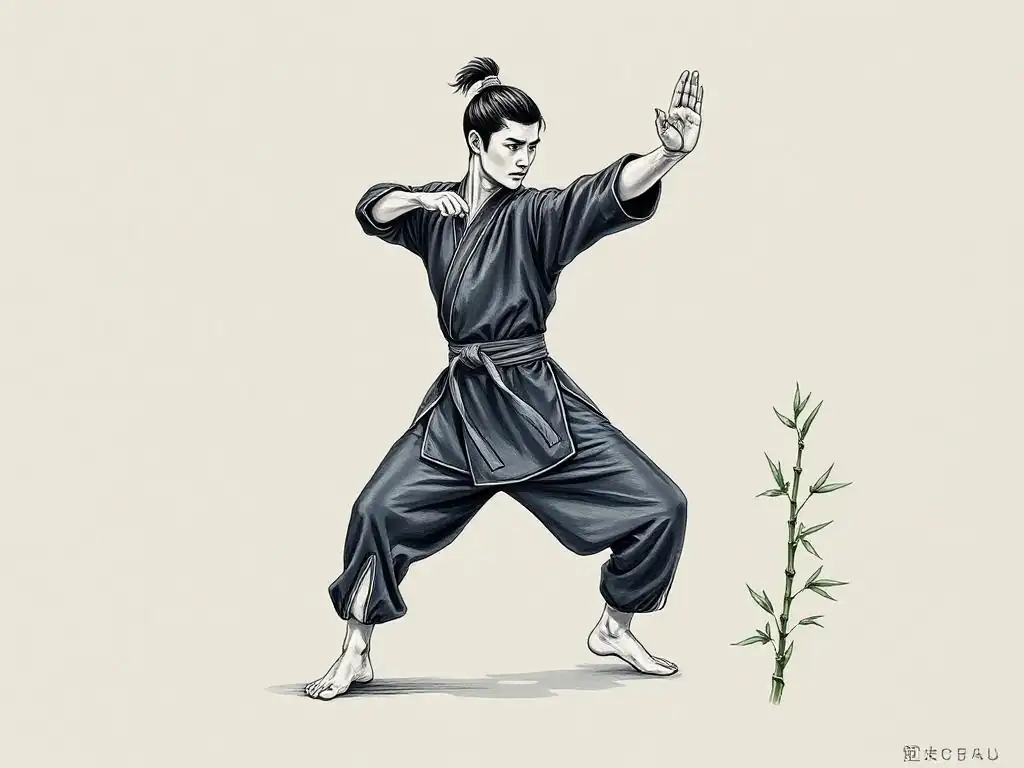
Translating Taekwondo Poomsae techniques to real-world scenarios requires adapting the idealized movements to the messy reality of an attack. While a Poomsae movement might involve a perfectly executed block at a specific angle, in a real situation, the block might be against a less-than-perfectly thrown punch or grab.
The core principle of the movement – deflecting force and creating an opening – remains, but the execution must be flexible. For example, a middle block from Taegeuk Sa Jang, designed for a straight punch, can be adapted to deflect a shove or a swinging arm by slightly altering the angle and power.
Common assault situations often involve grabs, shoves, or wild, untrained strikes rather than the precise attacks sometimes simulated in controlled training. Poomsae movements often contain principles for dealing with these. A pull from a grab might be countered using the principle of redirecting force seen in certain Poomsae transitions, perhaps involving a turn and simultaneous strike or block. The key is to look beyond the exact form and identify the underlying principle of leverage, redirection, or explosive counter-movement. This adaptive thinking is crucial for making Taekwondo hyung real world applicable beyond the dojang.
Utilizing Taekwondo Blocks and Strikes for Self-Protection
Taekwondo's emphasis on powerful blocks and strikes makes its Poomsae a valuable resource for self-protection. The various blocks are designed to protect vital areas and disrupt an attacker's force. A well-executed low block can effectively stop a kick to the leg, while a high block can deflect an overhead strike. Strikes, particularly punches to vulnerable points or powerful kicks, can create distance, incapacitate, or provide an opportunity to escape. Poomsae repeatedly drills these techniques, building the power and precision needed for them to be effective under duress.
Consider the high section punch (Olgul Jireugi) frequently practiced in Poomsae. While aiming for the head, in a self-defense context, this movement principle can be applied to strike other vulnerable areas like the throat or jaw if the opportunity arises.
Similarly, the side kick (Yeop Chagi), featured in many Poomsae, is a powerful defensive or offensive tool capable of striking an attacker's knee, torso, or head from a relatively safe distance, providing significant stopping power. The constant repetition in Poomsae helps build the muscle memory for these powerful, fundamental techniques, making them more accessible when needed in a real-world situation.
Low Block and Counter-Strike Against a Forward Grab
A common real-world scenario is an attacker grabbing the front of your shirt or body. While Poomsae don't explicitly detail defenses against every type of grab, they provide foundational movements that can be combined. Imagine an attacker grabbing your lapels. A quick, powerful low block motion, perhaps using the forearm or even the palm, can be used to momentarily break or loosen the grip by striking downwards on their wrists or forearms. This utilizes the principle of the low block (Arae Makgi) found in virtually every Taegeuk Poomsae.
Immediately following this defensive action, a counter-strike is often necessary. Poomsae frequently pair blocks with immediate counter-punches or strikes. After the low block motion disrupts the grab, a middle section punch (Momtong Jireugi) to the attacker's solar plexus or a knee strike (Mureup Chigi) to the groin (a technique also present in some Poomsae applications) can create the necessary pain or distraction to escape. This simple combination of a defensive principle from Poomsae (low block concept) and an offensive principle (middle punch or knee strike) demonstrates how Taekwondo hyung real world application can be built from fundamental patterns.
Knifehand Strike and Evade in Response to a Linear Attack
Another relevant scenario is facing a linear attack, such as a straight punch or a lunge. Many Poomsae feature knifehand strikes and defensive movements. Consider the knifehand strike (Sonnal Chigi) seen in Poomsae like Taegeuk Sa Jang or Chil Jang.
While often performed as a block or strike in the form, its principle involves using the hardened edge of the hand. In response to a linear attack, moving slightly off the line of attack (an evasion principle also found in Poomsae footwork) while simultaneously executing a knifehand strike to a vulnerable point like the side of the neck, collarbone, or even a bicep or forearm (to disrupt the limb) can be highly effective.
This application combines evasive footwork, often a subtle step or angle change derived from Poomsae transitions, with a powerful counter-strike. The knifehand strike, practiced for power and precision within the form, becomes a sharp, focused weapon. This isn't about performing the exact Poomsae sequence but extracting the relevant movement – the angled footwork, the body turn, and the knifehand action – and applying it dynamically. This highlights how understanding the underlying mechanics and principles taught in Taekwondo hyung real world scenarios can be addressed effectively by adapting learned patterns.
The Importance of Drills and Sparring in Applying Poomsae Techniques
Partner Drills for Refining Poomsae Techniques and Building Reflexes
Partner drills are indispensable for translating the solo practice of Taekwondo Poomsae into applicable self-defense skills. While Poomsae build the foundation, partner drills introduce external factors: timing, distance, and a non-compliant partner. Simple drills can involve one partner initiating a specific attack (e.g., a simulated front punch), and the other partner responding with the corresponding defense and counter-attack derived from a Poomsae sequence (e.g., a middle block followed by a punch). This allows practitioners to feel the contact, judge the distance, and time their response, activities impossible in solo Poomsae.
More complex drills can string together several movements from a Poomsae or combine techniques from different forms to address a simulated scenario. For example, practicing a drill where a partner attempts a grab, and the defender uses a low block concept to break the grip, followed by a knee strike and an escape step. These drills are crucial for developing practical reflexes and ensuring that the techniques learned in Poomsae can be deployed effectively against a moving target, solidifying the connection between Taekwondo hyung real world application. Consistent partner work helps automate reactions, reducing hesitation in a real confrontation.
Integrating Poomsae Movements into Sparring: Dynamic Application
Sparring provides the ultimate testbed for integrating Poomsae-derived techniques into a dynamic, unpredictable environment. While competition sparring often emphasizes specific rules (e.g., no hand attacks below the belt, limited targets), training sparring can be more open to explore a wider range of techniques. Practitioners can consciously attempt to use movements or combinations from Poomsae during free sparring. This might involve using a specific footwork pattern to create an angle, employing a less common block, or attempting a counter-attack sequence practiced in a form.
Attempting to apply Poomsae movements in sparring highlights what works and what needs refinement. A technique that feels powerful in solo Poomsae might be too slow or leave one exposed when facing a live opponent. Sparring teaches the necessary adaptations – shortening movements, adjusting timing, and combining techniques in fluid, unexpected ways. It forces practitioners to move beyond the rigid structure of the form and apply the underlying principles dynamically. This integration is vital for ensuring that the physical and strategic lessons embedded in Taekwondo hyung translate effectively to real world self-defense scenarios.
Counter-Attack Drill: Practicing Blocks and Strikes from Taegeuk Poomsae
A practical partner drill directly derived from Poomsae involves practicing specific block-and-counter sequences. Take, for example, the sequence of a middle block followed by a middle punch, prevalent in many Taegeuk Poomsae (e.g., Taegeuk Ee Jang, Sam Jang). A simple drill involves one partner throwing a controlled, non-contact middle-section punch. The other partner practices executing a strong middle block, immediately followed by a powerful middle-section counter-punch.
This drill can be progressed by varying the speed and angle of the incoming "attack," requiring the defender to adjust their timing and position. It can also be expanded to include other sequences, such as a high block followed by a down punch (found in Taegeuk Oh Jang), or a low block followed by a front kick (Taegeuk Ee Jang). By practicing these specific Poomsae-based interactions with a partner, practitioners build the reflexes and timing necessary to deploy these fundamental defensive and offensive combinations effectively in a self-defense situation, directly linking Poomsae practice to Taekwondo hyung real world application.
Developing Real-World Self-Defense Skills Through Taekwondo Patterns
Enhancing Situational Awareness and Reaction Speed Through Poomsae Practice
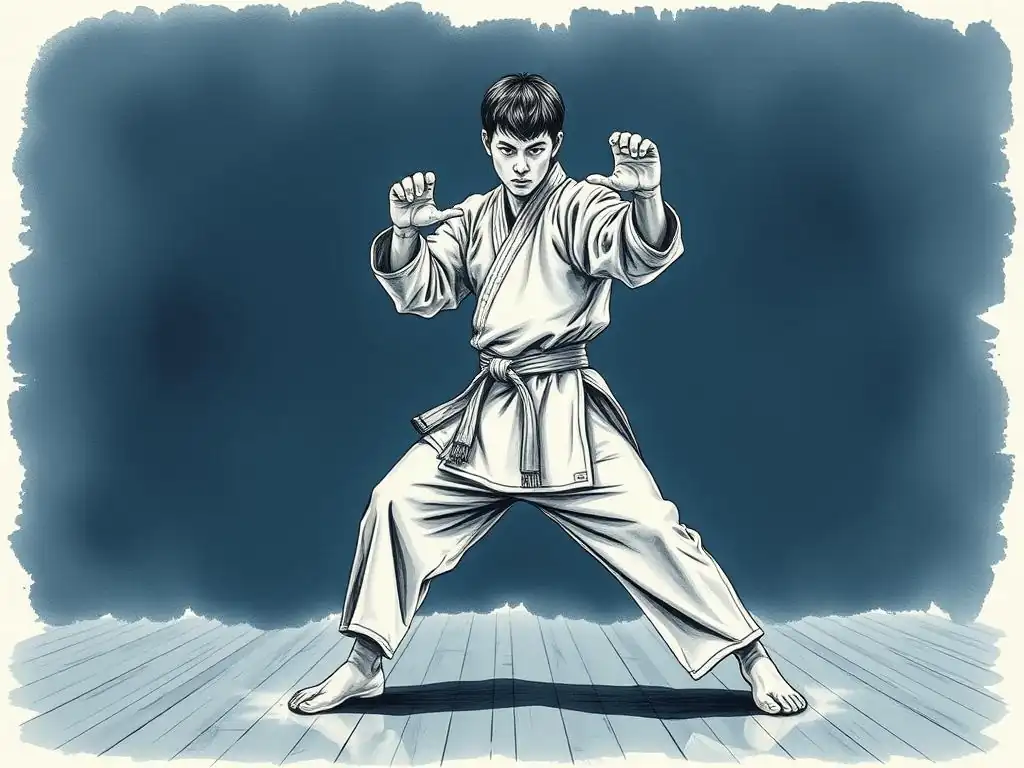
While Poomsae are performed in a controlled environment, their practice inherently contributes to developing attributes crucial for real-world self-defense, including situational awareness and reaction speed. The requirement to perform the sequence accurately and powerfully while maintaining focus encourages a heightened sense of body awareness and spatial orientation. Practitioners must be aware of their own position, the direction they are moving, and the imaginary threats they are addressing within the form. This focus, when carried into other training methods and daily life, enhances general awareness.
Furthermore, the rapid transitions between defensive and offensive movements within Poomsae, often requiring quick changes in direction and technique, trains the body and mind for rapid response. While not reacting to an unseen threat like in a real scenario, the sheer speed and precision required in advanced Poomsae (some black belt forms involve over 50 movements performed in under a minute) build explosive power and quick reflexes.
This trains the body to react quickly to visual or physical cues, laying a physiological foundation for faster reactions when a real threat emerges. This makes the study of Taekwondo hyung real world beneficial for developing rapid response capabilities.
Building Self-Assurance and Mental Resilience for Self-Defense
Beyond the physical techniques, consistent practice of Taekwondo Poomsae significantly builds self-assurance and mental resilience, critical components of effective self-defense. Mastering increasingly complex Poomsae requires dedication, perseverance, and the ability to overcome frustration. Successfully performing a difficult sequence, perhaps after weeks or months of practice, provides a tangible sense of accomplishment and competence. This builds confidence in one's physical abilities and capacity for learning and execution.
This self-assurance translates directly to self-defense. A person confident in their ability to perform techniques is more likely to react decisively when threatened, rather than freezing in fear. Moreover, the mental discipline required for Poomsae practice – focusing intensely, remembering complex sequences, and pushing through physical fatigue – builds mental resilience. This resilience helps a person remain calmer and more focused under the stress of a potential confrontation, enabling them to access their training effectively. The journey through Taekwondo hyung builds not just physical skill, but the mental fortitude necessary for real world challenges.
The Mental and Emotional Benefits of Taekwondo Poomsae Training
The structured nature of Taekwondo Poomsae training offers significant mental and emotional benefits that indirectly support self-defense capabilities. The focused, almost meditative aspect of performing Poomsae can reduce stress and improve concentration. In a world filled with distractions, dedicating time to the disciplined execution of a Poomsae sequence provides a mental escape and strengthens the ability to maintain focus under pressure. This heightened focus is invaluable in a self-defense situation, where assessing threats and making quick decisions is paramount.
Additionally, the progressive learning structure of Poomsae, moving from simpler forms to more complex ones, instills patience and the understanding that mastery is a journey requiring consistent effort. This perspective helps manage expectations and frustration, fostering a resilient mindset. The physical activity itself releases endorphins, contributing to overall well-being and reducing anxiety. By building a calm, focused, and resilient mental state, Poomsae practice prepares individuals not just physically but also psychologically for potential real-world threats, highlighting the holistic benefits of Taekwondo hyung real world preparation.
Advanced Considerations: Adapting Poomsae for Individual Effectiveness
Modifying Poomsae Techniques to Suit Individual Body Mechanics
While Poomsae provide standardized blueprints, truly effective self-defense requires adapting these techniques to one's individual body mechanics, strengths, and limitations. Not everyone has the same flexibility, reach, or power generation capabilities. An advanced practitioner understands the core principle of a Poomsae movement and finds the most efficient way for their body to execute it effectively in a dynamic situation, even if it slightly deviates from the strict form. For example, someone with shorter limbs might need to adjust their distance or angle slightly when performing a block or strike derived from a Poomsae sequence.
This adaptation is not about disrespecting the form but about optimizing its application. It involves understanding why a movement is performed a certain way in the Poomsae and finding an equally effective, personalized method. This might mean slightly altering a stance for better balance on uneven ground, adjusting the trajectory of a kick based on one's hip flexibility, or modifying a block to account for less-than-ideal positioning. This level of understanding comes from deep practice and analysis, allowing the practitioner to fluidly apply the principles of Taekwondo hyung in real world situations tailored to their own capabilities.
Complementing Taekwondo Poomsae with Other Martial Arts Principles
While Taekwondo Poomsae offer a comprehensive system of strikes, blocks, and kicks, complementing this knowledge with principles from other martial arts can enhance real-world self-defense capability. Taekwondo excels at dynamic, often linear or angular movements and powerful kicks. However, principles from arts focusing on grappling, throws, or close-quarter trapping (like Hapkido, Judo, or Wing Chun) can provide valuable tools for situations where striking distance is lost or an attacker initiates physical contact like a grab or clinch.
For instance, understanding basic joint locks or escape techniques can provide options when an attacker bypasses the initial striking range addressed by many Poomsae applications. Incorporating basic wrestling or Judo break-falls can help recover safely if taken to the ground, a scenario not explicitly detailed in Poomsae. This isn't about diluting Taekwondo but about building a more robust, multi-faceted self-defense skillset. By integrating complementary principles, practitioners can make their Taekwondo hyung real world application more versatile and effective across a wider range of threats.
Seeking Expert Guidance for Practical Poomsae Application
Translating the movements and principles of Taekwondo Poomsae into effective real-world self-defense requires knowledgeable instruction. While practicing the forms solo builds a technical base, understanding the self-defense applications embedded within them often requires guidance from experienced instructors. These experts can demonstrate the Hosinsool (self-defense techniques) contained within the Poomsae, break down complex movements into practical applications, and guide partner drills that simulate real-world scenarios.
An experienced instructor can point out how a specific transition in a Poomsae can be used to escape a grab, or how a series of movements represents a defense against multiple attackers. They can provide feedback on timing, power, and adaptation during partner practice and sparring, ensuring that the techniques learned in the forms are functional and effective. Relying solely on self-interpretation of Poomsae for self-defense is less effective than learning from those who have dedicated years to understanding and applying these complex patterns. Seeking this expert guidance is crucial for maximizing the Taekwondo hyung real world potential.
Taekwondo Poomsae: A Path to Effective Self-Defense
The Continuous Process of Learning and Applying Taekwondo Patterns
The journey of mastering Taekwondo Poomsae and applying them effectively for self-defense is a continuous process of learning, practice, and refinement. It begins with learning the basic movements and sequences, progresses through understanding the embedded principles and applications, and continues with adapting and integrating these skills through drills and sparring. There isn't a point where one simply "knows" how to use Poomsae for self-defense; it requires ongoing practice to maintain sharpness, explore deeper applications, and adapt to new challenges.
As practitioners advance through the ranks, they learn more complex Poomsae that introduce increasingly sophisticated movements and strategic concepts. Each new pattern offers fresh insights into body mechanics, power generation, and defensive/offensive combinations. Regularly revisiting older Poomsae with a more experienced eye also reveals applications that were not apparent at earlier stages. This lifelong engagement with Taekwondo hyung ensures that the skills remain sharp and the understanding of real world application continues to deepen.
Explore Taekwondo Poomsae and Enhance Your Self-Defense Capabilities
Taekwondo Poomsae are a profound and practical element of the art, offering a structured path to developing physical prowess, mental discipline, and a deep understanding of fundamental techniques. Far from being mere ritual, these patterns contain a wealth of knowledge directly applicable to self-protection. By diligently practicing the forms, analyzing their embedded applications, engaging in realistic partner drills and sparring, and seeking expert instruction, practitioners can effectively bridge the gap between the dojang and the street.
Embracing the study of Taekwondo hyung real world applications unlocks the full potential of the art for self-defense. It provides a systematic method for learning and internalizing techniques, building crucial attributes like balance, power, speed, focus, and resilience. While no single training method is a guarantee of safety, a dedicated approach to understanding and applying Taekwondo Poomsae offers a solid foundation for enhancing one's ability to protect oneself in real-world situations. Exploring these patterns is exploring a rich heritage and a powerful means of self-empowerment.
Frequently Asked Questions
### What exactly are hyung in Taekwondo, and why are they important?
Hyung are pre-arranged forms or patterns of movement that simulate combat scenarios. They're important for developing fundamental techniques, balance, and coordination.
### How do hyung practice contribute to real-world self-defense skills?
While not direct sparring, hyung help build muscle memory and spatial awareness. This allows for faster reaction times and more efficient execution of techniques in a real confrontation.
### The article mentions "From Pattern to Protection: How Taekwondo Hyung Translate to RealWorld Defense". Can you provide examples of how specific hyung movements translate to practical self-defense?
Certain blocks in hyung directly translate to deflecting strikes. Kicks practiced in hyung can be used for creating distance or disabling an attacker. The stances improve your balance and stability, essential in a physical altercation.
### What are some common misconceptions about the application of Taekwondo hyung in real-world situations?
A common misconception is that hyung alone are sufficient for self-defense. They require supplemental training like sparring and practical application drills to be effective in real-world scenarios.
### Besides self-defense, what other benefits can one gain from diligently practicing Taekwondo hyung?
Beyond self-defense, consistent hyung practice enhances physical fitness, improves mental discipline, and cultivates a deeper understanding of Taekwondo principles and history.
Final Reflection: The Enduring Legacy of Taekwondo Hyung
The journey from the precise patterns of Taekwondo hyung to the chaotic reality of self-defense might seem a leap, but the underlying principles of discipline, awareness, and adaptability remain profoundly relevant today. In a world increasingly demanding both physical and mental resilience, the lessons embedded within these ancient forms offer a timeless framework for navigating challenges, both on and off the mat.
The influence of Taekwondo hyung extends far beyond the dojang. It's a testament to the power of structured practice in building confidence and cultivating a proactive mindset. The countless hours spent perfecting each movement, each stance, instill a deep understanding of body mechanics and spatial awareness, skills that translate into heightened self-assurance and the ability to react decisively in unpredictable situations. The best fighter is never angry.
This ancient wisdom, often echoed in martial arts philosophy, underscores the importance of maintaining composure and clarity under pressure, a skill honed through the disciplined practice of hyung.
Now, as you step away from this exploration of Taekwondo hyung and their real-world application, I invite you to consider how these principles resonate within your own life. How can you apply the discipline and focus cultivated through these forms to overcome obstacles and achieve your goals? Embrace the challenge, cultivate your inner strength, and remember that the path to mastery, whether in martial arts or in life, begins with a single, deliberate step.
Unleash Your Inner Warrior: Take Action Now!
Thank you for exploring the power of Taekwondo Hyung with us. We hope you've gained a deeper understanding of how these patterns translate into practical self-defense skills. Now it's time to put that knowledge into action!
- Commit to perfecting one Hyung per month, focusing on understanding its applications beyond the movements.
- Join our Martial Arts Mastery community forum and share your insights on how you're applying Hyung in your training.
- Surprise yourself and your training partner by trying to adapt a hyung movement into a sparring session!
What specific Hyung are you most excited to explore further, and how will you integrate its principles into your next training session?