
Is Aikido Passive? A Philosophical Reexamination of Its Dynamic Core

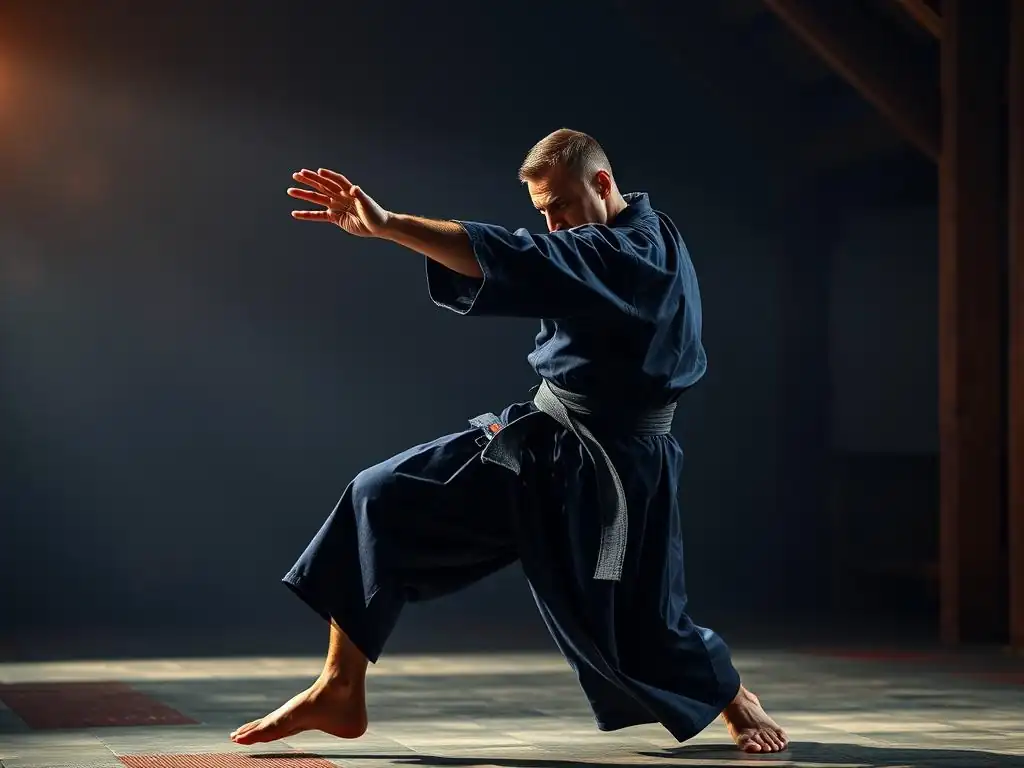
Welcome to Martial Arts Mastery, your ultimate guide to the world's diverse fighting traditions!
Delve into the captivating realm of martial arts, where physical prowess intertwines with profound philosophy. Ever wondered about the true nature of Aikido? Is it truly a passive art, or does its defensive grace conceal a dynamic and potent core? Explore our in-depth article, " Is Aikido Passive? A Philosophical Reexamination of Its Dynamic Core", as we dissect the Aikido defensive techniques philosophy and challenge conventional wisdom. Prepare to unlock new perspectives and deepen your understanding of this captivating martial art – and much more across our site!
Atemi: Vital Point Strikes and Their Role in Aikido's Strategy
While often perceived as purely a grappling or joint-locking art, Aikido incorporates atemi, which refers to strikes delivered to vital points on an attacker's body. These strikes are not typically intended as finishing blows in the way they might be in a striking art like Karate or Boxing. Instead, Atemi in Aikido serves a specific tactical purpose within the broader Aikido defensive techniques philosophy.
Its primary function is to momentarily distract, disrupt balance, or create an opening, thereby facilitating the execution of a throw or joint lock. For instance, a sharp, focused strike to the attacker's face, temple, or solar plexus can instantly break their concentration and structure, making them vulnerable to the subsequent technique.
This fleeting disruption is crucial for the Aikidoka to enter, control, and redirect the attacker's force effectively, turning a potentially dangerous situation into an opportunity for resolution. The timing and precision of Atemi are paramount; it's a supplementary tool, not the core method of resolution, emphasizing Aikido's principle of minimizing harm while maximizing effectiveness.
The strategic application of Atemi underscores the active and pragmatic nature of Aikido's defense. Consider a common scenario where an attacker is strongly gripping or pushing.
A well-timed Atemi, such as a palm heel strike to the jaw or a sharp finger jab to the eyes (practiced safely in training, of course, but understood conceptually), can create a sudden reflex action or momentary paralysis. This brief pause is exactly what the Aikidoka needs to initiate kuzushi (breaking balance) and apply a technique like kokyunage (breath throw) or ikkyo (first technique).
The power of Atemi in Aikido is not measured by its ability to knock someone out, but by its efficiency in disrupting the attack and setting up the defensive response. This nuanced use of striking highlights that Aikido defensive techniques philosophy is far from passive; it employs a range of methods, including targeted strikes, to actively manage and neutralize threats, always aiming towards a swift and decisive resolution that protects both parties involved, if possible.
- ### Is Aikido truly passive, given its emphasis on blending with an opponent's attack?
- ### How does Aikido's philosophy influence its defensive techniques?
- ### What are some examples of Aikido defensive techniques that demonstrate its "dynamic core"?
- ### How does Aikido's historical context shape its approach to self-defense?
- ### In what ways can Aikido's defensive philosophy be applied outside of the dojo?
Frequently Asked Questions
### Is Aikido truly passive, given its emphasis on blending with an opponent's attack?
Aikido is not passive in the traditional sense. It utilizes the attacker's momentum against them, redirecting their energy and leading to a controlled outcome.
### How does Aikido's philosophy influence its defensive techniques?
Aikido's philosophy of wa (harmony) guides its techniques. It aims to neutralize aggression without causing unnecessary harm, emphasizing non-resistance and harmonious resolution.
### What are some examples of Aikido defensive techniques that demonstrate its "dynamic core"?
Techniques like shihonage (four-corner throw) and iriminage (entering throw) exemplify Aikido's dynamic core. These movements involve entering, blending, and controlling the attacker's balance.
### How does Aikido's historical context shape its approach to self-defense?
Aikido evolved from Daito-ryu Aiki-jujutsu, incorporating elements of swordsmanship and battlefield tactics. This history influences its focus on efficient movement and controlling an opponent's center.
### In what ways can Aikido's defensive philosophy be applied outside of the dojo?
Aikido principles like centering, harmonizing, and redirecting can be applied to everyday situations. They offer strategies for conflict resolution, stress management, and improved communication.
Final Reflection: Embracing Dynamic Harmony
The exploration of Aikido's dynamic core reveals that its essence is far from passive; rather, it is a proactive engagement with conflict through yielding and redirection. This understanding is profoundly relevant today, as we navigate a world often characterized by reactive aggression and polarized viewpoints. Aikido's philosophy offers a powerful alternative: a path towards resolving conflict not through force, but through understanding and skillful adaptation.
Aikido's influence extends beyond the dojo, shaping our approach to interpersonal relationships and societal challenges. The ability to remain centered and responsive, even in the face of adversity, is a skill that transcends physical combat and permeates every aspect of life. True victory is victory over oneself; that is, over one's own mind.
- Morihei Ueshiba, the founder of Aikido. This quote encapsulates the heart of Aikido's defensive techniques philosophy, emphasizing inner strength and self-mastery as the ultimate defense.
As you reflect on the principles explored in this article, consider how you might apply Aikido's dynamic harmony in your own life. Can you find opportunities to yield rather than resist, to redirect conflict towards resolution, and to cultivate inner peace amidst external chaos? Embrace the challenge of becoming a more responsive, adaptable, and ultimately, more effective force for good in the world.
Embrace Aikido's Dynamic Flow: Unleash Your Inner Harmony!
Thank you for exploring the philosophical depths of Aikido with us. We hope you've gained a fresh perspective on its active core and potential for personal growth. Now, let's translate this understanding into action!
- Begin incorporating more intentional movement in your practice, focusing on leading, rather than reacting. Feel the power in directing energy.
- Join the Martial Arts Mastery community forum and share a personal experience where you felt the active energy of Aikido.
- Explore historical texts on Aikido's founder, Morihei Ueshiba, to deepen your understanding of its philosophy.
How will you harness the dynamic energy of Aikido to create more harmony in your life, both on and off the mat?