
Comparing Iaido Kata: Seitei vs. Koryu Approaches to Sword Drawing

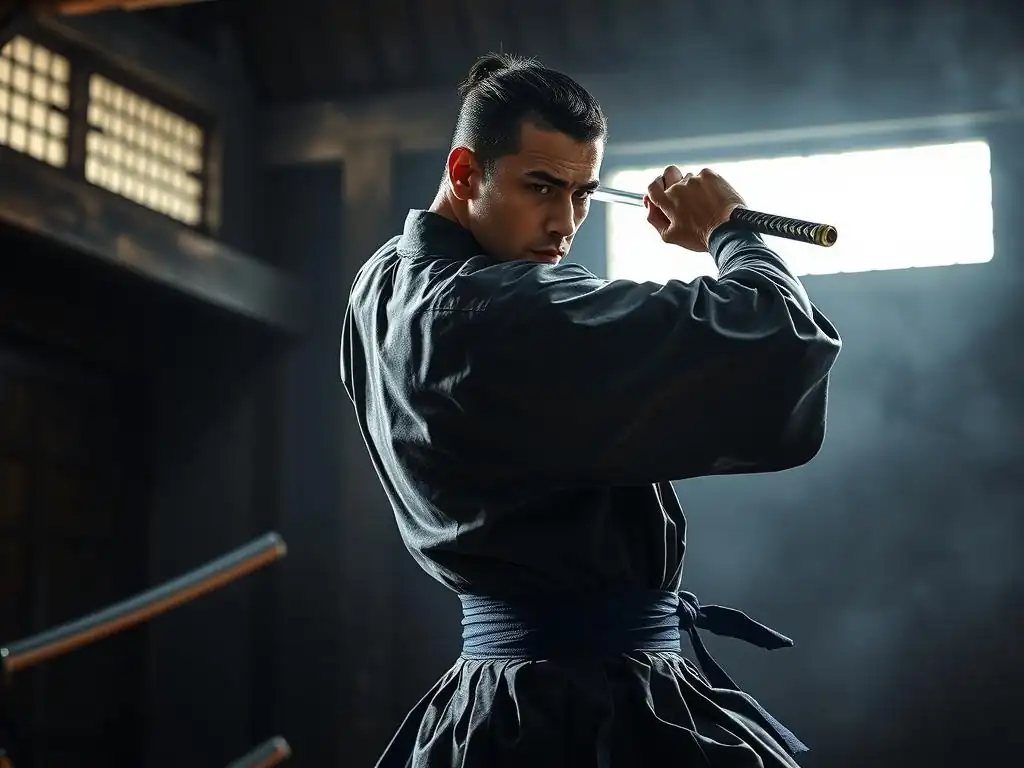
Welcome to Martial Arts Mastery, where we delve into the fascinating world of combat traditions!
Ever wondered how different schools approach the same art? Today, we're unsheathing the secrets of Iaido with a detailed Iaido kata side-by-side comparison, exploring the subtle yet significant distinctions between Seitei and Koryu styles. Prepare to witness the evolution of sword drawing and discover the philosophical nuances behind each movement. What insights await you in this clash of traditions? Read on to find out!
- Introduction to Iaido Kata: A Side-by-Side Comparison
- Seitei Iaido Kata: A Standardized Approach
- Koryu Iaido Kata: Traditional Schools and Styles
- Side-by-Side Comparison: Seitei and Koryu Kata
- Practical Considerations for Iaido Practitioners
- Advanced Iaido Practice: Bridging the Gap Between Seitei and Koryu
- Conclusion: Appreciating the Richness of Iaido Kata - Seitei and Koryu
-
Frequently Asked Questions
- What is Iaido and why is a kata side-by-side comparison important?
- What are Seitei Iaido and Koryu Iaido, and what are the key differences between them?
- What aspects of Iaido kata are typically compared in a side-by-side analysis?
- Where can I find a detailed Iaido kata side-by-side comparison specifically for Seitei and Koryu styles?
- How can understanding the differences in Iaido kata improve my martial arts training?
- Final Reflection: The Enduring Art of the Draw
- Ignite Your Iaido Journey!
Introduction to Iaido Kata: A Side-by-Side Comparison
Understanding Iaido: The Art of Japanese Sword Drawing
Iaido is a traditional Japanese martial art focused on the drawing of a sword, its cutting application, the cleaning of the blade, and its return to the scabbard. It is often translated as "the way of harmonious being" or "the way of mental presence and immediate reaction." Unlike kendo, which emphasizes sparring with bamboo swords, iaido is primarily a solo practice centered around kata (prearranged forms).
These kata simulate encounters with one or more opponents and require precise movements, mental focus, and an understanding of distance, timing, and strategy. The practice cultivates not just physical skill but also mental discipline, presence of mind, and ethical conduct.
The core of iaido practice lies in mastering the techniques of drawing the sword (nukitsuke), cutting (kiritsuke), cleaning the blade (chiburi), and returning the sword to the saya (noto). Each movement within a kata serves a specific purpose, often rooted in historical battlefield or dueling scenarios. While modern iaido is practiced primarily for personal development and physical exercise, its techniques originate from practical applications developed over centuries by samurai warriors. Understanding the historical context and practical intent behind each movement is crucial for deep learning in iaido.
The Significance of Kata in Iaido Training
Kata are the foundational training method in iaido. They are not merely choreographed sequences but dynamic simulations designed to teach fundamental principles, techniques, and strategies. Each kata represents a specific scenario, whether standing, kneeling (seiza), or walking, and dictates the practitioner's response to an imagined threat. Through repeated practice of kata, students internalize the correct body mechanics, sword handling, and mental attitude required for effective sword drawing and engagement. This repetitive refinement is essential for developing muscle memory and intuitive reaction.
The significance of kata extends beyond physical execution; they are vehicles for transmitting the art's philosophical and strategic depth. Studying kata helps practitioners understand concepts like ma-ai (combative distance), suki (openings or vulnerabilities), and zanshin (lingering awareness). The precise execution of each movement, from the initial grip on the saya to the final noto, is paramount. This meticulous attention to detail fosters concentration and mindfulness. An Iaido kata sidebyside comparison often highlights how different schools interpret these core principles through varied forms.
Seitei Iaido vs. Koryu Iaido: Defining the Key Differences
The landscape of Iaido practice is broadly divided into two main categories: Seitei Iaido and Koryu Iaido. Seitei Iaido, officially known as Seitei-gata, is a standardized system developed by the All Japan Kendo Federation (Zen Nihon Kendo Renmei, ZNKR) in the late 20th century. It consists of a set number of prescribed kata designed to provide a common foundation for practitioners across different schools and lineages. It serves as a widely recognized syllabus for grading and competition within the ZNKR framework.
Koryu Iaido refers to the older, traditional schools (ryuha) that predate the Meiji Restoration (1868) and the subsequent standardization efforts. These schools, such as Musō Jikiden Eishin-ryū or Musō Shinden-ryū, maintain their own distinct sets of kata, history, philosophy, and techniques. Each koryu represents a unique lineage and approach to sword drawing, often reflecting the specific historical period, battlefield conditions, or dueling styles from which they emerged. An Iaido kata sidebyside comparison between Seitei and various Koryu reveals significant differences in movement, strategy, and underlying principles.
Seitei Iaido Kata: A Standardized Approach
Origins and Purpose of Seitei Iaido
Seitei Iaido was formally established by the Zen Nihon Kendo Renmei (ZNKR) in 1968. The primary motivation was to create a standardized syllabus that could be taught and understood by practitioners from various traditional iaido schools. Before Seitei, iaido was practiced solely within disparate koryu, each with its own unique curriculum and teaching methods. This made it challenging for practitioners to learn from instructors of different schools or to participate in unified events and grading systems.
The purpose of Seitei Iaido was thus twofold: to provide a common ground for iaido practitioners regardless of their koryu background and to serve as an accessible introduction to the art for newcomers. The ZNKR selected kata derived from prominent koryu, primarily Musō Shinden-ryū and Musō Jikiden Eishin-ryū, and standardized their execution. This standardization aimed to preserve the essential principles of iaido while making them universally understandable and teachable. It has become the most widely practiced form of iaido globally, especially in international settings.
Structure and Content of Seitei Iaido Kata
The ZNKR Seitei Iaido curriculum initially comprised 7 kata (1968), later expanded to 10 (1980), and finally to the current 12 kata (2001). These 12 kata are divided into two groups: five from seiza (kneeling) and seven from tachi (standing or walking). The kata were carefully chosen and refined by a committee of masters from various traditional schools to represent fundamental techniques and scenarios common to iaido.
The 12 Seitei kata are:
- Seiza: 1. Mae, 2. Ushiro, 3. Uke Nagashi, 4. Tsuka Ate, 5. Kesagiri
- Tachi Waza: 6. Morote Tsuki, 7. Sanpō Giri, 8. Ganmen Ate, 9. Soete Tsuki, 10. Shihō Giri, 11. So Giri, 12. Nuki Uchi
Each kata has a prescribed sequence of movements, including the initial draw, cut(s), chiburi, and noto. The execution is standardized with specific angles, distances, and timing. This structure provides a clear, progressive learning path for students, ensuring they build a solid foundation in the core mechanics of sword drawing and handling.
Key Techniques Emphasized in Seitei Kata
Seitei Iaido kata place strong emphasis on fundamental techniques executed with precision and clarity. The focus is on mastering the core elements of drawing and cutting in a controlled and standardized manner. Key techniques include:
- Nukitsuke: The initial draw and simultaneous cut. Seitei emphasizes a smooth, powerful, and single-action draw that clears the saya and delivers a cut in one motion.
- Kiritsuke: The finishing cut. Seitei kata feature various cutting angles (e.g., kesagiri - diagonal, shōmen giri - vertical, tsuki - thrust) executed with proper body mechanics and blade alignment.
- Chiburi: The action of shaking blood from the blade. Seitei uses standardized forms like ō-chiburi (large blood shake) or yoko-chiburi (side blood shake), performed with controlled movement.
- Noto: The return of the sword to the saya. Seitei noto is deliberate and safe, emphasizing awareness of the blade's edge and position.
These techniques are taught within simplified scenarios, typically involving a single opponent whose position and actions are clearly defined. The standardization ensures that practitioners develop correct posture, grip, footwork, and blade handling according to a widely accepted model. An Iaido kata sidebyside comparison with koryu often highlights Seitei's focus on fundamental mechanics over complex combative scenarios.
Benefits of Practicing Seitei Iaido for Beginners
Practicing Seitei Iaido offers numerous benefits, particularly for those new to the art of Japanese sword drawing. Its standardized curriculum provides a clear, accessible entry point. Beginners can focus on learning the fundamental body movements, sword handling skills, and the basic sequence of drawing, cutting, and sheathing without being overwhelmed by the vast and complex variations found in traditional koryu.
The structure of Seitei Iaido, with its defined kata and clear performance criteria, makes it well-suited for structured learning and progression through grading ranks (kyu and dan). This provides a sense of achievement and a tangible path for development. Furthermore, because Seitei is so widely practiced, beginners can often find dojos and instructors more easily than for specific koryu.
It also allows practitioners to attend seminars and competitions with people from different dojos and countries, fostering a sense of community and shared learning based on a common syllabus. It provides a solid foundation upon which later koryu study can be built.
Koryu Iaido Kata: Traditional Schools and Styles
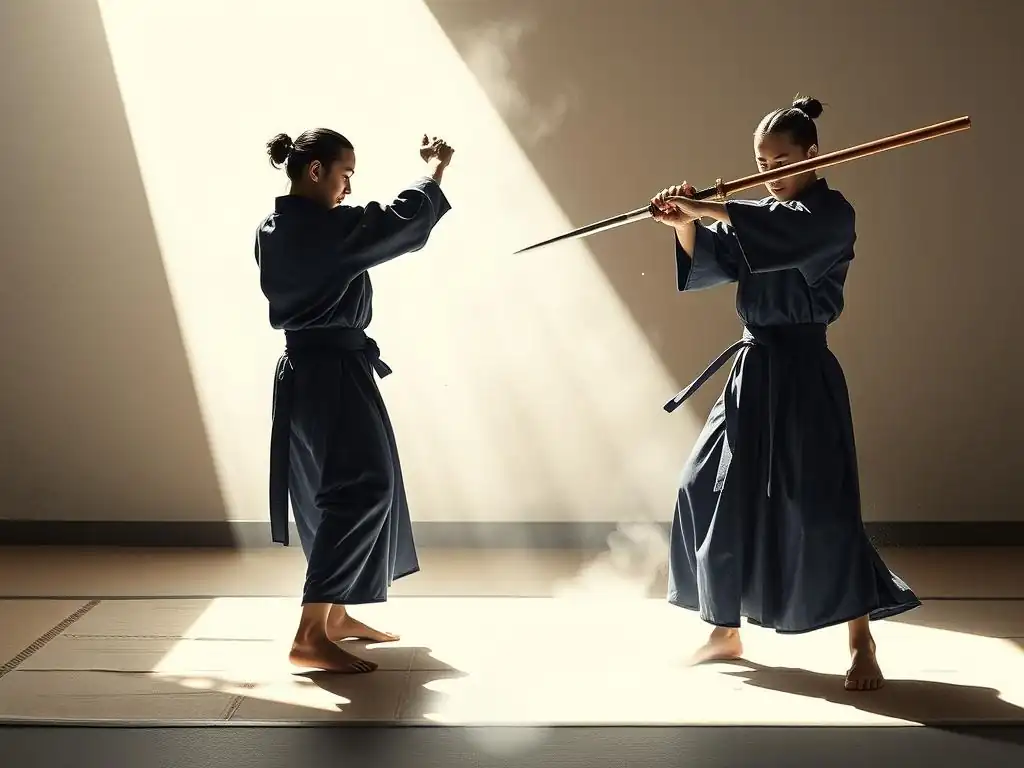
The Historical Context of Koryu Iaido
Koryu Iaido schools represent the historical evolution of Japanese swordsmanship, with many originating in the Sengoku period (warring states era, 1467-1615) or the subsequent Edo period (1603-1868). These schools were developed by samurai warriors and swordsmen for practical combat application, either on the battlefield or in duels. Their techniques and kata were often closely guarded secrets, passed down through generations within specific lineages. The purpose was survival and effectiveness in real-life conflict scenarios.
These koryu developed diverse approaches based on the specific needs and experiences of their founders and the prevailing combat methods of their time. Some focused on drawing from seiza for surprise attacks indoors, while others emphasized drawing from standing or walking for battlefield encounters or street duels. The historical context is crucial for understanding the rationale behind the specific movements, postures, and strategies embedded within each koryu's kata. Unlike the later standardized Seitei, koryu techniques were forged in the crucible of actual combat.
Diversity in Koryu Iaido Kata: A School-Specific Approach
One of the defining characteristics of Koryu Iaido is its immense diversity. There is no single, unified Koryu Iaido; rather, it is an umbrella term for dozens, if not hundreds, of distinct schools ( ryuha), each with its own unique curriculum, history, and philosophy. While many share common roots, their kata, techniques, and interpretations can vary significantly.
For example, Musō Jikiden Eishin-ryū and Musō Shinden-ryū, two of the most prominent koryu from which Seitei is derived, share many similarities but also have distinct kata sets, names for techniques, and subtle differences in execution. Other schools, like Hoki-ryū or Tamiya-ryū, have entirely different sets of kata and emphasize different aspects of sword drawing and combat.
This school-specific approach means that learning a koryu requires dedication to that particular lineage and often involves a deeper dive into its unique history and principles. An Iaido kata sidebyside comparison between different koryu can reveal fascinating insights into the varied strategies and tactics developed by historical swordsmen.
Understanding the Nuances of Koryu Sword Drawing Techniques
Koryu Iaido kata often contain a greater level of complexity and nuance compared to Seitei. While Seitei focuses on fundamental mechanics, koryu kata are designed to address more varied and complex combative situations. The techniques within koryu are often less standardized, allowing for subtle variations depending on the specific scenario, the practitioner's physical attributes, and the teachings of their instructor within that lineage.
Nuances in koryu techniques can include variations in the angle and timing of the draw, the relationship between body movement and sword movement, and the integration of other martial arts elements (like unarmed techniques or grappling) within the kata. The emphasis is often on efficiency, deception, and adaptability to a live, unpredictable opponent. Understanding these nuances requires not just physical repetition but also a deep intellectual and intuitive grasp of the kata's underlying strategy and combative intent. An Iaido kata sidebyside comparison highlights how koryu prioritize practical effectiveness in diverse scenarios.
Examples of Koryu Iaido Schools and their Unique Kata
Several prominent Koryu Iaido schools are still actively practiced today, each with its distinctive curriculum.
- Musō Jikiden Eishin-ryū (MJER): One of the most widespread koryu, with roots tracing back over 450 years. Its curriculum includes extensive sets of kata performed from seiza (seated), tatehiza (kneeling on one knee), and tachi (standing). Examples include Ōkubi (decapitating a kneeling opponent) or Tora Issoku (Tiger's Paw), a tatehiza kata.
- Musō Shinden-ryū (MSR): Closely related to MJER, also widely practiced. While sharing many kata names and principles, there are differences in execution and the overall structure of the curriculum. MSR also features kata from seiza, tatehiza, and tachi.
- Hoki-ryū: Another significant koryu, known for its powerful and sometimes more direct techniques. Hoki-ryū kata are primarily performed from seiza and tatehiza. Their kata like Hikitsure (Leading Along) or Makkō (Direct Front) have distinct movements and emphasis compared to the Musō schools.
- Tamiya-ryū Iaijutsu: An older school with a strong emphasis on practical, efficient movements. Its kata are often shorter and focus on direct engagement from standing or walking postures.
These examples illustrate the rich diversity within Koryu Iaido. Each school's kata reflects its unique history, strategic principles, and technical emphasis, offering a deep well of study for dedicated practitioners.
Side-by-Side Comparison: Seitei and Koryu Kata
Sword Drawing (Nukitsuke): A Comparative Analysis
Seitei Nukitsuke: Standardized Form and Execution
In Seitei Iaido, the nukitsuke (the draw and initial cut) is performed as a single, continuous, and powerful action. The emphasis is on achieving maximum speed and efficiency from the moment the hand grips the tsuka (hilt) to the point where the blade clears the saya and delivers the cut. The form is highly standardized: the left hand pushes the saya forward and slightly down (sayabiki), while the right hand draws the sword forward and upward in an arc, culminating in the cut.
The target in Seitei nukitsuke is typically a single opponent directly in front or to the side, depending on the specific kata. The movement is clean, direct, and aims for a precise cut, often to the head or torso. The standardization of Seitei nukitsuke ensures that practitioners develop a strong, consistent basic draw. This consistency is crucial for learning the fundamentals before exploring variations. An Iaido kata sidebyside comparison of nukitsuke clearly shows Seitei's focus on a universal, fundamental motion.
Koryu Nukitsuke: Variations and Emphasis on Realism
Koryu Iaido exhibits much greater variation in nukitsuke techniques, reflecting the diverse scenarios and strategies of different schools. While the core principle of drawing and cutting in one action remains, the specific execution can differ significantly. Some koryu might emphasize a very low draw, others a more circular motion, and some might incorporate deceptive movements or feints.
The emphasis in koryu nukitsuke is often on realism and adaptability to complex situations. Kata might involve drawing against multiple opponents, drawing from awkward positions, or incorporating subtle shifts in body weight and angle to gain an advantage. For example, some koryu have techniques for drawing while falling or against an opponent who is grappling. The variations in koryu nukitsuke highlight the art's roots in actual combat, where a single, standardized draw might not always be effective. An Iaido kata sidebyside comparison reveals that koryu nukitsuke is tailored to specific, often more complex, combative contexts.
Body Movement (Tai Sabaki): Contrasting Styles
Seitei Tai Sabaki: Efficient and Controlled Movements
Tai sabaki (body movement) in Seitei Iaido is characterized by efficiency, control, and clarity. The movements are generally direct and economical, designed to position the practitioner effectively for the draw, cut, and subsequent actions within the standardized kata. Footwork is precise, often involving stepping forward, backward, or to the side in a controlled manner.
The body movements in Seitei are typically linear or follow simple arcs, ensuring stability and balance throughout the kata. The focus is on executing the techniques with proper form and posture, maintaining a strong center. While intended to simulate combative movement, the tai sabaki in Seitei is often more stylized and less dynamic than in many koryu, prioritizing clear demonstration of technique over complex tactical maneuvering. This controlled approach helps students build a foundation of correct body mechanics.
Koryu Tai Sabaki: Adaptability and Combat Effectiveness
Koryu Iaido kata often feature tai sabaki that is more dynamic, fluid, and varied, reflecting the need for adaptability in real combat. Body movements can be more evasive, deceptive, or integrated with techniques beyond simple cutting, such as unbalancing an opponent or creating openings. Footwork might include shuffling steps, pivots, or even ground-based movements.
The tai sabaki in koryu is intrinsically linked to the specific combative scenario of the kata. It is designed to manage distance, evade attacks, create angles for effective cutting, and maintain tactical advantage against unpredictable opponents, potentially multiple ones. For instance, a koryu kata might involve a complex pivot to address an opponent approaching from the rear immediately after dealing with one in front. This emphasis on practical combat effectiveness leads to a wider range of body movements compared to the standardized Seitei. An Iaido kata sidebyside comparison of tai sabaki demonstrates koryu's focus on practical, dynamic maneuvering.
Target Engagement: Differences in Imagined Opponents
Seitei: Engaging a Single, Clear Target
In most Seitei Iaido kata, the practitioner engages a single, clearly defined imagined opponent. This opponent is typically positioned directly in front, to the side, or behind, and their actions are predictable within the context of the kata. The kata are structured to teach the appropriate response to this single threat, from the initial draw to the final noto.
This focus on a single, clear target simplifies the learning process and allows students to concentrate on mastering the fundamental techniques of drawing, cutting, and controlling the sword. While some Seitei kata involve turning to address an opponent from a different direction (e.g., Ushiro or Shihō Giri), these are still generally treated as sequential engagements with individual threats rather than simultaneous management of multiple adversaries.
Koryu: Addressing Multiple Opponents in Complex Scenarios
Koryu Iaido kata frequently involve scenarios with multiple imagined opponents or more complex, less predictable single opponents. These kata demand a higher level of spatial awareness, strategic thinking, and the ability to transition smoothly between targets. The practitioner must manage threats from different directions simultaneously or in rapid succession.
For example, a koryu kata might begin with drawing against an opponent in front, followed immediately by turning and cutting another opponent from the side or rear, and then perhaps dealing with a third threat. The kata's movements, including tai sabaki and cutting angles, are designed to be effective in these multi-directional and dynamic situations. This difference in target engagement is a key distinction in an Iaido kata sidebyside comparison, highlighting koryu's emphasis on complex combative applications.
Chiburi and Noto: Analyzing Blood Removal and Sheathing Techniques
Seitei Chiburi and Noto: Simplified and Standardized
The chiburi (shaking blood from the blade) and noto (returning the sword to the saya) in Seitei Iaido are performed using standardized methods. The most common chiburi is ō-chiburi, a large, sweeping motion of the blade. Yoko-chiburi is also used in certain kata. These movements are executed with precision and control, serving primarily as a clear signal that the cutting action is complete and the practitioner is preparing to re-sheath the sword.
Seitei noto is performed carefully, with the left hand guiding the saya to meet the blade at the kissaki (tip), and then the blade is slid smoothly and safely back into the saya. The emphasis is on safety and control, ensuring the blade is not damaged and the practitioner is not cut. Both chiburi and noto in Seitei are integral parts of the kata sequence, performed with a specific form that reinforces basic sword handling principles. An Iaido kata sidebyside comparison shows Seitei's chiburi and noto as formal, standardized concluding movements.
Koryu Chiburi and Noto: Practical Applications and Variations
Koryu Iaido often features a wider variety of chiburi and noto techniques, some of which emphasize practical application in a combative context. While some koryu use movements similar to Seitei's ō-chiburi, others might employ smaller, quicker chiburi variations (like kinōchi-chiburi or sayabiki-chiburi) that are less conspicuous or allow for quicker transitions. The choice of chiburi might depend on whether other opponents are present or the need to quickly move to the next action.
Similarly, koryu noto techniques can vary. Some kata might involve noto performed while moving, or even while engaging a retreating or nearby opponent. The return to the saya might be quicker or incorporate elements of zanshin that are less explicitly shown in Seitei. The variations in koryu chiburi and noto reflect the practical demands of historical combat, where efficiency and tactical awareness were paramount, even in the concluding actions of an engagement. An Iaido kata sidebyside comparison highlights how koryu variations often retain a stronger link to the practical requirements of historical sword use.
Practical Considerations for Iaido Practitioners
Choosing Between Seitei and Koryu Iaido: Which is Right for You?
Deciding whether to primarily focus on Seitei or a specific Koryu (or both) depends largely on your goals and interests. If you are new to iaido and seeking a structured, progressive learning path with widely recognized standards and opportunities for formal grading and competition, Seitei Iaido is an excellent starting point. Its standardized curriculum provides a solid foundation in the core mechanics and principles of sword drawing in an accessible format. It's also often easier to find qualified Seitei instructors.
If you are drawn to the historical depth, diverse techniques, and complex combative strategies of traditional schools, then studying a Koryu might be more appealing. However, koryu study typically requires a greater commitment to a specific lineage and can be more challenging to access, as qualified instructors may be fewer and farther between. Many experienced practitioners choose to study both, using Seitei as a fundamental base and koryu to explore deeper principles and historical context. An Iaido kata sidebyside comparison study can help clarify the distinct paths offered by each approach.
Integrating Seitei and Koryu Iaido Training
For many dedicated iaido practitioners, integrating both Seitei and Koryu training offers the most comprehensive path to mastery. Seitei provides the essential foundation: correct posture, grip, basic draw mechanics, and standardized movements. This strong base makes it easier to understand and execute the more complex and varied techniques found in koryu. Learning Seitei kata first helps develop the necessary physical control and mental focus.
Conversely, studying a koryu can deepen one's understanding of Seitei. The historical context, tactical nuances, and practical applications embedded in koryu kata can shed light on the underlying principles behind the standardized Seitei movements. Koryu training often emphasizes the combative intent and the interaction with an imagined opponent in a way that can enrich the practice of Seitei. Integrating both allows practitioners to appreciate the standardization of Seitei while exploring the richness and historical depth of traditional schools. An Iaido kata sidebyside comparison becomes a powerful learning tool when practicing both.
The Role of Kata in Developing Practical Sword Skills
While modern iaido is not practiced for actual combat, the kata remain crucial for developing skills that are fundamentally rooted in practical sword use. Through the repetitive practice of kata, practitioners develop precise body control, timing, distance judgment ( ma-ai), and the ability to generate power efficiently. The simulated scenarios in kata teach strategic thinking, awareness of one's surroundings, and the importance of zanshin (lingering awareness) after an action is completed.
Kata practice also cultivates mental discipline, focus, and presence of mind, qualities essential in any high-pressure situation. The physical techniques, such as nukitsuke and kiritsuke, build muscle memory for rapid, powerful actions. While not a substitute for sparring (as in kendo or kenjutsu), diligent kata training develops the foundational physical and mental attributes that would be necessary for effective sword handling if ever required. The practical skills developed through kata are the core of iaido training.
Finding a Qualified Iaido Instructor for Both Seitei and Koryu
Finding a qualified instructor is paramount for effective iaido training, whether in Seitei, Koryu, or both. For Seitei Iaido, look for instructors affiliated with recognized organizations like the Zen Nihon Kendo Renmei (ZNKR) or its international affiliates. They should hold recognized dan grades and have experience teaching the Seitei syllabus. A good Seitei instructor will emphasize correct form, precision, and understanding of the basic principles.
For Koryu Iaido, finding an instructor can be more challenging. Koryu lineages are often smaller and more geographically concentrated. It is crucial to find an instructor who is a legitimate successor within their specific ryuha, often holding a high license or teaching title (e.g., menkyo kaiden or shihan). Research the school's history and lineage. A qualified koryu instructor will not only teach the kata but also transmit the school's history, philosophy, and the deeper nuances of its techniques. Ideally, find a dojo where senior students demonstrate a high level of skill and understanding.
Advanced Iaido Practice: Bridging the Gap Between Seitei and Koryu
Applying Seitei Fundamentals to Koryu Techniques
For practitioners who have established a strong foundation in Seitei Iaido, the transition to or concurrent study of Koryu can be significantly smoother. The fundamental body mechanics, the principles of sayabiki, the feel of the draw, and the basic cutting actions learned in Seitei are directly applicable to Koryu techniques. Seitei provides a universal language of movement and terminology that helps in understanding the often more complex and varied applications found in traditional schools.
For example, the powerful, unified nukitsuke developed through Seitei practice is the basis for many koryu drawing techniques, even those with different angles or targets. The control and precision cultivated in Seitei noto are essential for safely sheathing the sword in koryu, where noto might occur in more dynamic or compromised positions. By consciously applying their Seitei fundamentals, advanced practitioners can more quickly grasp the specific nuances and strategic intent of different koryu kata, seeing how the basic building blocks are utilized in more elaborate structures.
Understanding the Deeper Principles of Sword Drawing
Moving beyond the mere physical execution of movements, advanced iaido practice involves delving into the deeper principles that underpin both Seitei and Koryu kata. This includes a profound understanding of ma-ai (correct distance), kakegoe (vocalization and spirit), kokyu (breath control), and the connection between mind, body, and sword ( ki-ken-tai-ichi). These principles are present in both Seitei and Koryu but are often explored with greater subtlety and depth in traditional schools.
Studying koryu can illuminate the combative logic behind Seitei's standardized forms. An advanced practitioner might realize that a specific movement in a Seitei kata, while appearing simple, is derived from a complex koryu technique designed to counter a particular attack. Understanding the 'why' behind the movements, the strategic intent, and the flow of energy is crucial for advanced practice. This deeper understanding transcends the specific kata and applies to the art of sword drawing itself, regardless of school. An Iaido kata sidebyside comparison at this level reveals the common roots and shared principles beneath the surface variations.
Exploring the Philosophical Underpinnings of Iaido Kata
Iaido is not just a physical discipline; it is deeply intertwined with Japanese philosophy, particularly Zen Buddhism and Shinto. Advanced practice involves exploring these philosophical underpinnings, understanding how they influence the do (way) aspect of iaido. Concepts like mushin (empty mind), fudoshin (immovable mind), and zanshin (lingering awareness) are not just technical terms but states of being cultivated through diligent training.
Each kata, whether Seitei or Koryu, can be seen as a moving meditation, a path to self-discovery and refinement. The focus on precision, presence, and confronting imagined threats mirrors the challenges of life. Exploring the history and philosophy of specific koryu can reveal unique insights into the values and worldview of the samurai who developed them. This philosophical depth adds another layer to the practice, transforming it from mere technique into a profound personal journey. An Iaido kata sidebyside comparison viewed through a philosophical lens highlights how different schools embody similar core tenets through varied physical forms.
The Importance of Continuous Learning and Refinement in Iaido
Mastery in iaido is a lifelong pursuit. Even after decades of practice, there is always room for refinement and deeper understanding. Continuous learning involves revisiting fundamental techniques, exploring advanced kata, studying the history and philosophy of the art, and seeking instruction from various qualified teachers. The body changes with age, requiring adjustments to technique, but the principles remain constant.
Refinement comes from meticulous attention to detail, striving for perfect execution of each movement, and cultivating a deeper connection with the sword and the kata. This involves not just physical repetition but also critical self-assessment and mindful practice. Whether focusing on Seitei or Koryu, the path of iaido is one of continuous growth, pushing physical and mental boundaries. The journey of comparing Iaido kata sidebyside, understanding their differences and commonalities, is itself a form of continuous learning that enriches the practitioner's appreciation for the art.
Conclusion: Appreciating the Richness of Iaido Kata - Seitei and Koryu
The Enduring Legacy of Japanese Sword Arts
The art of Japanese sword drawing, Iaido, represents an enduring legacy of the samurai era. While the age of swordsmanship as a primary form of combat has passed, the principles, discipline, and techniques developed over centuries continue to offer profound benefits to modern practitioners. Iaido is a living link to a rich cultural and martial history, preserving traditions and philosophies that emphasize not only physical skill but also mental fortitude, ethical conduct, and self-mastery.
The practice of Iaido kata allows us to step into the mindset of historical warriors, understanding their strategies and challenges. The sword becomes a tool not just for cutting, but for forging character. The dedication required to master Iaido kata, whether Seitei or Koryu, reflects the commitment and discipline that were hallmarks of the samurai. This enduring legacy is a testament to the depth and effectiveness of these traditional Japanese arts.
The Value of Studying Both Seitei and Koryu Iaido
Studying both Seitei and Koryu Iaido offers a uniquely rich and comprehensive understanding of the art. Seitei provides an essential, standardized foundation, making the initial learning process accessible and providing a common framework for practitioners worldwide. Its emphasis on fundamental mechanics builds the necessary physical skills and discipline.
Koryu, on the other hand, offers a window into the historical diversity, strategic depth, and practical nuances of traditional swordsmanship. Exploring different koryu reveals the varied approaches developed by masters over time to address specific combative challenges. By studying both, practitioners gain a holistic perspective, appreciating the value of standardization while also understanding the historical context and complex applications that gave rise to the art. An Iaido kata sidebyside comparison throughout one's training journey continually deepens appreciation for the art's breadth.
Further Resources for Iaido Study and Practice
For those interested in further exploring Iaido, seeking out qualified instructors is the most important step. Look for dojos affiliated with recognized national or international federations (like the ZNKR and its affiliates) for Seitei Iaido. For koryu, research specific schools that interest you and inquire about authorized branches or instructors.
Reading books and articles on the history, philosophy, and techniques of Iaido can supplement physical training. While this article provides an Iaido kata sidebyside comparison overview, dedicated texts on specific koryu or on the principles of Seitei can offer much greater detail. Attending seminars and workshops led by senior instructors is also invaluable for gaining different perspectives and refining technique. Consistent, dedicated practice under experienced guidance is the true path to understanding the depth and richness of Iaido kata.
Frequently Asked Questions
What is Iaido and why is a kata side-by-side comparison important?
Iaido is a Japanese martial art emphasizing the smooth, controlled drawing of the sword, striking, and replacing it in the scabbard. A kata side-by-side comparison helps understand the different styles and approaches to these techniques.
What are Seitei Iaido and Koryu Iaido, and what are the key differences between them?
Seitei Iaido is a standardized set of kata designed for wider accessibility. Koryu Iaido refers to older, traditional schools with unique and often more complex kata.
What aspects of Iaido kata are typically compared in a side-by-side analysis?
Comparisons often focus on drawing speed, footwork, target selection, and the overall intent behind each movement within the kata.
Where can I find a detailed Iaido kata side-by-side comparison specifically for Seitei and Koryu styles?
Websites like MartialArtsMastery.org offer resources, and searching online using keywords like "Iaido kata side-by-side comparison" or "Seitei vs. Koryu Iaido" can reveal articles and videos.
How can understanding the differences in Iaido kata improve my martial arts training?
Understanding the nuances can broaden your perspective, refine your technique, and deepen your appreciation for the historical and philosophical underpinnings of the art.
Final Reflection: The Enduring Art of the Draw
The subtle nuances of Iaido kata, often overlooked in the rush of modern life, offer a profound connection to history and self-discipline. This side-by-side comparison of Seitei and Koryu approaches to sword drawing reveals not just technical differences, but also divergent philosophies that continue to shape the practice of Iaido today. The dedication required to master either style speaks volumes about the enduring power of tradition in a rapidly changing world.
The study of Iaido, and particularly the meticulous practice of kata, has profoundly influenced my understanding of patience and precision. It's a constant reminder that true mastery lies not just in physical skill, but in the cultivation of mental fortitude and unwavering focus. The ultimate aim of Iaido is not to cut others, but to cut away the negative aspects within oneself.
This quote encapsulates the transformative potential of this art, a potential that resonates deeply within the cultural landscape of martial arts and personal development.
As you reflect on the differences and similarities between Seitei and Koryu Iaido, consider how the principles of discipline, focus, and respect can be applied to your own life. Embrace the challenge of continuous improvement, and strive to cultivate the same unwavering spirit that defines the art of the draw. Let the lessons learned from the sword guide you towards a sharper, more focused, and ultimately, more fulfilling existence.
Ignite Your Iaido Journey!
Thank you for delving into the nuances of Seitei and Koryu Iaido with us. We hope this comparison has illuminated the paths to deeper understanding and mastery of sword drawing. Now, let's put that knowledge into action:
- Commit to practicing at least one new drawing technique from either Seitei or Koryu this week and observe the subtle differences in feel and execution.
- Share your insights! Discuss your favorite Kata from either style on our forum and why it resonates with you.
- Surprise yourself: Attempt to adapt a principle from one style into a Kata from the other, and reflect on what you discover about both.
What new dimension of sword drawing will you explore next?