
Creating Openings: Using Choy Li Fut Long Range to Set Up Devastating Short Range Attacks

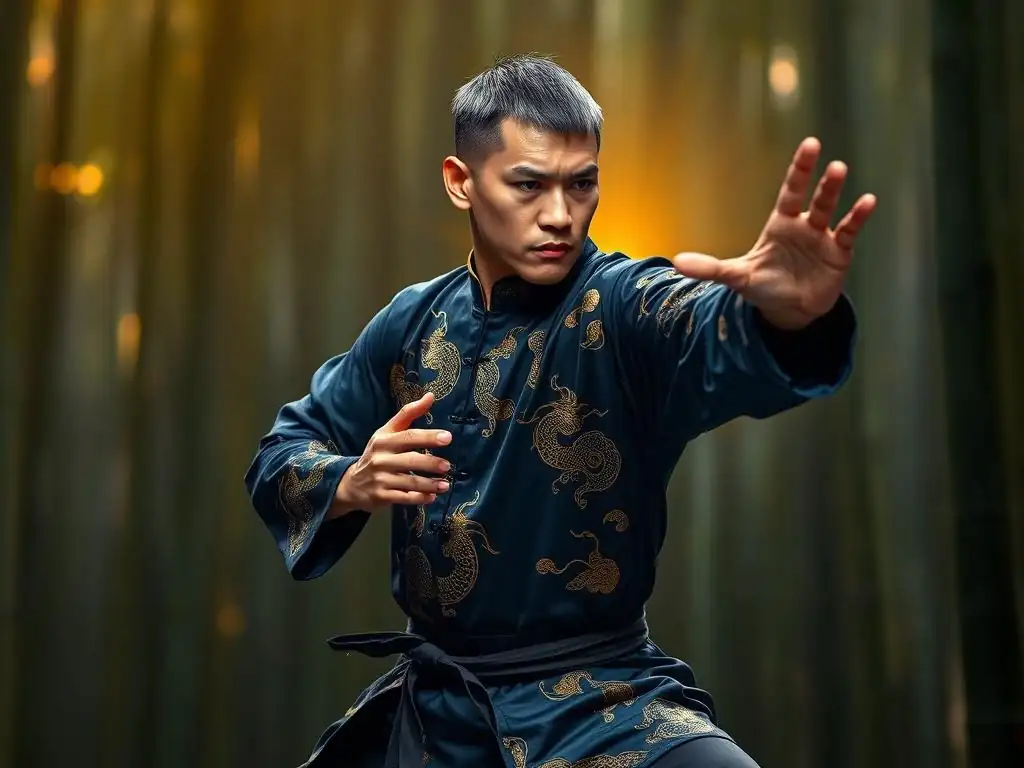
Welcome to Martial Arts Mastery, where the secrets of combat are unveiled! Delve into the rich history and intricate techniques that define the world's most effective martial arts. Today, we explore a fascinating aspect of Choy Li Fut: how its long range capabilities are strategically used to create openings for devastating close-quarters combat. Curious to discover how mastering distance can make you a more formidable fighter? Let's begin.
- Introduction to Choy Li Fut's Long and Short Range Dynamics
- The Core Principles of Choy Li Fut Long Range Fighting
- Leveraging Choy Li Fut Long Range for Offensive Setups
- Transitioning from Long Range to Devastating Short Range Attacks
- Specific Choy Li Fut Techniques for Long to Short Range Transition
- Training Drills for Seamless Range Transition in Choy Li Fut
- Case Studies: Analyzing Effective Long to Short Range Strategies in Choy Li Fut
- The Importance of Timing and Precision in Choy Li Fut Combat
- Conclusion: Mastering Range Control for Complete Choy Li Fut Proficiency
-
Frequently Asked Questions
- What is the primary advantage of using Choy Li Fut long-range techniques?
- How does Choy Li Fut's long-range approach differ from other martial arts?
- Why is long-range proficiency important for self-defense in Choy Li Fut?
- What are some specific Choy Li Fut long-range techniques mentioned in the article?
- How can I improve my Choy Li Fut long-range capabilities?
- Final Reflection: The Dance of Distance and Destruction
- Unleash Your Inner Power: Master the Art of Striking!
Introduction to Choy Li Fut's Long and Short Range Dynamics
Understanding the Interplay of Distance in Choy Li Fut Kung Fu
Choy Li Fut, a renowned Southern Chinese martial art, is celebrated for its comprehensive approach to combat, encompassing techniques effective across all fighting ranges. Unlike systems that specialize primarily in close-quarters or long-range engagement, Choy Li Fut mastery lies in the seamless transition between distances. The interaction between the long hand (長拳, Cháng Quán) techniques and the short strike (短打, Duǎn Dǎ) methods is fundamental to the style's effectiveness.
Understanding this interplay involves recognizing the strengths and weaknesses inherent at each range and how they can be exploited. At long range, Choy Li Fut utilizes powerful, sweeping movements and extended stances, while at short range, it employs rapid, explosive hand strikes, elbow attacks, and close-quarters grappling. The dynamic flow between these distances defines the tactical depth of the system.
The strategic advantage in Choy Li Fut combat often comes from dictating or controlling the fighting distance. A practitioner skilled in Choy Li Fut long range techniques can maintain a safe distance while probing an opponent's defenses, disrupting their structure, and forcing reactions. This pressure from afar is not merely for damage but serves a crucial purpose: creating vulnerabilities that can be capitalized upon when the distance is closed.
Conversely, relying solely on short range without effective long-range setup can leave a practitioner exposed during approach. The essence is to use the expansive power generated by Choy Li Fut long range movements to break down an opponent's guard or position, thereby opening a path to deliver decisive blows from within their defensive perimeter.
Why Master Long Range Techniques to Enhance Short Range Combat
Mastering Choy Li Fut long range techniques is not merely an option but a necessity for unlocking the full potential of its devastating short-range arsenal. The power generated in Choy Li Fut's close-quarters techniques, such as the "Sun Punch" (日字衝拳, Yat Ji Chung Kuen), relies heavily on explosive body mechanics and often requires an opponent to be within a specific, tight distance. Without effective long-range tools, closing this distance safely against a skilled opponent who understands range management is exceedingly difficult and risky.
Long-range techniques act as the entry tools and setup strikes. They allow a practitioner to chip away at an opponent's guard, test their reactions, and draw out defensive responses from a relatively safe distance.
Furthermore, proficiency in Choy Li Fut long range fighting provides the necessary control to dictate the fight's rhythm and distance. By effectively using long-range kicks, sweeps, and extended hand strikes, a practitioner can prevent an opponent from closing distance prematurely or force them into a disadvantageous position. This control is paramount.
An opponent constantly reacting to long-range pressure is less likely to initiate their own offense or maintain a solid defensive posture. This state of disruption is precisely what creates the openings required for the practitioner to transition into the devastatingly fast and powerful short-range combinations that are a hallmark of advanced Choy Li Fut. The long game doesn't just soften the target; it engineers the opportunity for the knockout blow.
The Core Principles of Choy Li Fut Long Range Fighting
Fluid Footwork and Evasive Maneuvering for Range Control
Fluid footwork is the bedrock of effective Choy Li Fut long range combat and paramount for range control. Stances like the "Four-Six Stance" (四六步, Sei Luk Bou) and the "Cross Stance" (交叉步, Gaau Cha Bou) are utilized to facilitate rapid forward, backward, and lateral movement. The ability to quickly advance to press an attack, retreat to evade, or circle to find an angle is essential.
This constant motion, often described as "like a dragon," makes the Choy Li Fut practitioner a difficult target at distance. Unlike static stances, Choy Li Fut footwork emphasizes dynamic shifting and stepping, allowing the practitioner to cover significant ground instantly or make subtle adjustments to maintain optimal striking distance.
Evasive maneuvering complements this dynamic footwork. Techniques such as body angling, weaving, and quick lateral steps are used to avoid incoming long-range attacks while simultaneously positioning for a counter or a closing maneuver. For instance, a quick side step combined with a body pivot can evade a long-range kick while setting up a powerful circular hand strike.
The goal is not just to dodge, but to dodge into a better position. This sophisticated interplay of footwork and evasion allows the Choy Li Fut practitioner to dominate the outer ranges, constantly threatening the opponent while minimizing their own exposure, a critical skill for setting up effective Choy Li Fut long range strategies.
Utilizing Long Weapons and Extended Strikes in Choy Li Fut
Choy Li Fut's curriculum is extensive, including a vast array of weapons, many of which are used to enhance its long-range capabilities. The staff (棍, Gun), particularly the long staff, is a prime example. Its reach extends the practitioner's effective distance significantly, allowing control of a large area. Techniques like sweeping motions, thrusts, and figure-eight patterns keep an opponent at bay or force them to move defensively, thereby creating openings. Beyond weapons, Choy Li Fut's empty-hand forms feature numerous extended strikes designed specifically for Choy Li Fut long range engagement.
Strikes like the "Whip Fist" (鞭拳, Bin Kuen), "Hanging Fist" (掛拳, Gwa Kuen), and various wide, sweeping palm strikes are characteristic of Choy Li Fut's long range arsenal. These techniques generate immense power through body rotation and arm extension, allowing them to reach opponents from a distance.
For example, a well-executed Whip Fist can travel a considerable distance with surprising speed and power, disrupting an opponent's guard or balance. The emphasis is on generating leverage and momentum from the core and transferring it through the extended limb or weapon, enabling the practitioner to apply significant force even when several feet away from their target.
Maintaining Optimal Distance: The Key to Long Range Dominance
Maintaining optimal distance is the strategic lynchpin of Choy Li Fut long range fighting dominance. This isn't a static measure but a dynamic zone relative to the opponent's capabilities and the practitioner's intended technique. Optimal Choy Li Fut long range distance allows the practitioner to land their longest techniques effectively while remaining just outside the range of the opponent's primary attacks. This requires constant awareness of both one's own body and the opponent's position and movement. Through refined footwork and continuous observation, the Choy Li Fut practitioner seeks to stay in this advantageous zone.
This optimal distance provides the necessary space to generate power for Choy Li Fut long range strikes through full body extension and rotation. It also offers time – precious fractions of a second – to react to an opponent's movements, evade incoming attacks, and plan the next sequence. A practitioner who can consistently maintain this distance gains a significant tactical advantage, effectively controlling the flow of the fight from the outside. This control is not an end in itself but a means to an end: setting the stage for the transition to closer ranges when the opportunity arises.
Leveraging Choy Li Fut Long Range for Offensive Setups
Disrupting Your Opponent's Stance with Long Range Kicks
Long-range kicks are invaluable tools in Choy Li Fut for disrupting an opponent's balance and stance, laying the groundwork for subsequent attacks. Techniques like the "Side Kick" (側踢, Chak Tek), "Roundhouse Kick" (橫掃腿, Waang Sou Teui), and various sweeping kicks are employed from a distance. Targeting the opponent's legs, knees, or lower body with these powerful kicks can significantly compromise their stability. A well-placed low kick can buckle a leg, force a shift in weight, or momentarily freeze an opponent as they absorb the impact, disrupting their ability to move effectively or launch a counter-attack.
Beyond direct damage, these kicks serve as probes and distractions. A practitioner might throw a series of feinted or light long-range kicks to gauge the opponent's defensive reactions – how they block, evade, or absorb the kicks. This information helps the practitioner anticipate the opponent's responses to future attacks.
The act of defending against long-range kicks also often forces an opponent to raise their guard or shift their weight, creating temporary openings in their upper body defense or leaving them vulnerable to a sudden change in attack angle or distance. This strategic disruption is a core function of Choy Li Fut long range kicking.
Creating Openings with Circular Hand Techniques from a Distance
Choy Li Fut is renowned for its powerful, circular hand techniques, many of which are effective at long range and excel at creating openings. Strikes like the "Gua Kuen" (Hanging Fist), "Bin Kuen" (Whip Fist), and wide "Chopping Palms" (劈掌, Pek Jeung) utilize sweeping motions generated from the waist and torso. These techniques can bypass or overwhelm an opponent's linear guard.
A forceful Bin Kuen, for example, can whip around an opponent's outstretched arm or block, striking their head or body from an unexpected angle. This forces the opponent to widen their guard or adjust their defensive structure, creating a momentary gap.
These circular techniques, when used at Choy Li Fut long range, also serve to control the space between fighters. A wide sweeping motion can keep an opponent from advancing directly, forcing them to move laterally or pause.
By constantly attacking the periphery of the opponent's defense with these powerful, extending strikes, the Choy Li Fut practitioner puts immense pressure on their structure. This pressure often leads to defensive errors – a guard held too wide, a delayed block, or an unbalanced step – which provide the critical windows needed for the practitioner to close the distance and launch their short-range assault.
Feinting and Deception: Misdirection in Choy Li Fut's Long Game
Feinting and deception are integral to leveraging Choy Li Fut long range techniques for offensive setups. From a distance, a practitioner has more time and space to execute convincing feints. A common tactic involves initiating a large, powerful Choy Li Fut long range movement, such as a sweeping kick or a wide palm strike, only to abruptly change direction or withdraw it just before full commitment. This draws a reaction from the opponent – they might block, evade, or prepare a counter – based on the anticipated attack.
Once the opponent commits to defending against the feint, they are momentarily vulnerable. This moment is precisely when the Choy Li Fut practitioner exploits the misdirection. For example, a feinted high roundhouse kick might cause the opponent to raise their guard, instantly exposing their lower body to a real low sweep or a quick step-in and short-range attack.
Similarly, a wide Bin Kuen aimed at the head might be a setup to draw the opponent's hands up, allowing a rapid transition to a straight punch or elbow strike to the body. The art lies in making the feint believable enough to elicit a response but controlled enough to capitalize on the opponent's reaction.
Transitioning from Long Range to Devastating Short Range Attacks
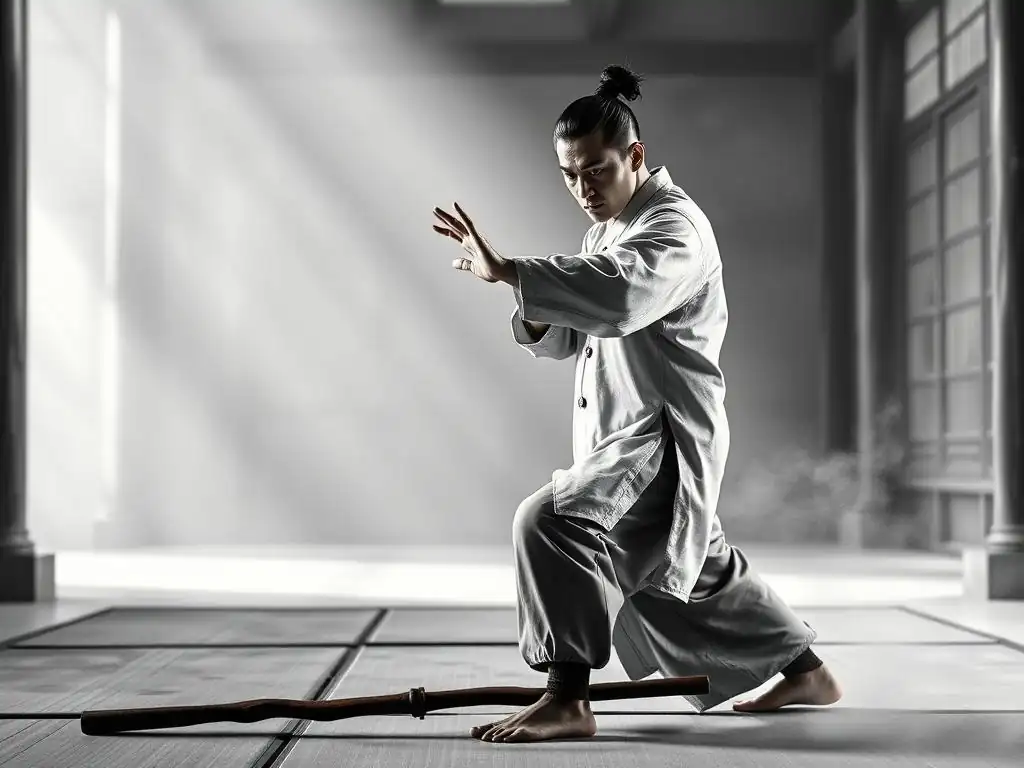
Closing the Gap Effectively: Bridging the Distance Safely
Closing the gap from Choy Li Fut long range to the critical short range safely is a nuanced skill requiring timing, speed, and proper footwork. It's not simply running forward but a calculated maneuver often disguised within an attack or defensive action. One common method is to use a long-range technique as a cover for the advance.
For example, a powerful sweeping kick or a wide circular hand strike can occupy the opponent's attention and defense, providing a split-second window to step or slide forward. The momentum generated by the Choy Li Fut long range movement can even help propel the practitioner into closer quarters.
Another effective technique involves using a quick combination of footwork steps, often starting with a defensive move or a feint. A rapid shuffle step, a controlled lunge (sometimes called "bridging the gap"), or a step-through can quickly cover distance. The key is to enter the opponent's space while minimizing exposure.
This might involve keeping the head off the center line, maintaining a guard, or entering behind the cover of an attacking limb. Effective gap closing ensures that the transition from Choy Li Fut long range to short range is smooth and protected, allowing the practitioner to arrive in position to launch their close-range assault without being intercepted.
Exploiting Openings Created by Long Range Pressure
The primary objective of Choy Li Fut long range pressure is to engineer openings in the opponent's defense, and the transition is the moment to exploit these vulnerabilities. Once a long-range kick has disrupted balance, a circular hand strike has forced a defensive shift, or a feint has drawn a reaction, a temporary window of opportunity appears. This opening might be a gap in the guard, a moment of hesitation, a loss of balance, or a compromised stance. The Choy Li Fut practitioner must be ready to recognize and instantly capitalize on these fleeting chances.
Exploiting these openings requires explosive speed and decisive action. The transition isn't just about moving closer; it's about moving closer with purpose, aiming the first short-range strike at the vulnerability that the Choy Li Fut long range technique created. If a long-range Bin Kuen to the head caused the opponent to raise their hands, the follow-up might be a rapid step-in with a Sun Punch to the now-exposed solar plexus.
If a low sweeping kick caused a momentary loss of balance, the transition could be a quick lunge followed by a powerful elbow strike or shoulder strike to the upper body. The success lies in the immediate, almost simultaneous recognition of the opening and initiation of the close-range attack.
Utilizing Short Range Power Generation: Sun Punch, Back Fist, Elbow Strikes
Choy Li Fut's short-range power generation is distinct and devastating, designed to inflict maximum impact within confined spaces. Techniques like the Sun Punch (Yat Ji Chung Kuen) are executed with incredible speed and torque, generating force through hip rotation and a compact, explosive extension.
This is a stark contrast to the more expansive power generation of Choy Li Fut long range techniques. Other vital short-range tools include the "Back Fist" (橫拳, Waang Kuen or 橫掌, Waang Jeung), delivered with a whipping motion from close quarters, and various elbow strikes (肘, Jau), which are among the most powerful close-range weapons available.
Once the distance is closed, these techniques are unleashed in rapid, often simultaneous combinations. The power comes from the body's core and structure, allowing for multiple strikes to be delivered in quick succession.
For example, after using Choy Li Fut long range techniques to close the gap, a practitioner might launch a lightning-fast Sun Punch to the body, followed immediately by a Back Fist to the head and an elbow strike if the opponent is still within range. The transition must place the practitioner in the optimal distance for these compact, explosive movements to maximize their impact and finish the engagement decisively.
Specific Choy Li Fut Techniques for Long to Short Range Transition
The "Whip Chain Fist" and its Application
The "Whip Chain Fist" (連環鞭拳, Lin Wan Bin Kuen) is a prime example of how Choy Li Fut blends long-range principles with rapid, chaining strikes, serving as an excellent tool for transition. While individual "Whip Fists" (Bin Kuen) can be used effectively at Choy Li Fut long range to probe and disrupt, the "Whip Chain Fist" involves delivering multiple Bin Kuen in rapid succession, often in a circular or figure-eight pattern. This creates a continuous, dynamic attack that pressures the opponent from a distance, making it difficult for them to defend linearly or counter-attack effectively.
Application of the Whip Chain Fist in transition involves initiating the chain from Choy Li Fut long range, using the continuous motion and the need for the opponent to defend against multiple incoming strikes as cover to close the distance. As the practitioner steps or slides forward behind the protection of the whipping arms, the strikes naturally transition from longer, more sweeping motions to shorter, more compact whips or even lead into other close-range techniques.
For instance, a series of high and low Bin Kuen might force the opponent to cover, allowing the practitioner to step inside their guard and follow up with a Sun Punch or elbow strike before the opponent can recover from defending the chain.
Utilizing the "Tiger Claw" after a Long Range Distraction
The "Tiger Claw" (虎爪, Fu Jaau) is a powerful grasping and tearing technique often associated with Southern Chinese martial arts, and in Choy Li Fut, it can be a potent follow-up to a long-range distraction. While the Tiger Claw itself is typically a mid-to-short range technique, requiring relatively close proximity to grasp or strike effectively, a Choy Li Fut long range attack can create the perfect opportunity to close the distance and apply it. A wide, sweeping Choy Li Fut long range palm strike or a feinted kick can momentarily occupy the opponent's vision and defensive focus.
As the opponent reacts to the long-range threat, the practitioner quickly closes the gap. The Tiger Claw can then be applied to grasp clothing, limbs, or sensitive areas like the face or throat.
For example, a Bin Kuen aimed high might cause the opponent to raise their hands; as they do, the practitioner steps in, and the whipping motion of the Bin Kuen transitions into a seizing Tiger Claw aimed at the face or shoulder. The long-range technique serves as the "bait" or the "smoke screen," allowing the practitioner to enter safely and apply the devastating, close-range control or tearing power of the Tiger Claw.
The Role of "Butterfly Palms" in Closing and Attacking
"Butterfly Palms" (蝴蝶掌, Woo Dip Jeung) in Choy Li Fut refer to rapid, circular, and often simultaneous palm strikes that can be used effectively for both defense and offense, particularly in closing distance and attacking at mid-to-short range. While perhaps not strictly a Choy Li Fut long range technique itself, its continuous, flowing motion makes it an excellent tool for bridging the gap and overwhelming an opponent once inside their outer defenses. The circular nature of the strikes helps to parry or deflect incoming long-range attacks while simultaneously advancing.
As a practitioner transitions from Choy Li Fut long range, perhaps after a feint or a disruptive kick, they can initiate a rapid sequence of Butterfly Palms. The continuous, fluid motion of the palms creates a defensive shield while moving forward, deflecting or neutralizing any last-ditch long-range attempts by the opponent to stop the advance.
Once within closer range, these same palm strikes transition into powerful, whipping attacks aimed at the head, body, or limbs. The constant, unpredictable movement of the Butterfly Palms makes it difficult for the opponent to regain their structure or set up a solid defense, allowing the practitioner to establish dominance at the crucial short range.
Training Drills for Seamless Range Transition in Choy Li Fut
Footwork Drills for Closing Distance Quickly and Efficiently
Developing the ability to close distance quickly and efficiently is paramount for transitioning from Choy Li Fut long range. Specific footwork drills are essential. A fundamental drill involves practicing rapid forward and backward shuffles, maintaining a consistent stance and balance. This helps build the explosive power in the legs needed for quick advances and retreats. Another key drill is the "Three-Step Arrow Step" (三步箭步, Saam Bou Jin Bou), where the practitioner takes three rapid, small steps forward, covering ground quickly while staying low and balanced.
Partner drills are also crucial. One partner maintains a defensive Choy Li Fut long range distance while the other practices closing the gap using different footwork patterns – a single explosive step, a series of quick shuffles, or a step-through. The defender provides varied reactions (stepping back, moving laterally) to simulate real combat scenarios. Practicing closing distance from various starting points and against different speeds of retreat helps the practitioner develop the timing and adaptability required to bridge the gap safely and effectively after utilizing Choy Li Fut long range techniques.
Partner Drills for Practicing Long to Short Range Combinations
Partner drills specifically designed for long-to-short range transitions are vital for integrating techniques and timing. A common drill involves one partner initiating a Choy Li Fut long range attack, such as a sweeping kick or a Bin Kuen. The second partner practices defending or evading this attack while simultaneously executing a rapid step-in or gap-closing maneuver. Immediately upon closing the distance, the first partner transitions to a pre-arranged or spontaneous short-range combination (e.g., Sun Punch, elbow strike, Back Fist), which the second partner then defends against.
Variations of this drill include the first partner using feints at Choy Li Fut long range to draw a reaction, and the second partner practicing recognizing the opening created by the feint and exploiting it with a rapid transition and short-range attack. Roles are then reversed. This type of drill, often starting slowly and gradually increasing speed and intensity, helps practitioners internalize the timing, distance judgment, and explosive power needed for the seamless shift from the expansive movements of Choy Li Fut long range to the compact power of close combat.
Shadow Boxing with a Focus on Range Adjustment and Transition
Shadow boxing is a foundational solo training method, and focusing it specifically on range adjustment and transition is highly beneficial for mastering the shift from Choy Li Fut long range. Instead of simply flowing through techniques, the practitioner actively visualizes an opponent and practices moving in and out of different ranges. This involves throwing a Choy Li Fut long range technique, immediately following it with the footwork necessary to close the distance, and then unleashing a sequence of short-range strikes.
The emphasis during this type of shadow boxing is on the transition itself. The practitioner visualizes how a long-range attack creates an opening and practices the specific footwork and body mechanics required to bridge the gap smoothly and powerfully. They practice initiating from Choy Li Fut long range, closing to mid-range, then short-range, and even practicing retreating back to long range if the short-range attack isn't successful or a counter-attack is anticipated. This mental and physical rehearsal helps build muscle memory for dynamic range control and the seamless flow between Choy Li Fut's different fighting distances.
Case Studies: Analyzing Effective Long to Short Range Strategies in Choy Li Fut
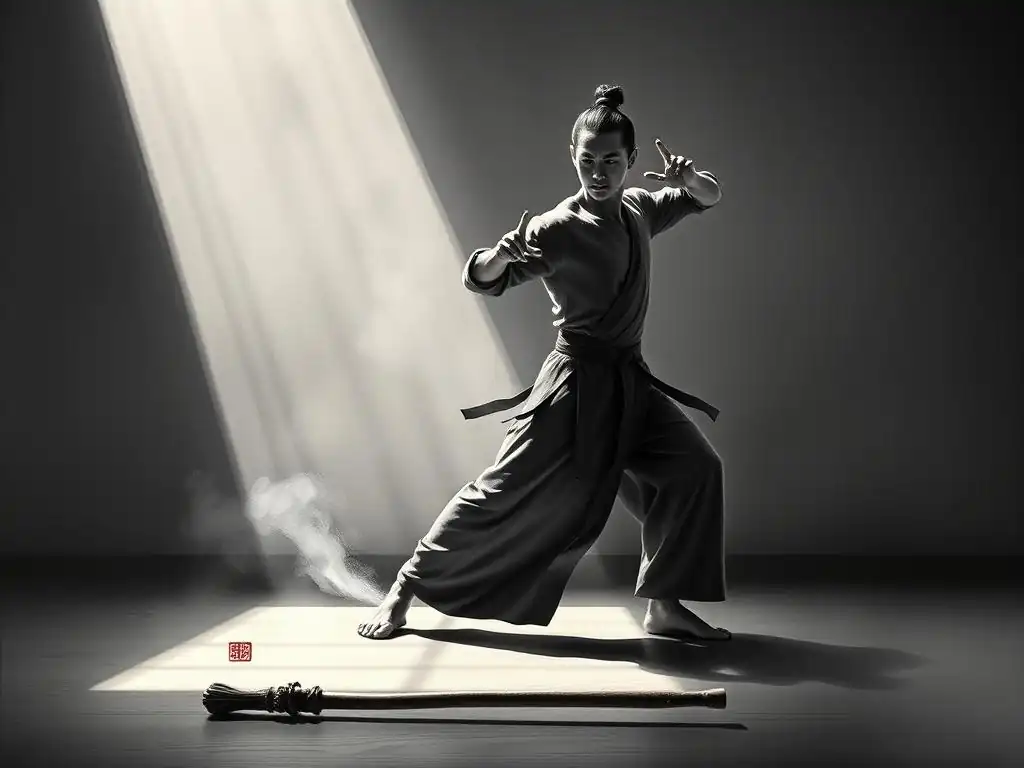
Wong Yan-Lam vs. Lei Tai Competitor: A Study in Distance Control
While specific, detailed accounts of historical Lei Tai (elevated fighting platform) matches involving Choy Li Fut masters like Wong Yan-Lam (黃仁霖) with blow-by-blow technique analysis are scarce in publicly available records, general principles can be extrapolated from the known characteristics of Choy Li Fut and Lei Tai combat. Lei Tai bouts often began at a distance, with fighters circling and probing.
A master like Wong Yan-Lam, known for his comprehensive Choy Li Fut skills, would undoubtedly utilize his Choy Li Fut long range arsenal in such a scenario. Imagine a hypothetical Lei Tai match where Wong Yan-Lam faces a skilled opponent specializing in closer-range grappling or throwing.
Wong Yan-Lam would likely use sweeping Choy Li Fut long range kicks and wide, powerful hand strikes (like Bin Kuen) to keep the grappler at bay, preventing them from closing distance prematurely. These long-range attacks would not only score points or inflict damage but also serve to test the opponent's reactions and create openings.
For example, repeated long-range leg kicks might force the opponent to lower their guard or shift weight defensively. Seeing such an opening, Wong Yan-Lam would then execute a rapid, explosive step-in, perhaps behind the cover of a final long-range feint, immediately transitioning to a close-range attack like a Sun Punch to the body or a powerful elbow strike to disrupt the opponent's structure or finish the fight before they could initiate their grappling.
This hypothetical scenario illustrates the strategic use of Choy Li Fut long range to neutralize an opponent's primary strength and create opportunities for the practitioner's own close-range power.
Modern Sparring Application: Using Long Range Kicks to Set Up a Grappling Takedown
In modern Choy Li Fut sparring, especially in contexts that allow for grappling or takedowns, the strategic use of Choy Li Fut long range techniques to set up close-range entries is highly effective. Consider a sparring scenario where a Choy Li Fut practitioner wants to execute a takedown against an opponent with strong striking defense at mid-range. Engaging directly at mid-range might lead to getting caught by punches or kicks.
Instead, the practitioner utilizes Choy Li Fut long range tactics. They might employ a series of powerful, fast roundhouse kicks or side kicks to the opponent's legs or body from a safe distance.
These long-range kicks force the opponent to react – they might block, evade, or try to counter-kick. As the opponent is focused on defending against the kicks and their weight is shifted, a momentary window appears. For instance, defending a strong leg kick often requires shifting weight onto the supporting leg, making a takedown easier.
At this precise moment, the Choy Li Fut practitioner executes a rapid level change and a driving step-in, transitioning from the kicking range directly into a wrestling shot or a judo-style grip setup. The long-range kicking attack, a core element of Choy Li Fut long range strategy, serves not as the finishing move, but as the critical setup that disrupts the opponent's balance and defense, allowing for a successful transition to the close-range grappling required for the takedown.
The Importance of Timing and Precision in Choy Li Fut Combat
Developing a Keen Sense of Timing for Optimal Attack
Timing is arguably the most critical element in martial arts, and its importance is magnified when transitioning between ranges in Choy Li Fut. A keen sense of timing allows the practitioner to initiate their Choy Li Fut long range attacks at the precise moment they are most likely to land or create a reaction. More importantly, it dictates the success of the transition to short range.
Closing the gap too early leaves the practitioner exposed; closing too late misses the opening created by the long-range setup. Optimal timing means recognizing the exact moment the opponent is vulnerable – perhaps during their own movement, while recovering from a block, or when their weight is shifted – and initiating the transition immediately.
Developing this timing comes through countless hours of practice, including drills that focus on reacting to specific cues, partner work that simulates real combat speeds, and sparring. It's an intuitive skill honed through experience. A Choy Li Fut practitioner with excellent timing can make even simple long-range techniques appear devastating because they are delivered when the opponent is least able to defend. This timing then seamlessly carries into the transition, ensuring that the explosive short-range follow-up lands when the opponent is still reeling or out of position from the initial Choy Li Fut long range pressure.
Precision Striking: Targeting Vulnerable Points at Close Range
While Choy Li Fut long range techniques often involve larger, more sweeping motions designed to cover distance and disrupt, precision striking becomes paramount once the distance is closed. At short range, opportunities are fleeting, and the margin for error is small. The power generated by techniques like the Sun Punch or elbow strikes is immense, but it must be directed at vulnerable targets to be truly devastating. Targeting areas such as the solar plexus, jaw, temples, ribs, or specific pressure points significantly increases the effectiveness of short-range attacks.
Precision striking requires not only accuracy but also the ability to identify targets rapidly in the chaos of close-quarters combat. This is where the setup from Choy Li Fut long range is crucial. If a long-range feint successfully draws the opponent's guard high, the precise target for the follow-up Sun Punch is the now-exposed solar plexus.
If a long-range kick causes the opponent to momentarily buckle, the precise target for a close-range elbow strike might be the side of the head or jaw as they recover. Training involves not just performing the techniques powerfully but also developing the visual acuity and targeting reflexes needed to land these high-impact strikes on vital areas during the critical short-range phase.
Conclusion: Mastering Range Control for Complete Choy Li Fut Proficiency
The Path to Becoming a Well-Rounded Choy Li Fut Practitioner
Becoming a truly well-rounded Choy Li Fut practitioner necessitates mastery across all fighting ranges, with particular emphasis on the dynamic interplay between them. It is insufficient to excel solely at Choy Li Fut long range or only at close-quarters combat. The art's genius lies in its integrated system, where techniques from one distance set up opportunities at another. The journey involves dedicating significant training time to developing powerful and strategic Choy Li Fut long range techniques, alongside cultivating explosive and precise short-range power. This dual focus ensures that the practitioner is never limited by distance.
The path requires constant practice of footwork and transitional drills, enabling the seamless shift from the outer perimeter to the inner core of engagement. It demands a keen understanding of timing and the ability to read an opponent's reactions to Choy Li Fut long range pressure.
Ultimately, complete Choy Li Fut proficiency is achieved when the practitioner can effortlessly control the fighting distance, using the expansive power of Choy Li Fut long range to manipulate the opponent, create openings, and transition with speed and precision to deliver decisive short-range attacks. This integrated approach embodies the comprehensive nature of Choy Li Fut Kung Fu.
Frequently Asked Questions
What is the primary advantage of using Choy Li Fut long-range techniques?
The primary advantage lies in creating openings and controlling distance. This allows you to set up a more effective and devastating short-range attack.
How does Choy Li Fut's long-range approach differ from other martial arts?
Choy Li Fut emphasizes fluid movement and whipping power from a distance. This contrasts with styles that focus solely on close-quarters combat or linear attacks.
Why is long-range proficiency important for self-defense in Choy Li Fut?
Long-range skills provide the ability to maintain a safe distance from an attacker. This allows for better reaction time and the opportunity to exploit weaknesses.
What are some specific Choy Li Fut long-range techniques mentioned in the article?
While the article doesn't explicitly list specific techniques here, it focuses on the concept of using long-range to establish dominance and control the engagement.
How can I improve my Choy Li Fut long-range capabilities?
Focus on footwork drills to enhance mobility and develop proper body mechanics for generating power from a distance. Consistent practice is crucial.
Final Reflection: The Dance of Distance and Destruction
The principles of Choy Li Fut, as explored in this article, are not merely historical techniques; they are living strategies applicable to any situation demanding adaptability and calculated aggression. Just as the long range sets the stage for the devastating short range, so too does foresight and planning pave the way for decisive action in all aspects of life. The ability to create openings, both in combat and in life, hinges on understanding the interplay between preparation and execution.
The enduring appeal of Choy Li Fut lies in its holistic approach, mirroring the complexities of human interaction. It teaches us that true power comes not just from brute force, but from the intelligent manipulation of space and timing. This resonates deeply in a world where success often depends on anticipating opportunities and seizing them with precision. Know the enemy and know yourself; in a hundred battles you will never be in peril.
- Sun Tzu, highlighting the importance of understanding both the long game and the immediate confrontation.
Now, consider how you can apply these lessons in your own life. Are you strategically positioning yourself for future success? Are you creating the openings you need to achieve your goals? Embrace the dance of distance and destruction, and remember that every long-range plan, every carefully considered strategy, is ultimately designed to set you up for a powerful, decisive strike. Go forth and create your openings.
Unleash Your Inner Power: Master the Art of Striking!
Thank you for diving into the world of Choy Li Fut and exploring the power of range manipulation. Now that you've grasped the foundations, it's time to transform knowledge into action.
Ready to elevate your martial arts game?
- Begin incorporating the long-range techniques discussed into your daily practice. Consistency is key to mastering the flow!
- Share this article with fellow martial artists who might benefit from these strategies – let's build a stronger community.
- Consider attending a Choy Li Fut seminar or workshop to experience these techniques firsthand under expert guidance.
Which long-range technique will you prioritize mastering this week to enhance your close-quarters combat?