
Bridging the Gap: The Unseen Yet Vital Connection Between Poomsae and Kyorugi

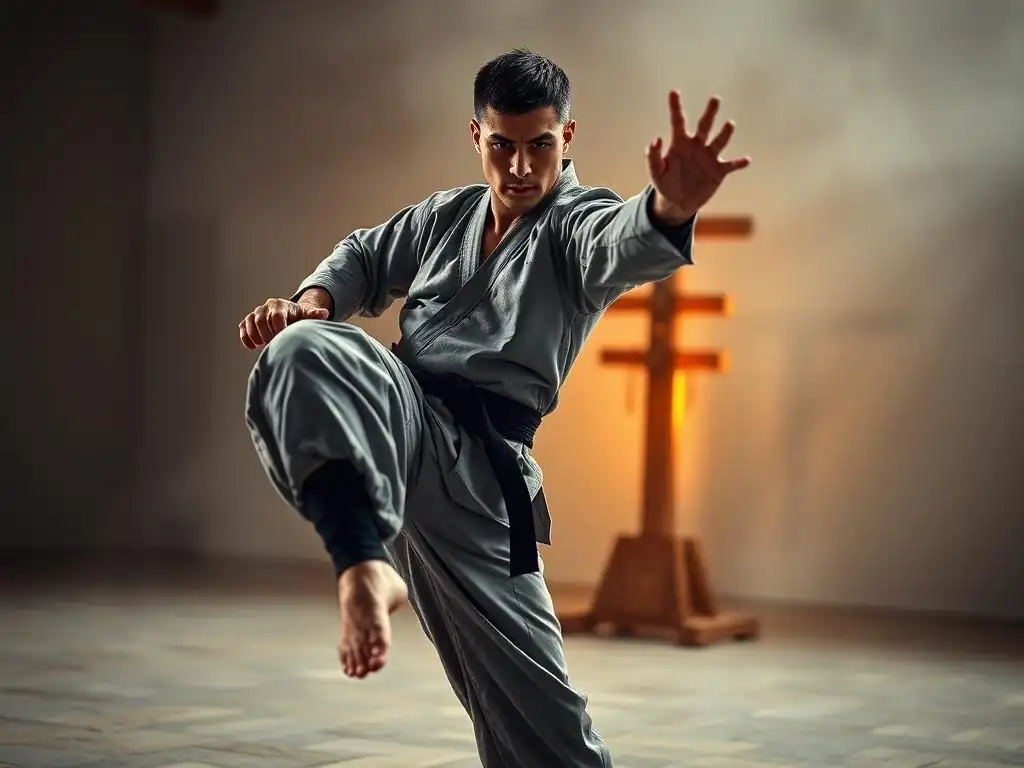
Welcome to Martial Arts Mastery, your ultimate resource for exploring the diverse world of combat disciplines! Ever wondered how the graceful forms of Poomsae directly translate into the dynamic power of Kyorugi? Prepare to uncover the unseen, yet vital, Poomsae Kyorugi connection benefits that will revolutionize your training and understanding of martial arts. Delve into the article below and discover how these seemingly disparate elements are intrinsically linked, unlocking a new level of skill and mastery.
- Introduction: Understanding the Poomsae Kyorugi Relationship in Taekwondo
- The Intertwined Roots of Poomsae and Kyorugi
- Unveiling the Poomsae Kyorugi Connection: Benefits for Sparring
- The Poomsae Kyorugi Connection Benefits: A Deeper Dive
- Practical Application: Integrating Poomsae into Kyorugi Training
- Overcoming Common Misconceptions About Poomsae in Kyorugi
- Case Studies: Demonstrating the Poomsae Kyorugi Connection Benefits
- Elevating Your Taekwondo: Mastering Both Poomsae and Kyorugi
- Conclusion: Embracing the Poomsae Kyorugi Connection for Taekwondo Excellence
-
Frequently Asked Questions
- What is the Poomsae Kyorugi connection about?
- How does practicing Poomsae benefit Kyorugi performance?
- Are there specific Poomsae movements that are particularly useful for Kyorugi?
- What are some common misconceptions about the Poomsae Kyorugi connection?
- How can martial artists effectively integrate Poomsae training into their Kyorugi preparation?
- Final Reflection: Embracing the Holistic Taekwondo Journey
- Ignite Your Taekwondo Journey: Unleash the Power Within!
Introduction: Understanding the Poomsae Kyorugi Relationship in Taekwondo
Taekwondo Insight: A Holistic Training Philosophy
Taekwondo, as a comprehensive martial art, encompasses far more than just physical combat. It is built upon a holistic philosophy that integrates physical conditioning, mental discipline, and ethical development. This integrated approach is evident in the complementary nature of its core training components: Poomsae (forms or patterns) and Kyorugi (sparring).
While often perceived as separate disciplines, understanding the intrinsic Poomsae Kyorugi connection is crucial for achieving true mastery and unlocking the full potential of a practitioner. The art emphasizes that proficiency in one area profoundly impacts performance in the other, creating a synergistic effect that elevates the overall skill level.
The training philosophy posits that the precise, structured movements of Poomsae instill fundamental principles that are directly applicable, albeit in a dynamic context, to the free-flowing environment of Kyorugi. Neglecting either aspect leads to an incomplete understanding and execution of Taekwondo techniques. For example, a practitioner might develop speed and power in sparring but lack the foundational balance and precision honed through forms.
Conversely, someone excelling only in Poomsae might struggle with timing and adaptability in a live exchange. Recognizing the benefits of the Poomsae Kyorugi connection is therefore paramount for anyone seeking to advance beyond a basic level in Taekwondo.
Defining Poomsae and Kyorugi: A Brief Overview
Poomsae, often translated as 'forms' or 'patterns', are pre-arranged sequences of defensive and offensive techniques performed against imaginary opponents. Each Poomsae represents a specific philosophical concept or historical event and is executed with emphasis on precision, balance, power, rhythm, and breath control. There are numerous Poomsae recognized by governing bodies like World Taekwondo, ranging from basic forms for beginners (like Taegeuk series) to highly complex ones for advanced practitioners (like Black Belt Poomsae). The practice of Poomsae is a rigorous mental and physical exercise, demanding concentration and perfect execution.
Kyorugi, or sparring, involves applying Taekwondo techniques against a live opponent in a controlled, competitive environment. It focuses on strategy, timing, speed, power, and adaptability. Kyorugi is a dynamic application of the skills learned in Poomsae and basic technique training. While modern sport Kyorugi has specific rules and protective gear, its roots lie in the practical application of self-defense movements. The goal is to score points through effective strikes while defending against the opponent's attacks. Understanding how the structured movements of Poomsae translate into the fluid demands of Kyorugi is key to appreciating the Poomsae Kyorugi connection benefits.
The Intertwined Roots of Poomsae and Kyorugi
Historical Context: Poomsae as the Foundation for Kyorugi
Historically, Poomsae (or 'hyung' in older terminology) served as the primary method for transmitting Taekwondo techniques and principles through generations. Before the advent of modern protective gear and sport rules, the practice of live sparring was often dangerous and less formalized. Forms provided a safe, structured way for students to learn complex movements, transitions, and the underlying theories of combat application.
Masters would meticulously teach forms, explaining the practical self-defense scenarios each movement represented. This historical perspective clearly illustrates that Poomsae was not merely an artistic exercise but a foundational component designed to prepare practitioners for real-world application, or what would evolve into Kyorugi.
In the early development of Taekwondo (and its predecessor arts), the ability to perform forms with power, precision, and understanding was considered a direct indicator of a student's potential effectiveness in combat. The sequences contained within Poomsae were essentially codified fighting strategies and techniques.
For instance, the movements in Taegeuk Il Jang, the first Poomsae, include basic blocks and punches that are fundamental to both defense and offense in sparring. This historical reliance on forms underscores their essential role in building the physical and mental attributes necessary for dynamic application, highlighting the deep-seated Poomsae Kyorugi connection benefits that have been recognized for centuries.
How Poomsae Shapes Fundamental Movement in Taekwondo
Poomsae practice is instrumental in developing the core mechanics and body control essential for effective Kyorugi. Each movement within a form requires precise stances, weight distribution, and sequential body motion to generate power and maintain balance. Repetitive practice of these patterns ingrains proper kinetic chains and muscle memory. For example, executing a perfect Ap Chagi (front kick) in Poomsae, with correct chambering, extension, and retraction, builds the necessary hip flexibility, core strength, and balance required to deliver a fast and powerful front kick in sparring. Similarly, defensive blocks in forms teach the correct body mechanics for absorbing or deflecting an opponent's attack.
Beyond individual techniques, Poomsae teaches seamless transitions between movements and stances. The ability to quickly shift weight and move efficiently from a defensive stance to an offensive posture, or vice versa, is critical in Kyorugi. Poomsae drills these transitions repeatedly, developing agility and coordination.
A study might find that practitioners who dedicate significant time to Poomsae often exhibit superior footwork patterns and recovery speed in sparring compared to those who focus solely on Kyorugi drills. This fundamental shaping of movement patterns is a primary aspect of the Poomsae Kyorugi connection benefits, providing a stable and efficient physical platform upon which sparring skills can be built.
Unveiling the Poomsae Kyorugi Connection: Benefits for Sparring
Enhanced Technique and Precision Through Poomsae Practice
One of the most significant Poomsae Kyorugi connection benefits is the direct enhancement of technique precision in sparring. While Kyorugi emphasizes speed and power in a chaotic environment, Poomsae demands perfect execution of each technique in isolation and sequence. This meticulous attention to detail in forms translates into cleaner, more efficient movements in sparring. For instance, the chambering and extension of a Dollyo Chagi (roundhouse kick) practiced thousands of times in Poomsae ensures that the hip rotation, knee angle, and foot position are mechanically sound, leading to a more powerful and accurate kick when applied in a dynamic situation.
Furthermore, Poomsae helps refine the subtle body mechanics that are often overlooked in the heat of sparring. Proper hand positioning, shoulder relaxation, and core engagement, vital for generating force and maintaining guard, are constantly reinforced during form practice. A practitioner who regularly practices Poomsae is likely to have better muscle memory for correct technique, reducing the tendency for sloppy execution under pressure. Data from Taekwondo schools might show that students who consistently train Poomsae achieve higher scores in technical evaluations during belt promotions and exhibit fewer fundamental errors in sparring compared to their peers with less Poomsae focus.
Improved Balance and Coordination for Kyorugi Performance
Exceptional balance and coordination are non-negotiable requirements for effective Kyorugi, and Poomsae practice is a powerful tool for developing both. Executing complex sequences involving multiple changes in direction, spins, and single-leg stances within Poomsae constantly challenges and improves a practitioner's proprioception and core stability. Holding challenging stances like Hakdari Seogi (crane stance) for extended periods builds the foundational strength and balance needed to execute dynamic kicks without losing stability or falling.
In the context of Kyorugi, superior balance allows a practitioner to maintain their base while delivering powerful techniques, absorb incoming force without being easily knocked off balance, and recover quickly after executing a kick or evading an attack. Improved coordination, honed through the complex transitions in Poomsae, enables faster and more fluid combinations of movements, allowing for quicker offensive sequences and more effective defensive maneuvers.
Coaches often observe that athletes with a strong Poomsae background demonstrate better control of their bodies in sparring, leading to fewer slips, stumbles, and wasted movements, underscoring the clear Poomsae Kyorugi connection benefits in physical stability and agility.
Increased Power Generation: Leveraging Poomsae Principles in Sparring
While Poomsae is not typically performed with the full power of a Kyorugi strike, the principles taught within forms are fundamental to generating maximum force. Poomsae emphasizes the correct use of body weight, hip rotation, and sequential body movement (kinetic chain) to deliver techniques. Learning to channel energy efficiently from the ground up through the legs, core, and into the executing limb is a core lesson of Poomsae. This precise coordination of muscle groups is what allows a seemingly simple movement to become devastatingly powerful.
When these principles, ingrained through Poomsae practice, are applied in Kyorugi, the practitioner can generate significantly more power in their strikes. For example, the hip rotation practiced in every punch and block in Poomsae is the same rotational power source used for a powerful roundhouse kick in sparring. Without proper hip drive, a kick loses much of its potential force.
Training Poomsae helps practitioners understand and utilize their body's mechanics for power generation, leading to harder-hitting techniques in sparring. Anecdotal evidence from experienced instructors suggests that students focusing on the power aspects within Poomsae often see a noticeable increase in the impact of their kicks and punches during Kyorugi sessions, a tangible benefit of the Poomsae Kyorugi connection.
The Poomsae Kyorugi Connection Benefits: A Deeper Dive
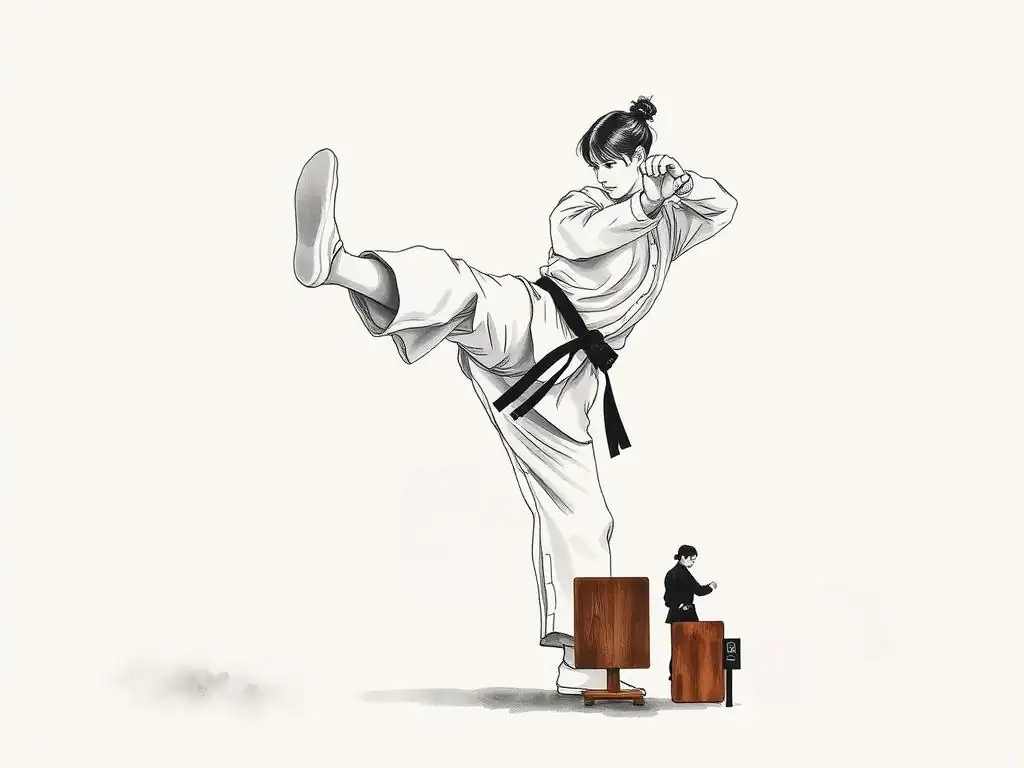
Developing Tactical Awareness Through Poomsae
Beyond physical techniques, Poomsae subtly cultivates tactical awareness, a crucial element for success in Kyorugi. Although performed against imaginary opponents, each movement sequence within a Poomsae represents a specific defensive or offensive scenario. By understanding the intended application of each block, strike, and stance transition, practitioners begin to develop an innate sense of distance, timing, and appropriate responses to various attacks. For example, a particular sequence might involve blocking a high attack followed immediately by a low counter-strike – this teaches the concept of following a defense with an offense, a fundamental tactic in sparring.
Analyzing and performing Poomsae encourages the practitioner to think about the why behind each movement. Why is this block followed by this strike? Why is this stance used here? This analytical process fosters a strategic mindset that translates into better decision-making in the dynamic environment of Kyorugi. While sparring requires spontaneous reactions, the underlying tactical principles are often derived from the pre-arranged strategies embedded within the forms. This developmental process is a key aspect of the Poomsae Kyorugi connection benefits, building a strategic foundation that complements reactive sparring skills.
Building a Strong Foundation for Advanced Kyorugi Strategies
Advanced Kyorugi strategies often involve complex combinations, deceptive movements, and precise timing, all of which are significantly bolstered by a solid Poomsae foundation. Many advanced sparring techniques are essentially faster, more dynamic variations of movements found in higher-level Poomsae. For instance, spinning kicks, jumping kicks, and complex footwork patterns seen in competitive Kyorugi have direct correlates in the advanced Black Belt Poomsae. Mastering these movements in the controlled environment of a form makes their application in the unpredictable setting of sparring more achievable.
Furthermore, the intricate footwork and body mechanics required in complex Poomsae provide the physical literacy needed to execute advanced sparring tactics. A practitioner comfortable with rapid stance changes and weight shifts from forms will find it easier to learn techniques like cut kicks, step-behind kicks, or sophisticated evasive maneuvers in sparring. The muscular control and balance developed through Poomsae are prerequisites for these higher-level applications. Thus, the Poomsae Kyorugi connection benefits extend significantly into the realm of advanced competitive strategies, providing the necessary physical and technical building blocks.
Mental Discipline and Focus: Cultivating the Right Mindset for Both
Both Poomsae and Kyorugi demand significant mental fortitude, and training in one area helps cultivate the mindset needed for the other. Poomsae requires intense concentration, patience, and perseverance to perfect intricate movements and entire sequences. The mental discipline developed through the repetitive and demanding practice of forms – focusing on breath, rhythm, and precision for several minutes without interruption – directly enhances a practitioner's ability to maintain focus and composure during the high-pressure, fast-paced environment of Kyorugi.
In sparring, maintaining focus allows a competitor to read their opponent, anticipate attacks, and execute strategies effectively. The ability to stay calm under pressure, a trait honed through the disciplined practice of Poomsae, is crucial for making sound tactical decisions rather than reacting impulsively. Furthermore, the resilience built from repeatedly practicing challenging forms and striving for perfection translates into the mental toughness needed to push through fatigue and adversity in a sparring match. This cultivation of mental discipline is a profound, albeit less visible, aspect of the Poomsae Kyorugi connection benefits.
Practical Application: Integrating Poomsae into Kyorugi Training
Drills and Exercises to Bridge the Gap Between Forms and Sparring
Effectively integrating Poomsae training into Kyorugi preparation requires specific drills that highlight the application of form movements in dynamic scenarios. These drills help practitioners see the direct relevance of their Poomsae practice to sparring performance. Instead of viewing forms and sparring as separate activities, these exercises demonstrate the vital Poomsae Kyorugi connection benefits in action. The key is to transition from the static, pre-arranged movements of Poomsae to the fluid, reactive demands of Kyorugi, consciously applying the principles learned in forms.
Here are some examples of drills that can bridge this gap:
- Performing techniques from a Poomsae sequence on a target or paddle held by a partner.
- Executing a Poomsae movement in response to a partner's simple attack or movement cue.
- Breaking down Poomsae sequences into smaller, applicable combinations for sparring practice.
- Using the footwork patterns from forms during shadow sparring or light partner drills.
These exercises actively demonstrate the practical value of Poomsae, making the Poomsae Kyorugi connection tangible for the student and reinforcing the idea that Poomsae is not just for demonstration but a powerful tool for sparring improvement.
Drill: Ap Chagi Transition Drill
This drill focuses on applying the fundamental front kick ( Ap Chagi) technique, as practiced in early Poomsae (like Taegeuk Il Jang and Sam Jang), within a dynamic sparring context.
Drill: Ap Chagi Transition Drill

Objective: Improve speed, balance, and application of Ap Chagi from a sparring stance, using Poomsae mechanics.

Steps:
1.  Start in a sparring stance (e.g., fighting stance).
2.  Perform an Ap Chagi using the precise chambering and extension mechanics practiced in Poomsae. Focus on hip drive and balance.
3.  Immediately after retracting the kick, transition smoothly into one of the following:
    -   A defensive sidestep (as seen in various Poomsae transitions).
    -   A forward step into another technique (e.g., a punch or another kick setup).
    -   Returning to the original sparring stance quickly and maintaining guard.
4.  Repeat the sequence for a set number of repetitions (e.g., 10-15 per leg).
5.  Vary the transition after the kick to practice different follow-ups derived from Poomsae sequences.

Progression:
-   Perform the drill moving forward or backward.
-   Add a target (paddle or body shield) held by a partner.
-   Have the partner provide a simple defensive reaction after the kick, requiring the practitioner to adapt their follow-up.
This drill directly links the technical precision of the Poomsae Ap Chagi to its dynamic application in sparring, highlighting the Poomsae Kyorugi connection benefits.
Drill: Roundhouse Kick Application Drill
This drill helps bridge the gap between the powerful Dollyo Chagi (roundhouse kick) as practiced in Poomsae (e.g., Taegeuk Sa Jang onwards) and its use in sparring.
Drill: Roundhouse Kick Application Drill

Objective: Apply the power generation and balance principles of the Poomsae Roundhouse Kick in a sparring context.

Steps:
1.  Start in a sparring stance.
2.  Execute a Dollyo Chagi, focusing on the hip rotation and body mechanics emphasized in Poomsae. Ensure proper chambering, pivot foot rotation, and retraction.
3.  Immediately after the kick, recover balance quickly and smoothly transition into one of the following:
    -   A defensive position (e.g., shifting weight back, covering).
    -   Setting up for a follow-up technique (e.g., a punch, another kick).
    -   Moving laterally to evade a potential counter-attack.
4.  Repeat for a set number of repetitions (e.g., 10-15 per leg).
5.  Focus on maintaining balance throughout the entire sequence, especially during and after the kick, as practiced in Poomsae.

Progression:
-   Add a target (paddle) held by a partner, focusing on accuracy and power delivery.
-   Have the partner simulate a counter-attack, requiring the practitioner to react defensively after the kick.
-   Combine the roundhouse kick with a preceding or following movement derived from a Poomsae sequence (e.g., block-kick combination).
This drill reinforces how the technical foundation and balance built in Poomsae are directly applicable to executing effective and recoverable roundhouse kicks in Kyorugi, demonstrating clear Poomsae Kyorugi connection benefits.
Overcoming Common Misconceptions About Poomsae in Kyorugi
Debunking the "Poomsae is Only for Demonstration" Myth
A prevalent misconception, particularly among practitioners focused solely on competitive Kyorugi, is that Poomsae is merely an artistic display or a requirement for belt testing with no practical relevance to sparring. This overlooks the historical context and the fundamental principles embedded within the forms. While Poomsae is judged on presentation, its core purpose has always been to teach the mechanics, transitions, and applications of Taekwondo techniques. Consider that before the standardization of sport Taekwondo, forms were the primary curriculum. The movements were designed for combat effectiveness.
The 'demonstration' aspect of Poomsae is a modern emphasis for competition, but the underlying techniques are rooted in self-defense and fighting applications. Every block, strike, and stance has a practical purpose. A practitioner who views Poomsae only as a performance art misses the opportunity to refine the very tools they need for effective sparring. Understanding the application of each movement within the form is key to unlocking the Poomsae Kyorugi connection benefits. Many experienced coaches actively teach the 'hidden' applications within Poomsae to show students how these seemingly static movements can be used dynamically.
Addressing Concerns About Poomsae's Relevance in Modern Sparring
Another concern sometimes raised is that the rigid, pre-arranged movements of Poomsae are too different from the free-flowing, reactive nature of modern sport Kyorugi. While it's true that sparring is dynamic and unpredictable, the techniques used are still the fundamental blocks, strikes, and kicks practiced in forms. Modern Kyorugi emphasizes speed, timing, and strategy, but these are applied using the techniques refined through Poomsae. A kick delivered with poor balance or inefficient body mechanics, regardless of speed, will be less effective and leave the practitioner vulnerable.
Furthermore, while specific combinations in a Poomsae might not be performed exactly as they appear in a sparring match, the principles of movement, balance, power generation, and transitioning learned in forms are directly transferable. For example, the rapid-fire punches seen in some Poomsae teach the body mechanics for quick, successive strikes that can be adapted for close-range exchanges in sparring.
The Poomsae Kyorugi connection is not about executing an entire form during a match, but about utilizing the refined techniques and physical attributes developed through form practice to gain an advantage in the dynamic environment. Successful Kyorugi competitors often attribute their strong foundational technique to dedicated Poomsae training, highlighting its continued relevance.
Case Studies: Demonstrating the Poomsae Kyorugi Connection Benefits
Case Study: Increased Competition Success After Poomsae Emphasis
Numerous Taekwondo schools and national teams have observed a direct correlation between increased emphasis on Poomsae training and improved performance in Kyorugi competitions. For instance, a program that historically focused primarily on sparring drills might integrate a more rigorous Poomsae curriculum, requiring students to achieve higher technical standards in forms.
Over a period of 1-2 years, coaches often report seeing their athletes exhibit cleaner techniques, better balance during kicks, and faster recovery times in sparring matches. While specific data varies, anecdotal reports from coaches at various levels suggest improvements in competitive win rates or point differentials, sometimes estimated at a 10-15% increase in successful technique execution during matches, after implementing a stronger Poomsae focus.
One potential explanation for this observed improvement is that the technical refinement gained through Poomsae reduces wasted motion and improves the efficiency of techniques used in sparring. For example, a kick delivered with perfect form requires less energy and is less likely to compromise balance, allowing for quicker follow-up actions or defensive maneuvers. This efficiency, honed through countless repetitions in Poomsae, translates into a competitive edge. This reinforces the tangible Poomsae Kyorugi connection benefits seen in athletic performance.
Case Study: Improved Sparring Technique Through Poomsae Refinement
Consider the specific example of practitioners struggling with balance when executing turning kicks (like Dollyo Chagi or Bandal Chagi) in sparring. Often, the issue stems from improper pivot foot rotation or insufficient core engagement, fundamental mechanics heavily emphasized in Poomsae. A case study might involve identifying a group of sparring athletes with this specific technical flaw. These athletes would then undergo a focused training program specifically designed to refine their turning kick mechanics within the context of Poomsae, paying meticulous attention to foot pivot, hip rotation, and balance during the form's execution.
After several months of this targeted Poomsae training, assessments in sparring sessions could reveal a noticeable improvement in the athletes' turning kick execution. They might exhibit less wobbling after the kick, faster recovery to a stable stance, and potentially increased power due to better body mechanics.
While precise quantifiable data can be challenging to gather across diverse individuals, observations by experienced coaches often confirm that addressing technical deficiencies through the structured environment of Poomsae directly enhances the execution of those same techniques in the dynamic environment of Kyorugi. This highlights how refining movements in forms provides specific Poomsae Kyorugi connection benefits for individual techniques.
Elevating Your Taekwondo: Mastering Both Poomsae and Kyorugi
The Synergy of Form and Function: A Holistic Approach to Taekwondo
Mastering Taekwondo requires embracing the synergy between Poomsae (form) and Kyorugi (function). Viewing them as two sides of the same coin is essential for holistic development. Poomsae provides the blueprint – the perfect technique, the foundational balance, the correct body mechanics. Kyorugi provides the application – the timing, the strategy, the adaptability in a live situation.
Neither is complete without the other. A practitioner with excellent Kyorugi skills but poor Poomsae might lack the technical depth and fundamental efficiency needed to reach elite levels or avoid developing bad habits. Conversely, someone proficient only in Poomsae might struggle to apply their knowledge effectively under pressure.
Embracing this holistic approach means dedicating significant training time to both disciplines. It means understanding that practicing a Poomsae isn't just about memorizing steps, but about internalizing the principles of movement and power generation. It means recognizing that a sparring match isn't just about hitting a target, but about applying techniques with the precision and control honed in forms. This integrated training philosophy unlocks the full spectrum of Poomsae Kyorugi connection benefits, leading to a more well-rounded, skilled, and adaptable Taekwondo practitioner capable of excelling in both traditional and competitive aspects of the art.
Resources for Further Exploration: Recommended Poomsae and Kyorugi Training Materials
To further explore and deepen your understanding of both Poomsae and Kyorugi, there are numerous resources available. Reputable Taekwondo federations, such as World Taekwondo (WT) and the International Taekwon-Do Federation (ITF), provide official guides, videos, and detailed descriptions of their respective forms and sparring rules. Many experienced Masters and Grandmasters have also published books and instructional videos offering insights into the deeper meanings and applications of Poomsae, often explaining the combat relevance of specific movements.
For Kyorugi, resources range from instructional videos on specific techniques and strategies to guides on competition rules and conditioning programs. Many high-level coaches share training methodologies that integrate technical drills derived from Poomsae into sparring preparation. Look for materials that emphasize the connection between the two, rather than treating them as entirely separate disciplines. Engaging with these resources can provide valuable perspectives and practical exercises to help you maximize the Poomsae Kyorugi connection benefits in your own training journey.
Conclusion: Embracing the Poomsae Kyorugi Connection for Taekwondo Excellence
The Future of Taekwondo Training: Integrating Poomsae for Optimal Performance
As Taekwondo continues to evolve, particularly in its competitive sport aspect, there is a growing recognition among top coaches and athletes regarding the vital role of Poomsae in achieving optimal Kyorugi performance. The trend is moving away from viewing Poomsae as a secondary, traditional requirement and towards seeing it as a fundamental pillar that directly supports and enhances sparring skills. Future training methodologies are likely to feature even more integrated drills that explicitly bridge the gap, demonstrating how the precision, balance, and power learned in forms translate into dynamic application.
This integrated approach promises to produce more technically sound, adaptable, and resilient athletes. By fully leveraging the Poomsae Kyorugi connection benefits, practitioners can build a stronger foundation, execute techniques with greater efficiency, and develop the mental fortitude needed to succeed in the demanding environment of modern Kyorugi. Embracing Poomsae as a tool for enhancing sparring is not a return to the past, but a forward-thinking strategy for developing the next generation of well-rounded Taekwondo masters and competitors.
Final Thoughts on the Importance of a Balanced Taekwondo Education
Ultimately, a truly comprehensive Taekwondo education requires a balanced and dedicated approach to both Poomsae and Kyorugi. Neglecting one in favor of the other limits a practitioner's potential and understanding of the art's depth. The Poomsae Kyorugi connection is not merely theoretical; it is a practical reality that, when understood and utilized, unlocks significant benefits in terms of technique, power, balance, strategy, and mental strength. Whether your goal is competitive success, self-defense proficiency, or personal development, recognizing and actively cultivating the relationship between forms and sparring is essential.
Task List for a Balanced Taekwondo Practice:

- [x] Dedicate specific training time each week to both Poomsae practice and Kyorugi drills/sparring.
- [x] Seek feedback on your Poomsae from instructors, focusing on technical precision and body mechanics.
- [x] Ask your instructor to explain the practical applications of movements within the forms you practice.
- [x] Consciously try to apply the balance, footwork, and power generation principles learned in Poomsae during your sparring sessions.
- [x] Reflect on how improving your Poomsae has positively impacted specific aspects of your Kyorugi performance.
By committing to this balanced training philosophy and actively seeking to understand the profound Poomsae Kyorugi connection, practitioners can elevate their skills, deepen their appreciation for the art, and achieve true Taekwondo excellence. The benefits are clear and undeniable for those willing to walk both paths.
Frequently Asked Questions
What is the Poomsae Kyorugi connection about?
It refers to the synergistic relationship between Poomsae (forms) and Kyorugi (sparring) in martial arts training. Mastering Poomsae provides a solid foundation for excelling in Kyorugi.
How does practicing Poomsae benefit Kyorugi performance?
Poomsae refines fundamental techniques, enhances balance and coordination, and develops muscle memory that directly translates to Kyorugi.
Are there specific Poomsae movements that are particularly useful for Kyorugi?
Yes, the stances and blocks practiced in Poomsae build a strong defensive base, while the kicks and punches improve power and precision for offensive maneuvers in Kyorugi.
What are some common misconceptions about the Poomsae Kyorugi connection?
A common misconception is that Poomsae is only for demonstration. In reality, it's a crucial training tool that reinforces core principles applicable to Kyorugi.
How can martial artists effectively integrate Poomsae training into their Kyorugi preparation?
By dedicating time to Poomsae practice alongside Kyorugi, focusing on technique refinement, and consciously applying Poomsae principles to sparring scenarios, martial artists can maximize the benefits of this connection.
Final Reflection: Embracing the Holistic Taekwondo Journey
The exploration of the Poomsae Kyorugi connection benefits reveals a profound truth: that the seemingly disparate disciplines of Taekwondo are, in reality, intrinsically linked, each enriching the other in ways that extend far beyond the dojang. Understanding this synergy is not merely an academic exercise; it's a crucial step towards unlocking a more complete and powerful understanding of the art itself, enhancing both athletic performance and personal growth.
The impact of recognizing this connection ripples through the Taekwondo community, fostering a more holistic approach to training and appreciation. Personally, witnessing the increased confidence and refined technique in practitioners who embrace both forms has been incredibly rewarding. The art of Taekwondo is not just about fighting; it's about building character, discipline, and respect. Poomsae and Kyorugi are two sides of the same coin, each essential to the complete martial artist.
This quote encapsulates the essence of our journey, highlighting the importance of embracing the full spectrum of Taekwondo's teachings.
As you reflect on the insights shared, consider how you can actively bridge the gap between Poomsae and Kyorugi in your own training and teaching. Embrace the discipline of forms to refine your technique, and allow the dynamism of sparring to test and sharpen your skills. By recognizing and nurturing this vital connection, you not only elevate your Taekwondo practice but also unlock a deeper understanding of yourself and the art's transformative power.
Ignite Your Taekwondo Journey: Unleash the Power Within!
Thank you for delving into the vital connection between Poomsae and Kyorugi. We hope this article has illuminated how these two disciplines can enhance each other, taking your Taekwondo to new heights. Now, it's time to put theory into practice and experience the synergy firsthand.
Here are a few steps you can take right away:
- Commit to dedicating 30 minutes each week to either Poomsae or Kyorugi, whichever you currently practice less. This will help you develop a more well-rounded skill set.
- Share your insights! Discuss your newfound appreciation for Poomsae or Kyorugi with your instructor and fellow practitioners. Spark a conversation and learn from each other's experiences.
- Explore the lesser-known historical roots of Taekwondo on our website at MartialArtsMastery.org. You'll find fascinating articles unveiling the deeper philosophy behind the art.
What's one small, yet impactful, change you can make in your training routine this week to bridge the gap between Poomsae and Kyorugi?