
How to Practice Kendo Basic Strikes Solo: Effective Home Drills

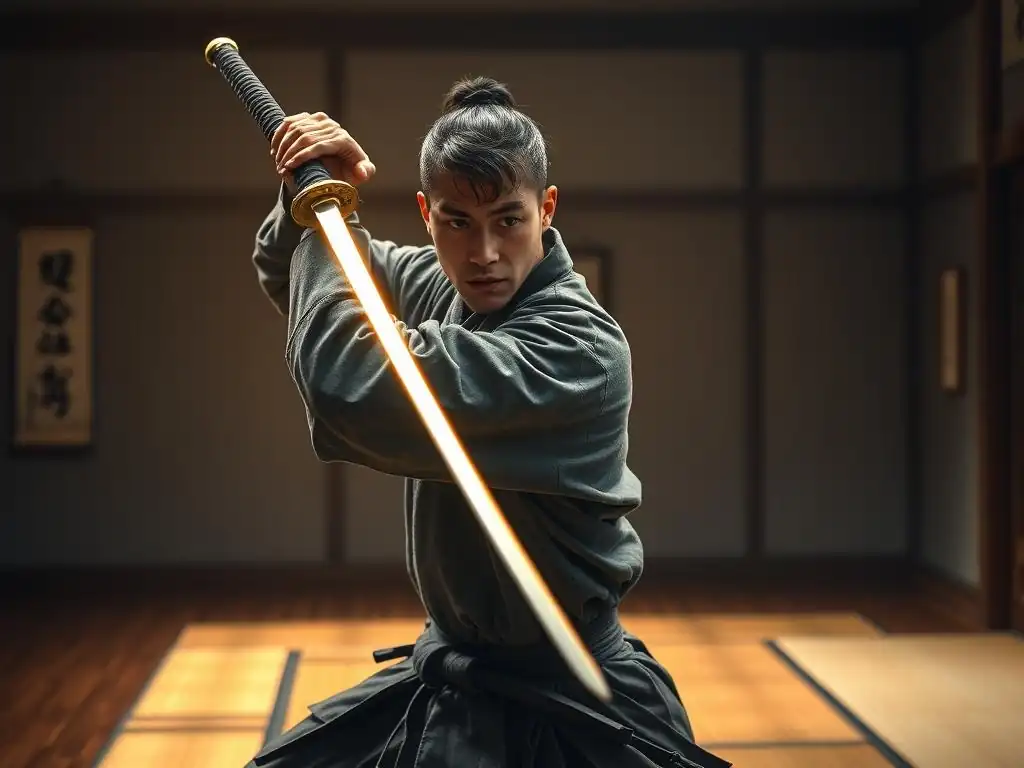
Welcome to Martial Arts Mastery, your ultimate guide to the world's fighting traditions! Delve into the rich history and intricate techniques that define martial arts. Ever wonder how to perfect your Kendo skills without a dojo? This article unveils effective solo drills, focusing specifically on Kendo basic strikes practice. Discover how to hone your precision, power, and form from the comfort of your own home. Ready to elevate your Kendo journey? Let's begin!
- Mastering Kendo Kihon at Home: A Comprehensive Guide to Solo Practice
- Introduction to Solo Kendo Training: Enhancing Technique and Skill
- Understanding Kendo Kihon: The Building Blocks of Your Art
- Preparing Your Home Kendo Practice Space
- Kendo Kihon Practice: Step-by-Step Solo Drills
- Advanced Solo Kendo Drills and Variations
- Common Mistakes to Avoid During Solo Kendo Practice
- Maximizing Your Kendo Kihon Practice at Home
- Conclusion: Achieving Kendo Proficiency Through Dedicated Solo Practice
-
Frequently Asked Questions
- What are the four basic strikes in Kendo, and why are they important to practice solo?
- How can I ensure my tenouchi (grip) is correct when practicing basic Kendo strikes alone?
- What equipment is absolutely necessary for practicing Kendo basic strikes at home?
- How often should I practice Kendo basic strikes solo to see improvement?
- Are there any resources available online to help me improve my solo Kendo basic strike practice?
- Final Reflection: The Enduring Spirit of Kendo
- Ignite Your Kendo Journey Now!
Mastering Kendo Kihon at Home: A Comprehensive Guide to Solo Practice
Introduction to Solo Kendo Training: Enhancing Technique and Skill
The Importance of Solo Practice in Kendo
Dedicated solo Kendo practice, particularly focusing on Kendo basic strikes practice, is not merely supplementary to dojo training; it is a fundamental component of true mastery. While dojo sessions provide invaluable interaction, feedback from instructors, and the dynamic experience of sparring (ji-geiko), solo training allows for focused repetition and refinement of individual techniques without the pressure or distraction of an opponent. Many high-level sensei emphasize that the quality of a kendoka's technique is often forged in the quiet discipline of their personal practice space.
Consider the anecdote of legendary kendoka, who often spent hours performing suburi (swinging practice) in solitude, perfecting the angle, power, and timing of their cut long before stepping onto the shiai-jo (competition floor). This foundational work, often unseen, builds the muscle memory and precision essential for effective strikes in a dynamic situation.
Furthermore, solo practice provides the necessary volume of repetition that is often difficult to achieve in a typical dojo class, which might allocate only 10-15 minutes specifically to focused kihon drills. By dedicating even just 30 minutes daily to solo Kendo basic strikes practice, a student can accumulate hundreds, if not thousands, more repetitions of fundamental movements like shomen-uchi or kote-uchi over a week.
This consistent, high-volume practice allows for subtle corrections in posture, grip, and footwork that might be overlooked in a group setting. It's in this solitary environment that a kendoka can truly internalize the feeling of a correct strike, developing a deeper understanding of their own body mechanics and how they interact with the shinai.
Benefits of Practicing Kendo Kihon Independently
Engaging in regular Kendo kihon practice independently offers a multitude of benefits that accelerate a kendoka's development. One significant advantage is the ability to work at your own pace and focus intensely on specific areas needing improvement. If a kendoka struggles with the tenouchi (grip squeeze) on their kote-uchi, for instance, they can perform dozens or even hundreds of repetitions focusing solely on that aspect, something not feasible within the structured time constraints of a dojo class.
This personalized approach to Kendo basic strikes practice allows for targeted skill development, addressing weaknesses directly and efficiently. Anecdotal evidence suggests that kendoka who supplement dojo training with consistent solo practice often show faster progress in terms of strike power, accuracy, and consistency within their first few years compared to those who rely solely on group sessions.
Beyond technical refinement, solo Kendo basic strikes practice cultivates crucial mental attributes. It demands self-discipline, focus, and introspection. Without an instructor constantly observing, the student must become their own teacher, analyzing their movements, identifying flaws, and striving for perfection. This self-reliance is vital for long-term growth in Kendo.
Moreover, solo practice allows for mental preparation and visualization, enabling the kendoka to mentally rehearse techniques and scenarios. This mental training, combined with physical repetition, strengthens the mind-body connection, making responses more instinctive and fluid during actual practice or competition. It's a holistic approach that builds not just physical skill but also the mental fortitude inherent in the art of Kendo.
Understanding Kendo Kihon: The Building Blocks of Your Art
Defining Kihon: The Foundation of Kendo
Kihon, often translated as "fundamentals" or "basics," represents the essential techniques and movements upon which all of Kendo is built. Mastering kihon is paramount because it provides the stable base required for executing more complex waza (techniques) effectively and safely. It encompasses not only the basic strikes – shomen-uchi, kote-uchi, do-uchi, and tsuki-zuki – but also foundational elements like proper kamae (stance), ashisabaki (footwork), tenouchi (grip and squeeze), and correct breathing.
Think of kihon as the alphabet of Kendo; without a firm grasp of these basic elements, forming coherent "sentences" or executing advanced techniques becomes impossible. Many experienced practitioners dedicate years, even decades, to refining their kihon, understanding that continuous practice of the basics leads to deeper insights and greater proficiency.
A common pitfall for students is rushing past kihon in an eagerness to learn flashier techniques or engage in extensive ji-geiko. However, a weak foundation in kihon will inevitably limit progress. For example, a powerful shomen-uchi relies heavily on correct posture, efficient footwork to generate forward momentum, and precise tenouchi at the moment of impact.
If any of these basic components are lacking, the strike will be less effective, less powerful, and potentially unsafe. Therefore, sustained and diligent Kendo basic strikes practice, alongside other fundamental movements, is not just for beginners; it is a lifelong pursuit for every kendoka aiming for true mastery. Dojo curricula universally emphasize kihon, typically dedicating a significant portion of class time to drills reinforcing these fundamentals, highlighting their enduring importance.
The Core Kendo Kihon: Foundational Techniques
The core Kendo kihon consists of several fundamental striking techniques, each targeting specific areas on the opponent's protective armor (bogu). These strikes are the primary scoring points in Kendo competition and form the basis for offensive strategy. While seemingly simple, each requires precise body mechanics, timing, and spirit (kiai) for effective execution. Mastering these core strikes through diligent Kendo basic strikes practice is the essential first step in developing offensive capability.
Shomen-uchi: The Fundamental Head Strike
Shomen-uchi is arguably the most basic and frequently practiced strike in Kendo, targeting the center of the opponent's head (men). Executing a proper shomen-uchi involves raising the shinai above the head with both hands, stepping forward with the front foot (typically the left, assuming a chudan-no-kamae stance), and bringing the shinai down in a vertical arc, striking the target with the monouchi (the top third) of the shinai. Crucially, the strike must be accompanied by a strong kiai (shout), typically "Men! ", and followed by zanshin (continued readiness).
Effective shomen-uchi requires coordination of body movement, arm extension, and the critical tenouchi – a snap of the wrists at the moment of impact to give the strike power and cut-like quality. Solo practice of shomen-uchi (suburi) allows a kendoka to focus on these individual elements, ensuring the cut is straight, the arms extend fully, and the tenouchi is sharp. Repetition builds the necessary muscle memory and stamina in the shoulders, arms, and core. According to many Kendo training manuals, beginners should aim for hundreds of shomen-uchi suburi repetitions daily to build a strong foundation.
Kote-uchi: Targeting the Wrist with Precision
Kote-uchi targets the opponent's wrist (kote), specifically the part protected by the kote armor. This strike is often used when the opponent's hands are exposed, such as during their preparation for a strike or immediately after they have swung. Executing kote-uchi typically involves a smaller, faster movement than shomen-uchi. From kamae, the kendoka steps forward, extending the arms to strike the opponent's kote with the monouchi of the shinai. Like all strikes, it requires a sharp kiai, usually "Kote! ", and subsequent zanshin.
Precision and speed are key to effective kote-uchi. The strike must land accurately on the target area. Solo Kendo basic strikes practice for kote-uchi focuses on developing quick hand speed and accurate targeting. Drills often involve practicing the strike from various distances and incorporating rapid footwork to close the gap. Repetitive kote-uchi suburi helps build explosive power in the wrists and forearms, essential for a sharp, decisive strike that doesn't telegraph its intent. Many dojos incorporate drills specifically focused on striking a stationary target (like a hanging tire or a partner's shinai held steady) to refine kote-uchi accuracy.
Do-uchi: Striking the Torso with Power
Do-uchi targets the opponent's torso (do), specifically the protective plates covering the sides of the body. This strike is often executed with a diagonal cut, typically from the right side of the attacker towards the opponent's left do, or vice versa. Do-uchi requires significant body movement and coordination, often involving stepping through (furiashi) or a large sweeping step to position the body correctly and generate power. The strike is delivered with a strong kiai, "Do! ", and demands robust zanshin.
Power generation in do-uchi comes less from the arms alone and more from the entire body's momentum. Solo Kendo basic strikes practice for do-uchi should emphasize coordinating footwork and body rotation with the swing of the shinai. Practicing the large, sweeping motion helps build the necessary strength and flexibility in the core and legs. Drills might involve visualizing the diagonal path of the strike and ensuring the monouchi connects cleanly. While perhaps less frequently scored than men or kote, a well-executed do-uchi is a powerful technique that can catch an opponent off guard, requiring fluid, coordinated movement.
Tsuki-zuki: The Thrust to the Throat
Tsuki-zuki, or tsuki, is a thrusting technique targeting the opponent's throat area, protected by the tsuki-dare on the men armor. This is considered an advanced technique and is often restricted in practice, especially for lower ranks, due to the potential for injury. Executing tsuki requires a precise forward thrust of the shinai, typically with the left hand extended forward and the right hand providing support and guidance. A sharp kiai, "Tsuki! ", accompanies the thrust, followed by immediate withdrawal and zanshin.
Accuracy and control are paramount in tsuki practice. The thrust must be straight, powerful, and immediately retracted. Solo Kendo basic strikes practice for tsuki can involve thrusting towards a fixed point or visualizing the target, focusing on the straight line of the thrust and the coordinated extension of the arms and body.
Due to its inherent risk, tsuki is often practiced only with experienced partners or specialized training equipment, and solo practice should be approached with caution, focusing purely on the form and mechanics of the thrust without impacting a target unless using appropriate gear. It's a technique that demands significant precision and control developed over extensive practice.
Hiki-men: Retreating Head Strike
Hiki-men is a strike delivered to the opponent's head while retreating or moving backward. This technique is often used after an initial engagement or when creating distance. It involves stepping backward with the front foot while simultaneously raising the shinai and executing a shomen-uchi cut as the back foot follows. The kiai is "Men! ", delivered with the same force and spirit as a forward shomen-uchi.
Hiki-men requires excellent balance and coordination, as the movement is contrary to the usual forward momentum of Kendo strikes. Solo Kendo basic strikes practice for hiki-men focuses on smoothly transitioning from a forward stance to a backward movement while maintaining the integrity and power of the men cut. Drills involve practicing the backward step in coordination with the swing, ensuring the body remains stable and the strike lands correctly.
Repetition helps develop the necessary leg strength and balance required to execute a powerful hiki-men while moving away from the opponent. It's a crucial technique for maintaining pressure or creating space effectively.
Preparing Your Home Kendo Practice Space
Essential Equipment for Solo Kendo Drills
Setting up a dedicated space for Kendo basic strikes practice at home requires minimal but essential equipment to ensure safety and effectiveness. The primary tool is, of course, the shinai. Having at least one shinai of the correct size and weight for your height and rank is non-negotiable.
Many practitioners find it beneficial to have two: one for general suburi and another, perhaps slightly heavier or lighter, for specific conditioning or speed drills. A sturdy bokken (wooden sword) is also valuable for practicing kata and understanding the feel of a solid weapon, though most basic strike repetition will use the shinai.
Beyond the shinai and bokken, consider targets for your solo Kendo basic strikes practice. A simple, padded hanging target (like a purpose-built Kendo target or even a thick piece of foam or tire) can be invaluable for practicing shomen-uchi, kote-uchi, and do-uchi with impact, allowing you to feel the connection and practice tenouchi. A wall-mounted target or even just a marked spot on a wall can help refine tsuki accuracy (practiced carefully).
While not strictly equipment, comfortable, non-slip footwear is essential for practicing ashisabaki safely on hard floors. Approximately $50-$100 can cover the cost of a good quality shinai and basic target setup.
Shinai Selection for Home Practice
Choosing the right shinai for your home Kendo basic strikes practice is important for both safety and effective training. Shinai come in different lengths and weights, typically designated by size (e.g., 37 for junior high, 38 for high school, 39 for adults). Ensure you use a shinai appropriate for your size and age as recommended by Kendo regulations or your instructor. Using a shinai that is too long or heavy can lead to poor form, strain, or even injury during prolonged practice.
For general suburi and basic strike repetition, a standard, well-balanced shinai is ideal. Some practitioners opt for a heavier suburi shinai (often thicker or weighted) for conditioning, which helps build strength and stamina, making a regular shinai feel lighter and faster. Conversely, practicing with a lighter shinai can help develop speed. Regardless of the type, ensure your shinai is well-maintained, checking regularly for splinters or cracks in the staves, which can cause injury. Replacing worn-out staves or the entire shinai is crucial for safe Kendo kihon practice at home.
Considerations for Protective Gear During Solo Training [e.g., Hand Protection]
While full bogu is generally not necessary for basic solo Kendo basic strikes practice like suburi against air or a simple target, certain protective gear considerations are prudent. The most common area for minor injuries during solo practice is the hands, particularly developing calluses or blisters, or experiencing impact shock when hitting a target. Wearing Kendo kote (gloves) is highly recommended, especially if you are practicing strikes with impact on a target. Kote provide padding and support, reducing the risk of hand injuries and allowing for longer, more comfortable practice sessions.
Even without kote, some form of hand protection like padded cycling gloves or weightlifting gloves might offer some minimal protection, though they lack the specific design and padding of Kendo kote. For any practice involving striking a solid target, eye protection (like safety glasses) is also a wise precaution, although less common in standard Kendo solo practice literature, it minimizes the minuscule risk of a splinter or piece of the target flying off. Ultimately, prioritizing safety allows for consistent, injury-free Kendo kihon practice at home.
Creating a Safe and Effective Training Environment
Your home Kendo basic strikes practice space should be safe and conducive to focused training. The most critical requirement is sufficient clear space. You need room to swing your shinai fully overhead and execute forward and backward steps without hitting walls, furniture, or low ceilings. Ideally, aim for a space with a ceiling height of at least 8-10 feet and a clear floor area of at least 6x6 feet, though more is better for practicing larger movements and footwork.
The flooring should ideally be firm and non-slip. Wooden floors or martial arts mats are suitable. Avoid practicing on carpet, which can impede footwork, or excessively hard surfaces like concrete without proper mats, which can be hard on joints. Ensure the area is well-lit and free from distractions. Remove any breakable objects or obstacles from the vicinity. A large mirror can be a valuable addition, allowing you to observe and correct your posture and technique during Kendo kihon practice. Dedicating a specific, prepared area signals your commitment to training and minimizes safety risks.
Kendo Kihon Practice: Step-by-Step Solo Drills
Warm-up Exercises for Kendo Training
Before beginning any intense Kendo basic strikes practice, a thorough warm-up is crucial to prepare your muscles and prevent injury. A warm-up should increase your heart rate, warm up major muscle groups, and improve flexibility relevant to Kendo movements. Start with 5-10 minutes of light cardio, such as jogging in place, jumping jacks, or skipping rope, to get your blood flowing.
Follow the cardio with dynamic stretches that mimic Kendo movements. Arm circles (forward and backward) prepare the shoulders and arms for swinging. Torso twists improve core flexibility needed for powerful strikes. Leg swings (forward/backward and side-to-side) loosen the hips and legs for ashisabaki. Ankle rotations are essential for footwork. Approximately 10-15 minutes dedicated to a comprehensive warm-up significantly reduces the risk of strains and sprains during your Kendo kihon practice.
Stretching and Flexibility for Kendo
Flexibility is a key component of effective Kendo, enabling proper posture, range of motion for strikes, and preventing injuries. After your dynamic warm-up, incorporate static stretches focusing on muscle groups heavily used in Kendo. Stretch your shoulders, chest, and back to ensure a full range of motion for overhead swings like shomen-uchi. Hold stretches for 20-30 seconds.
Target your legs, particularly hamstrings, quadriceps, and calf muscles, as strong and flexible legs are vital for powerful footwork (ashisabaki) and maintaining a low, stable kamae. Hip flexor stretches are also important due to the forward-leaning posture. While excessive flexibility isn't necessary, sufficient mobility allows for more fluid, powerful, and injury-resistant movement during your Kendo basic strikes practice. Consistent stretching, ideally daily, will contribute significantly to your overall physical readiness.
Preparing for Suburi: Posture, Grip, and Mental Focus
Before starting your suburi (swinging practice) for Kendo basic strikes practice, take a moment to mentally and physically prepare. Stand in a natural, relaxed posture, feet shoulder-width apart, or in a basic chudan-no-kamae if you are practicing from that stance. Hold the shinai with a correct grip: the left hand at the end of the tsuka (handle), the right hand about a hand's width below the tsuba (guard). The grip should be firm but not tense, primarily using the last three fingers of each hand (tenouchi).
Mentally, clear your mind and focus solely on the upcoming repetitions. Visualize the strike you are about to perform – the target, the movement path of the shinai, the coordination of your body. Breathe deeply and evenly. This moment of preparation, perhaps 1-2 minutes, sets the stage for focused and effective Kendo kihon practice, ensuring each swing is mindful rather than just going through the motions. It transitions you from daily life into the disciplined mindset required for Kendo training.
Practicing Shomen-uchi Solo
Shomen-uchi suburi is the cornerstone of solo Kendo basic strikes practice. It involves swinging the shinai in the vertical plane, mimicking the strike to the head. There are various forms of shomen-uchi suburi, ranging from simple swings to more complex variations incorporating body movement.
Start with basic standing shomen-uchi suburi (often called jo-gei buri or fumikomi suburi). Stand in kamae, raise the shinai high above your head, ensuring the tip drops slightly behind you, and swing down powerfully, stopping the shinai at roughly horizontal height or slightly lower, mimicking the moment of impact. Focus on a straight swing path, full extension of the arms, and proper tenouchi.
Progress to fumikomi shomen-uchi suburi, incorporating the explosive forward step (fumikomi) used in actual strikes. From kamae, as you raise the shinai, lift your front foot slightly, and as you swing down, stomp the front foot forward firmly, landing simultaneously with the simulated impact. This coordination of swing and step is vital for generating power and momentum. Aim for 50-100 repetitions of basic shomen-uchi suburi and 50-100 repetitions of fumikomi shomen-uchi suburi as a starting point for daily Kendo basic strikes practice. Use a mirror or record yourself periodically to check your form.
Shomen-uchi Suburi Techniques: From Ikkyo to Nikyo
Beyond the basic standing and fumikomi suburi, shomen-uchi practice can incorporate various suburi techniques, often referred to by numbers or variations like Ikkyo suburi and Nikyo suburi. Ikkyo suburi typically refers to the basic large swing, raising the shinai high and bringing it down. This emphasizes large motor skills and developing the full range of motion and power.
Nikyo suburi often refers to smaller, faster swings, sometimes called haya suburi (fast suburi). This involves rapid, continuous shomen-uchi swings with minimal pause, often performed with light, rapid footwork (suriashi or okuriashi). Haya suburi builds stamina, speed, and coordination. A common drill is to perform 50 fumikomi shomen-uchi swings followed immediately by 100 haya suburi swings, repeating several sets. Incorporating these variations into your Kendo basic strikes practice provides a comprehensive workout for strength, speed, and endurance.
Focusing on Proper Form and Power Generation in Shomen-uchi
During shomen-uchi solo practice, relentless attention must be paid to proper form. Ensure your posture is upright but relaxed, with your spine straight. Avoid leaning forward or backward excessively. Your grip should be firm but not tight, allowing the shinai to move smoothly. The swing should be a single, continuous motion, originating from the core and transmitted through the shoulders, arms, and wrists. Avoid stopping the shinai momentarily at the top of the backswing.
Power generation in shomen-uchi comes from the coordinated effort of the entire body. As you swing down, push off the back foot, drive your hips forward, and snap your wrists (tenouchi) at the moment the shinai would impact the target. The fumikomi step should coincide precisely with the end of the swing and the tenouchi, transferring your body weight into the strike. Practicing this coordinated action repeatedly during your Kendo basic strikes practice builds explosive power. Visualize cutting through the target, not just hitting it.
Practicing Kote-uchi Solo
Solo practice for Kote-uchi focuses on developing speed, precision, and the explosive snap required for this quick strike. While less visually dramatic than shomen-uchi, accurate kote-uchi is a highly effective technique. Start by practicing the basic kote-uchi motion from kamae. Step forward (usually with okuriashi or a small fumikomi) and extend your arms to strike an imaginary target at wrist height, about one sword's length away. The swing is shorter than shomen-uchi, primarily driven by the wrists and forearms, with a sharp tenouchi.
To refine kote-uchi accuracy during Kendo basic strikes practice, use a target. A hanging target or even a partner holding a shinai horizontally at wrist height allows you to practice hitting a specific point. Focus on striking with the monouchi and feeling the snap of the tenouchi. Practice striking quickly from kamae without telegraphing the movement. Repeat the movement focusing on minimizing the backswing and maximizing the speed of the forward extension and snap. Aim for 50-100 repetitions, focusing on speed and accuracy over power initially.
Kote-uchi Suburi Techniques: Variations and Applications
Kote-uchi suburi can be varied to simulate different scenarios. Practice striking an imaginary kote while stepping forward, stepping backward ( hiki-kote), or sidestepping. These variations help integrate kote-uchi with different footwork patterns used in actual combat. Another variation is practicing consecutive kote-uchi strikes, simulating attacking both wrists or following up a missed strike.
Consider practicing kote-uchi as a counter-attack. Visualize an opponent raising their shinai for men and practice striking their kote as they begin their movement. This type of visualization during solo Kendo basic strikes practice helps develop timing and reaction speed. Practice transitioning quickly from a men strike motion to a kote strike motion, as this adaptability is crucial in free practice. Incorporating these variations makes your solo kote-uchi training more dynamic and applicable to real situations.
Achieving Accuracy and Speed in Kote-uchi Strikes
Speed and accuracy are the hallmarks of an effective kote-uchi. To improve speed, focus on minimizing unnecessary movements. The action should be direct and economical. Practice relaxing your grip slightly before the strike and tightening it explosively (tenouchi) at the moment of impact. This relaxed-then-tense approach allows for faster movement. Short, rapid swings focusing purely on the wrist snap can help build speed endurance.
Accuracy in kote-uchi during Kendo basic strikes practice comes from repetition and focus. Use a visual target, even if it's just a spot on the wall or a piece of tape. Practice striking that exact spot consistently. Pay attention to your distance; kote-uchi is typically a close-to-medium range strike. Practicing stepping into the correct distance while striking is essential. Consider practicing kote-uchi while looking at yourself in a mirror to ensure your body mechanics aren't causing you to consistently strike too high, too low, or off-center.
Solo Do-uchi practice requires integrating a large body movement with the strike. The most common do-uchi suburi involves stepping through (furiashi) while executing a diagonal cut. From kamae, step forward with the front foot, bringing the back foot forward past the front foot in a large stride, while simultaneously swinging the shinai in a diagonal arc across your body, mimicking a strike to the opponent's side do. The strike typically lands as your back foot comes forward.
Focus on coordinating the large step with the swing during your Kendo basic strikes practice for do-uchi. The power comes from the rotation of the hips and torso, combined with the momentum of the large step. Ensure the shinai travels in a clean diagonal path and the monouchi makes contact with the imaginary target area. Repeat the movement, focusing on fluidity and power generation from the lower body. Aim for 30-50 repetitions on each side (striking left do and right do) to develop balance and comfort with the movement.
Do-uchi Suburi Techniques: Emphasizing Body Movement
Variations of do-uchi suburi can emphasize different aspects of body movement. Practice do-uchi with a sweeping step (okuriashi) rather than a full step-through, which might be used in closer distance. Practice striking while stepping to the side, simulating attacking an opponent who has shifted their position.
Another important aspect of do-uchi is the follow-through and zanshin. Because do-uchi often involves stepping past the opponent, your solo Kendo basic strikes practice should include continuing your movement and maintaining readiness after the strike. Practice striking the imaginary target and then immediately adopting a stable kamae while continuing to move forward a step or two. This reinforces the importance of zanshin and prepares you for potential counter-attacks.
Maintaining Balance and Control in Do-uchi Strikes
Executing a powerful do-uchi while maintaining balance and control can be challenging due to the large body movement involved. During solo practice, pay close attention to your center of gravity. Keep your posture stable and avoid leaning excessively in the direction of the strike, which can cause you to lose balance. The power should come from rotation and forward momentum, not just flinging the arms.
Ensure your feet are placed firmly and deliberately during the stepping motion. Avoid shuffling or unstable foot placement. The coordination between the step and the swing is key; the strike should culminate as your body movement reaches its peak effectiveness. Practicing do-uchi slowly initially, focusing purely on the coordinated body mechanics and balance, is more beneficial than rushing through repetitions with poor form during your Kendo basic strikes practice. Gradually increase speed as your balance and coordination improve.
Practicing Tsuki-zuki Solo
Solo Tsuki-zuki practice, due to its nature, should focus primarily on the mechanics of the thrust rather than impacting a hard target without proper protection. The basic tsuki motion involves extending the left hand forward along the center line, guiding the shinai towards the imaginary target (the opponent's throat), while the right hand pushes from the hip. The body moves forward, typically with a small, controlled step or slide. The thrust should be straight and powerful, with the monouchi hitting the target point.
Practice the thrusting motion repeatedly, focusing on a straight line, full extension of the arms, and a sharp snap (tenouchi) at the end of the thrust. Visualize the target precisely. Unlike the cutting strikes, tsuki is a linear attack. Solo Kendo basic strikes practice for tsuki should emphasize control and immediate withdrawal of the shinai after the simulated impact, returning to kamae or moving to a follow-up position. If using a target, ensure it is soft and positioned at the correct height, and wear kote and potentially a men if striking with force.
Tsuki-zuki Suburi Techniques: Precision and Control
Precision is paramount in tsuki. Solo practice should focus on hitting a very specific point. Use a visual marker on a wall or hanging target. Practice thrusting towards this point from different distances, ensuring your body mechanics adjust appropriately. The thrust should be initiated from the core and delivered with a unified movement of the arms and body.
Control is equally important. The thrust must be powerful enough to be effective but controlled enough to avoid overextension or losing balance. Practice stopping the thrust precisely at the point of simulated impact and immediately retracting the shinai smoothly. Avoid any wild or uncontrolled movements. This disciplined approach to tsuki during Kendo basic strikes practice builds the nuanced control required for this advanced technique.
Safe and Effective Tsuki-zuki Practice
Safety cannot be overstated in tsuki practice. In a dojo, tsuki is only practiced against opponents wearing men with tsuki-dare. Solo practice should reflect this caution. Avoid practicing powerful thrusts against hard surfaces or objects without appropriate padding and protection. The primary goal of solo tsuki suburi is to refine the body mechanics, line, and control of the thrust.
If you wish to practice with impact, use a dedicated tsuki target designed for solo practice, which typically has significant padding and absorbs the force of the thrust safely. Even with a target, ensure your grip and tenouchi are correct to prevent jarring injuries. The focus should remain on the quality of the movement – the straight line, the coordinated extension, the sharp snap, and the controlled withdrawal – rather than simply hitting the target hard. Approximately 20-30 focused tsuki repetitions can be sufficient for a solo session, given the intensity and focus required.
Practicing Hiki-men Solo
Hiki-men solo practice integrates backward footwork with the shomen-uchi cut. From kamae, initiate a step backward with your front foot (usually the left). As you step back, raise the shinai for the shomen-uchi cut. As your back foot (right) follows the front foot backward, bring the shinai down in a powerful shomen-uchi cut, aiming for an imaginary target's head height. The strike should land as you complete the backward step and regain a stable kamae.
The challenge in hiki-men is maintaining balance and power while moving away from the direction of the strike. During solo Kendo basic strikes practice for hiki-men, focus on keeping your body upright and stable throughout the movement. Avoid leaning back excessively. The power for the cut must come from the coordinated action of the arms, shoulders, and core, integrated with the backward step.
Hiki-men Suburi Techniques: Integrating Footwork and Strike
Hiki-men suburi variations involve practicing the strike from different starting points or incorporating different backward footwork patterns. Practice stepping straight back, or stepping back diagonally. Practice executing hiki-men after simulating a forward attack or engagement, emphasizing the transition from forward movement to backward striking.
A key focus should be on the timing between the backward step and the swing. The swing should be timed so that the impact occurs just as your feet settle into a stable stance after the backward movement, allowing for proper zanshin. Practice repeating the movement smoothly, focusing on the coordination between the large backward step and the powerful, straight men cut. Aim for 30-50 repetitions of hiki-men suburi to build confidence and coordination in this less intuitive movement during your Kendo basic strikes practice.
Developing Speed and Accuracy in Hiki-men
Developing speed in hiki-men involves practicing the backward step and swing as a single, fluid motion. Avoid pausing between the step and the swing. The movement should be sharp and decisive. Focus on quickly raising the shinai as you begin the backward step and bringing it down rapidly as you complete the step.
Accuracy in hiki-men requires visualizing the target at the correct distance as you move backward. Practice striking an imaginary target at approximately one sword's length away at head height as you step back. Use a mirror to ensure your cut remains straight and vertical despite the backward movement. Consistent Kendo basic strikes practice of hiki-men refines the coordination needed to deliver a powerful and accurate strike while retreating, a valuable skill in free practice and competition.
Advanced Solo Kendo Drills and Variations
Integrating Footwork (Ashisabaki) into Kihon Practice
True mastery of Kendo basic strikes practice requires seamlessly integrating footwork ( ashisabaki) with the strikes. Simply swinging the shinai in place, while foundational, is insufficient. Advanced solo drills involve performing all kihon strikes ( shomen-uchi, kote-uchi, do-uchi, tsuki, hiki-men) while actively moving. Practice shomen-uchi while performing okuriashi (sliding step), suriashi (gliding step), and ayumiashi (walking step, though less common for direct strikes).
Dedicate specific time to practicing strikes combined with forward movement, backward movement, and lateral movement. For example, practice a sequence of three shomen-uchi strikes performed with three consecutive fumikomi steps. Or practice striking kote while performing a rapid okuriashi to close distance. Incorporating ashisabaki into every repetition of your Kendo kihon practice makes the drills more realistic and builds the dynamic coordination necessary for effective Kendo. Aim to spend at least 50% of your solo strike practice time combining strikes with movement.
Utilizing a Mirror for Technique Refinement
A large mirror is an invaluable tool for refining your technique during solo Kendo basic strikes practice. Position yourself facing the mirror from the side or front (depending on the strike) so you can observe your entire body. Perform your kihon strikes and suburi while watching your reflection. Pay attention to your kamae, posture, grip, the straightness of your swing, the coordination of your body movement and footwork, and the timing of your tenouchi.
Seeing yourself perform the movements allows for immediate self-correction. You can identify common flaws like leaning, raising your shoulders, a crooked swing path, or poor foot placement that you might not feel otherwise. For instance, practicing shomen-uchi in a mirror helps ensure your swing is truly vertical and your arms extend symmetrically. Practicing tsuki allows you to check if your thrust is perfectly straight along the center line. Use the mirror periodically throughout your Kendo kihon practice sessions for objective feedback.
Mental Imagery in Solo Practice: Visualizing the Opponent
Adding a layer of mental imagery elevates solo Kendo basic strikes practice from mere physical repetition to a more strategic and realistic exercise. As you perform your kihon strikes, visualize an opponent standing before you. Imagine their kamae, their distance, and their potential reactions. Practice striking specific targets based on this mental opponent's stance or perceived opening.
For example, while practicing shomen-uchi, visualize an opponent in chudan-no-kamae and practice stepping in to strike their men. While practicing kote-uchi, visualize an opponent raising their shinai to strike and practice timing your kote strike to intercept their movement. This mental component makes your solo Kendo basic strikes practice more engaging and helps bridge the gap between static drills and dynamic free practice. It trains your mind to recognize opportunities and react instinctively, even in the absence of a physical opponent.
Common Mistakes to Avoid During Solo Kendo Practice
Incorrect Form and Posture
One of the most significant risks of solo Kendo basic strikes practice without direct supervision is reinforcing incorrect form and posture. Without an instructor to correct you, subtle errors can become ingrained habits. Common mistakes include rounding the back, raising the shoulders during the swing, a grip that is too tight or too loose, or a swing path that is not straight or lacks full extension.
To mitigate this, periodically record yourself practicing with a phone or camera and review the footage critically, comparing your form to instructional videos or mental images of correct technique. Use a mirror as mentioned previously. Focus on the feeling of correct posture and movement, paying attention to feedback from your body. Prioritizing quality over quantity in your Kendo kihon practice is essential; performing 50 correct swings is far more beneficial than 200 incorrect ones.
Rushing the Strikes
Another common mistake during solo Kendo basic strikes practice is rushing through repetitions, sacrificing quality for speed or quantity. This often leads to sloppy form, incomplete movements, and neglecting crucial elements like tenouchi or proper footwork synchronization. While speed is important in Kendo, it must be built upon a foundation of correct technique.
Focus on performing each strike deliberately and correctly before attempting to increase speed. Practice slowly initially, feeling the movement and ensuring each component is executed properly. Only gradually increase your speed as your form becomes consistent and fluid. Remember that the goal of Kendo kihon practice is to build precise muscle memory; rushing creates imprecise muscle memory.
Neglecting Proper Footwork
Solo Kendo basic strikes practice can sometimes devolve into just swinging the shinai with minimal or incorrect footwork. Neglecting proper ashisabaki during solo training is a major oversight, as footwork is inseparable from effective striking in Kendo. A powerful strike requires coordinated body movement and propulsion from the legs and hips, facilitated by correct footwork.
Ensure that every strike you practice, unless explicitly a stationary drill, incorporates the appropriate footwork. Practice fumikomi with shomen-uchi, okuriashi with kote-uchi, furiashi or large steps with do-uchi, and controlled steps with tsuki and hiki-men. Actively focus on your feet and legs during your Kendo kihon practice, ensuring they are moving correctly and powerfully in sync with your upper body and shinai.
Overlooking Safety Precautions
Despite the absence of a partner, overlooking safety precautions during solo Kendo basic strikes practice can lead to injuries. Practicing in an cluttered space risks hitting objects or tripping. Using a damaged shinai can result in splinters or breakage. Practicing powerful strikes against hard, unpadded surfaces can jar the hands and wrists.
Always ensure your practice space is clear and safe. Inspect your shinai before use. Wear appropriate hand protection, especially if striking a target. Listen to your body and avoid practicing through pain, which can lead to more serious injuries. Stay hydrated and take breaks as needed. A safe practice environment is fundamental to consistent and productive Kendo kihon practice at home.
Maximizing Your Kendo Kihon Practice at Home
Setting Realistic Goals and Tracking Progress
To make your solo Kendo basic strikes practice effective, set realistic goals. Instead of vaguely deciding to "practice Kendo," set specific, measurable goals like "Perform 100 fumikomi shomen-uchi swings focusing on tenouchi," or "Practice kote-uchi with okuriashi for 15 minutes." These specific goals provide focus for each practice session.
Tracking your progress can help maintain motivation and identify areas for improvement. Keep a simple training log noting what you practiced, how many repetitions, how long you practiced, and any specific points you focused on or challenges you encountered. Periodically (e.g., weekly or monthly), record yourself and compare your form to previous recordings to visually track your improvement in Kendo kihon practice. Seeing tangible progress, even small steps, is a powerful motivator.
Maintaining Motivation for Solo Training
Maintaining motivation for solo Kendo basic strikes practice can be challenging, especially without the camaraderie and direct feedback of the dojo. Find ways to keep it interesting. Vary your routine; don't just do the same 100 shomen-uchi swings every day. Incorporate different suburi variations, focus on different strikes, or integrate footwork drills.
Listen to Kendo lectures or instructional audio while you practice (where concentration allows). Visualize your goals in Kendo – perhaps passing a grading, improving a specific technique for ji-geiko, or simply achieving a deeper understanding of the art. Connect with fellow kendoka online or in person to share your solo training experiences and tips. Remembering your passion for Kendo and the benefits of consistent Kendo kihon practice will help you stay disciplined.
Supplementing Solo Practice with Dojo Training
Solo Kendo basic strikes practice is a powerful tool, but it is a supplement, not a replacement, for dojo training. Dojo practice provides essential elements that cannot be replicated alone: instruction from experienced sensei, practice with partners (uchikomi, kirikaeshi), and the dynamic environment of ji-geiko. Dojo training allows you to apply your solo-refined techniques in realistic scenarios and receive critical feedback.
Use your solo practice to work on the fundamentals and specific weaknesses identified in the dojo. For instance, if your sensei points out your tenouchi is weak during kote-uchi in ji-geiko, dedicate your solo time to high-repetition kote-uchi suburi focusing purely on the wrist snap. Your solo Kendo basic strikes practice makes you better prepared to maximize the learning opportunities available in the dojo, creating a synergistic effect on your overall Kendo development.
Conclusion: Achieving Kendo Proficiency Through Dedicated Solo Practice
The Impact of Consistent Home Drills on Kendo Development
Consistent home Kendo basic strikes practice, particularly focusing on kihon, has a profound impact on a kendoka's development. It builds the essential muscle memory, physical conditioning, and technical precision that form the bedrock of effective Kendo. By dedicating regular time outside of formal dojo training to repetitive, focused drills, kendoka can accelerate their progress significantly.
This allows for faster reaction times, more powerful and accurate strikes, improved stamina, and a deeper understanding of the body mechanics involved in each technique. Consider the difference between a student who practices 2 hours a week solely in the dojo and one who adds 3-4 hours of focused solo Kendo kihon practice at home; the latter will almost certainly develop faster and build a stronger foundation.
Moreover, consistent solo practice cultivates the mental discipline, self-awareness, and perseverance that are integral to the spirit of Kendo. The ability to motivate oneself, analyze one's own technique, and relentlessly pursue improvement in solitude strengthens the mind as well as the body. This internal development is just as crucial as mastering the physical aspects of Kendo basic strikes practice. The quiet dedication demonstrated in solo training carries over into the dojo, fostering a more focused and resilient approach to all aspects of Kendo training.
Continuing Your Kendo Journey: Resources and Further Learning
Mastering Kendo basic strikes practice is a continuous journey, not a destination. As you progress, your understanding of kihon will deepen, and you will find new nuances to explore even in the most basic movements. Continue seeking guidance from your dojo instructor – they are the most valuable resource for personalized feedback and advanced instruction. Attend seminars and workshops whenever possible to learn from different sensei and gain new perspectives on training methods, including solo practice techniques.
Supplement your physical training with study. Read books on Kendo philosophy, history, and technique. Watch instructional videos or competition footage (for inspiration and visualization, not direct copying without understanding the underlying principles). Engage with the wider Kendo community. By integrating consistent solo Kendo kihon practice with diligent dojo training, continuous learning, and a curious mind, you will build a strong foundation and continue to grow as a kendoka, unlocking deeper levels of skill and understanding in this rich martial art.
Frequently Asked Questions
What are the four basic strikes in Kendo, and why are they important to practice solo?
The four basic strikes are men (head), kote (wrist), do (torso), and tsuki (thrust). Solo practice helps develop correct form and muscle memory outside of partner training, building a strong foundation.
How can I ensure my tenouchi (grip) is correct when practicing basic Kendo strikes alone?
Focus on squeezing the shinai (bamboo sword) firmly with your last two fingers during the impact point of the strike. Visualizing a real target and exaggerating the snapping motion can help.
What equipment is absolutely necessary for practicing Kendo basic strikes at home?
While full bogu (armor) isn't required, a shinai is essential. A safe and open practice space is also crucial to avoid injury and damage.
How often should I practice Kendo basic strikes solo to see improvement?
Aim for at least 15-30 minutes of focused practice several times a week. Consistency is more important than long, infrequent sessions.
Are there any resources available online to help me improve my solo Kendo basic strike practice?
Yes, MartialArtsMastery.org offers articles and videos demonstrating correct technique and common mistakes. Look for resources specifically focused on solo suburi (basic swing) practice.
Final Reflection: The Enduring Spirit of Kendo
The pursuit of perfection in Kendo, even through solitary practice, remains a testament to discipline and dedication in a world increasingly demanding instant gratification. Kendo basic strikes practice, often perceived as repetitive and simple, is in reality the foundation upon which all advanced techniques are built, a principle that resonates far beyond the dojo.
The unwavering commitment required to master these fundamental movements has profoundly shaped not only my understanding of Kendo, but also my approach to challenges in life. This journey of self-improvement, mirrored in the countless hours spent perfecting shomen-uchi or kote-uchi, underscores the importance of perseverance and the beauty of incremental progress. The ultimate aim of the art of fencing is not the annihilation of the opponent, but the perfection of the fencer.
- Morihei Ueshiba. This quote encapsulates the true essence of Kendo, a pursuit of self-mastery through the discipline of the sword.
Now, as you close this article, I invite you to reflect on the principles of Kendo and how they might apply to your own life. Embrace the discipline, the dedication, and the unwavering spirit required to master the basics, for it is in these fundamental building blocks that true strength and lasting success are found. Let the spirit of Kendo guide you towards your own personal perfection, one strike at a time.
Ignite Your Kendo Journey Now!
Thank you for delving into the world of Kendo and learning effective solo practice techniques. Now it's time to translate that knowledge into action and elevate your training!
Here’s how you can take your Kendo skills to the next level:
- Commit to at least 15 minutes of daily Suburi practice, focusing on correct form and technique. Feel the power behind each swing!
- Explore online forums and communities dedicated to Kendo. Share your experiences, ask questions, and connect with fellow practitioners.
- Try visualizing yourself in a real Kendo match before each practice session, imagining successfully executing the strikes you've been practicing.
Ready to wield your Bokuto and transform your home into your personal dojo?