
Victorian Era Boxing: Respectability, Reform, and Raw Power in Transition


Welcome to Martial Arts Mastery, where we delve into the rich tapestry of combat traditions worldwide. Ever wondered how boxing evolved from bare-knuckle brawls to the sport we know today? This week, we peel back the layers of history to explore Victorian era boxing rules, a fascinating period of reform and raw power where respectability and brutality intertwined. Prepare to discover the surprising origins and evolution of this pugilistic art, and perhaps even find a new appreciation for its enduring legacy. Intrigued? Read on to uncover the secrets of the squared circle during this pivotal age!
- The Rise of Boxing in the Victorian Era: A Period of Transformation
- Victorian Era Boxing Rules: Towards a More Regulated Sport
- The Marquess of Queensberry Rules: A Turning Point in Boxing History
- The Impact of the Queensberry Rules on Boxing's Popularity
- Victorian Era Boxing Training Techniques: Building Strength and Endurance
- The Debate Over Boxing's Respectability: Morality and Social Class
- Victorian Era Boxing and its Lasting Influence on Modern Boxing
- Victorian Boxing Champions: Legends of the Ring
-
Frequently Asked Questions
- What were the primary goals of reforming boxing during the Victorian era?
- How did the Marquis of Queensberry Rules differ from earlier boxing rules?
- Why was there a push for boxing reform during the Victorian era despite its popularity?
- What impact did Victorian era boxing have on modern boxing?
- Besides the rules themselves, what other changes contributed to boxing's increased respectability during the Victorian Era?
- Final Reflection: Echoes of the Ring: Respect, Reform, and Resilience
- Unleash Your Inner Fighter: Take Action Now!
The Rise of Boxing in the Victorian Era: A Period of Transformation
Bare-Knuckle Boxing's Brutal Legacy: Setting the Stage for Change
Before the advent of standardized Victorian era boxing rules, the sport was dominated by bare-knuckle fighting, often referred to as the Pugilism or the Prize Ring. This era, peaking in the early to mid-19th century, was characterized by bouts that were incredibly brutal and often lasted for hours, sometimes even days, depending on the stamina of the fighters. There were no rounds in the modern sense; a round ended when a fighter went down, and they had a short period (typically 30 seconds) to "come to scratch" (return to a line marked in the center of the ring) to continue.
The lack of gloves meant devastating injuries were commonplace, including broken bones, severe cuts, disfigurement, and even death. Matches were fought until one fighter was unable to continue, either through knockout or incapacitation.
The violence was not confined to the ring; spectators often gambled heavily on the outcomes, and fights frequently devolved into riots. The sheer ferocity of bare-knuckle contests, while drawing large crowds willing to travel significant distances to witness the spectacle, also attracted the attention of authorities and moral reformers who viewed the sport as barbaric and a blight on society.
This growing unease, coupled with the inherent dangers to the participants, laid the groundwork for calls for significant changes to the format and Victorian era boxing rules. The raw, unregulated power of the Prize Ring was becoming increasingly untenable in a society grappling with ideals of progress and order.
Victorian society held complex and often contradictory views on violence and sports like boxing. While public displays of brutality were increasingly frowned upon, particularly by the burgeoning middle class and evangelical movements, there was also a strong cultural emphasis on "manliness" and physical prowess. Pugilism, despite its savage nature, was sometimes seen as a test of courage, endurance, and national character, a throwback to more martial times. It was particularly popular among the working classes, serving as both entertainment and a potential, albeit risky, path to fame and fortune for skilled fighters.
However, the association of bare-knuckle boxing with gambling, drunkenness, and the criminal underworld made it a target for moral crusaders. Newspapers of the time often reported on the brutal injuries and fatalities, fueling public debate about the sport's place in a civilized society.
The stark contrast between the raw, unregulated violence of the Prize Ring and the Victorian ideals of respectability and order created a tension that ultimately necessitated reform, pushing the sport towards a more structured and less overtly brutal format governed by clearer Victorian era boxing rules. This societal pressure was a significant catalyst for the changes that would define the later period of Victorian boxing.
Victorian Era Boxing Rules: Towards a More Regulated Sport
The Need for Reform: Addressing the Dangers of Bare-Knuckle Fighting
The inherent dangers of bare-knuckle boxing were undeniable and increasingly difficult to ignore. Bouts could involve hundreds or even thousands of blows exchanged over many hours, leading to cumulative trauma. Fatalities, while not occurring in every fight, were sufficiently frequent to cause alarm. For instance, historical records detail numerous instances where fighters succumbed to injuries sustained in the ring, often days or weeks after the contest. The lack of padding meant that blows directly impacted bone and tissue, causing severe lacerations, fractures, and internal injuries.
Beyond the physical toll on the fighters, the environment surrounding bare-knuckle contests was often lawless. Fights were frequently held in remote locations to evade police, and the large sums of money wagered attracted criminal elements. This created an atmosphere of chaos and danger that extended beyond the ropes.
The public spectacle of two men battering each other into insensibility, often with little regard for their safety, clashed sharply with the Victorian era's aspirations for social improvement and order. This urgent need to mitigate risk, both for the participants and the public, became the primary driving force behind the development and implementation of new Victorian era boxing rules.
The London Prize Ring Rules: A Flawed Attempt at Order
The London Prize Ring Rules, first codified in 1838 and later revised in 1853, represented an early attempt to bring some semblance of order to bare-knuckle boxing. These rules, building on earlier codes like the Broughton Rules (1743), introduced several key concepts. They defined fouls, such as hitting a downed opponent or using anything other than fists. They also regulated the "come to scratch" process, specifying the time allowed (30 seconds) after a knockdown before a fighter had to return to the center line to continue the round. The ring size was also standardized, typically 24 feet square.
Despite these efforts at formalization, the London Prize Ring Rules still permitted practices that were incredibly dangerous by modern standards. Clinching and wrestling were allowed, and fighters could be thrown to the ground. The concept of a "round" was still defined solely by a knockdown, leading to unpredictable fight lengths and encouraging strategic falls to gain recovery time.
Most critically, the rules still mandated bare fists. While they were an improvement over complete anarchy, the London Prize Ring Rules ultimately failed to address the fundamental brutality of the sport or make it significantly safer, leaving the door open for further, more radical reform of Victorian era boxing rules.
The Marquess of Queensberry Rules: A Turning Point in Boxing History
John Sholto Douglas, 9th Marquess of Queensberry: The Man Behind the Rules
The man most famously associated with the rules that would revolutionize boxing was John Sholto Douglas, the 9th Marquess of Queensberry. While the rules themselves were actually drafted by John Graham Chambers, a sportsman and member of the Amateur Athletic Club, it was Queensberry's endorsement and promotion that gave them legitimacy and widespread recognition. Queensberry was a keen amateur boxer himself and an advocate for physical fitness and fair play. He saw the need for a more structured and less brutal form of boxing that could appeal to a broader, more respectable audience.
Queensberry's patronage was crucial. He lent his name and social standing to the rules, which were formally published in 1867 as the "Rules of the Queensberry Amateur Boxing Championships." This association with a prominent member of the aristocracy helped to elevate the rules above the often-shady world of the Prize Ring and position them as a framework for a more modern, sportsmanlike contest. Although initially intended for amateur competition, their clarity and emphasis on safety soon made them the benchmark for professional boxing as well, fundamentally altering the landscape of Victorian era boxing rules.
Key Provisions of the Queensberry Rules: Gloves, Rounds, and Fouls
The Queensberry Rules introduced several revolutionary concepts that fundamentally changed the nature of boxing. The most significant was the requirement for fighters to wear "fair-sized boxing gloves." This single change dramatically reduced cuts and broken hands, although initial gloves were much lighter than modern ones, often weighing only a few ounces. Another crucial innovation was the introduction of defined rounds, standardized at three minutes with a one-minute rest period between them. This replaced the unpredictable "round" based on knockdowns, allowing for better pacing and recovery.
Furthermore, the Queensberry Rules strictly prohibited wrestling, grappling, and hitting a downed opponent. They also introduced the ten-second count for a knockdown, ending the fight if a boxer could not stand by the count of ten. The rules also specified the size of the ring (24 feet square, same as LPR rules) and the duration of the fight (initially unlimited, later often agreed upon). These provisions, particularly the use of gloves and timed rounds, shifted the focus from endurance and wrestling to skill, speed, and punching power, setting a new standard for Victorian era boxing rules.
From Controversy to Acceptance: The Gradual Adoption of the New Rules
Despite the clear advantages in safety and structure, the Queensberry Rules were not immediately adopted universally, especially in the professional Prize Ring. Bare-knuckle fighters and promoters, steeped in the traditions of the London Prize Ring Rules, viewed the new code with suspicion, seeing gloves as effeminate and timed rounds as less authentic tests of grit. For many years, the two sets of rules coexisted, with major fights often being contested under LPR rules.
However, the increasing pressure from authorities, the public's growing discomfort with the brutality of bare-knuckle fights, and the endorsement of influential figures gradually tilted the balance. Prominent boxers like Jem Mace began experimenting with gloved contests. The turning point is often cited as the 1892 heavyweight championship fight between John L. Sullivan and James J. Corbett, which was fought under Queensberry Rules.
Sullivan, the reigning bare-knuckle champion, lost to the more skilled Corbett, signaling the end of the bare-knuckle era. By the late 1890s, the Queensberry Rules had become the de facto standard for professional boxing globally, solidifying their place as the definitive Victorian era boxing rules.
The Impact of the Queensberry Rules on Boxing's Popularity
Increased Safety and Reduced Fatalities: Attracting a Wider Audience
The most immediate and significant impact of the Queensberry Rules was the considerable improvement in fighter safety. While still a dangerous sport, the introduction of gloves and the prohibition of wrestling and hitting a downed opponent drastically reduced severe injuries and fatalities compared to the bare-knuckle era. This increased safety made the sport more palatable to a broader audience, including members of the middle and upper classes who had previously shunned it due to its perceived barbarism and association with the criminal underworld.
The reduction in life-threatening outcomes also made the sport more attractive to aspiring athletes and their families. Instead of a brutal, often clandestine struggle for survival, boxing under the new Victorian era boxing rules began to be seen, at least by some, as a legitimate athletic contest requiring skill and training, not just brute force and endurance. This shift in perception was crucial in moving boxing towards the mainstream and laying the foundation for its future as a globally recognized sport.
Boxing Gyms and Training Regimes: Professionalizing the Sport
The shift towards the Queensberry Rules spurred the development of more structured and professional training methods. With timed rounds and a focus on punching technique over grappling, fighters needed to develop specific skills, speed, and tactical awareness. This led to the establishment of dedicated boxing gyms and training facilities, particularly in urban centers. These gyms became centers for learning the new techniques and conditioning methods required for gloved boxing.
Training regimes evolved beyond simple endurance and strength building. Fighters and trainers began to focus on footwork, defensive maneuvers, specific punch combinations, and strategy tailored to the three-minute round format. The role of the trainer or "second" became more specialized, offering coaching and advice between rounds. This professionalization of training under the new Victorian era boxing rules created a more skilled and refined type of boxer, further enhancing the sport's appeal as a display of athletic prowess.
The Emergence of Boxing Stars: Jem Mace, John L. Sullivan
The Victorian era produced some of the most legendary figures in boxing history, bridging the gap between the bare-knuckle age and the gloved era. Jem Mace (1831-1909) was a transitional figure, mastering both bare-knuckle fighting under London Prize Ring Rules and later adapting to gloved contests. His skill and longevity made him a celebrated champion and a key figure in demonstrating the evolving nature of the sport. He was known for his scientific approach and defensive skills, foreshadowing the style that would thrive under the Queensberry Rules.
John L. Sullivan (1858-1918), the last recognized bare-knuckle heavyweight champion, was an immensely popular figure whose career spanned both eras. While he made his name under the old rules, his acceptance of a challenge under the Queensberry Rules against James J. Corbett in 1892 marked the symbolic end of the bare-knuckle reign and cemented the new rules as the future. These stars, with their captivating personalities and athletic achievements, became national heroes, drawing massive crowds and further solidifying boxing's place in popular culture under the evolving Victorian era boxing rules.
Victorian Era Boxing Training Techniques: Building Strength and Endurance
Physical Conditioning: Diet, Exercise, and Sparring
Victorian era boxers, whether training under London Prize Ring or Queensberry Rules, placed a strong emphasis on physical conditioning, though methods evolved. Early bare-knuckle training was often rudimentary, focusing on building sheer toughness and endurance through roadwork, chopping wood, and basic strength exercises. Diet was often simple, emphasizing lean meat and avoiding alcohol, though specific nutritional science was limited. Sparring, even bare-knuckle, was practiced to hone skills, though it was inherently risky.
With the advent of the Queensberry Rules and gloved boxing, training became more refined. Roadwork remained crucial for endurance. Calisthenics, weight training with dumbbells, and using early forms of punching bags became common. Sparring with gloves became a safer and more effective way to practice technique and ringcraft. Trainers focused on developing speed and agility alongside strength. A typical training day might involve several hours of physical activity, reflecting the demanding nature of the sport under the new Victorian era boxing rules.
Boxing Strategy and Tactics: The Art of Ringcraft
Ringcraft, the strategic and tactical maneuvering within the ring, became increasingly important under the Queensberry Rules with their timed rounds and emphasis on skill over grappling. Bare-knuckle strategy often involved enduring punishment, wrestling for advantageous positions, and wearing down opponents. Under the new rules, fighters needed to think about pacing, conserving energy over multiple rounds, and exploiting openings with precise punches.
Defensive techniques like slipping, bobbing, and weaving became more critical. Offensive strategies involved setting up combinations and working the body to slow down opponents. Fighters also had to learn how to manage the one-minute rest period between rounds, listening to their corner for advice. The art of feinting, controlling distance, and adapting tactics based on the opponent's style became hallmarks of skilled boxers under the new Victorian era boxing rules.
The Role of the Second: Coaching and Support
The "second," or cornerman, played a vital role in Victorian era boxing, providing support, advice, and physical assistance between rounds. In bare-knuckle days, the second's duties included helping the fighter to the scratch line, staunching bleeding, and offering encouragement. The relationship between fighter and second was often deep, built on trust and years of training together.
Under the Queensberry Rules, the second's role became more akin to modern coaching. During the one-minute rest, the second would administer water, tend to cuts and swelling, and provide tactical instructions based on the previous round's performance. They were the fighter's eyes outside the ring, offering insights into the opponent's weaknesses and suggesting adjustments to strategy. This crucial support system was integral to a fighter's success under the structure of Victorian era boxing rules.
Boxing as a Working-Class Pastime: A Source of Pride and Community
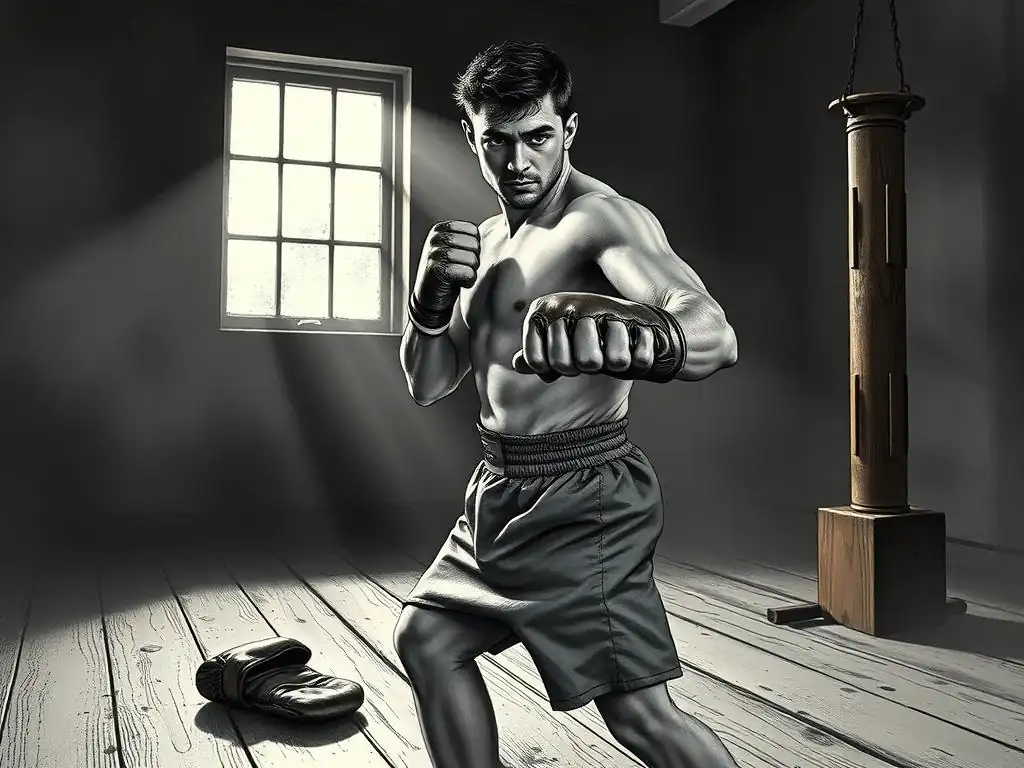
For much of the Victorian era, boxing, particularly bare-knuckle fighting, was deeply embedded in working-class culture. It provided a form of entertainment, a subject for gambling, and a potential ladder out of poverty for exceptionally skilled individuals. Local champions were often sources of intense community pride. Pubs and taverns served as unofficial centers for the sport, hosting smaller bouts and acting as places where larger contests were discussed and wagers were placed.
The physicality and grit required by boxing resonated with the harsh realities of working-class life. It was seen by many as a test of true "manhood" and resilience. While viewed with disdain by some, for many in the working class, the Prize Ring, and later gloved boxing under Victorian era boxing rules, offered a thrilling spectacle and a sense of shared excitement and identity.
Middle-Class Concerns: Violence, Gambling, and "Manly Virtue"
The Victorian middle class, with its emphasis on respectability, morality, and social order, often viewed boxing with suspicion and disapproval. The overt violence of bare-knuckle fighting, its association with heavy gambling, public drunkenness, and the criminal element clashed with their burgeoning social ideals. Religious groups, particularly evangelical movements, were vocal in their condemnation, seeing it as a barbaric and immoral pursuit.
However, even within the middle class, there was a nuanced perspective. Some saw boxing, when conducted under proper rules (increasingly the Queensberry Rules), as a legitimate test of "manly virtue" – courage, discipline, and physical fitness. This perspective was often tied to the ideal of the "muscular Christian," promoting physical prowess alongside moral fortitude. The debate over whether boxing represented brutal depravity or legitimate athletic manliness was a microcosm of broader societal tensions during the period of evolving Victorian era boxing rules.
Boxing's Transformation: From Brutal Spectacle to Legitimate Sport
The transition from the bare-knuckle Prize Ring under London Prize Ring Rules to gloved boxing under the Queensberry Rules fundamentally transformed the sport's public image and social standing. The increased safety and structure made it more appealing to potential spectators and participants from higher social strata. The focus shifted from sheer endurance and brutality to skill, strategy, and athleticism.
By the late Victorian era, particularly after the widespread adoption of the Queensberry Rules, boxing began to gain grudging acceptance as a legitimate sport. It was still controversial and faced opposition, but it was no longer solely associated with the criminal underworld. The establishment of amateur boxing clubs and its eventual inclusion in the Olympic Games (though not until the 20th century, the foundations were laid in this era) further solidified its status. This transformation was a direct result of the reform of Victorian era boxing rules and the efforts to make the sport safer and more respectable.
Victorian Era Boxing and its Lasting Influence on Modern Boxing
The Evolution of Boxing Gloves and Protective Equipment
The introduction of gloves under the Queensberry Rules was just the beginning of the evolution of protective equipment in boxing. Early Victorian era boxing gloves were often lightly padded, primarily intended to protect the hands of the puncher rather than significantly cushion the blow for the recipient. Over time, as understanding of head trauma grew, gloves became heavier and more padded, evolving into the standard 8-ounce or 10-ounce gloves used in professional boxing today.
The development of headguards for training and amateur competition also stems from the safety concerns raised during the transition to gloved boxing. Mouthguards, groin protectors, and hand wraps, all standard in modern boxing, are further refinements on the initial impulse towards safety ushered in by the adoption of the Queensberry Victorian era boxing rules. This continuous drive for fighter protection is a direct legacy of the reforms initiated in the Victorian era.
The Development of Boxing Styles and Techniques
The shift from bare-knuckle fighting to gloved boxing under the Queensberry Rules profoundly impacted fighting styles and techniques. The bare-knuckle era favored tough, durable fighters who could withstand punishment and excel in grappling and wrestling. The absence of timed rounds meant endurance was paramount, and fights often involved prolonged clinches and throws.
The Queensberry Rules, by prohibiting grappling and introducing timed rounds, fundamentally changed the dynamics. Fighters could no longer rely on wrestling to wear down opponents. The emphasis shifted to faster footwork, defensive head movement, and delivering sharp, clean punches within the three-minute round limit. This encouraged the development of more specialized styles: the "slugger" relying on power, the "boxer" emphasizing speed and defense, and the "boxer-puncher" combining elements of both. Modern boxing techniques, with their focus on combinations, footwork, and defense, are direct descendants of the styles that emerged and thrived under the new Victorian era boxing rules.
The Queensberry Rules Legacy: Shaping the Modern Sport of Boxing
The Queensberry Rules are arguably the single most important development in the history of boxing. They took a brutal, often lawless spectacle and transformed it into a structured, athletic contest. Their core principles – gloved fists, timed rounds, the ten-second count, and the prohibition of wrestling and hitting a downed opponent – remain the foundation of professional and amateur boxing worldwide.
While specific regulations have been added and refined over the past century and a half (such as weight classes, point scoring systems, and more detailed foul definitions), the essential framework established by the Queensberry Rules in the Victorian era persists. Every boxing match fought today, from amateur bouts to heavyweight championships, operates under rules that are a direct evolution of the code endorsed by the Marquess of Queensberry. The legacy of these Victorian era boxing rules is the modern sport itself.
Victorian Boxing Champions: Legends of the Ring
Jem Mace: The "Gypsy" Champion and Master Technician
Jem Mace (1831-1909) was a pivotal figure who successfully navigated the transition from bare-knuckle to gloved boxing. Known as the "Gypsy" due to his Romani heritage, Mace was a highly skilled and intelligent fighter. He held the English bare-knuckle heavyweight championship from 1861 to 1862 and later became one of the first to embrace and promote gloved contests under the new Victorian era boxing rules.
Mace was renowned for his defensive skills, footwork, and strategic approach, earning him the moniker of a "scientific" boxer. He traveled extensively, popularizing boxing in America, Australia, and other parts of the world. His career, spanning over 30 years, showcased his adaptability and mastery of both the old and new forms of the sport, making him a legend who helped bridge the gap between two distinct eras of boxing.
John L. Sullivan: The "Boston Strong Boy" and Bare-Knuckle King
John L. Sullivan (1858-1918) was an American icon and the last recognized heavyweight champion of the bare-knuckle era. Known as the "Boston Strong Boy," Sullivan was a powerful and charismatic figure who captured the public imagination. He defeated Paddy Ryan in 1882 to claim the bare-knuckle championship and defended it for a decade, primarily fighting under London Prize Ring Rules.
Sullivan's willingness, albeit somewhat reluctant, to fight James J. Corbett under the Queensberry Rules in 1892 was a landmark event. Although he lost the fight, his participation under the new rules solidified their dominance and marked the symbolic end of the bare-knuckle championship lineage. Sullivan's fame and transition highlighted the changing face of boxing and the growing acceptance of the Victorian era boxing rules that would define the sport for the next century.
Frequently Asked Questions
What were the primary goals of reforming boxing during the Victorian era?
The main goals were to increase respectability and reduce the brutality of bare-knuckle fighting by introducing standardized rules and making it more accessible to a wider audience. This aimed to make it a more legitimate sport.
How did the Marquis of Queensberry Rules differ from earlier boxing rules?
The Queensberry Rules introduced gloves, rounds with time limits, and a ban on wrestling and grappling, sharply contrasting the earlier, more lawless Broughton's Rules that permitted such tactics.
Why was there a push for boxing reform during the Victorian era despite its popularity?
While popular, bare-knuckle boxing was associated with gambling, violence, and disreputable characters. Reformers sought to eliminate these negative aspects and elevate boxing to a more respectable and controlled sport.
What impact did Victorian era boxing have on modern boxing?
Victorian era boxing, particularly the Marquis of Queensberry Rules, laid the groundwork for modern boxing. It established key elements such as gloved fighting, timed rounds, and restrictions on grappling, which are still fundamental today.
Besides the rules themselves, what other changes contributed to boxing's increased respectability during the Victorian Era?
The promotion of boxing by influential figures and the establishment of boxing clubs among the upper and middle classes helped to improve its image and distance it from its earlier, more disreputable associations.
Okay, here's a final reflection that aims to connect the article's theme with its current impact, stimulate personal reflection, and look toward the future, while also keeping in mind the article's focus on Victorian era boxing rules and its keyword:
Final Reflection: Echoes of the Ring: Respect, Reform, and Resilience
The echoes of Victorian era boxing, though seemingly distant, resonate even today. The struggle for respectability and the constant push for reform within the sport are themes that continue to shape boxing and other combat sports in the 21st century. The Victorian era's grappling with raw power and its attempts to codify it into a more civilized spectacle laid the groundwork for the modern rules and regulations that govern these contests, reminding us that even the most primal of human activities are subject to the evolving standards of society.
The Victorian era's influence on boxing extends beyond just the rulebook; it shaped the very perception of the sport. The drive to elevate boxing from a brutal street brawl to a respectable athletic pursuit is a testament to the enduring human desire to find order and meaning even within chaos. This transformation, however imperfect, reflects a broader societal shift towards valuing discipline, strategy, and fair play. As the famous boxing promoter, John L. Sullivan, once said, The manly art of self-defense is not only a sport, but a science.
This sentiment, born in the Victorian era, continues to inform how we understand and appreciate the complexities of boxing today.
Now, consider the lessons learned from the Victorian era's journey with boxing. How do we, in our own lives, grapple with the tension between raw power and the need for structure and regulation? How do we strive to elevate our own pursuits, transforming them from mere exercises of brute force into expressions of skill, discipline, and respect? Let the story of Victorian era boxing inspire you to find the balance between passion and control, and to always strive for a more refined and respectable version of yourself.
Unleash Your Inner Fighter: Take Action Now!
Thank you for diving into the gritty world of Victorian boxing. You've gained valuable insight into its transformation and enduring legacy. Now, it's time to put that knowledge into action.
- Rediscover your own physical limits: Consider trying a boxing class, even just a introductory session, to experience the raw power and discipline firsthand.
- Delve deeper: Research the life of a famous Victorian boxer you found particularly interesting and share your findings with a friend.
- Join the discussion: What surprised you most about the Victorian boxing era? Share your thoughts in the comments below.