
Legendary Chen Tai Chi Masters: Their Insights on Silk Reeling and Fajin

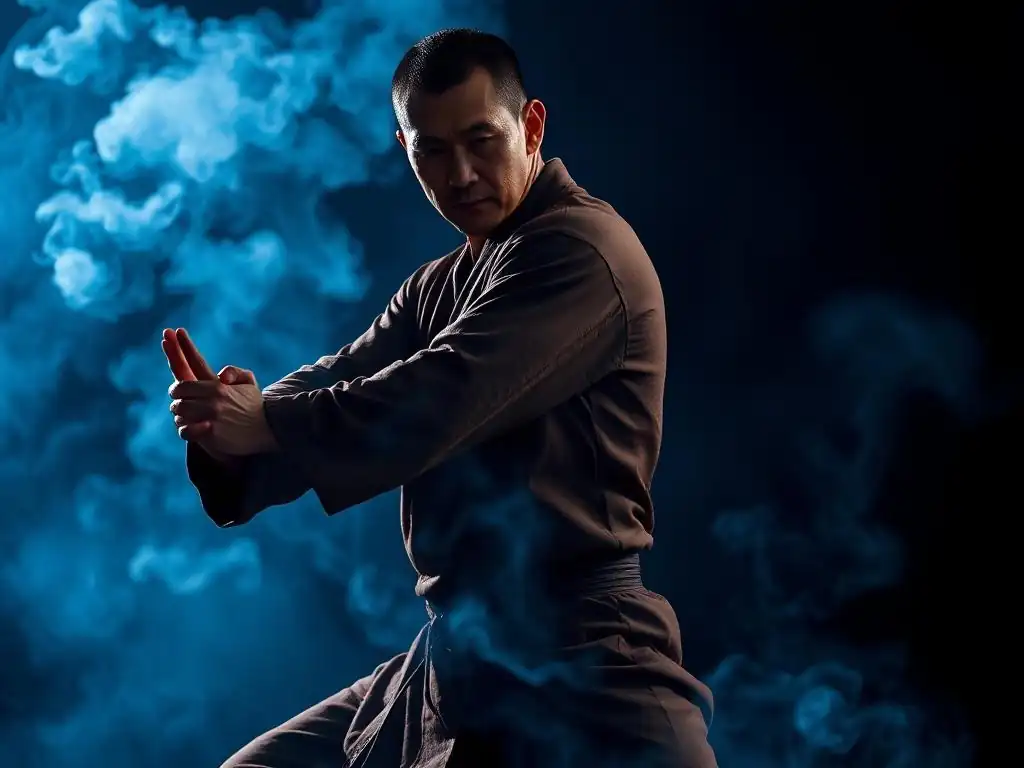
Welcome to Martial Arts Mastery, your gateway to the profound world of combat arts! Delve into the captivating history and intricate techniques that define martial arts traditions across the globe. Today, we unravel the secrets of Chen Tai Chi, focusing on the subtle power and devastating potential hidden within the practice of silk reeling. But what exactly is silk reeling, and how does it unlock the explosive force of fajin? Prepare to discover the insights of legendary Chen Tai Chi masters and unlock a deeper understanding of this internal art.
- Introduction to Chen Tai Chi Silk Reeling and Fajin
- Legacy of Chen Tai Chi Masters: Pioneers of Silk Reeling
- Insights from Contemporary Chen Tai Chi Grandmasters
- Understanding the Mechanics of Silk Reeling (Chansijin)
- Fajin Techniques in Chen Tai Chi: Unleashing Explosive Power
- Practical Applications of Silk Reeling and Fajin in Chen Tai Chi
- Common Mistakes in Silk Reeling and Fajin Practice
- The Future of Chen Tai Chi: Preserving and Promoting Silk Reeling and Fajin
- Conclusion: The Enduring Value of Chen Tai Chi's Core Principles
-
Frequently Asked Questions
- What is silk reeling in the context of Chen Tai Chi?
- How do legendary Chen Tai Chi masters view the importance of silk reeling?
- What is fajin, and how does it relate to silk reeling exercises?
- What are some practical benefits of mastering silk reeling beyond combat?
- Where can I learn more about Chen Tai Chi silk reeling and fajin?
- Final Reflection: The Enduring Power of Silk Reeling
- Ignite Your Chen Tai Chi Journey!
Introduction to Chen Tai Chi Silk Reeling and Fajin
The Significance of Silk Reeling (Chansijin) in Chen Style Tai Chi
Silk Reeling, known as Chansijin (纏絲勁), is a fundamental principle and training method unique to Chen Style Tai Chi Chuan. It describes the spiraling, coiling, and uncoiling movements that permeate every technique, form, and application within the style. This spiraling energy is generated from the core (dantian) and extends outward through the limbs, connecting the entire body in a unified, fluid motion.
Mastery of Chen Tai Chi silk reeling is considered essential for developing internal energy (qi) and achieving coordinated, powerful movement. Without a solid foundation in Chansijin, practitioners often struggle to understand the deeper aspects of the art, leading to disjointed movements and a lack of internal connectivity.
The intricate pathways of Chen Tai Chi silk reeling are not merely physical movements but represent a complex internal energetic cultivation. This coiling force is present in both offensive and defensive actions, allowing practitioners to neutralize incoming force while simultaneously preparing to issue power.
Early masters emphasized that Chansijin is the 'mother' of all Chen Tai Chi techniques, implying that every punch, kick, lock, or throw derives its power and effectiveness from this underlying spiraling motion. The consistent practice of Chen Tai Chi silk reeling exercises is therefore paramount for building the structural integrity and internal power necessary for advanced practice and application.
Fajin: Explosive Power in Chen Tai Chi
Fajin (發勁), meaning "issuing energy" or "explosive power," is the culmination of sophisticated internal training, deeply intertwined with the practice of Chen Tai Chi silk reeling. It represents the ability to release a concentrated burst of power through a relaxed body, often with minimal external movement. Unlike brute muscular force, Fajin relies on the coordinated alignment of the skeletal structure, the unified movement of the entire body, and the release of cultivated internal energy. This power is typically delivered through striking, pushing, or joint-locking techniques, capable of generating significant impact despite appearing effortless to the untrained eye.
Developing Fajin requires years of dedicated training, focusing on relaxation, proper body mechanics, and, critically, the integration of Chansijin. The spiraling movements of Chen Tai Chi silk reeling build the pathways for energy flow and teach the body how to coil and store power. Fajin is the uncoiling, the sudden release of this stored potential.
Masters often describe Fajin as being like cracking a whip – the power originates from the core, travels through a relaxed chain, and is released explosively at the tip. While Fajin can be visually dramatic, its effectiveness lies in its suddenness, penetration, and the unified power of the entire body delivered through a small point of contact.
Legacy of Chen Tai Chi Masters: Pioneers of Silk Reeling
Chen Wangting: The Founder's Vision of Silk Reeling Exercises
Chen Wangting (陳王廷), a Ming Dynasty general, is credited with creating Chen Style Tai Chi Chuan in the 17th century in Chenjiagou village, Henan province. His martial art synthesized traditional Chinese martial arts, the philosophical principles of Yin and Yang, and the Five Elements, along with the health cultivation practices of Daoyin and Tuna.
While the term Chansijin might have evolved over time, the core concept of spiraling, interconnected movement is evident in the foundational forms attributed to him, such as the Laojia Yi Lu (Old Frame First Form). These forms contain numerous movements characterized by coiling and spiraling actions in the limbs and torso, clearly laying the groundwork for what would later be formalized as Chen Tai Chi silk reeling.
Chen Wangting's genius lay in integrating complex martial techniques with principles of health and internal cultivation. The spiraling motions inherent in his forms were designed not only for generating power but also for promoting circulation and flexibility, reflecting the influence of Daoyin exercises. Historical accounts suggest that the early forms were rich in challenging movements, emphasizing the dynamic tension and release characteristic of Chansijin. His work established the fundamental principles of whole-body unity and the generation of force through coordinated, spiraling movements, which are the bedrock of all subsequent developments in Chen Tai Chi silk reeling practice.
Chen Changxing: Refining the Art of Chen Style Tai Chi
Chen Changxing (陳長興, 1771-1853) was a 14th-generation master who played a pivotal role in refining and systematizing Chen Style Tai Chi. He is particularly famous for consolidating the forms into two main routines, Laojia Yi Lu (Old Frame First Form) and Laojia Er Lu (Old Frame Second Form, also known as Pao Chui or Cannon Fist), which are still widely practiced today.
Chen Changxing's contribution to the understanding and practice of Chen Tai Chi silk reeling was significant. He emphasized the importance of maintaining a continuous, unbroken flow of spiraling energy throughout the forms, focusing on the internal connection rather than just the external movements.
It was through masters like Chen Changxing that the principles of Chansijin became more explicitly taught as a core component of the training. He stressed the importance of practicing the forms slowly and precisely to cultivate the internal feeling of silk reeling energy coiling and uncoiling.
His teachings focused on the 'thirteen postures' (eight gates and five steps) as embodying the essential principles, all underpinned by the spiraling mechanics of Chen Tai Chi silk reeling. His systematization provided a clear curriculum for future generations, ensuring that the intricate body mechanics and internal work, including the crucial Chen Tai Chi silk reeling methods, were preserved and accurately transmitted.
Chen Youben: Innovations in Chen Tai Chi Training
Chen Youben (陳有本, 1780-1858), a contemporary and relative of Chen Changxing, is credited with developing the Xin Jia (New Frame) variations of Chen Style Tai Chi. While sharing the same core principles, Xin Jia introduced more compact, intricate, and complex spiraling movements, further emphasizing the internal cultivation of Chansijin. Chen Youben's forms are characterized by tighter coiling and more pronounced Fajin expressions within the routine itself, making the connection between silk reeling and explosive power more explicit within the solo practice.
Chen Youben's innovations deepened the theoretical and practical understanding of Chen Tai Chi silk reeling. His approach often involved breaking down movements into smaller, more detailed components to facilitate a deeper grasp of the spiraling paths. The Xin Jia forms, particularly the First Form, are known for their numerous and sometimes subtle coiling actions, demanding a high level of precision and internal awareness. This emphasis on detailed Chansijin training in the Xin Jia lineage provided an alternative, yet complementary, path to mastering the essential spiraling energy of Chen Style Tai Chi, influencing many subsequent masters.
Insights from Contemporary Chen Tai Chi Grandmasters
Chen Xiaowang: Mastering the Principles of Silk Reeling Energy
Grandmaster Chen Xiaowang (陳小旺, born 1945), a 19th-generation direct descendant and one of the "Four Tigers of Chenjiagou," is renowned globally for his deep understanding and systematic teaching of Chen Tai Chi silk reeling. He has articulated Chansijin as the unifying principle of the art, describing it as the 'golden thread' that connects every movement. His teachings emphasize that silk reeling is not just about moving the limbs in spirals, but about generating and controlling a continuous, elastic force that originates from the dantian and permeates the entire body, capable of expressing soft neutralizing power or hard Fajin.
Chen Xiaowang has developed specific solo Chen Tai Chi silk reeling exercises designed to isolate and train these fundamental spiraling patterns before integrating them into the forms. He often uses analogies like spinning a top or winding thread to explain the mechanics. His extensive travels and teaching have brought a systematic approach to understanding Chen Tai Chi silk reeling to a global audience, breaking down complex principles into accessible concepts. He stresses that consistent practice of these spiraling motions is crucial for developing the sensitivity and internal connectivity required for advanced Tai Chi applications and Fajin.
Chen Zhenglei: Applications of Fajin in Modern Chen Tai Chi
Grandmaster Chen Zhenglei (陳正雷, born 1949), another of the "Four Tigers," is celebrated for his powerful Fajin and practical applications of Chen Style Tai Chi. While deeply rooted in traditional Chansijin principles, his focus often lies on how the spiraling energy translates into effective martial techniques and explosive power. He emphasizes that Fajin is not a separate technique but the natural result of correct body structure, unified movement, and the efficient release of the coiled energy built through Chen Tai Chi silk reeling practice.
Chen Zhenglei's teaching methodology often connects form practice directly to application. He demonstrates how the coiling and uncoiling inherent in Chen Tai Chi silk reeling forms are the precise mechanics needed to generate Fajin for strikes, pushes, and throws. He highlights different types of Fajin, such as short power (寸勁, Cunjin) delivered from close range, or penetrating power (穿透勁, Chuantoujin). Through detailed explanations and demonstrations, he illustrates how the seemingly soft, spiraling movements of Chen Tai Chi silk reeling lay the essential foundation for unleashing devastating Fajin in self-defense scenarios.
Wang Xian: Practical Exercises for Developing Silk Reeling Skills
Grandmaster Wang Xian (王西安, born 1944), also one of the "Four Tigers," is highly regarded for his practical approach to Chen Tai Chi training, particularly his emphasis on foundational exercises, including specific methods for cultivating Chen Tai Chi silk reeling. He stresses that true skill in Chansijin comes from diligent, repetitive practice of basic movements that isolate and refine the spiraling mechanics before attempting complex forms.
Wang Xian's methods often involve standing post (Zhan Zhuang) combined with subtle spiraling micro-movements, as well as dedicated silk reeling drills that work specific parts of the body, like the arms, legs, and torso.
Wang Xian's teaching makes the often-abstract concept of Chen Tai Chi silk reeling tangible through concrete drills. He provides clear, step-by-step instructions for exercises like single-hand and double-hand silk reeling, forward and backward spirals, and ground-level silk reeling. These drills are designed to build the necessary body awareness, coordination, and internal connection required to perform Chansijin correctly within the forms and applications. His focus on foundational Chen Tai Chi silk reeling exercises underscores the principle that mastery is built from the ground up, through dedicated and intelligent practice of the core mechanics.
Understanding the Mechanics of Silk Reeling (Chansijin)
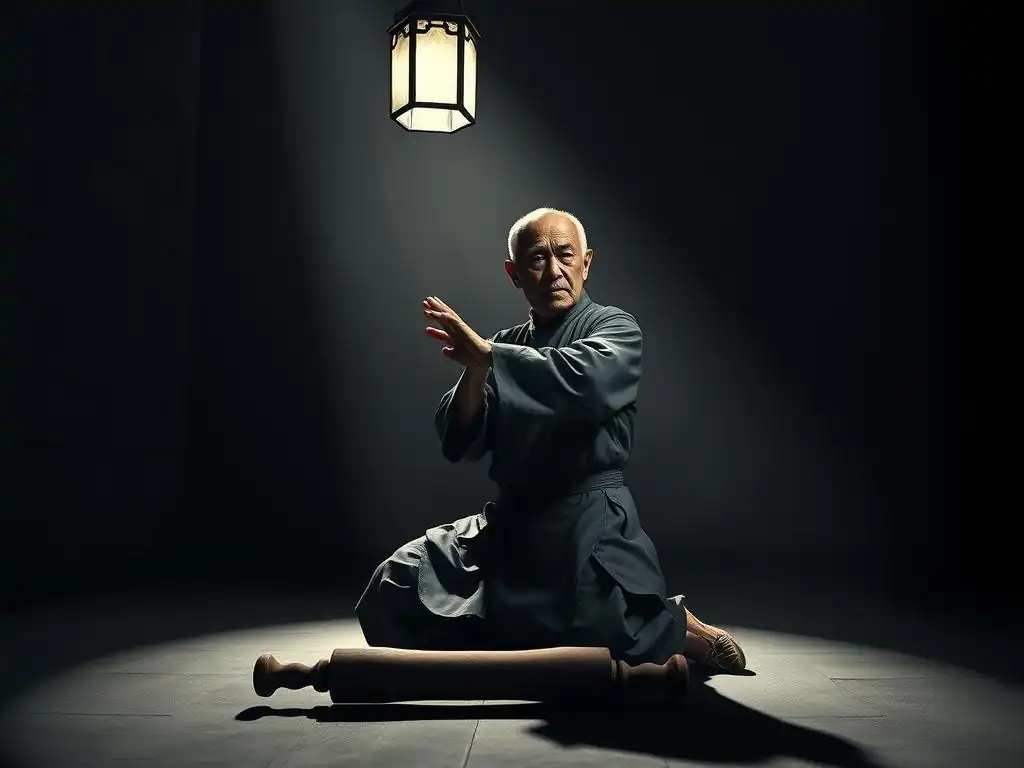
The Spiral Force: Generating Power from the Core
The fundamental mechanic of Chen Tai Chi silk reeling is the generation of force through spiraling movement originating from the body's central axis, the dantian area. This is often visualized as the body turning around a central vertical pole, with the limbs coiling and uncoiling like ropes winding around it.
The power is not generated in the limbs themselves but is driven by the rotation and subtle movements of the hips and waist, which act as the engine. This core-driven rotation creates the spiral force that propagates outwards through the torso, shoulders, arms, and legs, connecting every part of the body.
This spiral force allows for the principle of "whole body connected as one family" (全身一家). When performing Chen Tai Chi silk reeling correctly, any movement, no matter how small, involves the entire structure. For example, a slight turn of the waist causes a corresponding spiral movement in the arm. This interconnectedness means that force can be generated or neutralized efficiently, as the practitioner is not relying on isolated muscle strength but on the coordinated power of the entire structure moving as a unit. Mastering this core-driven spiral is the key to unlocking effective Chen Tai Chi silk reeling.
Coordinating Body Movements for Efficient Silk Reeling
Efficient Chen Tai Chi silk reeling requires precise coordination of multiple body parts. The movement must be continuous, smooth, and without interruption, like unwinding a silk thread from a cocoon without breaking it. This involves the coordinated action of the feet grounding, the legs driving, the waist turning, the spine aligning, and the arms and hands following the spiraling path. The hands and feet often move in harmonious, yet sometimes counter-directional, spirals – one coiling while the other uncoiling – creating a balanced tension and dynamic potential.
A key aspect of this coordination is maintaining proper body structure and alignment throughout the spiraling movements. The spine should remain upright and relaxed, the shoulders dropped, and the elbows sunk. The knees are bent, and the weight is rooted through the feet.
Any stiffness or misalignment in one part of the body will impede the smooth flow of Chansijin through the entire structure. Training involves learning to move each joint independently while simultaneously connecting it to the whole, ensuring that the spiraling energy flows freely and powerfully from the core to the extremities, characteristic of advanced Chen Tai Chi silk reeling.
Breathing Techniques to Enhance Silk Reeling Energy Flow
Breathing plays a crucial role in enhancing the effectiveness and internal depth of Chen Tai Chi silk reeling. While initial practice may focus on the physical mechanics, advanced practitioners integrate specific breathing methods to support and amplify the spiraling energy flow. The principle often involves coordinating the breath with the movements: inhaling during coiling or 'receiving' phases and exhaling during uncoiling or 'issuing' phases. This synchronized breathing helps to regulate the internal energy (qi) and deepen the connection between mind, body, and breath.
Specific breathing techniques, such as abdominal breathing (using the dantian), are fundamental. The expansion and contraction of the abdomen during inhalation and exhalation assist the waist rotation and core engagement, which are vital for generating Chansijin. Furthermore, cultivating deep, slow, and continuous breathing helps to maintain relaxation and focus, allowing the silk reeling energy to flow more smoothly and powerfully. Over time, the breath becomes seamlessly integrated with the spiraling movements, enhancing both the internal cultivation aspect and the potential for Fajin within Chen Tai Chi silk reeling practice.
Fajin Techniques in Chen Tai Chi: Unleashing Explosive Power
The Role of Silk Reeling in Generating Fajin
As mentioned earlier, Chen Tai Chi silk reeling is not just a movement pattern; it is the engine that drives Fajin. The spiraling, coiling motion allows the practitioner to store potential energy, much like winding a spring or tightening a rubber band. This coiling action creates tension throughout the body's fascial lines and musculature, connected and unified by the core. Fajin is the sudden, simultaneous release of this coiled tension. The uncoiling motion, driven by the waist and expressed through the coordinated structure developed through Chansijin, results in a rapid, powerful burst of energy delivered to a specific point.
Think of the difference between pushing with a stiff arm versus cracking a whip. The stiff arm uses linear muscular force. The whip uses a wave of energy transmitted through a flexible structure, culminating in a rapid, powerful snap at the end. Chen Tai Chi Fajin, enabled by silk reeling, is analogous to the whip.
The body, relaxed yet interconnected through Chansijin, coils to build potential. The Fajin is the sudden, unified uncoiling that directs this accumulated force outwards. Without the ability to coil and connect the body through Chen Tai Chi silk reeling, Fajin becomes mere muscular pushing or striking, lacking the penetrating power and internal force characteristic of the art.
Different Types of Fajin in Chen Style Tai Chi
Chen Style Tai Chi utilizes various types of Fajin, each differing in angle, distance, and intended effect, all stemming from the core principles of Chansijin and body unity. Some common types include:
- Short Power (寸勁, Cunjin): A sudden, close-range burst of power, often delivered from just inches away. This requires extremely refined Chen Tai Chi silk reeling mechanics to generate significant force with minimal apparent movement.
- Long Power (長勁, Changjin): Power delivered over a slightly longer range, involving more visible movement and a more extended release of the spiraling energy.
- Penetrating Power (穿透勁, Chuantoujin): Power that aims to affect the opponent's internal structure rather than just the surface. This requires precise timing, angle, and the unified force generated by sophisticated Chen Tai Chi silk reeling.
- Vibrating Power (抖勁, Doujin): A rapid, shaking release of power, often used to disrupt an opponent's balance or structure. This type relies heavily on the rapid, elastic recoil facilitated by advanced Chansijin.
Masters like Chen Zhenglei demonstrate how specific movements within the forms, such as the explosive punches in Pao Chui (Laojia Er Lu), embody these different Fajin types. Each requires the practitioner to first coil the body using Chen Tai Chi silk reeling principles and then release the energy instantly and completely.
Training Methods for Developing Fajin Power
Developing powerful and effective Fajin in Chen Tai Chi is a long-term process that builds upon a solid foundation of Chen Tai Chi silk reeling and structural alignment. Key training methods include:
- Consistent Form Practice: Performing the forms slowly initially to understand the Chansijin paths, then gradually increasing speed and incorporating Fajin releases at appropriate points.
- Silk Reeling Drills: Dedicated exercises focusing solely on the spiraling mechanics of Chen Tai Chi silk reeling, performed repeatedly to build muscle memory and internal connection.
- Single Movement Practice: Isolating specific movements from the forms that contain prominent Fajin applications (e.g., certain punches or shoulder strikes) and practicing them thousands of times, focusing on the coiling and uncoiling action.
- Partner Drills (Push Hands): Engaging in push hands allows practitioners to test and refine their Fajin against a resisting opponent, learning to apply the power generated by Chen Tai Chi silk reeling in a dynamic situation.
- Target Practice: Striking focus mitts, sandbags, or specialized poles to practice directing and releasing Fajin power effectively and safely.
Dedicated training across these methods, always emphasizing relaxation, structural integrity, and the core-driven spiraling of Chen Tai Chi silk reeling, is essential for cultivating Fajin.
Practical Applications of Silk Reeling and Fajin in Chen Tai Chi
Silk Reeling as a Foundation for Tai Chi Forms
The practice of solo forms in Chen Style Tai Chi is the primary method for internalizing the principles of Chen Tai Chi silk reeling and building the foundation for all other aspects of the art. Every posture and transition within the Laojia, Xin Jia, or other Chen forms is permeated by Chansijin. The forms teach the practitioner how to generate, guide, and control the spiraling energy throughout the entire body in a continuous, unbroken flow. Practicing the forms slowly allows the practitioner to feel the internal connections and the subtle coiling and uncoiling in each movement.
As skill progresses, the forms become a dynamic expression of Chen Tai Chi silk reeling and Fajin. The practitioner learns to transition seamlessly between soft, neutralizing movements (often emphasizing the Yin aspect of Chansijin) and sudden, explosive releases of power (Fajin, the Yang aspect of Chansijin). The forms thus serve as a moving textbook, encoding the complex body mechanics and energetic principles required for both health cultivation and martial application. Without a deep understanding of Chen Tai Chi silk reeling within the forms, the movements remain empty external shapes.
Fajin in Self-Defense Scenarios
Fajin is the martial expression of the internal power cultivated through Chen Tai Chi silk reeling and other training methods. In self-defense, Fajin allows a practitioner to deliver a powerful strike or push with minimal wind-up, making it difficult for an opponent to block or evade. Because the power comes from the entire body unified by Chansijin, it is often more penetrating and disruptive than simple muscular force. A seemingly small movement can generate significant impact, capable of disrupting an opponent's balance, causing internal shock, or creating an opening for follow-up techniques.
Examples of Fajin application include the sudden release of power in a close-range punch (like in the movement "Cannon Fist"), an explosive push that sends an opponent flying, or a sharp, coiling-uncoiling movement used in joint locks or throws. The ability to transition instantly from soft yielding (using the neutralizing aspect of Chen Tai Chi silk reeling) to explosive power (Fajin) makes Chen Style Tai Chi a formidable martial art.
The effectiveness of Fajin in application is directly proportional to the practitioner's mastery of the underlying Chen Tai Chi silk reeling mechanics and the ability to unify their body structure.
Integrating Silk Reeling and Fajin into Sparring
Integrating Chen Tai Chi silk reeling and Fajin into sparring (often through structured exercises like Push Hands or more free-form sparring) is crucial for developing practical application skills. Push Hands specifically is designed to train sensitivity (ting jin), neutralizing skills (hua jin), and the ability to issue power (fa jin) while maintaining contact with an opponent. The spiraling movements of Chen Tai Chi silk reeling are constantly employed to adhere, connect, and control the opponent's force, while simultaneously creating opportunities to issue Fajin.
In sparring, the continuous, adaptable nature of Chen Tai Chi silk reeling allows the practitioner to respond fluidly to an opponent's movements, maintaining balance and structure. When an opening arises, the practitioner can instantly transition from the yielding, coiling phase of Chansijin to the explosive uncoiling of Fajin to deliver a strike, push, or joint technique. This dynamic interplay between yielding and issuing, soft and hard, coiling and uncoiling, all rooted in the principles of Chen Tai Chi silk reeling and culminating in Fajin, is what makes Chen Style Tai Chi effective in combat scenarios.
Common Mistakes in Silk Reeling and Fajin Practice
Misconceptions About Silk Reeling Energy
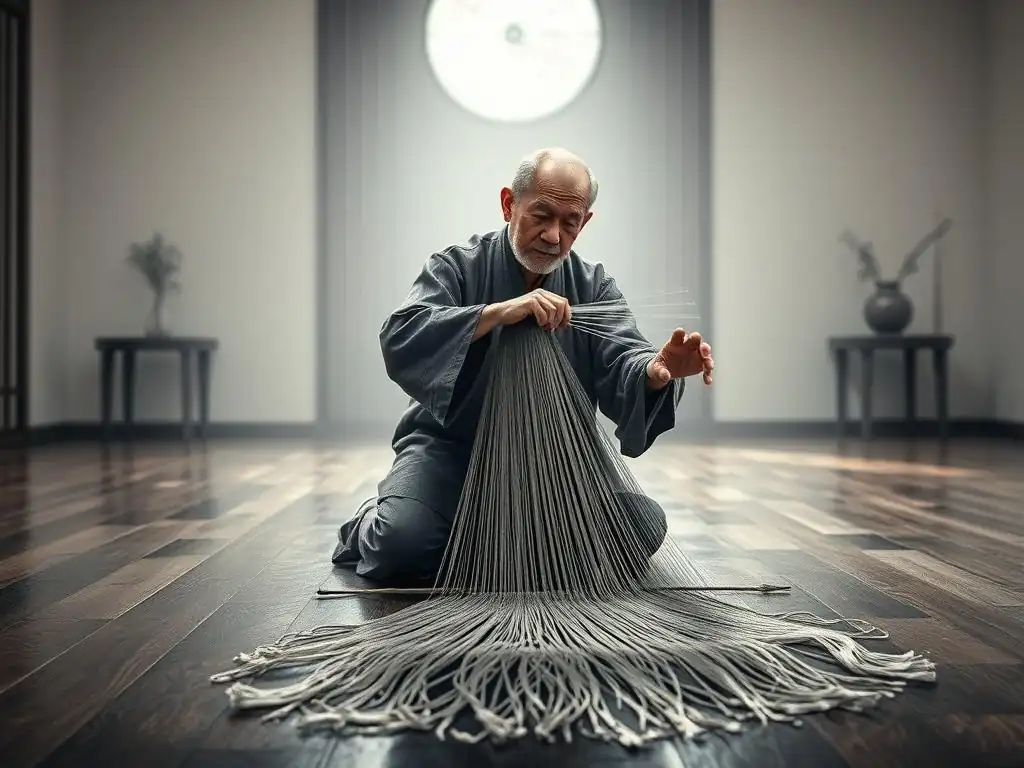
A common mistake in practicing Chen Tai Chi silk reeling is viewing it merely as a set of external, circular movements. Beginners often focus only on moving their arms and legs in spirals without engaging the core or connecting the entire body. This leads to empty, disconnected movements that lack internal power and fail to cultivate true Chansijin. Silk reeling energy is an internal feeling and connection that drives the external movement, not just the movement itself. It requires deep relaxation and internal awareness to feel the spiraling force originating from the dantian.
Another misconception is equating Chen Tai Chi silk reeling with being 'soft' or weak. While the movements are smooth and fluid, they contain underlying tension and potential energy. The coiling action builds elastic force; it's not limpness. Understanding the principle of 'cotton wrapped steel' (棉裡藏針) – appearing soft externally but containing internal hardness – is crucial. Correct Chen Tai Chi silk reeling develops a body that is both relaxed and powerfully integrated, capable of yielding and issuing force effectively.
Avoiding Incorrect Posture and Alignment
Incorrect posture and structural misalignment are significant impediments to developing proper Chen Tai Chi silk reeling and Fajin. Common errors include raising the shoulders, stiffening the neck, collapsing the chest, straightening the knees, or leaning the torso. These issues break the chain of connection throughout the body, preventing the smooth flow of Chansijin from the core to the extremities. For example, raised shoulders block the energy flow to the arms, resulting in disconnected, weak upper body movements.
Maintaining correct posture – rooted feet, bent knees, relaxed hips and waist, upright spine, sunken shoulders and elbows – is fundamental. This aligned structure allows the spiraling force generated by the waist to travel efficiently through the skeletal framework and connective tissues. Practitioners must constantly check and correct their posture during all aspects of training, from standing meditation to form practice and push hands. Proper alignment is the conduit through which the power of Chen Tai Chi silk reeling flows and Fajin is expressed.
Overcoming Plateaus in Fajin Development
Practitioners often hit plateaus in their Fajin development after initial progress. This can be due to several factors, including relying too much on muscular strength, lacking sufficient relaxation, or failing to fully integrate the Chen Tai Chi silk reeling mechanics. If Fajin feels stiff, fragmented, or lacks penetration, it's often a sign that the underlying Chansijin is not properly developed or connected throughout the body. Overcoming these plateaus requires returning to the fundamentals.
Strategies for overcoming Fajin plateaus include:
- Revisiting basic Chen Tai Chi silk reeling drills to refine the spiraling mechanics and internal connection.
- Focusing intensely on relaxation during practice; tension is the enemy of Fajin.
- Increasing the volume of single-movement Fajin practice, aiming for quality (unified release) over quantity.
- Using partner drills to get feedback on the quality and effectiveness of the Fajin.
- Seeking guidance from an experienced instructor who can provide specific corrections based on the individual's body mechanics.
Persistent, mindful practice, focusing on the subtle coordination and internal feeling of Chen Tai Chi silk reeling and release, is key to breaking through Fajin plateaus.
The Future of Chen Tai Chi: Preserving and Promoting Silk Reeling and Fajin
The Importance of Passing Down Traditional Knowledge
The preservation of traditional Chen Style Tai Chi, with its emphasis on Chen Tai Chi silk reeling and Fajin, relies heavily on the accurate transmission of knowledge from experienced masters to new generations. The intricacies of Chansijin and the mechanics of Fajin are often subtle and difficult to grasp from books or videos alone; they require hands-on correction and guidance from a qualified teacher. The lineage system, where students learn directly from masters who learned from their predecessors, has historically been the primary method for ensuring the integrity of the art's core principles.
Efforts by grandmasters and dedicated practitioners to document, teach, and share their knowledge are crucial. This includes publishing books, creating instructional videos (though direct instruction remains paramount), and establishing schools and training centers. Ensuring that the foundational principles, particularly the correct methods for cultivating Chen Tai Chi silk reeling and Fajin, are passed down accurately is vital for the future health and authenticity of Chen Style Tai Chi Chuan globally.
Adapting Chen Tai Chi for Modern Practitioners
While preserving tradition is important, adapting how Chen Style Tai Chi is taught to meet the needs and lifestyles of modern practitioners is also necessary for its continued growth. Many people initially come to Tai Chi for health benefits, not martial application. Teachers must be able to explain the relevance of Chen Tai Chi silk reeling and other principles in terms of improved posture, flexibility, balance, and energy flow, even if the student isn't focused on Fajin.
However, it is important that adaptation does not dilute the core principles. Simplified forms or purely external training methods that bypass the cultivation of Chansijin and internal energy fundamentally alter the art. Finding a balance between accessibility and authenticity is key. This might involve offering introductory classes focused on health, while clearly outlining the path to deeper study that includes the rigorous training required for mastering Chen Tai Chi silk reeling and Fajin for those interested in the martial or advanced internal aspects.
Resources for Learning Chen Tai Chi Silk Reeling and Fajin
For those interested in learning the intricacies of Chen Tai Chi silk reeling and developing Fajin, numerous resources are available, though finding qualified instruction is paramount. Many contemporary grandmasters and their disciples offer classes, workshops, and seminars internationally. Renowned masters like Chen Xiaowang, Chen Zhenglei, and Wang Xian, among others, have established organizations and schools that teach their family's traditional methods.
Additionally, there are many books and instructional videos available that delve into the theory and practice of Chansijin and Fajin. While these resources can provide valuable supplementary information and illustrate techniques, they are best used in conjunction with guidance from an experienced instructor. Learning Chen Tai Chi silk reeling, especially the subtle internal aspects, requires personalized feedback and correction to ensure correct body mechanics and the proper cultivation of internal energy.
Conclusion: The Enduring Value of Chen Tai Chi's Core Principles
The principles of Chen Tai Chi silk reeling ( Chansijin) and Fajin represent the heart of Chen Style Tai Chi Chuan. Chansijin provides the fundamental spiraling mechanics and internal connectivity that unify the body and cultivate energy, while Fajin is the powerful expression of this cultivated force. These concepts, developed and refined over centuries by legendary masters from Chen Wangting to contemporary grandmasters like Chen Xiaowang, Chen Zhenglei, and Wang Xian, are what distinguish Chen Style Tai Chi and give it its unique depth, power, and efficacy.
Mastering Chen Tai Chi silk reeling and Fajin is a lifelong journey, demanding dedication, patience, and diligent practice of foundational exercises, forms, and partner work. While challenging, the rewards extend beyond martial prowess to include profound health benefits, improved body awareness, and a deeper understanding of internal energy cultivation. As Chen Style Tai Chi continues to spread globally, the preservation and accurate transmission of these core principles, particularly the intricate art of Chen Tai Chi silk reeling, remain essential for maintaining the integrity and vitality of this remarkable martial art.
Frequently Asked Questions
What is silk reeling in the context of Chen Tai Chi?
Silk reeling (chan si gong) refers to a set of spiraling and coiling movements that are fundamental to Chen Tai Chi. These movements cultivate internal energy (qi) and develop whole-body connection for power generation.
How do legendary Chen Tai Chi masters view the importance of silk reeling?
They emphasize silk reeling as the foundation for all other Chen Tai Chi skills, including forms, pushing hands, and fajin. Consistent and correct practice is crucial for developing internal power and effective technique.
What is fajin, and how does it relate to silk reeling exercises?
Fajin is the explosive release of power in Chen Tai Chi. Silk reeling develops the body mechanics and internal energy necessary to generate and deliver fajin effectively.
What are some practical benefits of mastering silk reeling beyond combat?
Besides self-defense, silk reeling can improve balance, coordination, and overall health. It also cultivates mind-body awareness and promotes relaxation through flowing movements.
Where can I learn more about Chen Tai Chi silk reeling and fajin?
MartialArtsMastery.org offers historical overviews, training techniques, and profiles of legendary practitioners. You can explore different martial arts disciplines, training tips, history, and practical self-defense strategies on the website.
Final Reflection: The Enduring Power of Silk Reeling
The intricate movements and explosive power of Chen Tai Chi, particularly its emphasis on silk reeling and fajin, are not merely historical techniques; they represent a living tradition that continues to resonate deeply within the martial arts world and beyond. The principles of yielding, spiraling energy, and focused release, as exemplified by the legendary masters discussed, offer profound lessons applicable far beyond the training hall.
The enduring influence of Chen Tai Chi silk reeling lies in its holistic approach to movement and energy cultivation. It's a reminder that true strength comes not just from brute force, but from understanding and harnessing the body's natural mechanics. The whole body must be connected, like a string of pearls.
This quote, often attributed to Chen Changxing, encapsulates the essence of silk reeling: a unified, flowing movement that generates immense power from within.
As we conclude this exploration of Chen Tai Chi silk reeling and fajin, I invite you to consider how these principles might apply to your own life. Can you find ways to cultivate yielding and responsiveness in your interactions? Can you harness your inner energy and focus it with intention? The lessons of these legendary masters are not confined to the martial arts; they offer a pathway to greater awareness, balance, and power in all aspects of your being.
Ignite Your Chen Tai Chi Journey!
Thanks for exploring the wisdom of Chen Tai Chi masters with us! We hope you’ve gained valuable insights into silk reeling and the explosive power of Fajin. Ready to put this knowledge into action?
- Commit to practicing silk reeling exercises for at least 15 minutes daily, focusing on smooth, continuous movements and proper body alignment.
- Explore online resources and videos demonstrating Fajin techniques, paying close attention to the principles of whole-body coordination and internal energy release.
- Surprise yourself and document your progress! Start a martial arts journal to track your silk reeling practice, noting any improvements in your balance, coordination, and understanding of Fajin.
What specific silk reeling drill are you most excited to incorporate into your training, and how do you plan to measure your progress?