
Pressure Testing Your GojuRyu Techniques: Realistic Training Methods

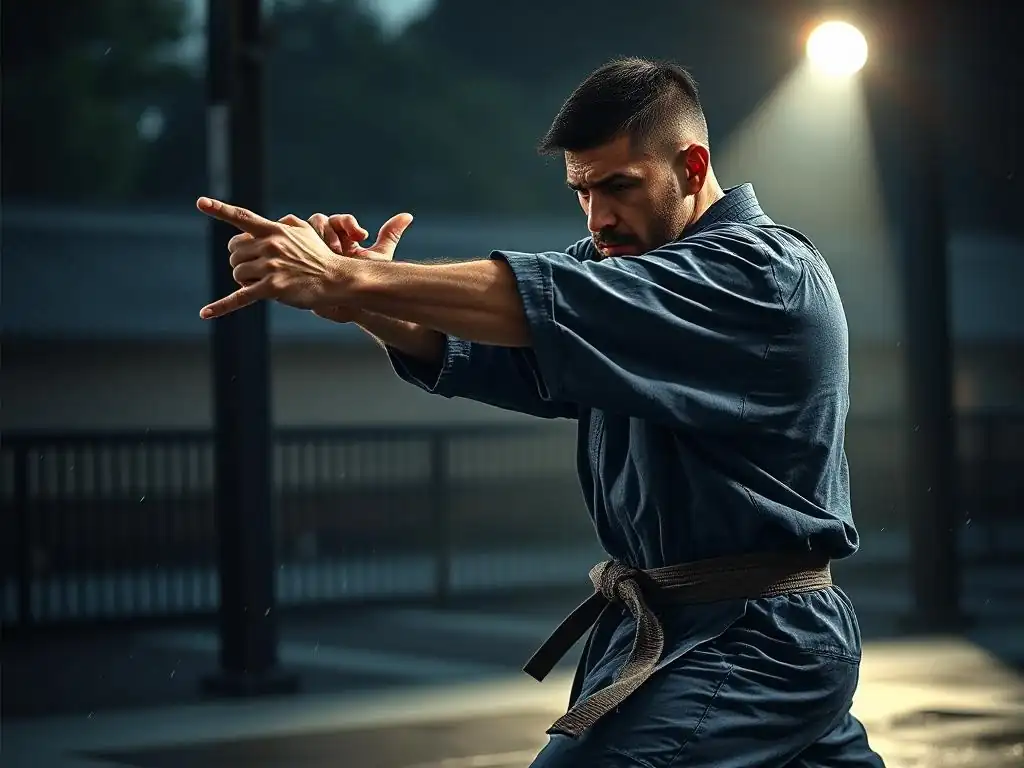
Welcome to Martial Arts Mastery, your gateway to the world's most effective fighting systems! Are you ready to take your GojuRyu training to the next level? This article delves into crucial pressure testing techniques – methods that bridge the gap between kata and real-world application. Discover how to transform your theoretical knowledge into practical self-defense skills and truly understand the power within GojuRyu. Intrigued? Keep reading to unlock the secrets!
- Introduction to GojuRyu Pressure Testing for Enhanced Combat Effectiveness
- Understanding GojuRyu's Core Techniques for Pressure Testing
- Methods for Implementing GojuRyu Pressure Testing Techniques Training
- Tools and Equipment for GojuRyu Pressure Testing
- Measuring Progress and Adapting Your GojuRyu Training
- The Mental Aspect of GojuRyu Pressure Testing
- Common Mistakes to Avoid in GojuRyu Pressure Testing
- Advanced GojuRyu Pressure Testing Drills
- Conclusion: Mastering GojuRyu Through Realistic Pressure Testing
-
Frequently Asked Questions
- What does "pressure testing" mean in the context of GojuRyu training?
- Why is pressure testing important for GojuRyu practitioners?
- What are some examples of GojuRyu pressure testing techniques?
- How does pressure testing differ from traditional GojuRyu kata training?
- What are the potential risks of pressure testing, and how can they be minimized?
- Final Reflection: Embracing the Crucible of GojuRyu
- Ignite Your Goju-Ryu Potential!
Introduction to GojuRyu Pressure Testing for Enhanced Combat Effectiveness
Why Pressure Testing Matters in GojuRyu Karate
GojuRyu, like many traditional martial arts, is steeped in rich history and structured kata. While kata provide the foundational movements, principles, and conditioning, they are inherently static. Pressure testing is the dynamic application of these techniques under realistic, unpredictable conditions. It's the crucial step where theoretical knowledge meets practical application, revealing how well a technique holds up when faced with a resisting opponent or unexpected circumstance. Without this vital step, a practitioner's understanding remains theoretical, potentially leading to ineffective responses in a real self-defense situation.
Engaging in GojuRyu pressure testing techniques training allows practitioners to move beyond choreographed movements and develop genuine functional strength, timing, and spatial awareness. It simulates the chaos and physical demands of a real encounter, helping to identify gaps in one's technique or strategy. For instance, a perfectly executed sanchin stance in solo practice might crumble when pressure is applied by a partner. Pressure testing highlights these weaknesses, providing clear areas for improvement and ensuring that the ingrained muscle memory from kata can be effectively deployed under duress.
The Importance of Realistic Training Scenarios in GojuRyu
Training scenarios that closely mimic real-world situations are paramount for effective GojuRyu pressure testing. Simply practicing techniques in isolation, such as repeatedly throwing a punch at a stationary target, builds mechanics but not adaptability. Realistic scenarios introduce variables like unexpected attacks, varying angles, different levels of resistance, and the psychological stress of confrontation. This type of GojuRyu pressure testing techniques training forces practitioners to think on their feet, adapt their techniques, and apply GojuRyu principles under pressure, rather than just executing pre-planned sequences.
Incorporating realistic scenarios, from simulating common street attacks like grabs or shoves to practicing techniques in confined spaces, bridges the gap between the dojo and the outside world. For example, practicing a block and counter-strike against a partner who is actively trying to land a strike with varying speed and power is far more valuable than drilling the same sequence against a compliant partner.
Such scenarios are integral to GojuRyu pressure testing techniques training, cultivating not just physical skill but also crucial attributes like situational awareness, decision-making under stress, and emotional control, all vital for effective self-defense rooted in GojuRyu principles.
Understanding GojuRyu's Core Techniques for Pressure Testing
Sanchin Kata: The Foundation for GojuRyu Strength and Stability Under Pressure
Sanchin Kata, often considered the cornerstone of GojuRyu, is far more than just a sequence of movements; it is a moving meditation and a fundamental exercise in building internal strength, rootedness, and mental fortitude. Pressure testing within Sanchin involves applying external force to a practitioner while they maintain the kata's postures and breathing.
This reveals how well the practitioner can maintain their structural integrity, balance, and focused energy (kime) when subjected to external disruption. A practitioner who can absorb pushes or strikes while maintaining a solid Sanchin stance demonstrates a profound understanding of the kata's principles and a strong foundation for all other GojuRyu techniques.
Effective GojuRyu pressure testing techniques training in Sanchin involves a partner applying moderate, controlled pressure to various points – shoulders, chest, hips – while the practitioner performs the kata. This isn't about brute force, but about testing the practitioner's ability to create a unified, stable structure through proper alignment, muscular tension, and grounding. Consistent practice with this type of pressure testing builds the ability to generate and absorb force from the core, a critical skill for delivering powerful strikes and maintaining stability during grappling or clinching exchanges, directly translating Sanchin's static strength into dynamic resilience.
GojuRyu Blocking Techniques: Deflecting and Redirecting Force
GojuRyu blocking techniques, such as age uke (rising block), gedan barai (downward sweep), and uchi uke (inside block), are designed to deflect or redirect incoming attacks rather than simply stopping them head-on. Pressure testing these techniques involves a partner delivering strikes with varying speed, power, and angles while the practitioner applies the appropriate block.
This training goes beyond simply making contact; it focuses on the effectiveness of the block in neutralizing the threat and preparing for a counter-attack. A successful block in GojuRyu pressure testing should disrupt the opponent's balance or posture and ideally create an opening for the defender.
Realistic GojuRyu pressure testing techniques training for blocking requires the partner to use focus mitts or training pads to simulate strikes, allowing for higher intensity and realism while minimizing injury risk. Drills should involve unpredictable attack patterns to prevent anticipation and encourage genuine reaction. For example, a partner might throw a combination of jodan (upper level) and chudan (middle level) attacks, requiring the practitioner to rapidly switch between age uke and uchi uke. This type of dynamic pressure testing refines timing, distance management, and the ability to transition smoothly from defense to offense, ensuring blocks are functional under pressure.
GojuRyu Striking Techniques: Delivering Power and Precision
GojuRyu striking techniques, encompassing powerful punches like seiken zuki (forefist punch) and devastating kicks such as mae geri (front kick) and mawashi geri (roundhouse kick), are rooted in generating power from the core and ground. Pressure testing these strikes involves applying them against resistant targets or opponents to assess their effectiveness.
Simply hitting air or a stationary bag doesn't reveal if a strike can penetrate a guard, disrupt an opponent's balance, or deliver significant impact when met with counter-force or movement. True GojuRyu pressure testing techniques training for striking evaluates power, accuracy under duress, and the ability to follow through or recover quickly.
Using focus mitts, Thai pads, and heavy bags with varying degrees of resistance is essential for pressure testing GojuRyu strikes. A partner holding pads can move, provide resistance, and call out target areas, forcing the striker to adjust. For instance, practicing a gyaku zuki (reverse punch) against a moving focus mitt requires precise timing and angle adjustment that is absent in static practice.
For kicks, hitting a resistant heavy bag or body shield tests the ability to maintain balance and deliver full power upon impact. This rigorous GojuRyu pressure testing techniques training ensures that strikes are not just visually correct but functionally powerful and adaptable in a dynamic exchange.
GojuRyu Grappling and Clinching: Close-Range Combat Application
While often perceived primarily as a striking art, GojuRyu incorporates techniques for close-range combat, including grappling, clinching, and joint manipulation, particularly evident in applications derived from kata like Seipai and Seienchin. Pressure testing in this range involves practicing techniques like throws, takedowns, joint locks, and control holds against a resisting partner. This is where the stability built in Sanchin and the close-range strikes (like hiji ate - elbow strikes) become critical, requiring practitioners to maintain balance and posture while dealing with an opponent who is actively trying to grab, push, or take them down.
GojuRyu pressure testing techniques training for grappling and clinching requires careful control and communication between partners to prevent injury. Drills can start with specific scenarios, such as practicing escaping a wrist grab or defending against a bear hug, gradually increasing resistance.
More advanced pressure testing might involve light stand-up grappling exchanges focused on maintaining dominant position, applying joint controls from a clinch, or executing a small throw (like a de ashi barai - advancing foot sweep) when an opening presents itself. This type of training is vital for developing comfort and effectiveness in the chaotic, close-quarters environment where many real-world confrontations occur, complementing the striking aspects of GojuRyu.
Methods for Implementing GojuRyu Pressure Testing Techniques Training
Partner Drills for GojuRyu Technique Refinement
Progressive Resistance Training with a Partner
Progressive resistance training is a fundamental method for GojuRyu pressure testing techniques training. It involves starting a drill with minimal or no resistance from the partner, allowing the practitioner to focus on correct form and timing. As the practitioner becomes more comfortable and proficient, the partner gradually increases their resistance, simulating a non-compliant or actively resisting opponent. This incremental approach allows the practitioner to adapt their technique under increasing pressure without being overwhelmed, building confidence and functional skill.
For example, when practicing a block-and-counter combination, the partner might initially offer a slow, predictable attack with no resistance to the block or counter. Over several repetitions or training sessions, the partner would increase the speed of the attack, then add some force to the block, and finally actively defend against the counter-strike. This structured progression in GojuRyu pressure testing ensures that the practitioner learns to execute techniques effectively against varying levels of opposition, refining their body mechanics and strategic thinking in a controlled environment before moving to higher-intensity scenarios.
Incorporating GojuRyu Kata Applications (Bunkai) into Pressure Testing
Bunkai, the application of movements found in GojuRyu kata, forms a crucial bridge between solo practice and partner work. Pressure testing Bunkai involves applying these applications against a resisting partner in dynamic scenarios. Instead of just demonstrating a pre-arranged application, the partner provides realistic resistance or unexpected variations, forcing the practitioner to adapt the Bunkai sequence on the fly. This process reveals whether the theoretical application from kata can be effectively deployed in a live situation and helps unlock deeper meanings within the kata movements.
Effective GojuRyu pressure testing techniques training using Bunkai requires partners to explore multiple potential applications for a single kata movement. For instance, a movement often interpreted as a block might also be applicable as a joint lock or a throw setup. Pressure testing involves the partner reacting realistically to the initial application (e.g., trying to pull their arm away from a lock), requiring the practitioner to transition to a follow-up technique derived from the kata. This dynamic exploration under pressure makes Bunkai functional, proving the combat effectiveness inherent in the GojuRyu kata system beyond mere form.
Sparring and Kumite: Applying GojuRyu Techniques in Live Combat
Light Sparring for Technique Development
Light sparring, or controlled kumite, is an essential step in GojuRyu pressure testing techniques training. It allows practitioners to apply their techniques against a moving, thinking opponent without the goal of knocking them out. The focus in light sparring is on timing, distance, movement, and applying techniques learned from kata and basic drills in a fluid exchange. Partners exchange techniques with controlled force, allowing for experimentation and adaptation in a relatively safe environment. This is where practitioners start to develop strategic thinking and the ability to read an opponent.
During light sparring for GojuRyu, the emphasis is on execution and learning, not winning. Participants might focus on specific aspects, such as maintaining proper GojuRyu posture while moving, effectively using footwork to create angles, or testing the timing of a specific combination like a mae geri followed by a gyaku zuki. The low impact nature reduces fear and allows practitioners to practice techniques repeatedly, building comfort and muscle memory for applying GojuRyu pressure testing techniques in a live, albeit controlled, combat scenario. It's a vital bridge between static drills and full-contact engagement.
Full-Contact Sparring for Realistic Combat Simulation
Full-contact sparring, when conducted safely with appropriate gear and supervision, represents the highest level of GojuRyu pressure testing techniques training before a real confrontation. It simulates the physical and psychological intensity of a real fight, requiring practitioners to apply all their skills – striking, blocking, movement, clinching – under maximum stress and resistance. In this environment, techniques must be not only correct but also effective in penetrating a determined defense and withstanding incoming attacks. It tests endurance, resilience, and the ability to make split-second decisions.
While full-contact sparring is not for beginners and should always prioritize safety, it provides invaluable insights into the functional application of GojuRyu techniques. It reveals which techniques are truly effective under force, how well a practitioner can maintain composure and strategy when hit, and the physical conditioning required for sustained engagement. This level of GojuRyu pressure testing pushes practitioners to their limits, developing the mental toughness and physical conditioning necessary for real-world self-defense, proving the efficacy of their GojuRyu pressure testing techniques training.
GojuRyu Self-Defense Scenarios: Preparing for Real-World Threats
Simulating Common Attack Scenarios
Simulating common attack scenarios is a highly practical form of GojuRyu pressure testing techniques training focused specifically on self-defense. This involves setting up realistic situations, such as being grabbed from behind, facing a shove, dealing with a wild punch, or responding to threats in confined spaces like hallways. The partner acts as an attacker, providing realistic resistance and unpredictability, forcing the practitioner to apply GojuRyu techniques and principles relevant to that specific threat. This type of training moves beyond the stylized movements of sparring and addresses the messiness of real-world violence.
Effective simulation for GojuRyu pressure testing requires varying the attacker's intensity, angle, and type of attack to prevent predictable responses. For example, practicing defenses against a wrist grab should include variations where the attacker pulls, pushes, or twists the arm. The goal is not just to escape the grab but to follow up with effective GojuRyu counter-techniques to neutralize the threat. This specific type of GojuRyu pressure testing techniques training builds practical skills and confidence in handling common real-world dangers, making the art directly applicable to personal safety.
Utilizing GojuRyu Principles for Effective Self-Defense
Beyond specific techniques, GojuRyu self-defense scenarios emphasize the application of underlying principles under pressure. Principles like Muchimi (sticky, heavy body), Gamaku (hip rotation and snapping power), and Chinkuchi (focused energy/tension) must be applied instinctively when faced with a threat. Pressure testing in self-defense scenarios evaluates how well a practitioner can maintain these principles while reacting to unexpected aggression. It's about assessing the practitioner's ability to generate power from close range, maintain stability against force, and transition smoothly between defense and offense using core GojuRyu mechanics.
GojuRyu pressure testing techniques training in self-defense scenarios focuses on the initial response – breaking balance, creating space, or disrupting the attack – and the immediate follow-up. For example, escaping a headlock might involve using a combination of hiji ate (elbow strikes) and shotei (palm heel strikes) while simultaneously applying Muchimi to root oneself and disrupt the attacker's center. The pressure comes from the attacker's resistance and the need to react quickly and decisively. This type of GojuRyu pressure testing ensures that the art's deep principles are not just theoretical concepts but functional tools for survival.
Tools and Equipment for GojuRyu Pressure Testing
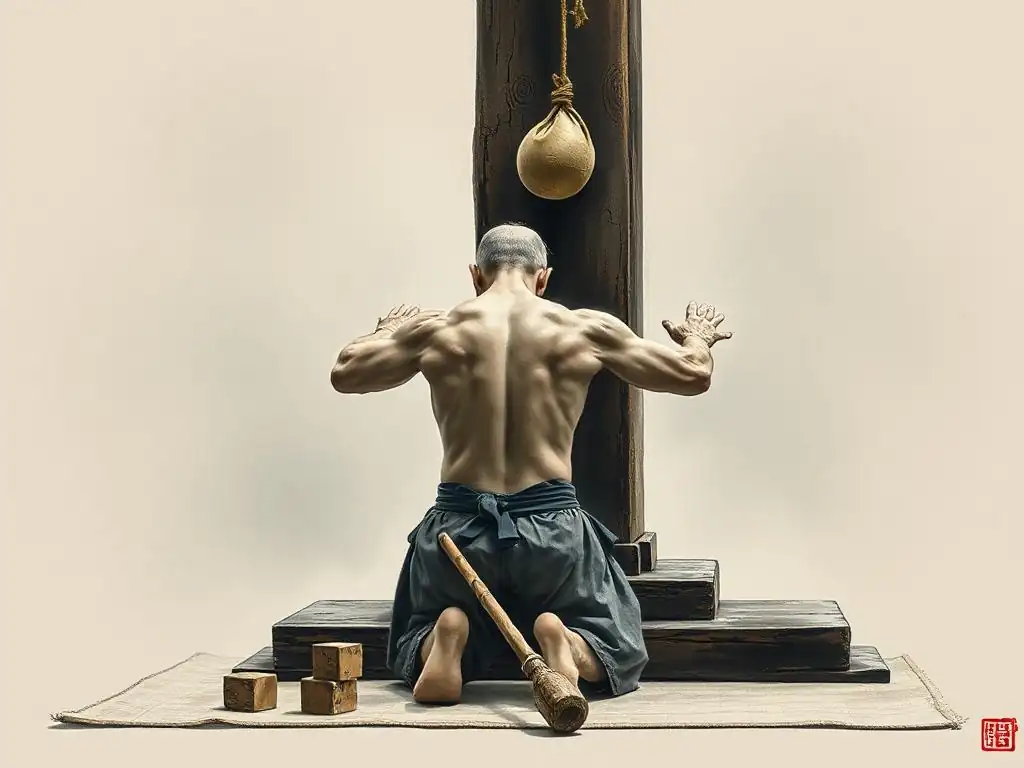
Protective Gear: Ensuring Safety During High-Intensity Training
Mouthguards, Gloves, and Shin Guards
Safety is paramount during high-intensity GojuRyu pressure testing techniques training, especially during sparring or drills involving powerful strikes. Essential protective gear includes mouthguards to protect teeth and prevent concussions, sparring gloves (typically 10-16 oz) to protect the hands and reduce impact on the partner, and shin guards to protect the shins during kicking exchanges and block practice. Using this gear allows practitioners to train with greater intensity and realism, applying techniques with more force without causing undue injury to themselves or their training partners.
While GojuRyu emphasizes body conditioning, relying solely on conditioning for protection during dynamic pressure testing is unsafe and impractical. Proper gear enables practitioners to fully commit to techniques, like blocking hard kicks or delivering powerful punches to a guarded target, which is critical for realistic GojuRyu pressure testing techniques training. Investing in quality protective equipment is an investment in consistent, safe, and effective training that pushes limits without unnecessary risk of injury.
Training Pads and Targets: Developing Striking Power and Accuracy
Focus Mitts, Thai Pads, and Heavy Bags
Training pads and targets are indispensable tools for GojuRyu pressure testing techniques training, particularly for developing striking power, accuracy, and timing against a resistant surface. Focus mitts are versatile, allowing a partner to simulate head and body targets for punch combinations and quick hand techniques, requiring the striker to adjust to movement. Thai pads are larger and more durable, ideal for absorbing powerful kicks, knees, and elbows, enabling practitioners to train full-power techniques. Heavy bags provide a stationary, weighted target for developing power, endurance, and practicing combinations.
Using these tools in GojuRyu pressure testing scenarios involves the partner holding the pads realistically, moving, and providing resistance, forcing the striker to apply techniques as they would against a live opponent. For instance, a partner holding Thai pads might simulate an aggressive forward movement, requiring the striker to use footwork while delivering powerful mawashi geri. This form of GojuRyu pressure testing ensures that strikes are not just powerful but can be delivered accurately and effectively while managing distance and dealing with a dynamic target, crucial for functional combat application.
Resistance Bands: Enhancing Strength and Explosiveness
Resistance bands are simple yet effective tools for adding an extra layer of conditioning and power development to GojuRyu pressure testing techniques training. They can be used to add resistance to fundamental movements like punches, kicks, and even GojuRyu-specific movements within kata applications. For example, securing a resistance band around the waist while practicing forward stances or Sanchin movement adds resistance, building strength in the legs and core essential for grounding and stability. Attaching a band to a stationary object and performing punches or blocks against its pull builds explosive power relevant to striking and defensive movements.
Incorporating resistance bands into GojuRyu pressure testing techniques training helps improve the speed and power of techniques by strengthening the relevant muscle groups and improving elastic strength. Practicing movements like a mae geri with a band around the ankle provides resistance through the entire range of motion, enhancing hip flexor strength and snap. This supplemental training directly contributes to the functional strength needed to deliver powerful strikes and maintain strong structure during grappling or clinching, enhancing overall combat effectiveness within GojuRyu.
Measuring Progress and Adapting Your GojuRyu Training
Tracking Performance Metrics in GojuRyu
Measuring Striking Power and Speed
Tracking performance metrics is a valuable aspect of GojuRyu pressure testing techniques training, providing objective data on improvement. For striking, devices like punch meters or force sensors can measure the power output of techniques like gyaku zuki or mawashi geri. While not always available, even simple methods like counting the number of powerful, well-formed strikes delivered within a specific time frame on a heavy bag can provide a benchmark. Measuring the time it takes to execute a specific combination or series of movements can track speed improvement.
Consistent measurement during GojuRyu pressure testing allows practitioners to see tangible results from their training efforts. For example, if weekly pressure testing on the heavy bag shows a 5% increase in average striking power over two months, it indicates the conditioning and technique adjustments are effective. Tracking speed on reaction drills during partner work can show improved response time. This data-driven approach helps to identify areas of strength and weakness, guiding future GojuRyu pressure testing techniques training to be more focused and efficient.
Assessing Reaction Time and Agility
Reaction time and agility are critical components of effective GojuRyu techniques under pressure. Pressure testing drills specifically designed to measure these can include using reaction balls, cones for agility drills, or partner drills with unpredictable cues. For example, a partner might hold up different colored focus mitts, and the practitioner must strike the correct color as quickly as possible. Agility can be tested through drills requiring rapid changes in direction or level while maintaining GojuRyu posture and balance.
Tracking improvements in reaction time (measured in milliseconds, even if approximated through consistent drill timing) or the completion time of agility drills provides objective feedback on a practitioner's ability to respond dynamically. If GojuRyu pressure testing techniques training focuses on footwork and reaction drills, subsequent assessments should show faster response times and smoother transitions. This type of measurement ensures that training is not just building physical strength but also improving the crucial reactive and adaptive skills needed for real combat application of GojuRyu.
Adjusting Training Based on Feedback and Results
Identifying Weaknesses and Focusing on Improvement
The primary purpose of GojuRyu pressure testing is to identify weaknesses in technique, conditioning, or mindset when under duress. The feedback gained from sparring, partner drills, and simulated scenarios is invaluable. If, for instance, a practitioner consistently loses balance when blocking a powerful kick during pressure testing, it highlights a weakness in their grounding or structural integrity, likely related to their Sanchin practice. Similarly, if strikes lack power when delivered against a moving target, it points to issues with timing, hip rotation (Gamaku), or Chinkuchi.
Based on this feedback, the GojuRyu pressure testing techniques training plan must be adjusted. If balance is the issue, more time should be dedicated to Sanchin, Shiko Dachi (horse stance) conditioning, and drills specifically designed to improve stability under force. If striking power is lacking, focus should shift to hip rotation drills, heavy bag work emphasizing core connection, and resistance training. This iterative process of testing, identifying weaknesses, and adjusting training ensures continuous improvement and the development of truly functional GojuRyu skills.
Adapting GojuRyu Techniques to Your Individual Strengths
While GojuRyu provides a structured curriculum, effective pressure testing also helps practitioners identify how to best apply techniques based on their individual body type, strengths, and limitations. Not every technique will feel equally natural or be equally effective for every person. Pressure testing against various partners with different body types and fighting styles reveals which GojuRyu techniques a practitioner excels at and which might need modification or less emphasis.
For example, a smaller practitioner might find certain throws or grappling techniques from kata applications more effective against larger opponents than trying to overpower them with strikes alone. Conversely, a practitioner with long limbs might find certain kicking techniques particularly effective in creating and maintaining distance during GojuRyu pressure testing. Adapting one's approach based on these insights, while staying true to GojuRyu principles, is key to developing a personal, highly effective combat system. This personalized adaptation, informed by rigorous GojuRyu pressure testing techniques training, is crucial for mastering the art.
The Mental Aspect of GojuRyu Pressure Testing
Developing Mental Toughness and Resilience
GojuRyu pressure testing is as much a mental challenge as it is a physical one. Facing a resisting opponent, dealing with unexpected attacks, or enduring the physical strain of sparring builds mental toughness and resilience. It teaches practitioners to push past discomfort, manage adrenaline surges, and continue thinking and acting effectively even when tired or under pressure. This mental fortitude is arguably the most important outcome of rigorous GojuRyu pressure testing techniques training, as panic or hesitation can render even perfect technique useless in a real confrontation.
Regular exposure to stressful training scenarios helps desensitize practitioners to the fear and anxiety associated with conflict. Starting with low-intensity drills and gradually increasing pressure allows the mind to adapt alongside the body. Learning to remain calm and focused when receiving a strike or being put in a difficult position during GojuRyu pressure testing is vital. This mental conditioning, forged through consistent pressure testing, builds the confidence and inner strength necessary to face real threats with composure and determination, embodying the warrior spirit cultivated in GojuRyu.
Managing Fear and Stress Under Pressure
Fear and stress are natural responses to confrontation, but they can severely impair performance. GojuRyu pressure testing techniques training provides a controlled environment to practice managing these responses. By repeatedly placing oneself in simulated stressful situations, practitioners learn to recognize the physical and psychological symptoms of fear (e.g., tunnel vision, rapid heart rate, muscle tension) and develop coping mechanisms. Techniques like focused breathing, maintaining peripheral vision, and relying on well-drilled responses become essential tools.
During GojuRyu pressure testing, particularly in sparring or self-defense scenarios, the goal is not to eliminate fear but to function despite it. This involves training the mind to stay present, focus on the immediate task (like blocking an incoming strike or escaping a grab), and avoid getting overwhelmed by the overall situation. Consistent GojuRyu pressure testing techniques training helps to automate responses through muscle memory, allowing the conscious mind to focus on strategy and adaptation rather than being consumed by fear, turning potential panic into controlled action.
Maintaining Focus and Composure in Combat Situations
Maintaining focus and composure is paramount in a combat situation, and GojuRyu pressure testing is the crucible where these qualities are forged. Under pressure, it's easy to become distracted, lose focus on the opponent, or become emotionally reactive. Training drills that simulate the chaos and unpredictability of a real fight force practitioners to maintain awareness, track their opponent's movements, and stick to their strategy despite distractions or setbacks.
GojuRyu pressure testing techniques training emphasizes staying grounded both physically (through proper posture and connection to the earth) and mentally. This involves cultivating a calm, alert state of mind, often referred to in martial arts as mushin (empty mind) or fudoshin (immovable mind). Through repeated exposure to pressure, practitioners learn to quiet the internal monologue, respond instinctively based on trained reactions, and maintain a strategic overview of the situation. This ability to remain focused and composed under intense pressure is a hallmark of effective GojuRyu pressure testing techniques training and essential for real-world effectiveness.
Common Mistakes to Avoid in GojuRyu Pressure Testing
Neglecting Fundamental GojuRyu Techniques
A common mistake in GojuRyu pressure testing is rushing into high-intensity drills or sparring without a solid foundation in the fundamental techniques and body mechanics. Pressure testing reveals flaws, but it doesn't build the initial skill. If basic stances are weak, if power isn't generated correctly from the hips (Gamaku), or if blocks lack structural integrity, attempting to apply them under pressure will likely result in failure and frustration. GojuRyu pressure testing techniques training must build upon a bedrock of diligently practiced basics.
Students should ensure they can perform fundamental GojuRyu techniques like Sanchin Dachi, Shiko Dachi, Seiken Zuki, Age Uke, and Mae Geri correctly and powerfully in isolation before significantly increasing resistance or unpredictability in pressure testing. Revisiting and refining these basics should be a continuous part of the training cycle, informed by the weaknesses exposed during pressure testing. Skipping this foundational work to jump straight into 'realistic' scenarios undermines the entire process and prevents the development of truly functional GojuRyu skills.
Over-Reliance on Strength and Power
Another pitfall in GojuRyu pressure testing is attempting to compensate for technical deficiencies with brute strength or aggression. While physical conditioning is important, GojuRyu techniques are designed for efficiency, using body mechanics, leverage, and timing to overcome a stronger opponent. Simply trying to muscle through a block or overpower an opponent in a clinch during pressure testing indicates a misunderstanding of the art's principles.
Effective GojuRyu pressure testing techniques training focuses on applying technique under pressure, not just exerting force. The goal is to make the technique work against resistance, not to win through superior strength alone. Practitioners should analyze why a technique failed in a pressure test – was it lack of power, or incorrect angle, poor timing, or insufficient connection to the ground? Focusing on refining the technique rather than just adding more muscle ensures that GojuRyu remains an art of skill and efficiency, applicable even when facing physically stronger adversaries.
Insufficient Warm-up and Cool-down
Neglecting proper warm-up before GojuRyu pressure testing and cool-down afterwards is a recipe for injury. High-intensity drills, sparring, and realistic scenarios place significant stress on the muscles, joints, and cardiovascular system. A thorough warm-up prepares the body by increasing blood flow, muscle temperature, and joint mobility, reducing the risk of strains, sprains, or tears during dynamic movements or impacts.
Similarly, a proper cool-down helps the body recover, reducing muscle soreness and stiffness. This typically involves light cardio and stretching. Rushing into GojuRyu pressure testing techniques training without adequate preparation or skipping recovery phases increases the likelihood of injury, which can halt training progress entirely. Prioritizing warm-up and cool-down demonstrates a professional approach to training and ensures longevity in practicing GojuRyu pressure testing.
Ignoring Safety Precautions
Ignoring safety precautions is perhaps the most critical mistake in GojuRyu pressure testing. This includes failing to use appropriate protective gear, training with untrained or reckless partners, practicing techniques with excessive or uncontrolled force, and not having adequate supervision, especially during full-contact drills or throws. The purpose of pressure testing is safe, controlled learning, not replicating the full danger of a real fight without mitigation.
Safe GojuRyu pressure testing techniques training relies on trust and clear communication between partners, mutual respect, and adherence to safety protocols established by the instructor. Partners must work together to provide realistic resistance while minimizing the risk of injury. Using padded equipment, practicing breakfalls, and knowing when to stop a drill are all part of responsible pressure testing. Compromising on safety undermines the training, risks serious injury, and goes against the principles of mutual respect and discipline inherent in GojuRyu.
Advanced GojuRyu Pressure Testing Drills
Multi-Attacker Scenarios
Advanced GojuRyu pressure testing techniques training can involve scenarios with multiple attackers. This significantly increases the complexity and pressure, requiring practitioners to manage multiple threats simultaneously, prioritize targets, use spatial awareness, and potentially use the environment or one attacker to mitigate another. These drills are highly challenging and should only be attempted by experienced practitioners under strict supervision, focusing on escape and survival rather than prolonged engagement.
Multi-attacker pressure testing for GojuRyu might start simply, with two partners approaching from different angles at walking speed, requiring the practitioner to orient themselves and apply basic evasive or disruptive techniques. Gradually, the partners can increase speed or add light, simulated attacks. This type of GojuRyu pressure testing forces rapid decision-making, efficient movement, and the ability to transition quickly between targets, pushing the practitioner's situational awareness and adaptive capacity to their limits, demonstrating advanced GojuRyu pressure testing techniques training.
Ground Fighting and Grappling Pressure Testing
While GojuRyu emphasizes standing techniques, real fights often go to the ground. Advanced GojuRyu pressure testing should include scenarios involving grappling and ground fighting, focusing on applying GojuRyu principles and techniques in this context. This might involve practicing escaping common pins, defending against strikes from the ground, or applying joint controls or short-range strikes (like hiji ate) from various ground positions.
Pressure testing ground techniques in GojuRyu requires specific knowledge of safe grappling practices and often cross-training or guidance from instructors experienced in ground combat. Drills could include starting from a dominant or subordinate ground position and attempting to achieve a specific objective (e.g., escape, gain posture, apply a control) against a resisting partner. This type of GojuRyu pressure testing techniques training ensures practitioners are not helpless if a confrontation leaves their feet, providing a more complete self-defense capability.
Weapon Defense Techniques
In real-world self-defense, threats can involve weapons. Advanced GojuRyu pressure testing techniques training can extend to simulating defenses against common weapons like knives or sticks. This is extremely high-risk training and must be conducted with utmost caution, using training weapons (e.g., padded sticks, blunt training knives), protective gear, and under the guidance of highly experienced instructors. The focus is on evasion, controlling the weapon, and applying immediate, decisive GojuRyu counter-techniques to neutralize the threat.
Pressure testing weapon defense in GojuRyu involves a partner simulating a realistic attack with a training weapon, and the practitioner applying defenses derived from GojuRyu principles and kata applications (some kata contain movements interpreted as weapon defenses). These drills are not about disarming in a flashy way but about survival – minimizing injury while creating an opportunity to escape or incapacitate the attacker. This highly advanced GojuRyu pressure testing techniques training is a serious undertaking and reflects a commitment to comprehensive self-defense preparation.
Conclusion: Mastering GojuRyu Through Realistic Pressure Testing
The Path to GojuRyu Combat Proficiency
Achieving true combat proficiency in GojuRyu goes far beyond mastering the forms and basic techniques in isolation. The path to functional mastery is paved through consistent, realistic GojuRyu pressure testing techniques training. It is in the crucible of dynamic partner drills, controlled sparring, and simulated self-defense scenarios that the theoretical knowledge from kata and basic practice is forged into practical, adaptable skill. Pressure testing reveals what works and what doesn't under duress, highlighting areas for improvement and building the physical and mental attributes necessary for effective self-defense.
Through this rigorous process, GojuRyu practitioners develop not just powerful strikes and solid blocks, but also crucial timing, distance management, adaptability, mental toughness, and the ability to remain calm and focused when facing resistance or aggression. It is this journey of applying, testing, refining, and re-testing GojuRyu pressure testing techniques that transforms a student of form into a capable and confident martial artist ready to apply their skills in uncertain situations, truly embodying the practical nature of GojuRyu.
Continuous Improvement and Adaptation in GojuRyu Training
Mastering GojuRyu through pressure testing is not a destination but a continuous process of improvement and adaptation. The insights gained from each pressure testing session, whether it's a minor adjustment needed in a blocking angle or a realization about one's reaction to stress, should inform the next phase of training. Identifying weaknesses is not a failure, but an opportunity for targeted practice and refinement of GojuRyu pressure testing techniques.
As a practitioner evolves, so too must their training. Pressure testing against different partners, exploring new scenarios, and challenging oneself with increasing intensity ensures that skills remain sharp and adaptable. The journey of GojuRyu pressure testing techniques training is one of ongoing learning, where feedback from realistic application fuels further refinement of technique, strategy, and mental fortitude, leading to deeper understanding and greater effectiveness in applying the powerful art of GojuRyu.
Frequently Asked Questions
What does "pressure testing" mean in the context of GojuRyu training?
Pressure testing refers to training methods designed to simulate real-world combat scenarios and assess the effectiveness of your GojuRyu techniques under stress and resistance. It moves beyond static forms and drills.
Why is pressure testing important for GojuRyu practitioners?
Without pressure testing, GojuRyu techniques might appear effective in isolation but fail under duress. It provides realistic feedback on your skills and identifies areas needing improvement for practical application.
What are some examples of GojuRyu pressure testing techniques?
Examples include sparring (kumite) with increasing levels of resistance, grappling drills with live opponents, and scenario-based training involving multiple attackers or unpredictable situations.
How does pressure testing differ from traditional GojuRyu kata training?
While kata training is fundamental for learning forms and principles, pressure testing bridges the gap to real-world application. It tests your ability to adapt and apply those principles under dynamic and stressful conditions.
What are the potential risks of pressure testing, and how can they be minimized?
Risks include injuries from excessive force or improper technique. Mitigation involves proper warm-up, supervised training with experienced instructors, and gradual progression of intensity.
Okay, here's a final reflection tailored for your article "Pressure Testing Your GojuRyu Techniques: Realistic Training Methods," designed to resonate with readers and leave a lasting impression, while also incorporating the requested Markdown formatting and keywords:
Final Reflection: Embracing the Crucible of GojuRyu
The journey through GojuRyu is not merely a collection of forms and movements, but a relentless pursuit of practical application. The true essence of GojuRyu lies in its ability to withstand the crucible of pressure testing, transforming theoretical knowledge into instinctive, effective action. This article has explored methods to bridge the gap between the dojo and the unpredictable reality of self-defense, emphasizing the importance of realistic training scenarios.
The impact of pressure testing extends far beyond the physical realm. It cultivates resilience, sharpens awareness, and instills a profound understanding of one's capabilities and limitations. This process of continuous refinement is not just about mastering techniques; it's about forging a stronger, more adaptable self. The ultimate aim of Karate lies not in victory nor defeat, but in the perfection of the character of its participants.
- Gichin Funakoshi. This quote underscores the deeper purpose of GojuRyu training, where the pursuit of technical mastery is intertwined with personal growth.
Now, I challenge you to reflect on your own training. Are you truly pressure testing your techniques, pushing beyond the comfort zone of rote repetition? Embrace the challenge, seek out realistic training partners, and continuously refine your approach. The path of GojuRyu is a lifelong journey of self-discovery. Let the lessons learned here be a catalyst for deeper understanding and a more resilient spirit.
Ignite Your Goju-Ryu Potential!
Thanks for diving deep into the world of Goju-Ryu pressure testing! We hope you've gained valuable insights into refining your techniques for real-world scenarios. Now, it's time to translate that knowledge into action.
- Prioritize this week to spend one session exclusively practicing pressure testing your favorite kata! Aim for realism, not perfection.
- Explore related disciplines like grappling to complement your Goju-Ryu skillset and broaden your understanding of combat.
- Share this article with fellow Goju-Ryu practitioners and spark a discussion about their pressure testing experiences!
What's one unexpected challenge you've encountered while pressure testing, and how did you adapt?