
Double Hand Silk Reeling: Integrating and Expanding Your Chen Tai Chi Power

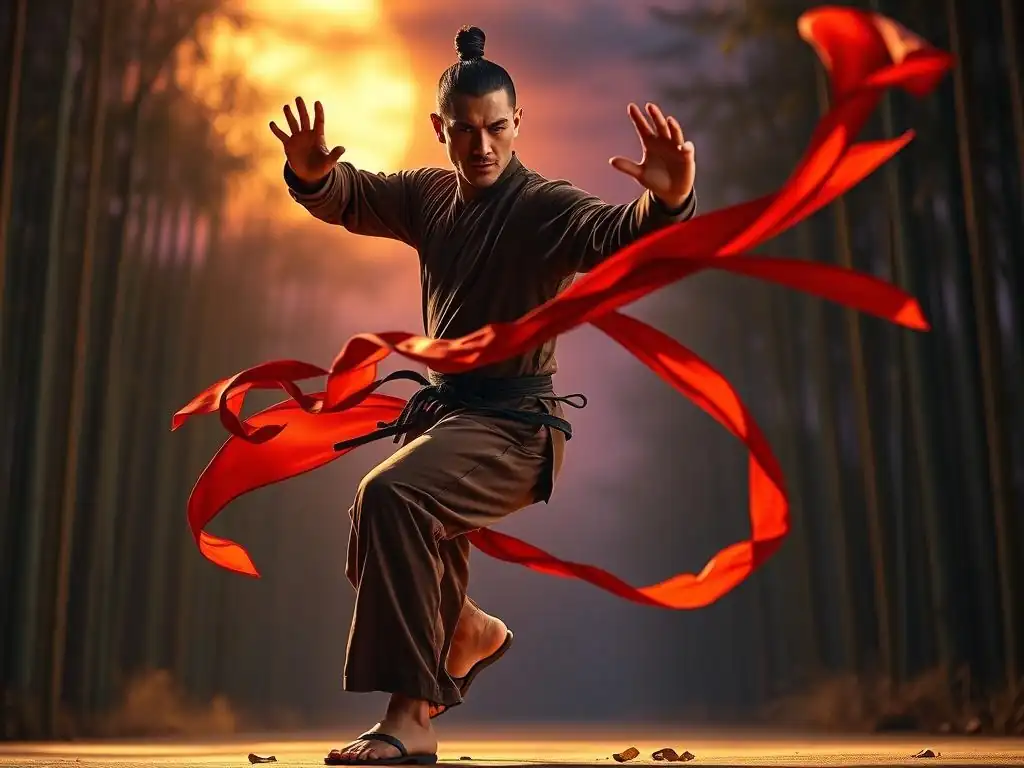
Welcome to Martial Arts Mastery, where we delve deep into the world of combat arts!
Unlock the secrets to a more potent and fluid practice. In this article, we'll be exploring the fascinating nuances of Chen Tai Chi power flow, specifically through the double hand silk reeling exercises. Prepare to integrate and expand your understanding of this powerful internal art as we uncover the intricacies that lead to true mastery. Curious about how to generate more power and connection? Read on!
- Understanding Chen Style Tai Chi Silk Reeling Energy
- Integrating Double Hand Silk Reeling into Your Chen Tai Chi Practice
- Expanding Your Chen Tai Chi Power Flow with Double Hand Exercises
- Advanced Double Hand Silk Reeling Techniques for Internal Strength
- Troubleshooting Common Challenges in Double Hand Silk Reeling
- Double Hand Silk Reeling: A Path to Deeper Chen Tai Chi Understanding
- Maximizing Chen Tai Chi Power Flow: Key Takeaways
-
Frequently Asked Questions
- How does Double Hand Silk Reeling enhance Chen Tai Chi's power?
- What are the key benefits of practicing Double Hand Silk Reeling?
- How does Double Hand Silk Reeling relate to the overall philosophy of Chen Tai Chi?
- Is Double Hand Silk Reeling suitable for beginners in Chen Tai Chi?
- What are some practical self-defense applications of the power developed through Double Hand Silk Reeling?
- Final Reflection: Embracing the Continuous Flow
- Unleash Your Inner Power: Step into the Flow!
Understanding Chen Style Tai Chi Silk Reeling Energy
Chen Style Tai Chi Chuan is renowned for its dynamic movements, explosive power (fajin), and intricate internal mechanics. Central to developing these attributes is the concept of Chan Si Jin, or Silk Reeling Energy. This fundamental principle describes the spiraling, coiling, and uncoiling movements that connect every part of the body, ensuring smooth, continuous, and efficient energy transmission. Mastery of silk reeling is often considered the gateway to unlocking the deeper potential of Chen Tai Chi power flow. It is the engine driving the characteristic circularity and integrated motion seen in all authentic Chen forms.
While individual limb silk reeling is crucial, working with both hands simultaneously in dedicated drills amplifies the learning process. Double hand silk reeling exercises isolate and emphasize the coordinated movement between the left and right sides of the body, the upper and lower body, and the internal connection that binds them. These drills are not mere warm-ups but sophisticated methods for refining the practitioner's understanding and application of Chan Si Jin, directly impacting the quality and effectiveness of their Chen Tai Chi power flow.
The Foundation of Chen Tai Chi Power: Silk Reeling (Chan Si Jin)
Chan Si Jin is the core training method for developing internal energy and coordinated body movement in Chen Tai Chi. It is not a single technique but a principle that permeates all aspects of the practice, from foundational drills to complex form movements and push hands. The term "silk reeling" evokes the image of drawing silk from a cocoon – a continuous, even, spiraling motion that requires constant awareness and control to avoid breaking the delicate thread. This analogy highlights the need for uninterrupted, smooth power transmission throughout the body.
Developing Chan Si Jin involves learning to move from the center (dantian), allowing the spiral force to extend outwards through the limbs and extremities, and then recoil back inwards. This process cultivates elasticity, resilience, and the ability to store and release energy efficiently. A practitioner with well-developed silk reeling can execute movements that appear effortless yet contain significant internal power, enabling them to generate fajin that is rooted, integrated, and surprising in its force. This foundational skill is paramount for achieving a robust Chen Tai Chi power flow.
What is Double Hand Silk Reeling?
Double hand silk reeling refers to a specific set of exercises and principles where both hands, often working symmetrically or in coordinated asymmetrical patterns, simultaneously execute silk reeling motions. Unlike single-hand drills that might focus on isolating the movement in one arm or leg, double hand practices compel the practitioner to integrate the left and right sides of the body, ensuring that the movement originates from the core and travels through both sides harmoniously.
These exercises typically involve continuous, circular, and spiraling movements of both arms, often accompanied by coordinated waist and leg work. Examples include exercises where both hands circle outwards and inwards, or where one hand circles upwards while the other circles downwards, always maintaining the characteristic spiraling nature. The primary goal is to synchronize the entire body's movement, eliminate disconnectedness, and forge a strong, unified structure that allows for an unimpeded Chen Tai Chi power flow. Consistent practice builds the internal connections necessary for advanced techniques.
Integrating Double Hand Silk Reeling into Your Chen Tai Chi Practice
Integrating double hand silk reeling into a regular Chen Tai Chi practice provides a powerful pathway to enhancing internal mechanics and overall skill. These drills serve as bridges, connecting the foundational principles of Chan Si Jin learned in simpler exercises to the complex, dynamic movements of the forms. By dedicating time to double hand work, practitioners can isolate specific aspects of coordination and power generation that might be harder to grasp solely through form practice.
The benefits extend beyond just understanding the mechanics. Regular double hand silk reeling refines proprioception, improving the practitioner's awareness of their body in space and the subtle internal connections. It builds core strength and stability, essential for rooting and balance. Furthermore, it cultivates the continuous, flowing quality characteristic of high-level Tai Chi, ensuring that the Chen Tai Chi power flow is smooth and uninterrupted from initiation to completion.
Connecting Upper and Lower Body: The Key to Enhanced Power
A fundamental challenge in martial arts, including Tai Chi, is achieving true whole-body power, where the force generated from the ground travels efficiently through the legs, torso, and arms to the point of application. Double hand silk reeling exercises are particularly effective at highlighting and correcting disconnections between the upper and lower body. As both hands move in complex patterns, the practitioner is forced to rely on the coordinated rotation and sinking of the waist and hips to drive the arm movements.
For instance, in many double hand drills, the hands circle while the waist turns, and the legs adjust through subtle weight shifts. If the upper body moves independently of the lower body, the spiraling force breaks, and the movement becomes stiff or segmented. By diligently practicing these drills, practitioners learn to root their movements through the feet and legs, allowing the power to coil and uncoil through the core before extending outwards through the coordinated action of both arms. This integrated movement is crucial for generating significant Chen Tai Chi power flow and is a hallmark of advanced practitioners.
Developing Whole-Body Movement with Double Hand Silk Reeling
True whole-body movement in Chen Tai Chi means that every part of the body is interconnected and moves as a unified whole, driven by the dantian (lower abdomen). Double hand silk reeling drills are specifically designed to cultivate this unity. The requirement to coordinate the movements of both hands simultaneously, often in different directions or planes, necessitates that the power originates from a central source – the core – rather than from isolated limb action.
Consider a drill where one hand circles high and the other low, requiring a significant, coordinated rotation of the torso and adjustment of the stance. This forces the practitioner to engage the hips, waist, and spine as the primary movers, with the arms following as extensions. Over time, this practice eliminates localized tension and encourages the development of elastic strength throughout the entire musculoskeletal system. The result is a dynamic, resilient body capable of generating and transmitting a robust Chen Tai Chi power flow that is rooted and stable.
Coordinating Breath and Movement for Optimal Energy Flow
In Tai Chi, the breath is intrinsically linked to movement and the cultivation of internal energy ( Qi). Coordinating the breath with the physical movements in silk reeling drills enhances the flow of energy and deepens the internal practice. Generally, expansive movements (like uncoiling or extending) are paired with exhalation, while contractive movements (like coiling or withdrawing) are paired with inhalation. This natural rhythm supports the body's mechanics and promotes relaxation.
In double hand silk reeling, maintaining conscious, deep, and relaxed breathing throughout the continuous, spiraling motions is vital. For example, as the hands coil inwards towards the center, the practitioner inhales, drawing energy inwards and downwards to the dantian. As the hands uncoil and extend outwards, they exhale, projecting the energy outwards. This synchronized breathwork not only supports the physical effort but also calms the mind, improves focus, and ensures a smoother, more powerful Chen Tai Chi power flow. Regular practice naturally aligns breath with motion.
Expanding Your Chen Tai Chi Power Flow with Double Hand Exercises
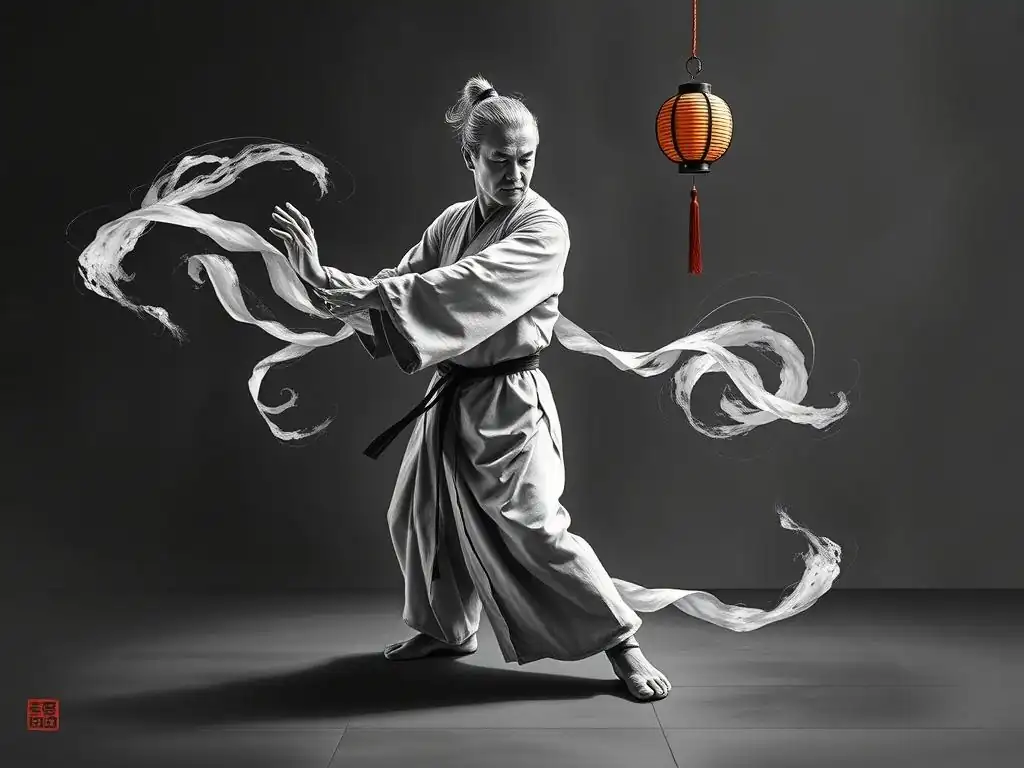
Once the fundamental mechanics of double hand silk reeling are understood, these exercises become powerful tools for expanding the quality and potential of a practitioner's Chen Tai Chi power flow. They move beyond basic coordination to refine the specific qualities needed for martial application, such as explosiveness ( fajin), balance, and the ability to apply principles within the forms. Dedicated double hand training systematically builds the internal structure required for higher levels of skill.
These exercises push the practitioner to explore the limits of their coordinated movement and energy transmission. They reveal subtle areas of stiffness or disconnection that hinder power generation. By working with the continuous, spiraling nature of the drills, practitioners learn to pack more force into their movements, improve their stability under pressure, and seamlessly transition between different types of energy expression, ultimately leading to a more dynamic and effective Chen Tai Chi power flow.
Harnessing Spiral Energy for Increased Fajin Potential
Fajin (發勁), or explosive power release, is a hallmark of Chen Style Tai Chi. It is not generated through muscular force alone but through the coordinated unwinding of the body's coiled structure, driven by Chan Si Jin. Double hand silk reeling drills are exceptional for cultivating this spiraling, coiling-uncoiling mechanism specifically for fajin. By practicing rapid, yet controlled, spiraling motions with both hands and the entire body, practitioners train the elasticity and coordination needed for explosive release.
A specific double hand drill might involve coiling inwards tightly with inhalation, storing potential energy, followed by a sudden, coordinated exhalation and uncoiling action that projects energy outwards through both hands simultaneously. This trains the body to act like a spring or whip. Through repetition, the practitioner refines the timing and coordination of the spiral, learning how to concentrate the force generated from the ground and waist into a sudden burst. This focused training directly enhances the practitioner's ability to express powerful and integrated Chen Tai Chi power flow in martial applications.
Using Double Hand Silk Reeling to Improve Balance and Stability
Excellent balance and stability are non-negotiable for effective martial arts practice and a strong Chen Tai Chi power flow. Double hand silk reeling exercises, particularly those performed in low stances or involving significant weight shifts, inherently challenge and improve balance. The continuous, often asymmetrical, movements of the hands and body require the practitioner to maintain their central equilibrium while the limbs are in motion.
Consider a drill where one hand performs a large outward circle while the other performs a small inward circle, all while maintaining a low horse stance and shifting weight. This demands constant engagement of the core and precise control over the distribution of weight through the feet. Regular practice strengthens the legs, ankles, and core musculature, while simultaneously refining the nervous system's ability to make minute adjustments to maintain balance. This improved stability provides a solid foundation from which to generate rooted Chen Tai Chi power flow.
Applying Silk Reeling Principles in Chen Tai Chi Forms
The ultimate goal of practicing silk reeling drills, including double hand variations, is to embody these principles within the Chen Tai Chi forms. The forms are essentially sequences of applied silk reeling movements. Double hand drills serve as laboratories to isolate and perfect the specific spiraling, coiling, and coordination patterns that are then woven together in the complex choreography of the forms.
By diligently practicing double hand silk reeling, a practitioner gains a deeper understanding of how the energy should move through their body during specific form transitions. For example, the continuous, coordinated circling of both hands in a double hand drill directly relates to movements like "Six Sealing, Four Closing" or sections involving simultaneous actions of both arms. This conscious practice allows the practitioner to infuse the form with true Chan Si Jin, making the movements not just aesthetically pleasing but functionally powerful, demonstrating a mature Chen Tai Chi power flow.
Advanced Double Hand Silk Reeling Techniques for Internal Strength
Beyond the basic patterns, advanced double hand silk reeling techniques delve deeper into the cultivation of internal strength, sensitivity, and martial application principles. These techniques often involve more complex spatial patterns, variations in speed and force, and the introduction of partner work to test and refine the internal connections under dynamic conditions. The focus shifts from merely performing the movement correctly to embodying the internal principles with increasing sophistication.
Advanced practitioners use these drills to explore the subtle nuances of energy transmission, the relationship between tension and relaxation, and the development of ting jin (listening energy) – the ability to sense and respond to an opponent's force. These techniques are crucial for refining the subtle mechanics that differentiate a proficient practitioner from a true master of Chen Tai Chi power flow and internal strength.
Exploring Variations in Hand Positions and Movements
Advanced double hand silk reeling expands the repertoire of movements beyond simple symmetrical circles. Variations might include:
- Asymmetrical patterns (e.g., one hand large circle, one hand small circle; one hand high, one hand low).
- Different planes of motion (horizontal, vertical, sagittal, or combinations).
- Varying speeds within a single movement (slow coiling, fast uncoiling).
- Incorporating subtle changes in hand shape or intention (e.g., open palm vs. fisted hand).
These variations challenge the practitioner's ability to maintain continuous Chan Si Jin and integrated body movement under more complex conditions. Practicing asymmetrical movements, for instance, forces a deeper reliance on the core to coordinate the disparate actions of the limbs. Exploring different speeds helps develop the ability to transition smoothly between yielding and issuing force. This detailed exploration refines the practitioner's control over their Chen Tai Chi power flow, making it more versatile and adaptable.
Cultivating Sensitivity and Awareness through Partner Drills
Partner drills are an essential component of advanced double hand silk reeling training. These exercises, often resembling simplified push hands, allow practitioners to test their ability to maintain Chan Si Jin and coordinated movement while interacting with another person's force. The goal is not to push the partner over but to practice yielding, adhering, connecting, and following, all while maintaining the spiraling, rooted structure.
For example, partners might place their hands lightly together and practice various double hand silk reeling patterns, focusing on sensing the partner's movement and intention through the point of contact. This cultivates ting jin and the ability to neutralize incoming force by redirecting it through the body's spiraling mechanics. It also reveals areas where the practitioner's own structure collapses under pressure, highlighting where further internal refinement is needed. Partner drills provide crucial feedback for developing a truly functional Chen Tai Chi power flow.
Internalizing the Principles of Yielding and Neutralizing
Two core principles in Tai Chi martial application are yielding ( ting) and neutralizing ( hua). Yielding involves allowing an opponent's force to pass without meeting it head-on, while neutralizing involves redirecting or dissolving that force using circular, spiraling movements. Advanced double hand silk reeling drills, especially with a partner, are invaluable for internalizing these principles.
By practicing yielding and neutralizing within the context of continuous, spiraling double hand movements, practitioners learn to absorb and redirect force through their integrated body structure rather than resisting it with muscular tension. They learn to "listen" to the incoming force and respond with appropriate circular pathways that lead the force away from their center. This ability to yield and neutralize while maintaining structural integrity is fundamental to Tai Chi's effectiveness and allows the practitioner to conserve energy while disrupting an opponent's balance, paving the way for effective counter-attacks powered by refined Chen Tai Chi power flow.
Troubleshooting Common Challenges in Double Hand Silk Reeling
As with any complex physical and internal practice, practitioners encounter common challenges when learning and refining double hand silk reeling. These obstacles often stem from ingrained habits of isolated movement, lack of body awareness, or insufficient understanding of the underlying principles. Addressing these issues systematically is crucial for progress and for developing a smooth, integrated Chen Tai Chi power flow.
Identifying and correcting these challenges requires patience, diligent practice, and often guidance from an experienced instructor. Common problems include stiffness in the shoulders or hips, lack of coordination between the upper and lower body, poor posture, and mental frustration. By understanding the root causes of these issues, practitioners can apply targeted corrections and continue on their path towards mastery.
Addressing Stiffness and Lack of Coordination
Stiffness is perhaps the most common obstacle in Tai Chi practice. It inhibits the smooth, continuous flow of Chan Si Jin and prevents the body from acting as a unified whole. Stiffness often manifests in the shoulders, elbows, hips, or knees during double hand silk reeling. Lack of coordination occurs when different parts of the body move independently rather than being driven by the core.
To address stiffness, the practitioner must prioritize relaxation ( song) while maintaining structural integrity. Consciously releasing tension in the joints and muscles during the spiraling movements is key. For lack of coordination, specific focus should be placed on initiating movement from the dantian and waist, allowing the limbs to follow. Simple visualization exercises, imagining the body moving like a single, interconnected chain, can help. Practicing drills very slowly, paying meticulous attention to how the movement travels through the body, also aids in identifying and correcting disconnections, thereby improving the Chen Tai Chi power flow.
Correcting Posture and Alignment Issues
Correct posture and alignment are foundational to generating rooted power and maintaining balance in Tai Chi. Issues like collapsing the chest, raising the shoulders, straightening the knees, or misaligning the spine disrupt the body's structure and impede the flow of energy. These problems become particularly apparent in double hand silk reeling due to the complex, continuous movements.
Maintaining the "Tai Chi posture" – head suspended, shoulders relaxed, elbows sunk, chest slightly rounded, back straight, waist relaxed, hips sunk, knees bent, feet rooted – is paramount. Practitioners should regularly check their alignment during double hand drills. Using a mirror or having an instructor provide feedback can be very helpful. Correcting posture ensures that the body's structure is stable and open, allowing the spiraling force to travel freely from the ground upwards and back down, supporting a consistent and powerful Chen Tai Chi power flow.
Overcoming Mental Obstacles and Cultivating Patience
Learning double hand silk reeling can be mentally challenging. The intricate coordination, the need for continuous focus, and the slow pace of internal development can lead to frustration or impatience. Practitioners may feel awkward or uncoordinated initially, which can be discouraging.
Overcoming these mental hurdles requires cultivating patience and a mindset focused on the process rather than immediate results. Understanding that developing Chan Si Jin and refining Chen Tai Chi power flow is a long-term journey is crucial. Approaching practice with curiosity and persistence, celebrating small improvements, and accepting that mistakes are part of the learning process can help maintain motivation. Focusing the mind on the internal sensations and the principles of movement, rather than just the external form, deepens the practice and makes it more rewarding.
Double Hand Silk Reeling: A Path to Deeper Chen Tai Chi Understanding
Engaging with double hand silk reeling is more than just learning a set of exercises; it is a path that leads to a deeper understanding of the fundamental principles of Chen Tai Chi Chuan. These drills embody the essence of Chan Si Jin and its role in generating and directing energy. Consistent practice reveals layers of subtlety in body mechanics and internal connections that might otherwise remain hidden.
Through the disciplined repetition of double hand silk reeling, practitioners internalize the feeling of integrated movement, the coiling and uncoiling of power, and the coordination of breath and body. This internal understanding then informs their practice of the forms, push hands, and even the philosophical aspects of Tai Chi, demonstrating how physical training is inseparable from internal development and the mastery of Chen Tai Chi power flow.
The Importance of Consistent Practice and Dedicated Training
Mastery in any martial art, especially one as nuanced as Chen Tai Chi, hinges on consistent and dedicated practice. Double hand silk reeling is no exception. Sporadic training yields minimal results; significant progress in developing Chan Si Jin and enhancing Chen Tai Chi power flow requires regular, focused effort. Even short, daily sessions are more effective than infrequent, long ones.
Consistency builds muscle memory, refines proprioception, and strengthens the internal connections over time. Dedicated training involves approaching each practice session with intention, focusing on the specific principles being worked on, whether it's maintaining continuity, coordinating the waist, or synchronizing breath. This discipline transforms the exercises from mere physical movements into a profound method of internal cultivation.
Connecting Silk Reeling to the Philosophical Underpinnings of Tai Chi
Tai Chi Chuan is deeply rooted in Taoist philosophy, particularly concepts like Yin and Yang, continuous change, and the flow of Qi. Silk reeling, with its continuous, spiraling, and alternating expansive/contractive nature, is a physical embodiment of these philosophical ideas. The coiling and uncoiling represent the interplay of Yin and Yang – contraction (Yin) and expansion (Yang) are inseparable and constantly transforming into one another.
The seamless, uninterrupted quality of silk reeling reflects the Taoist ideal of effortless action ( Wu Wei) and the continuous flow of nature. By practicing double hand silk reeling, practitioners not only develop physical skill but also cultivate a deeper connection to these philosophical principles. The internal feeling of integrated energy flow mirrors the concept of Qi circulating harmoniously within the body and in relation to the external environment, contributing to a holistic understanding of Chen Tai Chi power flow that transcends mere physical force.
Integrating Double Hand Silk Reeling with Chen Style Sword Form
Chen Style Tai Chi includes various weapon forms, such as the sword form. While weapon forms introduce new challenges related to handling an external object, the fundamental principles of body mechanics and energy flow remain the same. Double hand silk reeling is crucial for integrating the weapon into the body's movement and ensuring that the power originates from the core, not just the arms.
Practitioners learn to apply the same spiraling, coiling, and uncoiling principles developed in empty-hand double hand drills to the movements involving the sword. The waist drives the sword's movement, and the power flows seamlessly from the ground through the body to the tip of the sword. Specific double hand sword movements, like circling cuts or figure-eight patterns, are direct applications of double hand silk reeling. Mastery of these drills enhances the practitioner's ability to wield the sword as an extension of their body, projecting powerful and controlled Chen Tai Chi power flow through the weapon.
Maximizing Chen Tai Chi Power Flow: Key Takeaways
Maximizing one's Chen Tai Chi power flow is an ongoing journey that relies heavily on the diligent practice and understanding of fundamental principles like Chan Si Jin. Double hand silk reeling drills offer a uniquely effective method for cultivating the integrated, spiraling energy necessary for powerful and efficient movement. By focusing on coordination, connection, and continuous flow, practitioners build the internal structure required for higher levels of skill and application.
The journey involves not just physical execution but also internal awareness and patience. Overcoming common challenges through focused effort and maintaining consistency are key. The benefits of dedicated double hand silk reeling practice ripple through all aspects of Chen Tai Chi, from solo forms to partner work and weapon forms, ultimately leading to a more profound and effective expression of Chen Tai Chi power flow.
The Synergy of Double Hand Silk Reeling and Fajin Expression
The relationship between double hand silk reeling and fajin is one of cause and effect. Fajin is the expression of power generated through the efficient coiling and uncoiling mechanism cultivated by Chan Si Jin. Double hand drills, by isolating and emphasizing this spiraling action with both sides of the body, directly train the body to generate more unified and potent explosive power.
When both hands and the entire body coil inwards together, potential energy is stored. The subsequent, coordinated uncoiling action, driven by the core and expressed through the limbs, results in fajin. Double hand silk reeling refines the timing, coordination, and elasticity of this process, ensuring that the energy release is rooted, integrated, and delivered with maximum efficiency. This synergy is fundamental to unleashing potent Chen Tai Chi power flow in martial applications.
Double Hand Silk Reeling Application in Lazily Tying the Coat
"Lazily Tying the Coat" ( Lan Zha Yi) is a classic movement found in many Chen Tai Chi forms, particularly prominent in the Lao Jia forms. It is an excellent example of double hand silk reeling principles applied within a martial context. The movement involves a complex, spiraling interaction of both arms, torso, and legs, often culminating in a powerful outward extension or strike.
In "Lazily Tying the Coat," one hand typically performs an expansive, outward-spiraling motion while the other performs a more contained, inward-spiraling or neutralizing action. The power for both movements originates from the rotation of the waist and the shifting of weight. Practicing double hand silk reeling drills that mimic these opposing yet coordinated spiraling forces directly improves the execution and effectiveness of this form movement, showcasing a clear application of refined Chen Tai Chi power flow.
Achieving Martial Arts Mastery Through Silk Reeling Principles
Achieving mastery in Chen Tai Chi, or indeed any martial art, is not solely about learning techniques but about embodying principles. Chan Si Jin, cultivated significantly through practices like double hand silk reeling, is one of the most critical principles in Chen Style. It provides the foundation for integrated power, effortless movement, sensitivity, and effective application.
By dedicating oneself to the deep practice of silk reeling, including its double hand variations, the practitioner develops a body that moves with unified intent and efficiency. This internal refinement translates into external effectiveness in forms, push hands, and self-defense. The ability to generate continuous, spiraling Chen Tai Chi power flow, rooted in the core and extending through the limbs, is a hallmark of mastery and the result of years of dedicated training in these fundamental, yet profound, exercises.
Frequently Asked Questions
How does Double Hand Silk Reeling enhance Chen Tai Chi's power?
Double Hand Silk Reeling focuses on spiral movements throughout the body, improving internal energy flow and coordination, which ultimately amplifies the power in Chen Tai Chi techniques.
What are the key benefits of practicing Double Hand Silk Reeling?
Practicing Double Hand Silk Reeling develops whole-body connection, enhances sensitivity to force, and cultivates effortless power generation crucial for effective Chen Tai Chi.
How does Double Hand Silk Reeling relate to the overall philosophy of Chen Tai Chi?
It embodies the principle of yin and yang, promoting a balance of softness and hardness within movements, leading to a more refined and powerful expression of Chen Tai Chi.
Is Double Hand Silk Reeling suitable for beginners in Chen Tai Chi?
While beneficial for all levels, beginners should focus on basic stances and principles first, gradually incorporating Silk Reeling exercises to avoid improper alignment and potential injury.
What are some practical self-defense applications of the power developed through Double Hand Silk Reeling?
The improved body mechanics and energy flow translate to more effective strikes, throws, and joint locks, allowing for more efficient and powerful responses in self-defense situations.
Final Reflection: Embracing the Continuous Flow
The principles of Double Hand Silk Reeling, as explored in this article, are not merely techniques confined to the practice of Chen Tai Chi; they represent a profound understanding of continuous power flow that resonates far beyond the training hall. The ability to integrate and expand this power, to move with fluidity and intention, is a skill applicable to every facet of life, from navigating complex challenges to fostering deeper connections with ourselves and others.
The journey of mastering Chen Tai Chi power flow has undeniably shaped the cultural landscape of martial arts and continues to inspire practitioners worldwide. This journey, for me, has been a constant reminder that true strength lies not in brute force, but in the ability to yield, adapt, and redirect energy. The softest thing cannot be snapped. Force cannot break it. It can only be moved.
This quote encapsulates the essence of Silk Reeling, highlighting the power inherent in yielding and the potential for transformative movement.
Now, as you reflect on the principles of Double Hand Silk Reeling and the cultivation of Chen Tai Chi power flow, I invite you to consider how you can integrate this understanding into your own life. How can you embrace the continuous flow, adapt to the ever-changing currents, and find strength in yielding? Let the lessons learned on the Tai Chi path guide you toward a more balanced, powerful, and harmonious existence.
Unleash Your Inner Power: Step into the Flow!
Thank you for diving deep into the world of Double Hand Silk Reeling and Chen Tai Chi! You've now unlocked valuable insights into integrating this powerful practice into your martial arts journey. Ready to put your newfound knowledge into action?
- Commit to 15 minutes of daily Double Hand Silk Reeling practice to deeply integrate the principles of spiraling energy and whole-body connection. Feel the difference in your form and power!
- Share this article with fellow martial artists or start a discussion in your Tai Chi group to explore different interpretations and applications of Silk Reeling.
- Try visualizing the Silk Reeling movements in your daily life - reaching for an object, opening a door – to subtly infuse your actions with the principles of effortless power.
How will you weave the essence of Double Hand Silk Reeling into your Tai Chi practice and daily life?