
Tameshigiri: The Revealing Art of Test Cutting with a Japanese Katana

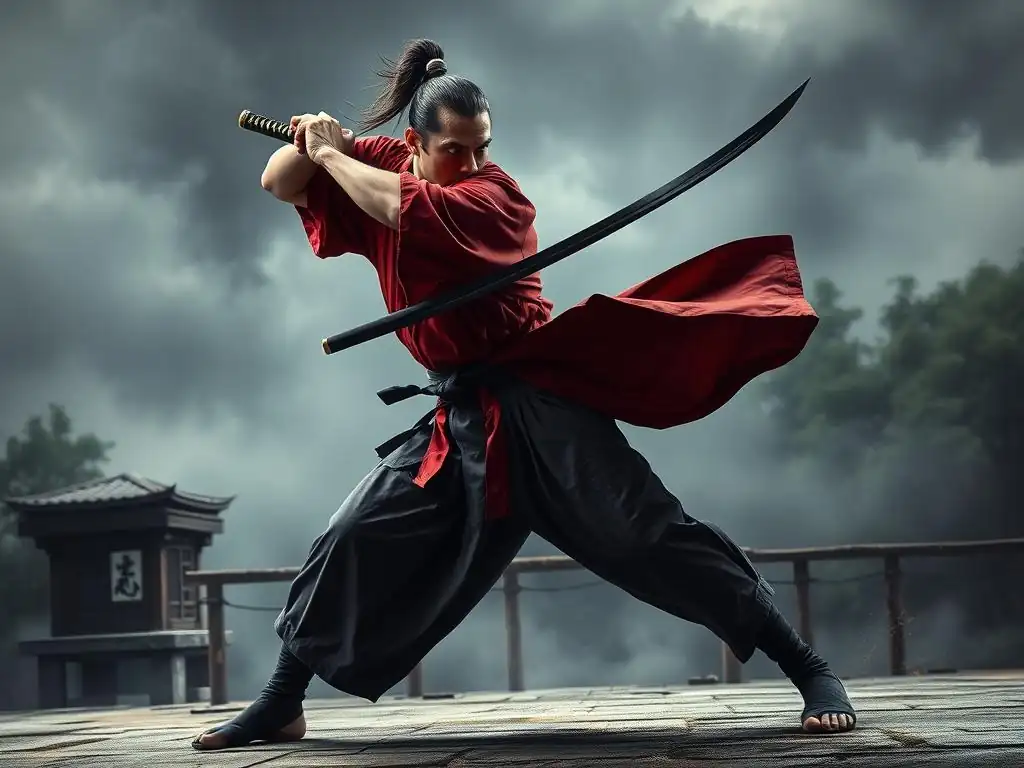
Welcome to Martial Arts Mastery, your gateway to the profound world of combat traditions!
Delve into the fascinating history and meticulous techniques of martial arts from across the globe. Are you ready to unlock the secrets behind the razor's edge? We begin our journey with a deep dive into the art of Tameshigiri: the revealing Japanese katana test cutting technique. Discover how this ancient practice not only honed swordsmanship but also revealed the very spirit of the warrior. Intrigued? Read on to uncover the intricacies of blade alignment, target selection, and the philosophy that underpins this demanding discipline.
- Tameshigiri: The Art of Test Cutting with a Japanese Katana
- Introduction to Tameshigiri: Testing the Katana's Edge
- Preparing for Tameshigiri: Equipment and Safety
- Mastering Katana Tameshigiri: Technique Guide
- Understanding the Katana Blade for Tameshigiri
- Katana Maintenance After Tameshigiri: Honing and Care
- The Philosophy of Tameshigiri: Beyond the Cut
- Advanced Tameshigiri Techniques
- Tameshigiri: Understanding Japanese Swordsmanship
-
Frequently Asked Questions
- What is tameshigiri and what is its primary purpose?
- What materials are typically used for tameshigiri targets?
- How does tameshigiri help improve a martial artist's skills?
- Is tameshigiri only about cutting power, or are there other aspects?
- What safety precautions should be taken when practicing tameshigiri?
- Final Reflection: The Enduring Echo of the Blade
- Unleash Your Inner Swordsman: Take the Next Step!
Tameshigiri: The Art of Test Cutting with a Japanese Katana
Introduction to Tameshigiri: Testing the Katana's Edge
What is Tameshigiri? Understanding the Art of Sword Testing
Tameshigiri, literally translating to "test cutting," is the practice of testing the sharpness and efficacy of a Japanese sword, typically a katana, on various target materials. While often associated with evaluating the quality of the blade itself, it is equally, if not more, a rigorous test of the swordsman's skill, precision, and understanding of the Japanese katana tameshigiri technique. It requires the practitioner to execute cuts with correct form, power, and angle to achieve a clean severance of the target.
This discipline serves as a practical application of the principles learned in martial arts forms ( kata) and other sword training. Unlike sparring, tameshigiri provides immediate and undeniable feedback on the success or failure of a specific cutting action. A clean cut through a challenging target demonstrates not only the blade's capabilities but also the swordsman's mastery of body mechanics, timing, and blade alignment, crucial elements of effective Japanese katana tameshigiri technique.
The Historical Significance of Tameshigiri in Japanese Swordsmanship
Historically, tameshigiri played a critical role in the lives of samurai and sword makers. Before a newly forged katana was deemed ready for battle, it would often be subjected to rigorous test cutting to prove its durability and cutting ability. Famous historical examples include testing on bundles of straw, bamboo, or even the bodies of executed criminals (though this practice is long abandoned and ethically fraught). This practice ensured that the warrior wielded a reliable weapon capable of performing under the stresses of combat.
Beyond simply testing the blade, tameshigiri was also an integral part of a samurai's training regimen. Practicing the Japanese katana tameshigiri technique helped warriors develop the practical skills needed to deliver devastating cuts in real combat. It provided a tangible measure of their progress and a way to refine their technique against resistant targets, preparing them for the unpredictable demands of the battlefield where a single, precise cut could mean the difference between life and death.
Tameshigiri's Role in Evaluating Katana Quality and Swordsman Skill
Tameshigiri serves as a dual evaluation tool, simultaneously assessing the quality of the Japanese katana and the proficiency of the practitioner's Japanese katana tameshigiri technique. For the blade, a successful cut without chipping, bending, or breaking demonstrates the integrity of the steel, the effectiveness of the heat treatment ( yakiba), and the sharpness of the edge. A well-made katana should pass through standard targets smoothly, with minimal resistance, and emerge undamaged.
Conversely, even the finest katana will fail to cut cleanly in the hands of an unskilled practitioner. Poor stance, incorrect grip ( tenouchi), improper cutting angle ( hasuji), or insufficient power generation will result in a ragged cut, a partial cut, or even potentially damage to the blade. Thus, tameshigiri provides an objective measure of a swordsman's ability to apply fundamental principles under pressure, revealing the effectiveness of their Japanese katana tameshigiri technique in a practical context.
Preparing for Tameshigiri: Equipment and Safety
Essential Tools: Katana, Stand, and Target Material
To engage in tameshigiri, several essential pieces of equipment are required. Foremost is a properly sharpened and robust Japanese katana designed for cutting practice. While many modern swords are sold as "battle ready," it is crucial to ensure the blade is specifically made and heat-treated to withstand the impact of cutting without damage. Blades intended purely for display may not be suitable.
In addition to the sword, a stable stand, often called a kiri-dai, is necessary to hold the target material securely and at an appropriate height for cutting. These stands are typically made of wood and designed to remain upright even when struck with force. Finally, the target material itself is central to the practice. The most common target today is the tatami omote, the woven rush mat cover from traditional Japanese flooring.
Choosing Tatami Omote and Other Target Materials
Tatami omote has become the standard target material for modern tameshigiri due to its consistency, availability, and similarity in cutting resistance to certain historical targets like bundled straw. Before use, the dry mats are typically soaked in water for 12 to 24 hours. This process allows the fibers to swell and become dense, providing a challenging yet realistic cutting medium that tests the blade's edge and the swordsman's Japanese katana tameshigiri technique.
While tatami omote is prevalent, other materials are sometimes used for different levels of challenge or specific training goals. Soaked straw bundles ( wara) are historically accurate and offer a different feel. Green bamboo, with its tough, fibrous structure, presents a significantly greater challenge and is often used to test the absolute limits of a blade's durability and a practitioner's advanced Japanese katana tameshigiri technique. However, bamboo cutting carries a higher risk of blade damage if technique is imperfect.
Safety Precautions: Protecting Yourself and Others
Safety is paramount in tameshigiri, as one is wielding an extremely sharp weapon. The cutting area must be clear of all bystanders and obstacles. A minimum safe distance, often several meters, should be maintained around the cutting stand. The swordsman should wear appropriate protective gear, which commonly includes sturdy gloves, safety glasses, and potentially shin guards or a thick jacket, although excessive padding can hinder movement essential for proper Japanese katana tameshigiri technique.
Before each cutting session, the katana must be thoroughly inspected for any signs of damage, such as nicks, cracks, or bends, which could cause the blade to fail catastrophically during a cut. The cutting stand must be stable and the target securely fastened. It is absolutely crucial to have an experienced instructor present, especially for beginners, to provide guidance on the Japanese katana tameshigiri technique and enforce strict safety protocols. Never attempt tameshigiri alone or without proper training.
Mastering Katana Tameshigiri: Technique Guide
Stance and Grip: Foundational Elements
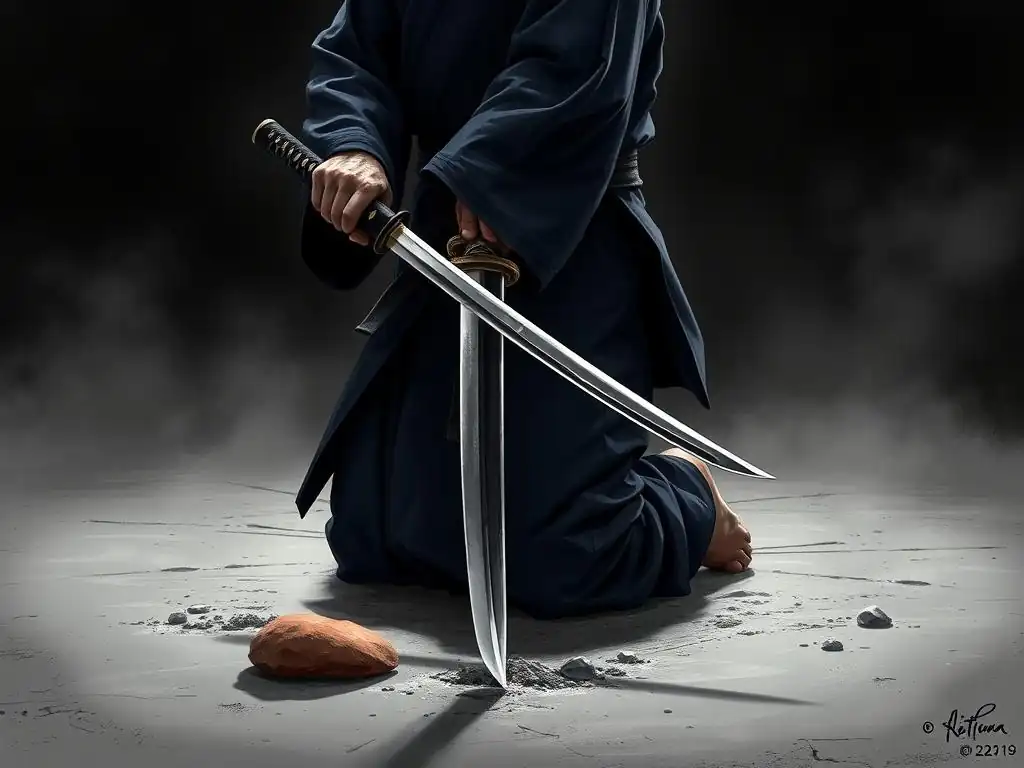
Proper stance, known as kamae, is the bedrock of effective Japanese katana tameshigiri technique. A stable, balanced posture allows for powerful body mechanics to drive the cut. Typically, a stance like hasso-no-kamae or chudan-no-kamae is adopted, with feet shoulder-width apart or slightly wider, knees slightly bent, and weight distributed evenly to allow for dynamic movement and powerful hip rotation. The body should be relaxed yet alert, ready to generate speed and power.
The grip ( tsuka) on the katana's handle is equally vital. The hands should grip the tsuka firmly but not rigidly, typically with the left hand near the end cap ( kojiri) and the right hand closer to the guard ( tsuba), leaving a small gap between them. The grip should be primarily with the fingers, particularly the pinky and ring fingers of both hands, rather than clenching with the palms. This allows for the crucial "wringing" action ( tenouchi) at the moment of impact, which snaps the blade down and ensures proper hasuji.
The Swing: Perfecting the Cutting Arc
The swing in tameshigiri is not a simple chop but a precise, controlled arc that maximizes the blade's speed and energy as it passes through the target. The cut originates from the core, utilizing hip rotation and body weight transfer, with the arms acting as guides rather than primary power sources. The path of the sword should follow a consistent plane, ensuring the blade edge ( hasaki) strikes the target at the correct angle ( hasuji).
Speed is important, but control is paramount. A fast, uncontrolled swing with poor hasuji is more likely to result in a failed cut or damaged blade than a slightly slower, perfectly aligned one. The practitioner must visualize the path of the blade through the target and execute the swing smoothly, accelerating through the cutting zone. The tenouchi action is applied just as the blade contacts the target, providing the final whip-like snap that helps ensure a clean, effortless cut, demonstrating refined Japanese katana tameshigiri technique.
Cutting Techniques: Exploring Variations
Tameshigiri involves practicing various fundamental cutting angles, each designed to simulate different combat scenarios and test specific aspects of Japanese katana tameshigiri technique.
Kesagiri: Diagonal Cut
Kesagiri refers to a diagonal cut, typically starting high on one side of the target (like the shoulder or neck region) and sweeping downwards across the body to the opposite side (like the hip). This is one of the most common and practical cuts in Japanese swordsmanship.
Mastering the kesagiri requires precise control of the cutting plane and angle throughout the diagonal path. A common variation starts from the upper right and cuts down to the lower left, or vice versa. Proper body mechanics, including hip rotation and weight transfer, are essential to generate the power needed to cleanly sever the target along this extended diagonal line, a key aspect of effective Japanese katana tameshigiri technique.
Kirioroshi: Vertical Cut
Kirioroshi, or makko giri, is a straight vertical cut descending from directly above the target downwards. This cut aims for the center line, simulating cutting through an opponent's head or collarbone area.
Executing a clean kirioroshi is deceptively difficult. It requires perfect vertical alignment of the blade throughout the swing and precise timing of the tenouchi. Any deviation from the vertical plane or wobble in the blade will result in a skewed or failed cut. This technique demands exceptional control and focus, making it a fundamental test of a practitioner's command over their Japanese katana tameshigiri technique.
Yokogiri: Horizontal Cut
Yokogiri is a horizontal cut, typically aimed at the midsection of the target. This cut simulates attacking the waist or abdomen of an opponent.
Horizontal cuts present unique challenges regarding maintaining a level cutting plane and generating power solely through rotational movement. The blade must travel precisely horizontally through the target. Like kirioroshi, any vertical deviation will impede the cut. Successful yokogiri demonstrates a high level of body control and the ability to apply power effectively in a horizontal plane, showcasing advanced Japanese katana tameshigiri technique.
Evaluating Cut Quality: Analyzing Results
After each cut, the result on the target material is meticulously analyzed to evaluate both the sword's performance and the practitioner's Japanese katana tameshigiri technique. A successful cut is characterized by a clean, single pass through the target, leaving a smooth, often wet, cut surface without tearing or ragged edges. The severed piece should fall away cleanly.
Conversely, signs of a poor cut include a ragged or torn surface, partial cuts requiring multiple passes, or the target being pushed over or bent rather than severed. These indicate issues with hasuji (blade angle), tenouchi (grip action), power, or speed. Examining the target provides invaluable feedback, allowing the swordsman to identify flaws in their Japanese katana tameshigiri technique and make adjustments for subsequent cuts.
Understanding the Katana Blade for Tameshigiri
Blade Geometry and Cutting Performance
The geometry of a Japanese katana is intricately designed to facilitate cutting, and understanding it is crucial for effective Japanese katana tameshigiri technique. Key elements include the shinogi (ridge line), niku (the convex shape of the blade profile), and the kissaki (the point). The niku provides strength and allows the blade to cleave through material rather than simply splitting it, pushing the severed material away from the blade surfaces.
The degree of niku affects cutting performance; blades with more niku are generally more durable but may feel "slower" in a cut compared to flatter profiles. The shinogi establishes the main bevels of the blade. A well-executed cut aligns the hasuji (cutting angle) parallel to the edge bevel defined by the shinogi, allowing the blade to pass through the material efficiently. Understanding how your specific katana's geometry interacts with the target is part of refining your Japanese katana tameshigiri technique.
While a katana must be sharp for tameshigiri, extreme, razor-like sharpness isn't the only factor; edge alignment is equally, if not more, important. The hasaki (cutting edge) must be perfectly straight and aligned with the intended cutting plane. A microscopic burr or slight wave along the edge can impede a clean cut, causing resistance or tearing.
The quality of the final polish ( finishing polish) on the hasaki is critical. A good polish leaves a smooth, consistent edge. During tameshigiri, even a perfectly sharp edge can be slightly deformed or misaligned by improper hasuji or insufficient tenouchi. Evaluating the edge after cutting helps assess both the blade's resilience and the precision of the Japanese katana tameshigiri technique.
Forging and Hardening: Influencing Cutting Ability
The traditional forging process of a Japanese katana, involving folding steel and differential hardening ( yakire), results in a blade with a hard edge ( yakiba) capable of holding a keen edge and a softer, more flexible spine ( mune). This structure, visible in the distinct hamon (temper line), is specifically engineered for the demands of cutting. The hard edge provides cutting power, while the flexible spine absorbs shock and prevents the blade from breaking upon impact.
The effectiveness of the differential hardening directly impacts the katana's performance in tameshigiri. A properly hardened edge will bite into the target and cleave through it without rolling or chipping, while the softer spine allows the blade to flex slightly, reducing the risk of catastrophic failure. Understanding the properties imparted by the forging and hardening process helps appreciate the capabilities and limitations of the sword being used for Japanese katana tameshigiri technique.
Katana Maintenance After Tameshigiri: Honing and Care
Maintaining the Katana's Edge
Even with perfect Japanese katana tameshigiri technique, test cutting puts stress on the blade's edge. After a session, the edge should be carefully inspected. Minor dulling or slight edge deformation may occur. For practitioners with the necessary skills, light touch-up honing using fine-grit stones specifically designed for Japanese swords might be performed.
However, significant chips, rolls, or damage require the attention of a professional Japanese sword polisher ( togishi). Attempting to sharpen a damaged katana without the proper knowledge, tools, and expertise can cause irreparable harm to the blade's geometry and historical value. Regular tameshigiri means regular inspection and appropriate maintenance or professional care to keep the blade in optimal condition for future practice of Japanese katana tameshigiri technique.
Cleaning and Storage
Immediate and thorough cleaning is essential after tameshigiri to prevent rust and preserve the blade. Any moisture or residue from the target material must be completely removed. The blade should be wiped down carefully with a clean cloth or paper ( nuguigami). Then, a thin layer of specialized sword oil ( choji oil is traditional) should be applied along the entire length of the blade using a clean cloth or paper, ensuring even coverage.
The katana should be stored in its scabbard ( saya) in a dry, climate-controlled environment, ideally horizontally in a rack designed for swords ( katana-kake). Avoid storing the sword vertically with the tip down, as this can cause the tip to press against the inside of the saya over time. Proper cleaning and storage are non-negotiable steps in the care routine for any katana used for Japanese katana tameshigiri technique.
Recognizing Damage and Seeking Repair
Practitioners must learn to recognize signs of damage on their katana. This includes visual inspection for chips ( ho), cracks ( kitae-ware or shinae), bends, or significant edge rolling ( ha-kobore). Running a finger carefully along the edge (away from the sharp part!) or using a soft material like cotton can help detect subtle imperfections.
If any damage is found, especially cracks or bends, the sword should not be used for further cutting. Such damage can compromise the structural integrity of the blade and make it dangerous to wield. The katana should be taken to a qualified togishi for assessment and potential repair. Investing in professional maintenance ensures the longevity of the blade and the safety of the practitioner practicing Japanese katana tameshigiri technique.
The Philosophy of Tameshigiri: Beyond the Cut
Tameshigiri as Mental Discipline
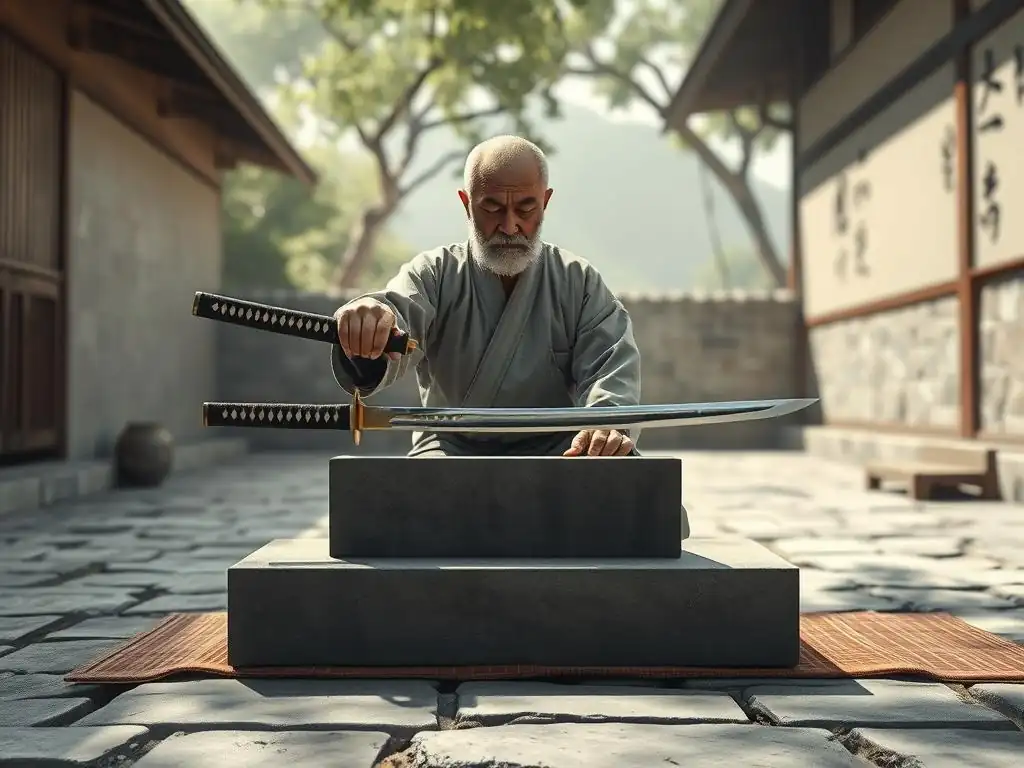
Beyond the physical act of cutting, tameshigiri is a profound exercise in mental discipline. It demands complete focus and presence in the moment. Distractions, hesitation, or a wavering mind will inevitably lead to a poor cut. The practitioner must clear their mind, visualize the cut, and execute with intent and decisiveness.
This mental fortitude, known as mushin (no mind) or a state of heightened awareness free from conscious thought, is cultivated through repeated practice. The immediate feedback provided by the target serves as a harsh but honest teacher, revealing not only physical flaws but also mental ones. Mastering the Japanese katana tameshigiri technique is as much about mastering one's own mind as it is about mastering the sword.
Connection to Bushido
Tameshigiri embodies several core tenets of Bushido, the way of the warrior. It emphasizes discipline, precision, and the pursuit of perfection in execution. The dedication required to refine one's Japanese katana tameshigiri technique reflects the Bushido value of diligent practice and self-improvement.
Furthermore, facing the target with the intent to cut cleanly, knowing that the result is an objective measure of one's ability, requires courage and resolve. It is a confrontation with one's own limitations and a commitment to overcoming them. This direct, unflinching approach to testing oneself aligns with the warrior's ethos of facing challenges head-on.
Respect for the Katana
A deep sense of respect for the katana is fundamental to tameshigiri. The sword is not merely a tool but is often regarded with reverence, a product of skilled craftsmanship and a symbol of the warrior spirit. This respect is demonstrated through proper handling, meticulous maintenance, and a clear understanding that the blade is capable of causing serious harm if not wielded with care and intention.
Before and after cutting, formal etiquette may be observed, acknowledging the gravity of using such a weapon. This respect extends to the target material as well, recognizing that it serves a vital role in the learning process. Treating the katana with respect reinforces the seriousness of the practice and the commitment to mastering the Japanese katana tameshigiri technique responsibly.
Advanced Tameshigiri Techniques
Cutting Multiple Targets
Once proficiency is gained with single targets, practitioners may advance to cutting multiple targets arranged in various configurations. This could involve two or more mats stacked vertically, placed side-by-side horizontally, or even set up to require a rapid sequence of different cuts. Cutting multiple targets simultaneously or in quick succession significantly increases the complexity and demands a higher level of skill.
Successfully cutting multiple targets requires not only greater power but also exceptional control, timing, and efficiency of movement. The Japanese katana tameshigiri technique must be refined to maintain the correct hasuji and power distribution across all targets. This practice develops advanced spatial awareness, rhythm, and the ability to link different cutting actions seamlessly.
Tameshigiri with Different Katana Types [Different blade lengths/styles]
Tameshigiri can also be practiced with different types of Japanese swords, each with unique characteristics that influence the Japanese katana tameshigiri technique. For example, cutting with a longer sword like an odachi requires a larger movement arc and different body mechanics compared to a standard uchigatana.
Similarly, practicing with a shorter sword like a wakizashi or tanto demands tighter movements and potentially different targets or cutting angles. Exploring tameshigiri with various blade lengths and styles helps the practitioner develop a deeper understanding of how sword design impacts cutting dynamics and refines their fundamental Japanese katana tameshigiri technique to adapt to different weapons.
The Role of Experience
Mastery in tameshigiri, like any martial art, is a journey that relies heavily on accumulated experience. Each cut, whether successful or not, provides valuable lessons. Over time, a practitioner develops an intuitive feel for the correct angle, speed, and power required for different targets and cuts.
Experienced practitioners can often diagnose issues with a cut immediately based on the sound, the feel of the blade passing through the target, and the visual result. This accumulated knowledge allows for continuous refinement of the Japanese katana tameshigiri technique, leading to greater consistency, efficiency, and the ability to handle increasingly challenging cutting scenarios.
Tameshigiri: Understanding Japanese Swordsmanship
Integrating Tameshigiri into Martial Arts Training
Tameshigiri is not typically a standalone practice but rather a component within a broader study of Japanese swordsmanship, such as Iaido, Kendo, or Kenjutsu. It provides a crucial link between the theoretical movements learned in kata and their practical application. While kata teaches form and flow, tameshigiri tests the ability to apply those principles with real force and precision against resistance.
Incorporating tameshigiri into a training regimen helps practitioners develop essential attributes like correct body alignment, powerful hip rotation, precise hasuji, and effective tenouchi – skills that are transferable and enhance all aspects of their sword art. It offers a tangible benchmark for progress in developing effective Japanese katana tameshigiri technique.
Finding a Qualified Instructor
Given the inherent dangers of using a sharp sword, learning tameshigiri under the guidance of a qualified and experienced instructor is absolutely essential. An instructor can provide personalized feedback on stance, grip, swing mechanics, and hasuji, correcting flaws in Japanese katana tameshigiri technique that could otherwise lead to poor results or, worse, injury.
A good instructor will also emphasize safety protocols, proper equipment use, and responsible blade care. They can guide students on appropriate targets for their skill level and help them progress safely through more advanced techniques. Finding a dojo or school with a reputable instructor specializing in tameshigiri is the most responsible way to learn this demanding art.
The Enduring Appeal of Tameshigiri
The enduring appeal of tameshigiri lies in its directness and objective feedback. In an age of theoretical knowledge, it offers a tangible connection to the practical realities faced by historical swordsmen. It is a challenging discipline that tests physical skill, mental fortitude, and respect for a legendary weapon.
For practitioners of Japanese martial arts, mastering the Japanese katana tameshigiri technique represents a significant achievement – a demonstration of control, precision, and the ability to apply the principles of their art effectively. It is a continuous process of learning and refinement, offering a lifetime of challenge and reward for those who pursue it with dedication and respect.
Frequently Asked Questions
What is tameshigiri and what is its primary purpose?
Tameshigiri is the Japanese art of test cutting with a katana. Its primary purpose is to assess the sword's quality and the swordsman's skill. It's not just about destruction, but about precision.
What materials are typically used for tameshigiri targets?
Traditionally, tameshigiri uses materials like rolled tatami mats that are soaked in water to simulate the resistance of human flesh. Bamboo is also used, but tatami mats are most common.
How does tameshigiri help improve a martial artist's skills?
It provides direct feedback on technique, forcing the swordsman to refine their grip, stance, and cutting angle for clean cuts. This immediate feedback loop accelerates skill development.
Is tameshigiri only about cutting power, or are there other aspects?
While power is important, tameshigiri also emphasizes precision, control, and proper form. A perfectly executed cut demonstrates mastery over the sword and the martial art.
What safety precautions should be taken when practicing tameshigiri?
Tameshigiri requires a safe environment, proper instruction, and protective gear. Supervision by an experienced instructor is crucial to prevent serious injury.
Final Reflection: The Enduring Echo of the Blade
The journey through the art of Tameshigiri, the test cutting of the Japanese katana, reveals more than just the sharpness of steel; it unveils a profound connection to tradition, skill, and the relentless pursuit of perfection. This ancient practice, far from being a relic of the past, continues to resonate today as a testament to the dedication and discipline required to master any craft. Its principles of precision, focus, and understanding the interplay between weapon and target remain powerfully relevant in a world often characterized by instant gratification and superficiality.
The influence of Tameshigiri extends beyond the dojo, shaping our understanding of commitment and the value of continuous improvement. Witnessing the dedication required to master this technique has instilled in me a deeper appreciation for the artistry and discipline inherent in all forms of mastery. The sword is a reflection of the soul.
This adage, often attributed to samurai philosophy, underscores the profound connection between the swordsman and their blade, highlighting the importance of inner harmony and unwavering focus in achieving true skill.
Now, as you reflect on the intricacies of the Japanese katana Tameshigiri technique, consider how its principles can be applied to your own life. Embrace the challenge of mastering a skill, cultivate unwavering focus, and strive for continuous improvement in all your endeavors. Let the enduring echo of the blade inspire you to pursue excellence with the same dedication and precision that defines the art of Tameshigiri.
Unleash Your Inner Swordsman: Take the Next Step!
Thank you for exploring the fascinating world of Tameshigiri! We hope you've gained a deeper appreciation for the skill, precision, and respect involved in this ancient art. Now, it's time to translate that knowledge into action.
- Find a reputable Tameshigiri dojo near you and observe a practice session. Witnessing the art firsthand will solidify your understanding and ignite your passion.
- Delve deeper into the history of the katana: Read a book on swordsmithing or Japanese weaponry.
- Share this article with fellow martial arts enthusiasts and spark a conversation about the discipline and artistry of Tameshigiri.
What aspect of Tameshigiri resonated with you the most, and what's one thing you're eager to learn more about?