
Stance Transitions in Tang Soo Do: The Key to Fluid Movement and Power

Welcome to Martial Arts Mastery!
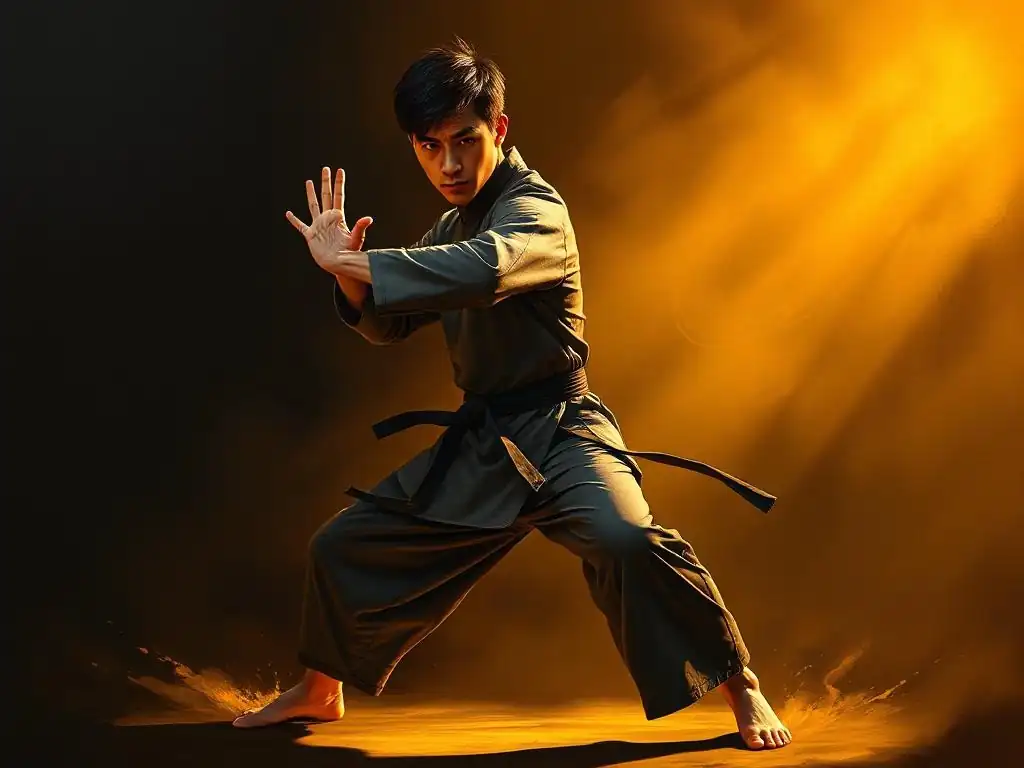
Delve into the fascinating world of martial arts, where ancient traditions meet modern techniques. Ever wondered how a seemingly simple shift in posture can unlock devastating power and unparalleled fluidity? Today, we unravel the secrets of Tang Soo Do stance transitions, exploring how mastering these fundamental movements can elevate your practice to new heights. Prepare to unlock the key to a more dynamic and effective martial arts journey. Curious to learn more?
- Introduction to Tang Soo Do Stance Transitions
- Understanding Fundamental Tang Soo Do Stances
- Principles of Effective Stance Transitions in Tang Soo Do
-
Common Tang Soo Do Stance Transition Techniques
- Ap Kubi to Ap Kubi Transitions: Forward and Backward Movement
- Dwi Kubi to Ap Kubi Transitions: Combining Defense and Offense
- Ap Kubi to Dwi Seogi Transitions: Quick Evasion and Counter-Attacks
- Dwi Seogi to Dwi Seogi Transitions: Lateral Movement and Angle Changes
- Beom Seogi Transitions: Utilizing Deception and Agility
-
Drills and Exercises for Improving Stance Transitions
- Shadow Boxing with Focused Stance Changes
- Partner Drills: Practicing Transitions with a Training Partner
- Line Drills: Repetitive Practice for Muscle Memory
- Cone Drills: Enhancing Agility and Footwork
- Forward Step-Through Drill: Enhancing Forward Momentum and Balance
- Back Step-Through Drill: Improving Backward Movement and Defensive Positioning
- The Relationship Between Stance Transitions and Tang Soo Do Techniques
- Advanced Applications of Stance Transitions in Tang Soo Do
- Common Mistakes to Avoid During Stance Transitions
- Conclusion: Mastering Stance Transitions for Tang Soo Do Excellence
-
Frequently Asked Questions
- How important are stance transitions in Tang Soo Do?
- What are some common challenges beginners face when learning Tang Soo Do stance transitions?
- How do stance transitions contribute to self-defense strategies in Tang Soo Do?
- Can you provide an example of a basic stance transition in Tang Soo Do?
- How often should I practice stance transitions to improve my Tang Soo Do skills?
- Final Reflection: Embracing the Flow of Tang Soo Do
- Master Your Flow: Embrace the Transition!
Introduction to Tang Soo Do Stance Transitions
Why Mastering Stance Transitions is Crucial in Tang Soo Do
Mastering Tang Soo Do stance transitions is not merely about moving from one static position to another; it's the dynamic core that links all techniques and movements. Without efficient transitions, even the most powerful kick or strike loses its effectiveness, as the practitioner is left off-balance, slow, or improperly positioned.
The ability to shift seamlessly between stances allows for instantaneous adaptation to an opponent's actions or changes in distance, enabling swift attacks, evasive maneuvers, and strong defensive postures. This fluidity is what separates a basic practitioner from an advanced martial artist, providing the necessary agility and stability to execute complex sequences under pressure.
Furthermore, proficiency in Tang Soo Do stance transitions directly impacts power generation. Many powerful techniques, such as a driving front kick from Ap Kubi or a quick counter-strike initiated from Dwi Kubi, rely heavily on the momentum and stability gained during the preceding stance change. A smooth transition ensures that body weight is transferred effectively, aligning the hips and shoulders to channel maximum force into the technique.
Conversely, a hesitant or clumsy transition can dissipate energy, reduce speed, and leave the practitioner vulnerable. Therefore, dedicating significant training time to perfecting these transitions is fundamental for achieving both speed and power in Tang Soo Do.
The Importance of Fluid Movement in Tang Soo Do Practice
Fluid movement is the lifeblood of Tang Soo Do, underpinning the grace and effectiveness seen in forms (Hyung) and the practical application in sparring (Dae Ryun) and self-defense (Ho Sin Sul). Tang Soo Do stance transitions are the primary mechanism by which this fluidity is achieved. Smooth transitions allow practitioners to cover distance quickly, change angles rapidly, and respond instinctively to changing situations without interruption.
This continuity of motion makes techniques harder for an opponent to predict and counter, maintaining the initiative and control during an exchange. It’s the difference between a series of disconnected actions and a continuous, dynamic flow.
Beyond combat applications, fluid Tang Soo Do stance transitions are vital for the aesthetic and technical execution of forms. Each movement within a Hyung is choreographed to flow into the next, often requiring intricate footwork and precise weight shifts. Practicing these transitions within forms builds muscle memory, enhances balance, and develops a deep understanding of body mechanics. This disciplined approach to movement translates directly into practical scenarios, ensuring that the practitioner can apply techniques with efficiency and grace, whether in a formal setting or a spontaneous situation.
Understanding Fundamental Tang Soo Do Stances
Ap Kubi (Walking Stance): Foundation of Movement
Ap Kubi, or walking stance, is one of the most fundamental stances in Tang Soo Do, characterized by a forward-leaning posture with the front knee bent and the back leg straight. The weight distribution typically favors the front leg, often cited as roughly 60-70% on the front and 30-40% on the back, though variations exist based on the specific application or lineage.
The length of the stance is usually about one and a half shoulder widths, providing a stable base for forward movement and powerful linear attacks. This stance is foundational for learning basic forward and backward movement, as well as executing strong hand strikes and front kicks.
This stance serves as a primary platform for advancing and retreating. When transitioning from one Ap Kubi to another moving forward, the back leg drives the body forward, and the front foot lands, establishing a new Ap Kubi. Conversely, retreating involves the front leg pushing off, allowing the back leg to step back into a new Ap Kubi. Mastery of these basic Tang Soo Do stance transitions within Ap Kubi is essential before moving to more complex changes, as it builds the necessary coordination, balance, and understanding of weight transfer required for all subsequent stance work.
Dwi Kubi (Back Stance): Defensive and Tactical Applications
Dwi Kubi, or back stance, is primarily a defensive stance in Tang Soo Do, emphasizing weight distribution on the back leg, typically around 60-70%, with the front leg lightly touching the ground or slightly bent. The body is often turned slightly to the side, presenting a smaller target to the opponent. This stance allows for quick withdrawal of the front leg for evasive maneuvers or rapid front kicks. Its structure makes it ideal for blocking techniques, as the strong back leg provides a solid base while the front arm is often positioned forward for defense.
The transition into Dwi Kubi is often used to absorb an attack or shift weight away from danger. Transitioning from Dwi Kubi, particularly into Ap Kubi, is a common offensive maneuver. This Dwi Kubi to Ap Kubi transition involves shifting the weight forward onto the front leg while simultaneously rotating the hips and body, generating significant power for a strike or kick. This dynamic Tang Soo Do stance transition is a cornerstone of combining defensive positioning with aggressive counter-attacks in sparring and self-defense scenarios.
Ap Seogi (Front Stance): Power Generation and Stability
Ap Seogi, often translated as front stance, is a shorter, less committed forward stance compared to Ap Kubi. The feet are typically about shoulder-width apart and one step forward, with the weight more evenly distributed, perhaps 50/50 or slightly favoring the front leg (around 55/45). Both knees are slightly bent, providing a stable and mobile base. This stance is excellent for quick, short-range movements, rapid-fire hand techniques, and maintaining readiness. It allows for faster side-to-side adjustments than the longer Ap Kubi.
While seemingly simple, effective Tang Soo Do stance transitions from Ap Seogi are crucial for speed. A quick shift to a more defensive stance like Dwi Kubi or a transition into a more powerful Ap Kubi for a strong attack can be executed rapidly from this balanced position. The relative ease of changing direction and distance from Ap Seogi makes it a valuable transitional or preparatory stance, allowing the practitioner to assess and react swiftly before committing to a deeper stance or more complex technique.
Dwi Seogi (Fighting Stance): Agility and Readiness
Dwi Seogi, commonly referred to as fighting stance or ready stance, is the posture typically assumed when engaging in sparring. It is a dynamic, balanced stance with feet roughly shoulder-width apart laterally and about one and a half shoulder-widths apart front-to-back. Weight distribution is usually close to 50/50, allowing for rapid movement in any direction. Both knees are bent, and the body is angled, presenting the side to the opponent while keeping hands up for defense and offense.
This stance is designed for constant movement and quick reactions. Tang Soo Do stance transitions from Dwi Seogi are often explosive, involving stepping forward, backward, or laterally into another fighting stance, or transitioning into a more committed stance like Ap Kubi for an attack or Dwi Kubi for a block. The agility afforded by Dwi Seogi is paramount, enabling swift angle changes, feints, and the ability to cover distance rapidly. Mastering transitions within and from this stance is fundamental for effective sparring.
Beom Seogi (Tiger Stance): Deceptive and Dynamic Positioning
Beom Seogi, or tiger stance, is a more advanced Tang Soo Do stance characterized by most of the weight (around 90-100%) being placed on the back leg, with the front foot lightly resting on the ball of the foot or even slightly off the ground. The back knee is deeply bent, and the posture is low and compact. This stance is excellent for deceptive movements, allowing the practitioner to quickly spring forward into an attack or withdraw the front leg completely to evade.
Tang Soo Do stance transitions from Beom Seogi are often sudden and powerful. The stored energy in the bent back leg can be released to launch forward into a kick or strike, transitioning into an Ap Kubi or another offensive stance. Alternatively, the front leg can be easily lifted for a quick front kick or withdrawn into a defensive posture. The deceptive nature of Beom Seogi relies heavily on the dynamic and unpredictable transitions it facilitates, making it a valuable tool for experienced practitioners.
Principles of Effective Stance Transitions in Tang Soo Do
Weight Shifting: The Core of Seamless Transitions
Effective weight shifting is the absolute foundation of seamless Tang Soo Do stance transitions. As you move from one stance to another, your body weight must flow smoothly and deliberately. For instance, when transitioning from Dwi Kubi to Ap Kubi for a front punch, the weight must shift rapidly and completely from the back leg to the front leg.
This transfer provides the forward momentum and stable base required for the punch to generate maximum power. Conversely, when moving from Ap Kubi to Dwi Kubi to evade, the weight must quickly unload from the front leg and shift back, often pivoting on the ball of the front foot.
Incorrect weight distribution during a transition leads to instability, reduces power, and leaves the practitioner vulnerable. If the weight is left too much on the trailing leg when moving forward, the technique will be weak and the balance compromised. If the weight isn't fully settled in the new stance before executing a technique, the foundation is unstable. Consistent practice focusing specifically on the feeling of weight shifting – feeling the pressure change on the soles of the feet – is crucial for developing intuitive and efficient Tang Soo Do stance transitions.
Maintaining Balance: Stability and Control During Movement
Maintaining balance is paramount throughout all Tang Soo Do stance transitions. A transition should never result in a moment of instability where the practitioner could easily be pushed over or caught off guard. Balance is achieved through a combination of proper weight distribution, core engagement, and controlled movement. The transition should be a continuous flow, not a series of jerky steps. As weight shifts from one foot to the other, the body's center of gravity must remain controlled and centered over the base of support, even as that base changes shape.
Drills that focus on slow, deliberate transitions can help practitioners understand the nuances of maintaining balance. Practicing moving from Ap Kubi to Dwi Kubi and back very slowly, feeling the weight shift and making micro-adjustments to stay upright, is highly beneficial. Incorporating balance exercises, such as standing on one leg or practicing techniques on slightly uneven surfaces (under supervision), can further enhance the proprioception needed for stable Tang Soo Do stance transitions in dynamic situations.
Proper Footwork: Precision and Efficiency in Stepping
Proper footwork is the physical execution of Tang Soo Do stance transitions. It involves precise steps, pivots, and glides that move the body efficiently from one position to the next. Foot placement dictates the structure and stability of the new stance; incorrect placement can lead to a weak stance, poor alignment, and difficulty executing subsequent techniques. Steps should be neither too large nor too small, ideally covering the necessary distance with minimal wasted motion.
Efficiency in footwork means using the least amount of energy and time to complete the transition. This often involves dragging or sliding the non-moving foot rather than lifting it high, maintaining contact with the ground for better balance and faster movement.
For example, when stepping forward into Ap Kubi, the back foot pushes off, and the front foot steps, but the back foot then quickly slides forward to assume its position for the new stance, rather than taking a second large step. Practicing specific Tang Soo Do stance transitions repeatedly, focusing on the exact path and placement of the feet, builds the muscle memory required for effortless execution.
Body Alignment: Generating Power and Preventing Injury
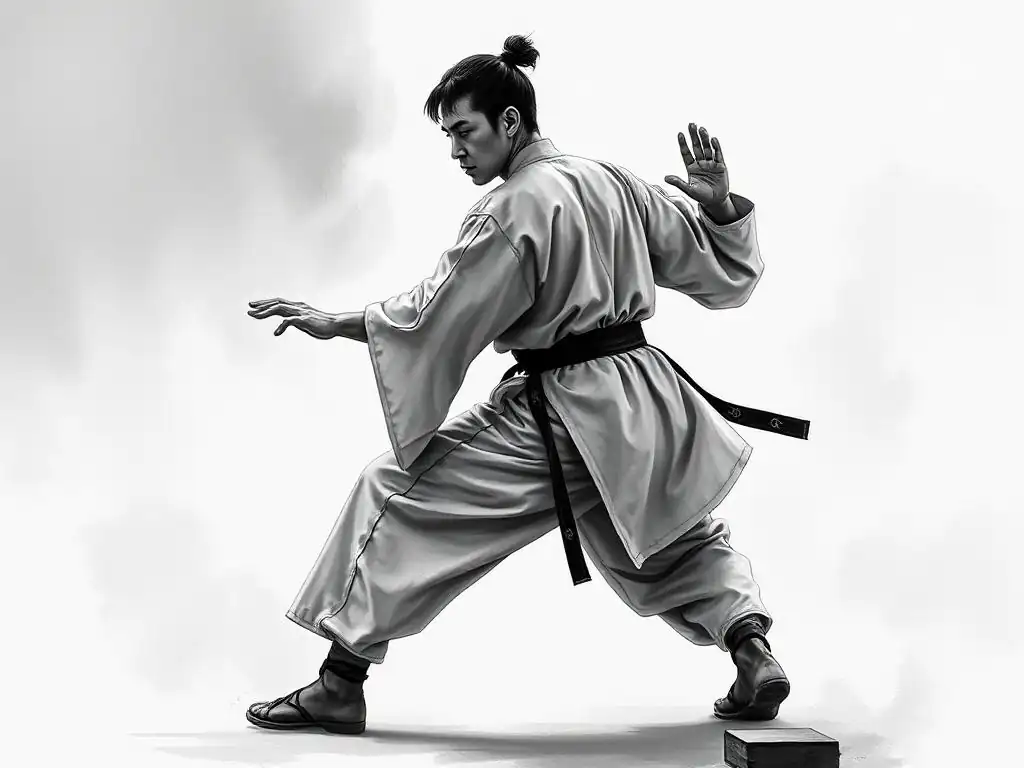
Correct body alignment during Tang Soo Do stance transitions is essential for both power generation and injury prevention. As you transition, the hips and shoulders should ideally remain aligned or deliberately rotate to set up the next technique. For instance, transitioning into Ap Kubi for a punch requires the hips and shoulders to face forward, directly behind the punching arm, to channel body weight into the strike. Transitioning into Dwi Kubi often involves rotating the body to the side, protecting vital areas and aligning the body for a block or side kick.
Poor alignment during transitions can strain joints, particularly knees and ankles, and reduce the effectiveness of techniques. If the knees are not aligned over the feet, or if the back is hunched, power leaks away and the risk of injury increases. Maintaining a strong, upright posture (unless deliberately lowering the center of gravity) and ensuring that the body's core is engaged helps stabilize the spine and pelvis, facilitating powerful and safe Tang Soo Do stance transitions. Instructors often emphasize keeping the "chase" (centerline) correct during movement.
Speed and Timing: Executing Transitions with Precision
Speed and timing elevate Tang Soo Do stance transitions from mere movement to strategic tools. Speed allows the practitioner to react quickly, close or create distance rapidly, and catch an opponent off guard. However, speed without control leads to sloppiness and loss of balance. Therefore, speed must be developed gradually, ensuring that the principles of weight shifting, balance, and footwork are maintained even at high velocity. Drilling transitions at increasing speeds helps build this controlled quickness.
Timing refers to executing the transition at the opportune moment – just before launching an attack, precisely as an opponent commits, or simultaneously with a defensive action. Good timing in Tang Soo Do stance transitions allows techniques to land effectively or defenses to be impenetrable. For example, timing a transition from Dwi Kubi to Ap Kubi just as an opponent finishes their technique allows the practitioner to launch a counter-attack while the opponent is recovering. Developing timing requires practice against live opponents or partners, learning to read cues and anticipate actions.
Common Tang Soo Do Stance Transition Techniques
Ap Kubi to Ap Kubi Transitions: Forward and Backward Movement
The Ap Kubi to Ap Kubi transition is the most basic linear movement in Tang Soo Do, forming the basis for advancing and retreating. To move forward, the practitioner pushes off the rear leg, stepping forward with the lead leg and then sliding the rear leg up to assume the new Ap Kubi. The body maintains its forward orientation throughout. This transition is fundamental for closing distance to an opponent or moving forward in forms. It requires coordinated leg drive and foot placement to maintain a consistent stance length and depth.
Moving backward from Ap Kubi to Ap Kubi involves the opposite action: pushing off the front leg, stepping backward with the rear leg, and then sliding the front leg back. This allows for creating distance or retreating in forms. Both forward and backward Ap Kubi transitions must be practiced extensively to develop the smooth, powerful locomotion necessary for all other Tang Soo Do stance transitions and techniques. They form the core of linear movement strategy.
Dwi Kubi to Ap Kubi Transitions: Combining Defense and Offense
The transition from Dwi Kubi to Ap Kubi is a classic example of moving from a defensive posture to an offensive one, and it's a cornerstone of Tang Soo Do stance transitions for counter-attacking. Starting from the weight-back Dwi Kubi, the practitioner rapidly shifts weight forward onto the front leg while pivoting the back foot and rotating the hips and torso to face forward. The back leg then slides forward to establish the Ap Kubi stance. This dynamic shift generates significant rotational and forward momentum.
This transition is frequently used to follow a block in Dwi Kubi with a powerful forward strike or kick from the resulting Ap Kubi. For instance, after blocking a punch with the lead arm in Dwi Kubi, the practitioner can immediately transition into Ap Kubi and deliver a reverse punch or a front kick, utilizing the momentum of the stance change. Mastering this Dwi Kubi to Ap Kubi transition is vital for effective counter-offense.
Ap Kubi to Dwi Seogi Transitions: Quick Evasion and Counter-Attacks
Transitioning from Ap Kubi to Dwi Seogi allows for a rapid shift from a committed forward stance to a more agile, side-on fighting stance, facilitating quick evasion or setting up a different angle of attack. From Ap Kubi, the practitioner can pivot on the ball of the front foot while simultaneously bringing the rear foot forward and outward, rotating the body to the side to assume Dwi Seogi. The weight shifts quickly from the front leg back and is then distributed evenly in the new stance.
This Tang Soo Do stance transition is often used to quickly evade a linear attack or to shift to the side to create an angle for a side kick or roundhouse kick from the Dwi Seogi position. It allows the practitioner to move off the line of attack while maintaining readiness. Practicing this transition helps improve lateral agility and the ability to fluidly switch between forward-facing power stances and side-facing agile stances.
Dwi Seogi to Dwi Seogi Transitions: Lateral Movement and Angle Changes
Moving laterally within the Dwi Seogi (fighting stance) is crucial for controlling distance, changing angles, and positioning oneself advantageously in sparring. These Dwi Seogi to Dwi Seogi Tang Soo Do stance transitions involve shuffling or sliding steps that maintain the basic structure and weight distribution of the fighting stance while moving sideways, diagonally, forward, or backward. The feet generally move in a coordinated manner, with one foot initiating the movement and the other following to maintain the stance width and distance.
Lateral shuffling allows a practitioner to circle an opponent, avoid linear attacks, or create openings. Stepping forward or backward within Dwi Seogi allows for minor adjustments in distance without fully committing to a deep stance. Mastering these subtle but essential Tang Soo Do stance transitions within Dwi Seogi provides the practitioner with the mobility needed to navigate the sparring arena effectively and control the engagement distance.
Beom Seogi Transitions: Utilizing Deception and Agility
Transitions involving Beom Seogi (tiger stance) are characterized by their potential for deception and explosive speed. A common transition from Beom Seogi is a rapid spring forward into Ap Kubi, often accompanied by a powerful strike or kick. From the weight-loaded back leg, the practitioner can quickly push off and extend the front leg forward, shifting weight rapidly into the new Ap Kubi stance while executing a technique. This sudden forward burst can surprise an opponent.
Conversely, transitioning into Beom Seogi, perhaps from Ap Kubi or Dwi Seogi, can be used to quickly unload weight from the front leg, making it available for a snap kick or allowing for rapid withdrawal if an attack is anticipated. The key to effective Tang Soo Do stance transitions from Beom Seogi is the dynamic use of the back leg to generate power and the lightness of the front leg for speed and maneuverability, capitalizing on the deceptive appearance of the stance.
Drills and Exercises for Improving Stance Transitions
Shadow Boxing with Focused Stance Changes
Shadow boxing is an invaluable tool for practicing Tang Soo Do stance transitions in a fluid, continuous manner without the need for a partner or equipment. The practitioner moves freely, simulating techniques and combinations against an imaginary opponent, paying close attention to the quality of each stance transition. The focus should be on smooth weight shifting, proper foot placement, and maintaining balance throughout the movement sequences.
During focused shadow boxing, a practitioner might dedicate rounds specifically to practicing transitions between certain stance pairs, such as Dwi Kubi to Ap Kubi, or practicing moving forward and backward in Ap Kubi while throwing punches. This allows for self-correction and refinement of mechanics. Regular shadow boxing sessions, even just 10-15 minutes daily, can significantly improve the muscle memory and fluidity of Tang Soo Do stance transitions.
Partner Drills: Practicing Transitions with a Training Partner
Practicing Tang Soo Do stance transitions with a training partner adds the crucial element of reaction and timing. Simple partner drills might involve one person calling out stances for the other to transition into, or one partner initiating a movement that requires the other to react with a specific transition. For example, one partner might step forward, prompting the other to transition into Dwi Kubi for defense or back into Ap Kubi to maintain distance.
More advanced partner drills can involve light sparring scenarios where the focus is less on landing techniques and more on using Tang Soo Do stance transitions effectively to gain positioning, evade attacks, and set up opportunities. Working with a partner provides external feedback and helps develop the timing needed to execute transitions effectively in dynamic situations, simulating the pressures of sparring or self-defense.
Line Drills: Repetitive Practice for Muscle Memory
Line drills involve practicing specific Tang Soo Do stance transitions repeatedly while moving along a straight line. This method is excellent for building muscle memory and ensuring consistency in stance length, width, and depth. A common line drill involves transitioning from Ap Kubi to Ap Kubi while moving forward down the length of the training area, then backward. Another might involve alternating between Ap Kubi and Dwi Kubi with each step.
The repetitive nature of line drills, often performed for several minutes or the length of the Dojang floor, engraves the correct patterns of weight shift and footwork into the body. While potentially monotonous, this type of focused repetition is highly effective for developing the automaticity required for Tang Soo Do stance transitions to become second nature, allowing the practitioner to focus on the technique being executed rather than the movement between stances.
Cone Drills: Enhancing Agility and Footwork
Cone drills, or marker drills, are useful for improving the agility and precision of Tang Soo Do stance transitions, particularly lateral and diagonal movements. Cones are placed in various patterns (e.g., a square, a triangle, a zig-zag), and the practitioner is instructed to move between them, executing specific stance transitions at each cone or along the path. For example, moving from one cone to the next might require transitioning from Dwi Seogi to Ap Kubi, then back to Dwi Seogi to move to the next cone.
These drills challenge the practitioner to change direction and angle rapidly while maintaining proper stance structure and balance. They are particularly effective for developing the quick, precise footwork needed for dynamic Tang Soo Do stance transitions used in sparring to outmaneuver an opponent. The visual cues of the cones help the practitioner focus on the required path and timing of the movement.
Forward Step-Through Drill: Enhancing Forward Momentum and Balance
The forward step-through drill focuses specifically on the transition from a rear stance (like Dwi Kubi or a preparatory stance) into a powerful forward stance (like Ap Kubi), often culminating in a technique like a punch or kick. Starting from a ready position or a back stance, the practitioner steps forward, ensuring the weight shifts fully onto the lead leg as they land in Ap Kubi, generating momentum. This drill emphasizes driving off the back leg and controlling the landing in the forward stance.
This drill is crucial for developing the explosive power that can be generated through forward Tang Soo Do stance transitions. Practicing it repeatedly, focusing on the transfer of weight and the stability upon landing, helps build the necessary strength and coordination. It is a fundamental drill for anyone looking to improve the power of their forward-moving techniques, such as stepping punches or front kicks.
Back Step-Through Drill: Improving Backward Movement and Defensive Positioning
Similar to the forward step-through, the back step-through drill focuses on controlled backward Tang Soo Do stance transitions, typically moving from a forward stance (like Ap Kubi) into a rear or defensive stance (like Dwi Kubi or retreating Ap Kubi). The emphasis is on pushing off the front leg and smoothly moving the rear leg backward, shifting weight away from the potential line of attack while maintaining balance and readiness.
This drill is vital for developing effective defensive footwork and the ability to create distance quickly and safely. Practicing retreating into a stable Dwi Kubi, for instance, allows the practitioner to immediately follow up with a block or counter-kick. The back step-through drill reinforces the principle of shifting weight away from pressure, a key skill for evasion and setting up defensive actions through Tang Soo Do stance transitions.
The Relationship Between Stance Transitions and Tang Soo Do Techniques
Stance Transitions in Basic Kicks (Bal Chagi)
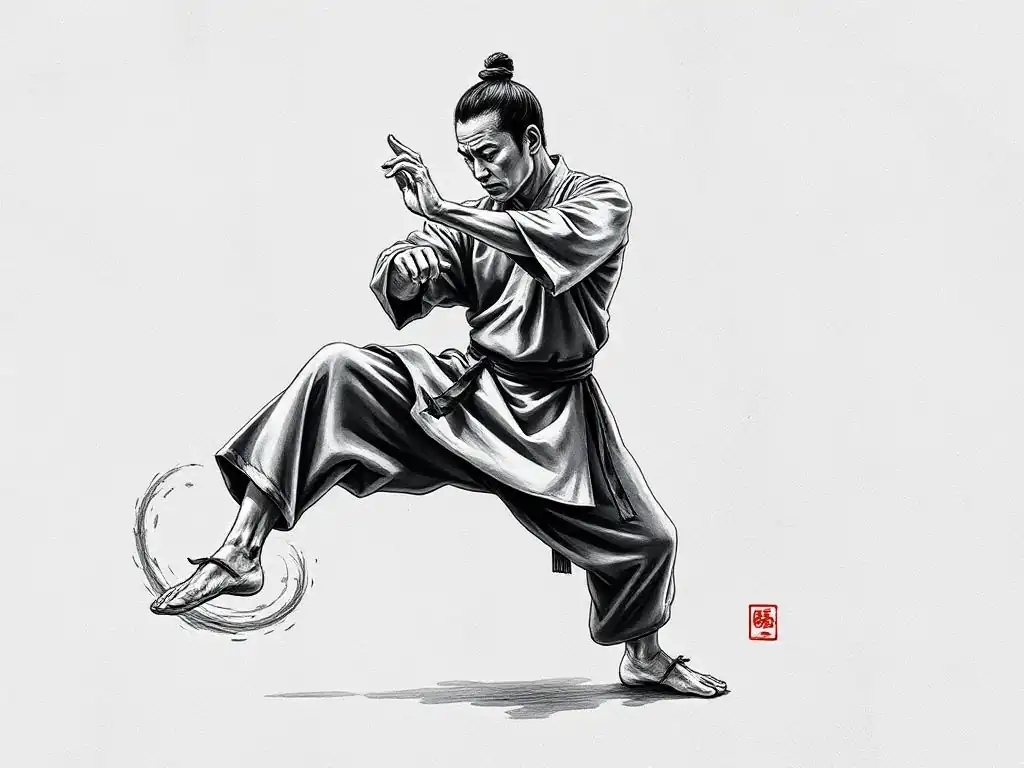
Stance transitions are intrinsically linked to the execution of basic kicks in Tang Soo Do. Consider the front kick (Ap Chagi): it is often launched from Ap Kubi, but the power is significantly enhanced by a preceding Tang Soo Do stance transition that loads weight onto the supporting leg. A rapid shift from Dwi Kubi to Ap Kubi or a forward step into Ap Kubi just before lifting the kicking leg adds momentum and stability.
For side kicks (Yup Chagi) or roundhouse kicks (Dollyo Chagi), transitions from Ap Kubi or Dwi Kubi into Dwi Seogi or a pivot allow the hips to rotate correctly for maximum power. The precision and timing of the stance transition determine how effectively the body can align and generate force. A poorly timed or unstable transition will result in a weak, off-balance kick, demonstrating the critical dependency of kicking power on proficient Tang Soo Do stance transitions.
Stance Transitions in Hand Strikes (Soo Gi)
Just as with kicks, hand strikes in Tang Soo Do rely heavily on effective stance transitions for power and speed. A driving reverse punch from Ap Kubi gains its force from the forward weight transfer that occurs during the transition into that stance or a forward step within it. The rotation of the hips, powered by the weight shift of the Tang Soo Do stance transition, is channeled through the core and into the punching arm.
Blocking techniques (Makgi) also often involve simultaneous stance transitions. Stepping or shifting into Dwi Kubi while executing a block, for example, uses the weight transfer to absorb incoming force and establishes a stable defensive platform. Even simple movements like stepping forward with a punch involve a fundamental Ap Kubi to Ap Kubi transition coordinated with the hand technique. The seamless integration of Soo Gi and Tang Soo Do stance transitions is essential for practical application.
Stance Transitions in Blocks (Makgi)
Blocking in Tang Soo Do is rarely a static action; it often involves movement and a change in stance to effectively deflect or absorb an attack while maintaining balance and preparing for a counter. Tang Soo Do stance transitions are integral to this process. For instance, executing a low block while stepping forward into Ap Kubi (Ha Dan Makgi in Ap Kubi) combines forward movement, a stance change, and the block into a single, powerful action.
Similarly, transitioning into Dwi Kubi while performing a middle block (Choong Dan Makgi in Dwi Kubi) utilizes the backward weight shift to create distance and establish a strong defensive posture. The stability provided by the settled stance after the transition is crucial for absorbing the impact of a strike. Effective Tang Soo Do stance transitions allow blocks to be executed with greater power, stability, and the potential for immediate follow-up techniques.
Combining Stance Transitions with Combinations
Complex combinations of techniques in Tang Soo Do are built upon a foundation of fluid Tang Soo Do stance transitions. A typical combination might involve a step forward with a punch (Ap Kubi transition), followed by a pivot and side kick (transitioning into Dwi Seogi), and then perhaps retreating with a block (transitioning into Dwi Kubi). The effectiveness of the entire sequence depends on the seamlessness and speed of the transitions between each technique.
Practicing combinations requires linking strikes, kicks, and blocks with the appropriate Tang Soo Do stance transitions. This develops the ability to move dynamically through multiple stances while maintaining power, balance, and readiness. The transitions become the "glue" that holds the combination together, allowing the practitioner to flow from one technique to the next without hesitation or loss of control, making the combination faster and more impactful.
Advanced Applications of Stance Transitions in Tang Soo Do
Using Stance Transitions for Evasion and Defense
Beyond simply moving backward, advanced Tang Soo Do stance transitions are used strategically for sophisticated evasion and defense. This includes using lateral or diagonal transitions from Dwi Seogi to move off the line of attack, pivoting into Dwi Kubi to absorb force, or using the quick withdrawal capability from Beom Seogi or Ap Seogi to avoid a strike entirely. These transitions are often small, subtle, and executed with split-second timing.
For example, a slight lateral shuffle in Dwi Seogi to make a roundhouse kick miss its target, or a rapid pivot into Dwi Kubi just as a punch arrives, are advanced defensive applications of Tang Soo Do stance transitions. They require keen awareness, quick reflexes, and precise footwork to execute effectively under pressure, allowing the practitioner to avoid damage while maintaining position for a counter-attack.
Generating Power with Dynamic Stance Changes
Advanced practitioners utilize the dynamic energy of Tang Soo Do stance transitions to maximize power generation. This involves not just settling into a stance before a technique, but using the act of transitioning itself to fuel the technique. The rapid shift of weight, the rotation of the hips during the transition, and the bracing of the body in the final stance all contribute to the force delivered.
Consider the power generated by a stepping side kick: the forward step and transition into the chambered position loads energy into the supporting leg and hips, which is then released into the kick. Similarly, a powerful reverse punch from Ap Kubi is amplified by the preceding forward momentum and weight transfer of the transition into that stance. Mastering these dynamic Tang Soo Do stance transitions allows practitioners to hit harder and move faster.
Setting Up Attacks with Deceptive Footwork
Deceptive footwork, often achieved through skilled Tang Soo Do stance transitions, is a key element of advanced strategy. This involves using subtle movements and stance changes to mislead an opponent about your intentions or create openings. For example, faking a forward transition into Ap Kubi to draw a reaction, then rapidly shifting into Dwi Seogi and moving laterally, can create an angle for an unexpected attack.
Using the ambiguity of stances like Beom Seogi, where the weight distribution allows for both quick forward attacks and rapid backward evasions, relies heavily on deceptive Tang Soo Do stance transitions. The ability to convincingly feint a movement or transition into a stance that suggests one action, only to execute another, requires a high level of control and fluidity in one's stance work and transitions.
Adapting Stance Transitions to Different Fighting Styles
Advanced Tang Soo Do practitioners learn to adapt their stance transitions based on the opponent's style or the specific situation (e.g., sparring vs. self-defense). Against a linear, aggressive opponent, transitions that facilitate rapid backward movement and strong defensive postures (like transitioning into Dwi Kubi) might be emphasized. Against a mobile, evasive opponent, quicker, more agile Tang Soo Do stance transitions within Dwi Seogi or transitions into Ap Seogi for rapid-fire techniques might be more effective.
In self-defense, transitions might prioritize stability and the ability to generate immediate power from less-than-ideal starting positions. Understanding how to modify the depth, length, and speed of Tang Soo Do stance transitions to suit different contexts is a mark of an experienced martial artist. This adaptability allows the practitioner to apply the principles of stance transitions effectively regardless of the circumstances.
Common Mistakes to Avoid During Stance Transitions
Incorrect Weight Distribution
One of the most frequent errors in Tang Soo Do stance transitions is incorrect weight distribution. This often manifests as leaving too much weight on the trailing leg when moving forward, resulting in a weak forward stance and reduced power, or failing to shift weight fully to the back leg in Dwi Kubi, compromising stability. Another issue is bouncing or excessive up-and-down motion caused by improper weight transfer, which wastes energy and telegraphs movement.
Correcting this requires conscious effort to feel the weight shifting through the feet and ensuring the center of gravity moves smoothly between the bases of support. Slow, deliberate practice of Tang Soo Do stance transitions, focusing solely on the sensation of weight transfer, can help correct this fundamental error and build a more solid foundation for movement.
Poor Foot Placement
Poor foot placement during Tang Soo Do stance transitions leads directly to unstable and incorrect stances. This includes stepping too wide or too narrow, stepping too far forward or not far enough, or failing to angle the feet correctly for the target stance. Forgetting to adjust the trailing foot after the lead foot has landed is another common mistake, resulting in a stretched or compressed stance.
To avoid this, practitioners should visualize the target stance before initiating the transition and practice hitting precise marks. Drills using floor markers or lines can help improve accuracy. Consistent attention to the details of where the feet land and how they are angled is crucial for developing correct and stable Tang Soo Do stance transitions.
Loss of Balance
Loss of balance during Tang Soo Do stance transitions is often a symptom of other underlying issues, such as incorrect weight distribution or poor footwork. It can also be caused by moving too quickly before the mechanics are solid, or by failing to engage the core muscles for stability. A moment of lost balance leaves the practitioner vulnerable and unable to execute techniques effectively.
Improving balance during Tang Soo Do stance transitions requires addressing the root causes – focusing on smooth weight transfer, precise footwork, and strengthening the core. Practicing transitions slowly and deliberately, gradually increasing speed while maintaining stability, is key. Incorporating balance-specific exercises into training can also help improve overall equilibrium.
Telegraphing Movements
Telegraphing refers to giving away your intended movement or technique through subtle pre-action cues, often during stance transitions. This could be an unnecessary dip of the shoulder before moving forward, lifting a foot too high, or a visible hesitation before initiating the transition. Telegraphing makes your actions predictable, allowing an opponent to react and counter.
Minimizing telegraphing in Tang Soo Do stance transitions involves making movements as efficient and compact as possible. Reducing unnecessary preliminary movements, maintaining a consistent posture until the transition begins, and practicing transitions with speed and fluidity can help mask intentions. Advanced practitioners learn to initiate transitions with minimal, explosive movements.
Neglecting Body Alignment
Neglecting proper body alignment during Tang Soo Do stance transitions reduces power and increases the risk of injury. This includes allowing the back to round, the shoulders to slump, or the knees to collapse inward or outward. Failing to rotate the hips and torso correctly during a transition also limits power generation for subsequent techniques.
Maintaining a strong, aligned posture throughout Tang Soo Do stance transitions requires conscious effort and core strength. Practitioners should be mindful of keeping the back straight, the chest open, and the core engaged. Drilling transitions while focusing specifically on hip and shoulder rotation ensures that the body is correctly aligned to deliver maximum power and remain structurally sound.
Conclusion: Mastering Stance Transitions for Tang Soo Do Excellence
The Ongoing Journey of Refining Your Stance Transitions
Mastering Tang Soo Do stance transitions is not a destination but a continuous journey of refinement. Even at advanced levels, practitioners continue to hone their transitions, seeking greater speed, fluidity, power, and efficiency. As techniques become more complex and sparring becomes more dynamic, the demands on stance transitions increase. The subtle nuances of weight shift, foot placement, and timing require years of dedicated practice to perfect.
Embracing this ongoing process means consistently revisiting the fundamentals, even as you learn advanced techniques. Regular practice of basic Tang Soo Do stance transitions, focused drills, and mindful application in forms and sparring are essential. The pursuit of excellence in Tang Soo Do is inextricably linked to the persistent effort to make your stance transitions as seamless and powerful as possible.
Integrating Stance Transitions into Your Overall Tang Soo Do Training
Effective Tang Soo Do stance transitions should not be viewed as a separate component of training but as an integral part of every technique and movement. Every block, strike, and kick is initiated, supported, and concluded by a stance or a transition between stances. Therefore, when practicing any technique, attention must also be paid to the quality of the stance transition that precedes, accompanies, or follows it.
By integrating focused attention on Tang Soo Do stance transitions into every aspect of your training – from basic drills and forms to sparring and self-defense simulations – you build a stronger, more dynamic, and more effective martial art. This holistic approach ensures that your movement is always powerful, balanced, and ready, forming the true key to unlocking your full potential in Tang Soo Do.
Frequently Asked Questions
How important are stance transitions in Tang Soo Do?
Stance transitions are absolutely crucial for fluid movement and generating power. They form the foundation of effective technique execution in Tang Soo Do.
What are some common challenges beginners face when learning Tang Soo Do stance transitions?
Beginners often struggle with maintaining proper balance, consistent stance width, and coordination during transitions. Practice and repetition are key to overcoming these challenges.
How do stance transitions contribute to self-defense strategies in Tang Soo Do?
Effective stance transitions allow for rapid repositioning, enabling you to evade attacks and launch counter-offensives from advantageous angles.
Can you provide an example of a basic stance transition in Tang Soo Do?
A common transition involves moving from a front stance (Chun Gul Jaseh) to a horse stance (Kima Jaseh). This requires maintaining a low center of gravity and smooth weight distribution.
How often should I practice stance transitions to improve my Tang Soo Do skills?
Regular practice is essential. Incorporating stance transitions into your daily training routine, even for short periods, will significantly improve your speed, balance, and overall technique proficiency.
Final Reflection: Embracing the Flow of Tang Soo Do
The exploration of Tang Soo Do stance transitions reveals more than just technical proficiency; it unveils a pathway to unlocking fluidity and power within the art. Understanding these transitions is not merely about memorizing steps, but about internalizing the principles of balance, momentum, and efficient energy transfer, principles that resonate far beyond the dojang.
The journey through these transitions has profoundly impacted my own understanding of movement, demonstrating how seemingly small adjustments can yield significant results. This realization extends beyond martial arts, influencing how I approach challenges in life with greater adaptability and grace. The journey of a thousand miles begins with a single step,
Lao Tzu's wisdom reminds us that even the most complex endeavors are built upon fundamental movements, executed with intention and precision.
Now, I invite you to reflect on your own movements, both within and beyond the realm of Tang Soo Do. Consider how you transition between tasks, ideas, and even emotions. Can you find greater fluidity and power by embracing the principles of balance and efficient energy transfer? Let the lessons learned from mastering stance transitions in Tang Soo Do inspire you to move through life with greater purpose, grace, and unwavering strength.
Master Your Flow: Embrace the Transition!
Thank you for exploring the nuances of stance transitions in Tang Soo Do! We hope you've discovered the secrets to unlocking greater power and fluidity in your movements. Now, it's time to put that knowledge into action.
- Begin your journey towards mastery:Practice each transition slowly and deliberately, focusing on maintaining balance and control.
- Dive deeper into the art:Explore related forms or techniques that utilize similar stance transitions to expand your understanding.
- Share your newfound wisdom: Discuss your experiences and insights with fellow Tang Soo Do practitioners to foster a stronger martial arts community.
What's one small adjustment you can make today to improve your stance transitions and unlock a new level of power in your Tang Soo Do?