
Ashi Guruma: From Basic Form to CompetitionWinning Variations

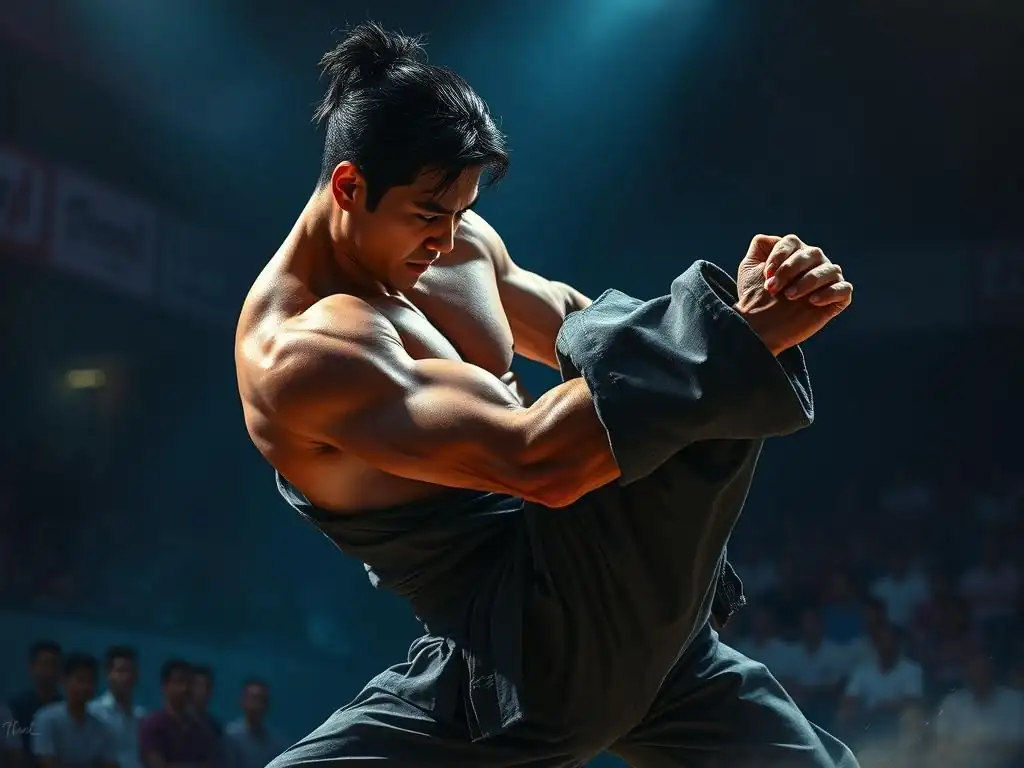
Welcome to Martial Arts Mastery, your premier resource for exploring the rich tapestry of global martial arts. Delve into the intricacies of combat, philosophy, and personal development. Curious about how seemingly simple techniques can dominate the competition mat? This article unveils the secrets of Ashi Guruma Competition Techniques, bridging the gap between basic form and victory. Prepare to unlock the power of this fundamental throw and discover how to elevate your Judo game!
- O Goshi: From Basic Form to Competition-Winning Variations
- Introduction to O Goshi: The Major Hip Throw in Judo
- Mastering the Fundamental O Goshi Technique
- O Goshi Variations for Competitive Judo
- O Goshi Competition Techniques: Gaining the Edge
- Advanced O Goshi Strategies for Judo Experts
- O Goshi's Role in Self-Defense
- Conclusion: The Enduring Power of O Goshi
-
Frequently Asked Questions
- What is Ashi Guruma and what martial art is it most commonly associated with?
- What are the key principles to consider when performing Ashi Guruma effectively in a competition setting?
- What are some common variations of Ashi Guruma that can be used in competition?
- What are some effective training drills to improve one's Ashi Guruma technique for competition?
- What are some common mistakes practitioners make when attempting Ashi Guruma in competition, and how can they be avoided?
- Final Reflection: Mastering Ashi Guruma for Competitive Success
- Unleash Your Inner Throwing Power!
O Goshi: From Basic Form to Competition-Winning Variations
Introduction to O Goshi: The Major Hip Throw in Judo
What is O Goshi and its Significance in Judo Nage-waza?
O Goshi, often translated as "Major Hip Throw," is one of the fundamental and foundational techniques in Judo, belonging to the Koshi-waza (hip techniques) family. It is typically one of the first throws taught to beginners due to its relatively intuitive mechanics and its effectiveness when executed correctly. Its significance lies not only in its status as a core technique but also in its versatility and power.
A well-applied O Goshi can result in a decisive ippon (a full point), instantly ending the match. Its importance is highlighted by its inclusion in the original forty throws of the Kodokan Judo curriculum, the Gokyo no Waza.
Beyond its foundational role, O Goshi teaches crucial principles of Kuzushi (breaking balance), Tsukuri (entry and fitting in), and Kake (execution). Mastering O Goshi helps judoka develop essential body awareness, coordination, and sensitivity to their opponent's movements, skills that are transferable to learning and executing many other Judo techniques. It serves as a gateway technique, building the physical and conceptual framework necessary for advancing in Judo's throwing repertoire. Its widespread use across all levels, from novice practice to elite competition, underscores its enduring relevance and effectiveness.
O Goshi's Place within the Koshi-waza Family of Judo Throws
O Goshi stands as a quintessential example of a Koshi-waza technique, where the thrower (Tori) uses their hip as the primary fulcrum to lift and rotate the opponent (Uke) off their feet and onto the mat. Within the Koshi-waza family, which includes throws like Harai Goshi (Sweeping Hip Throw), Uchi Mata (Inner Thigh Throw), and Tsurikomi Goshi (Lifting and Pulling Hip Throw), O Goshi is often considered the most direct and fundamental. It relies heavily on a deep penetration and strong rotational force generated from the hips and core.
Compared to techniques like Harai Goshi or Uchi Mata, which often involve leg actions to assist the sweep or reap, O Goshi is primarily a pure hip throw driven by body turn and lift. While it shares the principle of using the hip as a pivot point, its execution emphasizes wrapping the opponent's waist and lifting, distinguishing it from throws that involve more complex leg movements or dynamic reaping actions.
This relative simplicity in core mechanics makes O Goshi an excellent starting point for understanding the principles common to all Koshi-waza, providing a solid base before progressing to more complex hip techniques.
Mastering the Fundamental O Goshi Technique
Step-by-Step Guide to Performing the Basic O Goshi
Performing the basic O Goshi involves several key steps, starting from a standing grip, typically a standard Kumi-kata (grip fighting stance) where Tori has a grip on Uke's lapel and sleeve. The first step is Kuzushi, breaking Uke's balance, often forward and slightly to their side, usually by pulling with the sleeve hand and pushing or lifting with the lapel hand. Simultaneous with Kuzushi, Tori steps in deeply with one foot, positioning it close to Uke's foot.
Following the entry step, Tori pivots on the balls of their feet, turning their back towards Uke while lowering their hips below Uke's center of gravity. As Tori turns, they wrap their free arm around Uke's back, securing a grip on Uke's belt or gi. The final stage, Kake, involves lifting Uke onto Tori's hips while rotating the body and pulling Uke down and over the pivoted hip. The power comes from the legs straightening, the back straightening, and the strong rotational pull from the arms and core, projecting Uke onto the mat.
Key Grips and Body Positioning for Effective O Goshi Execution
Effective O Goshi execution relies heavily on correct grip and precise body positioning. The standard grip involves Tori's sleeve hand controlling Uke's balance and movement, typically on the elbow or wrist, while the lapel hand provides control over Uke's upper body and assists in breaking posture. For O Goshi, the lapel hand grip is crucial; it often needs to be high on Uke's collar or shoulder to facilitate the strong pull and rotation required for the throw.
Simultaneously, as Tori turns in, the free arm wraps around Uke's waist or lower back, securing a deep, tight grip on the belt or gi. This wrap is vital for lifting Uke onto the hip and controlling their body during the throw.
Body positioning is equally critical. Tori must achieve a deep entry, getting their hips lower than Uke's and close to Uke's body. The pivot should bring Tori's back squarely against Uke's front, with knees bent and back straight. The goal is to create a stable platform with the hip for Uke to be lifted onto. The depth of the turn and the closeness of the bodies prevent Uke from easily stepping out or defending. The head should typically turn to look in the direction of the throw, aiding in the rotation and maintaining balance.
Common Mistakes in O Goshi and How to Correct Them
Several common mistakes can hinder the successful execution of O Goshi. One frequent error is insufficient Kuzushi; if Uke's balance is not adequately broken, they can easily resist the throw or step out. To correct this, focus on sharp, coordinated pulling and pushing actions with the grips just before or during the entry.
Another common issue is not stepping in deeply enough or not turning the hips sufficiently. This results in Uke being off-center on the hip, making the lift difficult and unstable. The correction involves practicing the entry step and pivot repeatedly, ensuring the hips get low and close to Uke's center.
A third significant mistake is relying solely on arm strength to lift Uke instead of using the hips and legs. O Goshi is a hip throw; the power comes from straightening the bent legs and rotating the core and hips. To fix this, focus on driving upwards with the legs and rotating powerfully through the waist, using the arms primarily for control and pulling Uke onto the hip platform.
Additionally, failing to maintain a strong, tight grip around Uke's waist allows them to escape the lift. Ensure the wrap is deep and secure, pulling Uke tightly into your body throughout the execution.
O Goshi Variations for Competitive Judo
Adapting O Goshi for Different Body Types and Opponent Styles
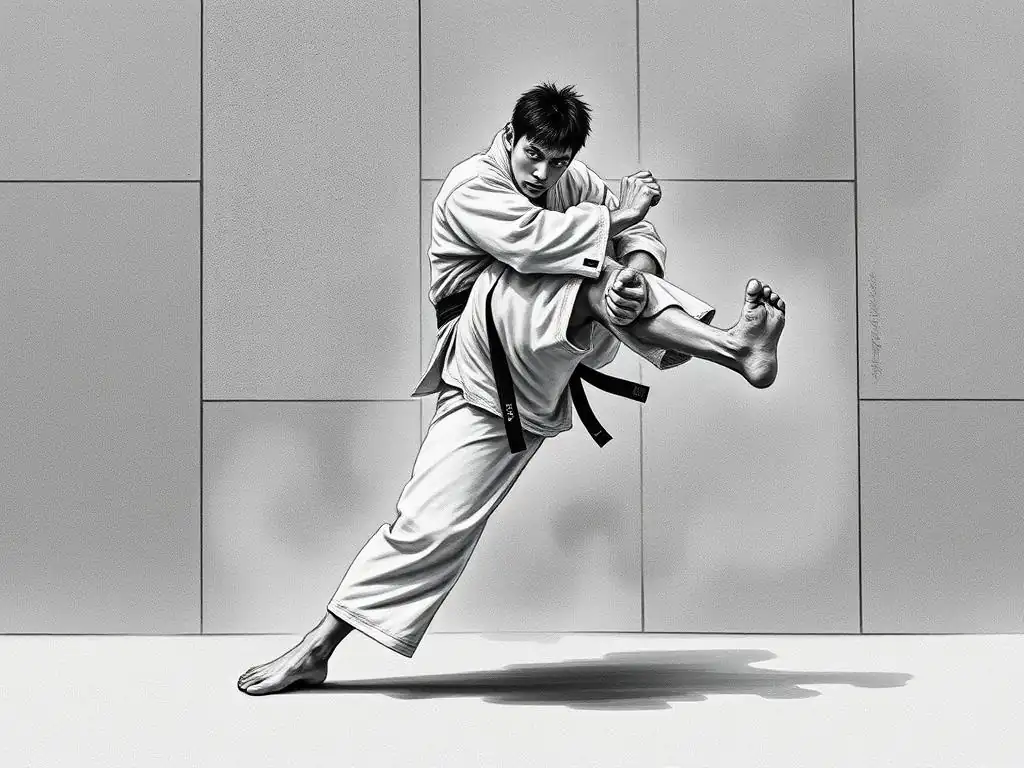
Adapting O Goshi makes it a potent weapon in competitive judo against a variety of body types and styles. Against taller opponents, a deeper entry with a lower hip position is crucial to get under their center of gravity. This might involve a slightly longer step and a more pronounced bend in the knees.
Taller players might also require a stronger upward lift component from the legs. Against shorter, stockier opponents, who often have a low center of gravity, the emphasis shifts to generating significant rotational force and ensuring a very tight fit, preventing them from stabilizing their base. Grips might need to be adjusted; a higher grip on the lapel can help break the posture of a shorter opponent, while a deeper belt grip might be necessary against a heavier one.
Opponent styles also dictate adaptation. Against defensive players who maintain a strong posture and resist being pulled forward, setting up O Goshi might require more sophisticated Kuzushi techniques, such as feinting other attacks or using combinations to force a reaction. Against aggressive, forward-moving opponents, O Goshi can be particularly effective as a counter-attack or by using their momentum against them. The entry must be timed precisely to coincide with their forward pressure. Adapting involves subtle shifts in timing, entry angle, hip depth, and grip adjustments based on the specific physical characteristics and fighting tendencies of the competitor.
Advanced O Goshi Entries and Combinations
Beyond the basic step-and-turn entry, competitive judoka employ advanced O Goshi entries and combinations to surprise opponents and create openings. A common advanced entry involves Kuzushi that forces Uke forward or to the side, followed by a rapid, almost jumping, step-pivot into the throwing position. This dynamic entry reduces the time Uke has to react and defend. Another method is to use a cross-step entry, stepping across Uke's body before pivoting, which can be effective against opponents who anticipate the standard entry.
Combining O Goshi with Tai Otoshi
Combining O Goshi with Tai Otoshi (Body Drop) is a classic example of creating a potent attacking sequence. Often, Tori will initiate a movement towards Tai Otoshi, pulling Uke forward and attempting to block their leg. If Uke resists by pulling back or stepping away from the Tai Otoshi attempt, their balance is momentarily shifted, creating an ideal opportunity to transition immediately into an O Goshi entry.
The resistance to the forward pull for Tai Otoshi naturally sets up the backward pull and rotational action needed for O Goshi. This combination exploits Uke's defensive reaction, turning their resistance into the setup for the second technique.
Using O Goshi as a Counter-Attack Technique
O Goshi is also highly effective as a counter-attack. When an opponent attempts certain throws, particularly forward throws like Ippon Seoi Nage (One-Arm Shoulder Throw) or Tai Otoshi, they often turn their back or commit their weight forward. If timed correctly, Tori can use the opponent's forward momentum and committed posture to quickly turn in, secure the O Goshi grip, and throw them.
For example, if Uke attempts a Seoi Nage and Tori manages to keep their posture or step slightly back, Tori can immediately wrap around Uke's turning body and execute O Goshi before Uke completes their throw. This requires excellent timing, sensitivity, and quick reaction speed, making O Goshi counter-attacks a hallmark of experienced competitors.
O Goshi Competition Techniques: Gaining the Edge
Analyzing Successful O Goshi Throws in Judo Competitions
Analyzing successful O Goshi throws in high-level judo competitions reveals key factors contributing to their effectiveness. Data from major tournaments often shows that successful O Goshi attacks frequently originate from scenarios where Tori has achieved dominant Kuzushi, often disrupting Uke's posture sideways or diagonally forward. Elite competitors demonstrate exceptional timing, entering for O Goshi precisely as Uke is off-balance or transitioning weight. For instance, analysis of Grand Slam events might show a higher success rate for O Goshi when initiated during grip exchanges or transitions between movements rather than from a static posture.
Another common theme is the depth and speed of the entry. Successful O Goshi attacks by top judoka involve getting their hips very low and close to the opponent's center of gravity in a split second. The wrap around the waist is tight and controlling from the outset.
Furthermore, the execution, Kake, is powerful and committed, using the full body's rotational and lifting power, not just the arms. Case studies of Olympic champions known for their O Goshi, like Shohei Ono (though primarily known for Uchi Mata, his hip mechanics are relevant) or earlier masters, highlight the seamless transition from grip fighting and Kuzushi into a decisive throw, often leaving the opponent with no time to defend.
Understanding the Tactical Applications of O Goshi in Tournament Settings
Understanding the tactical applications of O Goshi is crucial for competitive success. O Goshi can be used as a primary attack, setting the pace of the match and forcing the opponent to defend early. It's also an excellent technique for testing an opponent's balance and defensive reactions; a failed attempt can provide valuable information about their vulnerabilities. Tactically, O Goshi can be used to break down opponents who have a strong defensive stance or prefer to fight from a distance, as it requires closing the distance and achieving a deep connection.
Moreover, O Goshi is effective in specific match situations. It can be a go-to technique when fighting near the edge of the mat, as the forward/sideways projection makes it difficult for the opponent to step out. It's also a strong option when the opponent is tired, and their posture is weakening, making Kuzushi easier to achieve.
Using O Goshi in combinations, as discussed earlier, adds another layer of tactical depth, allowing the judoka to chain attacks and keep the opponent guessing. A competitor might attempt Ouchi Gari to force a reaction, then transition immediately to O Goshi as the opponent shifts weight.
Drills and Training Methods for Developing O Goshi Competition Proficiency
Developing high-level O Goshi competition proficiency requires dedicated drills and training methods. Uchikomi (repeated entries without completing the throw) is fundamental, focusing on speed, depth, and precision of the entry and grip. Thousands of repetitions are needed to make the movement instinctive. Nagekomi (throwing practice with a partner) allows for practicing the full technique, focusing on Kuzushi, Tsukuri, and Kake, and is often done with varying levels of partner resistance.
Randori (free practice) is essential for applying O Goshi in dynamic, unpredictable situations against resisting opponents. Specific randori scenarios can be practiced, such as starting from certain grip positions known to favor O Goshi, or focusing on attempting O Goshi as a counter to specific attacks. Tandoku Renshu (solo practice) involving footwork and turning drills helps refine the body mechanics of the entry. Additionally, strength and conditioning exercises targeting the core, legs, and back are vital for generating the power needed for competitive O Goshi, complementing the technical training.
Advanced O Goshi Strategies for Judo Experts
Setting up the Perfect O Goshi Opportunity in Randori
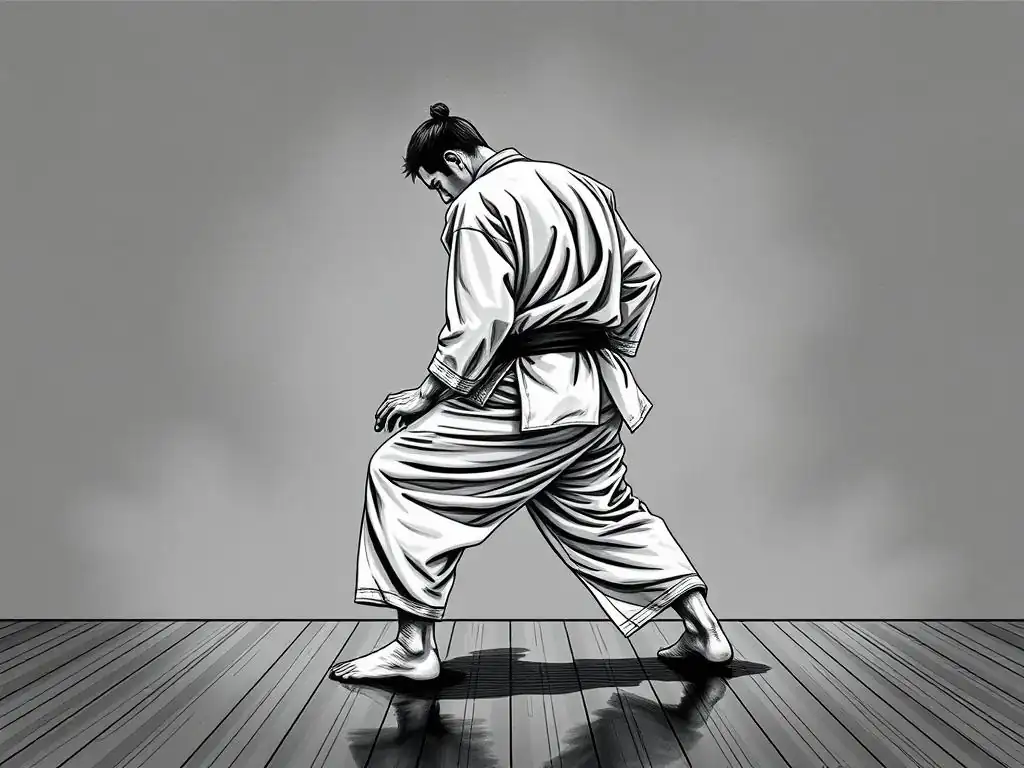
Setting up the perfect O Goshi opportunity in Randori involves sophisticated strategy and manipulation of the opponent's balance and reactions. Experts don't wait for an opening; they create it. This often begins with superior Kumi-kata, establishing dominant grips that allow for effective control and Kuzushi. Using feints is a common strategy; pretending to attack with a different technique, such as a leg sweep like De Ashi Harai or Ouchi Gari, can force the opponent to shift their weight defensively, creating the momentary imbalance needed for a swift O Goshi entry.
Another approach is to use movement. Constantly moving the opponent, pulling them, pushing them, and circling can wear down their posture and make them vulnerable. The expert judoka observes how the opponent reacts to different types of pressure and movement, identifying when and how they are most susceptible to having their balance broken forward and to the side – the ideal setup for O Goshi. Patience is key; sometimes, multiple setup attempts are needed before the precise moment for a decisive O Goshi attack arises.
Reading Your Opponent's Movements to Maximize O Goshi Success
Reading your opponent's movements is perhaps the most advanced skill for maximizing O Goshi success. This involves developing a keen sensitivity to their weight distribution, posture, and reactions to your actions. For example, if an opponent consistently pulls back when you apply forward pressure, you know that a sudden strong forward pull followed by a rapid O Goshi entry might break their balance effectively. If they tend to step back with a particular leg when you attempt an entry, you can time your O Goshi entry to coincide with that step, catching them mid-movement.
Observing subtle cues, such as shifts in eye direction, changes in grip pressure, or muscle tension, can also provide valuable insights. An opponent tensing their leg might indicate they are bracing for a sweep, while a slight leaning might signal a vulnerability to a hip throw. Experts develop an almost intuitive understanding of these signals through years of practice, allowing them to anticipate reactions and launch their O Goshi attack at the most opportune moment, turning the opponent's defensive or offensive movements against them.
Developing a Personal O Goshi Style for Competition
Developing a personal O Goshi style means tailoring the technique to your own physical attributes, strengths, and preferred fighting style. While the fundamental mechanics remain constant, variations in entry method, grip preference, or the specific type of Kuzushi used can make the technique uniquely yours. For instance, a judoka with strong legs and a low center of gravity might develop a very deep, powerful O Goshi with a significant lifting component, while a taller judoka might focus on using their reach and leverage to create large Kuzushi before a fast, rotational entry.
Some competitors might integrate O Goshi primarily as a counter-attack, specializing in using opponents' forward momentum. Others might build their entire game around setting up O Goshi as their primary scoring technique, developing complex grip-fighting and combination strategies to force the opening. This personal style is refined through countless hours of practice, experimentation in Randori, and analysis of one's own performance and that of opponents. It's about finding the most effective way for you to apply the principles of O Goshi against the types of opponents you typically face.
O Goshi's Role in Self-Defense
Adapting O Goshi for Street Self-Defense Scenarios
Adapting O Goshi for street self-defense scenarios requires significant modifications due to the unpredictable environment and lack of traditional grips. In a self-defense situation, an attacker is unlikely to be wearing a gi, making the standard lapel and sleeve grips unavailable.
Adaptations focus on securing control points on regular clothing, such as grabbing the back of the neck and the waist or belt area, or using an underhook and overhook configuration to control the upper body and secure the waist. The principle of Kuzushi remains vital, but it might involve using pushes, pulls, or even strikes to momentarily unbalance the attacker.
The entry needs to be faster and more opportunistic. The goal isn't necessarily a clean, high-amplitude throw for an ippon, but rather to get the attacker off their feet and onto the ground quickly to escape or gain control. The environment itself (uneven ground, obstacles) can be used to assist the throw.
The focus shifts from a perfect technical execution to a functional application aimed at neutralizing the threat, even if it means a less aesthetically pleasing throw. Safety is paramount; being aware of potential weapons or multiple attackers is critical, which influences the decision to attempt a throw at all.
Limitations and Considerations of O Goshi in Unregulated Environments
Despite its power, O Goshi has limitations and requires careful consideration in unregulated self-defense environments. The primary limitation is the requirement to get very close to the attacker, turning your back towards them during the entry. This exposes your back and requires a deep commitment, which can be risky against a potentially armed or multiple attacker. Unlike some striking arts or techniques that maintain distance, O Goshi requires closing the gap and engaging in grappling range.
Furthermore, falling with an untrained person can be unpredictable and dangerous for both parties, especially on hard surfaces like concrete. There is a higher risk of injury compared to falling on a padded judo mat. Successfully executing O Goshi against a completely untrained but resisting individual can also be difficult; they might react in unexpected ways that disrupt the technique. Therefore, while O Goshi principles (like using hip power and breaking balance) are applicable, the technique itself must be used judiciously, often as part of a broader self-defense strategy that includes awareness, de-escalation, and potentially other techniques.
Conclusion: The Enduring Power of O Goshi
Why O Goshi Remains a Relevant and Effective Judo Throw
O Goshi remains a relevant and highly effective Judo throw for several compelling reasons. Its fundamental nature makes it accessible to beginners while offering layers of complexity for advanced practitioners. Its reliance on core mechanics – Kuzushi, Tsukuri, and Kake driven by hip power – embodies the essence of Judo's throwing principles.
In competition, its versatility allows it to be adapted against various opponents and used as a primary attack, a combination element, or a counter-attack. Statistics from international competitions consistently show O Goshi, or techniques closely related to it, featuring in successful throws, albeit often integrated into more complex sequences.
Its effectiveness stems from its directness and power. When executed correctly with proper Kuzushi and a deep, committed entry, it is incredibly difficult for an opponent to defend. It forces a reaction and, if that reaction is anticipated, can lead directly to the throw. The physical benefits of training O Goshi, including developing core strength, balance, and coordination, also contribute to a judoka's overall development, making it a cornerstone of effective Judo practice across all levels.
Further Resources for Learning and Improving Your O Goshi
To further your understanding and improve your O Goshi technique, numerous resources are available. The Kodokan Judo Institute in Tokyo, the headquarters of Judo, offers detailed technical guides and hosts seminars. Books and DVDs by renowned Judo instructors often dedicate significant sections to O Goshi, breaking down its nuances. Online platforms host video tutorials from experienced coaches and analyses of competition footage.
Training under qualified Judo instructors is invaluable; hands-on correction and feedback are crucial for refining the subtle body mechanics of O Goshi. Attending clinics and seminars focused on Nage-waza or Koshi-waza can provide deeper insights. Practicing consistently with training partners, engaging in focused Uchikomi and Nagekomi, and analyzing your own Randori performance are practical steps. Studying the O Goshi of successful competitors and attempting to incorporate elements into your own game, under the guidance of your sensei, will significantly aid your development.
Frequently Asked Questions
What is Ashi Guruma and what martial art is it most commonly associated with?
Ashi Guruma, also known as leg wheel, is a throwing technique where one leg acts as a pivot. It's most commonly associated with Judo, but variations exist in other grappling martial arts.
What are the key principles to consider when performing Ashi Guruma effectively in a competition setting?
Key principles include maintaining balance, precise leg placement against your opponent, and efficient body rotation to generate power for the throw.
What are some common variations of Ashi Guruma that can be used in competition?
Variations include the O-goshi Ashi Guruma combination, the Tai-otoshi Ashi Guruma setup, and using Ashi Guruma as a counter-attack to an opponent's forward momentum.
What are some effective training drills to improve one's Ashi Guruma technique for competition?
Drills should focus on repetition of the basic form, partner work to improve timing and balance, and randori (sparring) to apply the technique in a dynamic environment.
What are some common mistakes practitioners make when attempting Ashi Guruma in competition, and how can they be avoided?
Common mistakes include poor balance, incorrect leg placement, and telegraphing the throw. These can be avoided by focusing on proper technique, consistent practice, and maintaining awareness of your opponent's movements.
Okay, here's a final reflection designed to close your article "Ashi Guruma: From Basic Form to Competition-Winning Variations," optimized for the keyword "Ashi Guruma Competition Techniques":
Final Reflection: Mastering Ashi Guruma for Competitive Success
The journey from understanding the fundamental Ashi Guruma to mastering its competition-winning variations is a testament to the power of dedication and strategic adaptation. This evolution, from basic form to complex application, underscores the dynamic nature of Judo and the constant pursuit of excellence within competitive environments. The techniques explored in this article are not merely static movements, but living strategies that can be honed and refined to achieve victory.
The impact of Ashi Guruma, and indeed all Judo techniques, extends far beyond the tatami. It's a discipline that cultivates not only physical prowess but also mental fortitude and strategic thinking. The ability to adapt, anticipate, and execute under pressure, honed through the practice of techniques like Ashi Guruma, translates into valuable life skills. The ultimate aim of Judo is to discipline the body and mind, to develop character, and to contribute to society.
- Jigoro Kano. This quote encapsulates the profound influence Judo has on shaping individuals and fostering a spirit of continuous improvement.
Now, as you step off the mat and back into your daily life, consider the lessons learned from mastering Ashi Guruma. How can you apply the principles of adaptation, strategic thinking, and relentless pursuit of improvement to your own challenges? Embrace the spirit of Judo, and let the dedication you've shown in perfecting your Ashi Guruma techniques inspire you to achieve your goals, both on and off the tatami.
Unleash Your Inner Throwing Power!
Thanks for diving into the world of Ashi Guruma with us! We hope you’ve gained a fresh perspective on this powerful throw and its potential. Now it’s time to put that knowledge into action.
Here are a few ways to elevate your Ashi Guruma game:
- Master the entry! Dedicate your next three training sessions solely to drilling the setup and entry for Ashi Guruma from different grip fighting scenarios.
- Explore and document three unique variations of Ashi Guruma that you find effective against resisting opponents.
- Share a video of your Ashi Guruma execution (or attempts!) with a training partner or coach and ask for their honest feedback.
What's the single biggest adjustment you'll make to your Ashi Guruma technique based on what you learned today? Let us know in the comments!