
How Effective Are Judo Joint Locks in Modern MMA?


Welcome to Martial Arts Mastery, your gateway to unlocking the secrets of combat and self-discovery! Ever wondered if the ancient techniques of Judo can still hold their own in the modern, fast-paced world of MMA? Dive into our exploration of Judo joint locks MMA and discover how these powerful submissions are being adapted and utilized by today's top fighters. Prepare to be enlightened as we delve into the effectiveness, variations, and strategic applications of Judo's joint locks within the MMA arena.
- Judo Joint Locks: A Grappling Legacy in MMA
- Examining the Efficacy of Judo Joint Locks in MMA Competition
- Judo Arm Locks in MMA: Success Stories and Case Studies
- Factors Influencing the Success of Judo Joint Locks in MMA
- Adapting Judo Joint Locks for the Modern MMA Landscape
- Judo Joint Locks vs. Other Grappling Submissions in MMA
- The Future of Judo Joint Locks in MMA: Trends and Predictions
- Conclusion: Judo's Contribution to the MMA Joint Lock Game
-
Frequently Asked Questions
- How often are Judo joint locks successfully applied in modern MMA fights?
- What are the main Judo joint locks used in MMA, and why are they chosen?
- What are the advantages of using Judo joint locks in an MMA context?
- What are the potential risks of attempting Judo joint locks in MMA?
- How can MMA fighters improve their ability to apply Judo joint locks effectively?
- Final Reflection: The Enduring Art of Submission
- Unleash Your Inner Submission Artist!
Judo Joint Locks: A Grappling Legacy in MMA
Understanding Judo's Katame-waza: Joint Locks and Submissions
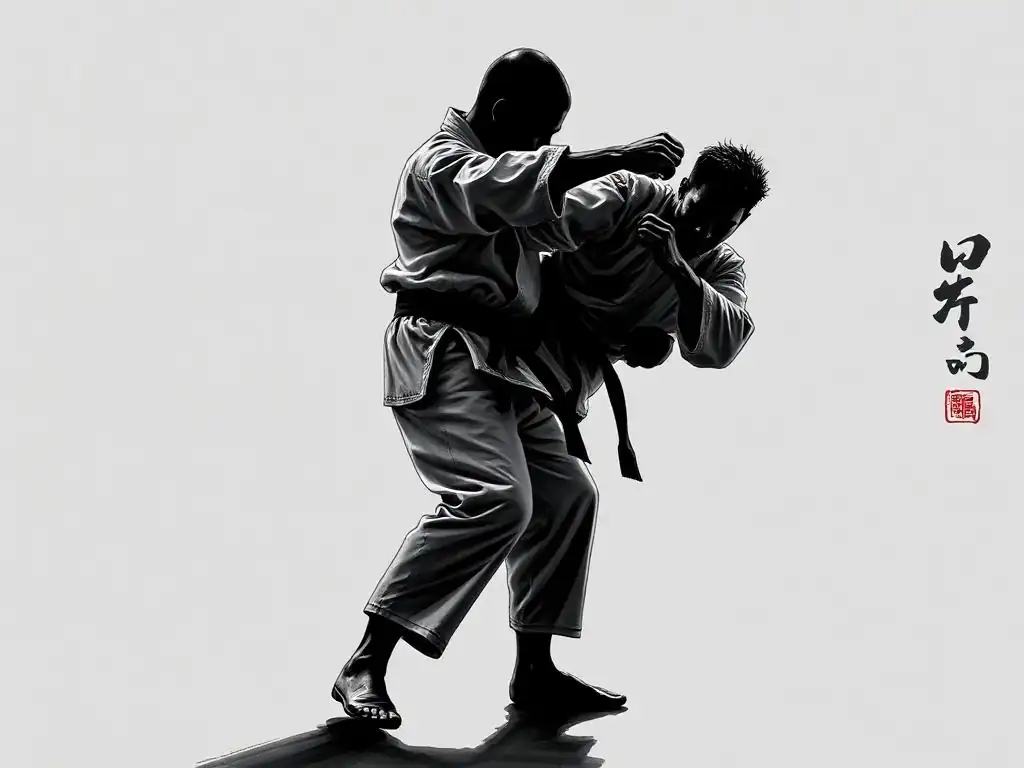
Judo, founded by Jigoro Kano in 1882, is renowned for its throwing techniques (nage-waza) but possesses a equally deep system of grappling, known as katame-waza. This ground fighting component includes holds (osae-komi), strangulations (shime-waza), and joint locks (kansetsu-waza). Kansetsu-waza specifically targets the joints, aiming to hyperextend or hyperflex them to force a submission from an opponent. While Judo's competition rules primarily restrict joint locks to the elbow joint (ude-hishigi), the traditional art encompasses techniques targeting other joints like the wrist, shoulder, and knee, though these are less commonly practiced or emphasized in modern sport Judo.
The core principle behind Judo joint locks in katame-waza is leveraging body mechanics and positioning to isolate a joint and apply pressure effectively. This requires precise control over the opponent's limbs and torso, often achieved through pins or transitional movements. The techniques are categorized based on the joint attacked and the method of application (e.g., using the arm, leg, or body to create the lock). Understanding the anatomical structure of the joint and the pain tolerance threshold is crucial for successful execution, making Judo's approach highly technical and focused on efficiency rather than brute force.
The Evolution of Judo Techniques in Mixed Martial Arts
The integration of Judo techniques into mixed martial arts began in the early days of the sport, with pioneers like Rickson Gracie, whose family lineage included Judo practitioners, showcasing effective grappling. As MMA evolved, fighters from various grappling backgrounds tested their skills against each other. While Brazilian Jiu-Jitsu (BJJ) became the dominant grappling art for submissions in the early UFC era, Judo's throws and ground control principles, including its joint locks (Judo joint locks MMA), found their place. Fighters with strong Judo bases demonstrated the power of off-balancing opponents and transitioning immediately into ground control or submission attempts.
Modern MMA training camps frequently incorporate elements from multiple disciplines. While pure Judo ground fighting might differ from BJJ, the fundamental principles of leverage, control, and isolating limbs for joint locks are universal. The emphasis on dynamic transitions from standing to the ground and the positional control taught in Judo complement the demands of MMA. As the sport progressed, successful fighters began adapting Judo's kansetsu-waza, particularly elbow locks, to the unique environment of the cage or ring, proving that Judo joint locks can be highly effective in MMA when applied correctly and integrated with other grappling styles.
Examining the Efficacy of Judo Joint Locks in MMA Competition
Arm Locks (Kansetsu-waza): Judo's Primary Joint Lock Focus
In the context of traditional and sport Judo, kansetsu-waza primarily refers to techniques targeting the elbow joint (ude-hishigi). These arm locks are a cornerstone of Judo ground fighting and have proven transferable to MMA. Techniques like the standard juji-gatame (cross-body armbar), ude-gatame (arm control lock), and ude-garami (bent armlock, similar to Americana or Kimura) are foundational Judo submissions. The emphasis in Judo is often on securing these locks from dominant positions or as counters to opponent's movements, requiring tight control and proper body alignment.
The efficacy of these Judo arm locks in MMA stems from their versatility and the universal vulnerability of the elbow joint. While a fighter might resist a choke or escape a leg lock, a properly applied armbar hyperextends the elbow, causing intense pain and potential injury, leaving little option but to tap.
Judo's methodical approach to setting up and finishing these arm locks, often involving pinning an arm or using the legs to control the opponent's body, provides a solid framework for MMA application. The tight, controlled nature of Judo's arm attacks minimizes opportunities for opponents to slip out, making Judo joint locks a potent threat.
Exploring the Application of Armbars from Guard in MMA
While Judo ground work often emphasizes top control, the juji-gatame (armbar) is a technique that can be effectively applied from the guard position, a common scenario in MMA. In Judo, executing an armbar from guard typically involves securing an opponent's arm while controlling their posture and transitioning the legs over their head and chest to isolate the limb. This requires flexibility, timing, and the ability to break the opponent's defensive grip. The guard position in MMA can be offensive, allowing for submission attempts like the armbar, or defensive, used to control distance and prevent ground and pound.
Applying Judo armbars from guard in MMA faces specific challenges, notably the risk of ground and pound strikes. However, a well-executed armbar from guard can be a fight-ending technique. It requires quick transitions, tight control of the opponent's arm and posture, and the ability to secure the finish before they can escape or inflict significant damage. Successful examples in MMA often show fighters utilizing grips and leg positioning reminiscent of Judo principles, demonstrating that the fundamental mechanics of Judo joint locks from guard remain relevant and dangerous in the MMA environment.
The Challenges of Implementing Judo Joint Locks Against Skilled Opponents
Implementing Judo joint locks against highly skilled MMA opponents presents significant challenges. Modern MMA fighters possess diverse grappling skills, often trained in BJJ, wrestling, and striking defense. They are acutely aware of submission threats and have developed sophisticated defenses and escapes. A key challenge is the opponent's defensive posture and grip fighting; breaking the grips of a strong, well-trained grappler to isolate an arm for a lock requires immense strength, technical precision, and timing.
Furthermore, the dynamic nature of MMA ground fighting, with striking permitted, makes securing and finishing a submission more difficult than in pure grappling sports. Opponents can use strikes to create openings for escape or to deter submission attempts. The scramble that often follows a takedown or transition can make it hard to establish the necessary control for a Judo joint lock. Successfully landing Judo joint locks in MMA requires not only technical proficiency but also the ability to set them up effectively amidst strikes and constant movement, adapting the traditional techniques to the unpredictable environment of the cage.
Judo Arm Locks in MMA: Success Stories and Case Studies
Ronda Rousey and Her Judo-Based Arm Lock Victories
Ronda Rousey, an Olympic bronze medalist in Judo, became one of the most prominent examples of Judo joint locks effectiveness in MMA. Her signature victory in the UFC, her debut against Liz Carmouche in 2013, was secured via armbar in the first round. Throughout her career, a significant portion of her wins came by armbar, often executed rapidly after a clinch or takedown. Her ability to transition from Judo throws directly into ground control and immediate armlock attempts highlighted the seamless integration of her Judo background into MMA.
Rousey's success with the armbar wasn't just about the technique itself; it was her Judo-honed ability to create opportunities for it. She used her powerful grips and throws to get opponents to the ground, where her proficiency in isolating an arm for the juji-gatame became evident. Her rapid submission victories against top-level competition, including multiple title defenses finished by armbar, solidified the perception that Judo joint locks, particularly the armbar, could be a devastating weapon in women's MMA, provided the fighter possessed Rousey's level of Judo expertise and athleticism.
Karo Parisyan and the Adaptation of Judo for MMA Submissions
Karo Parisyan, another fighter with a strong Judo background, demonstrated the adaptability of Judo techniques for MMA, including submissions. Known for his dynamic throws, Parisyan also utilized Judo-based grappling on the ground. While not exclusively an armlock specialist like Rousey, he showcased the application of Judo ground control and transitions to set up various submissions, including armlocks. His fights often featured aggressive takedowns followed by rapid positional advancement and submission attempts, drawing heavily on his Judo foundation.
Parisyan's approach illustrated that Judo's ground game provides more than just armbars. His ability to control opponents on the ground, transition effectively, and apply pressure stemmed directly from his Judo training. While his submission finishes were not always Judo joint locks, his overall grappling strategy, which led to submission victories, was clearly influenced by Judo principles. This demonstrates that Judo contributes not just specific techniques but also a foundational understanding of leverage, control, and transitions essential for effective grappling and applying Judo joint locks MMA.
Factors Influencing the Success of Judo Joint Locks in MMA
Opponent's Grappling Skill and Defensive Awareness
The success rate of Judo joint locks in MMA is heavily influenced by the opponent's grappling skill level and their awareness of submission threats. Against a novice grappler, even a basic armbar setup might be sufficient. However, against a seasoned black belt in BJJ or a high-level wrestler, securing a Judo joint lock becomes significantly more challenging. These opponents possess strong defensive postures, excellent grip fighting, and escape techniques honed over years of training. They anticipate submission attempts and react quickly to defend their limbs.
For a Judo joint lock to succeed against a skilled opponent, the attacker must often employ complex setups, feints, and transitions to create an opening. Relying solely on brute force or a predictable attack is unlikely to work. The opponent's ability to defend against strikes while simultaneously defending submissions further complicates the process. Therefore, the effectiveness of a Judo joint lock is directly proportional to the attacker's ability to outmaneuver and surprise a well-trained defender, highlighting the need for strategic application rather than just technical knowledge.
The Importance of Setups and Transitions for Securing Joint Locks
Successfully applying Judo joint locks in MMA is rarely a matter of simply grabbing a limb. It heavily relies on effective setups and smooth transitions. Setups involve actions taken before the actual submission attempt to create an opening, such as using strikes to distract, securing dominant positions, or breaking the opponent's posture and grips. Judo's emphasis on Kuzushi (off-balancing) extends to the ground, where disrupting an opponent's base or posture can create opportunities for submissions.
Transitions are crucial for moving from one position to another while maintaining control and progressing towards the joint lock. This might involve transitioning from side control to mount, or from guard to a position where an arm is isolated. Judo teaches dynamic transitions from standing to ground (tachi-waza to ne-waza) and within ne-waza itself.
Mastering these transitions allows a fighter to flow seamlessly through positions, making it harder for the opponent to defend and increasing the chances of securing a Judo joint lock. Without effective setups and transitions, most submission attempts, including Judo joint locks MMA, will be easily defended.
Rule Set Variations and Their Impact on Joint Lock Effectiveness
While modern unified MMA rules allow attacks on the elbow, shoulder, wrist, and knee joints, the specific rule sets of different promotions can impact the perceived effectiveness and application of Judo joint locks. For instance, some promotions might have slightly different interpretations of what constitutes a legal joint attack or when a referee should stop a fight, potentially influencing how fighters attempt and finish submissions. However, the core set of permitted joint locks under unified rules (mainly elbow, shoulder, wrist, knee) is broad enough to include most traditional Judo kansetsu-waza techniques, except for attacks on smaller joints like fingers.
The absence of the traditional Judo concept of "ippon" (instant win by perfect technique) in MMA means that simply applying a lock isn't enough; the opponent must either tap or the referee must stop the fight due to danger. This requires fighters to hold the lock and apply pressure until the opponent submits, which can be physically demanding and expose the attacker to counter-attacks or escapes.
The rule set, by allowing various joint attacks and requiring a clear submission, necessitates a more sustained and forceful application of Judo joint locks compared to the sometimes more technical, less pressure-focused application seen in sport Judo where a slight hyperextension might suffice for a point.
Adapting Judo Joint Locks for the Modern MMA Landscape
Combining Judo Joint Locks with Wrestling and Brazilian Jiu-Jitsu
For Judo joint locks to be consistently effective in modern MMA, they are almost always integrated with techniques from other grappling styles, primarily wrestling and Brazilian Jiu-Jitsu. Wrestling provides powerful takedowns and ride-control techniques that can lead directly to dominant ground positions, creating openings for submissions. BJJ offers a vast array of ground positions, sweeps, and submissions, including many arm lock variations (like the triangle armbar or rubber guard setups) that complement or enhance the basic Judo arm locks.
Combining Judo's standing control and dynamic entries with wrestling's top control and BJJ's intricate guard and submission chains creates a more complete grappling game. A fighter might use a Judo throw to get the opponent down, transition using wrestling principles to secure side control, and then apply a Judo-based armbar or transition to a BJJ submission. This multi-disciplinary approach makes the fighter less predictable and increases the probability of successfully applying Judo joint locks MMA by setting them up from diverse positions and transitions not solely found in traditional Judo ground work.
Drills and Training Methods for Enhancing Joint Lock Application in MMA
Effective training for Judo joint locks in MMA involves specific drills that simulate the challenges of the cage environment. Live rolling (randori) with MMA-specific rules (allowing strikes from certain positions, faster pace) is crucial. Drilling transitions from standing to ground and from various ground positions directly into joint lock attempts helps build muscle memory and timing. For instance, drilling a throw followed immediately by securing an arm for an armbar from side control or mount.
Positional sparring focusing on dominant positions (side control, mount, back control) with the goal of securing arm locks is highly beneficial. Training partners should actively defend and attempt escapes, simulating real fight scenarios. Specific drills for breaking grips and controlling limbs under pressure, often integrating techniques from BJJ and wrestling, are also essential. Furthermore, drilling defenses and counters to common joint lock escapes helps the fighter maintain the submission attempt even when the opponent is actively resisting, making their Judo joint locks more potent in MMA.
The Role of Flexibility and Body Awareness in Successful Joint Lock Execution
Successful execution of many Judo joint locks, particularly techniques like the armbar (juji-gatame) from guard or bottom positions, requires significant flexibility and body awareness. Flexibility in the hips and legs allows a fighter to swing their leg over the opponent's head and maintain control while extending their hips to apply pressure. Poor flexibility can hinder the ability to achieve the necessary angles and leverage, making the submission attempt weaker and easier to escape.
Body awareness is equally critical. It involves understanding one's own position relative to the opponent, knowing how to generate maximum leverage, and sensing the opponent's movements and reactions. A fighter with good body awareness can make subtle adjustments to their position and grip to maintain the lock as the opponent attempts to escape. This intuitive understanding, often honed through years of dedicated grappling practice like Judo, allows for the precise application of pressure needed to finish Judo joint locks in MMA, even against strong and flexible opponents.
Judo Joint Locks vs. Other Grappling Submissions in MMA

Comparing Arm Locks: Judo vs. BJJ
While both Judo and Brazilian Jiu-Jitsu feature prominent arm lock techniques, there are subtle differences in emphasis and application that affect their use as Judo joint locks MMA. Judo traditionally focuses heavily on the juji-gatame (straight armbar) and ude-garami (bent armlock, Americana/Kimura) primarily from top control or as counters. The setups often stem from throws or transitions initiated from standing. The emphasis is on control and leverage to hyperextend the elbow.
BJJ, while also utilizing these techniques, has developed a much wider array of setups and entries for arm locks, particularly from bottom positions like guard (e.g., triangle armbar, omoplata transitions to armbar) and complex transitions (e.g., inversions). BJJ training often involves more time spent developing intricate guard games and transitions specifically designed to isolate limbs for submissions.
While the fundamental mechanics of the arm lock are similar, the pathways to get there and the emphasis on certain positions can differ. MMA fighters often blend these approaches, using Judo entries to get to the ground and BJJ setups/transitions to finish the Judo joint locks.
Exploring the Effectiveness of Leg Locks and Shoulder Locks from a Judo Perspective
Traditional Judo rules restrict joint locks almost exclusively to the elbow. Therefore, while techniques attacking the knee (hiza-hishigi) and shoulder (kata-gatame, ude-garami variations targeting the shoulder joint) exist in the broader Judo curriculum, they are not as deeply explored or commonly practiced in sport Judo as arm locks. This contrasts sharply with BJJ and other grappling arts that extensively train leg locks (heel hooks, kneebars) and shoulder locks (Kimura, Americana, Omaplata).
In MMA, leg locks and shoulder locks are highly effective submission techniques, accounting for a significant percentage of submission finishes. However, fighters whose primary background is Judo often have less experience with these techniques compared to BJJ practitioners.
While a Judo black belt understands the principles of joint manipulation, applying complex leg locks or shoulder locks in the dynamic MMA environment requires dedicated training in those specific areas, often gained through cross-training in BJJ or submission grappling. Therefore, while Judo provides a foundation in joint locks, fighters relying solely on a pure Judo background may find themselves less equipped to attack these other joints effectively in MMA compared to those trained in BJJ.
The Future of Judo Joint Locks in MMA: Trends and Predictions
Increased Integration of Judo Principles in MMA Training Camps
There is a growing trend in high-level MMA training camps to incorporate specific Judo principles beyond just throws. Coaches and fighters are recognizing the value of Judo's emphasis on grip fighting, off-balancing (kuzushi), positional control during transitions, and the fundamental mechanics of its ground techniques (ne-waza), including Judo joint locks. This integration is not about turning MMA fighters into competitive Judoka, but about selectively adopting elements that enhance their overall grappling game.
Expect to see more MMA fighters, even those without a primary Judo background, drilling Judo-specific entries into ground fighting and practicing the tight, controlled application of arm locks characteristic of Judo. As the grappling meta in MMA continues to evolve, the solid fundamentals offered by Judo in establishing control and setting up submissions like Judo joint locks will likely become more valued and systematically integrated into mainstream MMA training methodologies.
The Potential for Innovative Joint Lock Variations and Setups
While the core Judo joint locks (like the armbar) are well-established, the dynamic nature of MMA could lead to the development of innovative variations and setups inspired by Judo principles but adapted for the cage. Just as BJJ has continuously evolved and added new techniques, fighters with a deep understanding of Judo's mechanics might discover new ways to apply leverage and isolate joints from positions unique to MMA scenarios, such as against the cage or during scrambles initiated by strikes.
This could involve blending Judo's grip fighting and control with wrestling's chain wrestling or BJJ's positional transitions to create novel pathways to traditional Judo joint locks. The exploration of less common Judo joint locks (like wrist or shoulder locks) within the MMA context, possibly adapted with BJJ or wrestling controls, could also emerge. The potential lies in combining the traditional effectiveness of Judo joint locks with modern MMA strategy and athleticism to create unpredictable and highly effective submission attacks.
Judo's Enduring Influence on the Evolution of MMA Grappling
Judo's influence on MMA grappling, particularly in throws and ground control, is undeniable and set to endure. The fundamental principles of leverage, balance, and control taught in Judo are universal to grappling and directly applicable to MMA. Even if specific Judo joint locks don't become the most dominant submission type, the methodology of securing limbs, applying pressure, and transitioning effectively, which is core to Judo's katame-waza, will continue to shape how fighters approach ground fighting and submission attacks.
As fighters seek advantages, they will continue to look to established martial arts for effective techniques and training methods. Judo's rich history and proven effectiveness in close-quarters combat and grappling ensure its continued relevance. The emphasis on efficiency and breaking down an opponent's structure, inherent in Judo, provides a powerful framework for developing a submission game. Thus, Judo's contribution to the evolution of MMA grappling, including the application and effectiveness of Judo joint locks MMA, will remain significant.
Conclusion: Judo's Contribution to the MMA Joint Lock Game
The Lasting Impact of Judo's Katame-waza on Submission Grappling in MMA
Judo's katame-waza, encompassing holds, strangulations, and particularly joint locks (kansetsu-waza), has had a significant and lasting impact on submission grappling in mixed martial arts. While BJJ often receives more attention for its extensive submission repertoire, Judo provided some of the foundational arm lock techniques that became staples of early MMA. Pioneers and later stars with Judo backgrounds demonstrated the fight-ending potential of well-executed Judo joint locks, proving their viability against diverse opponents.
Although the competitive landscape of MMA requires adaptation and integration with other grappling styles, the core principles of Judo's approach to joint manipulation – securing control, isolating the joint, and applying leverage – remain highly relevant. The effectiveness of Judo joint locks in MMA is not solely dependent on performing a technique exactly as it would be done in a Judo dojo, but on the fighter's ability to apply the underlying principles within the chaotic environment of the cage.
Judo's legacy endures not just in its powerful throws, but also in the fundamental understanding of ground control and joint attacks that continues to inform and enhance the submission game of modern MMA fighters.
Frequently Asked Questions
How often are Judo joint locks successfully applied in modern MMA fights?
While not as frequent as strikes or takedowns, Judo joint locks, particularly armbars and kimuras, are applied with success. Their effectiveness often depends on the fighter's skill level and the opponent's ground game awareness.
What are the main Judo joint locks used in MMA, and why are they chosen?
The most common Judo joint locks seen in MMA are armbars, kimuras, and omoplatas. These are chosen because they offer high submission rates and can be transitioned into from various positions.
What are the advantages of using Judo joint locks in an MMA context?
Judo joint locks offer a powerful submission option when fighters are on the ground. They can quickly end a fight and are effective at controlling an opponent's movements before the submission.
What are the potential risks of attempting Judo joint locks in MMA?
Attempting Judo joint locks in MMA carries the risk of losing positional advantage if the attempt fails. Opponents may also counter with strikes while the joint lock is being applied.
How can MMA fighters improve their ability to apply Judo joint locks effectively?
MMA fighters can improve their Judo joint lock game by specifically training Judo techniques, drilling transitions, and focusing on positional control and submission timing within live sparring scenarios.
Okay, here's a final reflection designed to close your article "How Effective Are Judo Joint Locks in Modern MMA?" and resonate with readers interested in the topic:
Final Reflection: The Enduring Art of Submission
The exploration of judo joint locks within the dynamic landscape of modern MMA reveals a fascinating interplay between tradition and innovation. While not as prevalent as strikes or wrestling-based submissions, the effectiveness of judo joint locks in MMA remains undeniable, a testament to their inherent power and strategic value. Their relative scarcity highlights the challenges of adapting these techniques to the fast-paced, multi-faceted nature of mixed martial arts, yet their successful application serves as a potent reminder of judo's enduring relevance.
The influence of judo on MMA extends far beyond just joint locks. It's about the principles of leverage, balance, and control that underpin so many grappling techniques. The subtle art of kuzushi, breaking an opponent's balance, is a cornerstone of both judo and successful MMA grappling, often setting the stage for devastating submissions, including joint locks. The best judoka are always looking for the opportunity to apply a submission, but they are also masters of control. They understand that control is the key to creating opportunities.
- Neil Adams, Olympic Judo Silver Medalist. This quote encapsulates the essence of judo's contribution to the grappling arts.
As we conclude this exploration, consider the broader implications of adapting traditional martial arts to the ever-evolving world of MMA. The journey of judo joint locks in MMA is a microcosm of this larger trend. It challenges us to appreciate the depth and complexity of these ancient arts, while also embracing the innovation and adaptation necessary to thrive in a modern context.
How can you apply the principles of adaptation and strategic thinking, learned from this analysis, to your own training and understanding of combat sports? The answer, I believe, lies in a continued commitment to learning, experimentation, and a deep respect for the art of submission.
Unleash Your Inner Submission Artist!
Thanks for diving deep into the world of Judo joint locks and their place in modern MMA! We hope this exploration has ignited your passion for grappling and sharpened your understanding of these powerful techniques. Now, it's time to put that knowledge into action!
Here are a few ways to continue your journey:
- Hit the Mats: Dedicate your next grappling session to specifically practicing the Judo joint locks we discussed. Focus on smooth transitions and proper technique.
- Analyze the Pros: Re-watch some classic MMA fights and pay close attention to instances where fighters successfully implement or attempt Judo-based submissions. What can you learn from their successes and failures?
- Share Your Insights: Discuss your newfound knowledge with your training partners or on martial arts forums. What are their thoughts on the effectiveness of Judo joint locks in modern MMA?
Ready to try out a new technique, or are you still thinking about the possibilities?