
Advanced Bokken Training: Techniques for the Seasoned Practitioner

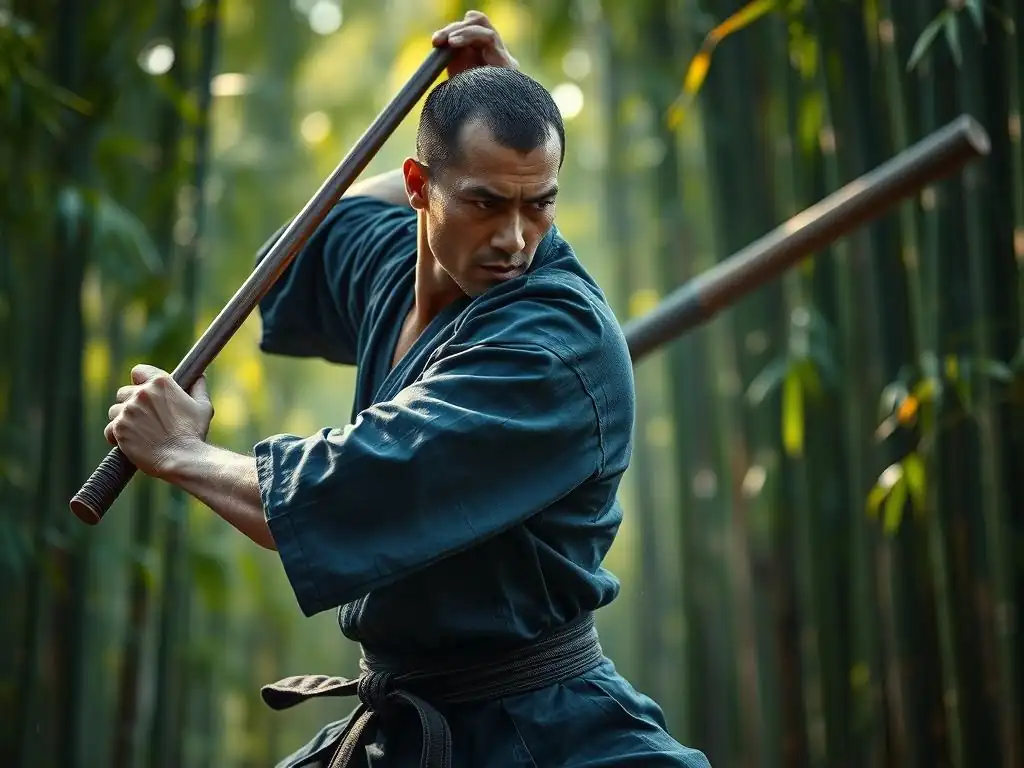
Welcome to Martial Arts Mastery. Delve deeper into the world of combat and self-improvement. Have you mastered the basics and are ready to elevate your Bokken training? This article unlocks advanced techniques for seasoned practitioners, exploring the intricacies of this essential weapon. Continue reading to refine your skills and discover new dimensions of mastery.
- Introduction to Advanced Bokken Training for Martial Arts Mastery
- Prerequisites for Advanced Bokken Training
- Mastering Advanced Bokken Suburi: Refining Your Fundamentals
- Advanced Bokken Kata: Unveiling Deeper Meaning and Application
- Kumitachi for Advanced Bokken Practitioners: Partnered Training
- Advanced Bokken Drills: Enhancing Reflexes and Tactical Awareness
- Bokken Training for Real-World Scenarios: Bridging the Gap
- Cross-Training with the Bokken: Integrating Other Martial Arts
- Maintenance and Care of Your Bokken for Optimal Performance
- Conclusion: Continuing Your Journey in Advanced Bokken Training
-
Frequently Asked Questions
- What is the primary focus of Advanced Bokken Training?
- What prerequisites are recommended before attempting advanced bokken training?
- What kind of training techniques are covered in Advanced Bokken Training?
- How does Advanced Bokken Training relate to the broader martial arts philosophy?
- Can Advanced Bokken Training be used for self-defense?
- Final Reflection: Honing the Edge of Mastery
- Deepen Your Bokken Mastery Now!
Introduction to Advanced Bokken Training for Martial Arts Mastery
For seasoned practitioners of Japanese martial arts, the bokken, often seen as a simple wooden sword, transforms from a basic training tool into a sophisticated instrument for refining technique, developing strategy, and deepening understanding. Advanced bokken training transcends mere physical replication of movements; it delves into the nuances of timing, distance, psychological engagement, and the underlying principles that govern sword combat. This phase of training is less about learning new basic cuts and stances and more about mastering the application, precision, and dynamic adaptation of previously acquired skills.
The journey into advanced bokken techniques requires a significant commitment to detail and a willingness to revisit and perfect fundamentals. It involves complex kata variations that demand intricate coordination, dynamic partner drills (kumitachi) that simulate realistic combat scenarios, and solo exercises (suburi) focused on power generation, speed, and unwavering control. Mastering these advanced techniques not only enhances proficiency with the bokken itself but also cultivates essential martial attributes like heightened awareness, improved reaction time, and a deeper intuitive grasp of combative principles applicable to both armed and unarmed situations. This pursuit is a continuous process of refinement and discovery.
Prerequisites for Advanced Bokken Training
Solid Foundation in Basic Bokken Techniques
Before embarking on advanced bokken training, a practitioner must possess an absolutely solid foundation in basic bokken techniques. This includes perfect posture, stable stances (like hasso-dachi, chudan-no-kamae, gedan-no-kamae), and fundamental cuts such as shomen-uchi (vertical cut), kote-uchi (forearm cut), do-uchi (body cut), and tsuki (thrust). Mastery at the basic level means executing these movements with correct body mechanics, proper grip ( tenouchi), and coordinated hip and leg drive, not just performing the motion. An instructor should be able to observe consistent power, accuracy, and stability in these basic actions.
Furthermore, a seasoned practitioner should have spent hundreds, if not thousands, of hours practicing these fundamentals. For instance, achieving proficiency in shomen-uchi isn't about knowing the steps, but about delivering a powerful, accurate cut from any stance, maintaining perfect balance, and recovering instantly. This level of ingrained physical literacy allows the mind to focus on the more complex tactical and strategic elements introduced in advanced bokken training, rather than struggling with the mechanics of the basic sword work itself. Without this deep foundation, attempting advanced material can lead to the reinforcement of bad habits and a plateau in progress.
Understanding of Kata and Kumitachi Principles
A prerequisite for advanced bokken training is a thorough understanding and experience with foundational kata and kumitachi (paired practice) principles. Basic kata serve as codified examples of technique and strategy; a practitioner must not only memorize the sequence but also understand the bunkai (application) and the combative intent behind each movement. This involves recognizing potential openings, defensive structures, and the flow of energy and distance within the kata. For example, understanding why a specific block is followed by a particular counter in a basic kamae transition is crucial.
Similarly, experience in basic kumitachi is vital. This initial partner work teaches fundamental timing, distance ( maai), and the dynamic interaction between opponents. It introduces concepts like sen (timing advantage), go no sen (responding after the attack), and sen no sen (anticipating and interrupting the attack). A seasoned practitioner should have practiced these basic exchanges extensively to develop a sense of reaction, control, and safety in partnered exercises. This groundwork in dynamic interaction is indispensable for the more complex and free-form kumitachi encountered in advanced bokken training.
Physical Conditioning and Mental Focus Requirements
Advanced bokken training demands significant physical conditioning and unwavering mental focus, going beyond the general fitness needed for basic practice. Physically, the ability to execute techniques with sustained power and speed requires strength, endurance, and flexibility, particularly in the core, legs, and shoulders.
Drills involving explosive power, rapid changes in direction, and prolonged sessions of high-intensity movement necessitate a higher level of cardiovascular fitness and muscular resilience. For example, performing 100 consecutive shomen-uchi with full power and correct form is a baseline endurance requirement, but advanced work might involve bursts of complex combinations or sustained defensive movements that tax the body differently.
Mentally, advanced bokken training requires heightened concentration, awareness ( zanshin), and the ability to remain calm and adaptable under pressure. Partnered drills, especially those involving unpredictable movements or multiple attackers (in conceptual training), demand split-second decision-making and the maintenance of peripheral vision and situational awareness. Cultivating mushin (no-mind) – the state of acting spontaneously without conscious thought – is a key mental goal. This level of focus is developed through consistent, disciplined practice, meditation, and the deliberate effort to clear the mind of distractions and ego during training sessions.
Mastering Advanced Bokken Suburi: Refining Your Fundamentals
Correcting Common Errors in Basic Suburi
Even at an advanced level, revisiting and correcting common errors in basic suburi is paramount for further refinement. Many practitioners, over time, can develop subtle inefficiencies in their fundamental cuts, thrusts, or stances without realizing it.
Common issues include insufficient hip rotation, lack of tenouchi (proper grip pressure and snap at the end of the cut), poor tracking of the tip ( kissaki), or failure to maintain a stable lower body during the swing. For instance, a study in Kendo practitioners noted that even experienced individuals sometimes exhibit excessive shoulder tension or insufficient knee bend, reducing power and increasing injury risk.
Advanced bokken training dedicates time to identifying and eradicating these deeply ingrained flaws. This often involves slow-motion practice, using mirrors or video recording for self-analysis, and receiving detailed feedback from a qualified instructor. The goal is to optimize every element of the movement for maximum efficiency, power, and speed. For example, focusing specifically on the moment of impact, ensuring the tenouchi is sharp and coordinated with the body's drive, can add significant "snap" and cutting power, transforming a powerful swing into a truly devastating strike.
Implementing Advanced Suburi Drills for Speed and Power
Once basic mechanics are optimized, advanced bokuri training incorporates suburi drills specifically designed to enhance speed and power. These drills move beyond simple repetitions and often involve variations in rhythm, tempo, and target visualization. Examples include haya suburi (fast suburi), which focuses on rapid, light cuts to build speed and endurance, or weighted bokken suburi (using a heavier bokken or adding weights) to increase strength, albeit with caution to maintain form. Another drill might involve performing sequences of cuts with increasing speed on command, pushing the practitioner's limits.
Power generation is refined by focusing on the coordinated use of the entire body, particularly the connection between the hips, core, and arms. Drills might emphasize driving power from the legs through the hips and torso, channeling it efficiently to the tip of the bokken.
For instance, practicing cuts while stepping forward or backward, focusing on the synergy between the footwork and the swing, directly translates to more powerful and dynamic strikes in kumitachi. These advanced suburi variations are not just physical exercises; they train the body to move as a single, powerful unit, crucial for effective advanced bokken techniques.
Focusing on Precision and Control in Advanced Suburi
While speed and power are important, advanced bokken training equally emphasizes precision and control in suburi. This means being able to stop the bokken precisely at a designated point, execute cuts at specific angles, and maintain perfect balance throughout the movement. Precision drills might involve aiming for imaginary targets of varying sizes and locations, or stopping the cut just before hitting a physical marker without touching it. This develops fine motor control and the ability to regulate force, essential for both safety and effective technique application.
Control also involves maintaining balance and stability, especially during rapid or complex suburi patterns. Drills might require executing cuts while balancing on one leg, or performing sequences that involve rapid changes in direction or elevation. This focus on control ensures that power and speed do not compromise form or stability. A practitioner who can deliver a fast, powerful cut but loses balance is vulnerable. Advanced suburi cultivates the ability to execute techniques with maximum effectiveness while maintaining complete command over one's body and the bokken at all times.
Advanced Bokken Kata: Unveiling Deeper Meaning and Application
Exploring Complex Bokken Kata Variations
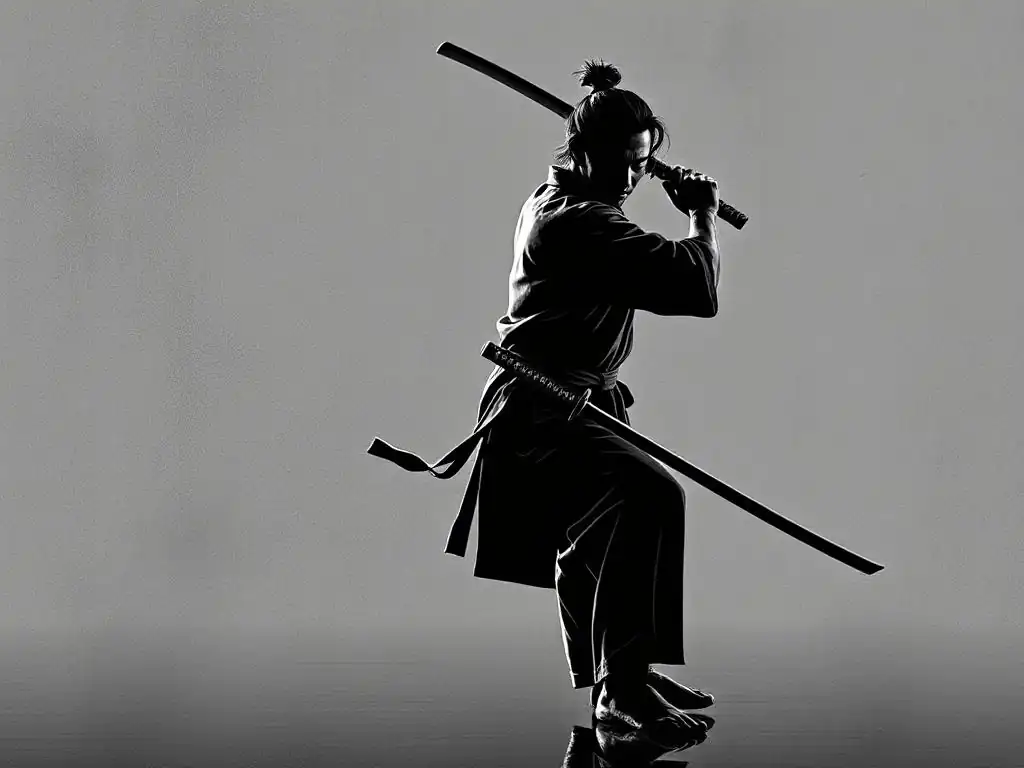
Advanced bokken training introduces practitioners to more complex and lengthy kata variations compared to foundational forms. These kata often involve intricate footwork, multiple opponent scenarios (simulated), and a wider range of techniques integrated into seamless sequences. For example, while basic kata might focus on fundamental cuts against a single opponent, advanced kata could incorporate throws, joint locks, or disarming techniques alongside sword strikes, reflecting a synthesis with unarmed martial arts principles. Some styles have kata with 10 or more movements, requiring significant memory and physical coordination.
These complex kata are not merely physical exercises; they are repositories of advanced bokken techniques and strategic thinking. Learning them involves deciphering the underlying principles and potential applications of each movement. An instructor might guide practitioners to analyze how a seemingly simple block in an advanced kata sets up a complex counter-attack or evasion. The challenge lies in executing these long, detailed sequences with perfect form, timing, and intent, embodying the spirit and strategy encoded within the kata.
Analyzing Kata Movements for Practical Application
A critical aspect of advanced bokken training is the detailed analysis of kata movements for their practical application, or bunkai. This goes beyond simply identifying a block and a strike. It involves understanding why a movement is performed in a specific way, when it is applied in relation to an opponent's action, and what the possible variations or follow-ups are. For instance, analyzing a specific transition within a kata might reveal a hidden defensive principle against a common attack or a technique for disrupting an opponent's balance.
This analysis is often done through partnered practice, where practitioners simulate the kata's sequence with a partner, exploring different interpretations and reactions. This dynamic exploration helps bridge the gap between the stylized movements of the kata and their messy reality in a combative situation. For example, a movement that looks like a simple parry in the solo kata might be revealed through bunkai to be a simultaneous block and entry technique, designed to close distance and control the opponent's weapon. This deep dive into application makes advanced bokken techniques learned in kata truly functional.
Developing Flow and Fluidity in Advanced Kata Execution
Executing advanced bokken kata effectively requires not just technical accuracy but also developing flow and fluidity. The movements must transition seamlessly from one to the next, without hesitation or stiffness. This creates a sense of continuous motion and energy, making the kata appear effortless and powerful. Achieving this fluidity comes from deep understanding of the transitions, mastering the linking steps and body movements that connect techniques, and practicing the kata until it becomes ingrained in muscular memory.
Developing flow also involves understanding the kokyu (breath power) and energy transfer throughout the kata. Each movement should build upon the previous one, channeling energy efficiently through the body and into the bokken. This allows for sustained power and speed throughout a potentially long sequence. Achieving this level of execution transforms the kata from a series of isolated movements into a dynamic, integrated performance that embodies the spirit and principles of the style. It is a hallmark of a truly seasoned practitioner engaging in advanced bokken training.
Kumitachi for Advanced Bokken Practitioners: Partnered Training
Incorporating Advanced Footwork and Evasion Techniques in Kumitachi
In advanced bokken training kumitachi, the emphasis on footwork and evasion becomes far more sophisticated. Beyond basic forward, backward, and lateral steps, practitioners explore techniques like suriashi (sliding step), tsugiashi (following step), and complex diagonal or circular movements ( taisabaki) to control distance and position relative to the opponent.
Evasion is not just about stepping away; it involves subtle body shifts, angulation, and timing to make oneself a difficult target while simultaneously creating openings for counter-attack. For example, a slight pivot combined with a step can evade a powerful shomen-uchi and place the practitioner in an advantageous angle for a kote-uchi.
Partnered drills focus on developing the ability to read an opponent's intentions based on subtle cues (like shifting weight or muscle tension) and reacting instantly with appropriate footwork and evasion. Drills might involve one partner attacking randomly while the other focuses solely on evading and maintaining optimal distance ( maai). This trains reactive footwork and spatial awareness under pressure. Mastery of these advanced techniques of movement allows the practitioner to dictate the engagement, positioning themselves for effective offense while minimizing exposure to incoming attacks.
Utilizing Advanced Striking Angles and Targets in Kumitachi
Advanced bokken training in kumitachi moves beyond the basic targets (head, wrists, body) to incorporate a wider range of striking angles and less obvious targets. This includes techniques like diagonal cuts to the neck or shoulder, reverse-grip strikes, or thrusts aimed at less protected areas. The ability to attack from unexpected angles makes a practitioner much harder to defend against. For example, after parrying a central attack, an advanced practitioner might not counter with a standard shomen-uchi but instead use footwork to circle and deliver a diagonal do-uchi from an oblique angle.
Furthermore, advanced kumitachi emphasizes attacking openings that appear fleetingly as the opponent moves or commits to an action. This requires precise timing ( sen) and the ability to transition instantly from defense to offense. Drills might focus on exploiting specific vulnerabilities, such as attacking the hands or wrists during an opponent's preparation phase ( debana waza) or targeting the leg during a shift in stance. This level of precision and tactical awareness is a hallmark of effective advanced bokken techniques in partner practice.
Developing Realistic and Dynamic Kumitachi Scenarios
To bridge the gap between structured practice and potential real-world application, advanced bokken training incorporates more realistic and dynamic kumitachi scenarios. These drills move away from pre-arranged sequences and introduce elements of unpredictability. This can include free-sparring with safety gear (though still with control and respect), practicing against multiple opponents (simulated or with multiple partners), or training in varied environments (e.g., confined spaces). The goal is to develop adaptability and the ability to apply techniques under pressure.
These scenarios might involve starting from different distances or positions, dealing with unexpected attacks, or incorporating elements of grappling or unarmed defense if the style dictates. For instance, a drill could begin with both practitioners at a long distance, requiring strategic movement to enter safely, or simulate a situation where one practitioner is disarmed and must use unarmed techniques to regain control or escape. This dynamic approach to kumitachi is essential for developing practical, applicable advanced bokken techniques.
Advanced Bokken Drills: Enhancing Reflexes and Tactical Awareness
Reaction Time Drills with the Bokken
Enhancing reaction time is crucial in advanced bokken training, as split-second decisions can determine the outcome of an encounter. Drills specifically designed to improve reflexes involve reacting to unpredictable stimuli. A common drill uses a partner holding the bokken who makes sudden, varied movements (feints, attacks) that the practitioner must react to defensively or offensively. Another method involves using visual or auditory cues; for example, reacting to a flash of light or a specific sound with a predetermined technique.
These drills are often performed at increasing speeds and with decreasing pre-warning time to push the practitioner's reactive capabilities. The focus is on minimizing the time between perceiving a threat and initiating the correct response. For instance, reducing reaction time by even 0.1 seconds can be the difference between successfully parrying a strike or being hit. Consistent practice of these drills helps to shorten the OODA loop (Observe, Orient, Decide, Act) specific to bokken combat, making reactions more intuitive and less reliant on conscious thought.
Distance Management and Timing Exercises
Mastery of maai (combative distance) and sen (timing) is fundamental to advanced bokken techniques. Drills specifically target the ability to control and exploit these critical elements. Distance management drills might involve practicing entering and exiting the optimal striking range quickly and safely, or maintaining a specific distance from a moving partner. Exercises could include one partner constantly changing distance while the other must maintain a consistent maai, or drills focused on closing distance explosively for a strike.
Timing exercises involve practicing initiating techniques at the precise moment to intercept, counter, or evade an opponent's action. This includes go no sen (responding after the opponent initiates), sen no sen (initiating simultaneously as the opponent, aiming to strike first), and tai no sen (initiating before the opponent, forcing their reaction).
Drills might involve reacting to a partner's subtle preparatory movements or practicing simultaneous attacks where both practitioners aim to land a strike at the exact same time, forcing a focus on reading intent and maximizing speed. These drills refine the practitioner's internal clock and understanding of the flow of combat.
Developing Adaptability in Sparring with the Bokken
Adaptability is the ability to adjust techniques and strategy on the fly in response to an opponent's actions, and it is a key goal in advanced bokken training. Sparring drills are designed to foster this skill by introducing varied scenarios and constraints. This could involve sparring with specific limitations (e.g., only using thrusts, or only attacking certain targets), changing opponents frequently to adapt to different styles and tendencies, or introducing unexpected elements during a sparring session. For example, an instructor might call out commands mid-sparring, requiring an immediate change in objective or technique.
Another method is scenario-based sparring, where the context changes (e.g., fighting uphill/downhill, in a tight space). This forces practitioners to think creatively and apply advanced bokken techniques in non-standard situations. The goal is not just to win, but to explore different approaches, recover quickly from errors, and effectively apply learned principles under dynamic conditions. This level of adaptable thinking is crucial for translating practiced techniques into effective action in unpredictable circumstances.
Bokken Training for Real-World Scenarios: Bridging the Gap
Applying Bokken Techniques in Self-Defense Situations
While modern bokken training is primarily a path of personal development and historical study, advanced practitioners may explore the application of bokken techniques in simulated real-world self-defense scenarios. This involves understanding how the principles of distance, timing, and weapon control translate to situations outside of a traditional dojo context. For instance, while a full-power shomen-uchi might be impractical in a crowded space, the footwork and body mechanics used to generate that power can be adapted for a powerful palm-heel strike or elbow.
Training might involve scenario drills simulating common street encounters, where the practitioner uses a bokken (or object of similar length like a stick or umbrella) to defend against unarmed or armed attackers. The focus is on de-escalation where possible, creating distance, controlling the threat, and using strikes or blocks to incapacitate or create an opportunity to escape.
For example, learning to use the tsuki (thrust) as a deterrent or a means to control distance, or using a quick kote-uchi to target an aggressor's limb holding a weapon. This application-focused training helps bridge the gap between stylized movements and practical self-defense.
Understanding Legal and Ethical Considerations
An essential, albeit often overlooked, aspect of advanced bokken training for potential real-world application is understanding the legal and ethical considerations of using a weapon, even a training one like a bokken, in self-defense. In most jurisdictions, using any object as a weapon carries significant legal consequences, and the level of force used must be justifiable based on the perceived threat. This means practitioners must be aware of the laws regarding self-defense in their area and understand the concept of reasonable force.
Ethically, using a weapon comes with a profound responsibility. Advanced bokken training should instill a deep respect for the potential harm a weapon can inflict and emphasize that its use is a last resort. Discussions and reflection on the ethical implications of using lethal or potentially lethal force are crucial. Training scenarios should reinforce the principle of using only the necessary force to neutralize a threat and escape, rather than seeking to inflict maximum damage. This awareness is part of becoming a truly responsible and skilled martial artist.
Disarming Techniques Against Common Attacks
Advanced bokken training can incorporate disarming techniques, particularly relevant in simulated self-defense scenarios against common armed attacks (e.g., knife or stick). These techniques are often complex, requiring precise timing, control of distance, and the ability to disrupt the opponent's balance or grip. They frequently involve using the bokken to trap, deflect, or strike the attacking limb or weapon, followed by a movement to take control of the opponent's weapon or create an opening for escape.
For example, a technique against a knife thrust might involve using the bokken to simultaneously block the arm and enter close distance, followed by a joint lock or strike to break the opponent's hold on the weapon. Training these techniques requires careful, slow practice with compliant partners before attempting them at higher speeds, due to the inherent risks involved. While not a guaranteed solution in a real attack, understanding and practicing disarms adds another layer to the practitioner's self-defense repertoire and highlights the versatility of advanced bokken techniques.
Cross-Training with the Bokken: Integrating Other Martial Arts
Combining Bokken Techniques with Kenjutsu Principles
For many, advanced bokken training is intrinsically linked to Kenjutsu, the art of the Japanese sword. Cross-training explicitly with Kenjutsu principles can deepen understanding of the bokken's use as a stand-in for the live blade (katana). This involves studying historical Kenjutsu schools, their strategies, cuts, and stances, and applying these concepts to bokken practice. For example, understanding the concept of saya no uchi (victory within the scabbard) from Kenjutsu can inform bokken sparring strategy, emphasizing psychological dominance and positioning before the engagement begins.
Integrating Kenjutsu also means focusing on concepts like cutting through a target (even though the bokken doesn't cut) by extending energy and intent beyond the point of impact. It involves studying Kenjutsu footwork patterns, body mechanics optimized for drawing and cutting, and the strategic use of the non-dominant hand. This cross-pollination provides a rich historical and technical context for advanced bokken techniques, revealing the combative logic behind the movements and strategies practiced with the wooden sword.
Incorporating Aikido and Jujutsu Elements with the Bokken
Many martial arts traditions that use the bokken, such as Aikido and some styles of Jujutsu, integrate weapon techniques with unarmed principles. Advanced bokken training can benefit greatly from incorporating elements from these arts. Aikido principles like blending with an opponent's energy, using circular movement, and applying joint locks or throws can be adapted to bokken scenarios. For instance, using Aikido-inspired body movements ( taisabaki) to evade an attack while simultaneously positioning for a bokken counter-strike or control technique.
Jujutsu elements, such as grappling entries, balance disruption, and control techniques, can also be integrated. This is particularly relevant in closer ranges or when an opponent attempts to close distance and nullify the bokken's reach advantage. Advanced bokken training might explore transitioning from a strike or block into a joint lock or throw using the bokken as a lever or point of control. This cross-training highlights the interconnectedness of martial arts principles and expands the practitioner's strategic options, demonstrating that advanced bokken techniques are not limited to striking alone.
Translating Bokken Movements to Unarmed Combat
A sign of true mastery in advanced bokken training is the ability to translate the principles and body mechanics learned with the weapon to unarmed combat. The power generation from the core and hips used in a shomen-uchi is the same power used in a punch or strike. The footwork and distance management applied with the bokken are directly applicable to controlling the engagement range in a fistfight. The awareness and timing developed in kumitachi are vital for unarmed sparring.
Drills can focus explicitly on this translation. For example, practicing a bokken kata and then immediately performing an unarmed equivalent, focusing on how the body mechanics, balance, and intent carry over. Sparring drills might involve transitioning between armed (with bokken) and unarmed phases. This ability to fluidly move between armed and unarmed applications demonstrates a deep understanding of the underlying martial principles, proving that the bokken is not just a stick for hitting, but a tool for developing fundamental combative skills applicable across disciplines.
Maintenance and Care of Your Bokken for Optimal Performance
Proper Cleaning and Storage Techniques
Maintaining your bokken is crucial for its longevity and your safety during advanced bokken training. Proper cleaning involves wiping down the bokken after each training session to remove sweat, dirt, and any moisture. A clean, dry cloth is usually sufficient. Avoid harsh chemicals or excessive water, which can damage the wood. For bokken that are oiled or finished, follow the manufacturer's recommendations.
Proper storage is equally important. Bokken should be stored in a cool, dry place, away from direct sunlight or extreme temperature changes, which can cause the wood to warp or crack. They should ideally be stored horizontally or vertically in a stand, never left leaning against a wall where they could fall and be damaged. Storing multiple bokken separately, perhaps in individual bags or compartments, prevents them from scratching or denting each other. Correct care ensures the bokken remains balanced and structurally sound for demanding advanced techniques.
Inspecting Your Bokken for Damage and Wear
Regularly inspecting your bokken is a critical part of its maintenance and essential for safety during advanced bokken training, especially during high-impact partner drills. Before and after each training session, visually inspect the entire length of the bokken for any cracks, splinters, dents, or signs of warping. Pay close attention to the tip ( kissaki), the handle ( tsuka), and the area around where a tsuba (guard) might be fitted. Run your hand along the surface to feel for any rough spots or potential splinters.
Also, check the balance and straightness of the bokken periodically. A warped bokken can affect the accuracy and feel of techniques. If you notice any significant damage, such as a deep crack or significant warping, the bokken should be retired from partner practice or high-impact use to prevent injury to yourself or others. Even minor damage should be addressed promptly to prevent it from worsening.
Repairing Minor Bokken Damage
While significant damage necessitates retiring a bokken, minor damage can often be repaired, allowing the bokken to continue being used for certain types of training, perhaps solo practice or lighter drills. Small splinters can often be carefully sanded down using fine-grit sandpaper. Ensure the area is smooth afterward. Minor dents might not require repair unless they affect the grip or balance significantly.
If the bokken has a minor crack that doesn't compromise its structural integrity for light use, some practitioners might apply wood glue and clamp the area, though this is often a temporary fix and such a bokken should never be used for full-contact kumitachi or powerful strikes. For lacquered or finished bokken, touch-up kits are sometimes available. Always consult with an experienced instructor or a professional woodworker if you are unsure about the safety or feasibility of repairing a damaged bokken. Safety is paramount in advanced bokken training.
Conclusion: Continuing Your Journey in Advanced Bokken Training
Advanced bokken training is not an endpoint but a continuous journey of refinement, discovery, and growth. Having built a solid foundation and explored complex kata, dynamic kumitachi, and targeted drills, the seasoned practitioner stands at a new threshold. The techniques learned at this level deepen not only physical skill but also strategic understanding, mental fortitude, and an appreciation for the rich history and philosophy embedded within the art of the sword.
The path forward involves perpetual practice, seeking out experienced instructors, and perhaps exploring the nuances of different bokken styles or related weapon arts. It is about honing the subtle details of timing and distance, mastering the dynamic interplay with a partner, and integrating the principles of bokken use into a holistic understanding of martial arts. The bokken remains a silent, steadfast partner in this ongoing pursuit of mastery, guiding the practitioner towards ever-greater levels of proficiency and insight.
Frequently Asked Questions
What is the primary focus of Advanced Bokken Training?
This training primarily focuses on advanced techniques for practitioners already familiar with the bokken, aiming to improve their skill and understanding. It goes beyond basic stances and cuts.
What prerequisites are recommended before attempting advanced bokken training?
A solid understanding of basic bokken fundamentals is essential. This includes stances, cuts, footwork, and an understanding of maai (combative distance).
What kind of training techniques are covered in Advanced Bokken Training?
It covers techniques like complex kata variations, advanced paired drills, and applications in self-defense scenarios. The emphasis is on practical application and refinement.
How does Advanced Bokken Training relate to the broader martial arts philosophy?
It explores how bokken training can deepen understanding of essential principles like zanshin (awareness), timing, and control. These principles translate to other martial arts.
Can Advanced Bokken Training be used for self-defense?
Yes, it emphasizes practical self-defense applications of bokken techniques, providing strategies for using the bokken effectively in realistic situations.
Final Reflection: Honing the Edge of Mastery
The journey of advanced bokken training is not merely about mastering techniques; it's about cultivating a deeper understanding of oneself and the principles of martial arts. The techniques explored throughout this article, from subtle footwork adjustments to complex kata applications, are not just exercises in physical prowess, but pathways to enhanced focus, discipline, and mental fortitude. Their relevance today lies in their ability to refine not only our martial skills, but also our approach to challenges in all aspects of life.
The bokken, a simple wooden sword, serves as a powerful metaphor for life itself. It teaches us that true strength comes not from brute force, but from precision, adaptability, and unwavering commitment to continuous improvement. The dedication required to master these advanced techniques resonates far beyond the dojo, influencing our patience, perseverance, and respect for the process of learning. The ultimate aim of martial arts is not to defeat others, but to perfect oneself.
This ancient wisdom underscores the profound personal growth that accompanies the pursuit of mastery.
As you continue your journey with the bokken, remember that the techniques outlined here are merely starting points. Embrace the challenge of refining your skills, exploring new applications, and deepening your understanding of the art. Let the bokken be your guide, not just in the dojo, but in all your endeavors. Strive for excellence, cultivate discipline, and never cease to hone the edge of your own potential.
Deepen Your Bokken Mastery Now!
Thank you for exploring the advanced techniques for bokken training! We hope you’ve gained valuable insights to elevate your practice. Now, it’s time to translate that knowledge into action and truly master the bokken.
- Immediately integrate one new drill from this article into your next training session and focus on proper form.
- Share your experiences and challenges with fellow practitioners in our forum at MartialArtsMastery.org.
- Research the historical context of your chosen bokken style and uncover a deeper understanding of its origins.
What specific aspect of bokken training are you most eager to improve, and what steps will you take this week to make progress?