
The Heian Kata Series: Building Blocks of Shotokan Mastery

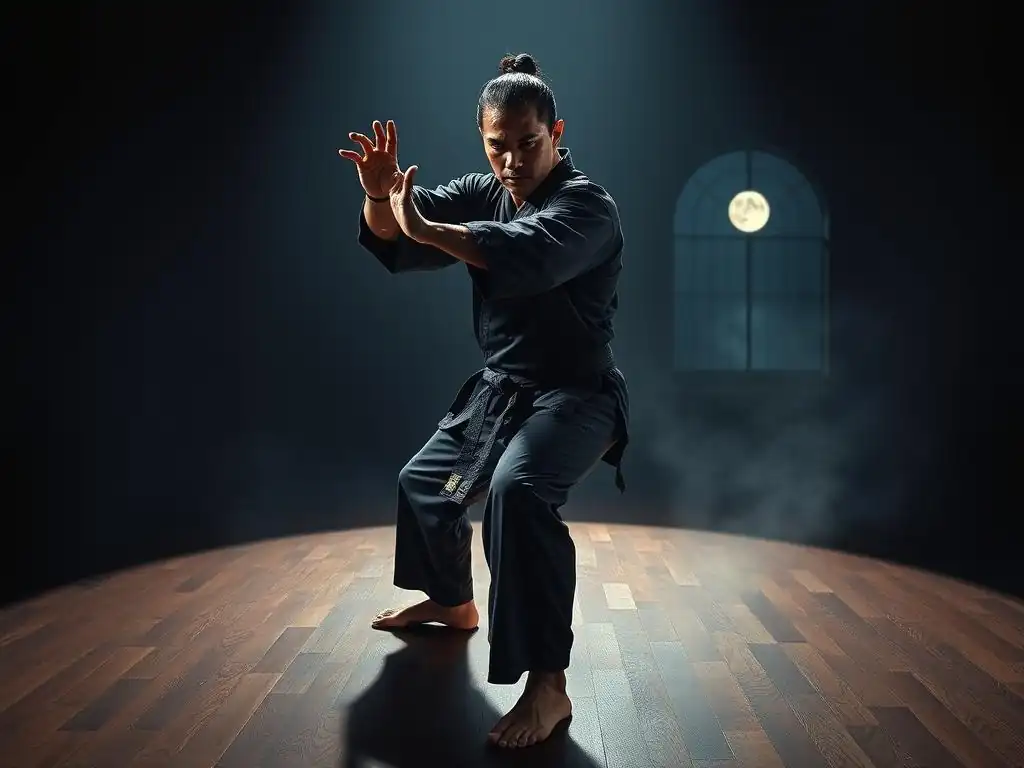
Welcome to Martial Arts Mastery, your gateway to unlocking the secrets of combat traditions worldwide. Delve into the rich tapestry of martial arts history, technique, and philosophy. Are you ready to unravel the foundational principles that underpin powerful self-defense? Then begin your journey with us as we explore the essential Shotokan Heian Kata progression. This series is more than just movement; it's the very bedrock upon which Shotokan mastery is built. But how do these seemingly simple forms unlock such profound potential? Discover the answer within!
- Introduction to Heian Kata in Shotokan Karate
- Shotokan Heian Kata Progression: A Step-by-Step Guide
- The Importance of Correct Form in Heian Kata Execution
- Common Errors in Performing Heian Kata and How to Avoid Them
- The Bunkai (Application) of Heian Kata Techniques
- Heian Kata and Their Relationship to Higher-Level Shotokan Kata
- Training Drills to Improve Heian Kata Performance
- Conclusion: Mastering Heian Kata for Shotokan Excellence
-
Frequently Asked Questions
- What is the significance of the Heian Kata series in Shotokan Karate?
- How does the Heian Kata progression contribute to self-defense skills?
- What are the key differences between the individual Heian Kata (e.g., Heian Shodan vs. Heian Nidan)?
- Where does the Heian Kata series originate from?
- How can I effectively train the Heian Kata to improve my Shotokan skills?
- Final Reflection: Embracing the Journey of Heian
- Unlock Your Shotokan Potential Now!
Introduction to Heian Kata in Shotokan Karate
Understanding the Significance of Heian Kata in Shotokan Training
The Heian kata series is not merely a collection of movements; it is the fundamental framework upon which a Shotokan karateka builds their technical proficiency and understanding. Developed by Itosu Anko Sensei in the early 20th century, derived from older Okinawan kata like Kankudai and Bassai-dai, these five forms—Heian Shodan, Nidan, Sandan, Yondan, and Godan—were specifically designed to be accessible to beginners and serve as a progressive introduction to the core principles and techniques of the style.
They systematically introduce stances (like Zenkutsu Dachi and Kokutsu Dachi), blocks (Gedan Barai, Age Uke, Soto Uke), strikes (Oi Tsuki, Gyaku Tsuki), and kicks (Mae Geri, Yoko Geri), starting with simpler, more static movements and gradually incorporating more complex combinations, dynamic transitions, and sophisticated body mechanics.
This systematic approach ensures that students develop a solid foundation before attempting the more advanced kata. The Heian series acts as a curriculum, guiding the student through increasing levels of complexity in footwork, hip rotation, timing, and power generation (kime).
Mastery of the Shotokan Heian Kata progression is universally recognized as essential for achieving shodan (first-degree black belt) and is a prerequisite for learning the majority of the advanced kata in the Shotokan syllabus. It's estimated that a dedicated student might spend anywhere from 1 to 3 years focusing heavily on mastering the Heian series before confidently moving onto forms like Tekki Shodan or Bassai Dai, demonstrating their pivotal role in the journey towards black belt.
MartialArtsMastery.org's Perspective on Kata in Karate
At MartialArtsMastery.org, we view kata as the living library of a martial art. In Shotokan karate, the Heian kata are seen as critical texts containing the fundamental vocabulary and grammar of the system. They are not just performance pieces but practical exercises designed to teach body control, spatial awareness, balance, timing, and the application of power. We emphasize that the true value of practicing the Shotokan Heian Kata progression lies in understanding the why behind each movement – its potential application (bunkai) in a self-defense situation. Without this understanding, kata can become rote memorization, losing its practical combat effectiveness.
Our perspective aligns with the traditional view that kata is a solo drill for refining technique, developing internal energy, and cultivating focus. However, we strongly advocate for integrating bunkai practice alongside kata performance. This involves analyzing each sequence, hypothesizing practical applications against an imaginary opponent, and then testing these applications with a partner.
This dual approach ensures that the student not only learns the form correctly but also internalizes its combative meaning, making the techniques viable for self-protection. The Heian series, with its relatively straightforward movements compared to advanced kata, provides an ideal starting point for this essential bunkai exploration.
Shotokan Heian Kata Progression: A Step-by-Step Guide
Heian Shodan: Foundational Movements and Principles
Heian Shodan is the first and arguably most fundamental kata in the Shotokan curriculum, typically the first form taught to white belts (10th Kyu). It introduces the basic stance, Zenkutsu Dachi (front stance), and core techniques like Gedan Barai (downward block), Age Uke (rising block), and Oi Tsuki (lunge punch). The kata follows a simple "I" shape, moving forward, turning, moving back, turning, and then moving sideways. This basic structure is designed to teach directional changes and the power generation from the hips in a linear fashion.
The primary focus in Heian Shodan is on establishing correct posture, stable stances, and understanding the relationship between hip movement and technique execution. For example, the transition from Gedan Barai to Oi Tsuki requires a coordinated hip rotation (koshi mawashi) to generate force. Students learn to sink into their stances and maintain a strong base while executing techniques, a principle that carries through all subsequent kata. The kata contains 21 movements and is practiced slowly initially, emphasizing precision over speed, ensuring the student builds a solid physical and mental foundation for the entire Shotokan Heian Kata progression.
Key Techniques in Heian Shodan
Heian Shodan introduces several foundational techniques that form the bedrock of Shotokan karate. The most prominent include Gedan Barai, Age Uke, and Oi Tsuki. Gedan Barai is a downward block used to defend against low attacks, emphasizing dropping the weight and using the forearm to deflect. Age Uke is an upward block, typically used against head-height attacks, requiring strong upward force generated from the hips and legs. Oi Tsuki, the lunge punch, is a powerful forward-moving strike where the punch is thrown with the same side leg stepping forward, relying heavily on body mass and hip rotation for power.
Beyond these, the kata also introduces basic footwork, specifically the forward step (Suri Ashi or Tsugi Ashi depending on context) and turning movements (Mawate). Students learn to maintain balance and stance depth while moving and changing direction. The final sequence introduces a series of three Oi Tsuki, building momentum and demonstrating the chaining of techniques. These fundamental techniques, though simple in isolation, are combined in Heian Shodan to teach basic defensive and offensive sequences, laying the groundwork for more complex applications later in the Shotokan Heian Kata progression.
Common Mistakes in Heian Shodan and How to Correct Them
A frequent error in Heian Shodan is failing to maintain proper depth and stability in Zenkutsu Dachi. Students might stand too tall, have a narrow stance, or not bend the rear leg sufficiently, compromising balance and power generation. To correct this, instructors often use drills focusing on holding the stance for extended periods or practicing transitions slowly, ensuring the weight is correctly distributed (approximately 60% front, 40% back). Another common issue is neglecting hip rotation (koshi) during blocks and punches. Techniques become arm-driven rather than body-driven, significantly reducing power (kime).
Lack of focus (zanshin) at the end of each movement is also prevalent. Students might relax prematurely or fail to maintain awareness. This can be improved by practicing holding the final posture and tension for a brief moment after completing the technique. Finally, rushing through the kata, especially the turns, prevents proper execution and understanding. Practicing each movement in isolation and focusing on the transition between movements, rather than just the destination, helps build smooth, powerful, and correct form throughout the entire Shotokan Heian Kata progression.
Heian Nidan: Introducing New Combinations and Concepts
Heian Nidan, sometimes taught before Heian Shodan in certain lineages, introduces more dynamic movements, new stances, and combined techniques. It features the first instance of Kokutsu Dachi (back stance), used primarily for blocking, and introduces techniques like Shuto Uke (knife-hand block), Mae Geri (front kick), and Ren Tsuki (simultaneous double punch). The kata has 26 movements and follows a more complex pattern than Heian Shodan, incorporating 90-degree and 180-degree turns that require better balance and coordination.
This kata challenges the student to integrate multiple actions within a single sequence, such as stepping into Kokutsu Dachi while executing Shuto Uke, or combining a kick with a punch. It begins to build the student's ability to shift weight effectively between stances and execute techniques from different body alignments. Heian Nidan is a crucial step in the Shotokan Heian Kata progression as it expands the student's technical vocabulary and demands greater control over their body, preparing them for the increased complexity of later kata.
Mastering the Kicks in Heian Nidan
Heian Nidan features the introduction of Mae Geri (front kick) within the kata structure. The kick appears after a Shuto Uke, requiring the student to quickly shift weight forward, execute the kick, and then land back into a stable stance (Kokutsu Dachi). This sequence teaches the crucial skill of kicking while maintaining balance and recovering quickly to a defensive posture. The focus is on proper chambering of the knee, extending the foot with the ball of the foot (koshi) as the striking surface, and retracting the leg quickly to avoid being grabbed or losing balance.
Practicing the Mae Geri in Heian Nidan helps develop hip flexibility and leg strength. A common error is not fully retracting the leg after the kick, which makes the student vulnerable. Drills focusing on snapping the kick out and pulling it back quickly, as well as balancing exercises on one leg, are essential for mastering this element. The integration of the kick within a larger sequence, transitioning from a block to a kick and back to a defensive stance, is a key learning point in the Shotokan Heian Kata progression.
Heian Nidan's Emphasis on Balance and Coordination
Heian Nidan places significant emphasis on balance and coordination due to the introduction of Kokutsu Dachi and kicks. Transitioning smoothly into and out of Kokutsu Dachi, which requires approximately 70% of the weight on the back leg, challenges a student's stability. The sequence involving the Mae Geri further tests balance, demanding control while standing on one leg and the ability to land back into a stable stance immediately. The kata also features techniques like the Nukite (spear hand) followed by a quick turn, requiring precise footwork and body control.
The various turns in Heian Nidan, including 180-degree pivots, necessitate coordinated movement of the feet, hips, and upper body to maintain balance and execute the subsequent technique effectively. Students learn to use their core muscles to stabilize their body during dynamic movements. Improving balance and coordination in Heian Nidan is vital for tackling the more complex footwork and rapid changes in direction found in later forms within the Shotokan Heian Kata progression.
Heian Sandan: Enhancing Power and Body Mechanics
Heian Sandan shifts focus towards generating power through body rotation and dynamic tension. It introduces techniques like Uchi Uke (inside forearm block), Tettsui Uchi (hammer fist strike), and the unique Kiba Dachi (horse riding stance) combined with Uchi Uke. The kata has 20 movements and is characterized by its compact, powerful movements and emphasis on shifting weight laterally in Kiba Dachi.
This kata is crucial for developing strong hip rotation and understanding the principle of "kime" – the focused tension and commitment at the end of a technique. The lateral movements in Kiba Dachi teach students to generate power from the legs and hips while moving sideways, a different dynamic than the linear movements of the previous kata. Heian Sandan is a significant step in the Shotokan Heian Kata progression, building explosive power and refining body control in different stances and directions.
Understanding the "Kime" in Heian Sandan
Kime is a fundamental principle in Shotokan karate, referring to the focus of power and mental energy at the point of impact or completion of a technique. Heian Sandan is particularly effective for developing kime due to its sharp, concise movements. Techniques like the rapid Uchi Uke in Kiba Dachi and the final series of punches demand a clear moment of tension and expulsion of breath (kiai) to maximize power. Kime is not just about muscular tension; it involves engaging the entire body, from the ground up through the legs, hips, and core, culminating in the technique.
Practicing kime in Heian Sandan involves focusing on the moment of impact, ensuring all body parts are aligned and muscles are briefly tensed. It's often described as like cracking a whip – loose and fast until the very end. Students learn to synchronize their breathing with their movements, exhaling sharply at the point of kime. Developing strong kime in Heian Sandan significantly enhances the effectiveness of all techniques within the Shotokan Heian Kata progression and in kumite (sparring).
Defensive Strategies Embedded in Heian Sandan
Heian Sandan, despite its focus on power, contains several defensive strategies. The lateral movements in Kiba Dachi, combined with Uchi Uke, suggest defense against attacks coming from the side or while moving sideways. The Uchi Uke itself is a versatile block against middle-level attacks. The kata also features techniques like the Jodan Age Tsuki (rising punch to the head), which can be interpreted as a counter-attack following a block or evasion.
The sharp turns and quick transitions also imply defensive applications, allowing the practitioner to rapidly change direction to evade or reposition. For example, the turn into Kiba Dachi from Zenkutsu Dachi can be seen as sidestepping an attack while simultaneously blocking. Analyzing the bunkai of Heian Sandan reveals applications involving blocking, striking, and utilizing body evasion, providing students with practical self-defense concepts within the Shotokan Heian Kata progression.
Heian Yondan: Developing Flexibility and Adaptability
Heian Yondan is often considered one of the more challenging of the Heian series for intermediate students (typically 5th-4th Kyu). It introduces higher kicks, more complex combinations, and techniques like Yoko Geri Keage (side snap kick) and Yoko Geri Kekomi (side thrust kick). The kata has 27 movements and features dynamic changes in direction and level, requiring significant flexibility, balance, and control.
This kata pushes the student's physical limits, demanding greater range of motion in the hips for the side kicks and improved balance to execute techniques from more unstable positions. It also integrates blocks and counters in rapid succession, requiring adaptability and quick reflexes. Mastering Heian Yondan is a key indicator of an intermediate student's progress in the Shotokan Heian Kata progression, demonstrating their ability to perform more athletic and complex movements.
Exploring the Flowing Movements of Heian Yondan
While Shotokan is often characterized by linear, powerful movements, Heian Yondan incorporates elements of flow and sequential execution. The opening sequence, with its double block and counter-attack, requires smooth transitions between techniques. The sequence involving the Yoko Geri Keage followed by a strike demands fluid hip movement and coordination. Unlike the more distinct, separate movements in earlier kata, Heian Yondan begins to link techniques together more seamlessly.
This fluidity is essential for developing adaptability in combat situations, allowing the practitioner to chain techniques effectively. The kata also features techniques like the Morote Uke (augmented block) and the Kakiwake Uke (reverse wedge block), which require coordinated action from both arms. Practicing Heian Yondan helps students develop better body control and the ability to perform complex sequences without stiffness, adding a layer of sophistication to their Shotokan Heian Kata progression.
Heian Yondan's Focus on Evasion and Counter-Attack
Heian Yondan heavily features movements that can be interpreted as evasive maneuvers followed by counter-attacks. The side kicks (Yoko Geri) themselves can be used to maintain distance or strike an opponent while moving laterally. The turns and changes in direction, often involving shifting the body off the line of attack, set up subsequent counter-strikes. The sequence with the Kakiwake Uke and the subsequent simultaneous double punch can be seen as deflecting a double attack and immediately countering.
The kata includes techniques like the Uraken Uchi (back fist strike) and Mae Empi Uchi (front elbow strike), often delivered after a block or evasion. These techniques are suitable for close-range counters. Analyzing the bunkai of Heian Yondan reveals strategies centered around avoiding the direct force of an attack and striking back from an advantageous angle or distance. This focus on evasion and counter-attack adds a dynamic defensive layer to the Shotokan Heian Kata progression.
Heian Godan: Integrating Advanced Techniques and Strategies
Heian Godan is the final and most advanced kata in the Heian series, typically required for 3rd or 2nd Kyu students. It integrates elements from all previous Heian kata while introducing new complexities, including jumping techniques (Tobi Komi), dynamic level changes (dropping into Gedan Kamae), and advanced combinations. The kata has 23 movements but is arguably the most demanding physically and technically.
Heian Godan requires a high level of coordination, power, and timing. The jump is a unique feature, demanding explosive power and the ability to execute a technique (Uchi Uke) mid-air and land stably. The rapid drop to a low level demonstrates adaptability and the ability to change body height quickly. This kata serves as a bridge to the advanced Shotokan kata, requiring the student to synthesize all the principles learned in the earlier Heian forms and apply them in more dynamic and complex scenarios. Mastering Heian Godan is a significant milestone in the Shotokan Heian Kata progression.
Heian Godan: The culmination of Heian Kata
Heian Godan represents the culmination of the technical and conceptual learning presented throughout the Heian series. It brings together the stances of Zenkutsu Dachi and Kokutsu Dachi, incorporating dynamic transitions between them. It includes blocks like Age Uke, Uchi Uke, and Gedan Barai, often in rapid succession or combined with other movements. The kata demands strong kime, developed in Heian Sandan, and utilizes balance and coordination, honed in Heian Nidan and Yondan.
The jump technique (Tobi Komi) is perhaps the most visually striking element and requires the explosive power and body control built through the entire Shotokan Heian Kata progression. The rapid level change into Gedan Kamae (low defensive posture) demonstrates the ability to quickly adapt to different attack heights. Heian Godan challenges the student to perform complex sequences with speed, power, and precision, synthesizing all the foundational elements into a dynamic and effective form.
Strategic Applications of Heian Godan in Kumite
Heian Godan contains several sequences with clear strategic applications in kumite (sparring) or self-defense. The opening sequence, involving a drop, double block, and rising punch, can be interpreted as defending against a low attack, blocking a follow-up, and countering to the head. The jumping technique, while perhaps less practical for direct attack in competitive kumite, can be applied in self-defense scenarios for evasion or attacking over an obstacle, or its principle can be used for explosive forward movement combined with a technique.
The rapid transitions and changes in level and direction provide strategies for breaking an opponent's rhythm or creating openings. The final sequence, featuring a series of blocks and strikes, demonstrates effective combinations for closing distance or defending against multiple techniques. Analyzing the bunkai of Heian Godan reveals advanced strategies for defense against varied attacks, utilizing mobility, level changes, and explosive power, showcasing the practical value embedded within the Shotokan Heian Kata progression.
The Importance of Correct Form in Heian Kata Execution
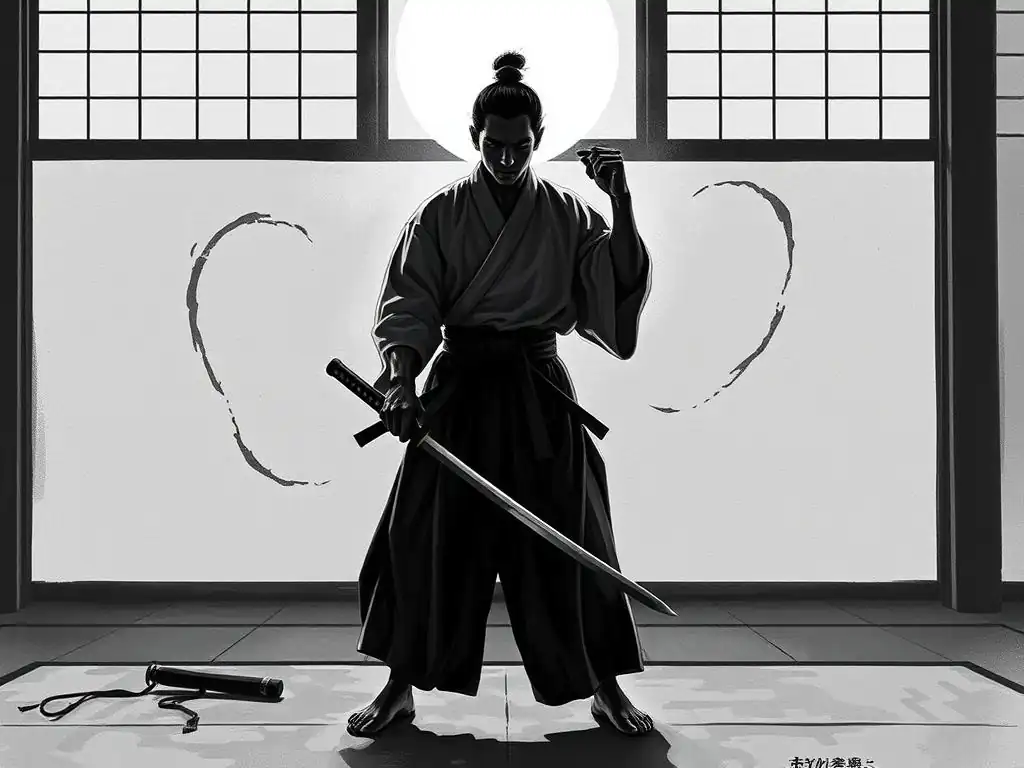
Posture and Stance in Heian Kata
Correct posture and stable stances are paramount in executing the Heian kata effectively. Proper posture involves maintaining a straight back, relaxed shoulders, and engaged core muscles. This alignment ensures that power can be generated efficiently from the ground up and transferred through the body into the technique. Poor posture can lead to loss of balance, reduced power, and potential injury.
Stances, such as Zenkutsu Dachi, Kokutsu Dachi, and Kiba Dachi, must be performed with the correct width, length, and weight distribution as defined by Shotokan principles. A deep, stable stance provides a strong base for both generating power for attacks and absorbing the impact of blocks.
For instance, in Zenkutsu Dachi, the front knee should be bent so that it hides the toes when looking down, and the back leg should be straight with the foot angled outwards at about 45 degrees. Maintaining these precise forms throughout the dynamic movements of the Shotokan Heian Kata progression is crucial for developing proper body mechanics and power.
Hand Techniques and Footwork Precision
Precision in hand techniques and footwork is equally vital in the Heian kata. Hand techniques (Te Waza) must be executed with the correct trajectory, timing, and focus (kime). For example, an Age Uke should travel in a specific arc, ending directly above the head with tension. Punches (Tsuki) must be delivered along the centerline with proper hip rotation. The angle of the wrist, the rotation of the forearm (snap), and the point of impact must all be precise.
Footwork (Ashi Sabaki) in kata involves not just moving from point A to point B but doing so efficiently while maintaining balance and stance integrity. This includes stepping (Suri Ashi, Tsugi Ashi), sliding (Okuri Ashi), and pivoting (Mawate). Each movement is timed with the corresponding hand technique. Precise footwork allows for smooth transitions, maintains correct distance from an imaginary opponent, and contributes significantly to power generation. Mastery of hand techniques and footwork precision is a continuous process throughout the Shotokan Heian Kata progression.
Breathing and Mental Focus during Kata Performance
Proper breathing (Kokyu) and mental focus (Zanshin) are integral components of high-level kata performance. Breathing should generally be natural and controlled, with a sharp exhalation (kiai or kiai-like sound) synchronized with the moment of kime. This helps to focus energy, tense the body briefly for impact, and maintain internal stability. Holding one's breath or breathing erratically can lead to tension and reduced performance.
Mental focus, or zanshin, means maintaining a state of alert awareness throughout the kata, even when a technique is completed. It implies being ready for the next movement or a potential follow-up attack. This mental state is reflected in the eyes (looking forward along the line of travel), the posture, and the overall intensity of the performance. Cultivating proper breathing and unwavering mental focus elevates the Heian kata from a series of physical movements to a dynamic, combative exercise, essential for true mastery in the Shotokan Heian Kata progression.
Common Errors in Performing Heian Kata and How to Avoid Them
Rushing Through the Movements
A very common error, especially as students become more familiar with the sequence, is rushing through the Heian kata. This often results in sloppy techniques, incomplete stances, and a loss of power and focus. Rushing prioritizes finishing the kata over executing it correctly. For example, a student might hurry the turn in Heian Shodan, resulting in a weak stance and punch, rather than executing a controlled pivot that allows for proper hip rotation.
To avoid this, students should consciously practice the kata at a slower tempo, focusing on the details of each movement and the transition between them. Breaking down the kata into smaller sections and practicing those segments repeatedly can help. Instructors often count out the movements slowly or emphasize pauses at critical points. The goal is to develop muscular memory for correct form at a controlled pace before attempting to add speed, ensuring precision is not sacrificed for haste throughout the Shotokan Heian Kata progression.
Lack of Power and Precision
Lack of power and precision stems from several underlying issues, including insufficient hip rotation, weak stances, and improper body alignment. Techniques might look correct externally but lack the internal connection to generate force (kime). For instance, a punch might be extended with the arm but lack the drive from the legs and hips. Precision is lost when stances are unstable, hand positions are incorrect, or footwork is sloppy.
Correcting this requires dedicated practice of fundamental techniques (kihon) and focusing on body mechanics. Drills emphasizing hip rotation, such as performing techniques while holding a staff behind the back, can be effective. Strengthening exercises for the legs and core improve stance stability. Detailed feedback from an instructor on specific hand positions, angles, and timing is crucial. Consistent, focused practice on generating power from the core and executing techniques with exactness is key to overcoming this hurdle in the Shotokan Heian Kata progression.
Forgetting the Bunkai (Application)
Performing kata as merely a dance or a sequence of abstract movements without understanding its bunkai (practical application) is a significant error that diminishes its value. The techniques within the Heian kata were originally derived from combat applications. Forgetting or ignoring the bunkai makes the kata less meaningful and less effective as a training method for self-defense. For example, the opening sequence of Heian Nidan (Shuto Uke in Kokutsu Dachi) is not just a block; its bunkai might involve stepping offline to avoid an attack while simultaneously blocking or parrying.
To avoid this, students should regularly study and practice the bunkai associated with each movement of the Heian kata. This can involve discussing applications with instructors, watching demonstrations, and practicing with a partner. Visualizing the application while performing the solo kata helps to imbue the movements with intent and understanding. Integrating bunkai practice ensures that the Shotokan Heian Kata progression remains relevant and practical for self-defense.
The Bunkai (Application) of Heian Kata Techniques
Practical Self-Defense Applications of Heian Shodan Bunkai
The bunkai of Heian Shodan focuses on fundamental self-defense scenarios involving direct, linear attacks. The initial Gedan Barai is a direct defense against a low kick or punch. Following with an Oi Tsuki can be applied as an immediate counter-attack after the block, using forward momentum to generate power. The Age Uke sequence addresses head-height attacks, such as punches or strikes with a weapon, again followed by a counter-strike.
The turns in Heian Shodan can be interpreted as pivoting to face a new attacker or repositioning relative to a single attacker. For instance, the turn involving Gedan Barai and Oi Tsuki could be applied if an opponent attempts to move around you; the turn allows you to face them, block their attack, and counter. The final three Oi Tsuki could represent advancing on a retreating opponent or breaking through a weak defense. These basic applications provide a starting point for understanding the combat relevance of the Shotokan Heian Kata progression.
Analyzing the Heian Nidan Bunkai for Close-Range Combat
Heian Nidan introduces techniques and movements suitable for close-range engagements and dealing with multiple angles of attack. The Shuto Uke in Kokutsu Dachi is highly versatile for parrying or blocking attacks to the head or body while maintaining distance and readiness for a counter. The Nukite (spear hand) technique can be applied as a vital point strike at close quarters.
The sequence involving the Mae Geri followed by a punch is a classic example of using a kick to create distance or strike a lower target, followed by a hand technique to the upper body. The simultaneous double punch (Ren Tsuki) can be applied as a powerful close-range strike to the body. The complex turns and transitions suggest applications involving evading attacks from different directions and immediately countering. Analyzing the bunkai of Heian Nidan shows a progression towards more dynamic and adaptable self-defense strategies within the Shotokan Heian Kata progression.
Heian Sandan Bunkai: Addressing Multiple Attackers
Heian Sandan's lateral movements and sharp turns lend themselves to interpretations involving defense against multiple opponents or attacks from the side. The initial Uchi Uke in Kiba Dachi could be applied when an opponent attacks from your side, allowing you to block while maintaining a strong, low base. The subsequent movements in Kiba Dachi, involving alternating Uchi Uke and Tettsui Uchi, can be interpreted as defending against attacks from alternating sides and countering with powerful hammer fist strikes.
The turns allow the practitioner to rapidly pivot to face a new threat or reposition relative to an existing one. The sequence involving the Jodan Age Tsuki could be a counter against a headlock or grappling attempt. While the kata is performed linearly, the bunkai often reveals circular or multi-directional applications. The bunkai of Heian Sandan emphasizes powerful, compact movements suitable for breaking free or creating space when surrounded, adding another layer to the Shotokan Heian Kata progression's defensive lessons.
Heian Yondan Bunkai: Utilizing Evasion and Counter-Strikes
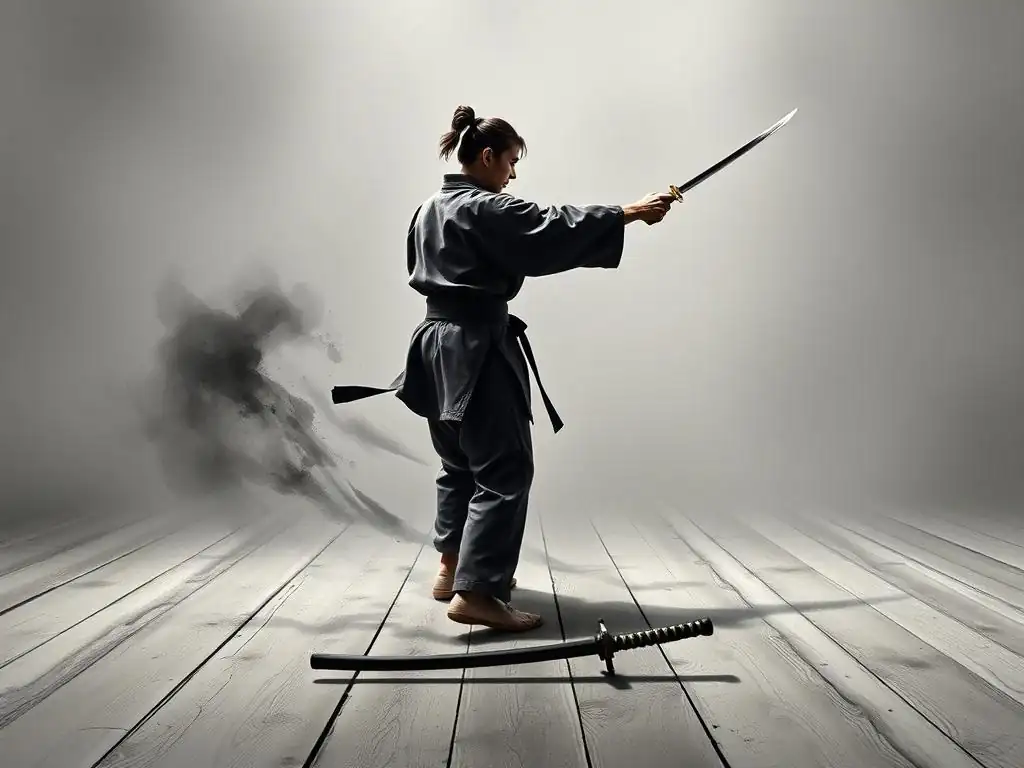
Heian Yondan's bunkai strongly emphasizes evasion and immediate counter-attacking. The side kicks (Yoko Geri) are prime examples, allowing the practitioner to strike an opponent while moving laterally, avoiding their direct line of attack. The turns in Heian Yondan often involve stepping off the line of attack (tai sabaki) before executing a block or strike. For example, the sequence involving Kakiwake Uke could be applied against a double grab or a charging attack, deflecting the force outwards while preparing for a counter.
Techniques like Uraken Uchi and Mae Empi Uchi are often used in close-quarters combat following an evasion or block. The flowing movements in Heian Yondan allow for rapid transitions between defense and offense. Analyzing the bunkai here reveals strategies focused on minimizing exposure to attack through movement and striking back quickly from an advantageous position. This focus on dynamic evasion and counter-strikes marks a significant development in the practical applications learned through the Shotokan Heian Kata progression.
Heian Godan Bunkai: Advanced Self-Defense Strategies
Heian Godan's bunkai integrates more complex and dynamic self-defense strategies. The initial drop into Gedan Kamae and subsequent blocks and strikes can be applied against low attacks, grappling attempts, or to quickly change levels to unbalance an opponent. The jumping technique, while debated in its literal application, embodies the principle of explosive movement for evasion or gaining an advantage, perhaps jumping over an obstacle or opponent's leg, or representing a sudden change in height or distance.
The rapid transitions and combinations in Heian Godan suggest applications against sophisticated attacks or multiple opponents. Techniques like Morote Uke (augmented block) provide strong defense against powerful strikes. The final sequence, with its series of blocks and strikes, can be interpreted as dealing with a flurry of attacks or securing control over an opponent. The bunkai of Heian Godan synthesizes the defensive principles of the entire series, offering advanced strategies for dynamic and challenging self-defense situations, representing the peak of the Shotokan Heian Kata progression's practical lessons.
Heian Kata and Their Relationship to Higher-Level Shotokan Kata
Connecting Heian Kata to Tekki Kata
The Heian kata series serves as a vital precursor to the Tekki kata (Tekki Shodan, Nidan, Sandan), particularly Tekki Shodan, which is often the first advanced kata learned after the Heian forms. While the Heian kata primarily focus on linear and angular movements in various stances, the Tekki kata are performed entirely in Kiba Dachi (horse riding stance) with lateral movements. However, the core principles developed in the Heian series are directly transferable.
The strong, stable base and powerful hip rotation cultivated in Heian Sandan's Kiba Dachi sections are absolutely essential for performing the Tekki kata effectively. The development of kime, emphasized throughout the Heian series, is paramount in the explosive, compact techniques of Tekki.
Furthermore, the understanding of sequential movements and bunkai analysis learned through the Shotokan Heian Kata progression is necessary to grasp the complex, close-quarters applications embedded within the Tekki forms. Tekki can be seen as an intensive study of lateral movement and power generation from a fixed stance, building upon the foundational body mechanics established in the Heian series.
The Influence of Heian Kata on Bassai-Dai and Kanku-Dai
The Heian kata were derived, in part, from older, more complex kata like Bassai Dai and Kanku Dai. Therefore, mastering the Heian series provides students with a foundational understanding of techniques and principles that reappear in these advanced forms. For instance, the opening sequence of Kanku Dai features movements that are more advanced versions of techniques found in Heian Shodan (Age Uke) and Heian Yondan (Kakiwake Uke). Similarly, techniques from Bassai Dai, such as Uchi Uke and various striking methods, are introduced in simplified forms within the Heian series.
The stances, transitions, hip usage, and kime developed through the Shotokan Heian Kata progression are prerequisites for executing the longer, more intricate sequences and dynamic movements found in Bassai Dai and Kanku Dai. Understanding the basic defensive and offensive principles taught in the Heian forms makes the complex bunkai of the advanced kata more accessible. Essentially, the Heian kata break down the core elements of these higher forms into manageable steps, making the transition to advanced kata a logical progression rather than a daunting leap.
Training Drills to Improve Heian Kata Performance
Kihon (Basic Technique) Drills for Kata Enhancement
Regular practice of kihon is fundamental to improving Heian kata performance. Drills focusing on individual techniques like Zenkutsu Dachi Oi Tsuki or Kokutsu Dachi Shuto Uke help refine stance stability, hip rotation, and kime. Practicing these basic movements thousands of times builds the muscle memory and power required for kata. For example, performing 50 repetitions of Age Uke with strong kime and proper breathing helps strengthen the technique as it appears in Heian Shodan and Godan.
Transition drills, focusing on moving smoothly and powerfully between stances while executing techniques (e.g., stepping forward into Zenkutsu Dachi with Gedan Barai), are also crucial. Practicing turns slowly, ensuring proper footwork and body alignment, improves the directional changes in all Heian kata. Kihon drills provide the building blocks; mastering them ensures that the techniques performed within the Shotokan Heian Kata progression are sharp, powerful, and correct.
Partner Drills for Practicing Bunkai
Practicing bunkai with a partner is essential for understanding the practical application of Heian kata movements. These drills involve one partner acting as the attacker, performing a specific attack (e.g., a lunge punch), while the other partner applies the corresponding technique from the kata's bunkai (e.g., a Gedan Barai followed by a counter-punch).
Partner drills allow students to feel the timing, distance, and resistance of a real-world application. They also help refine techniques that are difficult to practice solo, such as joint manipulations or close-range strikes derived from the kata's movements. Working with a partner helps students visualize the opponent while performing the solo kata, making the practice more meaningful and reinforcing the self-defense strategies embedded within the Shotokan Heian Kata progression.
Solo Training Methods for Refining Kata
Beyond performing the kata from start to finish, several solo training methods can enhance performance. Practicing the kata in slow motion allows students to focus on every detail – the trajectory of the hand, the feeling of hip rotation, the weight distribution in the stance. This helps identify and correct subtle errors. Performing the kata with exaggerated movements can help develop flexibility and range of motion.
Breaking the kata down into smaller sequences and practicing those sequences repeatedly helps to polish difficult transitions or combinations. For instance, repeatedly practicing the jump and landing sequence in Heian Godan builds explosive power and stability. Visualization is also a powerful solo tool; mentally walking through the kata, focusing on perfect execution and visualizing the bunkai, reinforces learning. These solo methods complement full kata practice, contributing significantly to mastering the Shotokan Heian Kata progression.
Conclusion: Mastering Heian Kata for Shotokan Excellence
The Enduring Legacy of the Heian Kata Series
The Heian kata series stands as a testament to the pedagogical genius of Itosu Anko Sensei. Designed as a systematic introduction to Shotokan karate, these five forms have served countless practitioners worldwide as the essential first step on their martial arts journey. From establishing basic stances and blocks in Heian Shodan to integrating dynamic movements and advanced strategies in Heian Godan, the series progressively builds the physical and technical capabilities required for higher levels of training. They encapsulate the fundamental principles of power generation, body mechanics, balance, and timing that are the hallmarks of Shotokan style.
The enduring legacy of the Heian kata lies in their effectiveness as a teaching tool. They provide a clear, structured path for beginners while offering layers of depth for experienced practitioners exploring bunkai and refining subtle movements. Mastery of this series is universally recognized as the gateway to advanced Shotokan kata and a solid foundation for effective kumite and self-defense. The Shotokan Heian Kata progression remains the indispensable core of foundational Shotokan training.
Continuing Your Shotokan Journey with Heian Kata
Mastering the Heian kata is not the end of the journey, but a crucial beginning. Even after achieving black belt rank and moving on to advanced forms like Jion or Enpi, practitioners continue to revisit the Heian series. Doing so allows for the refinement of fundamental techniques that underpin all higher kata. Experienced practitioners often find new layers of meaning and application (bunkai) in the Heian kata as their understanding of karate deepens.
Continual practice of the Shotokan Heian Kata progression reinforces correct posture, stable stances, powerful hip action, and sharp kime – elements that can degrade over time if not consistently maintained. It also serves as a benchmark of technical purity. The principles learned in these foundational forms are directly applicable to sparring, self-defense, and the demands of advanced kata. Therefore, the Heian kata remain relevant and essential throughout a karateka's lifelong pursuit of Shotokan excellence.
Frequently Asked Questions
What is the significance of the Heian Kata series in Shotokan Karate?
The Heian Kata series is fundamental, serving as the building blocks of a Shotokan practitioner's development. They teach basic stances, blocks, and strikes, progressively increasing in complexity to prepare students for advanced techniques.
How does the Heian Kata progression contribute to self-defense skills?
While primarily focused on foundational techniques, the Heian Kata introduce practical self-defense movements and principles. They help develop body coordination, balance, and awareness, crucial for effective self-defense.
What are the key differences between the individual Heian Kata (e.g., Heian Shodan vs. Heian Nidan)?
Each Heian Kata introduces new techniques and concepts. For example, Heian Shodan focuses on basic stances and blocks, while Heian Nidan introduces techniques such as the knife-hand block and circular movements.
Where does the Heian Kata series originate from?
The Heian Kata, originally known as Pinan Kata, were created by Anko Itosu in Okinawa. They were later adapted and renamed by Gichin Funakoshi for his Shotokan Karate system.
How can I effectively train the Heian Kata to improve my Shotokan skills?
Focus on proper form and technique over speed and power initially. Practice each Kata repeatedly, paying attention to transitions, timing, and kime (focus). Seeking guidance from a qualified instructor is highly recommended.
Final Reflection: Embracing the Journey of Heian
The journey through the Heian Kata series, as we've explored, isn't just about memorizing movements; it's about understanding the foundational principles of Shotokan Karate. The relevance of these principles remains undiminished today, as they provide the bedrock for developing power, precision, and a deeper understanding of self-defense, regardless of one's level of experience. The Heian Kata are, and will always be, the cornerstone of Shotokan mastery.
The influence of the Heian Kata extends far beyond the dojo. They instill discipline, focus, and a profound respect for tradition, qualities that permeate all aspects of life. The dedication required to master these forms cultivates resilience and a unwavering spirit. The ultimate aim of Karate lies not in victory nor defeat, but in the perfection of the character of its participants.
- Gichin Funakoshi. This quote encapsulates the true essence of the Heian Kata: a path to self-improvement through diligent practice and unwavering commitment.
Now, as you step off the page and back into the world, consider how the lessons embedded within the Heian Kata can enrich your own journey. Whether you're a seasoned karateka or simply someone seeking greater self-awareness, embrace the spirit of continuous learning and self-improvement. Let the principles of balance, power, and focus guide your actions, and allow the Heian Kata to serve as a constant reminder of the potential that lies within you.
Unlock Your Shotokan Potential Now!
Thank you for exploring the Heian Kata series with us. We hope you've gained a deeper appreciation for these fundamental forms and their pivotal role in Shotokan mastery. Now, it's time to translate that knowledge into action!
Here's how to continue your journey:
- Commit to perfecting one Heian Kata this week, focusing on precise form and understanding its underlying principles.
- Share your insights! Discuss your biggest takeaway from the Heian Kata series in the comments below and connect with fellow martial artists.
- Explore our expanded collection of kata tutorials on martialartsmastery.org to refine your technique and discover new depths within these essential forms.
Which Heian Kata will you dedicate your practice to this week, and what specific area will you focus on improving?