
KusanaginoTsurugi: The GrassCutting Sword of Japanese Imperial Legend

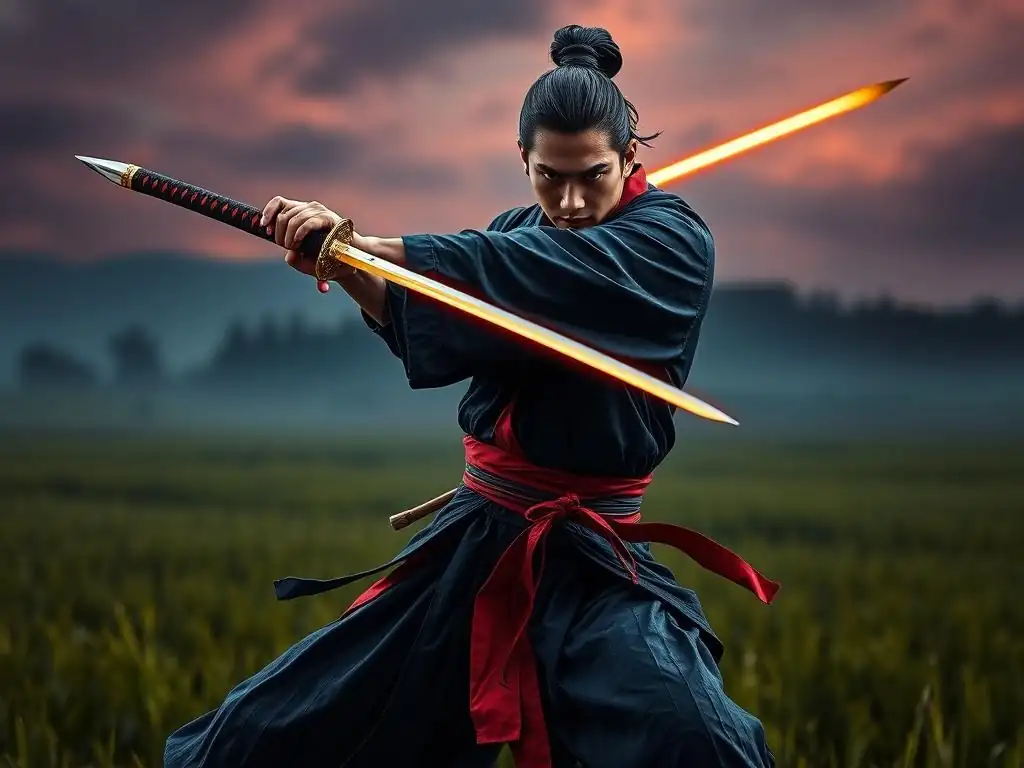
Welcome to Martial Arts Mastery, where we delve into the heart of combat traditions! Ever wondered about the sacred blades that shaped history? Today, we embark on a journey into the captivating realm of Japanese imperial sword legends, focusing on the mythical KusanaginoTsurugi, the Grass-Cutting Sword. Prepare to uncover the secrets and symbolism woven into this legendary artifact, and discover its enduring impact on Japanese culture and martial arts. Let the legend unfold...
- Unveiling the Mysteries of Kusanagi-no-Tsurugi: A Japanese Imperial Sword Legend
- The Origins of Kusanagi-no-Tsurugi: From Serpent's Belly to Imperial Heirloom
- Kusanagi-no-Tsurugi in Japanese Imperial History and Symbolism
- Kusanagi-no-Tsurugi and the Atsuta Shrine: The Sword's Current Location
- Kusanagi-no-Tsurugi in Bushido Philosophy
- Kusanagi-no-Tsurugi in Modern Japanese Culture: Literature, Art, and Media
- Decoding the Japanese Imperial Sword Legends: Historical Context and Interpretations
- Conclusion: The Enduring Legacy of Kusanagi-no-Tsurugi
- Frequently Asked Questions
- Final Reflection: Echoes of the Grass-Cutting Sword
- Unearth Your Inner Warrior: Embrace the Legend!
Unveiling the Mysteries of Kusanagi-no-Tsurugi: A Japanese Imperial Sword Legend
Introduction to Japanese Sword Legends and Kusanagi-no-Tsurugi's Significance
Japanese history and mythology are rich with tales of legendary swords, each imbued with unique powers and symbolic weight. These artifacts often play pivotal roles in narratives of creation, conflict, and the establishment of divine or imperial authority. Among the most revered of these fabled blades is Kusanagi-no-Tsurugi, the "Grass-Cutting Sword," a central piece in the collection of Japanese imperial sword legends. Its story is deeply intertwined with the origins of Japan itself and the lineage of its emperors.
Kusanagi-no-Tsurugi is not merely a weapon in these tales; it is one of the Three Sacred Treasures of Japan (Sanshu no Jingi), alongside the Yata no Kagami (the mirror) and the Yasakani no Magatama (the jewel). These treasures are said to have been passed down by the gods and are considered indispensable symbols of the Emperor's divine right to rule. Kusanagi, in particular, represents valor and strength, its legend providing a foundational narrative for the legitimacy and power associated with the Japanese imperial line, making it paramount among Japanese imperial sword legends.
Legendary Weapons in Mythology: Power, Protection, and Divine Right
Across various cultures, legendary weapons serve as powerful symbols, often representing the hero's strength, divine favor, or the just cause they champion. From Thor's hammer Mjölnir to King Arthur's Excalibur, these artifacts are frequently depicted as possessing supernatural abilities, granting their wielders unparalleled power, protection, or insight. They are not just tools of war but embodiments of ideals, destiny, or cosmic order.
In the context of Japanese imperial sword legends, Kusanagi-no-Tsurugi fulfills these roles spectacularly. Its origin story links it directly to the gods and their triumph over chaos, imbuing it with divine authority. Its later exploits demonstrate its protective capabilities and its role in expanding the reach of early imperial power. It is a sword that embodies both destructive force against evil and protective power for the righteous, solidifying its place as a prime example of a mythical artifact central to a nation's foundational myths and the legitimacy of its rulers.
The Origins of Kusanagi-no-Tsurugi: From Serpent's Belly to Imperial Heirloom
Susanoo-no-Mikoto and the Yamata no Orochi: Slaying the Eight-Headed Serpent
The birth of Kusanagi-no-Tsurugi is chronicled in Japan's oldest historical texts, the Kojiki (c. 712 CE) and Nihon Shoki (c. 720 CE), as part of the myth of the storm god Susanoo-no-Mikoto. Exiled from the heavens, Susanoo descended to the Izumo province. There, he encountered an elderly couple weeping because a monstrous eight-headed, eight-tailed serpent, the Yamata no Orochi, was devouring their daughters one by one each year. They were down to their last daughter, Kushinada-hime.
The Yamata no Orochi was a creature of immense scale, said to span eight valleys and eight hills, with red eyes like hozuki (winter cherries) and trees and moss growing on its back. Susanoo, determined to save Kushinada-hime, devised a plan. He instructed the couple to brew strong sake and build a fence with eight gates, placing a large vat of sake behind each. The serpent arrived, found the sake, plunged each of its eight heads into a vat, and drank until it was intoxicated and fell asleep, a pivotal moment in this Japanese imperial sword legend.
Discovery Within the Serpent: The Sword's Initial Power
While the Yamata no Orochi lay in a drunken stupor, Susanoo attacked. Using his own sword, he systematically cut off each of the serpent's heads and tails. As he was cleaving the fourth tail, his sword struck something incredibly hard, chipping its blade. Intrigued, he split the tail open further and discovered a magnificent, sharp sword hidden within. This divine blade, forged from the very essence of the monstrous serpent, was clearly no ordinary weapon.
This newly discovered sword was exceptionally sharp and powerful, far surpassing Susanoo's own. Its presence within the body of the defeated monster symbolized the taming of chaos and the extraction of power from destruction. It was a divine gift, emerging from the heart of the land's turmoil, destined for greatness. This event marks the very beginning of the Japanese imperial sword legend surrounding Kusanagi-no-Tsurugi.
From Ama-no-Murakumo-no-Tsurugi to Kusanagi-no-Tsurugi: The Origin of the Name
Initially, the sword found within the Yamata no Orochi was named Ama-no-Murakumo-no-Tsurugi (天叢雲剣), meaning "Sword of the Gathering Clouds of Heaven." This name likely refers to its divine origin or perhaps the clouds of steam or mist that might have emanated from the monstrous serpent. Susanoo, recognizing the sword's extraordinary nature and wishing to make amends with his sister, the sun goddess Amaterasu-Ōmikami, presented the sword to her as a gift.
Amaterasu, dwelling in the heavens, accepted the sword and later passed it down through her lineage to her grandson, Ninigi-no-Mikoto, when he descended to earth to rule Japan. It became one of the Three Sacred Treasures, symbols of the divine mandate to rule. The sword retained the name Ama-no-Murakumo-no-Tsurugi for a significant period before acquiring its more famous name, Kusanagi-no-Tsurugi, through another legendary event that solidified its status in Japanese imperial sword legends.
Kusanagi-no-Tsurugi in Japanese Imperial History and Symbolism
As one of the Three Sacred Treasures (Sanshu no Jingi), Kusanagi-no-Tsurugi holds profound symbolic weight within the Japanese imperial system. These items—the sword, the mirror ( Yata no Kagami), and the jewel ( Yasakani no Magatama)—are central to the imperial accession ceremony, representing the Emperor's divine lineage and authority. The sword, in particular, symbolizes the Emperor's martial prowess and the power necessary to protect the realm and maintain order.
Historically, the transmission of these treasures, including this key piece of Japanese imperial sword legends, was considered essential for a legitimate succession. Possession of the Sanshu no Jingi validated the new Emperor's claim, linking him directly to the founding myths and the sun goddess Amaterasu. While the Emperor's role has evolved significantly over centuries, these treasures remain potent symbols, representing the continuity of the world's oldest continuous monarchy, now primarily symbolic but deeply rooted in this ancient legitimacy.
Transfer to Yamato Takeru: The Sword's Role in Imperial Expansion
The sword's legend continues through the story of Prince Ōsu, later known as Yamato Takeru ("The Brave of Yamato"), a legendary prince of the Yamato dynasty (traditionally dated to the late 1st and early 2nd centuries CE). Tasked by his father, Emperor Keikō, with subduing tribes in the east who resisted imperial rule, Yamato Takeru was given the sword by his aunt, Princess Yamato-hime, the high priestess of Ise Grand Shrine. She had received the sword from the imperial court for safekeeping.
Princess Yamato-hime gave the prince the sword Ama-no-Murakumo-no-Tsurugi along with a bag of flint. This act marked the sword's transition from a static symbol held at court or shrine to an active tool used in the expansion of the imperial domain. The legend of Yamato Takeru's campaigns, aided by this divine blade, became a crucial part of the Japanese imperial sword legends, illustrating the sword's direct role in establishing the physical boundaries and authority of early Japan.
The Legend of Burning Grass: How Kusanagi-no-Tsurugi Earned its Name
The sword acquired its more famous name, Kusanagi-no-Tsurugi ("Grass-Cutting Sword"), during Yamato Takeru's eastern campaign. According to the legend, he was tricked by a local chieftain who set fire to the tall grass around him in a field, intending to trap and kill him. Trapped in the burning field with arrows raining down, Yamato Takeru realized the peril.
Drawing the Ama-no-Murakumo-no-Tsurugi, he began cutting the grass around him. As he swung the sword, he discovered it could control the wind, blowing the fire back towards his attackers. He also used the flint his aunt had given him to start a counter-fire. By cutting the grass and using the sword's wind-controlling power, he not only escaped but routed his enemies. From this event, the sword gained the name Kusanagi-no-Tsurugi, commemorating its miraculous ability to cut grass and manipulate wind, solidifying its place among the most dynamic Japanese imperial sword legends.
Kusanagi-no-Tsurugi and the Atsuta Shrine: The Sword's Current Location
The Atsuta Shrine: A Sacred Site Housing the Imperial Regalia
Following the exploits of Yamato Takeru, Kusanagi-no-Tsurugi's journey continued. Legend states that after Yamato Takeru's death, the sword was entrusted to Miyazu-hime, whom he had intended to marry. She enshrined it at Atsuta in Owari Province (modern-day Nagoya, Aichi Prefecture). The Atsuta Shrine (熱田神宮, Atsuta Jingū) was established to house and venerate this sacred artifact, becoming one of Japan's most important Shinto shrines.
For centuries, Atsuta Shrine has been the traditional repository for Kusanagi-no-Tsurugi. It is a major pilgrimage site, attracting millions of visitors annually who come to pay their respects and experience the spiritual atmosphere surrounding one of the core elements of Japanese imperial sword legends. While the sword itself is never displayed publicly, its presence is the central reason for the shrine's existence and its profound significance in Japanese religious and cultural life.
Access and Secrecy: The Mystery Surrounding the Sword's Display
True to its status as a divine and imperial treasure, Kusanagi-no-Tsurugi is kept in strict secrecy at Atsuta Shrine. It is not accessible to the public, nor is it displayed, not even to the Emperor himself except during the accession ceremony, and even then, it is presented in a wrapped package. This extreme secrecy is deeply ingrained in the traditions surrounding the Imperial Regalia, emphasizing their sacredness and distinction from mundane objects.
The lack of public viewing means that descriptions of the sword rely on ancient texts and accounts from those few individuals historically permitted near it. While some historical records mention imperial messengers or priests interacting with the treasure, these accounts are often brief or symbolic. This veil of secrecy only enhances the mystique and reverence surrounding Kusanagi-no-Tsurugi, fueling interest in this particular Japanese imperial sword legend.
Theories and Speculations: What Lies Within the Shrine?
Given the profound secrecy, the exact nature, appearance, and even current condition of Kusanagi-no-Tsurugi are subjects of much speculation. Some theories suggest the sword held at Atsuta Shrine is the original divine blade, preserved through millennia. Others propose that it might be a replica, with the original lost or enshrined elsewhere after various historical events, such as fires or conflicts that affected the imperial palace or the shrine itself.
One historical account from the Edo period (1603-1868) describes a priest who claimed to have seen the sword and reported it was about 84 cm long, with a white, crystalline appearance, resembling a reed or calamus leaf, and radiating a powerful aura. However, the reliability of such accounts is debated. Regardless of what physically resides within the shrine's inner sanctuary, the belief in the presence of Kusanagi-no-Tsurugi, the legendary grass-cutting sword, is what holds cultural and spiritual significance, sustaining this key Japanese imperial sword legend.
Kusanagi-no-Tsurugi in Bushido Philosophy
The Sword as a Paragon of Samurai Virtues: Courage, Loyalty, and Respect
Although Kusanagi-no-Tsurugi predates the formalization of Bushido as a distinct philosophy, its legendary attributes and history resonate deeply with the samurai code. The sword's origin story, emerging from the defeat of a monstrous foe, embodies courage and the willingness to face overwhelming odds. Its use by Yamato Takeru in dangerous campaigns exemplifies loyalty to the imperial court and the dedication required to fulfill one's duty, even in the face of betrayal.
The sword's precision in cutting and its mystical power to control the wind can be seen as metaphors for the samurai's required mastery of their craft, their ability to act decisively, and their connection to the natural world. The reverence with which the sword is treated, being enshrined and kept secret, mirrors the respect ( rei) that samurai were expected to show towards their weapons, their lords, and their ancestors, embedding it deeply within the symbolic language of Japanese imperial sword legends and warrior ethics.
The Sword's Symbolic Weight in Ethical and Moral Codes
Kusanagi-no-Tsurugi's legend also carries significant ethical and moral weight within the context of Japanese historical and martial philosophy. Its divine origin links power directly to the mandate of heaven and the well-being of the land (symbolized by defeating the serpent and taming the burning field). This implies that true power, like that embodied by the sword, is not just about strength but is inherently tied to righteousness and the protection of the innocent.
For warriors, the legend suggests that their tools and skills should be used for just causes, reflecting the sword's role in saving Kushinada-hime and aiding the legitimate expansion of imperial rule. The sword's transition from a tool of divine punishment (Susanoo) to an imperial protector (Yamato Takeru) illustrates a moral progression, where power is harnessed for governance and defense rather than mere destruction. This narrative thread adds depth to the understanding of Japanese imperial sword legends beyond simple tales of might.
Kusanagi-no-Tsurugi in Modern Japanese Culture: Literature, Art, and Media
Kusanagi-no-Tsurugi in Anime, Manga, and Video Games
The enduring appeal of Kusanagi-no-Tsurugi is evident in its frequent appearances across various forms of modern Japanese media. As a prominent artifact from Japanese imperial sword legends, it is a popular reference point in anime, manga, and video games. For instance, in the popular manga and anime Naruto, characters wield swords explicitly named "Kusanagi," often possessing unique abilities like extending or cutting through nearly anything, echoing the original legend's themes of impossible sharpness and power.
In video games like Ōkami, which draws heavily on Shinto mythology, Kusanagi is depicted as a powerful divine artifact. Other games, such as the Persona series or various role-playing games, feature Kusanagi as an ultimate weapon, often associated with lightning, wind, or dragon-slaying properties, directly referencing its origin from the Yamata no Orochi and its grass-cutting wind powers. These portrayals introduce the Japanese imperial sword legend to global audiences in dynamic and engaging ways.
The Sword's Enduring Appeal: Examining Its Cultural Significance Today
Kusanagi-no-Tsurugi's continued presence in popular culture speaks volumes about its lasting cultural significance. It is more than just a historical or mythological artifact; it is a recognizable symbol of Japanese heritage, power, and the deep connection between the natural world, the divine, and human rule. Its story encapsulates fundamental Japanese beliefs about purity, chaos, order, and the legitimacy of authority.
The legend continues to fascinate because it combines elements of heroic myth, divine intervention, and historical narrative. It provides a tangible link, albeit symbolic and legendary, to the very foundations of the Japanese state and the imperial line. This makes the Japanese imperial sword legend of Kusanagi-no-Tsurugi a powerful touchstone for national identity and a source of inspiration for creators across different media.
Preserving the Legacy: Kusanagi-no-Tsurugi as a National Treasure
While the physical sword's existence and form remain shrouded in secrecy, the legend of Kusanagi-no-Tsurugi is actively preserved as part of Japan's intangible cultural heritage. The story is retold in schools, featured in traditional arts like Noh and Kabuki theater, and commemorated at Atsuta Shrine. The concept of Kusanagi-no-Tsurugi as a divine treasure and symbol of imperial legitimacy is an integral part of understanding Japanese history and Shinto belief.
The preservation of this Japanese imperial sword legend ensures that its lessons and symbolism—about overcoming adversity, the relationship between power and responsibility, and the sacredness of the land—continue to be passed down through generations. It remains a powerful reminder of the myths that shaped Japan's identity and the enduring reverence for its ancient imperial lineage and the sacred objects tied to it.
Decoding the Japanese Imperial Sword Legends: Historical Context and Interpretations
The Intersection of Myth and History: Separating Fact from Fiction
When examining Japanese imperial sword legends like that of Kusanagi-no-Tsurugi, it's crucial to understand that they exist at the intersection of myth and early recorded history. The primary sources, Kojiki and Nihon Shoki, were compiled in the early 8th century, centuries after the events they describe would have hypothetically taken place (traditionally dated to the 1st-3rd centuries CE for figures like Yamato Takeru). These texts were commissioned by the imperial court partly to legitimize their rule by linking it to divine ancestry and heroic deeds.
Therefore, while these legends contain valuable insights into the belief systems, values, and political aspirations of early Japan, they should not be treated as factual historical accounts in the modern sense. The Yamata no Orochi is clearly a mythical creature, and the sword's powers are supernatural. However, the narratives about the consolidation of Yamato power and the subjugation of regional tribes, in which Yamato Takeru figures prominently, likely reflect actual historical processes of state formation, albeit presented through a mythological lens. Separating the literal truth from the symbolic truth is key to understanding these Japanese imperial sword legends.
Symbolism and Meaning: What Kusanagi-no-Tsurugi Represents Beyond Its Physical Form
Beyond being a fabled weapon, Kusanagi-no-Tsurugi is rich with symbolism. Its origin from the serpent represents the power derived from overcoming chaotic forces and the integration of wild, untamed power into the cosmic or political order. The act of finding it within the serpent's tail can be interpreted as extracting valuable resources or power from conquered territories or peoples, a common theme in state-building myths.
The sword's ability to control wind and fire, as demonstrated in the grass-burning incident, symbolizes control over natural forces and the ability to turn a disadvantage into an advantage. As part of the Imperial Regalia, it represents the physical power and authority of the Emperor, the ability to defend the realm and enforce justice. It embodies the martial aspect of imperial rule, complementing the mirror's representation of wisdom and the jewel's representation of benevolence or prosperity. This layered symbolism makes Kusanagi-no-Tsurugi a cornerstone of Japanese imperial sword legends.
Comparison with Excalibur and Other Legendary Swords
Comparing Kusanagi-no-Tsurugi to other legendary swords from world mythology, such as King Arthur's Excalibur, reveals interesting parallels and differences. Both swords are central to narratives of national identity and the legitimacy of rulers. Excalibur is often associated with the rightful king, sometimes drawn from a stone or received from a mystical source (the Lady of the Lake), symbolizing divine or inherent right to rule.
| Feature | Kusanagi-no-Tsurugi | Excalibur |
|---|---|---|
| Origin | Found within a divine monster | Pulled from stone/Given by divine/mystical entity |
| Initial Wielder | God (Susanoo) | King (Arthur) |
| Primary Role | Imperial Regalia, Symbol of Power/Valor | Symbol of Kingship/Rightful Rule |
| Key Legend | Defeating monster, Cutting grass, Wind control | Pulled from stone, Battles, Return to Lake |
| Current Status | Kept in sacred shrine (secret) | Lost/Returned to mystical realm |
While Excalibur often emphasizes the selection of a rightful ruler, Kusanagi highlights the power and divine mandate necessary to maintain rule and order. Both swords are powerful symbols that transcend their physical descriptions, embodying the ideals and foundational myths of their respective cultures and remaining iconic Japanese imperial sword legends (for Kusanagi) and Arthurian legends (for Excalibur).
Conclusion: The Enduring Legacy of Kusanagi-no-Tsurugi
Kusanagi-no-Tsurugi: A Timeless Symbol of Japanese Identity and Heritage
Kusanagi-no-Tsurugi stands as one of the most significant artifacts within the tapestry of Japanese imperial sword legends. Its story, woven through ancient myths and early historical accounts, connects the divine realm with the human one, establishing the legitimacy of the imperial line and symbolizing the power required to forge and protect a nation. From its miraculous discovery within the belly of a serpent to its role in the conquests of a legendary prince and its enshrinement as one of the Imperial Regalia, the sword's journey mirrors the narrative of Japan's own origins and development.
As a symbol, Kusanagi represents more than just military might; it embodies divine favor, control over nature, resilience in the face of adversity, and the profound link between the Emperor and the well-being of the land. Its continued veneration at Atsuta Shrine and its presence in modern culture underscore its timeless importance as a touchstone of Japanese identity and a powerful link to a rich mythological past.
Reflections on the Power of Myth and Legend in Shaping Cultural Identity
The legend of Kusanagi-no-Tsurugi offers a compelling case study in the power of myth and legend to shape cultural identity and political legitimacy. These stories provide a shared narrative, connecting a people to their origins, their values, and their institutions. Japanese imperial sword legends, in particular, served to solidify the authority of the early emperors by portraying them as descendants of gods and wielders of divine power, embodied by artifacts like Kusanagi-no-Tsurugi.
The enduring interest in Kusanagi-no-Tsurugi, both within Japan and globally through popular culture, demonstrates that these ancient narratives continue to resonate. They speak to universal themes of heroism, destiny, the struggle between order and chaos, and the symbolic weight of powerful artifacts. The mystery surrounding the sword today only enhances its legendary status, ensuring that the tale of the grass-cutting blade remains a vibrant part of Japan's cultural heritage and a fascinating example of Japanese imperial sword legends.
Frequently Asked Questions
What is the Kusanagi-no-Tsurugi?
The Kusanagi-no-Tsurugi is a legendary Japanese sword and one of the Three Sacred Treasures of Japan, symbolizing the authority of the Emperor. Its name translates to "Grass-Cutting Sword".
What is the historical significance of the Kusanagi-no-Tsurugi?
The sword's history is deeply intertwined with Japanese mythology and imperial power. Believed to have been found within the body of an eight-headed serpent, its possession is linked to legitimacy and divine right to rule.
Where is the Kusanagi-no-Tsurugi believed to be located today?
While its exact location is debated, it is traditionally believed to be enshrined at Atsuta Shrine in Nagoya, Japan. Access to the sword is highly restricted, adding to its mystical allure.
How does the Kusanagi-no-Tsurugi relate to martial arts?
Although primarily a symbol of imperial power, the Kusanagi-no-Tsurugi embodies the spirit of Bushido and the importance of swordsmanship in Japanese culture, influencing various kenjutsu styles.
Are there any documented sightings or examinations of the Kusanagi-no-Tsurugi?
Due to its sacred nature, there are very few documented examinations of the actual sword. Most accounts are based on historical texts and legends, adding to the mystery surrounding it.
Final Reflection: Echoes of the Grass-Cutting Sword
The enduring power of legends like the KusanaginoTsurugi, the Grass-Cutting Sword, lies not just in their historical roots, but in their continued resonance within modern Japanese identity and beyond. The sword, a symbol of courage, wisdom, and imperial authority, continues to captivate imaginations and inspire artistic expression, reminding us of the enduring human need for narratives that connect us to our past. Its story, passed down through generations, serves as a potent reminder of the values and beliefs that have shaped Japanese culture.
The KusanaginoTsurugi's influence extends far beyond the confines of historical texts and religious ceremonies. It permeates popular culture, influencing everything from anime and manga to video games and literature. This enduring fascination speaks to the power of myth to transcend time and cultural boundaries, offering us glimpses into the collective unconscious and reminding us of the universal themes of heroism, sacrifice, and the struggle against adversity. Myth is the secret opening through which the inexhaustible energies of the cosmos pour into human cultural manifestation.
- Joseph Campbell. The sword, therefore, isn't just a relic of the past; it's a living symbol, constantly reinterpreted and reimagined in the present.
As we reflect on the legend of the KusanaginoTsurugi, let us consider the power of stories to shape our understanding of the world and our place within it. What values do we choose to uphold? What narratives do we embrace? Let the Grass-Cutting Sword inspire you to cultivate your own inner strength, to face challenges with courage and wisdom, and to contribute to a future where the best aspects of our shared human heritage are preserved and celebrated.
Unearth Your Inner Warrior: Embrace the Legend!
Thank you for delving into the captivating tale of the Kusanagi-no-Tsurugi. We hope you found inspiration in this legendary sword and its embodiment of courage and strategy. Now, it's time to channel that spirit into your own journey!
- Embark on a new martial arts adventure and discover the discipline and focus needed to wield your own metaphorical sword.
- Share this legendary tale with fellow martial arts enthusiasts and spark a discussion about the influence of mythology on our practices.
- Delve deeper into Japanese history and research the real-world inspirations behind the legend of the Kusanagi-no-Tsurugi.
Which ancient weapon's story inspires your training the most?