
The Role of Japanese Monasteries in Preserving Martial Traditions

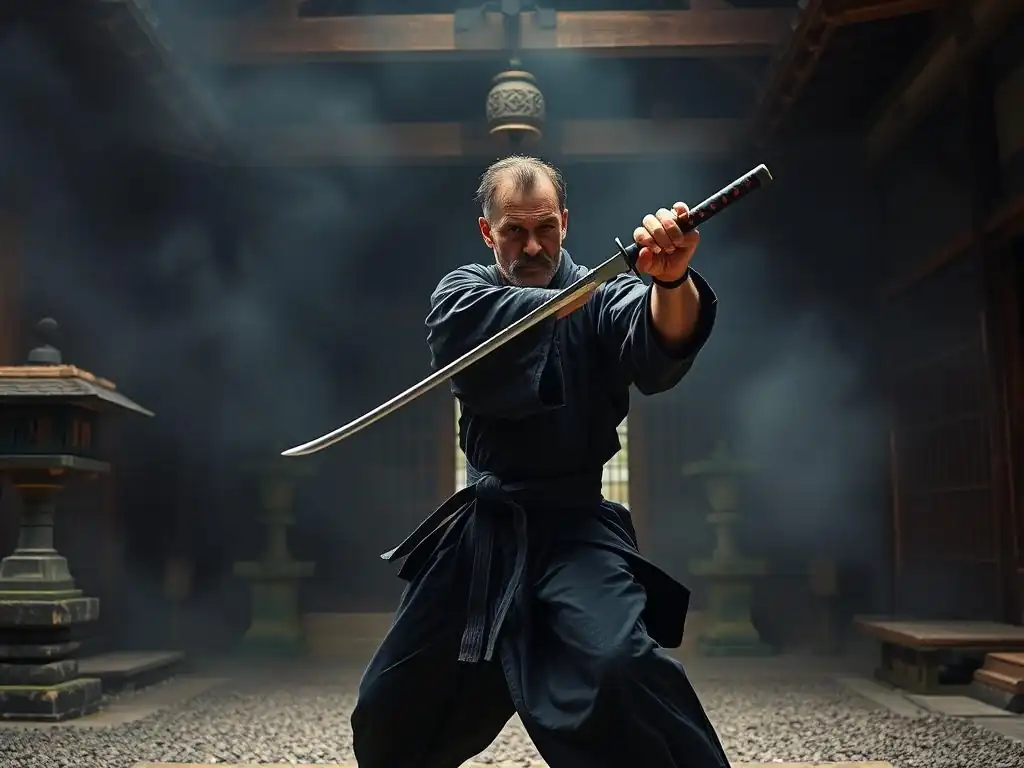
Welcome to Martial Arts Mastery, your gateway to unlocking the profound depths of martial arts. Delve into the fascinating world where discipline meets artistry, and strength intertwines with wisdom. Ever wondered about the hidden origins of fighting techniques? This article explores the pivotal role of Japanese monasteries in shaping and preserving martial arts history. Uncover the secrets held within ancient walls and discover how these spiritual centers became unexpected strongholds of combat tradition. Read on to unravel the mysteries and understand the lasting impact of monastic influence on the martial arts we know today.
- Introduction: Japanese Monasteries and the Legacy of Martial Arts
- The Historical Context: Monasticism and the Warrior Spirit in Japan
- Key Japanese Monasteries and Their Martial Arts Contributions
- Martial Arts Training Within Japanese Monasteries: Techniques and Disciplines
- The Philosophical Underpinnings: Bushido and Zen in Monastic Martial Arts
- The Decline and Preservation of Monastic Martial Traditions
- Case Study: Shorinji Kempo
- The Enduring Impact of Japanese Monasteries on Martial Arts
- Conclusion: Honoring the Legacy of Japanese Monasteries Martial Arts History
-
Frequently Asked Questions
- What role did Japanese monasteries play in preserving martial arts history?
- How did the unique environment of monasteries influence the development of martial arts?
- Are there specific examples of martial arts that were significantly influenced by Japanese monasteries?
- How did monks balance their religious duties with martial arts training?
- What is the lasting legacy of Japanese monasteries on modern martial arts?
- Final Reflection: Guardians of the Way
- Unlock Ancient Wisdom: Embark on Your Martial Arts Journey Now!
Introduction: Japanese Monasteries and the Legacy of Martial Arts
Enbukai.org: Exploring the Intersection of Spirituality and Combat
The pursuit of martial arts mastery often transcends mere physical technique, delving into realms of discipline, philosophy, and spiritual development. Websites like Martial Arts Mastery, and similar platforms, serve as crucial modern-day repositories, exploring the deep historical connections between spiritual practices and combat disciplines. This exploration is particularly relevant when examining the Japanese monasteries martial arts history, where centers of religious devotion simultaneously served as cradles for sophisticated fighting traditions. The intersection of spiritual seeking and martial training provided a unique environment for the evolution of techniques and principles that continue to influence martial arts today.
These digital resources help connect contemporary practitioners with the rich heritage of their arts, highlighting how ancient wisdom informed practical combat skills. By documenting the history, techniques, and philosophical underpinnings, they preserve knowledge that might otherwise be lost, echoing the role that institutions like monasteries played centuries ago in safeguarding cultural and technical traditions. Understanding this historical symbiosis is vital for appreciating the full depth and purpose behind many traditional Japanese martial arts.
Japanese Monasteries Martial Arts History: An Overview
The history of martial arts in Japan is intricately woven with the development of its religious institutions, particularly Buddhist monasteries. From the Heian period (794-1185) onwards, as monasteries amassed wealth and political influence, they also developed significant military capabilities, leading to the rise of the sōhei, or warrior monks. These monastic armies were not simply untrained militias; they cultivated specific martial skills to protect their land, wealth, and autonomy from rival monasteries, samurai clans, and the central government. This practical need for self-defense and military power fostered the development and preservation of various martial techniques within monastic walls.
The involvement of Japanese monasteries in martial arts history extends beyond just military conflict. Many Buddhist sects, especially Zen, emphasized rigorous physical and mental discipline as part of the path to enlightenment. Martial training, seen as a form of shugyō (austere training), became integrated into monastic life, providing a physical and mental challenge that complemented meditation and scriptural study. This dual emphasis on spiritual and martial development ensured that monasteries became significant centers for the transmission of martial knowledge, influencing the broader landscape of Japanese martial arts for centuries.
The Historical Context: Monasticism and the Warrior Spirit in Japan
Origins of Monastic Orders in Japan
Buddhism was officially introduced to Japan in 538 CE from the Korean kingdom of Baekje, quickly gaining traction among the ruling elite. Early monastic orders, such as those established by the Hossō and Kegon sects, were initially focused on scholarly pursuits and state protection through prayer and ritual.
Major temples like Tōdai-ji in Nara, founded in the 8th century, became powerful religious and political entities, receiving extensive land grants and imperial patronage. As these institutions grew in wealth and influence, they also needed means to protect their interests and enforce their will, leading them to recruit and train individuals capable of physical defense.
Over time, the structure of monastic life evolved, and the need for physical security became paramount, especially as central authority waned and regional conflicts increased. Monasteries began to organize their own forces, drawing from lay followers, retainers, and even monks who took up arms. This shift marked a significant departure from the purely spiritual and scholarly focus of earlier periods, laying the groundwork for the emergence of formidable monastic armies and solidifying the role of Japanese monasteries in martial arts history.
The Rise of Warrior Monks (Sōhei) and Their Martial Prowess
The phenomenon of sōhei, or warrior monks, became particularly prominent from the 10th century onwards. Driven by land disputes, political rivalries with other temples or secular powers, and the need to defend their autonomy, major monasteries like Enryaku-ji on Mount Hiei and Kōfuku-ji in Nara fielded substantial armed forces. These forces were not merely mobs; they were often well-organized and trained, equipped with weapons like the naginata (polearm), sword, and bow. Historical records describe their ferocity and effectiveness in battle, often challenging samurai armies.
The sōhei were instrumental in numerous conflicts throughout the Heian, Kamakura, and Muromachi periods. For instance, the sōhei of Enryaku-ji were notorious for descending from Mount Hiei to intimidate rivals or the imperial court, sometimes numbering in the thousands. Their martial prowess was a direct result of systematic training within the monastic compounds, focusing on practical combat skills necessary for both defensive and offensive operations. This era highlights a peak in the military power wielded by religious institutions and their deep engagement with martial arts.
Influence of Zen Buddhism on Japanese Martial Arts
While some sects produced warrior monks focused on military conflict, Zen Buddhism, introduced more formally in the Kamakura period (1185-1333), exerted a different but equally profound influence on Japanese martial arts. Zen's emphasis on discipline, mindfulness, intuition, and the pursuit of 'no-mind' ( mushin) resonated deeply with the warrior class, the samurai, who were increasingly seeking a spiritual framework for their demanding lives. Zen temples became centers where samurai would retreat for meditation and philosophical guidance.
The principles of Zen—such as living in the moment, detachment from fear and ego, and rigorous self-discipline—were found to be highly applicable to the intense focus and mental fortitude required in combat. Concepts like zanshin (lingering mind/awareness), fudōshin (immovable mind), and the intuitive reaction bypassing conscious thought were honed through Zen practice and integrated into martial training methodologies. This philosophical synergy between Zen and martial arts, particularly swordsmanship ( kenjutsu), archery ( kyūdō), and later arts, shaped the spiritual and mental dimensions that define many traditional Japanese martial disciplines today.
Key Japanese Monasteries and Their Martial Arts Contributions
Enryaku-ji Temple: A Center for Hiei Enshin Ryu Naginatajutsu
Enryaku-ji, the head temple of the Tendai school on Mount Hiei, was arguably the most powerful and feared monastery in Japanese history in terms of military might. Its sōhei forces, at times numbering several thousand, were a significant political and military force from the 10th to the 16th centuries. While they utilized various weapons, the naginata, a polearm with a curved blade, was famously associated with the sōhei of Mount Hiei. This weapon was effective against cavalry and foot soldiers alike, providing reach and power.
Within Enryaku-ji's vast complex, specific martial traditions developed, though many were practical combat methods rather than formalized ryuha (schools) in the later sense. One tradition sometimes linked to Mount Hiei's sōhei is Hiei Enshin Ryu Naginatajutsu, although the direct, unbroken lineage back to the original sōhei is debated by historians. Regardless of the exact lineage, the sheer scale and frequency of Enryaku-ji's military engagements underscore the intensive martial training that must have occurred within its precincts, making it a crucial site in the history of Japanese monasteries martial arts development, particularly concerning the naginata.
Kōfuku-ji Temple: The Siege of Nara and its Impact on Martial Arts
Kōfuku-ji in Nara, the head temple of the Hossō school and the tutelary temple of the powerful Fujiwara clan, was another major center of sōhei power. Like Enryaku-ji, Kōfuku-ji maintained its own armed forces and frequently engaged in conflicts with rival monasteries, especially Enryaku-ji, and secular powers. The temple's sōhei played a significant role in the political landscape of Nara and surrounding regions for centuries. Their involvement in numerous skirmishes and larger conflicts necessitated a high level of martial training.
A notable historical event demonstrating the martial capabilities of Kōfuku-ji's forces was the siege of Nara in 1180 by the Taira clan. Although Kōfuku-ji and Tōdai-ji's sōhei put up a fierce resistance, they were ultimately defeated, and much of Nara was burned.
This event, while a military defeat for the monasteries, highlights the extent of their martial organization and willingness to fight to protect their domains. The tactics and techniques employed by the sōhei during such sieges, involving large-scale engagements, likely influenced the development of group combat strategies and weapon use within monastic settings, contributing to the broader Japanese monasteries martial arts history.
Other Significant Monasteries and Their Unique Traditions
Beyond the most famous warrior-monk strongholds like Enryaku-ji and Kōfuku-ji, numerous other Japanese monasteries played a role in martial arts history, often developing or preserving specific techniques relevant to their sect or location. For instance, temples associated with the Shingon school, particularly on Mount Kōya, also had their own defense forces and unique training methodologies, often incorporating esoteric Buddhist elements into their discipline. The rigorous ascetic practices ( shugendō) associated with mountain monasteries further emphasized physical endurance and practical combat skills needed for survival and protection in remote areas.
Zen monasteries, while not typically fielding large armies like the Tendai or Hossō giants, were crucial for the transmission of martial philosophy and the refinement of individual martial skills, particularly among the samurai who trained there. Daitoku-ji and Myōshin-ji in Kyoto are examples of Zen temples with strong historical ties to the samurai class and, by extension, the martial arts they practiced. These diverse monastic traditions, from the massed ranks of sōhei to the quiet discipline of Zen temples, collectively contributed to the rich tapestry of Japanese monasteries martial arts development.
Martial Arts Training Within Japanese Monasteries: Techniques and Disciplines
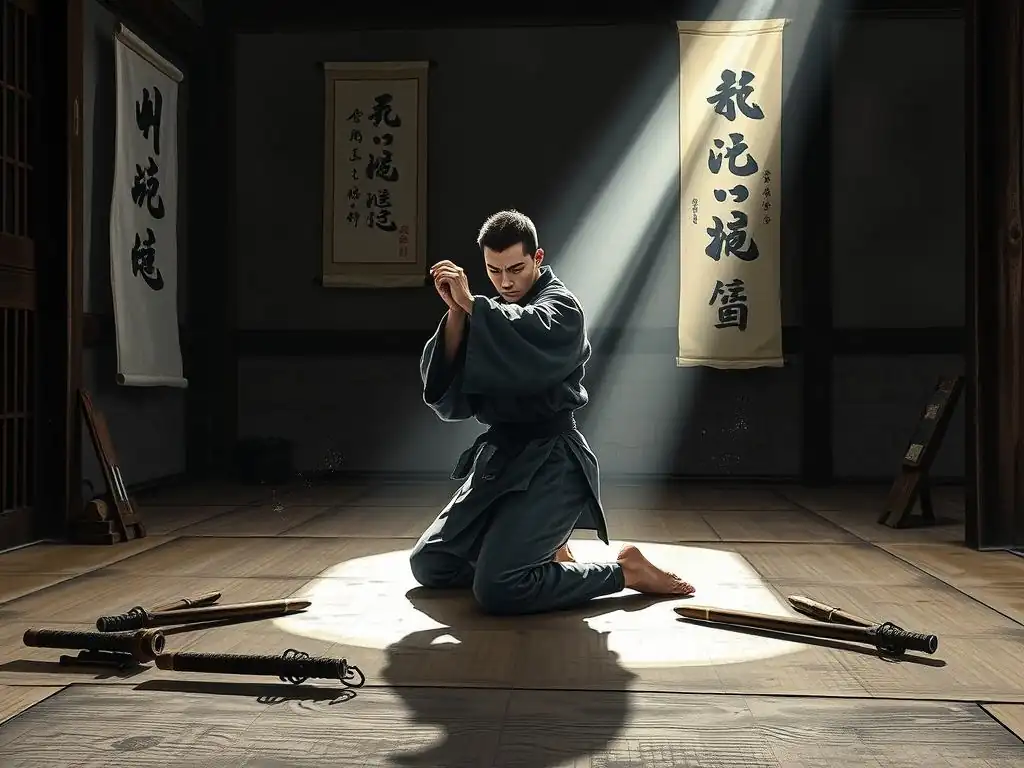
Swordsmanship (Kenjutsu/Kendo) and the Monastic Code
Swordsmanship, whether as kenjutsu (the art of the sword) or its more modern form kendo (the way of the sword), held a significant place in the martial training within Japanese monasteries, particularly those with warrior monks or those frequented by samurai. For warrior monks, sword techniques were essential for close-quarters combat alongside polearms. While specific monastic ryuha of kenjutsu are less well-documented than samurai schools, the proficiency demonstrated by sōhei in historical battles indicates systematic instruction.
For Zen monasteries, swordsmanship took on a deeper, more philosophical dimension. Training was not just about cutting down an opponent but about cultivating presence, decisiveness, and mindfulness. The concept of the sword as an extension of the mind, and the ultimate goal being the defeat of one's own ego and fear rather than just the physical opponent, became central.
Miyamoto Musashi, the legendary swordsman, reportedly spent time in Zen temples, and his writings, like The Book of Five Rings, reflect a strong influence of Zen principles on his martial philosophy. This integration of spiritual discipline with lethal technique is a hallmark of the Japanese monasteries martial arts history.
Staff Fighting (Bōjutsu) and Its Spiritual Significance
Staff fighting ( bōjutsu) was another prevalent martial art practiced within Japanese monasteries. The staff ( bō) was a practical weapon, often derived from tools like walking sticks or carrying poles, making it readily available to monks. Its use could range from a simple defensive tool for travelers to a sophisticated weapon system capable of blocking, striking, and joint manipulation. Many monasteries were located in mountainous or rural areas, where a staff was a common and versatile item.
The bō also held symbolic and spiritual significance. It could represent the Buddhist staff carried by monks ( shakujō), used to ward off evil spirits and announce one's presence. Training with the staff could be seen as a form of moving meditation, requiring focus, balance, and coordination. Some historical bōjutsu techniques are believed to have originated or been preserved within monastic communities before being transmitted to lay practitioners. This practical utility combined with potential spiritual symbolism made bōjutsu a natural fit for monastic martial arts training.
Unarmed Combat (Jujutsu) and Self-Defense in Monastic Life
While weapons were prominent, unarmed combat techniques, collectively known as jujutsu (or similar grappling arts), were also likely part of monastic martial training, particularly for self-defense or situations where weapons were impractical. Monks, even warrior monks, were not always armed, and the ability to defend oneself using throws, joint locks, and strikes was crucial. Many historical jujutsu ryuha trace their origins back to earlier periods, and it is plausible that foundational grappling and unarmed defense methods were practiced within monastic settings.
The need for self-defense was not limited to large-scale battles. Monks traveling between temples, dealing with bandits, or managing internal disputes would require practical skills for personal protection. While detailed historical records of specific monastic jujutsu styles are scarce compared to weapon arts, the principles of using an opponent's energy and leverage, central to jujutsu, align well with the often less physically imposing nature of monastic life compared to the samurai warrior. This aspect of unarmed defense is an understated but important part of Japanese monasteries martial arts history.
Physical and Mental Conditioning: The Monastic Approach
Beyond specific techniques, monastic life itself provided a rigorous regimen of physical and mental conditioning that was inherently martial. Daily routines involved early rising, manual labor (cleaning, gardening, farming), long periods of sitting meditation ( zazen), chanting, and scripture study. This demanding lifestyle built endurance, physical strength, mental fortitude, and focus – qualities essential for any martial artist. The ascetic practices ( shugyō) undertaken by some monks, such as long pilgrimages, fasting, or exposure to harsh weather, pushed the limits of physical and mental resilience.
Zen training, in particular, emphasized mindfulness in all activities, including physical exertion. This attention to detail and presence of mind translated directly to improved awareness and technique in martial arts. The monastic environment fostered discipline, patience, and the ability to remain calm under pressure – attributes as valuable in combat as technical skill. Thus, the entire monastic lifestyle served as a form of holistic training, preparing the body and mind for both spiritual realization and, when necessary, physical conflict.
The Philosophical Underpinnings: Bushido and Zen in Monastic Martial Arts
The Connection Between Zen Meditation and Martial Arts Mastery
Zen meditation ( zazen) is a core practice aimed at achieving insight into the nature of reality through focused awareness. For martial artists, particularly samurai and monks who trained in Zen monasteries, zazen was not merely a religious ritual but a direct method for improving martial skill. The state of mind cultivated in deep meditation – characterized by stillness, clarity, and non-attachment – is directly applicable to combat. The ability to silence distracting thoughts, remain present in the moment, and react intuitively without hesitation or fear is paramount in life-or-death situations.
Zen masters often used analogies from martial arts to explain spiritual concepts, and martial arts masters incorporated Zen principles into their training. The concept of mushin (no-mind), a state of spontaneous, effortless action arising from deep training and intuition, is central to both Zen and high-level martial arts. Through dedicated zazen, practitioners sought to achieve this state, allowing their bodies to react instantly and effectively based on ingrained training, free from conscious deliberation or emotional interference. This profound connection solidified Zen's influence on Japanese monasteries martial arts history.
Bushido Principles and Their Manifestation in Monastic Combat
While Bushido, the 'Way of the Warrior', is primarily associated with the samurai class, its core principles—loyalty, honor, courage, self-discipline, and frugality—also found resonance within monastic martial traditions, particularly among the sōhei. Warrior monks often displayed fierce loyalty to their temple and sect, fighting with remarkable courage to defend their faith and territory. Their lives, while sometimes opulent for the institutions, demanded personal discipline and often involved periods of austerity.
The concept of honor was also crucial; defending the temple's reputation and autonomy was a matter of profound importance. While the motivations of sōhei were complex, involving both religious fervor and secular power struggles, their conduct in battle often reflected the warrior code prevalent in their era. The monastic context added layers of religious justification and spiritual discipline to these warrior principles, creating a unique blend of martial ethics and Buddhist tenets within the framework of Japanese monasteries martial arts history.
Self-Discipline, Mindfulness, and the Pursuit of Perfection
The pursuit of perfection, both spiritual and martial, was a driving force in monastic martial arts. Monastic life is inherently structured around rigorous self-discipline, controlling desires, adhering to strict schedules, and committing to arduous practices. This discipline formed the bedrock for mastering complex martial techniques, which require countless hours of repetitive practice ( kata or suburi). The patience and perseverance cultivated in monastic training were directly transferable to the demanding path of martial mastery.
Mindfulness, cultivated through meditation and integrated into daily activities, enhanced body awareness, focus, and the ability to perceive subtle cues from an opponent. This heightened state of awareness improved reaction time and strategic thinking in combat. The pursuit of perfection was not about achieving an endpoint but about the continuous process of refinement, both in technique and character. This relentless dedication to self-improvement, integrating physical, mental, and spiritual dimensions, defines the unique contribution of Japanese monasteries to martial arts philosophy.
The Decline and Preservation of Monastic Martial Traditions
Historical Events Leading to the Suppression of Warrior Monks
The power of the sōhei reached its zenith in the 12th century but began to decline as the central government under the shogunate consolidated power and developed its own professional samurai armies. The Sengoku period (1467-1615), an era of widespread civil war, saw the monastic armies become significant players, but also targets.
The most devastating blow came from Oda Nobunaga, a powerful daimyo who sought to unify Japan. In 1571, weary of Enryaku-ji's interference and military strength, Nobunaga attacked Mount Hiei, burning the complex to the ground and massacring an estimated 3,000 to 20,000 monks and lay followers, effectively ending the military power of Enryaku-ji's sōhei.
Other major monastic strongholds, including Kōfuku-ji, were also targeted and their military capabilities dismantled by Nobunaga and his successors, Toyotomi Hideyoshi and Tokugawa Ieyasu. The establishment of the Tokugawa Shogunate in 1603 brought an end to the era of large-scale monastic armies. The new government enforced strict controls over religious institutions, prohibiting them from maintaining armed forces and significantly curtailing their political influence. This suppression marked the formal end of the warrior monk era and a major turning point in Japanese monasteries martial arts history.
The Role of Secret Societies and Lineages in Preserving Knowledge
Despite the official suppression, the martial knowledge cultivated within monasteries did not entirely vanish. Some techniques and philosophical insights were likely preserved within smaller, less conspicuous monastic communities or passed down through informal channels. More significantly, many warrior monks or individuals trained in monastic traditions either returned to lay life or joined existing samurai or commoner martial arts schools ( ryuha), bringing their knowledge with them.
Some martial arts lineages trace aspects of their curriculum or philosophy back to monastic sources, though verifying direct, unbroken transmission over centuries is challenging. The esoteric nature of some monastic practices also lent itself to being preserved in secret within specific families or small groups. While the overt military power of monasteries ended, their influence on martial techniques, strategies, and particularly the philosophical and spiritual dimensions of Japanese martial arts continued through these less visible means of transmission.
Modern-Day Revivals and the Continued Influence of Monastic Training
In the modern era, there have been efforts to revive or draw inspiration from historical monastic martial traditions. While large-scale warrior monk training is a thing of the past, the principles of discipline, mindfulness, and the integration of physical and spiritual practice, so central to monastic training, remain highly relevant. Many contemporary martial arts schools, particularly those with roots in traditional Japanese disciplines, emphasize these aspects.
Some modern martial arts, like Shorinji Kempo (discussed below), explicitly acknowledge their historical connection to monasticism, albeit primarily through Chinese Chan (Zen) traditions. Furthermore, certain traditional koryū (old schools) of martial arts may preserve techniques or training methodologies that have historical links to monastic practices. The enduring emphasis on do (way) – the path of self-cultivation – over mere jutsu (technique) in many Japanese martial arts is a direct legacy of the philosophical depth fostered within historical Japanese monasteries martial arts training environments.
Case Study: Shorinji Kempo
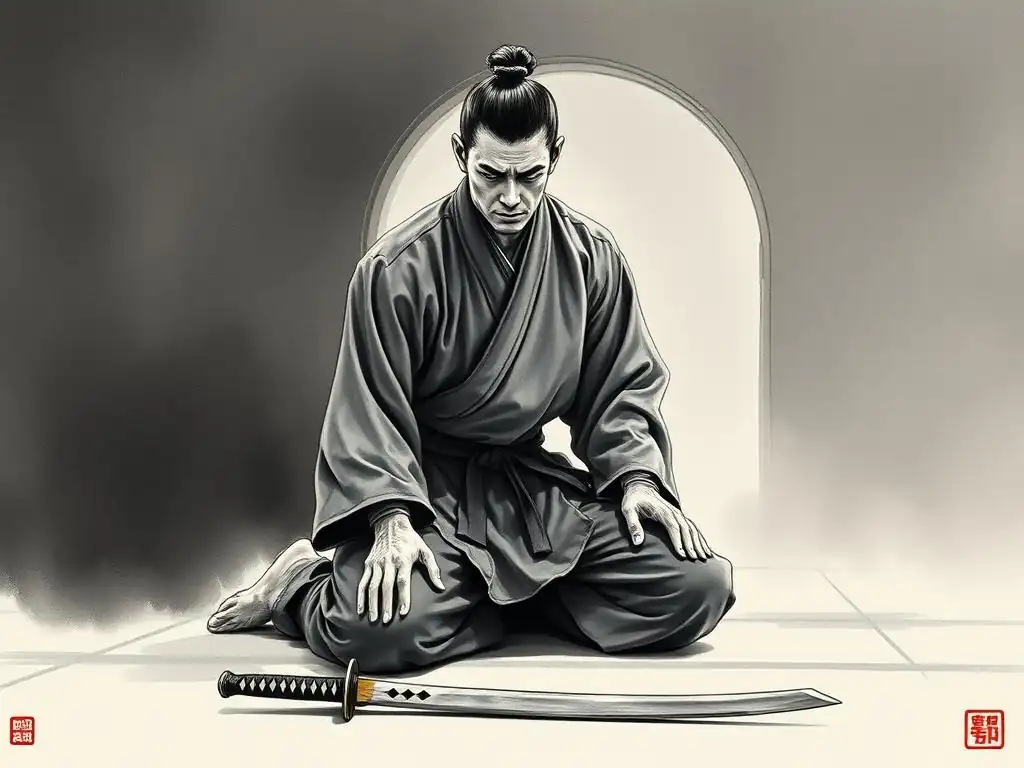
Origins and Development within Shorinji Monastery (China) and its Adaptation in Japan
Shorinji Kempo is a modern Japanese martial art founded in 1947 by Doshin So (Sō Dōshin). While developed in post-war Japan, its philosophical and technical roots are explicitly traced by its founder to the martial traditions associated with the Shaolin Monastery (Shorinji in Japanese) in China. Doshin So spent significant time in China during the war and studied various martial arts, including those he believed were descendants of the original Shaolin fighting methods. He sought to revive these traditions, not just as fighting techniques, but as a system for self-cultivation and mutual help, aligning with Buddhist ideals.
Upon returning to Japan, Doshin So synthesized his knowledge into Shorinji Kempo, establishing it in Tadotsu, Kagawa Prefecture. The art is structured around three main components: shūkei (philosophy/training goals based on Kongo-Zen), gōhō (hard techniques like strikes and blocks), and jūhō (soft techniques like throws, pins, and joint locks).
The training environment, known as a dōin, is akin to a monastic setting, emphasizing communal living, meditation, and the pursuit of spiritual growth alongside physical training. This direct attempt to transplant and adapt a monastic martial concept into a modern Japanese context makes Shorinji Kempo a fascinating case study, even though its primary historical link is to China rather than native Japanese monasteries martial arts history.
Techniques and Principles
Shorinji Kempo's techniques are characterized by their practical effectiveness and emphasis on simultaneous defense and counter-attack. The gōhō techniques include a wide array of punches, kicks, and blocks, often targeting vital points. The jūhō techniques involve escaping from holds, joint manipulations ( kansetsu waza), and throws ( nage waza). A key principle is seihō (correct method), which includes restorative massage and acupressure techniques ( kyūsho), reflecting a holistic approach to the body.
Philosophically, Shorinji Kempo is deeply rooted in Doshin So's interpretation of Kongo-Zen, which emphasizes the inseparability of mind and body ( shinshin ichinyo) and the potential for human growth through physical and mental training. The art teaches kumite shūdan, training in pairs, emphasizing cooperation and mutual improvement rather than pure competition. This reflects the monastic ideal of community and shared progress, distinguishing it from many competitive sports. The principles aim to build confidence, discipline, and compassion, aligning martial skill with ethical conduct.
Legacy and Contemporary Practice
Today, Shorinji Kempo is practiced globally, with organizations in numerous countries. While not a historical koryū from Japan's feudal past, its deliberate design around monastic principles makes it a living example of how martial arts can be integrated with a spiritual or philosophical path. Its emphasis on partnership, self-improvement, and community sets it apart.
The legacy of Shorinji Kempo lies in its successful adaptation of monastic ideals to a modern martial art system. It demonstrates that the principles of discipline, mindfulness, and the pursuit of holistic development, which were central to historical Japanese monasteries martial arts history, remain relevant and applicable in contemporary martial training, even when drawing inspiration from foreign monastic traditions.
The Enduring Impact of Japanese Monasteries on Martial Arts
Shaping the Development of Naginatajutsu
As mentioned, the sōhei of monasteries like Enryaku-ji were strongly associated with the naginata. While the naginata was used by other warrior classes, the sheer volume of sōhei who trained with and employed it in battle likely influenced the evolution of techniques specific to large-scale group combat and defense of fortified positions. The reach and cutting power of the naginata made it ideal for fighting in formation or defending gates and walls, scenarios common in monastic warfare.
Although specific monastic naginata ryuha may not have survived intact, the extensive use of this weapon by monastic armies undoubtedly contributed to the pool of knowledge and techniques that informed later, formalized schools of naginatajutsu that emerged in the Edo period and continue to be practiced today. The image of the warrior monk wielding a naginata remains iconic in Japanese monasteries martial arts history.
Preserving Ancient Techniques and Philosophies
Monasteries, as stable institutions over long periods, served as unintended custodians of various skills and knowledge, including martial arts. Before the widespread formalization of martial ryuha, techniques were often passed down through families, communities, or specific institutions like monasteries. In times of political instability or war, monasteries could provide a sanctuary where training could continue when secular centers were disrupted.
Moreover, the philosophical and spiritual frameworks provided by Buddhism, particularly Zen, became integral to the higher-level understanding and practice of many Japanese martial arts. Concepts like mushin, zanshin, and the emphasis on mental fortitude and ethical conduct were preserved and transmitted through monastic teachings and the interactions between monks and warriors. This philosophical legacy is arguably the most significant enduring impact of Japanese monasteries on martial arts.
Inspiring Future Generations of Martial Artists
The stories of warrior monks, their discipline, and their prowess continue to capture the imagination of martial artists today. The idea of integrating rigorous physical training with deep philosophical or spiritual practice remains a powerful model for those seeking more than just combat effectiveness. The historical example of Japanese monasteries martial arts traditions provides a template for a holistic approach to training that seeks to develop the whole person – mind, body, and spirit.
Contemporary martial arts that emphasize self-cultivation, mindfulness, and ethical behavior draw inspiration, directly or indirectly, from the principles refined in monastic settings. The legacy encourages practitioners to see their training not just as learning fighting techniques but as a lifelong path of self-discovery and improvement, echoing the monastic journey towards enlightenment.
Conclusion: Honoring the Legacy of Japanese Monasteries Martial Arts History
The Importance of Understanding Monastic Contributions
Understanding the history of Japanese monasteries martial arts is crucial for a complete appreciation of traditional Japanese martial arts. Monasteries were not just centers of religious learning; they were significant social, political, and sometimes military forces that actively engaged in and contributed to the development of martial traditions. Their involvement ranged from fielding large armies of warrior monks practicing practical combat skills to providing the philosophical bedrock (especially through Zen) that shaped the mental and spiritual dimensions of arts like kenjutsu and kyūdō.
Ignoring the role of monasteries would mean overlooking a vital component of how martial arts were developed, preserved, and transmitted in Japan. It would also diminish the understanding of the deep connection between spiritual discipline and martial training that is a defining characteristic of many Japanese martial ways ( do).
Continuing the Study of Martial Arts and Monastic Traditions
The study of Japanese monasteries martial arts history is an ongoing process, requiring careful examination of historical texts, temple records, and the lineages of traditional martial arts schools. Platforms dedicated to martial arts history, like Martial Arts Mastery, play a valuable role in disseminating this knowledge and fostering further research. By continuing to explore the intersection of monasticism and martial arts, we gain deeper insights into the cultural, historical, and philosophical forces that shaped these disciplines.
This continued study not only enriches our understanding of the past but also provides valuable perspectives for contemporary martial arts practice, reminding practitioners of the potential for martial training to be a path of holistic self-improvement, discipline, and mindfulness, just as it was for the monks and warriors of ancient Japan.
Frequently Asked Questions
What role did Japanese monasteries play in preserving martial arts history?
Japanese monasteries served as safe havens for martial arts practices during periods of societal upheaval and prohibition. They provided a sanctuary for practitioners and a space for knowledge transmission.
How did the unique environment of monasteries influence the development of martial arts?
The monastic lifestyle, emphasizing discipline, meditation, and self-sufficiency, fostered a holistic approach to martial arts. This led to the integration of spiritual and philosophical elements into training.
Are there specific examples of martial arts that were significantly influenced by Japanese monasteries?
Many martial arts styles have roots in monastic traditions, including certain forms of Kempo and Jujutsu. Some martial arts incorporated elements of Zen Buddhism and other spiritual practices.
How did monks balance their religious duties with martial arts training?
Martial arts were often seen as a form of physical and mental discipline, complementing spiritual practices. Monks used martial arts for self-defense, physical fitness, and to protect the monastery.
What is the lasting legacy of Japanese monasteries on modern martial arts?
The monastic influence is still evident in the emphasis on discipline, respect, and self-improvement in many martial arts schools. The philosophical underpinnings are also a key part of many styles.
Final Reflection: Guardians of the Way
The exploration of Japanese monasteries' role in preserving martial traditions reveals a profound connection between spiritual discipline and physical prowess, a link that remains surprisingly relevant in today's world of mindfulness and holistic well-being. The dedication and rigorous training within these sacred spaces offer a compelling model for cultivating inner strength and resilience, qualities increasingly sought after in our fast-paced, often chaotic, lives.
The influence of these monasteries extends far beyond the dojo, shaping the very fabric of Japanese culture and influencing martial arts practices globally. The dedication to preserving these traditions speaks volumes about the enduring human need for connection to history, discipline, and a sense of purpose. The ultimate aim of martial arts is not to win battles, but to avoid fighting altogether.
This quote encapsulates the profound philosophy at the heart of these monastic practices, emphasizing peace and self-mastery over aggression.
As we conclude this journey into the heart of Japanese monasteries and their martial arts history, I invite you to consider how the principles of discipline, mindfulness, and dedication to a higher purpose can enrich your own life. Embrace the spirit of the warrior monk, not in the pursuit of conflict, but in the unwavering pursuit of self-improvement and inner peace. Let the lessons learned from these ancient traditions guide you towards a more balanced, purposeful, and ultimately, more fulfilling existence.
Unlock Ancient Wisdom: Embark on Your Martial Arts Journey Now!
Thank you for delving into the fascinating world of Japanese monasteries and their crucial role in preserving martial traditions. We hope you found valuable insights into the historical and spiritual connections that shape these arts. Now, it's time to take action and deepen your understanding.
Here are a few things you can do:
- Start exploring related historical resources: Delve into the history of a specific martial art, such as Kendo or Judo, and explore its unique origins and evolution.
- Share this article with fellow martial arts enthusiasts to spark conversation about the profound impact of history on martial arts practice.
- Consider visiting a local martial arts dojo with ties to Japanese martial traditions to learn about the values taught in Japanese martial arts.
Which aspect of Japanese martial arts history inspires you the most to deepen your practice or understanding?