
Common Beginner Mistakes in Wing Chun and How to Fix Them Fast


Welcome to Martial Arts Mastery, your gateway to unlocking the secrets of combat and self-discovery!
Delve into the world of striking, grappling, and inner peace. Are you ready to embark on the Wing Chun journey, but worried about stumbling at the first hurdle? We understand. Many beginners fall prey to common pitfalls that can hinder their progress. This article, "Common Beginner Mistakes in Wing Chun and How to Fix Them Fast," shines a light on these errors and offers practical solutions to accelerate your learning. Discover how to avoid these common mistakes and unlock your true potential in this legendary martial art.
- Introduction to Wing Chun Beginner Training Errors
- Mistake #1: Incorrect Stance (Yee Gee Kim Yeung Ma)
- Mistake #2: Poor Hand Position (Wing Chun Hand Techniques)
- Mistake #3: Lack of Relaxation and Tension
- Mistake #4: Neglecting Footwork and Mobility
- Mistake #5: Rushing the Learning Process
- Mistake #6: Not Understanding Wing Chun Principles
- Conclusion: Correcting Wing Chun Beginner Training Errors for Mastery
-
Frequently Asked Questions
- What are some of the most common beginner mistakes in Wing Chun training?
- Why is maintaining proper structure so important in Wing Chun?
- How can I improve my centerline defense in Wing Chun?
- What is the key to generating power effectively in Wing Chun?
- How often should a beginner practice Wing Chun to see improvement?
- Final Reflection: Embracing the Path of Wing Chun Mastery
- Unleash Your Wing Chun Potential Now!
Introduction to Wing Chun Beginner Training Errors
Embarking on the journey of learning Wing Chun is an exciting endeavor, introducing practitioners to a unique system of martial arts developed for practical self-defense. This system, known for its efficiency, directness, and reliance on structure and principles rather than brute force, requires diligent and precise training. However, like any complex skill, mastering the fundamentals of Wing Chun involves navigating potential pitfalls, and Wing Chun beginner training errors are a common part of the learning curve. Recognizing and addressing these early on is paramount to building a strong foundation.
Understanding the common Wing Chun beginner training errors is not about discouraging new students but empowering them. Every experienced practitioner has encountered and overcome these initial hurdles. This article aims to shine a light on the most prevalent mistakes made by those new to the art, providing clear explanations and actionable strategies to correct them swiftly. By focusing on these key areas from the outset, beginners can accelerate their progress, prevent ingrained bad habits, and develop a more effective and authentic Wing Chun practice.
Understanding the Fundamentals of Wing Chun for Beginners
Wing Chun stands apart from many other martial arts due to its core principles and unique approach to combat. At its heart lies the concept of the centerline, the imaginary line running vertically down the center of the body, which is simultaneously protected and exploited. Economy of motion is another critical element, emphasizing direct, efficient movements that minimize wasted energy and time. Power generation in Wing Chun is derived not from large, winding movements, but from proper structure, relaxation, and coordinated body mechanics, often referred to as "short power."
For Wing Chun beginners, grasping these fundamental concepts is more important than learning a vast repertoire of techniques. The initial stages of training heavily emphasize developing the correct structure through stance work (Yee Gee Kim Yeung Ma), understanding basic hand positions and movements (like the straight punch and basic blocks/guards), and cultivating sensitivity through exercises like Chi Sao (sticking hands).
A typical beginner curriculum might involve spending the first few months focusing almost exclusively on the Siu Lim Tao form, the foundational set that introduces core principles and body mechanics. This deliberate pace is designed to embed the correct habits before complexity is added.
Why Avoiding Common Mistakes is Crucial for Wing Chun Progress
Avoiding or quickly correcting Wing Chun beginner training errors is vital for long-term proficiency and safety. When fundamental mistakes, such as an incorrect stance or poor hand structure, become ingrained, they create a weak technical base. This weak base limits the practitioner's ability to generate power effectively, maintain balance under pressure, and apply techniques correctly in dynamic situations. For instance, consistently holding tension in the shoulders can prevent the development of relaxed, powerful force transmission, a hallmark of advanced Wing Chun.
Furthermore, allowing Wing Chun beginner training errors to persist can increase the risk of injury. Incorrect body mechanics place undue stress on joints and muscles, potentially leading to chronic issues over time. Correcting deeply ingrained bad habits later in training is significantly more challenging and time-consuming than addressing them early on.
Instructors often note that it can take twice as long to unlearn a bad habit as it did to learn it initially. Therefore, paying meticulous attention to detail from day one, seeking feedback, and being willing to refine foundational movements are essential investments in a successful and sustainable Wing Chun journey.
Mistake #1: Incorrect Stance (Yee Gee Kim Yeung Ma)
The Importance of a Solid Wing Chun Stance
The Yee Gee Kim Yeung Ma, or "Character Two Goat Pulling Stance," is the cornerstone of Wing Chun's structure and power generation. It is not merely a static posture but a dynamic foundation that allows for stability, mobility, and the efficient transmission of force. A properly executed stance provides a strong connection to the ground, enabling the practitioner to absorb incoming force and project their own power outwards. It helps maintain balance, crucial for both defense and offense, and facilitates quick, precise footwork. Without a stable and correctly aligned stance, all subsequent techniques will lack power, rootedness, and effectiveness.
Beginners often spend a significant portion of their initial training perfecting this stance. Instructors might dedicate the first 15-20 minutes of a beginner class solely to stance work and the Siu Lim Tao form, which is performed almost entirely within this stance.
The stance's slightly inward-pointing feet and bent knees create a stable base while allowing the hips to be mobile and aligned with the centerline. The slight tension maintained in the inner thighs and lower core connects the structure from the ground up, enabling the body to act as a cohesive unit for generating force, such as the powerful chain punch.
Common Stance Errors in Wing Chun Training
Despite its fundamental importance, the Yee Gee Kim Yeung Ma is a frequent source of Wing Chun beginner training errors. One of the most common issues is incorrect knee alignment. Beginners often let their knees splay outwards or collapse inwards too much, neither of which provides the optimal structure for stability and power transmission. The knees should track roughly over the toes, with a sense of pushing inwards to engage the inner thighs, creating tension and connection to the ground. This subtle inward pressure is key to the "goat pulling" analogy.
Incorrect Knee Alignment
Many beginners struggle to find the correct angle for their knees and feet. If the knees fall outwards, the stance becomes weak laterally, making the practitioner easily unbalanced by side forces. Conversely, if the knees collapse inwards excessively, it puts strain on the knee joints and inhibits proper hip mobility. The ideal alignment involves the knees pointing slightly inwards, roughly towards the corners of a square drawn around the feet, while the feet are angled outwards at approximately 45-60 degrees. Achieving this requires conscious effort and building strength in the supporting leg muscles.
Improper Weight Distribution
Another prevalent error is improper weight distribution. The weight should be balanced evenly between both legs, with a slight emphasis towards the heels to maintain stability and readiness for movement. Beginners might lean too far forward or backward, or favor one leg over the other, leading to instability and slower transitions.
A simple test is to see if you can lift the balls of your feet slightly without losing balance; if not, too much weight is forward. Conversely, if you can lift your heels easily, too much weight is back. Even weight distribution ensures the structure is solid in all directions.
Tension in the Shoulders and Back
While the stance requires structural integrity and engagement of the legs and core, beginners often mistakenly hold excessive tension in their upper body, particularly the shoulders and back. This tension is counterproductive in Wing Chun, which emphasizes relaxation and efficiency. Stiff shoulders prevent the arms from moving freely and powerfully, and a tense back disrupts the kinetic chain from the ground up. The upper body should be relaxed, with the shoulders dropped and the elbows slightly tucked, allowing energy to flow unimpeded. This is one of the most persistent Wing Chun beginner training errors to overcome.
How to Correct Your Wing Chun Stance for Optimal Power
Correcting stance errors requires conscious effort, consistent practice, and attention to detail. A good starting point is to practice the basic Yee Gee Kim Yeung Ma in front of a mirror to visually check alignment. Focus on the feeling of rootedness and connection to the ground. Ensure your feet are shoulder-width apart (or slightly wider, depending on lineage) with the correct outward angle, and then bend the knees, pushing them slightly inwards. Imagine your legs are two pillars supporting your core, connected by strong internal tension.
Drills for Improving Stance Stability
Several drills can help improve stance stability. Holding the Yee Gee Kim Yeung Ma for extended periods (starting with 1-2 minutes and gradually increasing to 5-10 minutes) builds leg strength and endurance. Practicing subtle shifts of weight within the stance, without lifting the feet, helps develop balance and proprioception. Another useful drill involves having a training partner apply light, controlled pressure from different angles (front, sides) while you maintain your structure, learning to absorb force through your legs and core rather than resisting with your upper body. These drills directly address Wing Chun beginner training errors related to instability.
Visualizing the Correct Stance
Visualization is a powerful tool for correcting structural issues. Imagine roots growing from your feet into the ground, anchoring you firmly. Visualize your legs as strong springs, ready to absorb and release energy. For knee alignment, imagine your knees being gently pulled towards each other by a band. To combat upper body tension, visualize water flowing down from your shoulders, draining away stiffness. Consistent visualization during practice helps reinforce the correct feeling and alignment of the stance, making the corrections more intuitive over time for Wing Chun beginners.
Mistake #2: Poor Hand Position (Wing Chun Hand Techniques)
Mastering the Centerline Theory in Wing Chun
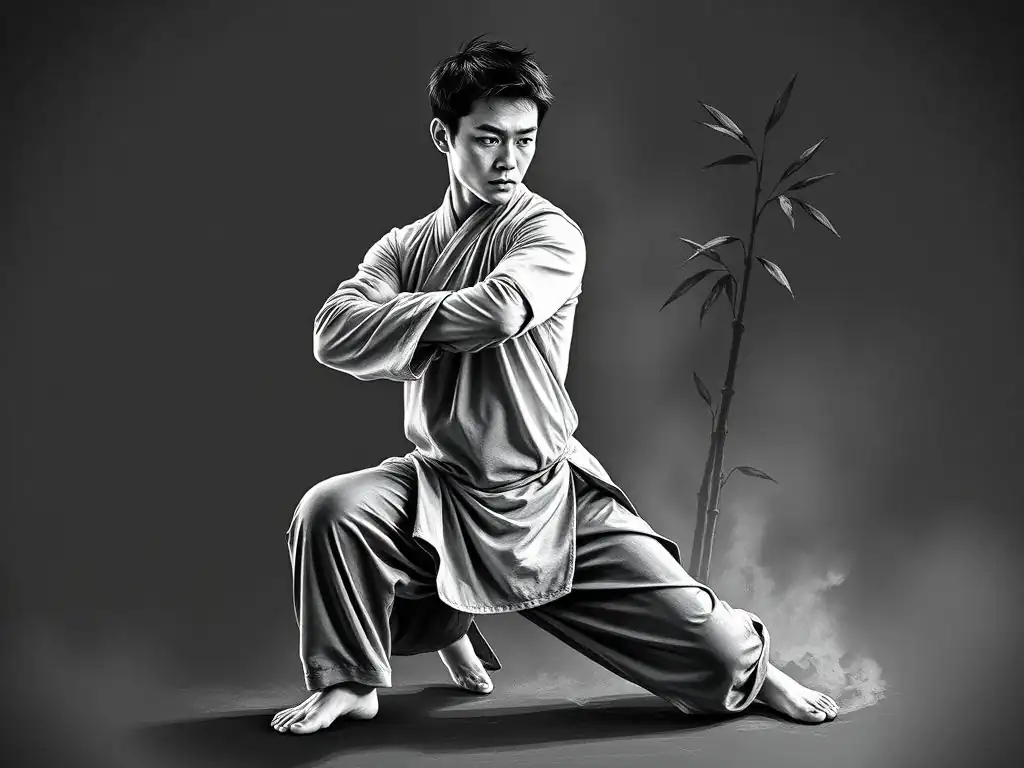
The centerline theory is perhaps the most defining strategic concept in Wing Chun. It posits that the most vulnerable targets (head, throat, chest, abdomen, groin) lie along the vertical midline of the body, and the shortest distance between two points is a straight line. Therefore, Wing Chun techniques are primarily designed to attack and defend along this central axis. Maintaining control of the centerline, both protecting your own and attacking your opponent's, is the primary objective in combat. This focus dictates hand positions, angles, and movements, making proper hand structure critical.
Wing Chun hand techniques like the straight punch (Yat Chi Chong Kuen), Tan Sao (dispersing hand), Bong Sao (wing arm), and Fook Sao (controlling hand) are all variations designed to operate effectively along or across the centerline. The straight punch, delivered from the chest along the centerline, is considered the core offensive weapon due to its speed and directness. Defensive movements often involve deflecting incoming force while simultaneously occupying the centerline with your own structure. Understanding and constantly applying the centerline principle is fundamental and directly impacts the effectiveness of all hand techniques for Wing Chun beginners.
Common Hand Position Errors in Wing Chun Training
Numerous Wing Chun beginner training errors manifest in poor hand position and execution of techniques. One prevalent issue is incorrect elbow placement. In most Wing Chun techniques, the elbows are kept relatively close to the body, pointing downwards. This "sinking the elbow" creates a strong, connected structure from the hand through the arm to the core and stance, allowing force to be transmitted efficiently. Beginners often let their elbows flare outwards, which weakens the structure, exposes the body's sides, and makes techniques less direct.
Incorrect Elbow Placement
When elbows flare outwards, the arm becomes a weaker lever, and the connection to the core structure is compromised. This is particularly detrimental in techniques like Tan Sao or Bong Sao, where the tight elbow is essential for deflecting force and maintaining structure. Beginners might do this out of habit from other martial arts or simply not understanding the structural necessity. Correcting this involves constant awareness and drills that emphasize keeping the elbows tucked, like practicing techniques close to a wall without touching it.
Weak Wrist Structure
A weak or bent wrist is another common Wing Chun beginner training error. Whether throwing a punch or executing a defensive hand, the wrist should generally be kept straight and strong, aligning the forearm and hand. A bent wrist absorbs impact poorly, reduces force transmission, and is vulnerable to injury. In techniques like the straight punch, a bent wrist means the force dissipates at the point of impact instead of transferring through the opponent. Strengthening the wrists and forearms through specific exercises and maintaining conscious alignment during practice are key corrective steps.
Telegraphing Punches
Telegraphing, or giving away your intention before executing a technique, is a significant error that often starts with poor hand position or unnecessary preparatory movements. Beginners might draw their punch back before striking, or tense their shoulders visibly. Wing Chun emphasizes directness and non-telegraphic movements. The hands should ideally move from their guard position (often along the centerline) straight to the target. Any extraneous movement warns the opponent and costs precious milliseconds. Identifying and eliminating these tells is crucial for effective striking.
Fixing Hand Position for Effective Wing Chun Techniques
Correcting hand position errors requires diligent practice, focusing on the details of each movement. Practicing basic techniques slowly and deliberately, paying attention to elbow angle, wrist alignment, and the path of the hand, is essential. Using a mirror or recording yourself can help identify subtle errors you might not feel. Partner drills, where a training partner provides light resistance or feedback on your structure, are invaluable for developing correct habits under slight pressure.
Developing Correct Elbow Control
To develop correct elbow control, practice the Siu Lim Tao form slowly, focusing solely on keeping the elbows sunk and tucked. Engage in wall drills, performing punches and hand movements with your side close to a wall, ensuring your elbow doesn't scrape the surface. Chi Sao practice, even at a very basic level, forces practitioners to maintain correct elbow structure as pressure is applied and movements are exchanged. These exercises help build the muscle memory for keeping the elbows in the optimal position, crucial for overcoming Wing Chun beginner training errors in structure.
Strengthening the Wrist and Forearm
Strengthening the wrist and forearm helps maintain a strong, straight wrist structure during techniques. Exercises like wrist curls (with light weights), using grip strengtheners, and performing knuckle push-ups (starting on knees if necessary) can build the necessary strength. During practice, constantly remind yourself to keep the wrist straight, like a natural extension of the forearm. In partner drills, feel how a straight wrist connects better structurally than a bent one when receiving or applying force.
Drills for Non-Telegraphic Movements
Eliminating telegraphing involves practicing techniques without any prior movement or tension. Stand in your stance with your hands in a ready position and practice launching a straight punch directly from there, without pulling back or tensing up. Focus on initiating the movement from the core and driving it straight out. Partner drills where your partner watches specifically for telegraphing cues can provide immediate feedback. The goal is for the movement to be sudden and direct, like a whipcrack, giving the opponent minimal warning. Correcting these Wing Chun beginner training errors enhances speed and surprise.
Mistake #3: Lack of Relaxation and Tension
The Paradox of Relaxation and Power in Wing Chun
One of the most challenging concepts for Wing Chun beginners to grasp is the principle of relaxation. It seems counterintuitive that being relaxed can lead to greater power, yet it is a cornerstone of Wing Chun methodology. Tension inhibits the free flow of energy and movement, stiffens the body, and makes techniques slower and weaker. Wing Chun power is not generated through brute muscular force alone, but through the coordinated release of energy from a relaxed, connected structure. Imagine cracking a whip – the power comes from the relaxed flexibility and sudden snap, not from holding it rigid.
Relaxation in Wing Chun doesn't mean being floppy or weak; it means releasing unnecessary muscular tension. It allows for increased speed, greater sensitivity to an opponent's energy (crucial in Chi Sao), and the ability to absorb incoming force efficiently. A relaxed muscle can contract faster and more powerfully than a muscle already tensed. Developing this relaxed power is a journey that takes significant time and practice, often feeling awkward initially, but it is essential for unlocking the full potential of Wing Chun techniques and is a common area for Wing Chun beginner training errors.
Holding unnecessary tension is a pervasive issue among Wing Chun beginners. This manifests in various ways, often unconsciously. Clenching the fists tightly when not striking is a very common error. Fists should be relaxed until the moment of impact, allowing for speed and preventing arm fatigue. Holding tension in the arms, shoulders, and neck inhibits the free movement of the hands and disrupts the structural connection to the core and legs.
Clenching the Fists
Many beginners clench their fists constantly, whether in their guard position or even during forms. This pre-tension tires the forearm muscles quickly and slows down the punch. The fingers should be lightly curled, and the fist should only tighten just before or upon impact. Practicing opening and closing the hands rapidly helps develop the ability to relax and tense on demand. This is a subtle but significant Wing Chun beginner training error.
Holding Breath During Movements
Holding breath is another common tension-related mistake. Beginners often inadvertently hold their breath during strenuous movements or when anticipating impact. This restricts oxygen flow, increases overall body tension, and limits endurance. Proper breathing should be relaxed and coordinated with movements – typically exhaling on exertion (like a punch) and inhaling during recovery or preparation. Shallow or held breath significantly hinders the ability to maintain relaxation.
Unnecessary Muscle Engagement
Beyond specific areas like fists or breath, beginners often engage large muscle groups unnecessarily during techniques that should primarily use structural alignment and smaller, faster muscles. For example, using shoulder muscles to drive a punch instead of the lats and core, or tensing the entire leg when only a slight adjustment in the stance is needed. This wastes energy, slows down reactions, and makes movements less efficient. Identifying and releasing this unnecessary muscle engagement is key to correcting Wing Chun beginner training errors related to tension.
Cultivating Relaxation for Efficient Wing Chun
Cultivating relaxation requires conscious effort and specific training methods. It's not something that happens automatically; it must be practiced diligently alongside techniques. Focusing on the feeling of releasing tension throughout the body, particularly in areas prone to stiffness like the shoulders, is crucial. Many instructors emphasize the importance of "sinking" the energy downwards, promoting a relaxed upper body and a rooted lower body.
Breathing Exercises for Wing Chun Practitioners
Simple breathing exercises can significantly help in cultivating relaxation. Practice deep, diaphragmatic breathing before and during training. Focus on slow, steady inhales and complete exhales. Coordinate breathing with movements in the forms, such as exhaling as a technique extends outwards and inhaling as the hands return to guard. Becoming mindful of your breath is a powerful tool for identifying and releasing tension throughout your Wing Chun practice.
Mindful Movement Drills
Performing Wing Chun movements and forms very slowly, with deliberate attention to releasing tension in every part of the body, is an excellent drill. Focus on the feeling of relaxation flowing through your limbs. As you practice techniques, consciously scan your body for areas of unnecessary tension and actively try to relax them without losing structural integrity. This mindful approach helps retrain the body to move efficiently without stiffness, addressing fundamental Wing Chun beginner training errors.
Focus on Structure, Not Force
Shift your focus from trying to generate power through muscular force to generating it through correct structure and relaxation. Practice techniques like the straight punch, aiming for looseness and speed over brute strength. Feel how a relaxed punch, delivered with proper body mechanics, can penetrate more effectively than a stiff, muscled one. Trust that the power comes from the ground and travels through your aligned, relaxed structure. This philosophical shift is vital for overcoming tension-based Wing Chun beginner training errors.
Mistake #4: Neglecting Footwork and Mobility
The Importance of Footwork in Wing Chun
While Wing Chun is often characterized by its emphasis on the centerline and close-range combat, effective footwork is absolutely indispensable. Footwork provides the means to manage distance, generate power, maintain balance, evade attacks, and create angles. It is the engine that drives the techniques, allowing the practitioner to move into optimal range for offense and out of danger for defense. Wing Chun footwork is typically characterized by short, rapid steps that maintain a stable base, often involving shifting weight and pivoting rather than large, crossing steps.
The basic Wing Chun shuffle step (often called "Bil Ma" or "sidestepping") allows the practitioner to move forward, backward, or sideways while largely maintaining the structure of the Yee Gee Kim Yeung Ma. This keeps the centerline protected and the body aligned for immediate action. Effective footwork ensures you are never static; you are always ready to adjust, advance, or retreat. Neglecting footwork is a significant Wing Chun beginner training error that severely limits the practical application of hand techniques.
Common Footwork Errors in Wing Chun Training
Despite its importance, footwork is frequently overlooked by Wing Chun beginners in their eagerness to learn hand techniques. This leads to several common errors. Stiff and unresponsive footwork is perhaps the most prevalent. Beginners might keep their feet glued to the floor or move awkwardly, lacking the fluidity required to adjust quickly in response to an opponent's movements.
Stiff and Unresponsive Footwork
Beginners often fail to transfer the principle of relaxation from their upper body to their legs and feet. Stiff legs lead to slow, ponderous movements. The feet should be light and ready to move, connected to the ground but not stuck to it. This allows for rapid adjustments and smooth transitions between techniques. Overcoming this requires dedicated drills focused solely on footwork, independent of hand techniques initially.
Incorrect Weight Shifting
Wing Chun footwork relies heavily on precise weight shifting. Whether advancing, retreating, or pivoting, the weight must transfer smoothly and correctly between the legs to maintain balance and readiness. Beginners might shift their weight incorrectly, leaving them momentarily unbalanced or "stuck," unable to move effectively. For example, when stepping forward, the weight should shift predominantly to the front leg as the rear leg moves up, maintaining a balanced structure throughout the transition.
Poor Angling and Evasion
Effective Wing Chun relies not just on moving forward, but on using angles to gain a positional advantage and evade incoming force. Beginners often move only directly forward or backward, making them predictable targets. Learning to pivot and step off the line of attack (using angles) is crucial for both defense and offense. This allows you to evade a direct attack while simultaneously positioning yourself for a counter. Lack of focus on angling is a critical Wing Chun beginner training error impacting practical application.
Improving Footwork for Enhanced Wing Chun
Improving footwork requires dedicated practice time focused specifically on movement drills. It's not enough to just perform footwork during forms; it needs to be practiced dynamically. Start slowly, focusing on the correct mechanics of each step and weight transfer, and gradually increase speed and complexity. Integrate footwork into partner drills and eventually light sparring to apply it under pressure.
Practicing Basic Wing Chun Footwork Drills
Regularly practice the basic shuffle step forward, backward, and sideways. Focus on keeping your body structure stable, your centerline protected, and your weight balanced throughout the movement. Practice pivoting on the ball of the foot to change direction or angle while maintaining your base. Aim for smooth, continuous movement rather than jerky steps. Spend 5-10 minutes each session dedicated solely to these fundamental footwork drills.
Incorporating Footwork into Forms and Sparring
Once the basic mechanics are understood, consciously incorporate footwork into your practice of Wing Chun forms, particularly Chum Kiu, which heavily features stepping and turning. During Chi Sao and light sparring, make footwork a priority. Focus on using movement to control distance and angle, rather than just relying on hand techniques. Actively look for opportunities to step offline or adjust your distance. This application under pressure helps highlight and correct Wing Chun beginner training errors in mobility.
Developing Evasion Skills
Practice drills that specifically focus on evading attacks using footwork and angling. Have a partner throw slow, predictable attacks (like a straight punch) and practice stepping off the line of attack using a shuffle step and pivot, ending in a position where you can counter. This teaches you to use movement as your first line of defense, rather than solely relying on blocking, and helps overcome the Wing Chun beginner training error of remaining static under pressure.
Mistake #5: Rushing the Learning Process
The Value of Patience and Repetition in Wing Chun Training
Wing Chun is often described as a system that requires dedication and patience. Mastery is achieved not through quickly learning a large number of techniques, but through deeply understanding and refining the fundamental principles and movements through consistent, mindful repetition. The initial forms, particularly Siu Lim Tao, contain the blueprint for the entire system.
Spending months, even a year or more, focusing primarily on this form and foundational drills is not uncommon or wasted time; it is essential for building the correct internal structure and understanding. The value lies in the quality of practice, not just the quantity of techniques learned.
Repetition allows the body to absorb the correct mechanics and principles, turning conscious effort into unconscious competence. It builds muscle memory and refines subtle details that are invisible to the untrained eye but critical for effectiveness. Patience is required to resist the urge to rush ahead to more complex forms or sparring before the foundation is solid. Instructors often emphasize that the depth of your understanding of Siu Lim Tao will directly influence your ability to perform Chum Kiu and Biu Jee effectively. Rushing is a significant factor contributing to many Wing Chun beginner training errors.
Common Mistakes Due to Rushing
The desire to progress quickly is natural, but it often leads to significant Wing Chun beginner training errors. Beginners might try to learn multiple forms simultaneously, overload themselves with techniques, or jump into sparring before they have developed basic structure and control. This dilutes their focus and prevents them from truly internalizing the foundational principles.
Skipping Fundamental Drills
Rushing often manifests as neglecting or rushing through fundamental drills like stance holding, basic hand structure exercises, or simple footwork practice. These drills can seem repetitive or less exciting than learning flashy techniques, but they are the bedrock of Wing Chun. Skipping them leaves critical gaps in the practitioner's foundation, making subsequent learning more difficult and less effective.
Neglecting Form Accuracy
Forms in Wing Chun are moving meditations and repositories of the system's principles. Rushing through forms, focusing only on the sequence of movements rather than the details of structure, relaxation, and intention, is a common error. Accuracy in form practice is paramount. Every movement, position, and transition should be performed with precision, embodying the principles. A rushed form is an empty form, failing to build the necessary internal qualities.
Prematurely Engaging in Sparring
While sparring is an important part of applying Wing Chun, engaging in it too early, before developing basic control, structure, and sensitivity, can be detrimental. Beginners might develop bad habits under pressure, rely on brute force or instinct rather than technique, and potentially injure themselves or partners. Sparring should be introduced gradually, starting with controlled drills like Chi Sao and progressing to light, cooperative sparring focused on applying specific principles, not winning.
How to Pace Your Wing Chun Training for Long-Term Success
Pacing your Wing Chun training involves embracing the value of repetition and focused practice on fundamentals. Trust your instructor's guidance on when to move to the next stage. Understand that progress in Wing Chun is often non-linear, with periods of apparent plateau followed by sudden leaps in understanding. Consistency and patience are more valuable than speed. This approach helps mitigate Wing Chun beginner training errors caused by haste.
Focusing on Building a Solid Foundation
Dedicate ample time to mastering the Yee Gee Kim Yeung Ma stance and the Siu Lim Tao form. Aim for quality over quantity. Perform the form slowly, focusing on relaxation, structure, and the feeling of energy flow. Practice basic hand and footwork drills until they become second nature. View this foundational period not as a hurdle to overcome, but as the most important phase of your training. A strong foundation makes learning everything else significantly easier and more effective.
Seeking Feedback from Experienced Instructors
Regularly ask your instructor for feedback on your fundamentals. A good instructor can identify subtle Wing Chun beginner training errors in your stance, structure, or movements that you might not notice yourself. Be open to correction and view it as an opportunity to refine your practice. Don't be afraid to ask questions about the principles behind the techniques; understanding the 'why' makes the 'how' more effective.
Understanding the Importance of Consistent Practice
Short, consistent practice sessions are often more beneficial than infrequent, long ones. Aim for 20-30 minutes of focused practice several times a week, rather than one marathon session. This helps reinforce positive habits and prevents your body from forgetting the subtleties between training days. Consistency, combined with patience and a focus on fundamentals, is the true path to overcoming Wing Chun beginner training errors and achieving proficiency.
Mistake #6: Not Understanding Wing Chun Principles
Wing Chun Principles and Their Importance
Wing Chun is fundamentally a principles-based martial art. The techniques are merely applications of these underlying concepts. Understanding principles like the centerline, economy of motion, simultaneous block and strike (Lin Wan Kum Da), force absorption and redirection, and generating power from structure is what makes Wing Chun effective and adaptable. Without this understanding, practitioners are left with a collection of movements that lack depth, flexibility, and true combat effectiveness. The principles provide the framework for applying techniques in dynamic, unpredictable situations.
For example, the principle of simultaneous block and strike is not just about doing two things at once; it's about efficiency and denying the opponent time to react. The principle of redirecting force is about using an opponent's energy against them rather than meeting force with force. These principles guide decision-making and action in a confrontation. Failing to grasp these principles means missing the essence of the system, leading to significant Wing Chun beginner training errors in application.
Common Mistakes Involving Wing Chun Principles
A common Wing Chun beginner training error is learning techniques by rote without understanding the principles that make them work. This results in mechanical, ineffective movements. Beginners might perform a technique like Bong Sao correctly in isolation but fail to understand its purpose in redirecting force or how it relates to protecting the centerline.
Forgetting the Centerline
Beginners often forget the centerline concept during partner drills or light sparring. They might move away from the centerline unnecessarily, leave their own centerline exposed, or fail to occupy the opponent's centerline. Constant awareness of this principle is crucial for positioning and strategy.
Not using Economy of Motion
Instead of using the shortest, most direct path, beginners might use wide, circular, or unnecessary movements. This wastes energy, slows down techniques, and provides openings for the opponent. Applying economy of motion means eliminating anything that doesn't contribute directly to the objective.
Not generating Power from the Structure
As mentioned earlier, relying on muscular strength instead of structural integrity is a major error related to principles. Beginners might push with their arms instead of driving power from their legs and core through a relaxed, aligned structure. This limits power and increases fatigue.
Applying Wing Chun Principles Correctly
Applying Wing Chun principles requires constant mindfulness and practice. It's about integrating the principles into every technique, form, and drill. Ask yourself: How does this movement relate to the centerline? Is this the most economical way to move? Am I using my structure to generate power?
Drills for Enhancing Centerline Awareness
Practice simple drills focusing on maintaining and controlling the centerline. Stand facing a partner and take turns gently touching each other's centerline targets (chest, shoulder, etc.) while the other person uses minimal movements to protect their own centerline and touch the partner's. This develops awareness of the central line and the most efficient movements to defend and attack it.
Drills to Improve Economy of Motion
Practice performing techniques with the minimum necessary movement. For example, practice a straight punch, focusing on the hand traveling in a straight line from the guard position to the target with no winding up. Perform forms slowly, analyzing each transition to ensure it is direct and efficient. Partner drills where you focus on redirecting force with minimal movement help embody economy.
Exercises to Develop Structural Integrity
Continue focusing on stance training and the Siu Lim Tao form, as these build the fundamental structure. Practice partner drills where your partner applies light pressure to your structure (e.g., pushing gently on your arms or chest) while you maintain your alignment and rootedness without resisting with muscular force. This teaches you to rely on bone structure and connection to the ground, crucial for generating power from your core structure and correcting significant Wing Chun beginner training errors.
Conclusion: Correcting Wing Chun Beginner Training Errors for Mastery
Embarking on the path of Wing Chun is a rewarding journey, but it is one that requires diligence and attention to detail, particularly in the foundational stages. Wing Chun beginner training errors are inevitable, but they are also opportunities for growth and deeper understanding. By specifically addressing common pitfalls such as incorrect stance, poor hand position, tension, neglected footwork, rushing the process, and a lack of understanding of core principles, beginners can build a much stronger and more effective foundation.
Consistently working to identify and correct these Wing Chun beginner training errors transforms practice from mere repetition into mindful self-improvement. It requires patience, perseverance, and a willingness to focus on the fundamentals even when they feel challenging or repetitive. Seeking guidance from experienced instructors and utilizing feedback are invaluable resources. By adopting a focused, patient, and principle-driven approach, Wing Chun beginners can significantly accelerate their progress and lay the groundwork for true mastery of this unique martial art.
Reviewing the Key Mistakes and Solutions
We've explored six major areas where Wing Chun beginner training errors commonly occur.
These include issues with the foundational stance (Yee Gee Kim Yeung Ma) and its impact on stability and power; errors in hand position and technique execution, often related to elbow placement, wrist structure, and telegraphing; the pervasive problem of unnecessary tension hindering relaxation and power generation; the critical oversight of neglecting footwork and mobility, limiting practical application; the counterproductive tendency to rush the learning process instead of embracing patience and repetition; and finally, the fundamental mistake of not understanding the underlying principles that govern all Wing Chun techniques.
For each mistake, we've outlined practical solutions, ranging from specific drills like stance holding and wall exercises for structure and hand position, to breathing exercises and mindful movement for relaxation, dedicated footwork practice for mobility, and a conscious focus on principles and seeking instructor feedback to deepen understanding. Addressing these Wing Chun beginner training errors requires a holistic approach that values structure, relaxation, efficiency, and conceptual understanding equally.
The Path to Wing Chun Proficiency
Correcting Wing Chun beginner training errors is not a one-time fix but an ongoing process of refinement. The path to Wing Chun proficiency is built on a solid foundation, cultivated through consistent, intelligent practice. As beginners progress, they will encounter new challenges, but the ability to identify and correct errors, developed by addressing these initial mistakes, will serve them throughout their journey. Embrace the learning process, be patient with yourself, and focus on embodying the core principles.
Ultimately, overcoming Wing Chun beginner training errors is about developing self-awareness and discipline. It's about understanding that true power and effectiveness in Wing Chun come from internal alignment, relaxation, and strategic principles, not just physical techniques. By diligently working on these fundamental areas, Wing Chun beginners can transform their practice, build confidence, and unlock the deeper layers of this profound martial art, setting themselves on a clear path towards mastery.
Frequently Asked Questions
What are some of the most common beginner mistakes in Wing Chun training?
Beginner errors often involve incorrect stance and poor centerline defense. It's also common to struggle with relaxed power generation early on.
Why is maintaining proper structure so important in Wing Chun?
Structure is crucial for efficient force transmission and stability. A weak structure leaves you vulnerable to being easily overpowered.
How can I improve my centerline defense in Wing Chun?
Focus on consistent hand positioning and awareness of the central line. Practice drills that emphasize blocking and redirecting attacks.
What is the key to generating power effectively in Wing Chun?
Effective power comes from relaxed movements and whole-body coordination. Avoid muscular tension and focus on internal alignment.
How often should a beginner practice Wing Chun to see improvement?
Consistent practice is vital; aim for at least 2-3 sessions per week. Regular training helps develop muscle memory and improve technique.
Final Reflection: Embracing the Path of Wing Chun Mastery
The journey of Wing Chun, as we've explored, is paved with potential pitfalls, especially for beginners. Understanding and correcting these common errors is not merely about technical proficiency; it's about cultivating a deeper connection with the art itself. The principles of structure, relaxation, and intent, when properly applied, transform Wing Chun from a series of movements into a powerful and effective martial art.
This journey, fraught with challenges, mirrors the broader human experience of learning and growth. The dedication required to overcome these initial hurdles fosters resilience and a profound appreciation for the subtle nuances of Wing Chun. The journey of a thousand miles begins with a single step.
This ancient proverb reminds us that even the most daunting tasks become manageable when approached with patience, persistence, and a willingness to learn from our mistakes.
Now, as you continue your Wing Chun training, remember the lessons we've discussed. Embrace the corrections, refine your technique, and cultivate the mindful awareness that is essential for true mastery. Let the principles of Wing Chun guide not only your movements, but also your approach to challenges in all aspects of your life. The path of Wing Chun is a path of continuous learning and self-discovery. Are you ready to continue the journey?
Unleash Your Wing Chun Potential Now!
Thanks for diving deep into the world of Wing Chun! We hope you've gained valuable insights into avoiding those common pitfalls and are ready to refine your practice. Now it's time to put that knowledge into action!
Here are a few things you can do to supercharge your training:
- Master the Siu Lim Tao form with laser-like focus. Dedicate your next training session exclusively to perfecting your stance and first form, paying close attention to the details discussed.
- Share your biggest Wing Chun breakthrough or challenge in the comments below! Let's build a supportive community of learners.
- Try filming yourself performing Siu Lim Tao. Comparing your form to expert demonstrations can reveal hidden areas for improvement.
What’s one small adjustment you can make today to significantly improve your Wing Chun technique?