
Sync or Sink: Partner Drills to Perfect Your Offensive and Defensive Timing

Welcome to Martial Arts Mastery, your ultimate guide to the world's fighting arts! Ever felt your timing was just off during partner drills? This article delves into " Partner drills timing improvement," offering practical techniques to synchronize your movements, enhance your offensive flow, and solidify your defensive reactions. Discover how to go beyond rote repetition and unlock a deeper understanding of rhythm, anticipation, and connection. Are you ready to elevate your training to the next level?
- Mastering Martial Arts Timing with Partner Drills
- Understanding the Importance of Timing in Martial Arts
- Partner Drills: A Pathway to Enhanced Timing
- Offensive Timing Drills: Sharpening Your Attack
- Defensive Timing Drills: Honing Your Reactions
- Advanced Partner Drills for Comprehensive Timing
- Key Considerations for Effective Partner Drills Timing Improvement
- Conclusion: Achieving Timing Mastery Through Partner Practice
-
Frequently Asked Questions
- What are partner drills, and how do they contribute to timing improvement in martial arts?
- Why is timing so crucial in martial arts, and how do partner drills specifically address this need?
- What types of partner drills are most effective for enhancing offensive timing, and what should practitioners focus on during these drills?
- How do partner drills improve defensive timing, and what are some common mistakes to avoid during defensive timing exercises?
- How often should martial artists incorporate partner drills into their training regimen to see noticeable improvements in their timing ability?
- Final Reflection: Harmonizing Actions, Honing Precision
- Elevate Your Timing: Step into Mastery Today!
Mastering Martial Arts Timing with Partner Drills
In the world of martial arts, speed and power are often emphasized, but true mastery hinges on another crucial element: timing. The ability to execute a technique at the precise moment it will be most effective separates the novice from the expert. This nuanced skill isn't developed in isolation; it thrives on interaction. Partner drills are the cornerstone for cultivating exceptional timing, providing a dynamic environment to test and refine reactions against a live, unpredictable opponent. Engaging in structured partner practice is arguably the most effective way to achieve genuine partner drills timing improvement.
Developing impeccable timing through dedicated partner work allows practitioners to capitalize on split-second openings, anticipate an opponent's movements, and respond with optimal efficiency. Whether delivering a devastating offensive sequence or implementing a rock-solid defensive maneuver, correct timing ensures techniques land with maximum impact or evade danger with minimal effort. This article explores the fundamental role of timing and presents a series of partner drills specifically designed to enhance both offensive and defensive timing capabilities, ultimately contributing significantly to overall martial arts proficiency.
Understanding the Importance of Timing in Martial Arts
Timing in martial arts is the rhythmic connection between your movement and your opponent's. It's about understanding distance, speed, and prediction to act at the optimal moment. This isn't just about being fast; it's about being appropriately fast or slow, early or late, depending on the situation. A perfectly timed strike delivered with moderate power can be far more effective than a powerful strike thrown too early or too late.
The subtle shifts in weight, the briefest opening in guard, the moment an opponent commits to an attack – these are the windows of opportunity that superior timing exploits. Without a keen sense of timing, even the most technically perfect techniques can miss their mark or be easily countered. It is the lubricant that makes the complex machinery of martial arts techniques run smoothly and effectively under pressure.
Why Timing is Crucial for Effective Offense
Offensive timing is the art of striking when the opponent is most vulnerable or least prepared. This might be during their own attack, during a transition, or when they have momentarily dropped their guard. Consider a simple jab; its effectiveness skyrockets when thrown just as the opponent is stepping forward or retracting their own strike, catching them off balance or mid-motion. Failing to time an offensive technique correctly often results in the attack being blocked, evaded, or worse, leaving the attacker open to a counter.
Precision in offensive timing allows a practitioner to dictate the flow of an exchange. By timing attacks to coincide with an opponent's inhalation, exhalation, or foot placement, one can disrupt their rhythm and control the distance and tempo of the fight. For example, timing an attack as an opponent finishes throwing a punch means they are likely still extended and recovering, offering a prime target that wasn't available moments before. This level of precision is honed through countless repetitions of partner drills timing improvement exercises.
The Role of Timing in Defensive Maneuvers
Defensive timing is equally, if not more, critical. It's about reacting to an opponent's attack at the last possible moment to maximize effectiveness and minimize exposure. Slipping a punch, for instance, requires timing the head movement precisely as the punch arrives, not too early (which telegraphs the defense) and not too late (which results in being hit). A well-timed block or parry redirects force efficiently, often creating an immediate opening for a counter-attack.
Effective defensive timing conserves energy and maintains balance. Constantly reacting too early or with excessive force can be tiring and leave gaps in defense. By waiting until the optimal moment, a defender can use minimal movement to negate an attack and be instantly ready to transition to offense. This reactive timing, refined through specific partner drills timing improvement focus, builds confidence and resilience under pressure.
Timing as the Foundation of Martial Arts Mastery
Timing is often considered the invisible force that underpins all martial arts techniques. It's the difference between going through the motions and executing techniques with purpose and impact. A master doesn't just know how to perform a technique; they know when and where to apply it for maximum effect, often exploiting fractions of a second that an untrained eye wouldn't even perceive.
Developing this acute sense of timing requires intuitive understanding built through extensive practice against dynamic resistance. It's not something learned solely from textbooks or solo drills. It is in the live interaction of partner drills timing improvement that the practitioner learns to read subtle cues, predict intent, and synchronize their actions with the unpredictable rhythm of combat. This makes timing not just a skill, but a fundamental pillar of true martial arts mastery.
Partner Drills: A Pathway to Enhanced Timing
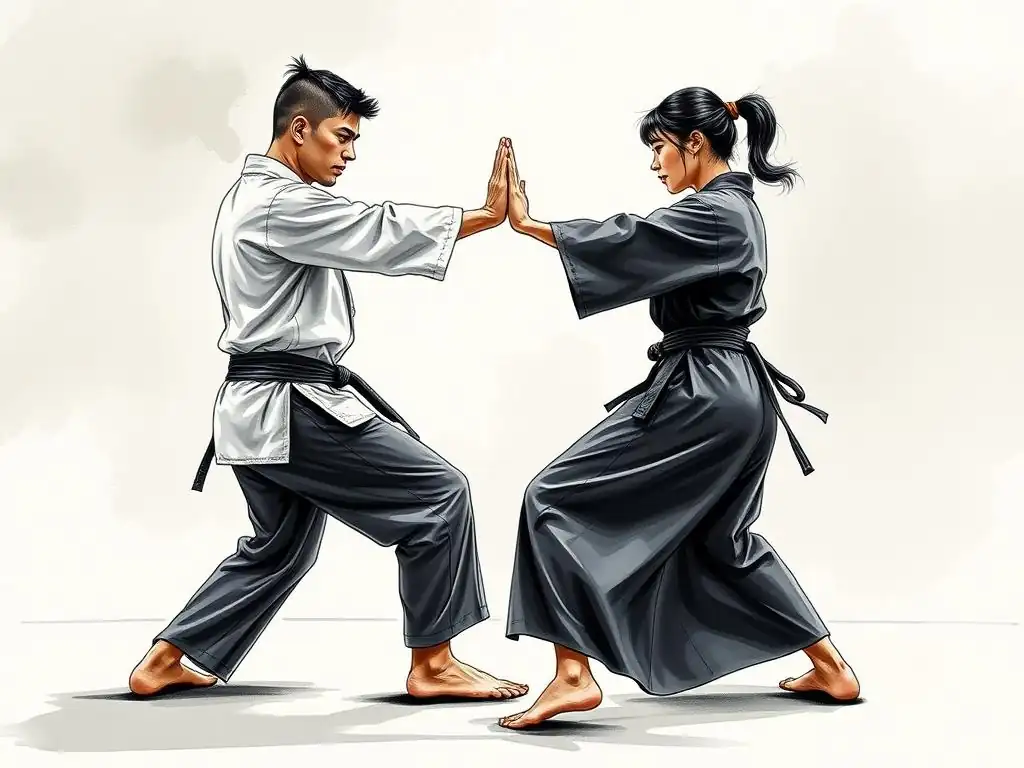
Partner drills are indispensable tools for developing timing because they replicate the dynamic environment of actual combat or sparring, albeit in a controlled setting. Unlike hitting a stationary bag or performing solo forms, working with a partner introduces variables like unpredictable movement, varying speed, and reactive defense. This forces the practitioner to adapt and refine their actions based on external stimuli, which is the essence of good timing.
Through consistent partner practice, martial artists develop the ability to judge distance accurately, anticipate an opponent's rhythm and intentions, and react instantaneously and appropriately. These drills provide immediate feedback – a strike lands cleanly, a defense is successful, or a technique fails because the timing was off. This iterative process of action and reaction, facilitated by a training partner, is the most direct route to significant partner drills timing improvement.
The Benefits of Partner Training for Timing Development
Partner training offers several unique advantages for timing development. Firstly, it provides a moving target and a reacting opponent, which is far more realistic than solo training. This variability is crucial for learning to time techniques against different speeds, angles, and reactions. Secondly, it allows for immediate, real-time feedback. You know instantly if your timing was correct based on your partner's response (or lack thereof).
Furthermore, partner drills encourage the development of 'feel' and intuition – the ability to sense distance and timing without conscious calculation. Regularly engaging in partner drills timing improvement exercises helps build muscle memory and reactive patterns that become second nature. This intuitive timing is what allows skilled practitioners to react effectively in the chaotic environment of sparring or self-defense without having to overthink each movement.
Different Types of Partner Drills for Timing
Partner drills for timing can be broadly categorized based on their primary focus: offensive timing, defensive timing, or a combination of both. Offensive drills often involve timing attacks based on a partner's movement or static position, focusing on entry and execution at the right moment. Defensive drills, conversely, emphasize timing reactions – blocks, slips, parries, or evasions – in response to incoming attacks.
Combination drills integrate both offensive and defensive elements, often involving exchanges where practitioners must transition seamlessly between reacting to an attack and launching their own counter-attack. Each type of drill contributes uniquely to overall timing ability, and a balanced approach incorporating all varieties is essential for comprehensive partner drills timing improvement.
Offensive Timing Drills: Jab-Cross Combination
A foundational offensive timing drill involves the jab-cross combination. The focus here is not just throwing the punches, but timing their delivery relative to the partner's position and potential reactions. For example, timing the jab to land just as the partner is settling their weight, followed by a cross thrown as they attempt to regain balance or block the jab.
Defensive Timing Drills: Slip and Counter
A classic defensive timing drill is the slip and counter. The partner throws a slow to moderate speed punch (like a jab or cross), and the practitioner focuses on timing a slip (head movement) to evade the attack at the last possible moment, immediately followed by a counter-punch (like a cross or hook) timed to land while the partner is still extended or recovering from their initial attack.
Combination Drills for Offensive and Defensive Timing: Feint, Parry, and Counter
Combination drills integrate both aspects. A common example involves a feint, parry, and counter sequence. The practitioner uses a feint to provoke a reaction, parries the partner's response (if any), and immediately counters. This requires timing the feint to be convincing, timing the parry to be effective, and timing the counter to land when the partner is vulnerable after their reaction or attack. Such drills significantly contribute to overall partner drills timing improvement.
Offensive Timing Drills: Sharpening Your Attack
Developing sharp offensive timing means being able to launch attacks not just with power and speed, but at the precise moment they are most likely to land cleanly and effectively. These drills focus on learning to read your partner's movements and vulnerabilities to time your strikes perfectly.
Drill 1: Lead Hand Jab Timing Refinement
The jab is fundamental, and its effectiveness heavily relies on timing. This drill isolates the jab to focus purely on its timing relative to a moving target.
Objective: Improve jab extension and retraction speed in relation to partner's movement.
The primary goal is to develop the feel for the correct distance and moment to throw the jab as the partner moves, ensuring it lands cleanly. This is less about raw speed and more about the timing of the speed burst. Success is measured by consistent contact without over-extending or being jammed.
Execution: Partner moves forward and back. Drill focuses on landing the jab as the partner moves forward.
The partner walks slowly back and forth within a designated area. The practitioner maintains fighting stance and distance, attempting to land a crisp jab on the partner's lead shoulder or chest only as the partner is stepping forward or beginning their forward movement. The partner provides passive feedback by indicating if the jab landed well-timed or was too early/late.
Focus: Distance control, jab speed, and recovery.
Key elements to focus on are maintaining the correct range so the jab extends fully but not excessively, timing the snap of the jab to coincide with the partner's entry, and quickly retracting the hand to guard immediately after contact. Aim for roughly 70-80% of attempts to land cleanly within a 3-minute round. Consistent practice significantly aids partner drills timing improvement.
Drill 2: Cross Counter Timing Enhancement
Countering is a hallmark of good timing. This drill specifically targets timing the cross counter against an incoming jab.
Objective: Develop the ability to counter a partner's jab with a cross.
The objective is to time the cross to land simultaneously with or immediately after evading the partner's jab. This drill builds reactive offensive timing, turning a defensive maneuver into an offensive opportunity. Success means landing the cross cleanly after a successful slip or parry.
Execution: Partner throws a jab. Drill focuses on slipping the jab and immediately countering with a cross.
The partner throws a non-telegraphic, moderate-speed jab towards the practitioner's head. The practitioner practices slipping to the outside of the jab (moving the head off the center line) and simultaneously or instantly firing a cross from their rear hand towards the partner's head or chest. The partner gives feedback on the timing and effectiveness of the counter.
Focus: Anticipation, accurate counter timing, and power generation.
Crucial points are anticipating the jab's trajectory and speed to time the slip correctly, firing the cross with proper body mechanics as the slip is completed, and ensuring the cross lands with power generated from the hip rotation. A well-timed cross counter can land before the opponent has recovered their jab, highlighting the importance of precise partner drills timing improvement.
Drill 3: Feint and Attack Timing Development
Feints are timing tools used to create openings. This drill teaches how to time a follow-up attack based on the opponent's reaction to a feint.
Objective: Improve the ability to use feints to create openings for attacks.
The goal is to practice making the feint look convincing enough to elicit a reaction from the partner, and then timing the subsequent attack to exploit the opening created by that reaction. This develops strategic timing.
Execution: Partner stands ready. Drill focuses on using a feint (e.g., a jab feint) to draw a reaction and then follow with a different attack (e.g., a cross or hook).
The practitioner initiates with a believable feint (e.g., a slight shoulder twitch, a partial step, or a half-jab). The partner is instructed to react naturally (e.g., flinch, slightly block, or brace) if they perceive a threat. The practitioner observes this reaction and immediately follows with a different, full attack timed to land while the partner is still reacting to the feint. Repeat with various feints and follow-ups.
Focus: Selling the feint, reading partner's reaction, and timing the follow-up attack.
Key elements include making the feint look genuine without fully committing, quickly reading how the partner reacts (e.g., did they cover high? drop their hands slightly? ), and timing the real attack to land in the gap exposed by the reaction. This drill is excellent for developing the psychological aspect of partner drills timing improvement, using deception to create offensive opportunities.
Defensive Timing Drills: Honing Your Reactions
Defensive timing is about reacting effectively to incoming attacks, minimizing damage, and ideally creating opportunities for counter-offense. These drills focus on refining the timing of defensive movements like slips, parries, and evasions.
Drill 4: Slip and Counter Timing Practice
Building on the offensive counter drill, this focuses more on the defensive slip's timing as the precursor to the counter.
Objective: Refine the ability to slip punches and immediately counter.
The objective is to develop the precision and timing of the head movement (slip) itself, ensuring it happens at the correct moment to avoid contact, and then seamlessly transitioning into a counter-attack while maintaining balance and guard.
Execution: Partner throws a jab and cross combination. Drill focuses on slipping each punch and countering with a hook or cross.
The partner throws a jab-cross combination at moderate speed. The practitioner practices slipping the jab (to the outside) and then immediately slipping the cross (to the inside). After successfully slipping both, the practitioner immediately launches a counter-attack, such as a hook or cross, timed to land as the partner is finishing their combination. The partner provides feedback on the timing of both the slips and the counter.
Focus: Head movement, balance, and counter-punch timing.
Crucial elements are timing the head movement to evade the punch by mere inches, maintaining a strong base and balance throughout the slips, and timing the counter to fire instantly from a stable position. This rapid sequence of defense-to-offense is a prime example of effective partner drills timing improvement under pressure.
Drill 5: Parry and Riposte Timing Training
Parrying is a direct defense that can immediately lead to offense. This drill focuses on timing the parry and the subsequent riposte.
Objective: Develop the ability to parry attacks and immediately riposte with a counter-attack.
The goal is to refine the timing of a sharp, minimal hand movement to deflect an incoming straight punch and then immediately follow with a counter-attack using the same hand or the opposite hand.
Execution: Partner throws a straight punch. Drill focuses on parrying the punch with the lead hand and immediately riposting with a jab or cross.
The partner throws a straight punch (like a jab). The practitioner uses a minimal, sharp parry with their lead hand (a slight brush or tap) to deflect the incoming punch just off-line. Immediately upon completing the parry, the practitioner launches a counter-attack, such as a jab (with the same hand) or a cross (with the opposite hand), timed to land while the partner's hand is still extended or recovering.
Focus: Hand speed, parry accuracy, and counter-attack timing.
Key points are timing the parry to occur as the punch arrives, using minimal force and movement for the parry, and ensuring the counter-attack fires instantly from the parrying position. This drill highlights the efficiency gained from combining defense and offense through precise partner drills timing improvement.
Drill 6: Evade and Counter Timing Improvement
Sometimes the best defense is spatial evasion. This drill focuses on timing movement to avoid an attack and creating distance for a counter.
Objective: Enhance the ability to evade attacks and create openings for counters.
The objective is to improve the timing of stepping or moving out of the range of an attack while simultaneously positioning oneself to launch a counter-attack as the opponent finishes their committed technique.
Execution: Partner throws a roundhouse kick. Drill focuses on stepping back and avoiding the kick, then countering with a straight punch to the body.
The partner throws a moderate-speed roundhouse kick towards the practitioner's body or head. The practitioner practices timing a step back or slight angle change to move just outside the trajectory of the kick as it arrives. As the partner's leg is extending or retracting, the practitioner immediately steps back in or shifts their weight forward to launch a counter-attack, such as a straight punch to the body or head.
Focus: Footwork, distance management, and counter-attack placement.
Crucial elements include timing the footwork to evade effectively without excessive movement, maintaining balance while moving, judging the distance to counter effectively after the evasion, and timing the counter to land when the partner is most off-balance or recovering. This drill demonstrates how timing full-body evasion contributes to overall partner drills timing improvement.
Advanced Partner Drills for Comprehensive Timing
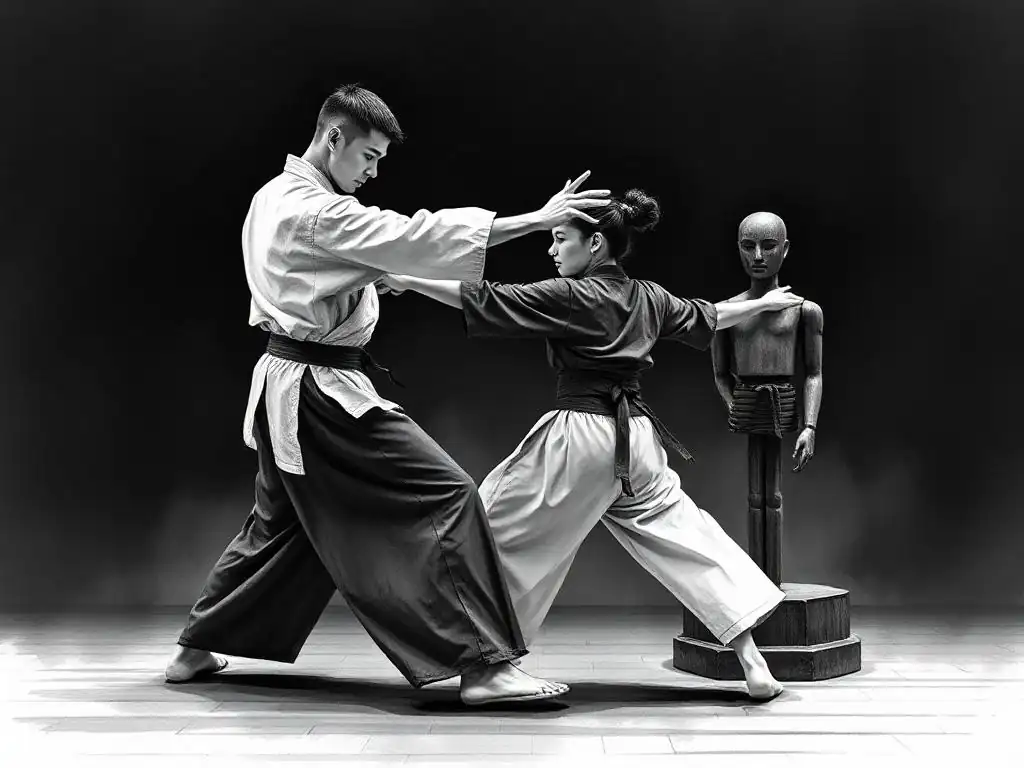
Once basic offensive and defensive timing is established, more complex drills integrate these skills in dynamic, less predictable scenarios. These drills often combine elements and introduce constraints to simulate the fluid nature of real combat exchanges.
Integrating Offensive and Defensive Timing
True timing mastery lies in the seamless integration of offensive and defensive actions. An effective martial artist doesn't think of these as separate; a defensive move is often just the setup for an attack, and an attack can be a form of defense (e.g., interrupting an opponent's strike). Advanced partner drills challenge practitioners to fluidly transition between these roles, timing their actions based on the constantly evolving situation.
These drills often involve longer exchanges or specific rules that force practitioners to apply their timing skills under conditions closer to sparring or self-defense. They push beyond simple action-reaction sequences to incorporate anticipation, rhythm disruption, and strategic timing decisions. Consistent practice of these integrated drills is crucial for achieving high-level partner drills timing improvement.
Drill 7: Free Sparring with Timing Constraints
Adding specific constraints to light sparring can isolate and improve particular timing aspects within a more realistic context.
Objective: Integrate offensive and defensive timing in a dynamic environment with specific limitations.
The goal is to apply learned timing principles (like using feints, countering, or evading) naturally within a live exchange, guided by a rule that forces focus on a specific timing element.
Execution: Light sparring with the constraint that each exchange must begin with a feint.
Partners engage in light, controlled sparring (e.g., 50% power, focus on technique). The specific rule for this round is that before either partner throws a committed attack, they must first attempt a feint. This forces both practitioners to focus on timing their feints effectively and reading/reacting to the partner's feints and subsequent timed attacks.
Focus: Applying feints effectively, reading partner's reactions, and transitioning between offense and defense.
Key elements are making the feint convincing enough to draw a reaction, quickly reading the partner's response to the feint, timing the real attack to exploit the opening, and timing defensive reactions to the partner's feints and attacks. This drill specifically targets the strategic application of timing through partner drills timing improvement.
Drill 8: Reactive Partner Drill for Dynamic Timing
This drill focuses on developing instantaneous, adaptive timing in response to unpredictable stimuli.
Objective: Develop reactive timing and adaptability to unpredictable attacks.
The objective is to improve the speed and accuracy of defensive and counter-offensive reactions when faced with a variety of attacks delivered without predictable patterns or telegraphing.
Execution: Partner throws a series of random attacks (jab, cross, hook, kick) without telegraphing. Drill focuses on reacting quickly and appropriately with blocks, slips, or counters.
The partner throws a varied sequence of techniques (punches, kicks) at moderate speed and power, focusing on disguising their intentions as much as possible. The practitioner's goal is solely to react effectively – blocking, parrying, slipping, or evading as appropriate – and, if an opening is created, immediately launching a timed counter-attack. There is no set pattern, forcing genuine reaction timing.
Focus: Reaction speed, adaptability, and defensive awareness.
Crucial elements are keeping guard high and eyes focused, reacting instantly to the type and trajectory of the incoming attack, choosing the most efficient defense, and timing a counter only when a clear, safe opportunity arises. This high-intensity drill is excellent for building the reactive timing essential for real combat and represents a high level of partner drills timing improvement.
Key Considerations for Effective Partner Drills Timing Improvement
Maximizing the benefits of partner drills requires more than just going through the motions. Certain principles should guide your practice to ensure genuine timing enhancement.
Communication and Feedback with Your Partner
Effective communication with your training partner is paramount. Regularly discuss the drill's objectives, the speed and power level, and provide constructive feedback. Did the jab land cleanly? Was the slip timed correctly? Was the feint believable? Honest and specific feedback helps both partners understand what's working and what needs adjustment. This collaborative approach accelerates partner drills timing improvement.
For instance, after Drill 4 (Slip and Counter), your partner might say, "Your slip was good, but the counter was a bit slow – I had time to recover." This tells you to focus on the transition speed. Conversely, you might tell them, "That cross felt very telegraphed," prompting them to focus on hiding their intention.
Gradual Progression and Increasing Difficulty
Start drills slowly and with minimal power. Focus on precision and timing at a manageable speed. As timing improves, gradually increase the speed, complexity of combinations, and intensity. Attempting drills at full speed before the timing is accurate can lead to bad habits or injury. A structured progression ensures that the foundational timing skills are solidified before adding the challenge of speed and power, leading to sustainable partner drills timing improvement.
For example, begin Drill 2 (Cross Counter) with the partner throwing a very slow, deliberate jab. Once the slip and counter timing is consistently accurate at that speed, gradually increase the speed of the jab over several sessions.
Focusing on Precision and Accuracy over Speed
While speed is important in martial arts, for timing drills, precision and accuracy come first. It's better to land a technique correctly timed at moderate speed than to miss or be off-balance at high speed. Focus on hitting the intended target at the exact right moment with proper technique. Speed will naturally increase as precision improves and movements become more efficient, contributing to overall partner drills timing improvement.
In Drill 1 (Jab Timing), the goal is not to see how fast you can jab, but how consistently you can land the jab as the partner steps forward. A jab that lands just as the partner's lead foot touches down is well-timed, regardless of its absolute speed, and is more effective than a lightning-fast jab thrown too early or too late.
Conclusion: Achieving Timing Mastery Through Partner Practice
Timing is the critical, often underestimated, element that transforms raw technique into effective martial arts application. It dictates when to attack, when to defend, and how to transition seamlessly between the two. While solo training builds mechanics, it is through dedicated partner drills that the dynamic, adaptive timing necessary for real-world situations is truly forged.
By consistently engaging in structured partner drills timing improvement exercises – focusing on both offensive and defensive scenarios, communicating openly with partners, and prioritizing precision over speed – practitioners can significantly enhance their ability to act at the optimal moment. Mastering timing through partner practice is not just about improving individual techniques; it's about developing the intuitive flow and strategic intelligence that define a truly skilled martial artist. Make partner drills a cornerstone of your training regimen, and watch your timing, and consequently your overall effectiveness, reach new heights.
Frequently Asked Questions
What are partner drills, and how do they contribute to timing improvement in martial arts?
Partner drills are structured exercises performed with a training partner. They help develop offensive and defensive timing by providing a dynamic, reactive environment that simulates real-world scenarios.
Why is timing so crucial in martial arts, and how do partner drills specifically address this need?
Timing is essential for effective strikes and blocks. Partner drills force you to react to a moving, thinking opponent, improving your ability to anticipate and respond within fractions of a second.
What types of partner drills are most effective for enhancing offensive timing, and what should practitioners focus on during these drills?
Drills involving striking combinations and feints are great for offensive timing. Focus on distance management, reading your partner's reactions, and executing techniques at the optimal moment.
How do partner drills improve defensive timing, and what are some common mistakes to avoid during defensive timing exercises?
Defensive drills help you react to incoming attacks. Avoid hesitation and telegraphing your blocks. Focus on developing quick reflexes and precise movements to intercept or evade strikes.
How often should martial artists incorporate partner drills into their training regimen to see noticeable improvements in their timing ability?
Regular practice is key. Integrating partner drills 2-3 times per week alongside solo training will generally lead to significant improvements in your offensive and defensive timing.
Final Reflection: Harmonizing Actions, Honing Precision
The exploration of partner drills, as detailed in this article, highlights the crucial role of synchronized timing in both offensive and defensive maneuvers. The ability to move as one, to anticipate and react in perfect unison, is not merely a skill, but a fundamental principle that transcends the training ground and echoes in every collaborative endeavor. This principle, often overlooked, is the very foundation upon which successful teams and partnerships are built, making the pursuit of timing improvement through partner drills a worthwhile investment for any athlete or team.
The impact of mastering timing extends far beyond the immediate benefits of improved athletic performance. It fosters a deeper understanding of non-verbal communication, enhances trust, and cultivates a shared sense of purpose. These are qualities that resonate in all aspects of life, from professional collaborations to personal relationships. The key is not to prioritize what's on your schedule, but to schedule your priorities.
- Stephen Covey. This quote underscores the importance of dedicating time and effort to refining our timing and coordination, not just in sports, but in all areas where collaboration and synergy are essential.
Now, consider how you can apply the principles of synchronized timing and collaborative practice to your own life. Whether you're striving for athletic excellence, building a stronger team at work, or simply seeking to improve your relationships, remember the power of shared rhythm and coordinated action. Embrace the challenge of perfecting your timing, and you'll discover a new level of precision, efficiency, and harmony in all that you do.
Elevate Your Timing: Step into Mastery Today!
Thank you for exploring the art of synchronized martial arts training with us. We hope this article has illuminated the path to heightened offensive and defensive timing. Now, take your training to the next level with these actionable steps:
- Commit to partnering with a training buddy and dedicate at least 30 minutes, 3 times a week, to practicing the drills outlined in this article. Consistency is key to unlocking true synchronization!
- Share your favorite drill with a fellow martial artist or on your social media platform. Inspire others to elevate their timing through collaborative practice.
- Challenge yourself to create a brand new partner drill focusing on a specific offensive or defensive sequence, and share it in the comments below to inspire our community!
What hidden timings are you ready to unveil in your martial arts journey?