
Bojutsu for Ninjas: Wielding the Long Staff with Deadly Skill

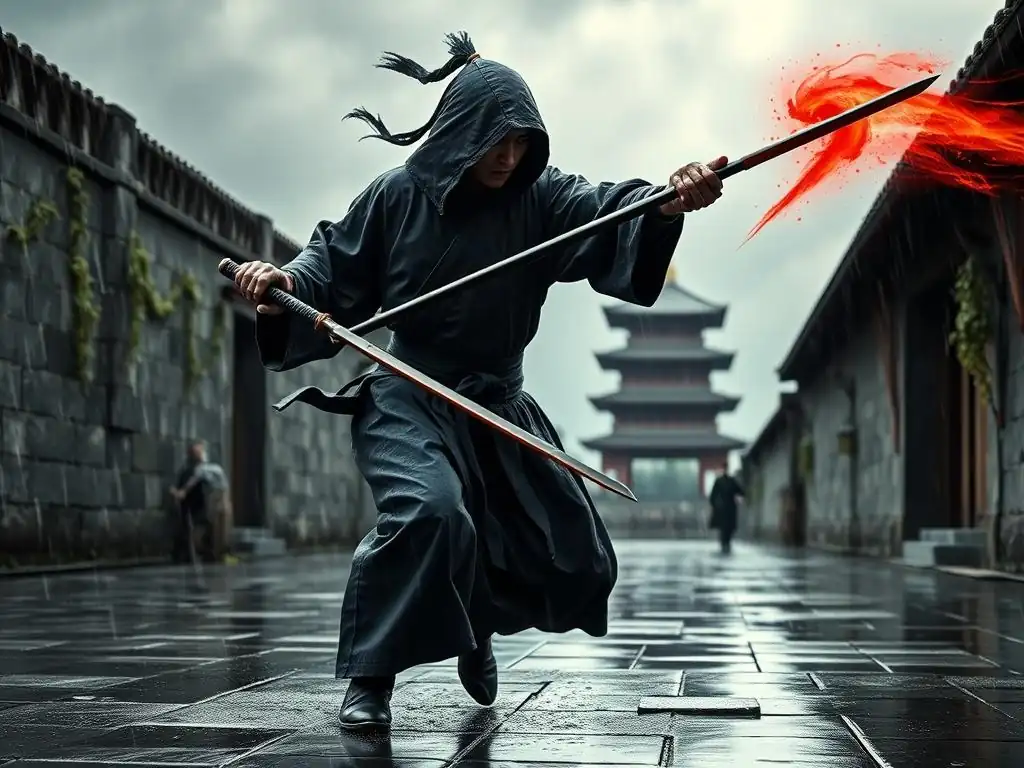
Welcome to Martial Arts Mastery, your gateway to the world's fighting traditions!
Delve into the ancient secrets and modern applications of martial arts. Are you ready to unlock the power of the bo, the versatile long staff, and discover its deadly potential? Explore the fascinating world of Bojutsu techniques for self-defense and learn how this seemingly simple weapon can become an extension of your will, a shield, and a spear. Prepare to be amazed by its history, its practicality, and its lethal grace. Intrigued? Continue reading to master the basics and uncover advanced strategies...
- Introduction to Bojutsu in Ninjutsu: Mastering the Long Staff for Self-Defense
- Bojutsu Techniques for Self-Defense: Core Principles and Applications
- Essential Bojutsu Techniques for Ninjas: A Practical Guide
- Bojutsu Drills and Training Exercises for Ninjas
- Advanced Bojutsu Strategies for Ninjutsu Masters
- The Mental Aspect of Bojutsu: Focus and Discipline
- Maintaining Your Bo Staff: Care and Preservation
- Conclusion: The Enduring Legacy of Bojutsu in Ninjutsu for Self-Protection
-
Frequently Asked Questions
- How effective is Bojutsu for self-defense in modern scenarios?
- What are some basic Bojutsu techniques a beginner should learn for self-defense?
- How does Bojutsu training contribute to overall physical fitness?
- How does the historical context of Bojutsu relate to its application in modern self-defense?
- Does Bojutsu training require specialized equipment or a dedicated training space?
- Final Reflection: Mastering the Art of Bojutsu
- Ignite Your Inner Warrior: Master the Bo!
Introduction to Bojutsu in Ninjutsu: Mastering the Long Staff for Self-Defense
The Significance of Bojutsu in the Ninja Arsenal
Bojutsu, the art of using the long staff (Bo), held a place of paramount importance within the complex arsenal of the historical ninja. Unlike the katana or shuriken, which often required specific manufacturing and were easily identifiable, the Bo was a tool that could be disguised or even improvised from everyday objects like walking sticks or farming implements.
This inherent versatility aligned perfectly with the ninja's need for practicality, stealth, and adaptability in their missions, which often involved infiltration, information gathering, and survival rather than overt combat. Mastering Bojutsu techniques for self-defense provided a ninja with a powerful, yet potentially inconspicuous, weapon capable of striking from a distance, blocking attacks, and controlling an opponent without necessarily inflicting lethal damage, thus facilitating escape or capture when needed.
Furthermore, the reach of the Bo, typically around 6 shaku (approximately 1.8 meters or 6 feet), gave the wielder a significant advantage against opponents armed with shorter weapons like swords or knives. This reach allowed for striking vulnerable points from relative safety, keeping an adversary at bay, or delivering powerful blows that could break bones or render an attacker unconscious.
The weight and length of the staff, when wielded correctly through proper Bojutsu techniques, translated kinetic energy into formidable force, making it an effective tool for both offense and defense. Historical accounts and scrolls, though often shrouded in secrecy regarding specific ninja practices, consistently highlight the proficiency of these operatives with a variety of tools, with the Bo being a staple due to its practicality and effectiveness in diverse scenarios.
Understanding the Historical Context of Bojutsu and Ninjutsu
The origins of Bojutsu predate Ninjutsu by centuries, evolving from the use of staves as basic tools for carrying loads, herding animals, and as simple weapons for self-protection among commoners and travelers across Asia. In Japan, the use of the Bo developed into formalized martial arts systems within various ryu (schools), often associated with specific regions or families.
When Ninjutsu emerged as a distinct set of skills and strategies employed by the ninja, it naturally incorporated effective combat methods from existing traditions, adapting them to the unique requirements of covert operations. Bojutsu was integrated not just as a fighting skill but as another layer of the ninja's survival toolkit, valuable for its stealth potential and defensive capabilities.
Within Ninjutsu traditions like the historical Togakure-ryū, the Bo (or sometimes specifically the Rokushaku Bo, a staff around 6 shaku long) was taught alongside other weapons and unarmed combat. The focus wasn't solely on dueling but on practical application in real-world situations: disrupting pursuers, defending against multiple attackers, or using the staff to vault obstacles or test the ground.
These practical Bojutsu techniques for self-defense were honed through rigorous training, often conducted in secret, emphasizing efficiency and effectiveness over flashy movements. The ninja's approach to Bojutsu was pragmatic; it was a tool to survive, complete the mission, and escape, reflecting the overall philosophy of Ninjutsu itself.
Bojutsu Techniques for Self-Defense: Core Principles and Applications
Stance and Posture: The Foundation of Effective Bojutsu
Effective Bojutsu techniques for self-defense begin with a solid foundation in stance and posture. The stance must provide balance, mobility, and the ability to generate power quickly. A common starting stance is Ichimonji no Kamae, a side-facing posture where one foot is forward, the body is slightly bladed, and the Bo is held horizontally or diagonally in front, protecting the centerline.
This stance minimizes the target area presented to an opponent while allowing for rapid movement forward or backward and providing a strong base for strikes or blocks. Another essential stance is Jumonji no Kamae, a cross stance where the feet form a "cross" shape, offering stability and the ability to shift weight for powerful rotational movements.
Maintaining a correct posture is equally critical. The back should be straight, shoulders relaxed, and the core engaged. This posture ensures that the body's weight can be used effectively to power techniques and reduces strain during prolonged engagement.
Poor posture leads to instability, limits reach and power, and makes the wielder predictable. Training often involves holding stances for extended periods and practicing transitions between them, sometimes with added weight or while navigating uneven terrain, mirroring the unpredictable environments a historical ninja might encounter. Mastering these fundamental stances and postures is the bedrock upon which all advanced Bojutsu techniques are built.
Grip and Handling: Achieving Optimal Control of the Bo Staff
The grip on the Bo staff is fundamental to executing Bojutsu techniques for self-defense with speed, power, and control. Generally, the hands are placed roughly shoulder-width apart, though this can vary depending on the specific technique or desired range. A common grip involves holding the staff with palms facing downwards or one palm down and one palm up. The grip should be firm enough to maintain control but relaxed enough to allow the staff to move fluidly through the hands when necessary, such as during sliding grips ( Tebuki) for quick shifts in reach or leverage.
Proper handling involves understanding how to manipulate the staff's balance point. The Bo is typically heavier towards the ends, but its relative weight distribution affects how it moves. Training emphasizes developing Tenouchi, the coordinated action of the hands and wrists to snap the staff and generate power, particularly at the tips.
This isn't just about brute force; it's about efficient movement and leverage. Drills often involve practicing quick grip adjustments, spinning the staff for momentum or defense, and learning to control the tip of the staff with precision, whether for a strike, block, or thrust. Mastery of grip and handling allows the ninja practitioner to transition seamlessly between different Bojutsu techniques, maximizing the staff's potential as a versatile weapon.
Essential Bojutsu Techniques for Ninjas: A Practical Guide
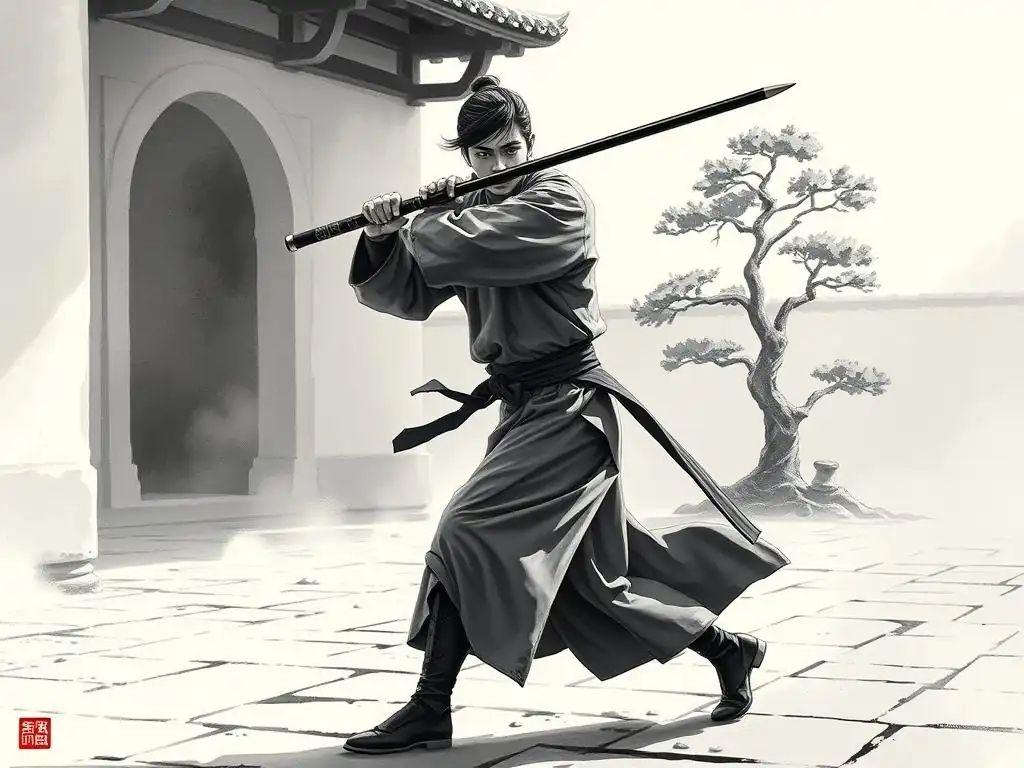
Striking Techniques: Unleashing the Power of the Bo
Striking with the Bo can generate immense power, leveraging the staff's length and the wielder's body weight. Strikes can target various points on an opponent, from limbs to the head, aiming to incapacitate or create an opening. The power comes not just from arm strength but from the rotation of the hips and core, driving the staff through the target. Practicing striking Bojutsu techniques for self-defense involves learning to control the impact point and deliver force effectively at full extension or closer range.
Blocking Techniques: Defending Against Attacks with the Bo
Blocking is a critical component of Bojutsu techniques for self-defense, allowing the practitioner to defend against incoming attacks from various weapons or unarmed strikes. Blocks can be hard deflections designed to stop an attack entirely or softer parries intended to redirect the force and create an opportunity for a counter-attack. Effective blocking relies on timing, positioning, and using the strongest part of the staff against the incoming force, often near the hands or the central section.
Thrusting Techniques: Precision and Penetration with the Bo
Thrusting techniques utilize the point or end of the Bo to target vital areas, delivering precise force over a short distance. Unlike wide, sweeping strikes, thrusts are linear and quick, making them difficult to defend against. They require accurate targeting and the ability to generate forward momentum through body movement. Mastery of Bojutsu techniques for self-defense includes developing powerful and accurate thrusts.
Sweeping Techniques: Unbalancing and Controlling Opponents
Sweeping techniques with the Bo aim to disrupt an opponent's balance, knock them off their feet, or control their movements. These techniques often involve using the staff to target the legs or feet, or to sweep away an opponent's weapon or arms. Sweeps can range from low, ground-level actions to higher movements designed to clear space or create distance. They are invaluable Bojutsu techniques for self-defense in scenarios where controlling the opponent is preferred over inflicting severe injury.
Bojutsu Drills and Training Exercises for Ninjas
Solo Drills: Honing Fundamental Skills
Solo drills are indispensable for developing the foundational Bojutsu techniques for self-defense, building muscle memory, coordination, and control. These exercises allow practitioners to focus on individual movements without the unpredictability of a partner. Regular solo practice is essential for achieving fluency and precision in handling the staff.
Kata Practice: Shushi no Kon Sho
Kata, pre-arranged sequences of movements, are a cornerstone of solo Bojutsu training. Shushi no Kon Sho, for example, is a well-known Okinawan Bojutsu kata that emphasizes fundamental stances, strikes, blocks, and transitions. Practicing kata helps internalize the flow of movement, develop proper form, and understand the practical applications of different techniques in a simulated combat scenario. Repetition of kata builds stamina and refines technique.
Suburi Exercises: Tenuchi (Hand Conditioning)
Suburi refers to repetitive striking or swinging practice. In Bojutsu, this often involves swinging the staff through various arcs, focusing on generating power through the coordinated action of the hands, wrists, and body. Tenuchi, specifically, emphasizes the snapping action of the wrists and hands at the moment of impact (simulated), crucial for delivering sharp, powerful strikes. Hundreds, sometimes thousands, of repetitions are performed daily to build strength, speed, and precision, enhancing the effectiveness of Bojutsu techniques for self-defense.
Partner Drills: Developing Reflexes and Timing
Partner drills introduce dynamic elements, requiring practitioners to react to unpredictable movements and develop timing and distance judgment. These exercises simulate combat scenarios and are crucial for applying solo-honed Bojutsu techniques for self-defense against a live opponent. Safety gear is often used to prevent injury.
Sparring Drills: Ippon Kumite (One-Step Sparring)
Ippon Kumite (one-step sparring) is a structured partner drill where one person attacks with a predetermined technique, and the other defends and counter-attacks. This drill allows practitioners to practice specific Bojutsu techniques for self-defense in a controlled environment, focusing on timing, distance, and reaction speed. It helps bridge the gap between solo practice and free sparring, building confidence and practical application skills.
Disarming Drills: Bo Dori (Staff Disarming)
Bo Dori refers to techniques for disarming an opponent wielding a Bo or other long weapon. Partner drills focusing on Bo Dori are vital for ninjutsu practitioners, as they might face opponents also armed with staves or similar weapons. These drills involve learning to close distance safely, evade strikes, control the opponent's weapon, and apply joint locks or throws to take away the staff. They require precise timing and understanding of leverage.
Advanced Bojutsu Strategies for Ninjutsu Masters
Combining Bojutsu with Other Ninjutsu Weaponry
For a skilled ninja, Bojutsu was rarely used in isolation. Advanced strategy involved seamlessly integrating the Bo with other tools from the ninja's diverse arsenal. For instance, the long reach of the Bo could be used to keep opponents at bay while simultaneously preparing to throw shuriken or manage a concealed blade ( tanto).
Alternatively, the Bo could be used to create an opening or distraction, allowing the ninja to switch to a shorter weapon like a kusarigama (sickle and chain) for grappling or close-quarters combat. This layered approach to combat significantly enhanced the ninja's adaptability and unpredictability, making their Bojutsu techniques for self-defense even more formidable.
Consider a scenario where a ninja is cornered. They might use the Bo to fend off multiple attackers, using wide sweeps ( Harai-Uke) and powerful strikes ( Yokomen Uchi) to control the space. If an opponent manages to get inside the Bo's effective range, the ninja could quickly drop the staff or use it to trip the attacker, simultaneously drawing a tanto to engage at close range. This fluidity between weapons, often practiced in advanced henka (variation) drills, was a hallmark of effective ninjutsu and elevated the practical application of Bojutsu techniques beyond simple staff fighting.
Using the Environment to Your Advantage in Bojutsu
Ninjutsu emphasizes using the surrounding environment as an ally, and this principle applies directly to Bojutsu techniques for self-defense. A ninja wouldn't just fight in an open field; they would utilize narrow passages, doorways, uneven terrain, or obstacles to their advantage. The length of the Bo makes it particularly effective in confined spaces where shorter weapons are less practical, or in areas with low ceilings where overhead swings are limited, forcing the opponent into predictable movements.
For example, fighting in a forest, a ninja could use trees for cover while striking with the Bo, or use the staff to vault over fallen logs to escape a pursuer. In an urban environment, the Bo could be used to strike from around corners, break through flimsy barriers, or even as a lever to open jammed doors. Advanced Bojutsu training incorporated scenarios that mirrored real-world environments, teaching practitioners to adapt their techniques and leverage their surroundings to maximize the effectiveness of their long staff techniques for self-defense and survival.
Deception and Misdirection in Bojutsu Combat
Deception ( Kyojitsu Tenkan) was a core principle of Ninjutsu, and it permeated all aspects of their art, including Bojutsu techniques for self-defense. A ninja wouldn't just rely on brute force or technical skill; they would use feints, false retreats, and unexpected movements to confuse and mislead an opponent. This could involve making a wide, powerful swing that is suddenly checked and redirected into a quick thrust, or pretending to drop the staff only to quickly recover it for a low sweep.
Another example of misdirection involves using the Bo's length to create visual distractions. Rapid spinning or complex movements could draw an opponent's gaze, masking the ninja's true intention or movement. The ninja might deliberately expose a perceived weakness or create an opening to lure the opponent into a trap where a decisive Bojutsu technique could be applied. This psychological aspect, combining technical proficiency with cunning, is what truly distinguished the ninja's application of Bojutsu from more conventional martial arts.
The Mental Aspect of Bojutsu: Focus and Discipline
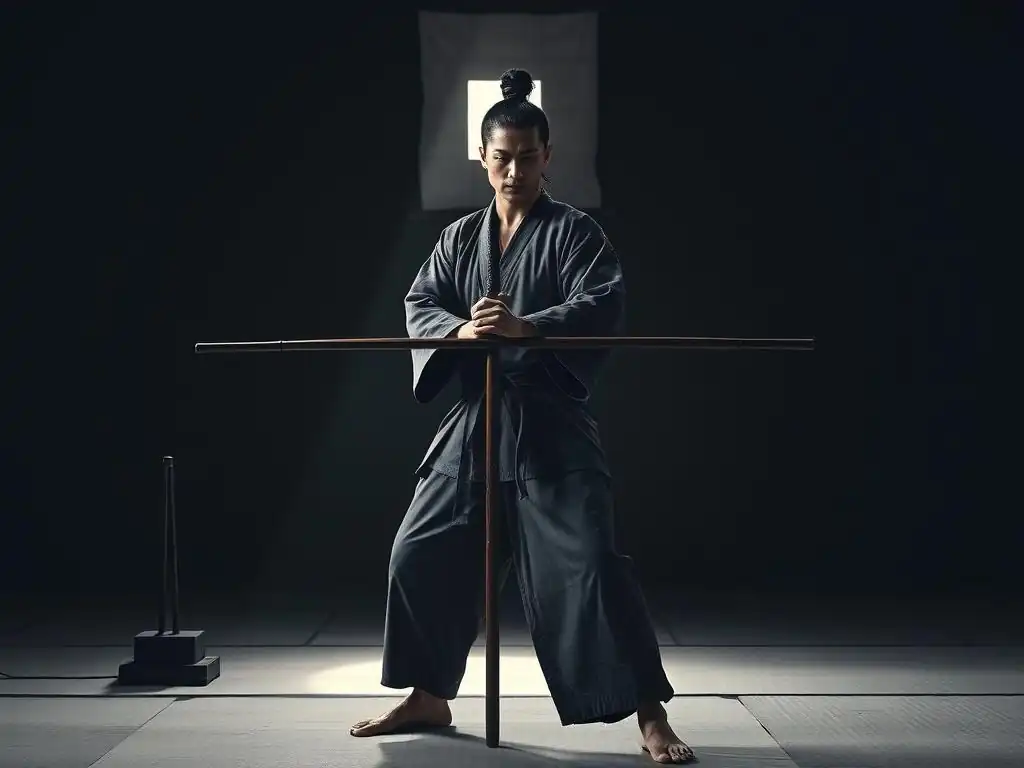
Developing Mental Fortitude for Effective Combat
Mastering Bojutsu techniques for self-defense requires more than just physical prowess; it demands significant mental fortitude. Combat situations are inherently stressful, and the ability to remain calm, focused, and decisive under pressure is paramount. Ninja training emphasized cultivating a strong will and emotional control, often through rigorous physical and mental exercises that pushed the limits of endurance. This mental conditioning allowed practitioners to think clearly in chaotic situations, make split-second decisions, and execute complex Bojutsu techniques accurately even when fatigued or injured.
Historical accounts, though sparse and often legendary, suggest that ninja underwent training designed to harden their minds against fear and pain. This could involve exposure to uncomfortable environments or demanding physical challenges. The discipline required to practice Bojutsu techniques for self-defense repetitively for hours, refining subtle movements, also builds mental resilience. It teaches patience, perseverance, and the understanding that mastery comes through dedication and overcoming internal resistance.
Cultivating Awareness and Observation Skills
Awareness ( Sakki Jutsu - detecting killer intent) and observation were crucial survival skills for a ninja, directly impacting their ability to apply Bojutsu techniques effectively. Being aware of one's surroundings – the terrain, potential escape routes, and the positions and intentions of opponents – is just as important as knowing how to wield the staff. Ninja training included exercises to sharpen the senses and improve observational skills, such as walking silently in nature or recognizing subtle signs of danger.
In combat, this translates to constantly assessing the opponent's stance, gaze, and movements to anticipate their attacks and identify openings. A ninja using Bojutsu for self-defense wouldn't just react; they would read the situation, using their awareness to position themselves advantageously, perhaps using the Bo's length to exploit a blind spot or predicting a strike to execute a timely block or counter. This heightened state of awareness, combined with technical skill, made the ninja's Bojutsu techniques incredibly difficult to overcome.
Maintaining Your Bo Staff: Care and Preservation
Cleaning and Oiling Your Bo
Proper maintenance is essential for preserving the integrity and usability of a wooden Bo staff, ensuring it remains a reliable tool for Bojutsu techniques. After training, especially if the staff has been exposed to sweat, dirt, or moisture, it should be wiped clean with a dry cloth. Periodically, depending on the climate and frequency of use, the Bo should be lightly oiled. Traditional oils like linseed oil or tung oil are often recommended, as they penetrate the wood, helping to prevent drying, cracking, and warping.
To oil the staff, apply a small amount of oil to a clean cloth and rub it evenly over the entire surface. Allow the oil to soak in for a few minutes, then wipe off any excess. This process not only protects the wood but can also enhance its natural grain and feel. A well-maintained Bo is less likely to splinter or break during practice or application of Bojutsu techniques for self-defense, ensuring its longevity and safety.
Inspecting for Damage and Repairing
Regular inspection of the Bo staff is crucial to identify any signs of damage before they compromise its strength or cause injury. Look for cracks, splinters, dents, or signs of wear, particularly near the ends and where the hands grip the staff. Even small imperfections can worsen over time and potentially lead to the staff breaking during a strenuous movement.
Minor damage, such as small dents or rough spots, can often be repaired by lightly sanding the affected area with fine-grit sandpaper. If the wood is dry, re-oiling the sanded spot is necessary. Deeper cracks or significant damage might require more extensive repair, possibly involving wood glue or professional restoration, but often indicate that the staff should be replaced for safety. Maintaining a Bo in good condition ensures that the practitioner can rely on their tool when executing Bojutsu techniques for self-defense.
Conclusion: The Enduring Legacy of Bojutsu in Ninjutsu for Self-Protection
Embracing the Art of the Long Staff for Self-Defense Mastery
Bojutsu, as practiced within the historical context of Ninjutsu, represents a sophisticated system of self-protection utilizing the versatile long staff. It is an art form that transcends mere physical combat, encompassing principles of adaptability, environmental awareness, and psychological strategy. For modern practitioners seeking effective Bojutsu techniques for self-defense, studying the methods employed by the ninja offers invaluable insights into practical application, efficiency, and the integration of weapon skills with strategic thinking. The Bo, seemingly simple, becomes a potent extension of the body and mind when wielded with the knowledge and discipline honed over centuries.
Embracing this art involves dedicated practice of fundamental stances, grips, and core Bojutsu techniques, progressing through solo and partner drills. It requires not only physical training but also cultivating the mental attributes of focus, resilience, and awareness that were essential to the ninja's survival. The journey towards Bojutsu mastery for self-defense is continuous, demanding patience and perseverance.
Continued Learning and Improvement in Bojutsu Techniques
The path of Bojutsu, particularly through the lens of Ninjutsu, is one of perpetual learning and refinement. There is always more to explore, from variations in Bojutsu techniques across different schools and historical periods to the subtle nuances of applying principles like timing, distance, and leverage against different types of opponents or in varied environments. Continued training under experienced instructors is vital for receiving personalized feedback and guidance.
Beyond formal instruction, dedicated practitioners can deepen their understanding through consistent personal practice, studying historical accounts and technical manuals (where available), and cross-training in related disciplines. The goal is not just to collect techniques but to internalize the principles, allowing for spontaneous and effective application of Bojutsu techniques for self-defense in any situation. The legacy of the ninja's Bojutsu endures as a testament to the effectiveness of practical, adaptable, and strategically applied long staff techniques for self-protection.
Frequently Asked Questions
How effective is Bojutsu for self-defense in modern scenarios?
Bojutsu, while traditionally a martial art form, can be highly effective for self-defense. The length of the bō provides extended reach and leverage, useful for controlling distance and striking.
What are some basic Bojutsu techniques a beginner should learn for self-defense?
Beginners should focus on fundamental strikes, such as the Tsuki (thrust), Uchi (strike), and Harai (sweep). Mastering stance and footwork is also crucial for effective defense and offense.
How does Bojutsu training contribute to overall physical fitness?
Bojutsu training provides a full-body workout, enhancing strength, agility, and coordination. The repetitive movements improve muscle endurance and cardiovascular health.
How does the historical context of Bojutsu relate to its application in modern self-defense?
Understanding Bojutsu's origins, particularly its development for disarming opponents and weapon defense, informs its modern application. Techniques are adapted for practical self-defense scenarios.
Does Bojutsu training require specialized equipment or a dedicated training space?
While a bō (staff) is essential, training can begin in a relatively small space. Proper instruction and a safe environment are vital, though specialized equipment beyond the bō is not initially required.
Final Reflection: Mastering the Art of Bojutsu
The exploration of Bojutsu techniques for self-defense reveals more than just a historical martial art; it unveils a potent system of movement and strategy with enduring relevance in modern self-protection. While the world has changed drastically since the age of the ninja, the principles of leverage, distance control, and decisive action, embodied by the Bo, remain timeless and applicable in various self-defense scenarios.
The influence of Bojutsu extends beyond the dojo, shaping our understanding of spatial awareness and the power of simple tools. The dedication required to master the Bo reflects a deeper commitment to self-discipline and personal growth, fostering a sense of confidence and control that permeates all aspects of life. The ultimate aim of martial arts is not to win battles, but to avoid them.
This quote encapsulates the true essence of Bojutsu, highlighting its focus on de-escalation and strategic avoidance, making it a valuable asset in navigating potentially dangerous situations.
Now, consider the lessons learned from the Bo. How can you apply the principles of balance, precision, and calculated action to your own life? Embrace the spirit of Bojutsu, not just as a martial art, but as a philosophy of mindful movement and strategic thinking. Let the discipline and awareness cultivated through this ancient practice empower you to navigate the world with greater confidence and resilience, transforming challenges into opportunities for growth and self-discovery.
Ignite Your Inner Warrior: Master the Bo!
Thank you for exploring the art of Bojutsu and its vital role in Ninja combat. Now, take the next step and translate theory into powerful action.
- Embark on the journey to mastery by finding a qualified Bojutsu instructor in your area. Don't settle for less; seek out experience and dedication.
- Share this article with fellow martial arts enthusiasts and spark a conversation about the importance of traditional weapons training.
- Experiment: grab a broom handle and practice basic strikes and blocks in a safe, open space to get a feel for the weapon’s dynamics.
What unique Bojutsu techniques or training methods have you found most effective in your martial arts journey?