
From Pangainoon to UechiRyu: Tracing the Chinese Roots of this Okinawan Art

Welcome to Martial Arts Mastery!
Delve into the fascinating world of Okinawan martial arts history, a journey that unearths the deep connections between these ancient disciplines and their Chinese origins. Curious about the evolution from Pangainoon to UechiRyu? Prepare to uncover the secrets and influences that shaped this unique martial art, and discover the rich tapestry of its past. The story begins now...
- Unveiling Uechi-Ryu Karate: An Okinawan Martial Art with Deep Chinese Origins
- The Historical Context: Okinawan Martial Arts Development and Chinese Influence
- Pangainoon: The Fujian Tiger Crane Style Foundation
- The Three Pillars of Uechi-Ryu: Sanchin, Seisan, and Sanseiryu
- Uechi-Ryu's Distinctive Characteristics: A Blend of Hard and Soft
- The Evolution of Uechi-Ryu: From China to Okinawa and Beyond
- Comparing Uechi-Ryu to Other Okinawan Karate Styles: A Lineage Perspective
- Exploring the Philosophical Underpinnings of Uechi-Ryu Karate
- The Legacy of Uechi-Ryu: Preserving its Chinese Martial Arts Heritage
-
Frequently Asked Questions
- What is Pangainoon, and what is its significance to Uechi-Ryu?
- How did Uechi-Ryu develop from its Chinese origins to become an Okinawan martial art?
- What are some key differences between Pangainoon and Uechi-Ryu?
- Where does Uechi-Ryu fit within the broader landscape of Okinawan martial arts history?
- What aspects of Uechi-Ryu training reflect its Chinese heritage?
- Final Reflection: The Enduring Legacy of Connection
- Unearth Your Inner Strength: Continue Your Martial Arts Journey!
Unveiling Uechi-Ryu Karate: An Okinawan Martial Art with Deep Chinese Origins
Uechi-Ryu stands as a distinct and powerful style within the rich tapestry of Okinawan martial arts. Unlike some other prominent Okinawan systems that trace their lineage primarily through Shuri-te or Naha-te traditions, Uechi-Ryu's origins are uniquely tied to the Fujian province of Southern China. This connection provides a fascinating perspective on Okinawan martial arts history, highlighting the significant cultural and technical exchange that occurred between the Ryukyu Islands and the Chinese mainland over centuries. The style is known for its emphasis on hard body conditioning, powerful close-range techniques, and a unique blend of "hard" and "soft" principles.
Originally known as Pangainoon (meaning "half hard, half soft"), the style was brought to Okinawa in the early 20th century by Kanbun Uechi, who had spent years studying martial arts in China. His dedication to preserving the techniques he learned formed the bedrock of what would later become Uechi-Ryu. The transformation from a system practiced in secrecy in China to a recognized Okinawan martial art style is a key chapter in Okinawan martial arts history, demonstrating the evolution and adaptation inherent in these fighting systems.
The Historical Context: Okinawan Martial Arts Development and Chinese Influence
Okinawa's geographical location, situated between mainland Japan and China, positioned it as a crucial hub for trade and cultural exchange. This strategic position profoundly influenced the development of its indigenous fighting methods. Over time, these local techniques, often referred to collectively as Te (meaning "hand"), began to absorb and integrate influences from various sources, most notably from China. The historical record suggests that this exchange was not a single event but a continuous process spanning several centuries, shaping the unique character of Okinawan martial arts history.
The Ryukyu Kingdom, which governed Okinawa for many years, maintained close diplomatic and trade ties with China, particularly during the Ming and Qing dynasties. This relationship facilitated the movement of people, including scholars, merchants, and potentially martial artists, between the two regions. While the exact details of how Chinese martial arts were introduced and integrated are often shrouded in legend and oral tradition, their impact on the development of Te, and subsequently Karate, is undeniable.
The Role of Chinese Martial Arts in Shaping Okinawan Karate
Chinese martial arts, particularly those from the Southern Fujian province, played a pivotal role in the formation of classical Okinawan Karate styles. Historical accounts and technical analysis reveal strong parallels between Okinawan Te techniques and various Chinese systems, including White Crane, Tiger, and Monk Fist styles. This influence is evident in the stances, hand techniques, body mechanics, and even the philosophical underpinnings found in many Okinawan kata. The influx of Chinese martial arts knowledge provided Okinawan practitioners with more sophisticated training methodologies and a broader technical repertoire.
Specific examples of this influence can be seen in kata like Sanchin, which is central to styles like Uechi-Ryu and Goju-Ryu. Sanchin is widely believed to have originated in China and was adapted by Okinawan masters.
This kata, focusing on rooted stances, controlled tension, and breath work, reflects principles found in Southern Chinese internal training methods. Similarly, techniques like the nukite (spear hand) or the use of specific palm strikes found in some Okinawan styles bear a strong resemblance to methods present in Fujian White Crane and other related systems, underscoring the deep roots of Okinawan martial arts history in Chinese practices.
Early Okinawan Martial Arts: Precursors to Modern Styles
Before the formalization of styles like Shuri-te, Naha-te, and Tomari-te, Okinawa had its own indigenous fighting methods, collectively known as Te. These early systems were likely less structured than modern Karate and were often taught within families or small groups, focusing on practical self-defense skills. Evidence suggests these early forms of Te incorporated elements of local wrestling, joint locks, and striking, adapted for self-preservation in a sometimes volatile environment. While detailed records are scarce, these foundational practices laid the groundwork upon which foreign influences would later be built.
The interaction between these native Okinawan fighting arts and the imported Chinese techniques led to a unique synthesis. Masters like Sakukawa Kanga (c. 1733–1815) and Matsumura Sōkon (c. 1809–1899 or 1898) are credited with integrating Chinese forms and principles into the local Te, contributing significantly to the evolution of what would eventually be recognized as Karate. This period of fusion is critical to understanding Okinawan martial arts history, illustrating how external knowledge was adapted and refined within the Okinawan cultural context to create distinct and effective fighting systems.
Pangainoon: The Fujian Tiger Crane Style Foundation
Uechi-Ryu's direct lineage can be traced back to the Pangainoon system practiced in the Fujian province of Southern China. This style, often associated with the Tiger and Crane systems, was known for its emphasis on strong body conditioning, powerful close-range techniques, and a balance between hard and soft application. It represented a specific branch of Southern Chinese martial arts, distinct from the Northern styles known for their expansive movements and high kicks. Understanding Pangainoon is essential to grasping the technical and philosophical core of Uechi-Ryu.
The name "Pangainoon" itself, meaning "half hard, half soft," encapsulates a key principle of the style: the ability to seamlessly transition between rigid defense and fluid offense, absorbing force while simultaneously generating power. This concept is deeply embedded in Uechi-Ryu training, particularly in its foundational kata and body conditioning drills. The style's focus on rooted stances and powerful hand techniques, such as the nukite (spear hand) and shoken (one-knuckle fist), directly reflects the techniques taught within the Pangainoon system, preserving a direct link to its Chinese heritage.
Kanbun Uechi's Journey to China and Immersion in Pangainoon
Kanbun Uechi (1877–1948), the founder of Uechi-Ryu, embarked on a pivotal journey to Fuzhou, Fujian province, China, around 1897. He traveled there specifically to study martial arts, a common practice for Okinawan martial artists seeking deeper knowledge at the time. He became a student of Zhou Zihe (also known as Shushiwa), a renowned master of the Pangainoon system. Kanbun Uechi spent approximately thirteen years in China, immersing himself completely in the study of Pangainoon, eventually receiving a teaching license from his master.
During his time in Fuzhou, Kanbun Uechi is said to have reached a high level of proficiency in the Pangainoon system, mastering its core kata and principles. After an incident where one of his students was involved in a fatal altercation, Kanbun Uechi vowed never to teach martial arts again and returned to Okinawa around 1910.
This period of intense study in China under Master Zhou Zihe was formative, providing him with the comprehensive knowledge base that he would later reluctantly begin to share, first privately and then more openly, laying the foundation for Uechi-Ryu's place in Okinawan martial arts history.
Key Principles and Techniques of Pangainoon (Tiger Crane)
Pangainoon, as taught by Zhou Zihe and learned by Kanbun Uechi, was characterized by several core principles and techniques that remain central to Uechi-Ryu today. A primary focus was on developing a strong, resilient body through rigorous conditioning exercises, preparing the practitioner to both absorb and deliver powerful blows. Stances were typically low and rooted, emphasizing stability and the generation of power from the ground up. Hand techniques were varied but placed significant emphasis on open-hand strikes, particularly the spear hand ( nukite), and short, explosive movements.
The training incorporated the Sanseiryu (36 techniques/forms) concept, which included the three foundational kata: Sanchin, Seisan, and Sanseiryu. These kata served as repositories of the style's techniques and principles, focusing on body mechanics, breath control, and simultaneous defense and offense. The Tiger and Crane elements were integrated, with Tiger techniques providing power and directness, and Crane techniques offering evasiveness, joint manipulation, and strategic striking. This blend of powerful, direct attacks with softer, evasive movements is a hallmark of both Pangainoon and its successor, Uechi-Ryu, contributing a unique flavor to Okinawan martial arts history.
The Three Pillars of Uechi-Ryu: Sanchin, Seisan, and Sanseiryu
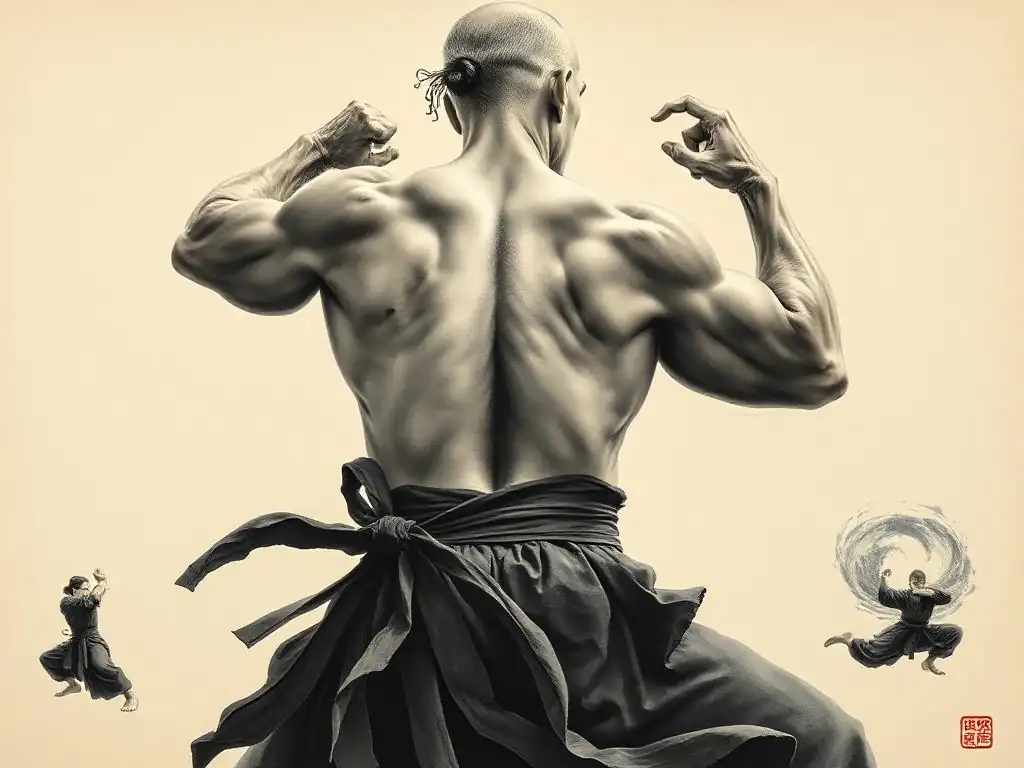
At the heart of Uechi-Ryu training lie three fundamental kata: Sanchin, Seisan, and Sanseiryu. These kata were the core curriculum taught by Kanbun Uechi and form the backbone of the style's technical and physical development. They are not merely sequences of movements but serve as dynamic exercises to cultivate proper body structure, breath control, focus, and the application of power. Mastery of these three forms is considered essential for understanding the deeper principles of Uechi-Ryu, representing the transmission of knowledge from the original Pangainoon system.
While Uechi-Ryu includes additional kata introduced by Kanbun's son, Kanei Uechi, the original three remain the most critical for developing the fundamental attributes of the style. Each kata focuses on different aspects, building upon the foundation laid by Sanchin. They embody the "half hard, half soft" principle, integrating powerful strikes with rooted stances and strategic movements. Studying these kata provides direct insight into the Chinese martial arts heritage that underpins this unique branch of Okinawan martial arts history.
Sanchin Kata: The Core of Uechi-Ryu's Power Development
Sanchin (meaning "Three Battles" or "Three Conflicts") is arguably the most important kata in Uechi-Ryu and many other Okinawan styles with Chinese roots, like Goju-Ryu. In Uechi-Ryu, Sanchin is performed with specific open-hand techniques and a strong, rooted stance. The kata focuses intensely on developing internal power, structural integrity, and control over one's body and breath. Practitioners perform Sanchin with isometric tension, coordinating muscle contraction with deep, controlled breathing ( Ibuki).
This constant tension and focused breathing are designed to strengthen the body, develop kime (focus of power), and build internal fortitude. Training in Sanchin often involves receiving physical checks from the instructor, who tests the student's structure and stability by striking or pushing their limbs and torso. This rigorous process ensures the development of a truly strong and rooted body capable of both absorbing and generating significant force, making Sanchin a vital component in the study of Okinawan martial arts history and practice.
Seisan Kata: A Blend of Chinese and Okinawan Techniques
Seisan (meaning "Thirteen") is the second core kata in the Uechi-Ryu system and introduces more dynamic movements and applications compared to Sanchin. While its origins are also likely Chinese, it may have undergone significant adaptation on Okinawa, representing a blend of Chinese principles and Okinawan sensibilities. Seisan incorporates a wider range of stances, hand techniques, and footwork than Sanchin, including evasive movements and close-range fighting strategies.
The kata includes techniques such as various strikes, blocks, joint manipulations, and takedowns, performed in sequences that simulate combat scenarios. Training Seisan helps students develop fluidity, timing, and the ability to apply the power cultivated in Sanchin in more complex situations. It is a longer and more intricate form than Sanchin, requiring greater coordination and understanding of transitional movements. Seisan is a key example of how imported Chinese forms were integrated and evolved within the Okinawan context, enriching Okinawan martial arts history.
Sanseiryu Kata: Advanced Techniques and Strategic Applications
Sanseiryu (meaning "Thirty-Six") is the third and most advanced of the original core kata in Uechi-Ryu. As the name suggests, it is a longer and more complex form than Seisan, encompassing a broader spectrum of techniques and strategic applications. Sanseiryu incorporates sophisticated footwork, intricate hand movements, and more elaborate combinations, reflecting advanced concepts of the Pangainoon system. It requires a high level of technical proficiency, physical conditioning, and mental focus to perform effectively.
This kata includes techniques for dealing with multiple opponents, entering and controlling space, and utilizing pressure points and joint locks in conjunction with strikes. Sanseiryu serves as a comprehensive summary of the style's fighting principles, demonstrating how the foundational strength and techniques from Sanchin and Seisan are applied in dynamic, flowing sequences. Mastery of Sanseiryu represents a deep understanding of the Uechi-Ryu system, showcasing the breadth and depth of its Chinese roots and its development within Okinawan martial arts history.
Uechi-Ryu's Distinctive Characteristics: A Blend of Hard and Soft
Uechi-Ryu is readily identifiable among Okinawan karate styles due to several distinctive characteristics that stem directly from its Pangainoon origins. While many Okinawan styles incorporate both hard and soft elements, Uechi-Ryu's approach is particularly pronounced, emphasizing strong body conditioning ("hard") alongside fluid, circular movements and evasive tactics ("soft"). This blend creates a system that is both physically robust and strategically adaptable, capable of delivering devastating power at close range.
The style's emphasis on close-quarters combat is another defining feature. Techniques are often designed for fighting within arm's reach, utilizing short, powerful strikes, joint manipulation, and body conditioning to overcome an opponent. This contrasts with some other styles that might focus more on longer-range techniques. The unique combination of extreme body hardening, specialized hand techniques, and close-range focus sets Uechi-Ryu apart within the diverse landscape of Okinawan martial arts history.
Unique Striking Methods: The Importance of the Nukite (Spear Hand)
One of the most iconic and distinctive techniques of Uechi-Ryu is the nukite, or spear hand. Unlike the closed fist strikes common in many martial arts, the nukite utilizes the tips of the fingers, often reinforced through rigorous conditioning, to strike vulnerable points on the opponent's body. This technique requires significant training to develop both the strength and precision necessary to be effective and safe for the practitioner.
The nukite is not the only unique striking method; Uechi-Ryu also heavily utilizes the shoken (one-knuckle fist), various palm strikes, and specialized foot strikes. The focus on open-hand techniques and strikes to vital points is a direct inheritance from the Pangainoon system. These specialized striking methods contribute significantly to Uechi-Ryu's reputation as a highly effective close-combat system and are a unique contribution to Okinawan martial arts history.
Body Conditioning and Strengthening in Uechi-Ryu Training
Body conditioning, known as Kote Kitae (forearm conditioning) and Tai Kitae (body conditioning), is a cornerstone of Uechi-Ryu training. This practice involves repeatedly striking and blocking with forearms, shins, and other parts of the body against training partners or conditioning tools to build resilience and toughen the bone and muscle. The goal is to develop a body that can both deliver powerful strikes without injury and withstand impacts.
This rigorous conditioning regime is directly inherited from the functional training methods of the Pangainoon system, where a hardened body was essential for survival in combat. While the intensity of conditioning may vary between dojo and practitioners today, it remains a fundamental element that defines the physical nature of Uechi-Ryu. This emphasis on building a durable physical structure is a key aspect that distinguishes Uechi-Ryu within Okinawan martial arts history.
Close-Range Combat and Grappling Elements
Uechi-Ryu is fundamentally a close-range fighting system. Techniques are designed to be effective when the practitioner is in close proximity to the opponent, utilizing short, explosive movements, joint manipulations, throws, and sweeps alongside strikes. While not a grappling art in the same vein as Judo or Jiu-Jitsu, Uechi-Ryu contains elements of trapping, seizing, and controlling an opponent at close quarters.
Many techniques found within the kata, particularly Seisan and Sanseiryu, demonstrate applications involving entering an opponent's space, disrupting their balance, and controlling their limbs. This focus on fighting in the clinch and utilizing the hardened body for both offense and defense at close range is a direct legacy of its Chinese origins and a significant characteristic that shapes its application in self-defense scenarios. These elements provide valuable insights into the practical applications preserved within Okinawan martial arts history.
The Evolution of Uechi-Ryu: From China to Okinawa and Beyond
The journey of the Pangainoon system from the Fujian province of China to becoming one of the most recognized styles in Okinawan martial arts history is a story of preservation, adaptation, and global spread. Kanbun Uechi's initial reluctance to teach after returning to Okinawa meant the style remained relatively unknown for some time. However, circumstances and persistent requests led him to eventually share his knowledge, first in Wakayama, Japan, and later back in Okinawa.
His son, Kanei Uechi, played a crucial role in formalizing and promoting the style, naming it "Uechi-Ryū" (Uechi style) in honor of his father in 1940. Kanei Uechi expanded the curriculum, adding preparatory exercises ( Junbi Undo) and additional kata, while meticulously preserving his father's core teachings. This period marked the transition from a privately taught family system back towards a more public martial art within Okinawa.
The Uechi Family's Role in Preserving and Promoting the Style
The Uechi family, beginning with Kanbun and most notably his son Kanei Uechi (1911–1991), were instrumental in ensuring the survival and propagation of the style. After Kanbun Uechi began teaching again in Wakayama, Japan, around 1924, his son Kanei joined him to train. Kanei Uechi dedicated his life to the style, becoming the second Soke (head of the family/style) upon his father's death. He moved back to Okinawa permanently after World War II and established dojo, playing a key role in the post-war resurgence of Okinawan martial arts.
Kanei Uechi standardized the teaching methodology, developed new training exercises, and introduced supplementary kata like Kanchin and Kanshiwa, which were based on the principles of the original three. He also actively promoted Uechi-Ryu both within Okinawa and internationally, welcoming foreign students and establishing associations. His efforts were critical in solidifying Uechi-Ryu's place in Okinawan martial arts history and paving the way for its global expansion.
The Spread of Uechi-Ryu Globally and Its Modern Adaptations
From its roots in China and its development on Okinawa, Uechi-Ryu began to spread internationally, particularly after World War II. American servicemen stationed on Okinawa were among the first non-Okinawan students, taking the style back to the United States and other countries. Masters like George Mattson were pioneers in establishing Uechi-Ryu in the West, contributing significantly to its growth outside of Japan.
Today, Uechi-Ryu is practiced in numerous countries around the world, with various associations and organizations dedicated to its study. While the core principles and original kata remain central, some adaptations have occurred in teaching methods, supplementary exercises, and kumite (sparring) practices to suit modern contexts and training needs. Despite these variations, the fundamental connection to the Pangainoon system and the emphasis on body conditioning and the core kata remain the defining characteristics of Uechi-Ryu globally, ensuring its unique place in Okinawan martial arts history continues to be recognized.
Comparing Uechi-Ryu to Other Okinawan Karate Styles: A Lineage Perspective
When examining the landscape of Okinawan martial arts history, Uechi-Ryu occupies a somewhat distinct position compared to styles like Shotokan (which traces roots to Shuri-te) or Goju-Ryu (which also has strong Chinese, Naha-te roots). While all Okinawan Karate styles share a common heritage of Te and Chinese influence, the specific lineage of Uechi-Ryu through Kanbun Uechi's direct study of Pangainoon in Fujian gives it a unique technical flavor and historical narrative.
Other prominent styles often trace their primary lineage through different Okinawan masters who synthesized various influences, leading to distinct technical differences in stances, movement, and preferred techniques. For instance, the higher stances and linear movements often associated with styles derived from Shuri-te contrast with the lower, more rooted stances and circular elements found in Uechi-Ryu and Naha-te based styles. Understanding these lineage differences is key to appreciating the diversity within Okinawan martial arts history.
Influences and Divergences in Okinawan Karate History
The development of Okinawan Karate was not monolithic; it involved multiple masters studying different Chinese systems and integrating them with local Te in various ways. This led to the emergence of distinct regional variations, broadly categorized as Shuri-te, Naha-te, and Tomari-te, based on the towns where they primarily developed. Shuri-te styles were often associated with the Okinawan aristocracy and guards, while Naha-te styles developed more among the merchant class and had strong ties to Southern Chinese systems like White Crane and Monk Fist. Tomari-te was likely a blend of influences from both Shuri and Naha.
Uechi-Ryu's direct link to Pangainoon aligns it more closely, in terms of its immediate Chinese source, with some of the influences found in Naha-te styles like Goju-Ryu, which also traces its roots to Chinese White Crane through Kanryo Higaonna's study in Fuzhou. However, the specific Pangainoon system studied by Kanbun Uechi resulted in a different emphasis on body conditioning and certain techniques, creating notable divergences even from other Naha-te rooted styles. This complex web of influences and adaptations makes Okinawan martial arts history a rich area of study.
The Uechi-Ryu's Distinctive Place in the Okinawan Karate Landscape
Uechi-Ryu holds a distinctive place in Okinawan martial arts history primarily because of its direct and well-documented lineage to the Pangainoon system of Fujian. While other styles acknowledge Chinese influence, Uechi-Ryu's founder spent over a decade immersed in a specific Chinese tradition and brought that system back largely intact before it evolved into Uechi-Ryu. This direct link provides a unique window into the specific type of Southern Chinese martial arts that heavily impacted Okinawan development.
Its emphasis on extreme body conditioning, its unique open-hand techniques like the nukite, and its focus on the original three kata (Sanchin, Seisan, Sanseiryu) differentiate it significantly from many other mainstream Okinawan styles. While sharing the fundamental principles of self-defense and physical discipline common to all Okinawan Karate, Uechi-Ryu offers a distinct methodology and technical repertoire that reflects its specific Chinese heritage, making it a fascinating subject within Okinawan martial arts history.
Exploring the Philosophical Underpinnings of Uechi-Ryu Karate
Beyond its physical techniques, Uechi-Ryu, like other traditional Okinawan martial arts, is deeply rooted in a rich philosophical framework. This philosophy is not explicitly taught as a separate subject but is interwoven into the training methodology, the etiquette of the dojo, and the expectations placed upon practitioners. The principles of discipline, respect, perseverance, and self-improvement are central to the study of Uechi-Ryu, guiding the student's journey both inside and outside the training hall.
The rigorous physical demands of Uechi-Ryu training, particularly the body conditioning and the intensity of Sanchin kata, inherently build mental fortitude and discipline. Overcoming physical discomfort and pushing one's limits fosters resilience. The structure of traditional dojo training, with its emphasis on hierarchy, respect for instructors and seniors, and adherence to established protocols, instills a sense of order and humility. These philosophical dimensions are as crucial as the physical techniques in understanding the complete picture of Uechi-Ryu and its place in Okinawan martial arts history.
Zen Buddhism and its Influence on Uechi-Ryu
While not as overtly expressed as in some Japanese martial arts traditions, elements of Zen Buddhist philosophy have subtly influenced Okinawan martial arts, including Uechi-Ryu, primarily through their connection to Chinese cultural and spiritual practices. The focus on mindfulness, present moment awareness, and the pursuit of perfection through repetitive practice found in Zen aligns with the meditative aspects of kata training, particularly Sanchin.
The concept of Mushin (empty mind), a state of mental clarity and spontaneity achieved through intense training, is also relevant. In Uechi-Ryu, the goal is not merely to execute techniques mechanically but to embody them fully, reacting instinctively and effectively in combat without conscious thought. This state of Mushin is often associated with Zen principles. While Uechi-Ryu's lineage is primarily martial, these subtle philosophical underpinnings add a layer of depth to the practice, linking it to broader spiritual currents that have flowed through Okinawan martial arts history.
The Importance of Discipline, Respect, and Self-Improvement
Core to the philosophy of Uechi-Ryu are the values of discipline, respect, and continuous self-improvement. Discipline is cultivated through consistent, rigorous training, adhering to the demanding physical regimen, and following the structured curriculum. This discipline extends beyond the dojo, influencing the practitioner's approach to life's challenges.
Respect is fundamental, shown towards instructors, fellow students, the dojo space, and the art itself. This respect fosters a positive training environment and reinforces the lineage and tradition of the style. Finally, Uechi-Ryu emphasizes self-improvement not just physically but also mentally and spiritually. The journey in Uechi-Ryu is seen as a lifelong pursuit of refining one's character, overcoming limitations, and striving for mastery, embodying the enduring spirit found throughout Okinawan martial arts history.
The Legacy of Uechi-Ryu: Preserving its Chinese Martial Arts Heritage
The legacy of Uechi-Ryu is one of remarkable preservation and global dissemination of a unique martial art system. It stands as a living link to the Southern Chinese martial arts of the early 20th century, specifically the Pangainoon system studied by Kanbun Uechi. While it has evolved somewhat on Okinawan soil and adapted to modern teaching, its core principles, foundational kata, and distinctive techniques remain remarkably true to its roots. This makes Uechi-Ryu a valuable repository of historical martial arts knowledge.
Its continued practice around the world ensures that the lineage and techniques brought from Fujian to Okinawa are not lost. The dedication of its practitioners to rigorous conditioning and the mastery of the core kata helps to preserve the physical and philosophical essence of the style. Uechi-Ryu's journey highlights the dynamic nature of martial arts transmission, where systems are carried across borders, adapted, and preserved by dedicated individuals, contributing significantly to the global story of martial arts and Okinawan martial arts history.
Uechi-Ryu's Contribution to Okinawan Martial Arts History
Uechi-Ryu's contribution to Okinawan martial arts history is significant and multifaceted. Firstly, it represents a distinct and well-documented lineage of Chinese influence, providing valuable comparative insight into how different Chinese systems impacted Okinawan Te. Its direct link to the Pangainoon system offers a unique perspective that complements the understanding gained from styles with other Chinese connections.
Secondly, Uechi-Ryu has contributed unique technical elements, such as its specific approach to body conditioning and its emphasis on the nukite and other open-hand techniques, which have enriched the overall Okinawan martial arts landscape. Its survival and growth demonstrate the enduring appeal and effectiveness of the principles it embodies. Uechi-Ryu stands as a testament to the deep historical ties between Okinawa and China and is a vital part of the diverse heritage of Okinawan martial arts history.
The Future of Uechi-Ryu: Adaptations, Innovations, and Continued Relevance
The future of Uechi-Ryu involves balancing the preservation of its rich heritage with necessary adaptations for modern times. While maintaining the integrity of the core kata and conditioning is paramount for preserving the style's essence, innovations in teaching methods, safety protocols, and the integration of sports science principles can enhance training effectiveness and accessibility. The inclusion of structured kumite (sparring) in many dojo allows practitioners to test techniques in a controlled environment, ensuring practical relevance.
As Uechi-Ryu continues to spread globally, instructors and students face the challenge of maintaining consistent standards while respecting cultural differences. The ongoing study of its historical roots and the practical application of its techniques will ensure its continued relevance as an effective self-defense system and a path for physical, mental, and spiritual development. The story of Uechi-Ryu, from its origins in Pangainoon to its global presence today, remains an inspiring chapter in Okinawan martial arts history.
Frequently Asked Questions
What is Pangainoon, and what is its significance to Uechi-Ryu?
Pangainoon is a Chinese martial art considered the direct precursor to Uechi-Ryu. It provided the foundational techniques and principles upon which Uechi-Ryu was built.
How did Uechi-Ryu develop from its Chinese origins to become an Okinawan martial art?
Kanbun Uechi, the founder, studied Pangainoon in China. Upon returning to Okinawa, he adapted and refined the art, eventually forming Uechi-Ryu, blending Chinese and Okinawan influences.
What are some key differences between Pangainoon and Uechi-Ryu?
While Uechi-Ryu retains many Pangainoon principles, it includes modifications and additions made by Kanbun Uechi. These changes reflect his personal interpretations and the Okinawan context.
Where does Uechi-Ryu fit within the broader landscape of Okinawan martial arts history?
Uechi-Ryu is a significant style within Okinawan martial arts, notable for its strong Chinese influence and its emphasis on close-range combat. It represents a unique branch of Okinawan Karate.
What aspects of Uechi-Ryu training reflect its Chinese heritage?
The emphasis on conditioning the body, particularly the hands and feet, and the focus on Sanchin kata are direct reflections of its Pangainoon roots. The techniques are geared towards practical self-defense.
Final Reflection: The Enduring Legacy of Connection
The journey from Pangainoon to Uechi-Ryu, as we've explored, is more than just a historical tracing of lineage; it's a testament to the enduring power of cultural exchange and adaptation. The very existence of Uechi-Ryu today speaks volumes about the interconnectedness of martial arts traditions and the constant evolution that defines them. This intricate tapestry, woven from Chinese roots and Okinawan soil, continues to influence the landscape of martial arts globally, reminding us that innovation often springs from a deep understanding of the past.
The story of Uechi-Ryu profoundly impacts how we understand the evolution of martial arts, highlighting the fluidity and dynamism inherent in these practices. It underscores the importance of acknowledging and respecting the diverse influences that shape any art form, fostering a deeper appreciation for the rich tapestry of human creativity. To know the road ahead, ask those coming back.
This ancient proverb resonates deeply, reminding us that understanding our origins is crucial for navigating the future of any discipline, especially one as deeply rooted in tradition as Okinawan martial arts.
As we conclude this exploration of Uechi-Ryu's origins, I invite you to reflect on the lessons it offers. Consider how the principles of adaptation, respect for tradition, and the pursuit of continuous improvement can be applied not only in martial arts but also in your own life. Embrace the interconnectedness of ideas and cultures, and strive to understand the roots of your own passions. Let the story of Uechi-Ryu inspire you to cultivate a deeper appreciation for the past, a more mindful presence in the present, and a more innovative vision for the future.
Unearth Your Inner Strength: Continue Your Martial Arts Journey!
Thank you for diving into the history of Uechi-Ryu with us! We hope you found this exploration of its Chinese roots insightful and empowering. Ready to take the next step?
- Begin charting your own martial arts lineage: Reflect on your martial arts journey and identify instructors or mentors who have helped shape your unique style.
- Delve into the cultural influences within your martial arts training. Share how understanding these origins has enriched your experience.
- Discuss with your instructor how to incorporate elements from its Chinese roots into your current practice.
What surprising connection between Pangainoon and Uechi-Ryu resonated most with you, and how will you apply that knowledge in your next training session?