
The "Swallowing and Spitting" Concept in Southern Mantis Close Combat Dynamics

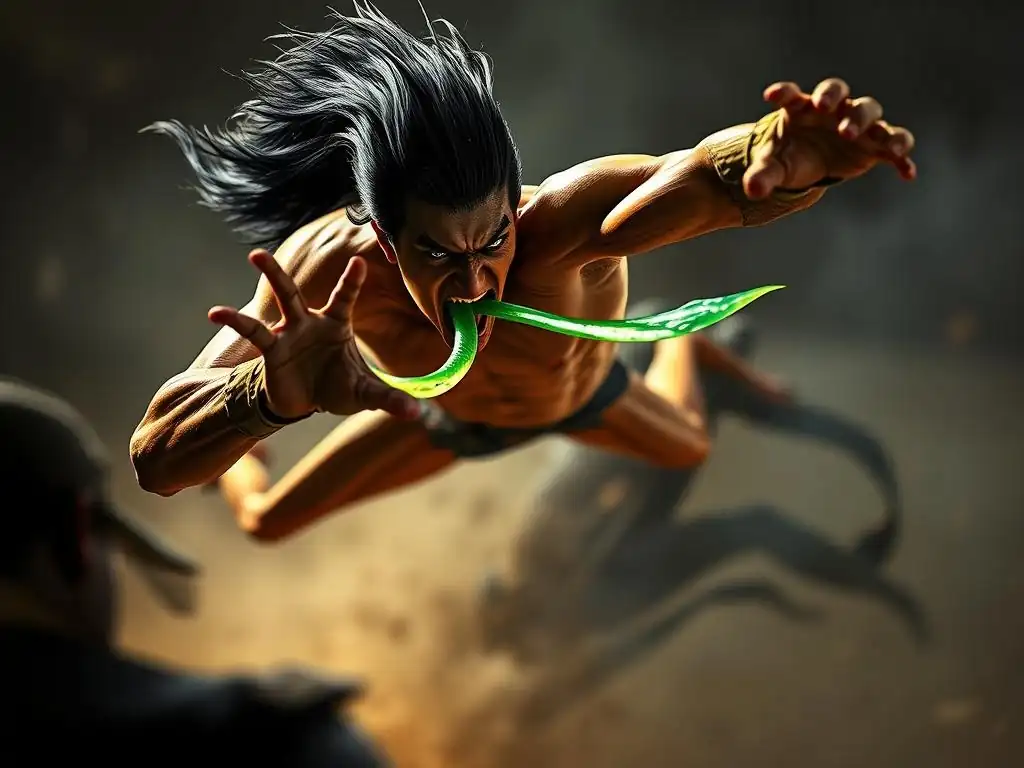
Welcome to Martial Arts Mastery, where we delve into the rich tapestry of fighting traditions worldwide. Prepare to unlock the secrets behind combat strategies, historical lineages, and the philosophies that shape them. Today, we explore the intriguing concept of the Southern Mantis swallowing spitting technique. What makes this unique approach so effective in close-quarters combat, and how can it be applied to your own training? Discover the answers and more as we dissect the nuances of this fascinating martial art.
- Understanding the "Swallowing and Spitting" Concept in Southern Mantis Kung Fu
- Decoding the Southern Mantis Swallowing Spitting Technique
- The Tactical Applications of Tun Tou in Southern Mantis
- Training Drills for Mastering Swallowing and Spitting
- Advanced Concepts in Southern Mantis Swallowing and Spitting
- The Legacy of "Swallowing and Spitting" in Southern Mantis Kung Fu
-
Frequently Asked Questions
- What is the "Swallowing and Spitting" technique in Southern Mantis?
- How does "Swallowing and Spitting" apply to self-defense?
- What are the key elements needed to execute "Swallowing and Spitting" effectively?
- Is the "Swallowing and Spitting" technique unique to Southern Mantis?
- Where can I learn more about the "Swallowing and Spitting" technique?
- Final Reflection: Embracing the Flow of Force
- Unleash Your Inner Mantis: Master the Art of Adaptation!
Understanding the "Swallowing and Spitting" Concept in Southern Mantis Kung Fu
Introduction to Southern Praying Mantis Close Combat
Southern Praying Mantis Kung Fu, known for its rapid, close-range tactics and devastating power, thrives in tight spaces. Unlike some long-range martial arts, the focus here is on dominating the immediate engagement zone, often referred to as the "telephone booth" range. This style emphasizes trapping, striking, and controlling an opponent within arm's reach, utilizing lightning-fast hand techniques and intricate footwork to overwhelm defenses. The core philosophy revolves around simultaneous defense and offense, intercepting an opponent's attack while launching one's own.
The efficacy of Southern Praying Mantis in close quarters stems from its unique body mechanics and principles. Techniques are designed for maximum impact at minimal distance, leveraging the entire body's structure to generate force. Stances are often compact yet rooted, allowing for explosive bursts of movement and power. Training emphasizes sensitivity and timing, enabling practitioners to react instinctively to an opponent's movements. It is within this close-range environment that the critical concept of "Swallowing and Spitting" comes into play, forming the foundation of the style's dynamic engagement strategy.
The Essence of "Swallowing and Spitting" (Tun Tou)
At the heart of Southern Mantis close combat lies the principle of "Swallowing and Spitting," or Tun Tou (吞吐). This concept describes the dynamic, fluid, and often simultaneous actions of receiving an opponent's force or attack ( Swallowing) and immediately counter-attacking or expelling force ( Spitting). It is not merely a sequence of blocking and then striking, but a continuous, integrated process where defense and offense are inseparable. The Tun Tou principle allows a Southern Mantis practitioner to adapt instantly to an opponent's energy, absorbing or redirecting it while simultaneously launching their own offensive.
Understanding Tun Tou is crucial for mastering the Southern Mantis swallowing spitting technique. It represents the style's ability to be yielding yet aggressive, soft yet hard. The "Swallowing" phase involves subtle adjustments, body shifts, and hand techniques to neutralize or absorb incoming force, often drawing the opponent slightly off-balance or creating an opening. The "Spitting" phase is the immediate, explosive counter-action, delivering power into the created vulnerability. This continuous cycle of Tun Tou makes Southern Mantis practitioners incredibly difficult to defend against in close range, as they are constantly shifting between receiving and attacking with seamless transitions.
Decoding the Southern Mantis Swallowing Spitting Technique
What Does "Swallowing" (Tun) Entail?
Absorbing and Redirecting Force in Close Quarters
"Swallowing" (Tun) in the context of the Southern Mantis swallowing spitting technique is far more sophisticated than a simple block. It involves using body structure, subtle movements, and specific hand techniques to absorb or redirect an opponent's incoming force.
Imagine an opponent pushing strongly; a Southern Mantis practitioner might not meet force with equal force, but instead subtly yield, shifting their weight or angle, and using a hand technique like Lap Sau (grasping hand) or Gum Sau (pressing hand) to guide the incoming energy past their center or into a less threatening direction. This absorption isn't passive; it's an active process designed to control the opponent's limb and create an opportunity for the subsequent "Spitting" action.
This absorption and redirection are vital in the close confines where Southern Mantis operates. For instance, if an opponent throws a powerful straight punch, "Swallowing" might involve a slight sidestep combined with a Biu Sau (thrusting finger/hand) or Fook Sau (controlling arm) to deflect the punch's trajectory while simultaneously gaining control of the opponent's arm. The goal is to disrupt the opponent's balance and structure, minimizing their attack's impact on the practitioner while setting them up for the counter. This requires a high degree of sensitivity developed through drills like Sticking Hands.
Footwork and Body Mechanics for Effective "Swallowing"
Effective "Swallowing" relies heavily on precise footwork and integrated body mechanics. The small, rooted stances of Southern Mantis, such as Sam Bo Jin (three step arrow), allow for rapid, subtle adjustments. A key element is maintaining a stable base while the upper body yields or redirects.
For example, a slight shift in weight to the back leg or a pivot on the ball of the foot can change the body's angle just enough to facilitate the redirection of force without compromising balance. The torso and hips play a crucial role, acting as a unit to absorb impact and generate torque for subsequent actions.
Consider the Jik Bo (straight step) or Heng Bo (crossing step) footwork patterns. These steps, often small and quick, allow the practitioner to slightly adjust distance or angle during the "Swallowing" phase, preventing them from being overwhelmed by an opponent's forward momentum. Simultaneously, the core muscles are engaged to maintain structure and stability. The entire body works in concert – the feet provide the base, the legs and hips manage weight and generate power, and the torso and arms execute the specific techniques – making the "Swallowing" process a dynamic, full-body action, not just a hand movement.
Exploring the "Spitting" (Tou) Aspect
Explosive Power Generation and Delivery
"Spitting" (Tou) is the explosive, offensive component of the Southern Mantis swallowing spitting technique. Following the brief yielding or redirection of "Swallowing," "Spitting" involves the immediate release of accumulated or generated power back into the opponent. This power is not typically generated from a large, winding motion, but rather from the integrated structure of the body, leveraging ground force and core engagement. Techniques like the Chop Choi (chopping punch) or Bong Sau (wing arm) followed by a rapid strike exemplify this explosive delivery.
The key to effective "Spitting" power lies in Fa Jing (releasing power), a concept where the entire body acts as a whip or spring. The power originates from the feet, travels up through the legs and core, and is channeled through the arm or hand into the target. This internal generation of power allows Southern Mantis practitioners to deliver significant impact from very short distances, often appearing effortless. The transition from the yielding of "Swallowing" to the sudden, sharp output of "Spitting" is what makes the Tun Tou dynamic so effective in overwhelming an opponent's defenses.
Targeting Vulnerable Points in Close Range
The "Spitting" aspect of the Southern Mantis swallowing spitting technique is characterized by precise targeting of vulnerable points at close range. Because the style operates in tight quarters, large, sweeping movements are impractical. Instead, strikes are aimed at areas like the eyes, throat, solar plexus, ribs, and groin, where even a short, sharp impact can be debilitating. The rapid-fire nature of Southern Mantis attacks means multiple strikes can be delivered in quick succession.
For example, after "Swallowing" an opponent's arm with a Fook Sau, the immediate "Spitting" counter might be a rapid Biu Sau to the eyes or a Gin Choi (vertical punch) to the sternum. The small, focused nature of many Southern Mantis hand techniques, like the "Mantis Claw," is ideal for striking or raking these sensitive areas. This strategic targeting maximizes the effect of the explosive "Spitting" power, aiming to quickly incapacitate the opponent or create a significant opening for follow-up techniques.
The Tactical Applications of Tun Tou in Southern Mantis

Bridging the Gap: Closing the Distance
The Tun Tou principle is fundamentally employed as a method for bridging the gap and closing the distance on an opponent safely and effectively. When facing an opponent at a slight distance, a Southern Mantis practitioner doesn't simply charge in. Instead, they might use the opponent's initial movement or attack as the cue to initiate Tun Tou. "Swallowing" can involve stepping in while simultaneously deflecting or controlling the incoming limb, neutralizing the immediate threat. This controlled entry allows the practitioner to transition directly into their preferred close-range fighting distance.
For instance, if an opponent throws a probing jab, the Southern Mantis fighter might "Swallow" it by stepping forward slightly and using a Bong Sau or Fook Sau to guide the arm offline, thus closing the distance safely. This isn't just a defensive maneuver; the act of "Swallowing" while stepping in is already part of the offensive sequence, putting the practitioner inside the opponent's guard and in prime position to "Spit" with immediate, close-range strikes. The dynamic allows the practitioner to turn the opponent's aggression into an opportunity to enter their space.
Controlling the Centerline: Dominating the Engagement
A core tactical application of the Southern Mantis swallowing spitting technique is dominating the centerline. The centerline is the imaginary line running vertically down the front of the body, housing many vital targets. In close combat, controlling this line gives a significant advantage, allowing access to the opponent's vulnerable points while protecting one's own. The Tun Tou principle facilitates this control through simultaneous defense and offense.
When an opponent attacks the centerline, the "Swallowing" action often involves deflecting or trapping the attacking limb off the centerline, creating an opening. The immediate "Spitting" action then drives power down the now-open centerline towards the opponent's targets.
Techniques like Gum Sau (pressing hand) or Lap Sau (grasping hand) are used in the "Swallowing" phase to control the opponent's arms and clear the path for a centerline "Spitting" strike like a Gin Choi (vertical punch) or Chop Choi. This continuous push and pull, yielding and attacking along or just off the centerline, is a hallmark of Southern Mantis close combat strategy.
Generating Power from Short Range
One of the defining characteristics of Southern Mantis Kung Fu, heavily reliant on the Tun Tou principle, is its ability to generate significant power from extremely short ranges. Unlike styles that rely on large stances or wind-up motions, Southern Mantis power, or Fa Jing, is often described as "short power" or "inch power." The "Swallowing" phase, by creating structure and connection, helps set the body for the subsequent "Spitting" release.
The transition from yielding absorption during "Swallowing" to explosive output during "Spitting" leverages the body's internal mechanics. The slight yielding or redirection builds a form of tension or potential energy in the structure, which is then released instantaneously. Imagine slightly coiling a spring during "Swallowing" and then letting it snap during "Spitting." This internal generation means that even a punch thrown from only an inch or two away can carry substantial force, capable of disrupting an opponent's balance or causing significant impact. The Southern Mantis swallowing spitting technique is the embodiment of this short-range power generation.
Training Drills for Mastering Swallowing and Spitting
Sticking Hands (Chi Sau) and Sensing Energy
Sticking Hands, or Chi Sau, is perhaps the most fundamental training drill for developing proficiency in the Southern Mantis swallowing spitting technique. This two-person drill involves partners maintaining contact with each other's forearms or wrists, sensing the pressure, direction, and intention of the opponent's energy. Through Chi Sau, practitioners learn to feel when an opponent is applying force (setting up for "Swallowing") and when there is an opening or weakness in their structure (setting up for "Spitting").
Regular practice of Chi Sau cultivates sensitivity (ting jing) and the ability to react reflexively. Practitioners learn to "listen" with their arms, feeling the flow of energy and identifying gaps. This allows them to instinctively yield and redirect incoming force ("Swallowing") while simultaneously feeling for the moment to explode back ("Spitting"). Different Chi Sau variations focus on specific hand techniques and energetic principles, all contributing to the development of the seamless transition between Tun and Tou.
Sam Gin: A Form Embodying Tun Tou Principles
The form Sam Gin (三真), or "Three Truths/Essences," is considered a cornerstone of Southern Mantis training and deeply embodies the principles of Tun Tou. This relatively short but complex form contains numerous movements that demonstrate the "Swallowing" and "Spitting" dynamic. Practicing Sam Gin allows the solo practitioner to internalize the feeling and mechanics of receiving force and immediately counter-attacking.
Within Sam Gin, one can see movements that mimic absorbing an incoming punch followed by a rapid strike, or yielding to a push while simultaneously executing a low block and a high strike. The transitions are quick and fluid, emphasizing the integrated nature of defense and offense. Repetitive practice of Sam Gin helps build the muscle memory and structural integrity required to execute the Southern Mantis swallowing spitting technique effectively under pressure, ensuring the body moves as a unified whole.
Partner Drills for Developing Reaction Time and Power
Beyond Chi Sau and solo forms, specific partner drills are essential for applying the Southern Mantis swallowing spitting technique in a dynamic, non-compliant environment. These drills simulate common attack scenarios and force practitioners to apply Tun Tou under pressure. Examples include drills where one partner throws a simple, committed strike, and the other must "Swallow" and "Spit" with an appropriate counter.
These drills often start slowly to ensure correct mechanics and understanding of the Tun Tou principle, gradually increasing in speed and intensity. Drills focusing on specific hand combinations, footwork transitions, and target acquisition help refine the timing and power generation of the "Spitting" phase after successfully "Swallowing" the incoming force. For instance, a drill might involve one partner throwing a series of straight punches, and the other must continuously apply Tun Tou to each punch, practicing redirection and counter-strikes while maintaining balance and structure.
Advanced Concepts in Southern Mantis Swallowing and Spitting
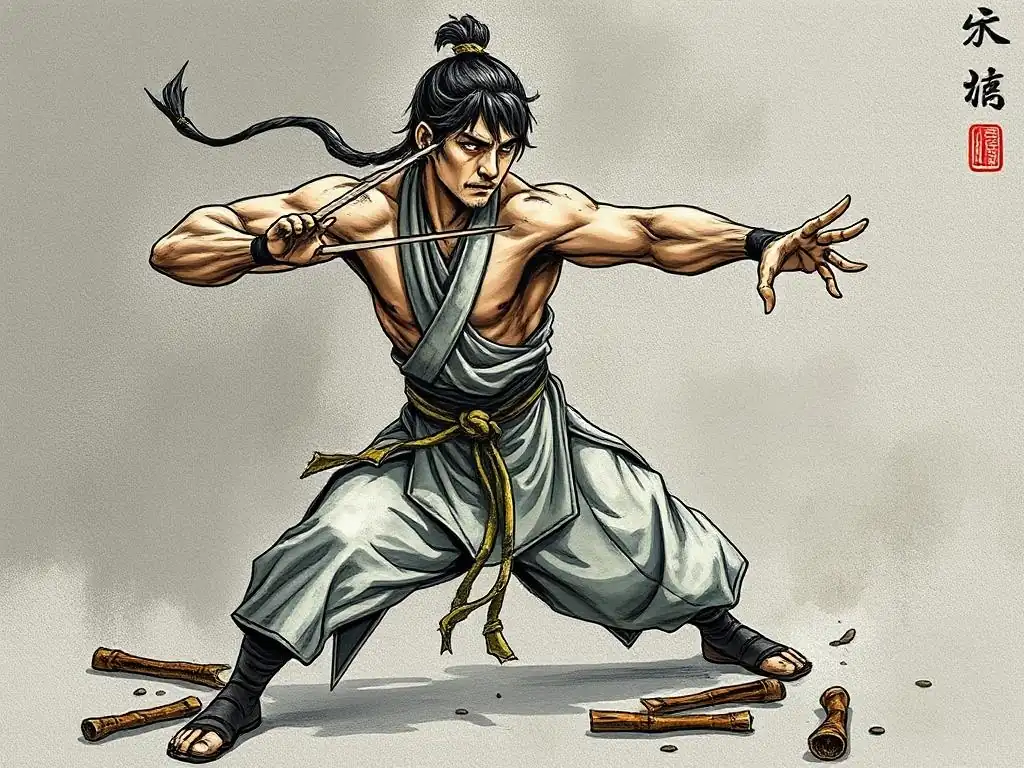
Fa Jing (Releasing Power) and its Connection to Tun Tou
Fa Jing (發勁), the explosive release of power, is inextricably linked to the Southern Mantis swallowing spitting technique. While "Spitting" is the action of delivering power, Fa Jing is the underlying mechanism by which that power is generated and released. The "Swallowing" phase often plays a crucial role in setting up the body's structure and creating the internal tension necessary for effective Fa Jing.
During "Swallowing," the practitioner maintains a rooted connection to the ground and aligns their body structure to absorb or redirect force. This alignment allows the subsequent "Spitting" action to leverage the entire body's mass and kinetic chain. The transition from the relaxed, yielding state of "Swallowing" to the sudden, sharp contraction and extension of "Spitting" is the physical manifestation of Fa Jing. Without proper Fa Jing, the "Spitting" action would lack the characteristic explosive impact that defines the Southern Mantis swallowing spitting technique.
Integrating Qin Na (Joint Locking) with Swallowing and Spitting
Southern Mantis Kung Fu often incorporates Qin Na (擒拿), or joint locking and seizing techniques, and these can be seamlessly integrated with the Tun Tou principle. The "Swallowing" phase, which involves controlling an opponent's limb, naturally lends itself to transitioning into a Qin Na application. By controlling an arm or wrist during the "Swallowing" phase, the practitioner is already in a prime position to apply a joint lock or break before, during, or immediately after the "Spitting" action.
For example, if an opponent grabs or pushes, the "Swallowing" action might involve using a hand technique to control their wrist or elbow. From this controlled position, the "Spitting" could be a strike with the free hand, followed immediately by applying leverage to the controlled joint. Alternatively, the "Spitting" itself could be the Qin Na application, such as a sudden twist or bend applied to the opponent's limb using the explosive power generated. The Southern Mantis swallowing spitting technique provides the dynamic entry and control necessary to make Qin Na effective in a live engagement.
Using Borrowed Force (Jie Li) to Enhance Spitting Power
An advanced application of the Southern Mantis swallowing spitting technique involves the concept of Jie Li (借力), or "borrowing force." This principle states that instead of solely relying on one's own muscular strength, a practitioner can utilize the opponent's force and momentum to enhance their own techniques. The "Swallowing" phase is where Jie Li is primarily applied.
By skillfully yielding and redirecting an opponent's incoming force, the practitioner doesn't just neutralize the attack; they can actually add the opponent's energy to their own "Spitting" counter. If an opponent pushes forward with significant momentum, the "Swallowing" action can involve a slight yielding and redirection that causes the opponent to slightly overextend.
The subsequent "Spitting" strike then leverages this forward momentum, adding it to the practitioner's own power generation, resulting in a significantly more impactful strike. This sophisticated use of Jie Li makes the Southern Mantis swallowing spitting technique incredibly efficient and powerful, allowing smaller practitioners to effectively deal with larger, stronger opponents.
The Legacy of "Swallowing and Spitting" in Southern Mantis Kung Fu
Influence on Modern Self-Defense Applications
The core principles of the Southern Mantis swallowing spitting technique have significant relevance in modern self-defense applications. The emphasis on close-range effectiveness, simultaneous defense and offense, and generating power from minimal distance are highly practical in real-world confrontations, which often occur in confined spaces and at close quarters. Unlike sport fighting, self-defense rarely involves controlled distances.
The ability to "Swallow" an initial aggressive movement – whether a shove, a grab, or a wild punch – allows a defender to manage the immediate threat without retreating, which might not be possible in a narrow hallway or crowded area. The immediate "Spitting" counter provides the means to quickly incapacitate or deter an attacker. The principles of controlling the centerline and targeting vulnerable points, central to Tun Tou, are directly applicable to neutralizing threats effectively and decisively in a self-defense scenario. The Southern Mantis swallowing spitting technique provides a robust framework for dealing with aggression at close range.
Wong Wah Bo's Use of Tun Tou Against Larger Opponents
Historical accounts and lineage teachings often highlight the legendary Southern Mantis master Wong Wah Bo (黃華寶), a contemporary of the famed Wing Chun master Leung Jan, and his exceptional skill, particularly in using the Tun Tou principle against larger and stronger opponents. Wong Wah Bo, though not a large man himself according to various accounts, was renowned for his ability to defeat physically superior adversaries. This was attributed in large part to his mastery of close-range mechanics and the Southern Mantis swallowing spitting technique.
Wong Wah Bo's application of Tun Tou allowed him to effectively manage the force of larger opponents. Instead of trying to muscle through their strength, he would "Swallow" their powerful attacks by yielding, redirecting, and adhering, thereby neutralizing their size advantage.
Immediately following the absorption or redirection, he would "Spit" back with explosive, precisely targeted strikes that leveraged his internal power and the opponent's compromised position. His ability to seamlessly transition between receiving and attacking, characteristic of the Southern Mantis swallowing spitting technique, made him incredibly elusive and dangerous up close, proving that technique and principle could overcome brute force.
Preserving the Traditional Principles of Southern Mantis Kung Fu
Preserving the traditional principles embodied in the Southern Mantis swallowing spitting technique is vital for maintaining the integrity and effectiveness of the style. In an era where many martial arts are adapted for sport, the focus on real-world close combat dynamics, sensitivity, and internal power generation inherent in Tun Tou represents the art's original purpose. Passing down the correct body mechanics, the nuanced understanding of energy flow in Chi Sau, and the practical application of Tun Tou in forms and drills ensures that the art does not become a mere collection of disconnected techniques.
Lineage holders and dedicated practitioners play a crucial role in this preservation. They emphasize the holistic nature of the Southern Mantis swallowing spitting technique, stressing that it is not just about hand movements but the integrated use of the entire body, mind, and intention. By adhering to the core concepts like Tun Tou, Fa Jing, and Jie Li, they ensure that the devastating close-range effectiveness for which Southern Mantis Kung Fu is historically known continues to be understood and practiced by future generations, safeguarding the legacy of this unique and powerful martial art.
Frequently Asked Questions
What is the "Swallowing and Spitting" technique in Southern Mantis?
The "Swallowing and Spitting" technique refers to a dynamic close-range combat strategy where one absorbs (swallows) an opponent's force, then immediately expels force back in a rapid counter-attack. It's a core principle of Southern Mantis.
How does "Swallowing and Spitting" apply to self-defense?
In self-defense, "Swallowing and Spitting" allows you to neutralize an attacker's initial aggression before launching a quick, decisive counter. It emphasizes efficiency and minimizing exposure to danger.
What are the key elements needed to execute "Swallowing and Spitting" effectively?
Effective execution requires precise timing, body mechanics, and sensitivity to the opponent's force. Practitioners must develop the ability to yield and redirect energy.
Is the "Swallowing and Spitting" technique unique to Southern Mantis?
While the specific terminology might be unique to Southern Mantis, the underlying concept of redirecting and counter-attacking is found in various other martial arts, although the execution may differ.
Where can I learn more about the "Swallowing and Spitting" technique?
MartialArtsMastery.org provides detailed articles, videos, and resources on Southern Mantis techniques, including "Swallowing and Spitting," as well as its history and training methods.
Final Reflection: Embracing the Flow of Force
The intricate dance of the "Swallowing and Spitting" technique in Southern Mantis Kung Fu, as explored in this article, isn't just a historical relic; it's a powerful metaphor for adaptability and resilience in a world demanding constant evolution. Understanding the principles of absorbing and redirecting force, both literally in combat and figuratively in life, provides a framework for navigating challenges with grace and effectiveness.
The enduring appeal of Southern Mantis lies not only in its devastating close-quarters combat prowess but also in its philosophical underpinnings. The ability to yield, to "swallow" an opponent's attack, only to unleash a counter with amplified power, resonates deeply with the human experience of overcoming adversity. As Bruce Lee famously said, Be like water making its way through cracks. Do not be assertive, but adjust to the object, and you shall find a way around or through it. If nothing within you stays rigid, outward things will disclose themselves.
This philosophy, embodied in the "swallowing and spitting" technique, encourages us to find strength in flexibility.
Now, consider how you can apply the "Swallowing and Spitting" concept in your own life. Where can you learn to yield, to absorb the negativity or challenges thrown your way, and then transform that energy into a positive and powerful response? Embrace the flow, adapt to the circumstances, and discover the strength that lies within your ability to both absorb and unleash. The power of Southern Mantis, and its "swallowing and spitting" technique, is not just for the martial artist; it's a lesson for us all.
Unleash Your Inner Mantis: Master the Art of Adaptation!
Thank you for diving into the intricate world of Southern Mantis Kung Fu! Now that you've explored the "Swallowing and Spitting" concept, it's time to translate theory into explosive action. Let's continue your journey to martial arts mastery!
- Begin by perfecting the Tin Kiu (Bridge Hand) drills to internalize the sensitivity and responsiveness crucial for effective close-range combat.
- Challenge yourself: Practice applying the "Swallowing and Spitting" principle against various attack scenarios with a training partner. Focus on yielding, redirecting, and unleashing focused counter-attacks.
- Share your insights! Discuss the challenges and triumphs you experience while implementing these techniques with fellow martial artists on our community forum.
How will you use the "Swallowing and Spitting" concept to redefine your close-combat strategy today?