
Judo Sensei Haruto: The Philosophy of 'Maximum Efficiency, Minimum Effort' in Action

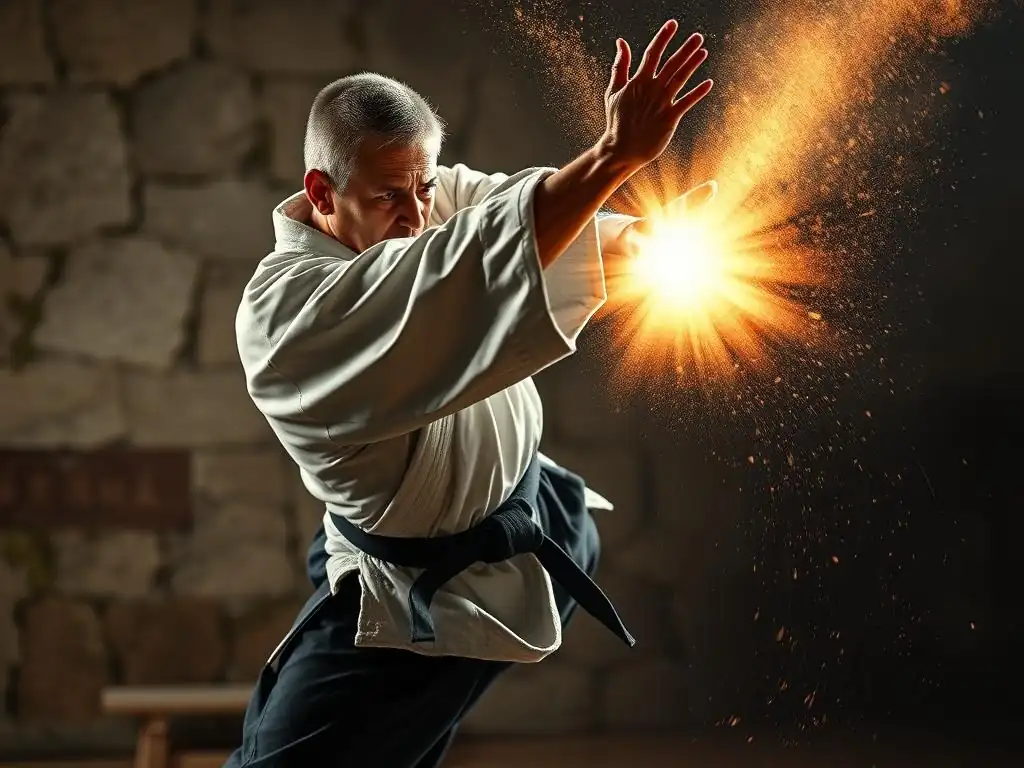
Welcome to Martial Arts Mastery, where the world's most compelling combat traditions come to life. Ever wondered how a single movement can yield maximum impact? Delve into the life and philosophy of Judo Sensei Haruto in our latest profile, a testament to the power of Judo efficiency training techniques. Discover how his dedication to "Maximum Efficiency, Minimum Effort" revolutionized the art, and unlock the secrets to applying this principle in your own practice. Are you ready to elevate your understanding of Judo and its profound applications?
- Ronda Rousey: Mastering Judo for MMA Dominance
- Understanding Judo's Influence on Rousey's MMA Success
- Judo-Based MMA Training Techniques with Ronda Rousey (Hypothetical)
- Ronda Rousey's Approach to Adapting Judo for MMA
- The Impact of Ronda Rousey's Judo on the Sport of MMA
- Judo and Self-Defense: Practical Applications in MMA
- Ronda Rousey's Legacy: Redefining MMA and Inspiring Athletes
- Conclusion: The Enduring Influence of Judo on Rousey's Success
-
Frequently Asked Questions
- What is the core philosophy behind Judo Sensei Haruto's approach to Judo training?
- How does Sensei Haruto incorporate "efficiency" into his Judo training techniques?
- What are some practical examples of "Judo efficiency training techniques" that Sensei Haruto uses?
- How does Sensei Haruto balance the philosophical aspects of Judo with the practical application of "efficiency training techniques"?
- How can students benefit from adopting Sensei Haruto's philosophy of "maximum efficiency, minimum effort" in their Judo training?
- Final Reflection: The Enduring Power of Efficient Movement
- Embrace the Judo Way: Unleash Your Inner Efficiency!
Ronda Rousey: Mastering Judo for MMA Dominance
Martial Arts Mastery Interview: Unveiling a Judo-Based MMA Strategy
Ronda Rousey's meteoric rise in mixed martial arts was largely predicated on a strategy deeply rooted in her elite Judo background. While most early female MMA fighters came from striking disciplines or Brazilian Jiu-Jitsu, Rousey brought a unique, aggressive grappling style honed over years of Olympic-level competition.
Her approach wasn't just about applying Judo techniques; it was about leveraging Judo's core principles – balance disruption (kuzushi), efficient movement (tai sabaki), and timing – within the chaotic environment of an MMA fight. This distinctive strategy allowed her to quickly close distance, control opponents in the clinch, and transition seamlessly into high-percentage submissions, primarily her signature armbar.
This Judo-centric strategy was a game-changer. Opponents struggled to deal with her relentless forward pressure and ability to secure dominant grips despite the presence of striking. Her ability to execute throws and takedowns with surprising speed and power, often from positions where traditional wrestling entries might be less effective, highlighted the practical application of sophisticated Judo efficiency training techniques. She demonstrated that Judo wasn't just a sport of throws but a comprehensive system of control, leverage, and finishing holds that could be devastating in a cage fight.
Ronda Rousey's Journey: From Olympic Medalist to UFC Champion
Ronda Rousey's martial arts journey began in Judo at a young age, following in her mother's footsteps, who was a world champion Judoka. Rousey dedicated years to the rigorous discipline, competing internationally and achieving significant success. Her pinnacle in Judo came at the 2008 Beijing Olympics, where she earned a bronze medal, becoming the first American woman to win an Olympic medal in Judo since it became a medal sport for women in 1992. This achievement marked her as an elite athlete at the highest level of grappling competition.
Transitioning to mixed martial arts shortly after the Olympics, Rousey brought her unparalleled Judo pedigree to a nascent women's division. She made her amateur MMA debut in 2010 and turned professional in 2011. Her early career was marked by rapid victories, almost exclusively by armbar submission in the first round. This dominant streak quickly propelled her through smaller promotions to Strikeforce, where she captured the bantamweight title. When the UFC decided to incorporate women's divisions, Rousey was the obvious choice to be their first female champion, making her historic debut in the octagon in February 2013.
Understanding Judo's Influence on Rousey's MMA Success
The Essence of Judo's Core Principle: Leverage and Technique
At its heart, Judo, meaning "gentle way," emphasizes using an opponent's energy and momentum against them, prioritizing leverage and technique over brute strength. This core principle is encapsulated in Jigoro Kano's concept of Seiryoku Zen'yo ("maximum efficiency, minimum effort"). For Rousey, this translated into an MMA style where she didn't necessarily need to overpower larger or stronger opponents through sheer force. Instead, she focused on breaking their balance (kuzushi) and executing throws (nage waza) with precise timing and body mechanics, minimizing the energy expenditure required to take the fight to the ground.
This focus on efficiency was a critical factor in her ability to finish fights quickly. By applying Judo efficiency training techniques, she developed an innate sense of timing and distance for entering grappling exchanges. Once grips were secured, she could utilize her opponent's reactions and weight distribution to initiate powerful throws or transitions. This efficient use of energy allowed her to maintain a high pace in the early minutes of a fight, overwhelming opponents before they could adjust, a hallmark of her dominant performances.
Applying Judo Throws and Submissions in MMA: Effective Strategies
Ronda Rousey became synonymous with the armbar (Ude Hishigi Juji Gatame in Judo). While the armbar is a common submission in many grappling arts, Rousey's execution was unique, often initiated directly from standing throws or rapid transitions on the ground.
She would frequently throw opponents with techniques like Harai Goshi (sweeping hip throw) or O Soto Gari (major outer reaping) and immediately transition to securing the arm, leaving opponents little time to defend. Her ability to finish the armbar from various positions, including mounted or from side control, demonstrated a deep understanding of Judo's Ne Waza (ground techniques) adapted for the MMA context.
Beyond submissions, her throws themselves were highly effective strategies. Unlike wrestling takedowns that often involve shooting low and engaging legs, Judo throws typically involve securing upper body grips and disrupting balance to lift or rotate the opponent off their feet. Rousey utilized this to great effect, often clinching and executing throws that landed her in dominant positions, bypassing the scramble phase common in wrestling-heavy MMA fights. This application of Judo throws provided a distinct advantage, allowing her to control where the fight went and quickly move towards her preferred finishing sequences, embodying effective Judo efficiency training techniques.
Mental Fortitude: The Competitive Edge Developed Through Judo
Years of competing at the elite level of Judo instilled in Ronda Rousey a profound level of mental fortitude. The pressure of Olympic trials, international tournaments, and ultimately the Olympic Games themselves required immense discipline, resilience, and the ability to perform under extreme stress. Judo competition, with its sudden impact throws and quick submissions, demands unwavering focus and the capacity to react instantly, skills that translated perfectly to the fast-paced nature of MMA.
This mental toughness was evident in her fights. She consistently demonstrated the confidence to close distance, engage in the clinch, and pursue finishes relentlessly. The discipline learned through countless hours of randori (sparring) and conditioning in the dojo prepared her for the physical and mental demands of professional fighting. This foundation in Judo's demanding environment provided her with a competitive edge, allowing her to push through adversity and maintain composure in high-stakes situations within the octagon.
Judo-Based MMA Training Techniques with Ronda Rousey (Hypothetical)
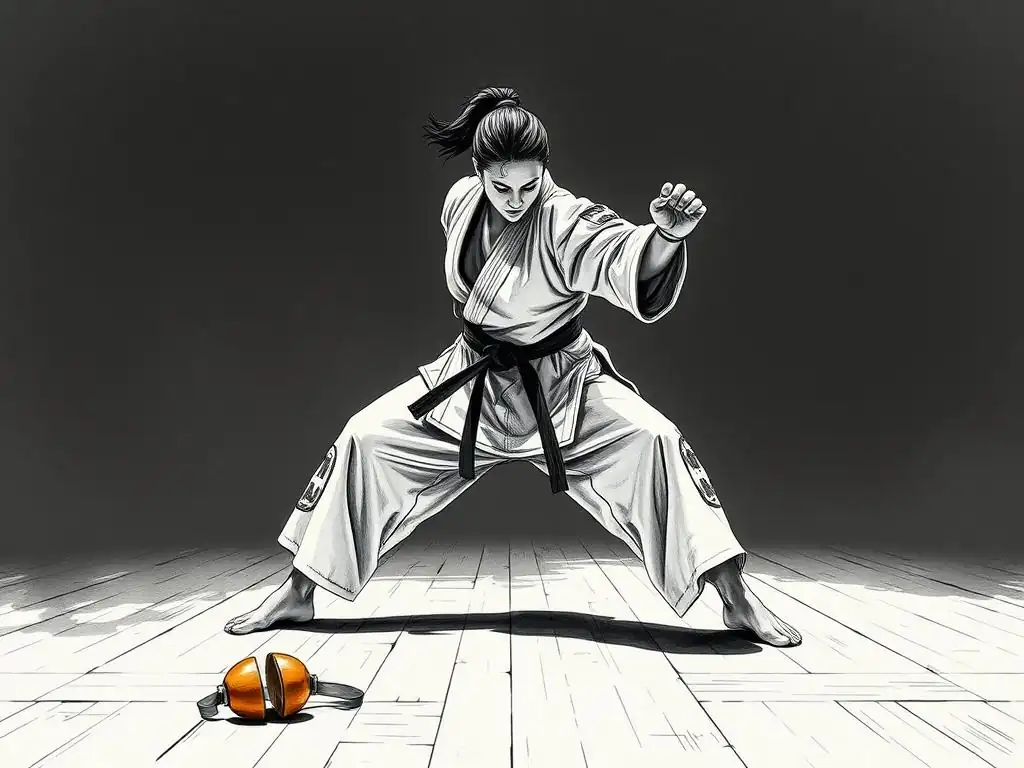
Drills for Integrating Judo Throws into MMA Striking
Hypothetically, training drills focused on integrating Judo throws into an MMA striking base would be crucial for a fighter like Rousey. One such drill might involve starting at striking range, exchanging a few punches or kicks, and then immediately transitioning into a clinch entry aimed at securing Judo grips (like a collar-and-sleeve or over-under control).
From the clinch, the focus would be on executing a throw like an Osoto Gari or Harai Goshi, ensuring the throw lands the practitioner in a dominant ground position, like side control or scarf hold (Kesa Gatame). This type of drill emphasizes seamless transitions between striking and grappling ranges.
Another hypothetical drill might focus on using striking feints to set up throwing entries. For example, a fighter might throw a jab or a cross to get the opponent to react, creating an opening to step in and secure a grip for a drop throw like Seoi Nage (shoulder throw) or Tai Otoshi (body drop). Practicing these entries repeatedly, perhaps starting with minimal resistance and gradually increasing intensity, would help build muscle memory for executing efficient, unexpected takedowns from striking range. These drills are prime examples of Judo efficiency training techniques adapted for the MMA environment.
Clinch Work and Takedown Defense Strategies from a Judo Perspective
Judo-based clinch training for MMA would involve extensive practice in maintaining strong grips while simultaneously defending against strikes. Drills could include working from an over-under clinch, focusing on breaking the opponent's posture using Judo principles of balance disruption (kuzushi) while being mindful of incoming knees or elbows. Practice would also involve drilling transitions between different grip configurations, such as moving from a wrestling tie-up to a traditional Judo lapel and sleeve grip, and using these grips to control posture and set up throws or trips.
Takedown defense from a Judo perspective in MMA often emphasizes maintaining strong posture and using hand fighting to prevent opponents from establishing dominant grips or getting to the legs. Drills might involve defending against wrestling shots by sprawling while simultaneously trying to secure upper-body grips to counter with a throw or turn the position into a defensive clinch. Practicing breaking grips, maintaining distance when necessary, and using footwork (tai sabaki) to pivot out of potential takedown entries are all key components of Judo-influenced takedown defense, highlighting practical Judo efficiency training techniques for defense.
Ground Game Domination: Utilizing Judo for Submissions and Control
Hypothetical ground training for a Judo-based MMA fighter would heavily emphasize transitioning quickly from throws to dominant ground positions and securing submissions, particularly armbars. Drills might involve starting from a position immediately after a throw, such as side control or Kesa Gatame, and practicing the seamless transition to securing an arm for the Juji Gatame finish. This rapid follow-up is crucial in MMA where opponents are actively defending and looking to escape or strike.
Further ground drills would focus on maintaining control from Judo pins (Osaekomi Waza) like Kesa Gatame or Hon Kesa Gatame, while being aware of strikes and positioning for submissions. Unlike sport Judo where pins score points, in MMA they are primarily means to control, recover, or set up strikes/submissions. Practicing variations of the armbar from mount, side control, or even bottom positions, focusing on tightening the hold and finishing efficiently, would be central. Adapting Judo's Ne Waza for striking defense and offensive submission attacks exemplifies applied Judo efficiency training techniques on the ground.
Ronda Rousey's Approach to Adapting Judo for MMA
Modifying Judo Techniques for the MMA Environment
Adapting pure Judo techniques for MMA requires significant modifications, primarily due to the presence of strikes, the cage, and the allowance of techniques like leg locks (forbidden in sport Judo). For Ronda Rousey, this meant adjusting grips to account for MMA gloves, which provide less material to grab compared to a traditional Judo gi.
She often relied on wrist control, neck ties, or over-under clinches, transitioning quickly to traditional gi grips if opportunities arose. The dynamic also changes; in MMA, failure to execute a throw can result in being struck or taken down by a wrestler, demanding faster, more decisive entries.
Furthermore, the cage wall acts as a boundary, unlike the open mat in Judo. Rousey learned to use the cage to trap opponents and set up throws, or conversely, to defend takedowns by pressing her back against it. Ground techniques also needed modification; Judo pins are primarily for control, but in MMA, maintaining a pin requires constant awareness of strikes and transitions, and the goal is often submission or strikes rather than scoring points. This adaptation process is a prime example of applying Judo efficiency training techniques to a new rule set.
The Importance of Footwork and Distance Management
While striking is not the primary focus of traditional Judo, effective footwork (Ashi Sabaki) and body movement (Tai Sabaki) are fundamental for setting up throws and maintaining balance. Rousey integrated these principles into her MMA striking game. She used lateral movement and forward pressure to close the distance safely, often using feints or single strikes as entries into the clinch. Her ability to pivot and change direction quickly allowed her to cut off the cage and trap opponents where she could initiate her grappling attacks.
Effective distance management, informed by her Judo background, was crucial for her strategy. She needed to be close enough to secure grips for throws but far enough to avoid significant damage from strikes. This required a nuanced understanding of the transitional range – the distance where striking can quickly turn into grappling. Training drills focused on moving from striking distance to clinch distance and back, emphasizing balance and control throughout, would have been vital to her development and represent key Judo efficiency training techniques for transitional phases.
Developing a Dominant Grappling Game in MMA
Rousey's dominant grappling game in MMA was a synergy of her elite Judo throws, powerful clinch work, and relentless ground attacks. She didn't just use individual techniques; she built a chain of attacks where one move set up the next. A successful throw would immediately lead to securing a dominant position on the ground, which would then transition into her favored armbar setup. This systematic approach made her grappling incredibly difficult to defend against, as opponents were constantly reacting to the next threat.
Her ability to maintain control through transitions, even against fighters with strong wrestling or BJJ backgrounds, highlighted the depth of her grappling foundation. The Judo emphasis on posture, balance, and controlling the opponent's structure allowed her to dictate the flow of the fight once it entered the grappling realm. This integrated approach, combining stand-up throws, clinch control, and ground finishing, exemplified a highly effective application of Judo efficiency training techniques in a comprehensive MMA grappling system.
The Impact of Ronda Rousey's Judo on the Sport of MMA
Impact on Female Participation in Judo and MMA
Ronda Rousey's unprecedented success in MMA had a significant ripple effect on female participation in both mixed martial arts and potentially Judo. Her captivating performances and media presence brought massive attention to women's combat sports, inspiring countless women and girls to pursue martial arts training. Before Rousey, women's MMA was largely a niche product; her rise to global stardom, headlining major pay-per-view events, legitimized the sport and opened doors for future generations of female fighters.
While specific global numbers are hard to pinpoint, her fame likely spurred interest in Judo as well. Parents seeing the success derived from a Judo background might have been more inclined to enroll their children in Judo classes. Her story demonstrated that the discipline and skills learned in Judo could lead to success not only in sport but also in other demanding fields, including professional fighting, indirectly promoting Judo efficiency training techniques as valuable life skills.
Inspiring a New Generation of Judo-Based MMA Fighters
Rousey's dominance showcased the effectiveness of a high-level Judo base in MMA, directly inspiring other Judokas to consider the transition. Fighters like Kayla Harrison, a two-time Olympic Judo gold medalist, followed Rousey's path into MMA, achieving significant success in the PFL promotion. Her career demonstrated that Judo was a viable, even dominant, base for MMA, challenging the prevailing notion that wrestling or Brazilian Jiu-Jitsu were the only essential grappling arts.
Her influence encouraged fighters from other backgrounds to cross-train in Judo, seeking to incorporate its unique throws, clinch control, and transitional skills into their game. The visibility she brought to Judo techniques in the octagon normalized their use and prompted coaches and fighters to explore Judo efficiency training techniques as part of a well-rounded MMA curriculum, thus diversifying the grappling landscape in the sport.
Judo and Self-Defense: Practical Applications in MMA
Utilizing Judo Throws for Self-Defense in MMA Situations
While an MMA fight is a specific context, the principles behind using Judo throws within it have clear parallels to self-defense. In MMA, Rousey used throws to quickly neutralize an opponent's striking threat by taking the fight to the ground.
In a self-defense scenario, the goal is similar: to control a dangerous situation and ideally escape. Judo throws, particularly those that don't require complex setups or deep engagement (like certain hip throws or reaping techniques), can be highly effective for disrupting an aggressor's balance and taking them down quickly, potentially ending a confrontation before it escalates or allowing for escape.
The emphasis in Judo on using the opponent's momentum is crucial for self-defense. An attacker often comes forward aggressively. Judo efficiency training techniques teach you how to redirect this forward energy into a throw, minimizing the need for your own strength. Techniques practiced for MMA, like securing a clinch to prevent strikes and then executing a throw, directly translate to managing distance and control in a close-quarters self-defense situation against an attacker who is attempting to grab or strike.
Applying Judo Principles for Grappling Defense
Judo principles are also invaluable for grappling defense, both within an MMA context and in self-defense. The core concept of maintaining strong posture and base is fundamental to preventing takedowns and maintaining balance when being pushed or pulled. Judo training heavily emphasizes developing a stable base and learning how to recover balance when it's compromised (Tsugi Ashi - following foot, Tai Sabaki - body movement).
Furthermore, Judo's focus on grip fighting is essential for defense. Learning to break an opponent's dominant grips on your clothing or body, and preventing them from establishing control, is a primary line of defense against grappling attacks. Techniques for maintaining distance when needed, pivoting away from attacks, and using leverage to escape holds are all part of Judo's defensive toolkit. These are practical Judo efficiency training techniques that are directly applicable to defending against grabs, holds, and takedown attempts in a self-defense scenario.
Ronda Rousey's Legacy: Redefining MMA and Inspiring Athletes
Breaking Barriers and Popularizing Women's MMA
Ronda Rousey was a true pioneer in mixed martial arts, single-handedly convincing the UFC to create a women's division and then becoming its first, dominant champion. Her charisma, outspoken personality, and thrilling finishes captivated audiences worldwide. Her early UFC fights drew massive viewership and headlined major events, something previously unheard of for female athletes in combat sports. For instance, UFC 157, headlined by Rousey vs. Liz Carmouche in February 2013, was a landmark event that proved the viability and popularity of women's MMA on the biggest stage.
Her reign as champion, marked by a series of rapid, dominant victories, including sub-minute finishes against top contenders, solidified her status as a global superstar and role model. She transcended the sport, appearing in movies and mainstream media, which further elevated the profile of women's MMA and inspired countless young women to pursue athletic dreams, regardless of the sport. Her impact was undeniable, forever changing the landscape for female fighters.
The Evolution of Judo in Modern Mixed Martial Arts
Ronda Rousey's success fundamentally altered how Judo was perceived and utilized in mixed martial arts. Before her, Judo was often seen as less effective for MMA grappling compared to wrestling or Brazilian Jiu-Jitsu. Rousey demonstrated that a high-level Judoka, with adaptations, could not only compete but dominate. Her career highlighted the power of Judo throws for immediate takedowns and transitions, and the effectiveness of its ground control and submissions.
Her influence can be seen in the increased cross-training by MMA fighters in Judo, and the emergence of other fighters with strong Judo backgrounds finding success in the sport. The focus on stand-up grappling exchanges, clinch control, and powerful throws as offensive weapons became more prominent. Rousey proved that Judo efficiency training techniques, when integrated correctly, provide a powerful and distinct advantage in the complex environment of modern mixed martial arts.
Conclusion: The Enduring Influence of Judo on Rousey's Success
Key Takeaways from Ronda Rousey's Judo-Based Fighting Style
Ronda Rousey's extraordinary success in MMA was a testament to the power and adaptability of high-level Judo. Key takeaways from her fighting style include the critical importance of seamless transitions between striking and grappling, the devastating effectiveness of Judo throws used offensively, and the value of a relentless, submission-oriented ground game derived from Ne Waza. Her ability to consistently apply her signature armbar from various positions, often immediately following a throw, showcased a mastery of combining techniques for maximum impact and minimal wasted effort – the essence of Judo efficiency training techniques.
Furthermore, her career highlighted the intangible benefits of a Judo background, such as the mental toughness and discipline required to compete at an elite level. Rousey didn't just perform Judo techniques; she embodied the principles of balance, leverage, and timing, using them to control the flow of the fight and impose her will. Her style demonstrated that a deep foundation in one martial art, when intelligently adapted, can be a formidable base for success in the multifaceted world of mixed martial arts.
Further Exploration: Resources for Judo Training and MMA
For those inspired by Ronda Rousey's journey and seeking to explore the synergy between Judo and MMA, numerous avenues exist for further learning. Engaging in traditional Judo training at a local dojo is an excellent starting point to build a strong foundation in grips, throws, and ground work. Look for certified instructors who can teach the fundamental principles of balance, leverage, and efficient movement, which are the bedrock of effective Judo efficiency training techniques.
Additionally, many martial arts gyms now offer MMA-specific grappling classes that integrate techniques from Judo, wrestling, and Brazilian Jiu-Jitsu. Seek out coaches with diverse backgrounds who understand how to adapt techniques for the cage environment. Online resources, instructional videos, and books can supplement practical training, offering insights into specific techniques and training methodologies, including drills focused on integrating stand-up and ground grappling. Consistent practice, focused on understanding the underlying principles of efficiency and control as taught in Judo, is key to developing a well-rounded grappling game for sport or self-defense.
Frequently Asked Questions
What is the core philosophy behind Judo Sensei Haruto's approach to Judo training?
Sensei Haruto emphasizes "maximum efficiency, minimum effort," a principle derived from Judo's core tenets. This means using the least amount of energy to achieve the most significant result, focusing on technique over brute strength.
How does Sensei Haruto incorporate "efficiency" into his Judo training techniques?
He focuses on drills that improve body positioning, balance breaking, and timing. These drills are designed to maximize leverage and minimize reliance on muscular force, leading to more efficient throws and groundwork.
What are some practical examples of "Judo efficiency training techniques" that Sensei Haruto uses?
Examples include kuzushi (balance breaking) drills, ukemi (breakfalling) practice to safely receive throws, and randori (free practice) sessions focused on efficient movement and transitions, not just overpowering opponents.
How does Sensei Haruto balance the philosophical aspects of Judo with the practical application of "efficiency training techniques"?
He stresses that understanding the philosophical underpinnings of Judo, like Jita Kyoei (mutual welfare and benefit), enhances the application of efficient techniques. This fosters a holistic approach to Judo mastery.
How can students benefit from adopting Sensei Haruto's philosophy of "maximum efficiency, minimum effort" in their Judo training?
By focusing on efficiency, students can improve their technique, reduce the risk of injury, and conserve energy during long training sessions or competitions. This leads to greater overall performance and longevity in Judo.
Final Reflection: The Enduring Power of Efficient Movement
The principles explored in "Judo Sensei Haruto: The Philosophy of 'Maximum Efficiency, Minimum Effort' in Action" are not merely historical relics of martial arts; they are profoundly relevant in today's fast-paced world. The pursuit of efficiency, minimizing wasted energy while maximizing impact, resonates deeply with our modern desire for productivity and well-being. This philosophy, far from being confined to the dojo, offers a powerful framework for navigating the complexities of daily life.
The impact of Judo's core tenets extends beyond physical prowess, shaping a mindset that values mindful action and strategic thinking. Personally, I've found that applying the concept of "maximum efficiency, minimum effort" to my own work has led to increased focus and reduced stress. It's a reminder that true strength lies not in brute force, but in intelligent application of resources. Judo is the way to the most effective use of both physical and spiritual power. By training you in attacks and defenses it refines your body and your soul and helps you make the spiritual essence part of your very being.
- Jigoro Kano, Founder of Judo.
As you reflect on Sensei Haruto's teachings and the Judo efficiency training techniques discussed, consider how you can integrate these principles into your own life. Embrace the challenge of identifying areas where you can streamline your efforts, eliminate unnecessary exertion, and achieve greater results with less strain. Let the pursuit of "maximum efficiency, minimum effort" guide you towards a more balanced, productive, and ultimately, more fulfilling existence.
Embrace the Judo Way: Unleash Your Inner Efficiency!
Thank you for diving into the world of Judo and the profound philosophy of "Maximum Efficiency, Minimum Effort." Now that you've discovered the power of this mindset, it's time to put it into action and see the difference it can make in your life.
Here’s how you can continue your journey:
- Begin applying the Judo principle of "Maximum Efficiency, Minimum Effort" in one specific area of your life this week. Choose a task, project, or routine where you can optimize your efforts for maximum results.
- Share this article with a friend or fellow martial artist who might benefit from Judo's philosophy, spreading the message of efficient action.
- Explore other martial arts philosophies on Martial Arts Mastery to broaden your understanding of effective movement and mindful living.
What's one small change you can make today to embody "Maximum Efficiency, Minimum Effort" in your daily routine?