
HEMA Instructor Isabella Rossi: Mastering the Longsword's Zwerchhau – A Technical Talk


Welcome to Martial Arts Mastery, where we delve into the heart of combat traditions! Ever wondered how the legendary longsword masters of old executed their devastating techniques? In this profile, we explore the intricate HEMA longsword zwerchhau technique through the eyes of instructor Isabella Rossi, offering a fascinating glimpse into the art and science behind this powerful maneuver. Prepare to unlock the secrets of this historical fencing approach and discover the dedication it takes to truly master the blade. Let's begin!
- Introduction to Isabella Rossi and the Art of HEMA Longsword
- The Zwerchhau Technique: A Deep Dive with Isabella Rossi
- Mastering the Zwerchhau: Isabella Rossi's Technical Breakdown
- Zwerchhau Applications in HEMA Longsword Sparring and Drills
- The Zwerchhau Beyond Technique: Strategy and Tactics
- The Zwerchhau in Different Historical Sources: A Brief Overview
- Isabella Rossi's Advice for Aspiring HEMA Longsword Practitioners
- Conclusion: The Enduring Value of the Zwerchhau in HEMA
-
Frequently Asked Questions
- What is the Zwerchhau technique in HEMA longsword fencing?
- Why is the Zwerchhau considered a complex technique?
- Who is Isabella Rossi, and what is her expertise?
- What are some common mistakes when learning the Zwerchhau?
- How can MartialArtsMastery.org help me learn more about HEMA longsword techniques like the Zwerchhau?
- Final Reflection: The Enduring Dance of Steel
- Unveil Your Inner Swordsman: Take Up the Blade!
Introduction to Isabella Rossi and the Art of HEMA Longsword
Isabella Rossi: A Profile in Historical European Martial Arts (HEMA)
Isabella Rossi stands out as a prominent figure in the modern resurgence of Historical European Martial Arts, particularly known for her expertise with the longsword. With over a decade dedicated to the rigorous study and practice of 15th and 16th-century German fencing traditions, Rossi has earned respect not only as a skilled practitioner but also as a dedicated instructor.
Her journey began in a local HEMA study group, evolving through countless hours of solo practice, paired drills, and competitive sparring at national and international events. She has achieved notable results in various tournaments, consistently placing in the top percentile for longsword, which underscores her practical understanding and application of historical techniques.
Beyond her competitive achievements, Isabella Rossi is deeply committed to the educational aspect of HEMA. She regularly teaches workshops and seminars focusing on specific historical techniques and their modern interpretation. Her approach emphasizes a deep understanding of the underlying principles found in historical fencing treatises, combined with practical application in a safe and controlled environment. This dedication to both theoretical knowledge and practical skill makes her insights into complex techniques like the Zwerchhau particularly valuable for students at all levels.
The Growing Popularity of HEMA and the Longsword
Historical European Martial Arts has experienced a significant global surge in popularity over the past two decades. What was once a niche academic pursuit has transformed into a vibrant community with thousands of practitioners worldwide. This growth is fueled by a fascination with historical combat systems, the physical and mental challenge of learning complex skills, and the camaraderie found within HEMA clubs. The longsword, with its iconic status and versatility as a weapon capable of both powerful cuts and intricate thrusts, is arguably the most popular discipline within HEMA.
The accessibility of digital copies of historical fencing manuals, coupled with dedicated instructors and structured training programs, has made learning HEMA longsword more feasible than ever before. Events ranging from small local workshops to large international tournaments attract hundreds of participants, showcasing the dynamic and evolving nature of the community. This increasing engagement highlights the demand for clear, practical instruction on foundational techniques, including essential cuts like the Zwerchhau, which are central to many historical longsword systems.
Why the Zwerchhau? Its Significance in Longsword Fencing
The Zwerchhau, often translated as "thwarting cut" or "traverse cut," is a fundamental and highly versatile technique found in numerous German longsword traditions, most notably in the teachings of masters like Johannes Liechtenauer and Joachim Meyer. Unlike the basic Oberhau (overhead cut) or Unterhau (rising cut), the Zwerchhau travels horizontally or diagonally across the body, typically originating from the shoulder and delivered with significant power. Its unique trajectory makes it particularly effective for attacking opponents from unexpected angles or for defending against incoming vertical or diagonal cuts.
Its significance lies in its utility as both an offensive and defensive action. A well-executed Zwerchhau can bypass standard guards, strike vulnerable targets like the head or hands, or forcefully displace an opponent's blade. In defense, the Zwerchhau can parry incoming cuts while simultaneously creating an opening for a riposte. Mastering the HEMA longsword Zwerchhau technique is considered essential for any serious practitioner of German longsword fencing, as it forms a cornerstone of many tactical exchanges described in historical manuals and is frequently seen in successful sparring applications.
The Zwerchhau Technique: A Deep Dive with Isabella Rossi
Understanding the Zwerchhau: Definition and Basic Mechanics
The Zwerchhau is fundamentally a diagonal or horizontal cut delivered across the body. In the Liechtenauer tradition, it is often counted among the "master cuts" (Meisterhau) due to its ability to displace or counter other techniques. The cut typically originates from one shoulder and travels towards the opposite side, often targeting the opponent's head or upper body. Unlike a simple horizontal cut, the Zwerchhau frequently incorporates body rotation and specific blade alignment to generate force and ensure the correct edge makes contact.
The basic mechanics involve initiating the movement from the core and shoulders, allowing the blade to travel in a wide arc. As the cut progresses, the wrists and forearms guide the blade, ensuring the "short edge" (the edge facing towards the wielder's body when holding the sword in a standard grip) or sometimes the "long edge" (the standard cutting edge) connects with the target or opponent's blade. The power is derived not just from arm strength, but from coordinated body mechanics, including weight transfer and hip rotation, which propel the sword with speed and force.
The Stance and Grip for an Effective Zwerchhau
A stable and dynamic stance is crucial for executing a powerful and controlled Zwerchhau. While specific stances vary slightly between practitioners and historical interpretations, a balanced guard like the Ochs (Ox) or Pflug (Plow) often serves as a good starting point, or one can cut from a more neutral standing guard. The feet should be roughly shoulder-width apart, with knees slightly bent, allowing for quick movement and weight transfer. The lead foot typically points towards the opponent, while the rear foot is angled slightly outwards for stability.
The grip on the longsword should be firm but not tense. A standard two-handed grip is used, with the hands typically spaced apart on the grip for leverage. For a Zwerchhau delivered from the right side (crossing the body to the left), the left hand often acts as the primary driver, pulling the sword across, while the right hand guides and provides support. Conversely, for a Zwerchhau from the left side, the right hand takes the lead. Isabella Rossi emphasizes maintaining a relaxed grip until the moment of impact to allow for fluid motion and explosive power generation.
Footwork and Body Mechanics in the Zwerchhau Execution
Effective footwork is inseparable from a well-executed Zwerchhau. The cut is rarely delivered from a static position; it is typically integrated with a step. For a Zwerchhau cutting from the right side across to the left, a common footwork pattern involves stepping forward with the left foot as the cut is initiated. This forward momentum adds power and closes distance. Similarly, a Zwerchhau from the left might be paired with a step forward with the right foot. The timing of the step must be coordinated precisely with the blade movement.
Beyond simple steps, the body mechanics involve significant core rotation and weight transfer. As the sword is brought across the body, the hips and torso rotate in the direction of the cut. For a right-to-left Zwerchhau, the body rotates to the left, shifting weight onto the lead (left) foot. This rotational force, combined with the forward step and arm movement, creates a powerful whipping action with the blade. Isabella Rossi stresses that the Zwerchhau is a whole-body technique, not just an arm cut, requiring coordinated movement from the ground up.
Mastering the Zwerchhau: Isabella Rossi's Technical Breakdown
The Importance of Blade Alignment and Edge Control
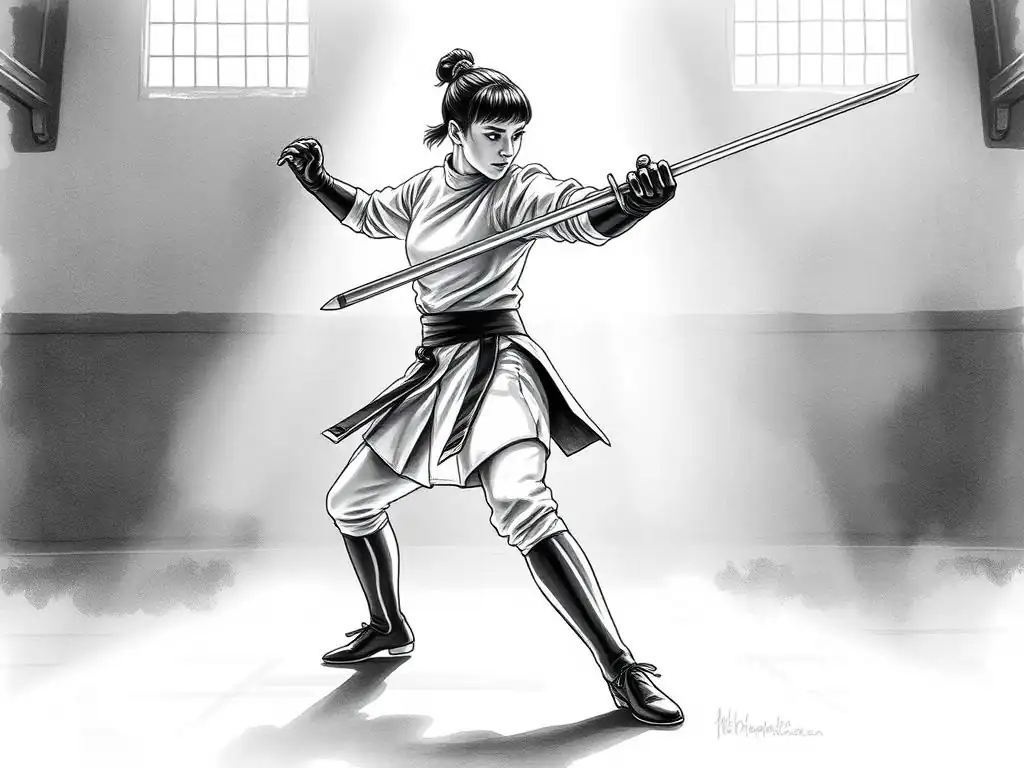
Correct blade alignment is paramount for the HEMA longsword Zwerchhau technique to be effective, whether cutting or parrying. The historical texts emphasize cutting with the "short edge" (Kurze Schneide) when delivering the Zwerchhau from certain guards like Ochs. This means the blade is angled such that the edge facing towards the wielder is the one making contact.
Achieving this requires specific wrist and hand articulation, often involving pronating or supinating the wrists as the cut is delivered. Incorrect alignment can result in a weak, glancing blow or, worse, striking with the flat of the blade, which lacks cutting power and can jar the hands.
Isabella Rossi highlights that edge control isn't just about cutting; it's also vital when using the Zwerchhau for defense or blade displacement. When parrying an incoming cut with a Zwerchhau, presenting the correct edge at the proper angle allows the sword to effectively redirect the opponent's force without being easily pushed aside. Maintaining edge awareness throughout the entire motion, from initiation to recovery, is a hallmark of a skilled practitioner and is critical for transitioning smoothly into subsequent actions.
Generating Power and Speed: Optimizing the Zwerchhau
Generating maximum power and speed in the Zwerchhau relies on the efficient integration of body mechanics described earlier. It's not about swinging the arms harder, but about channeling force from the legs and core through the torso, shoulders, and into the arms and sword. The rotational movement of the hips and torso provides the primary engine for the cut's velocity. Think of it like throwing a discus or swinging a baseball bat – the power comes from the turn, not just the arms.
Speed is also enhanced by minimizing unnecessary movement and maintaining fluidity. The Zwerchhau should be a continuous, accelerating motion. Isabella Rossi advises practicing drills that focus on smooth transitions and explosive hip rotation. For example, starting from a guard and executing a Zwerchhau while stepping, focusing on the feeling of the power transferring from the feet up. Drills involving cutting at pell targets or pool noodles can help practitioners feel the difference between an arm-driven cut and one powered by the entire body, often resulting in a noticeable increase in speed and impact force.
Common Mistakes in Zwerchhau Execution and How to Avoid Them
Several common errors hinder the effectiveness of the HEMA longsword Zwerchhau technique. One frequent mistake is cutting primarily with the arms, neglecting the crucial contribution of the legs, hips, and core. This results in a weak, easily deflected cut.
To avoid this, focus on initiating the movement from the lower body and ensuring the torso rotates fully with the cut. Another error is failing to achieve correct blade alignment, hitting with the flat or a poorly angled edge, which significantly reduces cutting power and control. Practicing slow, deliberate Zwerchhau motions focusing solely on wrist and hand position can help build the necessary muscle memory for proper edge control.
Lack of proper footwork or mistiming the step with the cut is also a common issue, leading to being off-balance or failing to close distance effectively. Drills that synchronize steps with cuts are vital. Finally, tensing up the shoulders and arms restricts fluid movement and reduces speed. Isabella Rossi recommends maintaining relaxed shoulders and a grip that is firm only at the point of impact, allowing the sword to move freely through the arc of the cut. Consistent, mindful practice is the key to identifying and correcting these common pitfalls.
Zwerchhau Applications in HEMA Longsword Sparring and Drills
Integrating the Zwerchhau into Your Longsword Game
The Zwerchhau is not a standalone technique but a versatile tool to be integrated seamlessly into a practitioner's overall longsword game. Its primary applications include attacking the opponent's head or hands from an angle that bypasses standard vertical guards (like Vom Tag or Alber). It can also be used defensively to parry incoming Oberhau or diagonal cuts, simultaneously creating an opening for a follow-up action. Successfully integrating the Zwerchhau requires recognizing the appropriate timing and distance. It is particularly effective when an opponent is committed to a linear attack or is transitioning between guards, presenting a vulnerable target.
Isabella Rossi suggests starting by practicing the Zwerchhau from various guards and in combination with basic footwork patterns, such as a simple forward step or a passing step. Once comfortable with the mechanics, practitioners should drill combining the Zwerchhau with other fundamental techniques. For example, following a Zwerchhau that displaces the opponent's blade with a thrust ( Stich) or another cut. Integrating this HEMA longsword Zwerchhau technique into sparring requires live application, starting slowly and gradually increasing intensity to build timing and judgment.
Effective Zwerchhau Drills for Skill Development
Developing proficiency with the Zwerchhau requires dedicated and varied practice. Solo drills are essential for building muscle memory for the correct blade path, edge alignment, and body mechanics. Practicing the Zwerchhau in the air, focusing on fluidity and form, or hitting a stationary pell target helps refine the cut's trajectory and power generation. Paired drills are crucial for developing timing and responsiveness against a partner. A simple paired drill involves one partner throwing a slow, committed Oberhau, and the other responding with a Zwerchhau parry, focusing on blade contact and control.
More advanced paired drills can involve sequences, such as one partner attacking with an Oberhau, the defender parrying with a Zwerchhau, and then immediately following up with a thrust or another cut. Flow drills, where partners exchange a series of techniques, including the Zwerchhau, based on each other's actions, are excellent for developing tactical awareness and the ability to transition between techniques seamlessly. Isabella Rossi recommends incorporating Zwerchhau-specific drills into every training session, perhaps dedicating 15-20 minutes to various solo and paired exercises focused solely on refining this critical HEMA longsword technique.
Using the Zwerchhau in Competitive HEMA Sparring
In the dynamic environment of competitive HEMA sparring, the Zwerchhau serves as a powerful and often decisive technique. Its ability to bypass standard defenses and strike vulnerable targets makes it a high-percentage attack when executed correctly. Practitioners frequently employ the Zwerchhau against opponents who favor high guards or are slow to react to diagonal attacks. It is also a formidable counter-attack, capable of intercepting incoming cuts before they reach their target. For example, against an opponent initiating an Oberhau, a well-timed Zwerchhau can strike their head or hands during their attack, a concept known as Indes (in the instant).
Successful application in sparring requires not only technical mastery but also strategic timing and reading the opponent. Observing an opponent's habitual reactions, guard choices, and footwork can reveal opportunities to land a Zwerchhau. While a powerful offensive tool, the Zwerchhau also carries risks; if anticipated or poorly executed, it can leave the practitioner open to a counter-attack. Therefore, using the HEMA longsword Zwerchhau technique effectively in competition involves understanding its strengths and weaknesses and applying it judiciously based on the specific situation and opponent.
The Zwerchhau Beyond Technique: Strategy and Tactics
Reading Your Opponent: Identifying Opportunities for the Zwerchhau
Effective Zwerchhau application in combat extends beyond mere technical execution; it requires sharp tactical insight and the ability to read your opponent. Opportunities for a Zwerchhau often arise when an opponent commits to a linear attack, such as a direct thrust or an Oberhau, leaving their flanks or head exposed to a diagonal cut. Another common opportunity occurs when an opponent is in a guard that leaves a significant opening to the side, like a deep Alber (Fool's Guard). Observing their preferred distance and timing can also reveal windows to launch a Zwerchhau attack effectively.
Isabella Rossi emphasizes the importance of probing and testing your opponent's reactions. Feinting an attack can draw a specific defensive response that opens up a line for the Zwerchhau. For instance, a feigned Oberhau might cause the opponent to raise their guard, creating an opening for a Zwerchhau to the lower head or shoulder. Learning to recognize these subtle cues and openings during the dynamic exchange of sparring is crucial for timing your HEMA longsword Zwerchhau technique for maximum impact.
Zwerchhau as a Counter-Attack: Disrupting Opponent's Offense
One of the most potent applications of the Zwerchhau is as a counter-attack, specifically within the principles of Nachreisen (pursuing after) or Indes (in the instant). By delivering a Zwerchhau as the opponent is initiating their own attack, the practitioner aims to hit the opponent before their attack lands or to displace their blade forcefully during their offensive action. This disrupts the opponent's timing and structure, often resulting in a double hit where the Zwerchhau lands clean, or a clean hit for the defender while neutralizing the opponent's attack.
Against an incoming Oberhau, for example, stepping slightly offline and delivering a Zwerchhau aimed at the attacker's head or hands can intercept their cut in the middle of its trajectory. This requires precise timing and nerve, as it involves moving into the opponent's attack rather than away from it. Isabella Rossi considers the counter-attacking Zwerchhau a more advanced application, requiring significant practice to develop the timing and confidence needed to execute it effectively under pressure. Mastery of this reactive use of the HEMA longsword Zwerchhau technique is a significant step towards advanced HEMA longsword play.
Combining the Zwerchhau with Other Longsword Techniques
The Zwerchhau rarely occurs in isolation; it is typically part of a larger sequence of actions. It can be combined with various other longsword techniques to create complex and effective exchanges. For instance, a Zwerchhau can be followed by a thrust if it opens the opponent's line.
If the initial Zwerchhau is parried, the practitioner can immediately transition into a bind ( Krieg) and work from there, using techniques like Winden (winding) to find an opening. Alternatively, a Zwerchhau can be used as a setup, forcing the opponent into a specific reaction that leaves them vulnerable to a subsequent Oberhau or Unterhau.
Consider a scenario where a Zwerchhau to the head is parried high; the practitioner can then immediately drop into an Unterhau to the leg or transition into a thrust. Or, a Zwerchhau that forces the opponent to cover high might leave their lower body open for a follow-up thrust ( Stich) or rising cut ( Unterhau). Isabella Rossi emphasizes practicing these combinations in drills to build fluidity and responsiveness. Knowing how to transition smoothly from a Zwerchhau into multiple follow-up options makes the practitioner much more unpredictable and dangerous in a sparring exchange.
The Zwerchhau in Different Historical Sources: A Brief Overview
Variations in Zwerchhau Execution Across HEMA Manuals
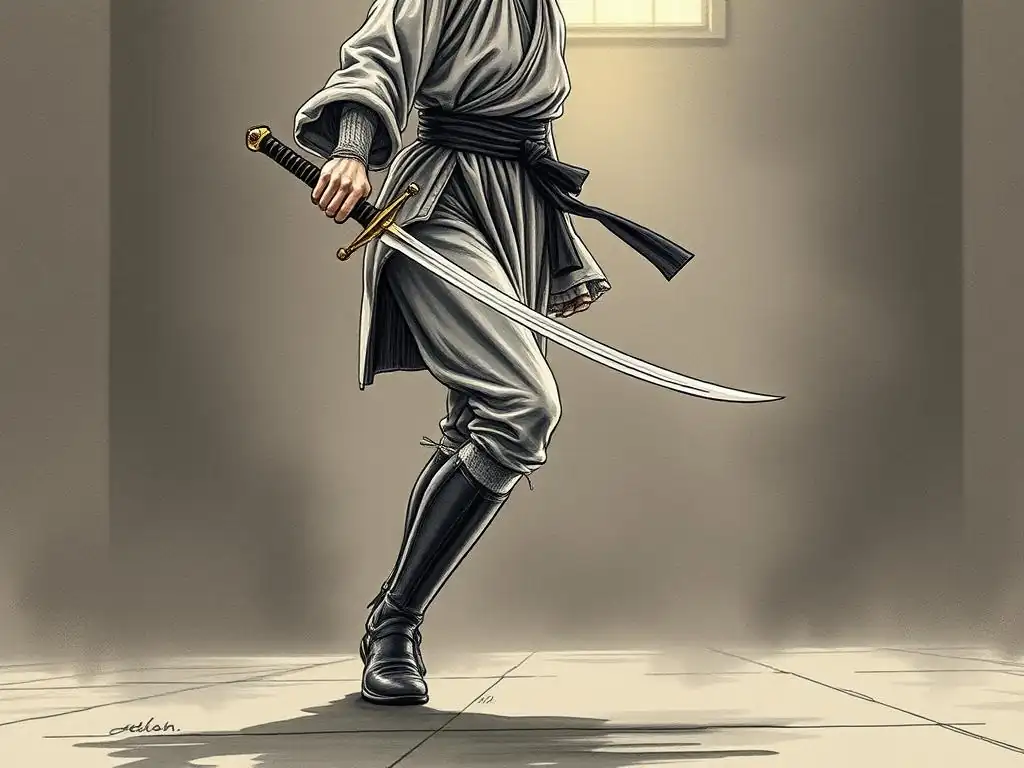
While the concept of a diagonal or thwarting cut across the body exists in many historical longsword traditions, its specific execution and interpretation can vary between different masters and their treatises. Early Liechtenauer glosses, like those from the 14th or early 15th century, describe the Zwerchhau as one of the five Meisterhau, emphasizing its ability to break the opponent's guard or counter their attacks. Later masters, such as Joachim Meyer in the late 16th century, provide more detailed descriptions and variations, integrating the Zwerchhau into a more complex system of guards, cuts, and thrusts.
Differences can include the primary edge used (short edge vs. long edge), the originating guard, the accompanying footwork, and the intended target. Some sources emphasize the Zwerchhau primarily as a defensive counter, while others describe it as a powerful offensive strike. These variations highlight the evolution of longsword fencing over time and the different pedagogical approaches of historical masters. Studying these different interpretations enriches a practitioner's understanding of the HEMA longsword Zwerchhau technique and provides a broader perspective on its potential applications.
Interpretation and Application of Historical Zwerchhau Techniques
Interpreting historical fencing manuals is a complex process involving linguistic analysis, understanding period context, and practical experimentation. Translating the often concise or metaphorical descriptions of historical masters into repeatable, effective physical techniques requires careful study and collaborative effort within the HEMA community. Practitioners test different interpretations through drills and sparring, seeking to understand the underlying principles and effectiveness of the techniques as they might have been applied historically.
Applying these historical interpretations in modern HEMA involves adapting them for safety (using protective gear and blunted swords) while striving to maintain the core mechanics and tactical intent described in the sources. For the Zwerchhau, this means understanding not just how the cut was performed mechanically, but why it was used in specific situations – its strategic purpose as a counter, an opening attack, or a bind entry. Isabella Rossi notes that different HEMA schools may favor slightly different interpretations of the Zwerchhau based on their primary source focus, leading to interesting variations in approach within the broader community.
Joachim Meyer's 1570 Treatise: Zwerchhau Variations and Applications
Joachim Meyer's comprehensive 1570 treatise, "Gründtliche Beschreibung der freyen Ritterlichen und Adelichen Kunst des Fechtens" (A Thorough Description of the Free Knightly and Noble Art of Fencing), provides a detailed account of the Zwerchhau, offering several variations and integrating it extensively into his system. Meyer describes Zwerchhau cuts delivered from various guards, including Ochs and Vom Tag, and discusses their use in opening attacks, defenses, and within the bind. He illustrates how the Zwerchhau can be thrown with significant power, often targeting the head or face.
Meyer also details variations like the "changing Zwerchhau" ( versetzen Zwerchhau), which involves transitioning between cuts, and emphasizes the importance of footwork and body structure in generating force. His manual provides specific plays and techniques that start or end with a Zwerchhau, demonstrating its versatility. Studying Meyer's detailed descriptions offers modern practitioners invaluable insights into the nuances and tactical possibilities of the HEMA longsword Zwerchhau technique as taught by a prominent late-period master.
Isabella Rossi's Advice for Aspiring HEMA Longsword Practitioners
Key Principles for Learning the Zwerchhau
For those beginning their journey with the HEMA longsword Zwerchhau technique, Isabella Rossi offers several key principles. First and foremost, focus on understanding the fundamental mechanics: the correct blade path, edge alignment (often the short edge), and the coordinated use of body mechanics. Don't prioritize speed or power initially; aim for correct form and fluidity. Start slowly, breaking the movement down into its components – stance, grip, step, rotation, and cut.
Secondly, practice consistently. Even short, frequent practice sessions are more beneficial than infrequent long ones. Solo practice in front of a mirror or against a stationary target can be incredibly helpful for self-correction. Finally, seek feedback from experienced instructors or practitioners. A second pair of eyes can spot errors in form that are difficult to identify on your own. Understanding why the Zwerchhau works is as important as knowing how to perform it; study the historical context and tactical purpose.
Training Resources and Recommendations from Isabella Rossi
Isabella Rossi recommends a multi-faceted approach to training the HEMA longsword Zwerchhau technique. Primary historical sources, particularly translations of Liechtenauer glosses and Meyer's treatise, are indispensable for understanding the historical basis of the technique. Numerous reputable HEMA schools and instructors worldwide offer structured classes and workshops specifically focused on longsword fundamentals, including the Zwerchhau. Attending these is invaluable for hands-on instruction and sparring practice.
Beyond formal instruction, there are many high-quality online resources, including instructional videos and articles from experienced HEMA practitioners. However, Rossi cautions that online resources should supplement, not replace, in-person coaching, especially for a complex and potentially dangerous activity like sword fighting. She also recommends investing in appropriate training gear, including a well-balanced longsword simulator (blunt steel or synthetic), protective gloves, mask, and jacket, to allow for safe practice and sparring.
The Importance of Consistent Practice and Study
Mastering any martial art, including HEMA longsword, is a journey that requires dedication and perseverance. The Zwerchhau, despite being a fundamental cut, takes time and consistent effort to execute effectively under pressure. Regular solo drills, paired practice with partners, and integrating the technique into sparring are all crucial components of skill development. Muscle memory for correct form and timing is built through repetition.
Equally important is the ongoing study of historical sources and the underlying principles of German longsword fencing. Understanding the tactical context and variations of the Zwerchhau found in different manuals provides depth to one's practice and opens up new possibilities for application. Isabella Rossi emphasizes that the learning process in HEMA is continuous; there is always more to refine technically and more to discover historically. Consistent engagement with both the physical practice and the academic study is key to truly mastering the HEMA longsword Zwerchhau technique and beyond.
Conclusion: The Enduring Value of the Zwerchhau in HEMA
The Zwerchhau stands as a cornerstone of German longsword fencing, a versatile technique described by masters across centuries. From its foundational role as a Meisterhau in early treatises to its detailed integration in later systems like Meyer's, the HEMA longsword Zwerchhau technique has proven its enduring value in both historical context and modern practice. Its unique diagonal trajectory makes it a powerful offensive strike, capable of bypassing common defenses, and a highly effective counter-attack for disrupting an opponent's initiative.
Mastering the Zwerchhau requires diligent practice, focusing on core mechanics, blade alignment, body integration, and footwork. As Isabella Rossi highlights, it's a technique that demands whole-body coordination and strategic timing. By understanding its historical variations and practicing its application in drills and sparring, practitioners can unlock its full potential. The Zwerchhau remains not just a cut, but a vital tactical tool, essential for navigating the complex exchanges of HEMA longsword fencing and a rewarding challenge for any dedicated student of the art.
Frequently Asked Questions
What is the Zwerchhau technique in HEMA longsword fencing?
The Zwerchhau is a powerful cut delivered horizontally, often from above, targeting the opponent's head or neck. It's a key technique in historical European martial arts (HEMA) longsword fencing.
Why is the Zwerchhau considered a complex technique?
It requires precise footwork, body mechanics, and blade alignment to execute effectively. Poor execution can leave you vulnerable to counterattacks.
Who is Isabella Rossi, and what is her expertise?
Isabella Rossi is a HEMA instructor renowned for her technical expertise in longsword fencing, particularly the Zwerchhau. She focuses on proper form and safety.
What are some common mistakes when learning the Zwerchhau?
Common mistakes include over-rotating the body, dropping the elbow, and failing to maintain proper blade alignment. These errors reduce power and control.
How can MartialArtsMastery.org help me learn more about HEMA longsword techniques like the Zwerchhau?
MartialArtsMastery.org provides historical overviews, training techniques, and profiles of legendary practitioners, including resources specifically on the Zwerchhau. You can find practical self-defense strategies and drills.
Final Reflection: The Enduring Dance of Steel
The intricacies of the Zwerchhau, as explored through Isabella Rossi's expertise, are not merely historical curiosities; they represent a living tradition of martial artistry. The resurgence of HEMA, and the dedication of instructors like Rossi, demonstrate a profound connection to our past, offering invaluable lessons in discipline, strategy, and the pursuit of mastery.
The longsword, and the Zwerchhau in particular, continues to shape our understanding of historical combat and its relevance to modern martial arts. This journey into the technique has underscored the importance of preserving and evolving these traditions, connecting us to a lineage of warriors and thinkers. The sword is more than a weapon; it is a symbol of honor, skill, and the pursuit of perfection.
This quote, though perhaps apocryphal, perfectly encapsulates the spirit of HEMA and the dedication required to truly master a technique like the Zwerchhau.
Now, consider how the principles of precision, control, and adaptability, so crucial to executing the Zwerchhau, can be applied to your own endeavors. Embrace the challenge of continuous learning, seek out mentors like Isabella Rossi, and strive for excellence in all that you do. The lessons learned from the longsword are not confined to the training hall; they are lessons for life.
Unveil Your Inner Swordsman: Take Up the Blade!
Thank you for delving into the art of the Zwerchhau with us! We hope this technical breakdown has sparked your interest in the longsword and its intricate techniques. Now, it's time to translate that knowledge into action.
- Seek out a qualified HEMA instructor in your area to begin your journey with the longsword safely and effectively.
- Explore our website for more in-depth articles on HEMA techniques and historical martial arts.
- Challenge yourself to research historical texts on swordsmanship to enhance your understanding of the Zwerchhau.
What aspect of the Zwerchhau's mechanics will you focus on improving in your next training session?