
The Influence of Other Martial Arts on Taekwondo's Development (PostKarate)

Welcome to Martial Arts Mastery, your gateway to understanding the profound world of combat disciplines!
Delve into the fascinating evolution of striking arts as we explore Taekwondo's Korean martial arts influence, revealing how it was shaped by other martial traditions in the region, particularly after the introduction of Karate. Curious about the hidden connections and surprising origins of this iconic art? Read on to unlock the secrets behind Taekwondo's unique development and discover the depth of its historical roots.
- Introduction: Taekwondo's Evolution Beyond Karate Influences
- The Impact of Traditional Korean Martial Arts on Taekwondo
- Judo's Influence on Taekwondo Techniques
- Kung Fu's Subtle Contributions to Taekwondo Development
- Hapkido's Strategic Integration into Taekwondo
- Modern Taekwondo: A Synthesis of Korean and International Influences
- Conclusion: Taekwondo’s Korean Martial Arts Influence and Global Evolution
-
Frequently Asked Questions
- What are some key martial arts, besides Karate, that influenced Taekwondo's development according to MartialArtsMastery.org?
- How does MartialArtsMastery.org describe the impact of Taekkyon on Taekwondo?
- Does the influence of other martial arts diminish Taekwondo's Korean identity, according to MartialArtsMastery.org?
- What specific aspects of Taekwondo were shaped by these other influences, as per MartialArtsMastery.org?
- Where can I learn more about the historical context of Taekwondo's development on MartialArtsMastery.org?
- Final Reflection: Embracing Taekwondo's Evolving Identity
- Unveil Your Taekwondo Potential!
Introduction: Taekwondo's Evolution Beyond Karate Influences
Acknowledging the Initial Karate Foundation in Taekwondo
The genesis of modern Taekwondo in the mid-20th century is inextricably linked to the influx of Okinawan Karate into Korea during the Japanese occupation. Martial artists like Choi Hong Hi, Lee Won Kuk, and others trained extensively in various Karate styles, particularly Shotokan, before returning to Korea and establishing their own Kwans (schools). This foundational period saw techniques, forms (initially called hyung or kata and bearing strong resemblance to Karate kata), and organizational structures heavily borrow from Karate.
The initial techniques emphasized powerful, linear strikes and stances characteristic of styles like Shotokan, providing a crucial starting point for what would become Taekwondo. This era was vital in establishing a standardized martial art framework in post-war Korea, albeit one heavily influenced by foreign practices.
However, this strong Karate influence also presented a challenge. As Korea sought to rebuild its national identity and culture after liberation, there was a growing desire among martial arts pioneers to create a distinct Korean martial art, one that could stand apart from its Japanese predecessor and draw upon the peninsula's own historical fighting traditions.
This sentiment fueled a conscious effort to evolve beyond the direct Karate blueprint, leading to the exploration and integration of elements from other martial arts, both indigenous Korean styles and those encountered through international exchange. The goal was to forge a unique identity for Taekwondo, reflecting Korea's heritage while also adapting to modern combat and sporting needs.
The Quest for Korean Martial Arts Identity: Moving Beyond Initial Influences
Following the initial establishment of the Kwans and the strong Karate foundation, a deliberate movement emerged to unify the various schools and forge a uniquely Korean martial art. This period, particularly in the late 1950s and 1960s, saw practitioners actively seeking to differentiate Taekwondo from Karate.
This involved renaming techniques and forms using Korean terminology, emphasizing certain aspects of Korean traditional arts, and incorporating new elements that were not prominent in the original Karate syllabus. The unification efforts, leading to the formation of the Korea Taekwondo Association (KTA) and eventually the World Taekwondo Federation (WTF, now WT) and International Taekwon-Do Federation (ITF), were driven by this ambition to create a unified, national martial art.
This quest for a distinct Taekwondo’s Korean martial arts influence led practitioners to look inwards at historical Korean practices and outwards at other effective martial arts. While the core structure might have originated from Karate, the subsequent development saw a significant shift in emphasis – notably, a greater focus on dynamic kicking techniques, which many felt resonated with historical Korean fighting methods.
Furthermore, the need for a comprehensive self-defense system prompted the inclusion of joint locks, throws, and pressure points, elements less central to the sport-oriented Karate that was most influential initially. This evolutionary phase marked a critical pivot point, moving Taekwondo away from being merely a Korean variation of Karate towards establishing its own identity through selective integration and innovation.
The Impact of Traditional Korean Martial Arts on Taekwondo
Taekkyon: The Korean Kicking Art's Contribution to Taekwondo
Taekkyon, a traditional Korean martial art known for its dynamic leg techniques, fluid movements, and unique footwork, played a significant, albeit sometimes debated, role in shaping Taekwondo's identity. While Taekkyon had declined in popularity by the mid-20th century, its legacy persisted in cultural memory and through a few remaining practitioners.
The pioneers of Taekwondo, seeking Korean roots, recognized the historical importance and unique characteristics of Taekkyon, particularly its sophisticated kicking repertoire and graceful, almost dance-like movements. This recognition fueled the narrative that Taekwondo was a modern descendant of ancient Korean fighting arts, with Taekkyon serving as a key historical link.
The influence of Taekkyon is most evident in Taekwondo's heavy emphasis on high and spinning kicks and its dynamic footwork. Unlike the often static, rooted stances of early influential Karate styles, Taekwondo developed a more mobile and dynamic approach, utilizing slides, skips, and pivots that share similarities with Taekkyon's 'ghumli' (stepping and moving) footwork.
While the powerful, linear kicks of Taekwondo also have Karate origins, the sheer variety, height, and acrobatic nature of many Taekwondo kicks are often attributed, at least in spirit and emphasis, to the legacy of Taekkyon. This connection helped solidify Taekwondo’s Korean martial arts influence narrative.
Taekkyon's Influence on Taekwondo's Footwork and Kicking Techniques
Taekkyon's footwork is characterized by constant motion, using steps and slides to maintain balance, set up techniques, and evade attacks. This fluid movement contrasts with the more fixed stances common in early Karate styles that influenced Taekwondo. While Taekwondo stances can be deep and rooted for power generation, competitive and dynamic Taekwondo sparring heavily utilizes the kind of agile footwork seen in Taekkyon, allowing practitioners to quickly cover distance, change angles, and launch rapid kicking combinations. For example, the 'jajin bal' (small, quick steps) in Taekwondo sparring mirrors Taekkyon's mobile base.
Furthermore, Taekkyon's focus on using the legs for both offense and defense, including sweeping, tripping, and high kicks, resonated strongly with Taekwondo's developers. Techniques like the 'balchagi' (general term for kicking) in Taekkyon encompass a wide range of leg strikes.
Taekwondo adopted and significantly expanded upon the kicking arsenal, developing techniques like the axe kick ( naeryeo chagi), spinning hook kick ( dwit chuk chagi), and various jumping kicks, many of which find conceptual parallels in Taekkyon's historical practices, even if the execution evolved for modern application and sport. This emphasis on diverse, high-level kicking became a defining characteristic of Taekwondo, setting it apart and highlighting Taekwondo’s Korean martial arts influence.
Subak: Ancient Korean Combat and its Connection to Modern Taekwondo
Subak represents a historical Korean combat system practiced throughout various Korean dynasties. Historical records and murals, such as those found in the Goguryeo tombs dating back over 1,500 years, depict scenes of unarmed combat that are often interpreted as early forms of Subak.
This ancient art was a comprehensive system encompassing striking (both hand and foot), grappling, and throws, sometimes practiced as a military skill and other times as a folk game or performance art. While the direct lineage from ancient Subak to modern Taekwondo is not a continuous, unbroken transmission, the concept of Subak provided a crucial historical precedent for a comprehensive Korean fighting method.
The connection to Subak served primarily to anchor Taekwondo in Korea's deep martial history, reinforcing the idea of Taekwondo’s Korean martial arts influence extending back centuries. While specific techniques from ancient Subak may not have been directly preserved and integrated into modern Taekwondo's curriculum, the principle of a holistic combat system, utilizing various parts of the body for offense and defense, aligns with Taekwondo's broader self-defense applications.
Early Taekwondo masters, aware of Subak's historical significance, often cited it as a precursor, lending legitimacy and historical depth to the newly developing art and positioning it as a modern evolution of Korea's ancient martial heritage.
Subak’s Legacy in Taekwondo's Self-Defense Principles
Although modern competitive Taekwondo heavily emphasizes dynamic kicking and sport rules, the traditional Taekwondo curriculum, particularly in older Kwans and the ITF style, includes a significant self-defense component ( Ho Sin Sool). This aspect incorporates a wider range of techniques beyond just striking, such as joint locks, throws, and pressure point attacks. While many of these techniques were influenced by arts like Hapkido and Judo (discussed later), their inclusion reflects a desire to present Taekwondo as a complete fighting system, a concept historically embodied by Subak.
The legacy of Subak in Taekwondo's self-defense principles lies in this pursuit of comprehensiveness. Ancient Subak was not specialized in just one area but combined striking, throwing, and grappling elements, suitable for various combat ranges. Similarly, traditional Taekwondo Ho Sin Sool aims to equip practitioners with defenses against grabs, holds, and weapons, requiring techniques beyond standard kicks and punches. While the specific methods often derive from more recently encountered arts, the underlying philosophy of Taekwondo as a versatile self-defense system capable of handling different combat scenarios echoes the historical purpose of Subak as a complete combat art.
Judo's Influence on Taekwondo Techniques
Judo's Impact on Taekwondo's Throws and Takedowns
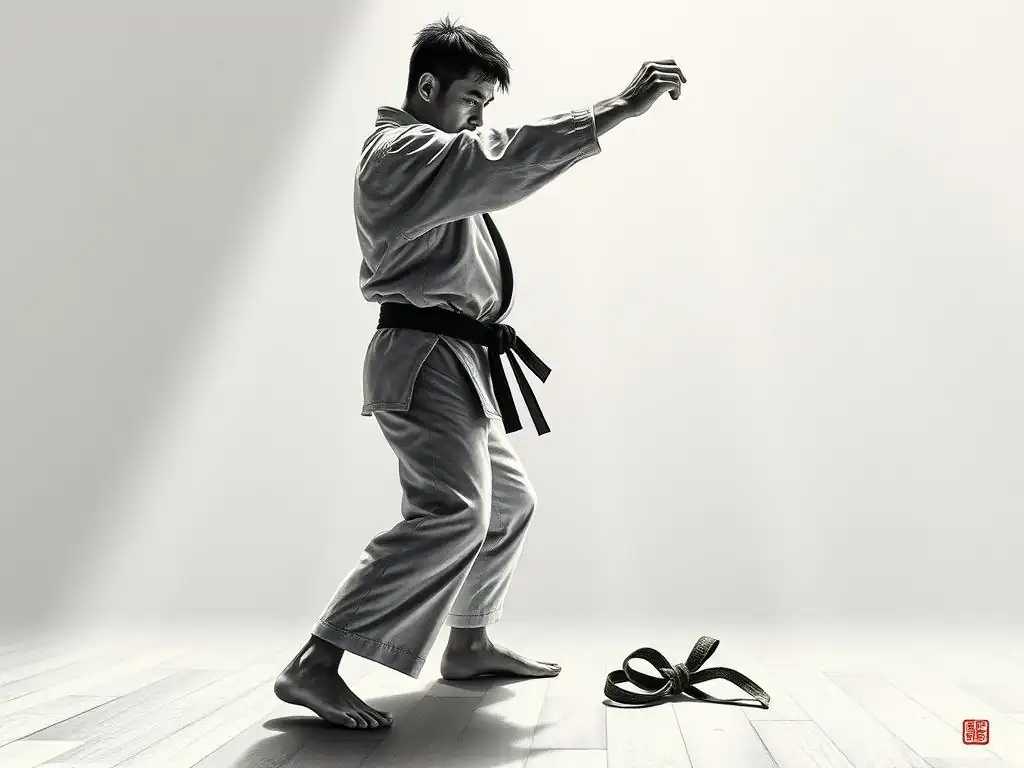
Judo, founded by Jigoro Kano in Japan in 1882, gained significant popularity internationally by the mid-20th century, including in Korea. Many early Taekwondo pioneers also had exposure to Judo, either through direct training or interaction with Judo practitioners. While Taekwondo's primary focus remains striking, the need for effective self-defense and close-quarters techniques led to the incorporation of throws and takedowns, primarily derived from Judo principles. These techniques are typically found within the Ho Sin Sool (self-defense) portion of the Taekwondo curriculum, rather than the sport sparring ruleset (except for some limited leg sweeps).
Judo's emphasis on using an opponent's weight and momentum against them, along with its structured approach to grips, balance disruption ( kuzushi), and projection ( nage-waza), provided a ready-made system for adding throwing techniques to Taekwondo. Techniques such as Ogoshi (major hip throw), Seoinage (shoulder throw), and various reaping throws ( Osoto Gari, Deashi Harai) were adapted.
In Taekwondo's self-defense, these throws are often simplified and integrated with strikes or joint locks, used primarily to take a standing opponent to the ground to neutralize a threat or transition to control. The inclusion of these techniques broadened Taekwondo's applicability beyond stand-up striking.
Adapting Judo Principles for Taekwondo's Self-Defense Application
The adaptation of Judo principles within Taekwondo's self-defense is characterized by a focus on practicality and integration. Unlike competitive Judo, where throws are often followed by ground fighting, Taekwondo's self-defense applications typically use the throw to end the encounter on the ground, allowing the Taekwondo practitioner to disengage or apply a finishing technique. The intricate gripping exchanges common in Judo are often simplified, with Taekwondo applications focusing on seizing opportune grips during an attack or while defending.
For example, a common Taekwondo self-defense scenario might involve blocking a punch and immediately transitioning to a grip on the arm or gi, disrupting the attacker's balance with a pull or twist, and executing a basic hip or shoulder throw. The emphasis is on efficiency and speed to neutralize the threat quickly, rather than engaging in a prolonged grappling exchange. This selective adoption and modification of Judo techniques highlight how Taekwondo integrated external influences to enhance its self-defense component while maintaining its primary identity as a striking art, contributing another layer to Taekwondo’s Korean martial arts influence narrative.
The Integration of Judo-Based Grappling in Taekwondo Sparring
While sport Taekwondo rulesets (particularly WT) strictly limit grappling, older styles or variations of Taekwondo, and certainly the self-defense curriculum, do incorporate elements derived from Judo and other grappling arts. In traditional Taekwondo, practitioners might learn basic joint locks, chokes, and control positions applied after a throw or takedown. This isn't the extensive ground fighting system of Judo or Brazilian Jiu-Jitsu, but rather a functional set of techniques designed to control an opponent once they are on the ground, preventing them from re-engaging or escaping.
Some traditional Taekwondo schools might practice limited forms of stand-up grappling drills, focusing on breaking grips, maintaining distance, or using throws to set up strikes. While these are far from the core focus of competitive Taekwondo, their presence in the broader curriculum acknowledges the reality of close-range combat and the utility of grappling principles. This integration, though less prominent than the striking aspects, demonstrates Taekwondo's historical willingness to borrow from effective grappling arts like Judo to create a more complete, albeit striking-dominant, martial system.
Kung Fu's Subtle Contributions to Taekwondo Development
Indirect Influences of Kung Fu via Korean Martial Arts History
The history of martial arts exchange between China and Korea spans centuries, with influences flowing back and forth through trade, cultural exchange, and conflict. Various forms of Chinese martial arts (Kung Fu) were known on the Korean peninsula long before the development of modern Taekwondo.
While there isn't a single, direct lineage from a specific Kung Fu style to Taekwondo in the same way there is from Okinawan Karate, the general principles and techniques of Chinese martial arts permeated the region and influenced the development of earlier Korean fighting methods, which in turn formed part of the backdrop against which Taekwondo emerged.
Historical records suggest that Korean martial arts like Subak and Taekkyon were not developed in complete isolation but were part of a broader East Asian martial arts ecosystem. Certain stances, hand techniques, and philosophical concepts found in Korean traditional arts bear resemblances to those found in various Chinese styles.
This long history of indirect influence meant that some foundational ideas about body mechanics, energy generation, and strategic movement, which were present in the Korean martial landscape, had distant roots in Chinese martial traditions. Thus, while not a direct source for modern Taekwondo's techniques, Kung Fu represents an ancient layer of influence within the broader Taekwondo’s Korean martial arts influence narrative.
The Influence of Northern Shaolin Kung Fu on Korean Peninsula Martial Arts
Northern Shaolin Kung Fu styles, known for their dynamic long-range techniques, mobile stances, and extensive kicking repertoire, are often cited as having had a historical influence on martial arts in the northern parts of the Korean peninsula. While precise historical records detailing this exchange are scarce, the geographical proximity and frequent interactions between the regions suggest a plausible transmission of martial ideas over time. The emphasis on high kicks, jumping techniques, and expansive movements characteristic of many Northern Shaolin styles resonates conceptually with the later development of Taekwondo's dynamic kicking focus.
This historical context suggests that some of the ideas about effective long-range combat and the potential of leg techniques, which became central to Taekwondo, may have been part of the martial arts consciousness on the Korean peninsula for centuries, partly due to exposure to styles like Northern Shaolin.
Although modern Taekwondo techniques were largely codified based on Karate and independent development, this historical link provides a deeper cultural and martial arts context, suggesting that the preference for dynamic leg techniques in Taekwondo has roots that extend beyond its immediate Karate origins, potentially influenced by older, broader East Asian traditions including Kung Fu.
Kung Fu's Impact on Taekwondo's Stances and Forms
While many of Taekwondo's initial stances and forms (Poomsae/Hyung) were heavily influenced by Karate kata, there are subtle elements that some practitioners argue show a distant connection to Chinese martial arts. For instance, some wider or more mobile stances found in certain Taekwondo forms, or the flow between techniques, might bear a faint resemblance to patterns seen in some Kung Fu styles. However, it's crucial to note that these similarities are often more general principles of body mechanics or strategic movement rather than direct copies of specific Kung Fu forms or stances.
The influence here is more about reinforcing or providing a historical precedent for certain physical principles. For example, the concept of rooting and generating power from the ground up, or the use of circular blocks transitioning into linear strikes, are common across many East Asian martial arts, including Kung Fu and older Korean arts.
As Taekwondo masters sought to develop new forms and techniques that were distinctly Korean, they may have consciously or unconsciously drawn upon a broader understanding of martial arts principles that had been present in the Korean cultural landscape for centuries, partly shaped by historical interactions with Chinese systems. This subtle layer contributes to the complex tapestry of Taekwondo’s Korean martial arts influence.
Hapkido's Strategic Integration into Taekwondo
Hapkido's Joint Locks and Pressure Points in Taekwondo Self-Defense
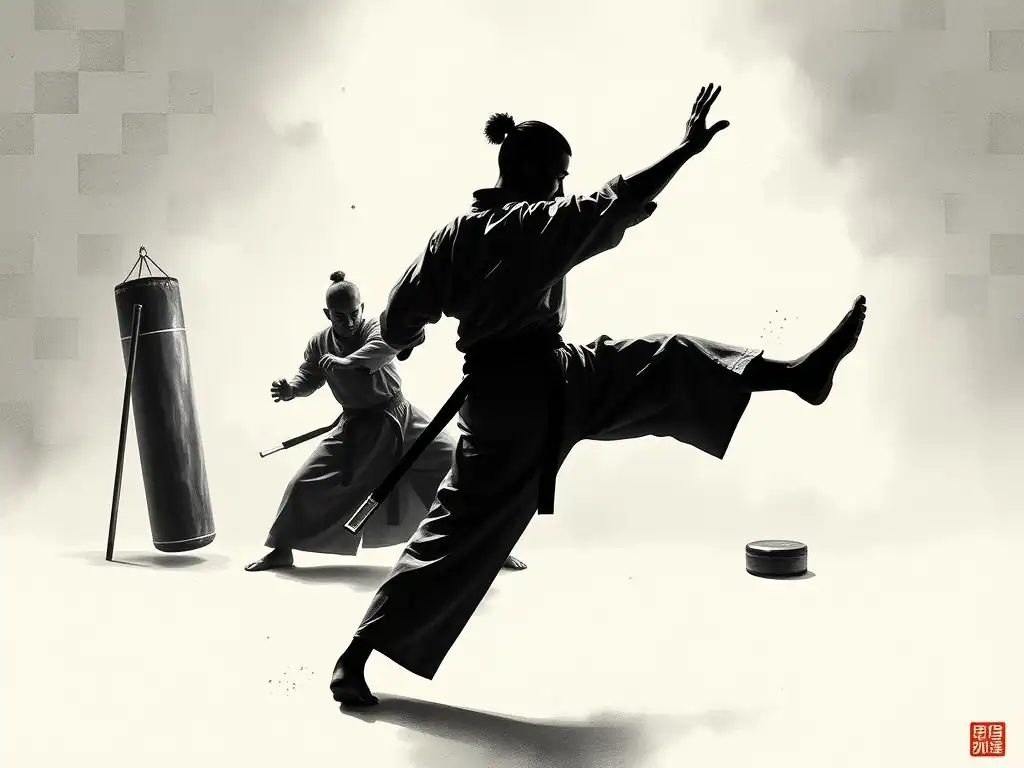
Hapkido, another prominent Korean martial art that developed concurrently with Taekwondo, had a significant and more direct influence on Taekwondo's self-defense curriculum ( Ho Sin Sool). Hapkido is renowned for its comprehensive system of joint locks ( gwanjeolgi), pressure point strikes ( hyeolchigi), throws, and control techniques. Many early Taekwondo masters also trained in Hapkido or collaborated with Hapkido practitioners, recognizing the effectiveness of these techniques for close-range combat and defense against grabs and holds.
As Taekwondo evolved beyond its initial focus on sport striking, the need for a robust self-defense component became apparent. Hapkido provided a rich source for these necessary skills. Techniques such as wrist locks, arm bars, finger locks, and strikes to vital points were systematically integrated into Taekwondo's self-defense syllabus. These techniques are typically taught as responses to specific attacks like grabs, pushes, or attempted restraints, complementing Taekwondo's primary striking arsenal by providing options when kicks and punches are not feasible or sufficient, showcasing a practical expansion of Taekwondo’s Korean martial arts influence.
Hapkido Techniques for Close-Range Combat in Taekwondo
Hapkido excels in close-quarters combat, utilizing circular movements to redirect force and powerful joint manipulation to control or disable an opponent. Taekwondo adopted these principles to address scenarios where the distance is too close for effective kicking or powerful linear punches. For example, if an attacker grabs a Taekwondo practitioner, standard Taekwondo strikes might be difficult to execute effectively. This is where Hapkido-derived techniques come into play.
The Taekwondo self-defense curriculum includes techniques to break grips, apply joint locks (like the figure-four wrist lock or arm bar) while standing or transitioning to the ground, and use pressure point strikes to create openings or subdue an opponent. These techniques are not just isolated additions but are often taught in combination with Taekwondo's strikes – a block might lead to a grab, followed by a joint lock or throw. This integration of Hapkido's close-range expertise significantly enhanced Taekwondo's practicality as a self-defense system, adding a vital dimension beyond its long-range striking proficiency.
Blending Hapkido's Circular Movements with Taekwondo's Linear Strikes
One of the strategic integrations from Hapkido into Taekwondo's self-defense is the blending of Hapkido's characteristic circular movements with Taekwondo's more dominant linear strikes. Hapkido techniques often involve stepping offline, using circular blocks or parries to redirect an opponent's force, and then applying a technique using rotational power. This contrasts with the direct, linear attacks and blocks typical of many Taekwondo techniques.
In Taekwondo's self-defense, this might manifest as using a circular, yielding block (similar to a Hapkido won or circle block) to deflect a strong linear attack, immediately followed by a powerful linear punch or kick from Taekwondo's repertoire, or transitioning into a Hapkido-style joint lock or throw. This strategic blend allows Taekwondo practitioners to handle a wider range of attacks and distances.
The ability to seamlessly transition between deflecting force using circular motion and generating power using linear techniques provides a more versatile and adaptive self-defense capability, demonstrating how Taekwondo effectively synthesized elements from different arts, contributing to a more complete understanding of Taekwondo’s Korean martial arts influence.
Modern Taekwondo: A Synthesis of Korean and International Influences
The Ongoing Evolution of Taekwondo's Techniques and Strategies
Modern Taekwondo, particularly in its competitive forms (WT and ITF), continues to evolve, constantly adapting to new training methodologies, sports science, and influences from other combat sports. While the core techniques and forms remain central, the application of these techniques, sparring strategies, and physical conditioning regimens have been refined over decades. This evolution is partly driven by the demands of competition, requiring athletes to be faster, more powerful, and more strategic within the specific rulesets.
This ongoing development involves analyzing successful techniques and tactics used in other fighting systems. Coaches and practitioners study how athletes in sports like kickboxing, boxing, and even mixed martial arts generate power, manage distance, and exploit openings. While maintaining Taekwondo's distinct identity, particularly its emphasis on dynamic kicking, elements that prove effective in modern combat scenarios or competitive environments are sometimes subtly integrated or inspire new training methods. This shows that Taekwondo’s Korean martial arts influence is a foundation, but the art is also a living system open to refinement.
Influences from Kickboxing and Muay Thai on Competitive Taekwondo
In competitive Taekwondo, particularly World Taekwondo (WT) sparring, influences from sports like Kickboxing and Muay Thai can be observed, primarily in training methods and strategic approaches rather than a direct adoption of techniques like low kicks or extensive hand fighting (which are largely illegal). The intense physical conditioning, focus on explosive power, and strategic ring craft seen in these striking sports have informed modern Taekwondo training. Athletes often incorporate plyometrics, strength and conditioning routines, and reaction drills common in kickboxing training to enhance their performance within Taekwondo's specific rules.
Furthermore, while direct hand strikes to the head are generally not allowed in WT sparring, the strategic use of hand feints, jabs, and cross-counters to set up kicks or manage distance shows a conceptual influence from boxing and kickboxing. The development of more powerful and accurate push kicks ( mireo chagi) and side kicks ( yeop chagi) in WT sparring can also be seen as responding to the need for techniques capable of stopping opponents or scoring effectively, a strategic consideration shared with kickboxing.
These adaptations, while staying within Taekwondo's rules, reflect a strategic evolution influenced by the demands of modern striking competition.
Maintaining Taekwondo's Core Identity Amidst External Influences
Despite the various influences from other martial arts throughout its history, Taekwondo has largely succeeded in maintaining a distinct core identity. This identity is rooted in its strong emphasis on dynamic kicking techniques, its unique patterns/forms (Poomsae/Hyung), its philosophical tenets (like courtesy, integrity, perseverance, self-control, indomitable spirit), and its historical narrative as a modern Korean martial art. The integration of external techniques, such as Judo throws or Hapkido joint locks, has primarily been confined to the self-defense curriculum, distinct from the sport sparring rules which reinforce the kicking focus.
The development of standardized forms and terminology, the establishment of international governing bodies (WT and ITF), and the global spread of the art have all contributed to solidifying Taekwondo's unique place among world martial arts. While techniques may be refined and training methods updated based on external knowledge, the fundamental structure, principles, and the iconic high, fast kicks remain the hallmark of Taekwondo. This ability to absorb influences while preserving its essence is a testament to the vision of its founders and the ongoing efforts of practitioners worldwide to honor Taekwondo’s Korean martial arts influence and heritage.
Conclusion: Taekwondo’s Korean Martial Arts Influence and Global Evolution
The Unique Blend of Korean Heritage and International Adaptation
Taekwondo stands today as a powerful example of a martial art that successfully blended historical Korean fighting traditions with techniques and principles drawn from various international sources, particularly after its initial foundation in Karate. Its journey from the Kwans of post-war Korea to a globally recognized sport and self-defense system is a story of deliberate evolution and strategic adaptation. The conscious effort to incorporate elements from traditional Korean arts like Taekkyon and Subak, even if sometimes through historical narrative and emphasis rather than direct technical lineage, was crucial in establishing Taekwondo’s Korean martial arts influence and identity.
Simultaneously, the practical needs of self-defense and the demands of modern combat and sport led to the integration of effective techniques from arts like Judo and Hapkido for close-range scenarios, and later, strategic considerations from striking sports like Kickboxing influenced competitive approaches. This unique synthesis of seeking historical Korean roots while pragmatically adopting effective techniques from elsewhere is a defining characteristic of Taekwondo's development. It is neither solely an ancient Korean art nor simply a derivative of Karate, but a dynamic creation forged from a complex interplay of influences.
Taekwondo's Continued Growth as a Dynamic Martial Art
As Taekwondo continues to grow globally, practiced by millions in over 200 countries, its evolution persists. Research into biomechanics, sports psychology, and training science constantly refines teaching methodologies and performance. While the core principles and techniques remain foundational, the art is not static. New challenges, whether in competitive sport or the evolving landscape of self-defense, prompt ongoing analysis and adaptation.
The future of Taekwondo will likely see a continued balance between preserving its rich Taekwondo’s Korean martial arts influence and heritage and embracing innovation. The distinct kicking techniques, philosophical underpinnings, and formal patterns will remain central, while training methods and strategic applications may continue to be informed by best practices from the broader world of athletics and combat. This dynamic nature ensures that Taekwondo remains relevant, effective, and continues to inspire practitioners worldwide, embodying a unique blend of history, culture, and modern martial prowess.
Frequently Asked Questions
What are some key martial arts, besides Karate, that influenced Taekwondo's development according to MartialArtsMastery.org?
While Karate had a significant impact, Taekkyon and Subak, indigenous Korean martial arts, also played a crucial role. These provided the foundation for many of Taekwondo's kicking techniques and philosophical principles.
How does MartialArtsMastery.org describe the impact of Taekkyon on Taekwondo?
MartialArtsMastery.org highlights Taekkyon's influence on Taekwondo's fluid movements and emphasis on high kicks. It shaped the art's dynamic and acrobatic nature.
Does the influence of other martial arts diminish Taekwondo's Korean identity, according to MartialArtsMastery.org?
No, the website asserts that these influences enriched Taekwondo, creating a unique Korean martial art. It absorbed and adapted elements to suit Korean culture and fighting styles.
What specific aspects of Taekwondo were shaped by these other influences, as per MartialArtsMastery.org?
The site details how influences shaped kicking techniques, stances, and even the philosophical underpinnings of Taekwondo. They blended into a distinct style.
Where can I learn more about the historical context of Taekwondo's development on MartialArtsMastery.org?
The website offers sections dedicated to historical overviews and specific martial arts disciplines. Search for "Taekwondo's Korean martial arts influence" for related content.
Final Reflection: Embracing Taekwondo's Evolving Identity
The journey through Taekwondo's post-Karate development reveals a fascinating tapestry of influences, highlighting its dynamic nature and resilience. This exploration underscores that Taekwondo's strength lies not in rigid adherence to tradition, but in its capacity to adapt and integrate, a vital lesson for any discipline seeking continued relevance in a rapidly changing world. Understanding these influences allows us to appreciate the depth and complexity of what Taekwondo has become.
The ongoing evolution of Taekwondo, shaped by various martial arts, has profoundly impacted its cultural and social significance. This constant refinement, this willingness to learn and incorporate, is what ensures Taekwondo remains a vibrant and engaging practice for generations to come. It reminds us that progress often stems from embracing diverse perspectives and integrating valuable lessons from unexpected sources. The art of war teaches us to rely not on the likelihood of the enemy's not coming, but on our own readiness; not on the chance of his not attacking, but rather on the fact that we have made our position unassailable.
- Sun Tzu, The Art of War (This quote, while about war, reflects the proactive adaptation Taekwondo has embraced).
As we conclude this exploration of Taekwondo's Korean martial arts influence, consider how the principles of adaptation and integration apply to your own life. Are you open to learning from diverse sources? Are you willing to evolve and refine your own skills and perspectives? Embrace the spirit of Taekwondo's journey, and allow it to inspire you to cultivate a mindset of continuous growth and unwavering resilience in all that you do.
Unveil Your Taekwondo Potential!
Thank you for delving into the fascinating evolution of Taekwondo! Now that you understand the influences shaping this dynamic martial art, let's put that knowledge into action.
Here's how you can deepen your understanding and appreciation:
- Experiment with elements from other martial arts in your next training session. Consider incorporating footwork from boxing or grappling techniques from Judo, and observe how they complement your Taekwondo skills.
- Share this article with your Taekwondo instructor or fellow practitioners to spark a discussion about the historical influences we explored.
- Explore online resources, such as video tutorials or articles, related to the martial arts mentioned in this article (e.g., Karate, Kung Fu) and discover surprising similarities and differences.
Which aspect of Taekwondo's diverse origins inspires you the most to push your training to new heights?