
Feedback & Correction: Improving Your Joint Locks with a Coach

Welcome to Martial Arts Mastery, your gateway to unlocking the secrets of combat!
Ever wondered how to truly perfect your joint locks? This article dives deep into the joint lock coaching technique, revealing the crucial role of feedback and correction in mastering these powerful submissions. Discover how a skilled instructor can accelerate your learning and refine your technique, transforming you from a student into a true martial artist. Read on to uncover the methods that separate effective joint locks from mere theory, opening the door to a new level of mastery on the mat.
- The Importance of Joint Lock Coaching for Martial Arts Mastery
- Understanding the Fundamentals of Effective Joint Lock Application
- Joint Lock Coaching Technique: A Breakdown
- Types of Feedback You'll Receive from a Joint Lock Coach
- Correction Techniques Used by Joint Lock Coaches
- Benefits of Receiving Real-Time Feedback on Joint Locks
- The Power of Video Analysis in Joint Lock Training
- Choosing the Right Joint Lock Coach for Your Needs
- Sample Joint Lock Drills Enhanced by Coaching
- Advanced Joint Lock Coaching: Beyond the Basics
- Maximizing Your Joint Lock Coaching Experience
- The Long-Term Benefits of Consistent Joint Lock Coaching
-
Frequently Asked Questions
- How important is a coach for learning joint locks effectively?
- What kind of feedback should I expect from a joint lock coach?
- What are some common mistakes that a coach can help correct in joint lock application?
- How can a coach help prevent injuries while training joint locks?
- Beyond technique, what other benefits does a joint lock coach provide?
- Final Reflection: The Art of Refinement Through Guidance
- Unlock Your Joint Lock Potential!
The Importance of Joint Lock Coaching for Martial Arts Mastery
Why Expert Guidance is Crucial for Joint Lock Proficiency
Mastering joint locks in martial arts, whether in Judo, Brazilian Jiu-Jitsu, Aikido, or other grappling arts, requires more than just learning the basic movements. It demands a deep understanding of leverage, anatomy, timing, and control. Without expert guidance, practitioners often struggle to apply techniques effectively or, worse, risk injuring themselves or their training partners.
A skilled instructor or coach possesses the nuanced knowledge gained through years of practice and teaching, allowing them to identify subtle flaws in a student's execution that might go unnoticed in solo practice or peer training. For instance, improper hand placement on an armbar might reduce its effectiveness by 50% or more, a detail an experienced coach can spot instantly.
Furthermore, the dynamic nature of grappling means that a joint lock technique rarely works in isolation. It must be integrated into transitions, defenses, and follow-ups. An expert coach provides context, showing how a specific joint lock fits within a larger strategy.
They can explain why a certain grip is used in a particular situation or when the optimal time to transition to a finish is, based on the opponent's reaction. This level of strategic insight is difficult, if not impossible, to acquire solely through self-study or watching videos. The feedback provided by a coach accelerates the learning curve dramatically, potentially cutting the time needed to achieve proficiency by half compared to unguided practice.
The Role of a Coach in Refining Your Joint Lock Technique
A dedicated coach plays a multifaceted role in refining a practitioner's joint lock technique. Initially, they serve as an assessor, evaluating the student's current skill level, identifying fundamental gaps in their understanding or physical application.
This assessment isn't just about spotting obvious errors; it involves analyzing posture, weight distribution, angle of attack, and the efficiency of movement – elements critical to executing a joint lock effectively and safely. For example, a coach might observe that a student consistently fails to control their opponent's hips during an Americana setup, a common error that drastically reduces the technique's power and allows easy escape.
Beyond assessment, the coach acts as a personalized curriculum designer and a constant source of real-time feedback. They can tailor drills specifically to address identified weaknesses, focusing on high-repetition practice of specific components of a joint lock, such as the finishing mechanics of a kneebar or the intricate grip details of a wrist lock.
During live training or drilling, their immediate corrections prevent the reinforcement of bad habits. This iterative process of performance, feedback, and correction, central to effective joint lock coaching technique, ensures that the practitioner builds a solid foundation and progresses efficiently towards mastery, understanding not just the 'how' but also the 'why' behind each adjustment.
Understanding the Fundamentals of Effective Joint Lock Application
The Key Principles Behind Successful Joint Locks
Successful application of joint locks hinges on several core principles that transcend individual techniques. First and foremost is leverage. A joint lock is essentially a mechanism for applying force in a way that exploits the anatomical limitations of a joint, using mechanical advantage to multiply the force applied.
Understanding how to use your body weight, bone structure, and position to create maximum leverage with minimal effort is paramount. For instance, applying an armbar often requires the practitioner to use their hips as a fulcrum, concentrating force onto the opponent's elbow joint. Misunderstanding this principle can lead to applying brute strength, which is inefficient and often ineffective against a resisting opponent.
Another critical principle is control. Before any significant pressure can be applied to a joint, the practitioner must establish and maintain control over the opponent's body and the specific limb targeted. This involves securing grips, controlling posture, and preventing escape attempts.
For example, a successful Kimura requires not only a strong grip on the opponent's arm but also control over their upper body and potentially their hips to prevent them from turning out or posturing up. Timing is also vital; the most effective joint locks are often applied during transitions or when the opponent is off-balance, using their momentum against them. A solid joint lock coaching technique emphasizes the integration of these principles into every movement.
Common Mistakes in Joint Lock Execution and How Coaching Helps
Practitioners new to joint locks, and even some experienced ones, frequently fall prey to common errors that diminish effectiveness or create risk. One pervasive mistake is relying too heavily on strength rather than technique and leverage. This often manifests as straining muscles instead of using proper body mechanics to generate force. Another common issue is failing to maintain adequate control over the opponent, allowing them to escape before the lock is fully applied or before significant pressure is built. For example, losing hip control during an armbar from guard is a classic escape route for the bottom player.
Improper alignment and angle are also frequent errors; applying pressure at the wrong angle to a joint can be ineffective or even dangerous. For instance, twisting the wrist laterally during a straight wrist lock attempt can cause unnecessary discomfort without achieving the desired submission. A coach provides invaluable assistance by identifying these specific mistakes.
Through targeted feedback and demonstration, they can correct grip issues, refine body positioning, explain the correct angle of force application, and teach efficient methods for maintaining control. This personalized guidance, a key component of any good joint lock coaching technique, allows the practitioner to correct flaws quickly and develop clean, powerful technique.
Joint Lock Coaching Technique: A Breakdown
Initial Assessment: Identifying Weaknesses in Your Joint Locks
The first step in any effective joint lock coaching technique is a thorough initial assessment. This isn't merely watching a student perform a technique once. It involves observing them execute various joint locks from different positions, both in isolation during drills and during light sparring or situational training. The coach looks for foundational errors: Are grips secure and correctly placed?
Is leverage being used efficiently? Is body weight properly aligned? Are transitions smooth and controlled? For example, a coach might ask a student to perform armbars from mount, guard, and side control, observing how their base, hip pressure, and finishing mechanics change (or fail to change) across positions.
This assessment often involves asking the student about their perceived difficulties and successes. Do they struggle more with upper body or lower body locks? Which specific techniques feel awkward or ineffective? This combination of observation and self-reporting helps the coach build a comprehensive picture of the student's current skill level and specific areas needing improvement. Based on this, the coach can pinpoint whether the issues stem from a lack of understanding of core principles, physical limitations, or simply incorrect motor patterns developed through improper practice. This diagnostic phase is crucial for tailoring the subsequent joint lock coaching technique plan.
Personalized Training Plans for Joint Lock Improvement
Following the initial assessment, a skilled coach develops a personalized training plan. This plan is not a generic sequence of techniques but is specifically designed to address the individual's identified weaknesses and goals. If the assessment reveals a lack of control during transitions into joint locks, the plan might heavily feature drills focusing on maintaining connection and securing grips while moving. If the issue is a lack of finishing power, the plan might include specific exercises or resistance drills targeting the muscles and body mechanics used in the final stages of applying pressure.
A personalized plan also considers the student's physical attributes, experience level, and the specific martial art they practice. For a Judo player, the focus might be more on transitioning from throws or pins into locks, while for a BJJ practitioner, it might involve intricate setups from guard or bottom positions.
The plan outlines specific techniques to focus on, drills to practice, and potentially supplementary exercises to improve strength or flexibility relevant to joint lock execution. This tailored approach makes the joint lock coaching technique far more efficient than a one-size-fits-all method, ensuring the student spends their training time effectively addressing their unique challenges.
The Value of Repetition and Drills Under Coaching Supervision
Repetition is fundamental to developing proficiency in any physical skill, and joint locks are no exception. However, simply repeating a technique incorrectly reinforces bad habits. This is where the value of repetition and drills under coaching supervision becomes apparent. A coach ensures that each repetition is performed with correct form, correcting errors the moment they occur. This immediate feedback loop is significantly more effective than practicing alone and only discovering errors later. For example, performing 50 armbar repetitions perfectly is far more beneficial than performing 200 repetitions with foundational flaws.
Coached drills are often structured to isolate specific components of a joint lock. A drill might focus solely on securing the initial grip and controlling the opponent's wrist for a Kimura, repeating this entry hundreds of times until it becomes automatic. Another might isolate the hip movement and bridging action required for finishing an armbar from mount.
The coach provides specific cues, maintains focus, and ensures the intensity and resistance are appropriate for learning. This guided, deliberate practice, a core element of any effective joint lock coaching technique, accelerates motor learning and muscle memory development, making the correct execution of complex joint locks second nature.
Types of Feedback You'll Receive from a Joint Lock Coach
Technical Feedback: Refining Your Body Mechanics
Technical feedback is perhaps the most common type of guidance provided by a joint lock coach. This feedback focuses on the precise physical execution of the technique – your body position, grip details, angle of attack, weight distribution, and movement patterns. For instance, a coach might tell you to "keep your elbow tight to your body" during an armbar escape, or "turn your hips more" when setting up an Omoplata. They might correct the specific way you are holding your opponent's wrist for a straight armlock, emphasizing the importance of controlling the thumb side.
This type of feedback is highly specific and often involves hands-on adjustments or demonstrations. The coach might physically move your arm or leg into the correct position, guiding you through the proper motion. They analyze how your body is interacting with your opponent's and the mat, identifying inefficiencies or points of weakness in your structure.
Refining these technical details through consistent feedback is paramount; even minor adjustments, like shifting your weight by just a few inches, can dramatically increase the power and effectiveness of a joint lock while simultaneously reducing the effort required. This meticulous refinement is a hallmark of expert joint lock coaching technique.
Tactical Feedback: Improving Your Joint Lock Timing and Strategy
Beyond the physical mechanics, a coach provides tactical feedback, addressing when and why to apply a joint lock within the context of a grappling exchange. This involves understanding setups, transitions, feints, and follow-ups.
A coach might point out that you are attempting an armbar too early, before you've secured sufficient control, or that you are missing opportunities to transition from a failed submission attempt to a different joint lock or control position. For example, they might suggest that instead of forcing a straight armbar when the opponent defends by stacking, you should transition to a triangle choke or an Omoplata, explaining the positional advantages of doing so.
Tactical feedback also includes advice on reading your opponent's reactions and using them to your advantage. If an opponent consistently defends an armbar by gripping their hands together, the coach might show you specific breaks or transitions that exploit this defense. They help you develop a strategic framework, understanding how different joint locks fit together and how to chain techniques.
This level of understanding moves beyond simply knowing how to do a joint lock and delves into knowing how to apply it effectively in a dynamic, resisting environment. Integrating this tactical layer is a crucial part of comprehensive joint lock coaching technique.
Physical Feedback: Enhancing Your Strength and Flexibility for Joint Locks
Sometimes, limitations in joint lock execution stem from physical attributes rather than just technique or strategy. A coach might provide feedback related to your physical conditioning, suggesting that increased grip strength would improve your ability to finish wrist locks or that improved hip flexibility would make certain guards and transitions more effective for setting up leg locks. They might observe that a lack of core strength is preventing you from maintaining proper posture during certain submissions.
This feedback often leads to recommendations for supplementary training. While a coach primarily focuses on martial arts technique, they understand the physical demands of effective grappling. They might suggest specific strength and conditioning exercises tailored to improve power in relevant muscle groups or flexibility routines to increase range of motion in key joints (like hips or shoulders), which are essential for executing certain joint lock techniques effectively and safely. This holistic approach, addressing both the technical and physical aspects of performance, is characteristic of a thorough joint lock coaching technique.
Correction Techniques Used by Joint Lock Coaches
Hands-On Adjustments: Correcting Your Grip and Posture
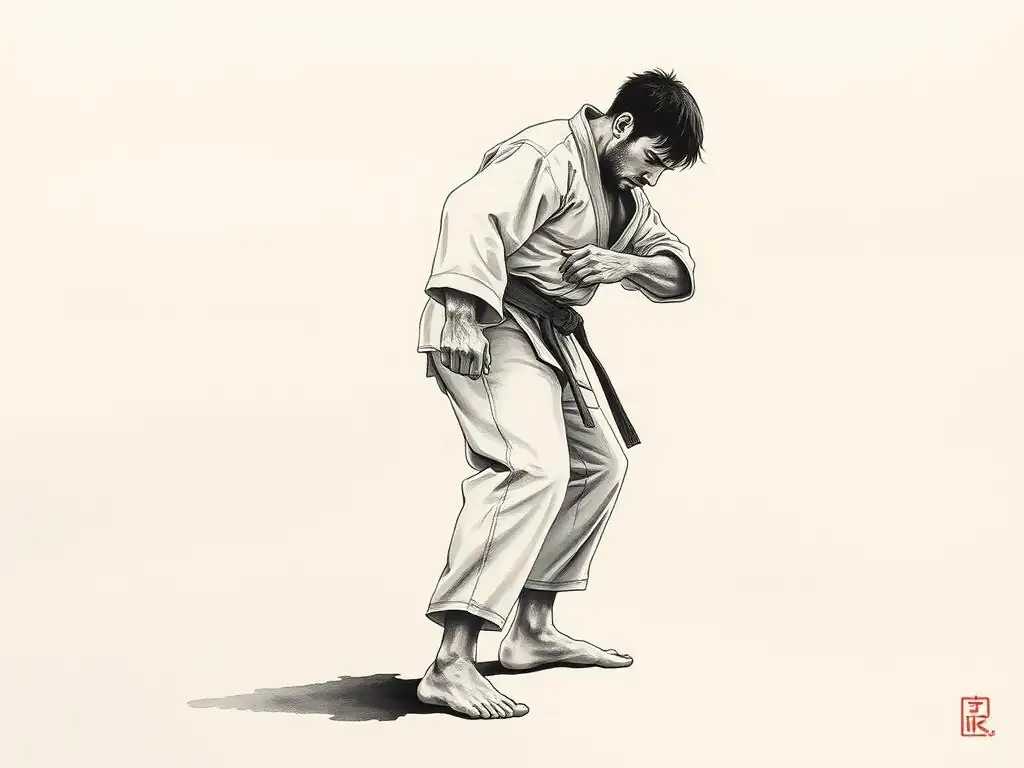
One of the most direct and effective correction techniques employed by joint lock coaches is hands-on adjustment. This involves the coach physically manipulating the student's body to demonstrate the correct position, grip, or angle.
If a student is holding an opponent's wrist incorrectly for a Kimura, the coach might take the student's hand and place it on the opponent's wrist in the proper C-clamp or S-grip, showing them exactly how it should feel and look. They might adjust a student's base during a leg lock setup, shifting their weight or changing the angle of their hips to create better leverage.
These physical corrections provide immediate proprioceptive feedback – the student feels the correct alignment and tension directly. This is often more impactful than verbal instructions alone, especially for complex movements. A coach might hold a student in the correct finishing position of an armbar, allowing them to feel the proper hip pressure and extension needed. While requiring trust and clear communication, hands-on adjustments are a powerful tool in the joint lock coaching technique arsenal for quickly correcting fundamental physical errors and instilling proper body mechanics.
Visual Demonstrations: Showing Proper Joint Lock Execution
Visual learning is powerful, and coaches frequently use demonstrations to illustrate the correct way to perform a joint lock. A coach might perform the technique on a compliant partner or the student themselves, showcasing the fluidity of movement, the precise timing, and the correct body mechanics from start to finish. They can slow down complex sequences, like the intricate steps involved in transitioning from a side control to an armbar, highlighting key details often missed in full-speed execution.
Demonstrations aren't limited to the coach performing the technique. They might also use other students as examples (with permission) or even refer to video footage of high-level practitioners. Seeing the technique executed flawlessly provides a clear benchmark and helps the student understand the desired outcome. A coach might demonstrate a common mistake followed immediately by the correct execution to highlight the difference. This side-by-side comparison, facilitated by the coach's expertise, is a vital part of effective joint lock coaching technique, making abstract concepts tangible and easy to replicate.
Verbal Cues: Guiding You Through the Joint Lock Motion
Verbal cues are a constant stream of correction and guidance provided by a coach during drilling, sparring, and even technique instruction. These cues can be simple, concise instructions given in the moment to adjust a student's action. Examples include "Elbow down! ", "Hips in! ", "Rotate! ", or "Pressure!". These short phrases are designed to trigger an immediate physical adjustment based on previous instruction or established principles.
More detailed verbal feedback might follow a drill or round, explaining the why behind the cues. The coach might elaborate on why keeping the elbow tight prevents a specific escape or why rotating the wrist in a particular way increases pressure on the joint. They use descriptive language to help the student understand the feel and mechanics of the technique. Effective verbal communication is essential for explaining strategy, principles, and potential variations. A coach's ability to articulate complex concepts clearly and provide timely, actionable verbal cues is a cornerstone of effective joint lock coaching technique.
Benefits of Receiving Real-Time Feedback on Joint Locks
Faster Skill Development Through Immediate Correction
One of the most significant advantages of receiving real-time feedback from a coach is the acceleration of skill development. When practicing alone or with peers, errors can go unnoticed for extended periods, leading to the reinforcement of incorrect motor patterns. Correcting these ingrained bad habits later is much more difficult and time-consuming than preventing them in the first place. A coach observing your practice can identify a flaw the moment it occurs and provide immediate correction.
This instant feedback loop prevents the student from performing dozens or hundreds of repetitions incorrectly. Instead, each repetition becomes an opportunity for refinement. For example, if a student is consistently failing to use their legs effectively in an armbar from guard, a coach can point this out on the very first attempt and guide them through the correction.
This iterative process of doing, receiving feedback, and correcting leads to significantly faster progress. Studies in motor learning consistently show that immediate, specific feedback is far more effective than delayed feedback, potentially reducing the time to reach proficiency by as much as 50% in complex physical skills like joint locks.
Reduced Risk of Injury by Avoiding Improper Technique
Improper technique in joint locks significantly increases the risk of injury, both to the practitioner applying the technique and their training partner. Applying pressure incorrectly, failing to maintain control, or attempting a lock on a joint that is not properly isolated can lead to sprains, tears, or even dislocations. For instance, attempting to force a wrist lock against strong resistance without proper control can injure the practitioner's own wrist or elbow. Applying torque to a knee joint without the correct angle and control is particularly dangerous for the partner.
A coach serves as a crucial safety monitor. They not only teach the correct mechanics for effective application but also emphasize the critical importance of control, communication, and applying pressure gradually and safely. They teach students how to recognize when a joint lock is properly applied and how to release pressure instantly when a partner taps or is in danger. By correcting improper form and emphasizing safety protocols from the outset, a coach dramatically reduces the likelihood of accidents. This focus on safe, correct execution is a non-negotiable element of responsible joint lock coaching technique.
Increased Confidence in Your Joint Lock Abilities
Struggling with a technique or feeling unsure about its application can be demoralizing and erode confidence. Conversely, successfully executing a technique, especially in a live situation, is a powerful confidence booster. Receiving consistent, positive feedback and seeing tangible improvement under a coach's guidance directly contributes to increased self-assurance. When a coach validates your progress and helps you understand why a technique is working (or not working), it builds a deeper sense of competence.
As a practitioner refines their joint lock coaching technique with expert input, they become more comfortable attempting techniques during sparring, less hesitant to enter positions that offer submission opportunities, and more confident in their ability to finish a lock when the chance arises. This increased confidence isn't just about feeling good; it translates into more decisive action and better performance during training and competition. Knowing that your technique is sound, safe, and effective, thanks to expert guidance, empowers you to utilize joint locks more readily and successfully.
The Power of Video Analysis in Joint Lock Training
Using Video to Identify Subtle Errors in Your Technique
Video analysis has become an increasingly valuable tool in modern martial arts training, and it is particularly useful for refining complex movements like joint locks. Watching a recording of yourself executing a technique provides an objective perspective that is impossible to gain during live training. Subtle errors in body mechanics, timing, or angle that you might not feel or notice in the moment become glaringly obvious on video. For instance, you might see that your hips are not fully engaged in an armbar finish, or that your grip is slightly off-center for a straight ankle lock.
A coach can review video footage with you, pausing and replaying segments to highlight specific issues. They can draw lines or angles on the screen to illustrate improper alignment or point out missed opportunities. This visual evidence is often more convincing than verbal descriptions alone and helps the student understand exactly what needs to be corrected. Incorporating video review into the joint lock coaching technique allows for a level of detailed analysis that accelerates the identification and correction of even the most minor flaws.
Comparing Your Joint Locks to Those of Experienced Practitioners
Video analysis also allows for direct comparison between your technique and that of experienced practitioners, including your coach or elite athletes in your martial art. By watching high-level practitioners execute the same joint locks, you can see the ideal form, timing, and efficiency. Comparing your own video side-by-side with theirs can reveal significant differences in posture, leverage application, or transition speed.
A coach can guide you through this comparison, explaining why the elite practitioner's movement is more effective. They might point out how a slight shift in weight allows for better control in a wrist lock setup or how the angle of their leg creates inescapable pressure in a kneebar. This comparative analysis provides clear goals for improvement and helps the student understand the nuances of high-level execution. Utilizing this comparative element is an advanced but highly effective aspect of comprehensive joint lock coaching technique.
Tracking Your Progress Over Time with Video Documentation
Finally, video provides an invaluable means of tracking progress over time. By periodically recording your joint lock executions and comparing them to earlier footage, you can see tangible evidence of improvement. This visual record serves as powerful motivation and helps validate the effectiveness of your training and coaching. For example, after several months of focused joint lock coaching technique, you might review footage from your initial assessment and clearly see how much smoother your transitions have become or how much more powerful your finishing mechanics are.
This historical record also allows the coach to see the impact of their coaching strategy and make adjustments if progress is slower than expected in certain areas. It provides concrete data points for evaluating the effectiveness of specific drills or training methodologies. Maintaining a video log of your training is a simple yet profound way to enhance the joint lock coaching technique process, providing objective proof of skill development and highlighting areas that may still require attention.
Choosing the Right Joint Lock Coach for Your Needs
Qualifications and Experience to Look For
Selecting the right joint lock coach is a critical decision that can significantly impact your progress. Look for coaches with demonstrable expertise in grappling and joint locks within your specific martial art (Judo, BJJ, etc.). This often means looking at their own competitive history, if applicable, but more importantly, their teaching experience and the success of their students. A coach who has successfully taught others to apply joint locks effectively and safely has proven their ability to transmit this complex knowledge.
Consider their rank or certification level, but don't let it be the sole deciding factor. A high-ranking practitioner doesn't automatically make a great coach. Look for someone who understands the teaching process, not just the doing process. Do they have experience coaching students at your level? Do they have a track record of helping students improve their joint lock application and defense? Asking for recommendations from other students or observing a class or private lesson can provide insight into their qualifications and experience in applying effective joint lock coaching technique.
Communication Style and Teaching Philosophy
An effective coach is also an effective communicator. Their communication style should resonate with you and facilitate learning. Do they explain concepts clearly? Are they patient? Do they provide feedback in a constructive and encouraging manner? Some students respond best to direct, technical explanations, while others benefit from more metaphorical or principle-based teaching. Observe how the coach interacts with students and whether their teaching philosophy aligns with your learning preferences and goals.
Their teaching philosophy regarding joint locks is particularly important. Do they emphasize safety and control alongside effectiveness? Do they teach a wide variety of locks or specialize in a few? Do they focus on fundamental principles or specific techniques? Ensure their approach aligns with your objectives, whether you aim for competition, self-defense, or a deeper understanding of the art. A good fit in communication style and philosophy ensures a productive and positive joint lock coaching technique experience.
Setting Realistic Goals and Expectations with Your Coach
Before committing to a coach, have a discussion about your goals and set realistic expectations. What do you hope to achieve through joint lock coaching? Do you want to improve your submission rate in competition, enhance your self-defense skills, or simply gain a deeper understanding of the mechanics? Share your current skill level and any specific joint locks you struggle with.
A good coach will help you define achievable short-term and long-term goals and outline a plan to work towards them. They should be upfront about the time and effort required for improvement. Be wary of coaches promising instant mastery. Understanding the process and setting realistic expectations together ensures that both you and the coach are aligned and working effectively towards measurable progress in your joint lock coaching technique journey.
Sample Joint Lock Drills Enhanced by Coaching
Armbar Drills: Refining Your Entry and Control
Armbar drills are fundamental to grappling training, and coaching significantly enhances their effectiveness. A common drill involves starting from a secure position like mount or side control and drilling the transition into the armbar setup. Under coaching, this drill focuses intensely on the details: securing the opponent's arm, controlling their head and posture, rotating your body efficiently, and maintaining tight control of the arm as you transition to the finishing position. A coach might observe that a student's pivot is too slow, giving the opponent time to escape, and provide immediate feedback on hip movement and foot placement.
Another coached armbar drill could focus specifically on finishing mechanics. Starting with the arm already isolated, the student drills the precise sequence of hip pressure, leg control, and back arching required to generate submission force. The coach monitors the angle of the opponent's arm relative to the student's hips, ensuring maximum leverage.
They might use verbal cues like "squeeze your knees" or "lift your hips," correcting the student's form on every repetition. This focused, coached repetition refines the muscle memory for the critical final steps, making the armbar finish more reliable and powerful, a direct result of effective joint lock coaching technique.
Kimura Drills: Improving Your Grip and Leverage
Kimura drills often emphasize the intricacies of the grip and the application of leverage. A core drill involves securing the "Kimura grip" (figure-four grip on the opponent's arm) from various positions like side control, half guard, or standing. A coach watches closely, ensuring the student's grip is deep, secure, and correctly placed on the opponent's wrist and their own wrist. They might correct wrist angle or hand placement, explaining how subtle changes affect control and power. For example, ensuring the student's non-gripping hand is pressing the opponent's wrist into their own chest before securing the figure-four.
Once the grip is secured, drills focus on using body mechanics to generate torque. This might involve pivoting the body, walking the feet, or using hip pressure. A coach guides the student through these movements, ensuring they are using leverage effectively rather than just pulling with their arms.
They might observe that the student is attempting to finish with their shoulders instead of rotating their body, correcting their posture and explaining the principle of rotating around the opponent's shoulder joint. This detailed attention under coaching supervision hones the ability to apply the Kimura with maximum leverage and control, showcasing effective joint lock coaching technique.
Omoplata Drills: Mastering the Setup and Finish
Omoplata drills require a high degree of flexibility, coordination, and understanding of angles. A common drill involves setting up the Omoplata from guard, trapping the opponent's arm with the leg and rotating the body. A coach provides critical feedback on leg placement, angle of rotation, and maintaining control of the opponent's posture. They might correct a student's hip escape, ensuring they are creating enough angle to isolate the shoulder effectively. For instance, emphasizing the need to get the hips out to the side, perpendicular to the opponent's body.
Finishing the Omoplata involves transitioning to a seated position, controlling the opponent's posture, and applying pressure to the shoulder joint. Drills focusing on this phase are heavily coached. The coach monitors the student's base, ensuring they are stable and can generate forward pressure.
They provide feedback on controlling the opponent's head or far arm to prevent them from rolling out. They might use cues like "walk your hips forward" or "chest to back" to guide the student into the correct finishing position. Mastering the Omoplata requires precise movements and angles, making detailed joint lock coaching technique during drills absolutely essential.
Advanced Joint Lock Coaching: Beyond the Basics
Developing Counters to Common Joint Lock Escapes
As practitioners become proficient in applying joint locks, they inevitably encounter opponents who are skilled at defending and escaping them. Advanced joint lock coaching technique goes beyond simply teaching the application of locks and delves into the complex world of counters to common escapes. For example, if an opponent consistently escapes an armbar by stacking and pulling their arm free, a coach will teach specific transitions like shifting to a triangle choke, Omoplata, or even a sweep that capitalizes on their defensive posture.
This involves understanding the mechanics of the escape itself and identifying the weak points in the opponent's defense. A coach will drill scenarios where the opponent is actively attempting a specific escape, teaching the student to recognize the signs and react appropriately with a counter-submission or transition. This level of training requires a deep understanding of grappling dynamics and transitions, turning defensive reactions into offensive opportunities. Integrating escape counters is a hallmark of high-level joint lock coaching technique.
Integrating Joint Locks into Your Overall Grappling Game
For a joint lock to be truly effective, it cannot exist in isolation. It must be seamlessly integrated into the practitioner's overall grappling game, whether that involves stand-up techniques, positional control, or other submission types. Advanced coaching focuses on chaining techniques together, using joint locks as part of a larger strategy. This might involve using a submission attempt as a setup for a sweep or positional advancement, or transitioning between different joint locks on the same limb if the initial attempt is defended.
A coach helps the student develop submission chains – sequences of attacks that flow naturally from one to the next. For instance, attempting an armbar from guard, transitioning to a triangle if the opponent defends by stacking, and then potentially moving to an Omoplata if they defend the triangle. This requires not only technical proficiency in each individual lock but also the strategic understanding of how they connect. This strategic integration, guided by expert joint lock coaching technique, elevates a practitioner from someone who knows techniques to someone who can apply them dynamically within a live grappling exchange.
Understanding the Legal and Ethical Considerations of Joint Lock Application
While technical and tactical proficiency are paramount, advanced joint lock coaching also includes crucial discussions on the legal and ethical considerations of applying these potentially dangerous techniques. In self-defense situations, understanding the appropriate level of force and the legal ramifications of using joint locks is vital. A coach might discuss scenarios where a joint lock is a necessary and proportionate response versus situations where it could lead to excessive harm and legal consequences.
In a training or competitive environment, the ethical responsibility towards training partners and opponents is paramount. A coach instills the importance of control, applying pressure gradually, and recognizing and respecting taps immediately. They emphasize that the goal in training is skill development, not injuring partners. Discussing scenarios where accidents can happen and how to mitigate risk through clear communication and responsible application is a critical, though often overlooked, aspect of comprehensive joint lock coaching technique. This ensures practitioners are not only effective but also responsible in their application of joint locks.
Maximizing Your Joint Lock Coaching Experience
Preparing for Your Coaching Sessions
To get the most out of your joint lock coaching sessions, preparation is key. Before each session, review notes from previous sessions and practice the drills assigned by your coach. Identify specific techniques or situations you struggled with during your regular training that week. Jot down questions you have about mechanics, strategy, or specific defenses you encountered. This focused approach ensures you come to the session with clear objectives and areas you want to address.
Physically, ensure you are well-rested, hydrated, and properly warmed up before the session begins. Mentally, be ready to focus intently, receive feedback, and step outside your comfort zone. Bringing a notebook or using a video recording device (with your coach's permission) can help you capture details and corrections that you might otherwise forget. Being prepared demonstrates your commitment and allows the coach to use the session time most efficiently, enhancing the overall joint lock coaching technique process.
Actively Participating in the Feedback Process
Coaching is a two-way street. Simply listening passively to feedback is not enough. Actively participate in the process by asking clarifying questions. If a correction doesn't make sense, ask the coach to explain the why behind it or demonstrate it again. Describe what you felt or thought when you attempted the technique – this can provide the coach with valuable insight into your understanding or physical execution.
Don't be afraid to admit when you don't understand or are struggling with a concept. Your coach is there to help you navigate these difficulties. Expressing your challenges allows them to adjust their teaching approach or provide alternative explanations or drills. Engaging actively with the feedback, discussing your perceptions, and seeking deeper understanding makes the joint lock coaching technique far more effective and tailored to your specific needs.
Implementing the Corrections and Advice You Receive
The true value of joint lock coaching lies in the implementation of the feedback and advice you receive. It's not enough to understand the corrections during the session; you must consciously apply them in your subsequent training. During drills and sparring, make a deliberate effort to incorporate the adjustments your coach suggested. This might feel awkward or slower at first, as you are breaking old habits and building new ones.
Focus on quality over quantity initially. Better to perform a technique slowly but correctly, applying the coach's feedback, than to rush through it reverting to old habits. Review your notes or video recordings after the session to reinforce the key takeaways. Consistent, diligent implementation of the coaching advice outside of the dedicated sessions is what ultimately translates into lasting improvement and mastery of your joint lock coaching technique.
The Long-Term Benefits of Consistent Joint Lock Coaching
Continuous Improvement and Refinement of Your Skills
Martial arts mastery is a journey, not a destination. Even highly experienced practitioners benefit from ongoing coaching to continuously refine their skills. Consistent joint lock coaching provides a mechanism for perpetual improvement. As you master the basics, a coach can introduce more advanced variations, intricate setups, and complex chains. They help you adapt your techniques as rulesets change or as you encounter different body types and grappling styles.
The nuances of joint lock application are incredibly deep, and there is always room for refinement in timing, leverage, control, and efficiency. A long-term coaching relationship allows for a deep understanding between coach and student, enabling highly personalized and subtle adjustments over time. This commitment to continuous learning and refinement, supported by consistent joint lock coaching technique, prevents stagnation and ensures you remain sharp and effective in your application of joint locks throughout your martial arts journey.
Enhanced Understanding of Joint Lock Mechanics and Strategy
Consistent coaching builds a profound understanding of the underlying mechanics and strategy of joint locks. It moves beyond simply executing a sequence of movements and develops an intuitive grasp of leverage, force vectors, anatomical vulnerabilities, and positional advantage. You begin to understand why certain techniques work against specific defenses and how to adapt them on the fly.
This deeper understanding allows you to troubleshoot problems independently and even begin to develop your own variations or setups. You learn to analyze joint locks not just as individual techniques but as part of a complex system of body control and leverage. This enhanced strategic and mechanical insight, cultivated through ongoing joint lock coaching technique, is a key indicator of advancing towards true mastery in this area of grappling.
Achieving Mastery in Joint Lock Application and Defense
Ultimately, consistent joint lock coaching is a powerful path towards achieving mastery in both the application and defense of these techniques. Mastery isn't just about being able to perform a technique perfectly in isolation; it's about applying it effectively against resisting opponents, knowing how to transition between techniques, understanding the defensive strategies, and being able to escape or counter attempts made against you.
A coach provides the structured guidance, personalized feedback, and strategic insight necessary to navigate the complexities of live grappling. They push you beyond your comfort zone, expose you to different scenarios, and help you develop the adaptability required for real-world application. While dedication and personal practice are essential, the focused, expert guidance provided through consistent joint lock coaching technique significantly accelerates the journey towards becoming truly masterful in the intricate art of joint locks.
Frequently Asked Questions
How important is a coach for learning joint locks effectively?
A coach is crucial for effective joint lock training. They provide immediate feedback and correction that's impossible to get from solo practice, preventing the development of bad habits.
What kind of feedback should I expect from a joint lock coach?
Expect feedback on your grip, body positioning, and application of pressure. A good coach will also point out potential weaknesses in your defense and offer solutions.
What are some common mistakes that a coach can help correct in joint lock application?
Common mistakes include using excessive force too early, incorrect angles of application, and poor leverage. A coach can identify and correct these quickly.
How can a coach help prevent injuries while training joint locks?
A coach ensures safe training practices by monitoring technique and ensuring proper tap-out protocols are followed. They teach controlled application to minimize risk.
Beyond technique, what other benefits does a joint lock coach provide?
A coach offers motivational support, helps develop realistic sparring strategies, and provides a structured learning environment, accelerating your progress significantly.
Final Reflection: The Art of Refinement Through Guidance
The journey of mastering joint locks, as we've explored, is not a solitary one. The crucial element of effective coaching transforms raw potential into refined technique. It's a testament to the power of external perspective in achieving excellence, not just in martial arts, but in any discipline demanding precision and control.
The impact of skilled joint lock coaching extends beyond the immediate improvement of technique. It fosters a deeper understanding of body mechanics, spatial awareness, and the subtle nuances of leverage. This continuous refinement, guided by experienced eyes, cultivates not only physical prowess but also mental resilience and strategic thinking. The best teachers show you where to look, but don't tell you what to see.
- Alexandra K. Trenfor. This quote perfectly encapsulates the role of a coach in unlocking your potential.
Now, consider how this principle of guided refinement applies to your own endeavors. Whether you're pursuing a physical skill, a creative passion, or a professional goal, seek out mentorship, embrace constructive criticism, and remember that even the most seasoned experts benefit from the wisdom of others. Embrace the power of feedback, and allow it to shape you into the best version of yourself.
Unlock Your Joint Lock Potential!
Thanks for diving deep into the world of joint locks with us! We hope you've gained some valuable insights into refining your technique and understanding the nuances of leverage and control. Now, let's take your skills to the next level.
Here's how to continue your journey:
- Commit to seeking personalized feedback: Actively seek out a qualified martial arts instructor or coach who can assess your joint lock execution, correct any technical flaws, and provide tailored advice for improvement. This is the single most effective step you can take.
- Explore different martial arts styles: Delve into other disciplines that heavily feature joint locks, like Aikido or Hapkido, to broaden your understanding and diversify your approach.
- Share your insights: Discuss your experiences with joint locks on our forums at MartialArtsMastery.org, helping fellow martial artists refine their skills and learn from your journey.
What specific element of your joint lock technique are you most eager to refine with expert guidance?