
From Basic Kokyu Nage to Advanced Applications: A Learning Progression

Welcome to Martial Arts Mastery!
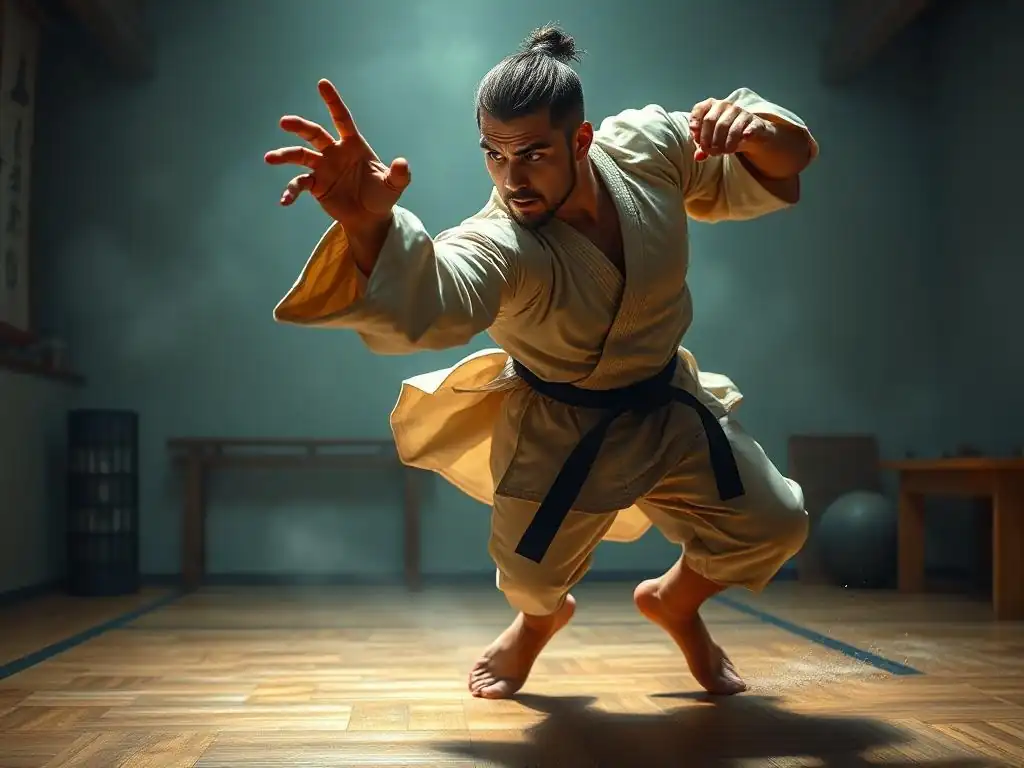
Delve into the intricate world of martial arts, where discipline meets artistry. Here, we explore the history, techniques, and philosophies that shape these powerful traditions. Are you ready to unlock the secrets of Kokyu Nage? Our latest article, "From Basic Kokyu Nage to Advanced Applications: A Learning Progression," guides you through a step-by-step journey, transforming fundamental movements into advanced self-defense strategies. Discover the nuances of this technique and begin your path to mastery. Let's begin!
- From Basic Ikkyo to Advanced Applications: A Learning Progression
- Introduction to Ikkyo: The First Technique in Aikido
- Foundational Ikkyo Techniques: Building a Solid Base
- Developing Sensitivity and Connection (Aiki) for Ikkyo
- Intermediate Ikkyo Variations and Applications
- Advanced Ikkyo Concepts: Beyond Technique
- Ikkyo Training Drills for Skill Refinement
- Troubleshooting Common Ikkyo Mistakes
- Ikkyo in Self-Defense: Practical Applications
- The Future of Your Ikkyo Journey: Continued Learning
-
Frequently Asked Questions
- What is Kokyu Nage and why is it important in martial arts?
- What are the foundational principles to understand before learning Kokyu Nage?
- How does the Kokyu Nage technique progression typically unfold?
- Are there specific martial arts disciplines that heavily emphasize Kokyu Nage?
- What are some common mistakes beginners make when learning Kokyu Nage?
- Final Reflection: Embracing the Journey of Kokyu Nage
- Elevate Your Kokyu Nage: Unleash the Power Within!
From Basic Ikkyo to Advanced Applications: A Learning Progression
Introduction to Ikkyo: The First Technique in Aikido
Understanding the Core Principles of Ikkyo
Ikkyo, often translated as "first technique," is a fundamental principle and movement pattern in Aikido, not just a single static hold. It represents a specific way of controlling an opponent's arm and balance by applying pressure along the arm and shoulder joint, typically driving them downwards. At its core, Ikkyo embodies the principle of kokyu (breath power or coordinated body power) and kuzushi (breaking balance).
The technique relies on leading the opponent's energy and structure, rather than opposing it directly, to achieve control and neutralization. Mastering Ikkyo involves understanding how to blend with an attack, extend one's own energy, and utilize body weight and movement to disrupt the opponent's stability.
A key aspect of Ikkyo's principles is the concept of irimi (entering) and tenkan (turning). While Ikkyo primarily utilizes irimi to move inside the opponent's space and control their center, the underlying principle of blending and redirecting force is paramount. Early practice focuses on the basic mechanics of moving the opponent's arm, but the deeper principles involve understanding their structure and intent.
For instance, a common instruction is to "lead the opponent's hand to their own shoulder," which illustrates the principle of using their own momentum and structure against them, a cornerstone of the entire Ikkyo technique progression. This isn't just about physical force, but about timing, angle, and sensitivity to their movement.
The Importance of Body Mechanics in Ikkyo
Effective Ikkyo execution relies heavily on precise body mechanics. This involves maintaining a stable yet mobile stance, utilizing hip rotation (tai sabaki) rather than just arm strength, and connecting the movement of the hands and arms to the core and legs. The power in Ikkyo does not come from the arms alone; it originates from the hips and lower body, transferring through a relaxed yet connected torso to the arms.
A common error for beginners is to rely on upper body strength, which quickly leads to tension and resistance from the partner (uke). Proper body mechanics ensure that the practitioner (nage) can maintain their own balance while simultaneously taking the opponent's balance.
Consider the movement of the hips: in a typical Ikkyo application following a shomenuchi (frontal strike), the nage steps in (irimi), turning their hips to face the side, leading the opponent's arm down. This hip movement allows the nage to pivot and use their body weight effectively, creating a downward spiral of force that breaks uke's posture. Without this hip rotation, the technique becomes a static push, easily resisted.
Furthermore, maintaining a low center of gravity and keeping the back straight allows for optimal force transmission. Dojo instruction often emphasizes keeping the "elbow heavy" or imagining the arm as a conduit for power from the earth, highlighting the connection between grounding and technique. This foundational understanding of body mechanics is crucial for advancing through the Ikkyo technique progression.
Foundational Ikkyo Techniques: Building a Solid Base
Basic Stance and Posture for Effective Ikkyo
A stable and dynamic stance, typically hanmi (half body stance), is the bedrock upon which all effective Ikkyo techniques are built. Hanmi provides mobility and balance, allowing the practitioner to move in any direction instantaneously while maintaining a strong connection to the ground. In hanmi, one foot is slightly forward, with the weight evenly distributed or slightly more on the back foot, allowing for forward movement (irimi) or turning (tenkan). The knees are slightly bent, and the hips are relaxed, ready to initiate movement. The spine is erect, and the shoulders are relaxed, preventing unnecessary tension.
Maintaining correct posture is equally vital. The body should be aligned, allowing for efficient transfer of force from the ground up. A slumped or rigid posture hinders movement and telegraphs intent. In Ikkyo, as the practitioner moves to control the opponent's arm, maintaining a strong core and upright posture prevents being pulled off balance.
Instructors often emphasize keeping the "center" (hara) strong and connected, visualizing a line of energy extending from the hara through the body. This focus on integrated body posture, rather than isolated arm movement, is a critical early step in the Ikkyo technique progression. Students often spend the first few months of training specifically refining their hanmi and basic posture before attempting complex applications.
Mastering the Initial Movement and Kuzushi (Breaking Balance)
The initial movement in Ikkyo is crucial for establishing control and achieving kuzushi (breaking the opponent's balance). This movement typically involves entering the opponent's space ( irimi) and guiding their arm in a downward circular motion. The key is not to push or pull the arm directly, but to blend with the opponent's energy and lead them off their line of balance. For instance, against a shomenuchi strike, the initial movement involves stepping offline slightly to avoid the direct attack while simultaneously moving to control the striking arm near the wrist or elbow.
Achieving kuzushi is paramount. Without breaking the opponent's balance, any attempt to apply Ikkyo becomes a struggle against their inherent stability. Kuzushi in Ikkyo is often achieved by leading the opponent's arm and body into a position where their weight is not over their feet, typically by extending their arm forward or to the side while simultaneously moving their center downwards.
A common method is to use the initial irimi step to get inside their guard and then extend their arm while turning, forcing them to step awkwardly or lose their base. Instructors often describe this as "taking their base away" or "making them light on their feet." Practicing simple drills focused solely on entering and guiding the arm to disrupt balance, without completing the full pin, is essential for solidifying this foundational skill in the Ikkyo technique progression.
Basic Ikkyo Drill: Hand Rotation and Body Shift
A fundamental drill for learning Ikkyo involves focusing purely on the hand rotation and corresponding body shift, often practiced from a static grab like katatedori (same-side wrist grab). In this drill, nage controls uke's wrist with one hand and forearm with the other, maintaining contact and connection.
The drill begins with nage rotating their lead hand (the one holding the wrist) downwards while simultaneously shifting their weight and stepping, turning their body to lead uke's arm downwards. The focus is on the coordinated movement of the hands, wrists, and hips, ensuring that the power comes from the body shift, not just arm strength.
This drill helps practitioners understand the feeling of leading uke's energy and structure downwards. The hand rotation creates the initial angle and leverage on uke's wrist and elbow, while the body shift provides the power and direction to break their balance. Beginners are often instructed to imagine they are turning a large steering wheel or guiding a rope downwards.
Repetition of this basic hand rotation and body shift drill, focusing on maintaining connection with uke and using the whole body, is critical. Students might spend hundreds of hours on this single motion variation, learning to feel the point where uke's balance is compromised, which is a key milestone in the early Ikkyo technique progression.
Developing Sensitivity and Connection (Aiki) for Ikkyo
Cultivating Aiki: Connecting with Uke's Energy
Cultivating Aiki, the principle of harmonizing with an opponent's energy, is a vital step beyond basic mechanics in the Ikkyo technique progression. Aiki is not about resisting force, but about blending with it, leading it, and ultimately controlling it. In the context of Ikkyo, this means feeling the direction and intensity of uke's attack or resistance and merging with it, rather than meeting it head-on.
For example, if uke pushes, nage doesn't push back but moves with the push, redirecting the energy while maintaining contact. If uke pulls, nage doesn't pull back but moves in the direction of the pull, again redirecting their force.
This connection is often described as being like two magnets that repel when brought together incorrectly but snap together and move as one when aligned properly. Developing Aiki requires heightened sensitivity to uke's physical and energetic state – their tension, balance, and intent. Through constant practice, practitioners learn to feel the subtle shifts in uke's body and respond instantly and appropriately.
This sensitivity allows nage to find the path of least resistance to apply Ikkyo, making the technique appear effortless. Many advanced practitioners can execute Ikkyo with minimal visible effort precisely because they have developed a high level of Aiki, moving with the opponent rather than against them.
Body Awareness and Responsiveness Drills
Developing Aiki is intrinsically linked to body awareness and responsiveness. Drills designed to enhance these qualities are essential for progressing in Ikkyo. One such drill, often called "contact practice" or "flowing practice," involves two partners maintaining light contact (e.g., hand-to-hand) and moving freely, responding to each other's subtle pushes and pulls without resisting. The goal is to stay connected and harmonious, feeling how small movements in one partner affect the other. This teaches practitioners to feel the flow of energy and maintain connection even during dynamic motion.
Another common drill involves practicing techniques like Ikkyo in a slow, deliberate manner, focusing intensely on the point of contact and the feeling of guiding uke's energy. Partners provide varying levels of soft resistance, and nage must adjust their movement to maintain connection and continue the technique smoothly. This helps develop the ability to feel uke's structure and balance through the point of contact.
Over time, this practice refines the practitioner's proprioception and kinesthetic awareness, allowing them to execute Ikkyo instinctively based on the feedback received from uke's body. This level of responsiveness is a hallmark of advanced Ikkyo technique progression.
Applying Aiki Principles to Basic Ikkyo
Once the foundational Ikkyo mechanics are understood, applying Aiki principles elevates the technique significantly. Instead of merely executing the physical steps of Ikkyo, the practitioner learns to blend with the initial attack and use its energy to facilitate the technique. For example, against a shomenuchi strike, instead of just blocking or evading, the practitioner meets the incoming force with a yielding movement that redirects the strike's energy downwards and transforms it into the initial phase of Ikkyo. This isn't about stopping the strike, but about merging with its trajectory and guiding it.
A specific application might involve receiving a strong push to the chest. Instead of bracing and resisting, the practitioner might step back slightly, aligning their body with the push, and simultaneously move to control the opponent's arm, using the forward momentum of the push to help break their balance for Ikkyo. This requires precise timing and a deep understanding of how to maintain connection ( musubi) while moving.
Learning to "receive" an attack and transform it into Ikkyo is a major step in the Ikkyo technique progression. It moves the technique from a set sequence of movements to a dynamic response based on the flow of energy between partners.
Intermediate Ikkyo Variations and Applications
Exploring Different Entries into Ikkyo
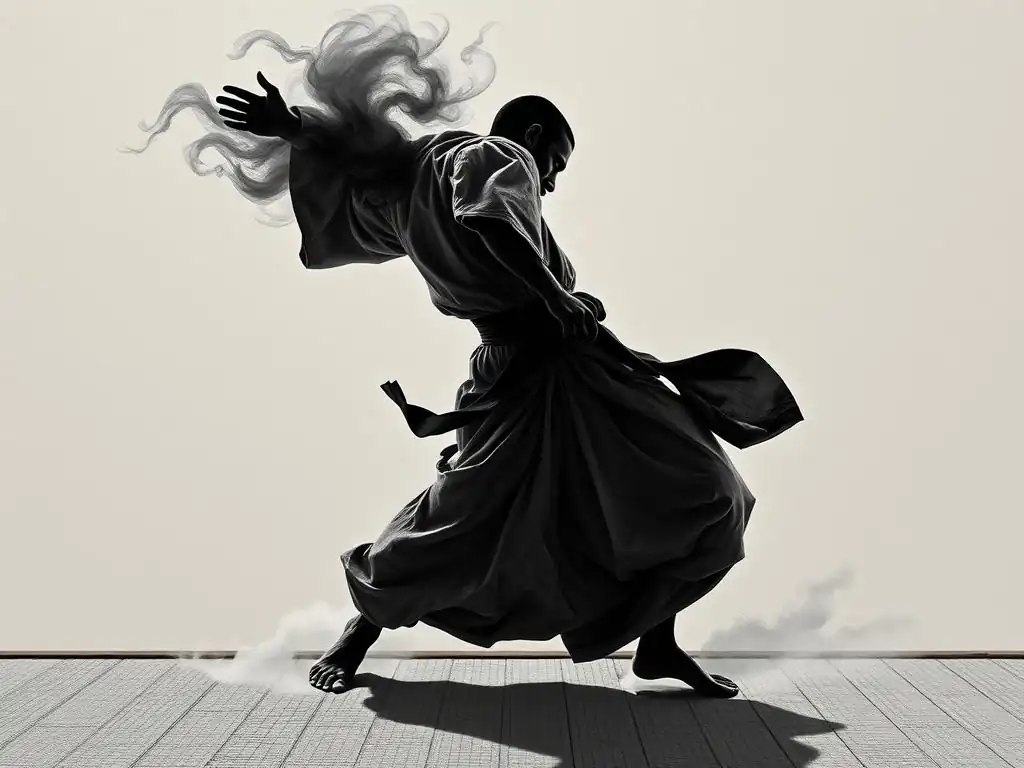
As proficiency grows, exploring various entries into Ikkyo from different attacks and grabs becomes crucial. While the core principle of controlling the arm and breaking balance remains constant, the initial movement and body positioning vary significantly depending on the nature of the attack. This expands the practitioner's ability to apply Ikkyo in a wider range of scenarios. Mastery at this level involves understanding the geometry of each attack and identifying the optimal entry point to gain control and initiate kuzushi.
Shomenuchi Ikkyo Variation
The shomenuchi (frontal head strike) attack provides a classic entry point for Ikkyo. The nage typically steps inside the line of the attack ( irimi), controlling the striking arm near the wrist or elbow. The key is to move with the downward energy of the strike, guiding it past nage's head and down towards uke's own center.
A common variation involves stepping deeply inside uke's lead leg as the strike descends, allowing nage to get close and immediately apply downward leverage on the arm while turning. This entry requires precise timing to avoid the strike while simultaneously establishing control. Dojo practice often focuses on receiving the strike with a soft, yielding movement that immediately transitions into the downward spiral of Ikkyo.
Katatedori Ikkyo Variation
From a katatedori (same-side wrist grab), the entry into Ikkyo is different from a strike. Here, the opponent has already established physical connection. Nage must use this connection to their advantage. A common method involves using a turning motion ( tenkan) or an inward step ( irimi) while simultaneously applying pressure to the grabbed wrist and rotating the hand downwards.
The turning motion helps break uke's grip and balance by leading their arm in an unexpected direction relative to their base. Another variation involves stepping in towards uke's center while applying upward pressure on the wrist initially, then rotating down, using the sudden change in direction to create kuzushi. Mastering these different entries from static grabs is a key part of the intermediate Ikkyo technique progression.
Integrating Atemi (Strikes) with Ikkyo
Integrating atemi (strikes) is a significant aspect of intermediate Ikkyo application. Atemi in Aikido is not typically intended to cause injury but rather to distract, disrupt balance, or create an opening for technique. A sharp, focused strike (or the threat of one) can momentarily freeze uke, shift their weight, or cause them to flinch, creating the perfect window to apply Ikkyo. For example, a quick menuchi (strike to the face) before moving in for Ikkyo from a grab can cause uke to recoil or raise their hands defensively, disrupting their posture and making them vulnerable to the arm control.
A common intermediate drill involves practicing an atemi followed immediately by the entry into Ikkyo. Against a katatedori grab, nage might deliver a quick, sharp strike to uke's face or solar plexus (without making contact, or with light contact in training) just as they initiate the turning movement for Ikkyo. This split-second distraction allows nage to establish control of the arm more easily.
The atemi serves as a form of psychological kuzushi and a physical disruption, making the subsequent Ikkyo application smoother and more effective. Learning when and how to integrate atemi seamlessly is a key part of advancing the Ikkyo technique progression.
The Role of Timing and Distance in Intermediate Applications
Precise timing and judging the correct distance are paramount in intermediate Ikkyo applications, especially when dealing with dynamic attacks. The practitioner must learn to enter the technique at the exact moment when the opponent's energy is committed and their balance is most vulnerable. Entering too early might result in meeting the attack with resistance; entering too late might mean the opponent has already regained their balance or is no longer in a position to be controlled effectively.
For example, against a tsuki (thrusting punch), the timing for Ikkyo involves moving offline and entering just as the punch is fully extended, using its forward momentum. The distance must be close enough to control the arm effectively but not so close that nage is crowded and unable to move. Mastering this requires countless repetitions and the development of intuitive judgment (often referred to as ma'ai or combative distance). Intermediate training heavily emphasizes reacting to attacks with varying speed and intensity to refine this sense of timing and distance, crucial elements in the Ikkyo technique progression.
Advanced Ikkyo Concepts: Beyond Technique
Blending with Uke's Attack: Seamless Transitions
At the advanced level, Ikkyo transcends a series of steps and becomes a seamless extension of blending with the opponent's attack. The transition from receiving the initial force to applying the control is virtually invisible. This requires a deep understanding of Aiki and the ability to maintain connection and flow throughout the entire interaction. Instead of reacting to the attack, the advanced practitioner moves with it from its inception, guiding its energy effortlessly into the Ikkyo application.
This level of blending is often described as musubi, or tying/connecting. The practitioner and the opponent become momentarily linked, moving as one unit, but with the practitioner guiding the direction. For instance, receiving a powerful push might not even look like a technique is being applied; instead, the practitioner might subtly shift their weight and angle, causing the opponent's own momentum to carry them directly into a position where the Ikkyo pin is a natural, inevitable conclusion.
Achieving this level of seamless transition is a hallmark of advanced mastery in the Ikkyo technique progression. It requires years of dedicated practice focused on sensitivity and connection rather than just physical execution.
Adaptive Ikkyo: Responding to Resistance
Advanced Ikkyo is highly adaptive. Opponents in real-world scenarios or even experienced training partners will not simply comply with the technique. They will resist, pull away, push back, or change their attack. Advanced practitioners of Ikkyo can feel this resistance instantly and adjust their movement and application of pressure to maintain control and complete the technique. This isn't about overpowering the resistance, but about flowing around it or using it to the practitioner's advantage.
If an opponent pulls their arm away during the application of Ikkyo, the advanced practitioner might shift their angle, step around, or apply a different type of pressure to redirect that pulling energy into the technique. If the opponent stiffens and pushes back, the practitioner might yield slightly and use that forward energy to drive them downwards more forcefully. This requires a deep understanding of body mechanics, leverage, and Aiki.
It's a dynamic conversation between nage and uke, where nage constantly adapts to maintain control. This ability to respond fluidly to resistance is a key indicator of significant progress in the Ikkyo technique progression.
Multiple Attackers and Advanced Scenarios
Applying Ikkyo effectively against multiple attackers or in complex, chaotic scenarios represents a high level of advanced skill. While a single Ikkyo application might neutralize one attacker, the practitioner must simultaneously maintain awareness of others, control their own space, and position themselves advantageously. This often involves using the first attacker's body to shield against others or moving in a way that keeps subsequent attackers in view and manageable.
In scenarios with multiple opponents, the application of Ikkyo is often abbreviated or modified. The goal might not be a prolonged pin, but a rapid disruption of balance and control to neutralize one threat momentarily before addressing the next. This requires extreme efficiency in movement, precise timing, and the ability to transition quickly between techniques or defensive movements.
For example, throwing one attacker with Ikkyo might open up an opportunity to evade or apply a different technique to a second attacker. Training drills involving multiple attackers are essential for developing the situational awareness and adaptability required for this stage of the Ikkyo technique progression.
Ikkyo Training Drills for Skill Refinement
Partner Drills for Enhancing Sensitivity and Timing
Partner drills are indispensable for refining Ikkyo technique progression, particularly in developing sensitivity and timing. One effective drill is "yielding practice," where uke provides minimal, flowing resistance, and nage focuses on maintaining constant connection and guiding uke's movement smoothly through the Ikkyo motion. This helps nage feel subtle shifts in uke's balance and tension. Another drill involves uke initiating attacks with varying speed and force, requiring nage to adapt their entry and timing instantly.
A specific sensitivity drill involves practicing Ikkyo with closed eyes (under supervision), forcing nage to rely solely on tactile feedback from uke to guide the technique. This heightens awareness of uke's structure and energy flow. For timing, drills often involve setting specific cues for entry, such as entering precisely as uke's foot lands from a step or just before their arm reaches full extension in a strike. These partner interactions, providing immediate feedback, are crucial for internalizing the principles of Aiki, timing, and connection necessary for advancing the Ikkyo technique progression.
Solo Drills for Improving Body Mechanics and Balance
While partner practice is vital, solo drills are also critical for perfecting the underlying body mechanics and balance required for Ikkyo. Practicing the basic Ikkyo movement pattern – the step, hip rotation, and arm motion – in isolation helps internalize the correct posture and weight transfer. This can be done slowly, focusing on alignment, or more dynamically, practicing rapid entries and turns.
A simple solo drill involves holding a staff or imaginary arm and practicing the downward spiraling motion and body shift of Ikkyo repeatedly, paying close attention to keeping the back straight, engaging the hips, and maintaining a stable base. Balancing exercises, such as standing on one leg while performing the arm rotation, can also improve the core strength and stability needed to maintain balance while disrupting the opponent's. Regular solo practice reinforces muscle memory and ensures that the practitioner's own body is a stable and efficient platform for executing the Ikkyo technique progression.
Elbow Control and Stabilization: Focused Practice for Ukemi
For the partner ( uke), understanding and safely receiving Ikkyo (ukemi) is just as important as applying it. Focused practice on elbow control and stabilization is key for uke to protect their joint and learn how to fall safely. A specific drill involves uke learning to maintain a strong, connected arm structure when Ikkyo is applied, allowing the force to travel through their body to their feet rather than concentrating pressure on the elbow.
In this drill, uke learns to yield at the shoulder and hips rather than collapsing the elbow. They practice maintaining a slight bend in the elbow and keeping the wrist aligned with the forearm. Nage applies gentle Ikkyo pressure, and uke's goal is to maintain structural integrity and smoothly follow the downward motion, eventually transitioning into a safe forward roll ( mae ukemi) or breakfall ( ushiro ukemi). This focused elbow control practice not only protects uke but also teaches nage how to apply Ikkyo safely and effectively, ensuring the sustainability of the Ikkyo technique progression for both partners.
Troubleshooting Common Ikkyo Mistakes
Identifying and Correcting Posture and Stance Issues
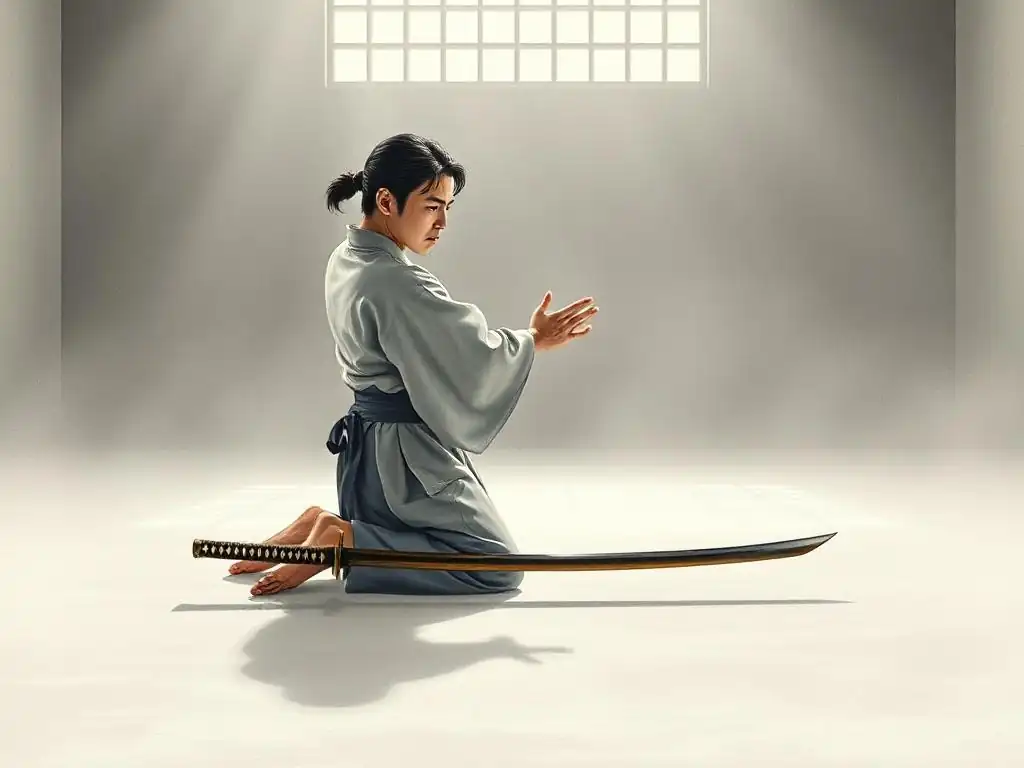
One of the most common mistakes in the early Ikkyo technique progression is poor posture and stance. Beginners often stand too stiffly, too narrowly, or with their weight incorrectly distributed, leading to instability and difficulty generating power from the hips. Identifying this involves instructors observing the practitioner's base, back alignment, and knee bend during execution. Often, a simple video recording can help students see their own errors.
Correction involves returning to foundational solo and partner drills focusing specifically on stance and posture. Practicing hanmi with attention to keeping the spine straight and hips relaxed, and performing basic Ikkyo movements slowly while an instructor provides tactile feedback on alignment, are effective methods. Emphasizing the feeling of being "rooted" to the earth while remaining mobile helps correct issues like being too high or too unstable. Consistent reminders and corrections from experienced practitioners are vital for overcoming these fundamental posture and stance issues in the Ikkyo technique progression.
Overcoming Resistance and Maintaining Balance
Another frequent challenge is dealing with a resisting partner and maintaining one's own balance. When uke resists, beginners often tense up, rely on arm strength, and lose their own balance while struggling to take uke's. This indicates a failure to apply Aiki and utilize proper body mechanics for kuzushi. The error is usually trying to muscle the technique rather than blend and lead.
Overcoming this requires focused drills on sensitivity and kuzushi. Practicing yielding to resistance and redirecting force, as described in the Aiki section, is key. Drills where uke provides increasing levels of soft, non-opposing resistance help nage learn to feel the flow and adapt. Focusing on hip movement and maintaining a strong core while applying the technique is also crucial for nage's own balance. Instructors might guide the practitioner physically, showing them how to shift their weight or adjust their angle to maintain stability while breaking uke's. This constant refinement against resistance is essential for advancing the Ikkyo technique progression.
Refining Timing and Coordination for Smooth Execution
Poor timing and lack of coordination between body parts are significant hurdles in achieving smooth, effective Ikkyo. This often manifests as jerky movements, entering too early or too late, or the hands, hips, and feet moving independently rather than as an integrated unit. For instance, the step might happen too far ahead of the hand movement, or the hip turn might lag behind.
Refining timing and coordination involves extensive repetition of the basic technique from various attacks, focusing specifically on the simultaneous initiation and completion of key movements. Practicing slowly, breaking down the movement into stages (entry, control, kuzushi, pin), and gradually increasing speed helps integrate the components. Partner drills where uke provides feedback on the timing of their loss of balance are also valuable.
For example, uke might indicate when they feel their balance breaking, allowing nage to understand the precise moment their action was effective. Consistent, mindful practice focused on the seamless flow of movement is necessary to achieve fluid and coordinated Ikkyo technique progression.
Ikkyo in Self-Defense: Practical Applications
Adapting Ikkyo for Real-World Scenarios
While Aikido training often occurs in a safe, controlled environment, adapting Ikkyo for real-world self-defense scenarios requires understanding its principles beyond the dojo context. In a street situation, the environment is unpredictable, and the attacker may not respond like a trained uke. Adapting Ikkyo means focusing on the core principles: blending, breaking balance, and achieving control, rather than replicating the exact dojo form.
For instance, a typical grab in a self-defense situation might be crude and forceful. Instead of attempting a precise wrist lock, the practitioner might focus on using the attacker's forward momentum from the grab to step offline, get inside their space, and apply downward pressure on their arm or shoulder using body weight.
The goal shifts from a perfect pin to creating enough disruption and pain compliance to escape or transition to another technique. Practical application often involves using the principle of Ikkyo (downward control of the arm/shoulder line) in a less stylized, more direct manner, potentially incorporating strikes or evasive movements not emphasized in basic dojo Ikkyo.
Combining Ikkyo with Other Aikido Techniques
Effective self-defense often requires combining techniques fluidly. Ikkyo can serve as an excellent entry point or follow-up for other Aikido principles. For example, if an attempted Ikkyo is strongly resisted and the opponent pulls away, the practitioner might seamlessly transition into a technique like kokyu nage (breath throw) or kote gaeshi (wrist return). The control established during the initial Ikkyo attempt can set up the leverage for the subsequent technique.
Conversely, a technique like irimi nage (entering throw) could lead into an Ikkyo pin if the throw doesn't fully neutralize the attacker. After throwing the opponent, the practitioner might immediately move to control their arm on the ground using the Ikkyo principle to maintain control or facilitate an escape. Training in combining Ikkyo with other throws, joint locks, and pins is crucial for developing a comprehensive self-defense skillset. This interconnectedness is a key aspect of the overall Ikkyo technique progression within the broader context of Aikido.
Awareness and De-escalation Strategies for Conflict Resolution
While Ikkyo provides a physical means of dealing with conflict, effective self-defense in the real world prioritizes awareness and de-escalation. The most practical application of Aikido principles, including those embodied in the Ikkyo technique progression, is often avoiding physical confrontation altogether. Training in awareness means recognizing potential threats early and positioning oneself to avoid danger.
De-escalation involves using verbal skills and body language to calm a situation or create space to disengage. Aikido principles, such as maintaining a calm center and blending with incoming energy (in this case, emotional or verbal aggression), can be applied to de-escalation. Physical techniques like Ikkyo are a last resort. Understanding when physical force is necessary and how much is required is paramount. Integrating awareness and de-escalation training alongside physical practice provides a more complete and practical approach to self-defense, grounded in the underlying philosophy of Aikido.
The Future of Your Ikkyo Journey: Continued Learning
Resources for Further Study and Practice
The journey through the Ikkyo technique progression is lifelong. Numerous resources exist for continued study and practice beyond regular dojo training. Books by notable Aikido masters, such as Morihei Ueshiba, Kisshomaru Ueshiba, or Koichi Tohei, offer deep philosophical and technical insights. While not a substitute for hands-on instruction, these texts can provide a broader understanding of the principles underlying Ikkyo.
Accessing instructional materials, such as DVDs or online platforms featuring high-ranking instructors demonstrating variations and applications, can also be beneficial. Attending seminars and workshops led by different teachers exposes practitioners to diverse interpretations and nuances of Ikkyo. Many dojos also have libraries or recommended reading lists for students. Actively seeking out these resources complements physical practice and deepens the understanding necessary to continue advancing in the Ikkyo technique progression.
The Importance of Consistent Training and Self-Reflection
Consistent training is the single most important factor in the continued development of Ikkyo technique progression. Regular practice, ideally multiple times per week, builds muscle memory, refines timing, and deepens the intuitive understanding of Aiki and body mechanics. Short, frequent practice sessions are often more effective than infrequent, long ones. The repetition allows the body and mind to internalize the complex movements and principles.
Equally important is self-reflection. After practice, take time to review what felt right, what felt challenging, and where improvements can be made. Did the Ikkyo application feel effortless, or was there resistance? Was the kuzushi effective? Journaling about training experiences can help track progress and identify areas needing more focus. Seeking feedback from instructors and senior students is also crucial. This combination of consistent physical effort and mindful self-assessment fuels ongoing growth in the Ikkyo technique progression.
Embracing the Ongoing Evolution of Your Ikkyo Technique Progression
Finally, embracing the concept of ongoing evolution is key to the long-term Ikkyo journey. Aikido is a dynamic art, and the understanding and execution of techniques like Ikkyo deepen and change over time. What felt like a rigid set of movements initially evolves into a fluid, adaptive response. As physical abilities change with age, the technique must also adapt, relying more on principle and less on physical strength.
There is no endpoint to the Ikkyo technique progression; there is always more to learn, refine, and understand. Approaching practice with curiosity and a willingness to experiment with different approaches keeps the training fresh and engaging. Recognizing that challenges are opportunities for growth, and that mastery is a continuous process, allows the practitioner to enjoy the journey itself. This commitment to lifelong learning and adaptation is the true spirit of advancing in the Ikkyo technique progression.
Frequently Asked Questions
What is Kokyu Nage and why is it important in martial arts?
Kokyu Nage, or breath throws, involves using your ki (internal energy) and breath control to unbalance and throw an opponent. It's important because it emphasizes technique over brute strength, making it effective for practitioners of all sizes.
What are the foundational principles to understand before learning Kokyu Nage?
Before learning Kokyu Nage, it's crucial to understand concepts like maai (distance), kuzushi (breaking balance), and proper body mechanics. A strong foundation in these allows for efficient energy transfer and control.
How does the Kokyu Nage technique progression typically unfold?
The progression usually starts with basic static drills to understand the feeling of unbalancing an opponent. It then moves to dynamic partner work and eventually culminates in free-flowing applications.
Are there specific martial arts disciplines that heavily emphasize Kokyu Nage?
Aikido is perhaps the most well-known discipline that heavily features Kokyu Nage. However, principles of Kokyu Nage can be found and applied in other arts like Judo and some forms of Jujutsu.
What are some common mistakes beginners make when learning Kokyu Nage?
Common mistakes include relying on muscular strength instead of technique, failing to maintain connection with the opponent, and neglecting the importance of proper breathing.
Final Reflection: Embracing the Journey of Kokyu Nage
The journey through Kokyu Nage, as we've explored, is not merely a collection of techniques but a continuous evolution of understanding and application. From the fundamental principles to the advanced nuances, each step builds upon the last, creating a powerful and adaptable martial art. The relevance of this progression lies in its ability to empower practitioners to move beyond rote memorization and into a realm of intuitive response.
This path of learning and refinement has profoundly shaped the martial arts landscape, emphasizing the importance of internal power and sensitivity over brute strength. The dedication required to master Kokyu Nage serves as a metaphor for personal growth, demanding patience, perseverance, and a willingness to embrace discomfort. The ultimate aim of martial arts is not to defeat others, but to perfect oneself.
This quote encapsulates the spirit of Kokyu Nage, highlighting its transformative potential beyond the physical realm.
As you reflect on the principles and techniques discussed, consider how you can apply this progressive approach not only to your martial arts practice but also to other areas of your life. Embrace the challenge of continuous learning, cultivate sensitivity, and strive for a deeper understanding of the underlying principles. The true mastery of Kokyu Nage, and indeed any skill, lies not in the destination, but in the journey itself. Let the principles of this technique inspire you to cultivate a life of mindful movement, unwavering focus, and continuous growth.
Elevate Your Kokyu Nage: Unleash the Power Within!
Thank you for exploring the learning progression of Kokyu Nage! Now that you've deepened your understanding, it's time to translate that knowledge into action.
Here are some steps you can take to further your training:
- Commit to practicing Kokyu Nage at least 15 minutes every day for the next week, focusing on the core principles discussed.
- Seek out a training partner and experiment with different entries into Kokyu Nage, documenting your successes and challenges.
- Share your newfound insights and experiences with fellow martial artists in our community forum.
What's one specific adjustment you'll make to your Kokyu Nage practice this week based on what you've learned?