
Mastering GojuRyu Footwork (Unsoku): Agility and Positioning

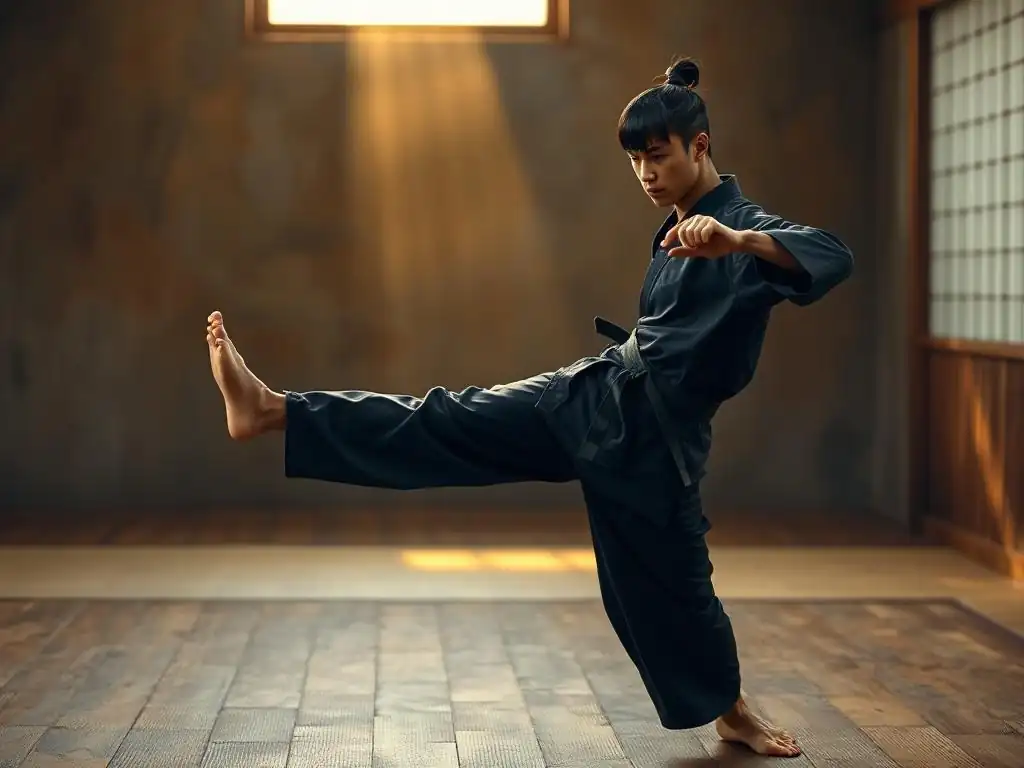
Welcome to Martial Arts Mastery, where we delve deep into the world of combat. Prepare to unlock the secrets of ancient traditions and modern techniques. Ever wondered how masters achieve seamless movement and devastating precision? This week, we're exploring the crucial role of Unsoku in GojuRyu, and you're about to discover the power of precise GojuRyu footwork techniques training. Are you ready to elevate your agility and dominate your positioning? Let's begin...
- Introduction to GojuRyu Footwork (Unsoku)
- Core Principles of GojuRyu Unsoku
- Essential GojuRyu Footwork Techniques Training
- GojuRyu Footwork Drills for Enhanced Agility
- GojuRyu Footwork in Kata Application (Bunkai)
- Common Mistakes in GojuRyu Footwork and How to Correct Them
- Advanced GojuRyu Footwork Strategies
- Conclusion: The Path to GojuRyu Footwork Mastery
-
Frequently Asked Questions
- What is Unsoku in the context of GojuRyu karate?
- Why is proper footwork so important for GojuRyu practitioners?
- What are some common mistakes beginners make with GojuRyu footwork?
- How does GojuRyu footwork contribute to self-defense strategies?
- How can I improve my GojuRyu footwork techniques training?
- Final Reflection: The Dance of GojuRyu
- Unleash Your GojuRyu Potential Now!
Introduction to GojuRyu Footwork (Unsoku)
Unsoku, or footwork, is a foundational element in GojuRyu karate, often overlooked by beginners eager to learn striking and blocking techniques. However, mastering Unsoku is paramount to effective self-defense and successful execution of all GojuRyu movements. It is the silent engine that drives power, enables evasive maneuvers, and dictates the practitioner's ability to control distance and positioning against an opponent.
Effective GojuRyu footwork techniques training focuses not just on moving the feet, but on coordinating the entire body's weight transfer and balance. It involves understanding how to shift weight instantaneously, pivot efficiently, and move explosively or subtly as the situation demands. Without refined Unsoku, even the most powerful punch or block can be rendered ineffective due to poor positioning or lack of balance.
The Importance of Footwork in GojuRyu Karate
Footwork in GojuRyu serves as the bedrock upon which all other techniques are built. It dictates the stability required to generate force in strikes, the mobility needed to evade attacks, and the precision necessary to position oneself for counter-offensives. Consider the fundamental Sanchin stance (Sanchin Dachi); its stability is directly linked to how the feet are positioned and the weight is distributed, enabling the practitioner to withstand external force and generate internal power.
Moreover, proper Unsoku is critical for transitions between techniques. Whether moving from a defensive block to an offensive strike, or shifting stances to change the angle of attack, seamless footwork ensures that there are no vulnerable pauses. GojuRyu footwork techniques training emphasizes smooth, efficient transitions, allowing practitioners to maintain control of the engagement and respond fluidly to dynamic situations.
GojuRyu Footwork's Role in Agility and Positioning
Agility, the ability to change direction quickly and efficiently, is directly proportional to the mastery of GojuRyu footwork. Nimble feet allow a practitioner to pivot, step, or slide out of the line of attack almost instantaneously, a crucial skill in self-defense. This isn't just about speed; it's about controlled, balanced movement that sets the stage for the next action, whether it's a counter-strike or further evasion.
Positioning is equally vital, determining whether a technique can be applied effectively or if one is exposed to attack. GojuRyu footwork techniques training teaches practitioners how to gain advantageous angles on an opponent, control the space between them, and deny the opponent favorable positions. For instance, using Okuri Ashi (sliding step) to maintain distance or Tsugi Ashi (following step) to close it allows the GojuRyu practitioner to dictate the flow and range of an encounter, maximizing their offensive and defensive capabilities.
Core Principles of GojuRyu Unsoku
Maintaining Balance and Stability in GojuRyu Stances
Balance and stability are non-negotiable fundamentals in GojuRyu footwork. Every movement, from the smallest shift to the largest step, must originate and conclude in a state of controlled balance. This is particularly evident in core stances like Zenkutsu Dachi (front stance) and Sanchin Dachi (three-battle stance), where a stable base is essential for absorbing impact or generating powerful techniques. Practitioners learn to ground themselves through conscious weight distribution and muscular engagement.
Achieving this stability involves more than just placing the feet correctly; it requires engaging the core muscles and maintaining a centered posture. In GojuRyu footwork techniques training, drills often focus on holding challenging positions or transitioning slowly between stances to highlight points of imbalance. For example, holding Sanchin Dachi for extended periods builds the leg strength and core stability necessary for dynamic footwork, ensuring that movement doesn't compromise the ability to strike or defend.
Generating Power Through Footwork in GojuRyu Karate
Footwork is not merely about movement; it is a primary source of power generation in GojuRyu. The kinetic chain starts from the ground up, with the legs and hips driving force through the body. Proper footwork ensures that the practitioner can leverage their body weight and momentum effectively, translating ground reaction force into powerful strikes or blocks. This principle is clearly demonstrated in techniques like the Gyaku Zuki (reverse punch), where the twist of the hips, initiated by the back foot's push, is crucial for maximum impact.
Training in GojuRyu footwork techniques emphasizes the connection between the feet, legs, hips, and upper body. Exercises like stepping into a punch or block, focusing on driving power from the back leg, are fundamental. The efficiency of this power transfer is directly dependent on the stability and angle of the feet. For example, a slight inward angle of the back foot in Zenkutsu Dachi can significantly improve hip rotation and, consequently, the power of a forward-driving technique.
The Concept of "Tai Sabaki" (Body Shifting) in GojuRyu
Tai Sabaki, or body shifting, is an advanced application of GojuRyu footwork principles, involving not just moving the feet but coordinating the entire body's movement to evade, deflect, or gain an advantageous position. It's about moving the body off the line of attack while simultaneously preparing for a counter. This can involve subtle adjustments, like shifting weight slightly, or larger movements, like pivoting or stepping diagonally.
In GojuRyu footwork techniques training, Tai Sabaki drills teach practitioners to respond to incoming attacks by moving the body as a unit. Instead of simply blocking, one might use Tai Sabaki to move the body out of the way, causing the opponent's technique to miss or lose power, while simultaneously creating an opening. A classic example is stepping offline at an angle while executing a block or strike, disrupting the opponent's balance and line of attack while maintaining one's own stability and offensive potential.
Essential GojuRyu Footwork Techniques Training
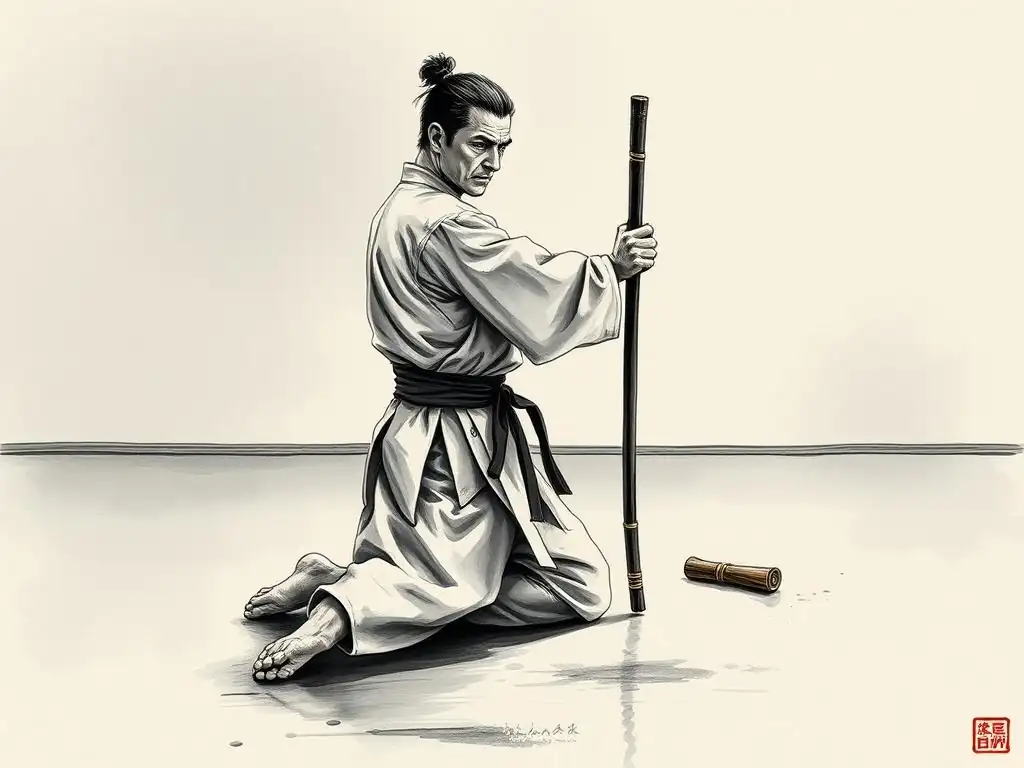
Shifting Stances: Zenkutsu Dachi, Sanchin Dachi, and Neko Ashi Dachi
Seamlessly transitioning between core stances is a fundamental aspect of GojuRyu footwork techniques training. The ability to move from a deep, stable stance like Zenkutsu Dachi to the grounded power of Sanchin Dachi, or the agile readiness of Neko Ashi Dachi (cat stance), is vital for adapting to different combat situations. Each transition requires precise weight transfer and foot placement to maintain balance and readiness.
Practice involves repetitions of moving between these stances, focusing on the fluidity and efficiency of the transition. For example, moving from Zenkutsu Dachi to Sanchin Dachi requires pulling the back foot up and inward while adjusting the front foot, all while maintaining a low center of gravity. This builds the muscle memory and coordination necessary for quick, balanced shifts during dynamic movement.
Executing Zenkutsu Dachi Footwork for Power and Reach
Zenkutsu Dachi is a long, forward stance ideal for generating linear power and extending reach. Footwork from this stance often involves driving off the back leg for forward movement (Tsugi Ashi or Okuir Ashi) or pivoting on the front foot. The depth of the stance provides a stable base, allowing practitioners to commit weight forward into strikes like Oi Zuki (lunge punch) or Mae Geri (front kick).
Effective Zenkutsu Dachi footwork relies on keeping the front knee bent over the ankle and the back leg straight, with the foot angled slightly outward (approximately 45 degrees). When stepping forward, the back foot pushes off, driving the body forward while maintaining the stance's structure. This driving motion is crucial for transferring momentum into techniques and maximizing reach. GojuRyu footwork techniques training emphasizes maintaining this structure even during rapid movement.
Sanchin Dachi Footwork for Stability and Internal Strength
Sanchin Dachi is the cornerstone stance of GojuRyu, known for its incredible stability and emphasis on internal tension and controlled breathing. Footwork from Sanchin Dachi is typically more subtle, involving small adjustments, shuffling steps, or pivoting within a tight base. The primary goal is to maintain an unshakeable foundation while allowing the upper body to move or generate power.
Movement in Sanchin Dachi often utilizes a "squeezing" action of the legs and a grounding pressure through the feet. When stepping, the feet drag or slide along the ground, maintaining constant contact and tension. This type of GojuRyu footwork techniques training builds immense leg strength and teaches the practitioner to move while maintaining a strong, rooted connection to the earth, essential for developing the "iron body" aspect of Sanchin.
Neko Ashi Dachi Footwork for Evasion and Speed
Neko Ashi Dachi, or cat stance, is a light, agile stance where most of the weight (around 80-90%) is on the back leg, leaving the front foot free to block, check, or initiate quick movements. Footwork from this stance is characterized by its speed and evasiveness, allowing for rapid retreats, side steps, or shifts into offensive stances.
Effective Neko Ashi Dachi footwork involves keeping the front foot lightly touching the ground, ready to lift or move instantly. The back leg supports the body's weight but remains mobile, allowing for quick pushing off or pivoting. GojuRyu footwork techniques training in this stance focuses on developing explosive lateral and backward movement, crucial for avoiding attacks and creating distance. The lightness of the front foot is key to its readiness for a swift response.
Ashi Sabaki: Pivoting and Turning Techniques
Ashi Sabaki, or foot management, specifically refers to pivoting and turning movements that allow the practitioner to change direction, evade attacks, or reorient themselves without large steps. These techniques are vital for efficiency and maintaining balance in close quarters.
Mae Ashi Mawatte: Front Foot Turn
Mae Ashi Mawatte involves pivoting on the front foot. This turn is typically used for turning towards the rear, allowing the practitioner to face an opponent who has moved behind them or to change direction quickly. The weight shifts to the front foot, which acts as an axis, while the back foot swings around to complete the turn.
Executing Mae Ashi Mawatte requires maintaining a low center of gravity and keeping the pivot foot firmly grounded but able to rotate. The turn should be smooth and controlled, ending in a stable stance facing the new direction. GojuRyu footwork techniques training for this pivot emphasizes speed combined with balance, ensuring that the practitioner doesn't become unstable during the rotation.
Ushiro Ashi Mawatte: Back Foot Turn
Ushiro Ashi Mawatte involves pivoting on the back foot. This turn is often used for turning towards the front or side, enabling the practitioner to quickly face a threat approaching from the side or to adjust angle during an exchange. The weight shifts to the back foot, which pivots, while the front foot moves to the new position.
Like Mae Ashi Mawatte, Ushiro Ashi Mawatte demands balance and control. The pivot foot must be stable, allowing the rest of the body to rotate efficiently. GojuRyu footwork techniques training includes drills focusing on rapid Ushiro Ashi Mawatte from various stances, ensuring practitioners can execute this fundamental turn under pressure and maintain their structure upon completion.
Tsugi Ashi: Following Step for Closing Distance
Tsugi Ashi, or the following step, is a method of closing distance quickly and smoothly. It involves the back foot moving up first, closer to the front foot, followed immediately by the front foot stepping forward. This creates a sort of shuffling or gliding motion that maintains the distance between the feet while advancing the body.
This GojuRyu footwork technique is excellent for quickly covering ground to launch an attack or catch a retreating opponent. The continuous motion minimizes bobbing and weaving, keeping the head relatively stable and making it harder for an opponent to predict the attack. Training emphasizes keeping the weight balanced throughout the movement and ensuring the second step (the front foot) follows immediately after the first (the back foot).
Okuri Ashi: Sliding Step for Maintaining Distance
Okuri Ashi, or the sliding step, is used for moving forward, backward, or sideways while maintaining the distance between the feet and preserving the stance structure. It involves one foot pushing off while the other foot slides in the desired direction, with the pushing foot then sliding to follow and restore the original distance between the feet.
This GojuRyu footwork technique is invaluable for adjusting range, evading attacks, or setting up techniques without committing the entire body weight in a large step. It allows for subtle, controlled movements that can be executed quickly. GojuRyu footwork techniques training for Okuri Ashi focuses on smooth, low-to-the-ground sliding motions and maintaining the correct stance width throughout the movement.
GojuRyu Footwork Drills for Enhanced Agility
Developing true agility in GojuRyu requires dedicated practice through specific drills that isolate and refine footwork movements. These drills build muscle memory, improve coordination, and enhance the practitioner's ability to react quickly and efficiently.
Solo drills form the foundation, allowing practitioners to focus solely on their own movement mechanics without external pressure. Partner drills then introduce elements of reactivity and application in dynamic scenarios, bridging the gap between theoretical understanding and practical use. Consistent repetition is key to internalizing these movements until they become second nature.
Solo Footwork Drills for Developing Coordination
Solo GojuRyu footwork techniques training is crucial for building the fundamental coordination and balance required for more complex movements. These drills can be performed anywhere and focus on precise execution of steps, shifts, and pivots.
Examples include moving across a designated area (like the length of a dojo) using only Okuri Ashi or Tsugi Ashi, focusing on maintaining a consistent stance and speed. Another common drill involves practicing rapid transitions between stances on the spot, such as moving from Zenkutsu Dachi to Neko Ashi Dachi and back repeatedly, ensuring balance is not lost during the transition.
Stance Transition Drills: Zenkutsu Dachi to Neko Ashi Dachi
Practicing rapid and balanced transitions between Zenkutsu Dachi and Neko Ashi Dachi is a core solo drill. This exercise helps develop the leg strength, coordination, and weight transfer control needed to switch between a driving, offensive stance and an agile, evasive one.
The drill involves starting in one stance, then smoothly and quickly shifting into the other, holding briefly for stability, and then transitioning back. Focus is placed on keeping the body low, avoiding unnecessary bobbing, and ensuring the weight transfer is efficient (e.g., shifting approximately 80-90% of weight to the back leg for Neko Ashi Dachi). Repeating this transition 20-30 times per leg can significantly improve fluidity and balance.
Pivoting and Turning Drills: Incorporating Ashi Sabaki
Solo pivoting drills involve practicing Mae Ashi Mawatte and Ushiro Ashi Mawatte from various stances and directions. This helps improve body awareness, balance during rotation, and the ability to quickly reorient oneself.
A common drill involves standing in a stance like Sanchin Dachi or Zenkutsu Dachi and practicing 90, 180, or even 360-degree turns using the appropriate pivot technique. For instance, practicing 180-degree Ushiro Ashi Mawatte from Zenkutsu Dachi 15-20 times in each direction builds proficiency in changing direction rapidly while maintaining a stable base. These drills are fundamental to effective GojuRyu footwork techniques training.
Partner Drills for Reactive Footwork
Partner drills introduce the element of a dynamic opponent, forcing the practitioner to apply their GojuRyu footwork techniques training in a reactive environment. These drills improve timing, distance management, and the ability to make split-second decisions based on an opponent's movements.
These can range from simple lead-and-follow exercises to more complex reaction drills simulating attacks. The partner provides a stimulus, and the practitioner must respond using appropriate footwork, such as evading a simulated strike or closing distance to counter.
Reaction Drills: Responding to Attacks with Footwork
Reaction drills involve a partner initiating a non-contact "attack" (e.g., a step forward, a feint punch), and the practitioner responding solely with footwork. The goal is to use Unsoku to evade, redirect, or achieve a superior position.
For example, a partner might step forward aggressively, and the practitioner uses Okuri Ashi backward or steps offline using Tai Sabaki. Or, the partner might feint, and the practitioner uses a small adjustment step to maintain optimal distance. Practicing 10-15 repetitions of reacting to varied stimuli helps develop the instinctual application of GojuRyu footwork techniques training under pressure.
Sparring Drills: Implementing Footwork in Combat Scenarios
Light sparring or controlled scenario training is the ultimate test for GojuRyu footwork. These drills allow practitioners to apply Unsoku in a realistic, although often low-contact, environment. The focus is less on delivering powerful techniques and more on using footwork to control the engagement.
Sparring drills might involve limiting techniques to focus purely on using footwork to evade or close distance, or focusing on using Tai Sabaki to create angles. For instance, practicing light point sparring where scoring is based on successfully using footwork to evade an attack and land a light counter-touch can significantly improve the practical application of GojuRyu footwork techniques training.
GojuRyu Footwork in Kata Application (Bunkai)
Kata, the pre-arranged forms in GojuRyu, are essentially moving manuals containing the principles and applications of its techniques, including Unsoku. Analyzing the footwork within kata provides deep insight into how these movements are intended for practical application (Bunkai).
Understanding the purpose behind each step, shift, and pivot in a kata unlocks its combative meaning. It shows how stances are transitioned, how distance is managed, and how body movement is coordinated with strikes and blocks. GojuRyu footwork techniques training is incomplete without studying its role in kata application.
Analyzing Footwork in Sanchin Kata
Sanchin Kata is arguably the most important kata in GojuRyu, heavily focused on Sanchin Dachi, controlled breathing, and the development of internal power and stability. The footwork in Sanchin is minimal but profound, primarily involving slow, deliberate Tsugi Ashi (following step) forward and Ushiro Ashi Mawatte (back foot turn) to change direction.
The slow, grinding steps forward in Sanchin build immense leg strength and teach the practitioner to root themselves while moving. The turns, performed from a stable Sanchin Dachi, reinforce the importance of maintaining balance even during dynamic reorientation. Analysis of Sanchin's Unsoku during GojuRyu footwork techniques training reveals its emphasis on unshakeable stability and moving from a deeply grounded base.
Applying Unsoku Principles in Other GojuRyu Kata
While Sanchin's footwork is unique, the principles of Unsoku are woven throughout all other GojuRyu kata. Gekisai Dai Ichi and Dai Ni introduce more dynamic movements like Zenkutsu Dachi and shifting forward with powerful strikes. Saifa incorporates lateral movements and Neko Ashi Dachi transitions for evasion and quick attacks.
Seiyunchin focuses heavily on Sanchin Dachi variations and directional changes using Ushiro Ashi Mawatte and subtle weight shifts. Shisochin involves diagonal movements and pivots. Each kata provides specific examples of how GojuRyu footwork techniques training is applied in different combative scenarios, from linear attacks to circular defenses and evasions. Studying the Bunkai of each kata reveals the practical application of its specific footwork patterns.
Adapting Footwork for Self-Defense Scenarios
While kata provides ideal applications, real-world self-defense scenarios are dynamic and unpredictable. GojuRyu footwork techniques training for self-defense emphasizes adapting the fundamental principles of Unsoku to chaotic situations. This means being able to move quickly off the line of attack, maintain balance on uneven surfaces, and use footwork to create distance or close it decisively.
Adapting involves simplifying kata movements for speed and efficiency. For instance, a deep Zenkutsu Dachi might be too slow in a sudden encounter, requiring a quicker, shallower power step. Tai Sabaki becomes crucial for evading unpredictable attacks. Training includes simulating real-life scenarios, perhaps starting from a non-combative posture, and practicing using immediate Unsoku responses to sudden threats, focusing on escape or rapid counter-positioning.
Common Mistakes in GojuRyu Footwork and How to Correct Them
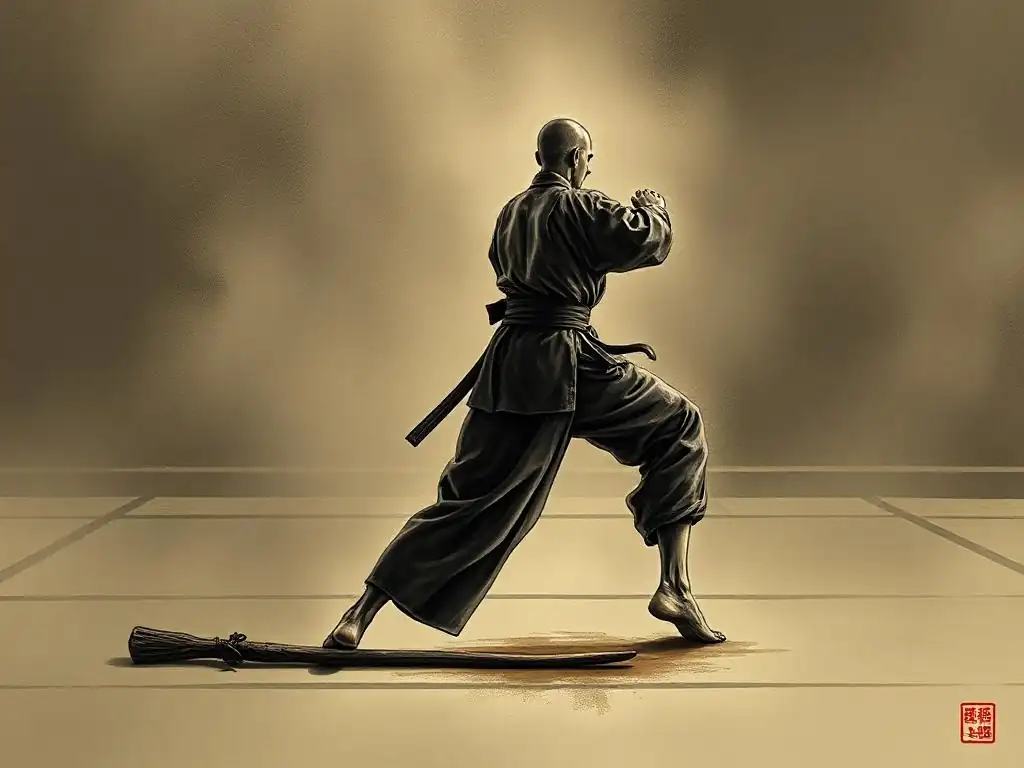
Even experienced practitioners can fall into common footwork errors. Recognizing and correcting these issues is vital for continuous improvement in GojuRyu footwork techniques training. These mistakes often compromise balance, reduce power, or telegraph intentions to an opponent.
Identifying these errors requires self-awareness, feedback from instructors, and often, video analysis. Correcting them involves returning to fundamental drills, focusing on precise execution, and building strength and flexibility in the legs and core.
Lack of Balance and Stability
A prevalent mistake is losing balance during or after a footwork movement. This can manifest as wobbling, excessive upper body movement, or the inability to immediately execute the next technique. It often stems from poor weight distribution, lifting feet too high off the ground, or insufficient leg and core strength.
Correction involves reinforcing basic stance training, spending more time holding stances with proper form, and practicing slow, deliberate transitions to identify points of instability. Drills focusing on maintaining a low center of gravity and keeping weight distributed evenly (or intentionally shifted for a purpose) are essential. Strengthen exercises targeting the legs, ankles, and core also significantly improve balance.
Telegraphing Movements
Telegraphing occurs when preparatory movements or subtle shifts give away an intended action before it happens, allowing the opponent time to react. In footwork, this might involve excessive backward movement before stepping forward, a large inhale before moving, or unnecessary tension in the shoulders or arms.
Correcting telegraphing in GojuRyu footwork techniques training requires focusing on smooth, subtle movements that originate from the hips and legs, not the upper body. Practicing moving without obvious wind-ups, keeping the upper body relaxed, and using smaller, more efficient steps like Okuri Ashi instead of large, exaggerated steps can help minimize telegraphing. Videoing oneself can be highly effective in identifying unconscious tells.
Improper Weight Distribution
Incorrect weight distribution undermines stability, power generation, and the ability to move quickly. For example, having too much weight on the front leg in Neko Ashi Dachi makes quick evasion impossible, while having weight too far back in Zenkutsu Dachi reduces forward power.
Correcting improper weight distribution involves conscious awareness of where the body's mass is centered during stances and transitions. Drills focusing on holding stances and feeling the weight distribution (e.g., 60/40 in Zenkutsu Dachi, 80/20 in Neko Ashi Dachi) are crucial. Practicing shifting weight smoothly from one foot to the other, such as in stepping drills, helps develop control over weight transfer, a key aspect of effective GojuRyu footwork techniques training.
Advanced GojuRyu Footwork Strategies
Once the fundamental GojuRyu footwork techniques training is solid, practitioners can explore more advanced strategies that integrate Unsoku with tactics and techniques for higher-level application. These strategies involve using footwork not just to move, but to deceive, control the opponent, and set up complex sequences.
Advanced footwork is about thinking several steps ahead, using subtle movements to manipulate the opponent's reactions, and seamlessly combining footwork with hand and leg techniques. It requires a deep understanding of distance, timing, and the opponent's likely responses.
Feinting and Deception with Footwork
Advanced practitioners use footwork to feint and deceive opponents, creating openings or drawing reactions. This might involve starting a step in one direction before quickly shifting to another, or using subtle weight shifts to suggest an attack is coming when it is not.
For example, a slight forward lean with the front foot in Neko Ashi Dachi might look like the start of a step forward to attack, prompting the opponent to react defensively, at which point the practitioner could quickly use Okuri Ashi backward to gain distance or shift laterally. GojuRyu footwork techniques training at this level focuses on making feints look realistic and using the opponent's reaction to one's advantage.
Controlling Distance and Range
Controlling the distance, or Maai, is a critical strategic application of GojuRyu footwork. It involves constantly adjusting one's position relative to the opponent to maintain optimal range for one's own techniques while denying the opponent their preferred distance.
Using Tsugi Ashi to quickly close distance for a punch or strike, Okuri Ashi to slide back and evade a kick, or Tai Sabaki to step just outside the range of an attack are examples. Advanced GojuRyu footwork techniques training includes drills specifically focused on Maai control, such as moving in and out of striking range with a partner, reacting to their movements to maintain the desired distance. This constant adjustment is key to tactical superiority.
Combining Footwork with Hand Techniques
True mastery of GojuRyu involves seamlessly integrating footwork with hand and leg techniques. The footwork should support and enhance the technique, not be a separate action. The movement of the feet, the shift of weight, and the execution of the strike or block should happen as one fluid action.
This is evident in techniques like stepping forward into a punch (Oi Zuki) or stepping back while blocking (Gedan Barai). Advanced GojuRyu footwork techniques training focuses on drilling combinations where the footwork is the engine driving the technique. For instance, practicing stepping offline with Tai Sabaki while simultaneously executing a middle block (Uke) and preparing a counter-strike, ensuring that the footwork sets up the subsequent actions efficiently and powerfully.
Conclusion: The Path to GojuRyu Footwork Mastery
Mastering GojuRyu footwork (Unsoku) is a lifelong pursuit, essential for unlocking the full potential of GojuRyu karate. It is the foundation of agility, stability, power, and strategic positioning. While often less visible than striking or blocking, refined footwork is the silent partner in every successful technique and defensive maneuver.
Dedicated GojuRyu footwork techniques training, focusing on core principles, essential techniques, and practical application through drills and kata study, is the key to developing fluid, powerful, and responsive movement. It requires patience, consistent practice, and attention to detail, but the rewards in terms of improved performance and understanding of GojuRyu are immense.
Consistent Practice and Dedicated Training
Achieving mastery in GojuRyu footwork demands consistent and dedicated training. Short, frequent practice sessions focusing specifically on footwork can be more effective than occasional long ones. This builds the muscle memory and coordination needed for Unsoku to become intuitive.
Integrating footwork drills into every training session, even for just 10-15 minutes, reinforces the fundamentals. Practicing solo drills to perfect form and then partner drills to develop reactivity are both crucial components of effective GojuRyu footwork techniques training. Like any skill, repetition and focused effort are non-negotiable.
The Importance of a Strong Foundation in Basic Techniques
Advanced GojuRyu footwork strategies are only possible with a strong foundation in the basic techniques and principles. Attempting complex movements before mastering simple steps, stances, and weight transfers will lead to instability and inefficiency.
Beginners should focus heavily on perfecting their stances (Zenkutsu Dachi, Sanchin Dachi, Neko Ashi Dachi) and the basic movements like Okuri Ashi and Tsugi Ashi. Only once these fundamentals are solid can they effectively move on to more dynamic footwork, pivots, and Tai Sabaki. A robust foundation is the prerequisite for all further GojuRyu footwork techniques training.
Continuous Learning and Refinement of Skills
The journey of mastering GojuRyu footwork is one of continuous learning and refinement. There is always room for improvement, whether it's increasing speed, enhancing balance, improving efficiency, or developing more subtle deceptive movements.
Seeking feedback from experienced instructors, studying the footwork of advanced practitioners, and constantly analyzing one's own movements (perhaps through self-recording) are vital for ongoing development. Embracing the process of refinement, focusing on subtle details, and challenging oneself with increasingly complex drills are the hallmarks of dedicated GojuRyu footwork techniques training on the path to true Unsoku mastery.
Frequently Asked Questions
What is Unsoku in the context of GojuRyu karate?
Unsoku translates to footwork and is a crucial element of GojuRyu training. It involves precise movements and stances to maintain balance and agility. Effective Unsoku allows for quick attacks and defenses.
Why is proper footwork so important for GojuRyu practitioners?
GojuRyu emphasizes both hard (Go) and soft (Ju) techniques. Proper footwork is essential for generating power in Go techniques and maintaining balance while executing Ju techniques. It also allows for effective evasion and tactical positioning.
What are some common mistakes beginners make with GojuRyu footwork?
Common mistakes include lifting the feet too high, resulting in slow movement, and crossing the feet, leading to instability. Also, forgetting to maintain a low center of gravity is a frequent error.
How does GojuRyu footwork contribute to self-defense strategies?
Agile footwork enables practitioners to quickly close the distance for attacks or evade incoming strikes. It allows for strategic positioning to control the engagement and exploit weaknesses.
How can I improve my GojuRyu footwork techniques training?
Consistent practice with a focus on correct stance and movement is key. Drills focusing on shifting weight smoothly and maintaining balance are helpful. Also, receiving guidance from a qualified instructor is essential.
Final Reflection: The Dance of GojuRyu
The essence of GojuRyu footwork, often overlooked, is not merely about movement, but about creating opportunities and controlling space. In a world increasingly demanding adaptability and strategic thinking, the principles of unsoku resonate far beyond the dojo, offering a framework for navigating the complexities of life with grace and precision.
The subtle shifts and calculated steps of GojuRyu footwork have profoundly shaped the martial arts landscape, influencing countless practitioners to understand movement as an art form. This understanding, cultivated through dedicated training, transcends physical prowess, fostering mental clarity and heightened awareness. The ultimate aim of Karate lies not in victory nor defeat, but in the perfection of the character of its participants.
- Gichin Funakoshi. This quote encapsulates the deeper purpose of GojuRyu, where footwork becomes a vehicle for self-improvement and a pathway to inner strength.
Now, consider how you can apply the principles of unsoku in your own life. Embrace the challenge of mastering GojuRyu footwork, not just as a martial art technique, but as a philosophy for navigating the world with agility, balance, and unwavering focus. Let each step be deliberate, each movement purposeful, and each interaction a testament to the power of controlled action.
Unleash Your GojuRyu Potential Now!
Thanks for diving into the world of GojuRyu footwork! We hope you’ve gained valuable insights to elevate your agility and positioning. Now, it's time to put that knowledge into action and truly master your movement.
Here’s how to continue your journey:
- Commit to 15 minutes of daily Unsoku practice focusing on the techniques covered in this article. Feel the difference!
- Share this article with a fellow GojuRyu practitioner and discuss your individual challenges and successes. Collaborative growth is powerful!
- Explore other articles on Martial Arts Mastery covering stances and body conditioning to complement your footwork training.
What specific Unsoku drill will you prioritize in your next training session, and why?