
SelfCorrection in Iaido: Developing an Eye for Your Own Form


Welcome to Martial Arts Mastery, your gateway to the world's fighting arts. Delve into the precision and grace of Iaido, where every movement is a study in perfection. Are you ready to uncover and eliminate those subtle yet significant Iaido selfcorrection technique flaws that hinder your progress? Explore the secrets within and begin developing an eye for your own form, transforming your practice from rote repetition to mindful mastery.
- Introduction to Iaido Self-Correction
- Understanding Common Iaido Technique Flaws
- The Importance of Self-Awareness in Iaido Training
- Iaido Selfcorrection Technique Flaws: A Detailed Approach
- Refining Your Iaido Form Through Solo Practice
- Tools and Resources for Iaido Self-Assessment
- Overcoming Plateaus in Iaido: Self-Correction Strategies
- The Mental Aspect of Iaido Self-Correction
- Advanced Iaido Self-Correction Techniques
- Conclusion: The Journey of Continuous Improvement in Iaido
-
Frequently Asked Questions
- How important is self-correction in Iaido training?
- What are some common flaws that Iaido practitioners often need to self-correct?
- How can video recording aid in the self-correction process for Iaido?
- What role does understanding the philosophical underpinnings of Iaido play in self-correction?
- What should a practitioner do if they continually struggle with self-correcting a specific Iaido technique flaw?
- Final Reflection: Honing the Blade Within
- Refine Your Stance: Become Your Own Iaido Master!
Introduction to Iaido Self-Correction
Self-correction is a fundamental aspect of mastering any complex skill, and in the intricate art of Iaido, it is absolutely indispensable. Unlike martial arts that rely heavily on a training partner, much of Iaido practice is performed solo, requiring the practitioner to become their own most insightful observer and critic. Developing the ability to identify and rectify one's own Iaido selfcorrection technique flaws is not merely supplementary; it is central to progress.
This internal feedback loop allows a practitioner to refine their movements with precision, ensuring that each draw, cut, and sheathing action adheres to the strict principles of the ryu (school) being studied. Without this skill, progress can stagnate, and ingrained errors can become increasingly difficult to undo.
The journey of self-correction in Iaido begins with cultivating a heightened sense of self-awareness. It involves not just performing the movements but truly feeling them, understanding how the body is aligned, how the sword moves through space, and where tension might be hindering fluid execution. This deep introspection, combined with external tools and feedback, forms the bedrock of an effective self-improvement strategy. Learning to see one's own Iaido technique flaws requires patience, humility, and a commitment to continuous learning, transforming solo practice from mere repetition into a powerful engine for personal growth and technical refinement.
Understanding Common Iaido Technique Flaws
Identifying Posture and Alignment Issues in Iaido
Correct posture and alignment are foundational in Iaido, influencing everything from balance and power generation to the aesthetic purity of the form. Common issues include a rounded back, slumped shoulders, or a protruding chin, which disrupt the body's natural alignment and compromise stability. For instance, many beginners inadvertently lean too far forward or backward during standing techniques (Tachi Waza), shifting their center of gravity outside their base and making subsequent movements slow or unstable. This lack of proper vertical alignment, often stemming from poor core engagement, is a significant Iaido selfcorrection technique flaw that must be addressed early.
Another prevalent alignment problem is misalignment of the hips and shoulders relative to the intended direction of movement or cut. If the hips are not correctly positioned or rotated, the power generated from the lower body cannot be efficiently transferred through the core to the sword. Similarly, misaligned shoulders can lead to awkward or weak cuts.
Observing experienced practitioners, one notices their almost perfect vertical stacking and horizontal alignment, which allows for maximum efficiency and power with minimal wasted effort. Recognizing your own subtle deviations from this ideal, perhaps a slight twist in the torso during the draw or an uneven weight distribution during kneeling (Seiza) techniques, is crucial for effective self-correction.
Recognizing Footwork Errors in Iaido Kata
Footwork (Ashi Sabaki) in Iaido is far more than just moving from point A to point B; it is a precise system of steps and body shifts that facilitate smooth transitions, maintain balance, and generate momentum for techniques. Errors in footwork are common Iaido technique flaws that can severely impact the effectiveness and flow of a kata.
A frequent mistake is taking steps that are too large or too small, disrupting the intended rhythm and distance of the movement. For example, in techniques requiring a forward step (Suri Ashi), taking too large a step can leave the practitioner overextended and off-balance, while too small a step may prevent them from reaching the target effectively or generating sufficient forward momentum.
Another critical footwork error is improper coordination between the feet and the rest of the body's movement. The feet should ideally move in harmony with the hips and sword action, ensuring that power is generated from the ground up. Beginners often move their feet independently, resulting in disjointed movements.
Dragging the feet excessively, lifting them too high, or landing them with unnecessary force are also common issues that indicate poor control and lack of grounding. Correct Iaido footwork should be quiet, efficient, and almost invisible, serving as the silent engine driving the technique. Identifying instances where your footwork feels clumsy, noisy, or out of sync is a primary step in addressing these Iaido selfcorrection technique flaws.
Analyzing Sword Handling Mistakes in Iaido Practice
Proficient sword handling (Toho or Suburi within kata) is at the core of Iaido, and errors here represent significant Iaido technique flaws. Common mistakes include incorrect grip (Tsuka Geri), such as holding the sword too tightly or too loosely, or placing the hands improperly on the handle. Gripping too tightly leads to tension in the wrists and arms, hindering fluid movement and absorbing shock rather than channeling force.
Conversely, a grip that is too loose compromises control. The angle and path of the sword during the draw (Nuki Tsuke), cut (Kiri Tsuke), and sheathing (Noto) must follow specific lines and angles dictated by the ryu. Deviations, such as cutting on a diagonal when a vertical cut is required, or failing to draw the sword along the correct plane, are fundamental errors.
Furthermore, the concept of 'tenouchi'—the subtle gripping action at the moment of impact or completion of a cut—is often misunderstood or executed incorrectly, leading to a weak cut or lack of proper 'snap'. Many beginners also struggle with the timing and angle of Noto, attempting to sheath the sword before it has come to a complete, controlled stop, or doing so without proper attention to safety and precision.
The coordination between the sword movement and body movement is paramount; the sword should not just move through space but be driven by the body. Analyzing whether your sword movements are precise, powerful, and correctly timed in relation to your body's action is key to identifying and correcting these pervasive Iaido selfcorrection technique flaws.
The Importance of Self-Awareness in Iaido Training
Developing Kinesthetic Awareness for Iaido Movements
Kinesthetic awareness, often referred to as proprioception, is the body's ability to sense its own position, movement, and effort without relying on vision. In Iaido, cultivating this internal sense is paramount for identifying Iaido selfcorrection technique flaws. It means being able to feel the angle of your back, the tension in your shoulders, the precise path of your sword, and the weight distribution in your feet, all while performing a kata.
This isn't just about noticing obvious discomfort; it's about sensing subtle inefficiencies or misalignments. For example, can you feel if your left hand is gripping the tsuka slightly tighter than your right? Can you sense if your hips are rotating slightly ahead of your shoulders during Nuki Tsuke?
Developing kinesthetic awareness requires focused, mindful practice. It involves paying deliberate attention to the physical sensations within your body during each movement. Beginners often rely heavily on external cues or visual feedback (like watching others or using a mirror), but true self-correction capabilities emerge when you can feel the correctness or incorrectness of a movement from the inside.
Techniques like practicing kata slowly, focusing intensely on the feeling of muscles contracting, joints moving, and weight shifting, are invaluable. This internal sensitivity allows you to detect Iaido technique flaws the moment they occur, rather than realizing them later through visual analysis or external feedback.
Using Video Analysis for Iaido Self-Improvement
Video analysis is an invaluable tool for gaining an objective perspective on your Iaido practice and highlighting Iaido selfcorrection technique flaws that kinesthetic awareness alone might miss. It provides an external viewpoint, allowing you to see your form as others see it or as a sensei would evaluate it.
Recording yourself performing kata from different angles—front, side, and even from behind—can reveal issues with posture, alignment, line of movement, and timing that are difficult to perceive while you are performing. For instance, a video might clearly show that your shoulders are not level, your knees are collapsing inward during kneeling, or your sword is deviating from the intended cutting plane.
Watching the footage critically, perhaps in slow motion, allows for detailed analysis of specific moments within a kata. You can freeze frames to check angles, compare your form against instructional videos or mental images of correct technique, and identify recurring errors. It's helpful to watch with a specific focus each time – one viewing for footwork, another for posture, another for sword angle.
While initial viewings might feel awkward or even discouraging as flaws become apparent, approaching video analysis with a detached, analytical mindset is key. It's not about judging yourself, but about gathering data to inform your practice and target specific Iaido technique flaws for improvement.
Seeking Constructive Feedback from Iaido Sensei
While self-awareness and video analysis are powerful tools for identifying Iaido selfcorrection technique flaws, external feedback from an experienced Iaido sensei is irreplaceable. A qualified instructor possesses years of experience observing practitioners and understanding the nuances of correct technique and common errors within their specific ryu. They can identify subtle issues that you might overlook and provide tailored advice based on their deep understanding of the kata's principles and your individual challenges. A sensei's feedback often goes beyond mere description of a flaw, explaining why it is incorrect and how it impacts the effectiveness or safety of the technique.
Receiving feedback requires humility and a willingness to listen and learn. It's important to ask specific questions about areas where you feel uncertain or where video analysis has highlighted a potential issue. A sensei can provide corrections directly through verbal instruction, physical adjustment, or demonstrating the correct movement alongside you.
They can also suggest specific drills or focus points for your solo practice to help you address identified Iaido technique flaws. Integrating feedback from a sensei with your own self-assessment creates a comprehensive approach to improvement, ensuring you are not only correcting errors but also understanding the underlying principles of the correct technique.
Iaido Selfcorrection Technique Flaws: A Detailed Approach
Analyzing Your Kata Performance for Iaido Technique Flaws
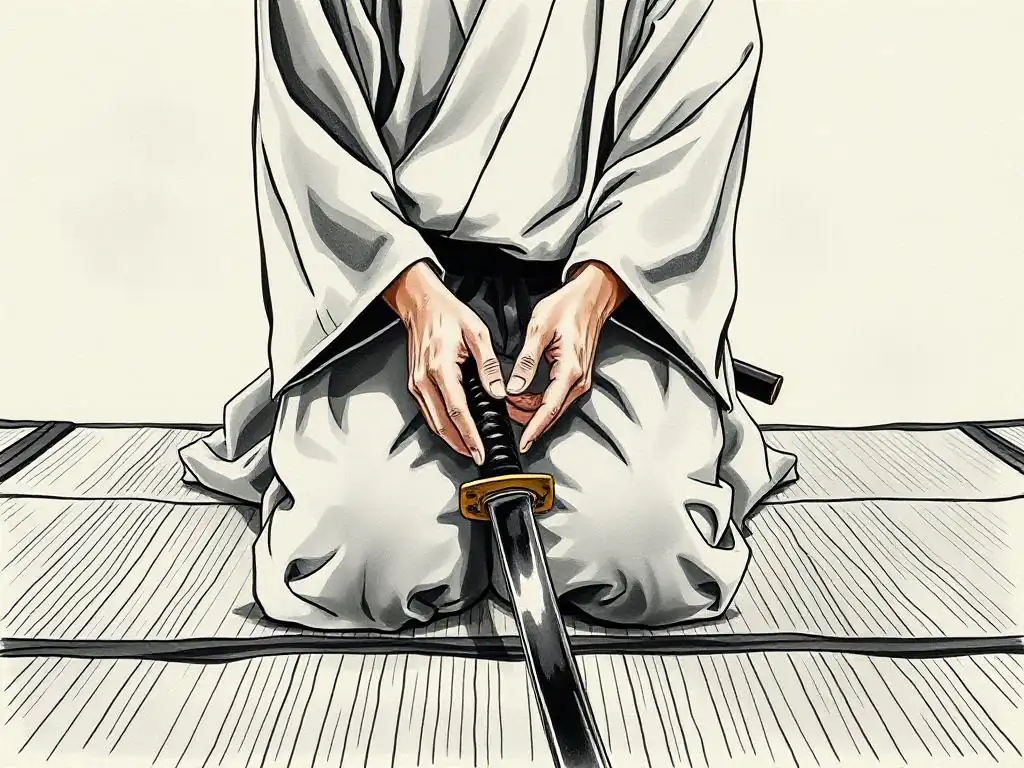
Analyzing your kata performance for specific Iaido selfcorrection technique flaws involves breaking down each movement into its constituent parts and evaluating its execution against the standards of your ryu. Don't just run through the kata; pause mentally or physically at key points. Consider the drawing phase (Nuki Tsuke): Is the sword exiting the saya smoothly? Is the angle correct relative to the target?
Is your body structure stable? Move to the cut (Kiri Tsuke): Is the power generated from the hips and core, not just the arms? Is the sword path straight and true? Is Tenouchi applied correctly at the end of the cut?
Continue this detailed analysis through O Chiburi (shaking blood off the blade) and Noto (sheathing). O Chiburi requires precise timing and angle; Noto demands safety, control, and quiet execution. Often, Iaido technique flaws are most apparent in the transitions between movements or in the final stages of a technique.
For example, many practitioners rush Noto, leading to clumsy or unsafe sheathing. By systematically examining each segment of the kata, comparing your execution to the ideal form, you can pinpoint exactly where the flaws lie. This granular approach moves beyond a general sense of "something feels wrong" to identifying specific actions or positions that require correction.
Common Iaido Selfcorrection Pitfalls and How to Avoid Them
While self-correction is vital, there are common pitfalls that can hinder progress or even lead to new Iaido selfcorrection technique flaws. One major pitfall is focusing solely on speed or power before achieving correct form. Trying to perform techniques quickly with fundamental flaws simply reinforces bad habits.
Avoid this by prioritizing accuracy and precision over speed, especially in the early stages of correcting a technique. Another pitfall is over-analyzing to the point of paralysis, constantly stopping and starting, which breaks the flow and rhythm essential to Iaido. Instead, focus on correcting one or two specific issues per practice session rather than trying to fix everything at once.
A third common pitfall is practicing incorrectly without external feedback for extended periods, potentially ingraining Iaido technique flaws deeply. Even with video analysis, subjective biases can creep in. To avoid this, seek regular feedback from a sensei or senior practitioner. Also, be wary of becoming overly self-critical to the point of discouragement; self-correction should be a process of constructive improvement, not self-flagellation. Maintain a positive, persistent attitude, recognizing that mastering Iaido is a long journey with many small steps forward.
Drills to Improve Specific Iaido Techniques
Targeted drills are essential for isolating and improving specific Iaido selfcorrection technique flaws. If you identify issues with Nuki Tsuke angle, practice the draw repeatedly without performing the subsequent cut or Noto. Focus solely on the smooth, correct angle of the sword exiting the saya.
- Nuki Tsuke Drill: Sit or stand, focusing only on the draw. Repeat 50-100 times, paying attention to the feel of the blade leaving the saya and the position of the hands and body at the end of the draw. Use a mirror or video to check the angle.
- Kiri Tsuke Drill (Suburi): Practice basic cutting motions (like Mae Giri, Tsuki Giri) in isolation. Focus on generating power from the hips, maintaining a straight cutting line, and executing proper Tenouchi. Perform 50-100 cuts, emphasizing quality over quantity.
- Noto Drill: Practice sheathing the sword slowly and safely. Focus on finding the Koiguchi (saya mouth) with the Kissaki (sword tip) without looking down, guiding the blade in smoothly and quietly. Repeat 50-100 times, prioritizing control and safety.
These specific drills allow you to dedicate focused effort to correcting a particular Iaido technique flaw before reintegrating the corrected movement back into the full kata.
Refining Your Iaido Form Through Solo Practice
The Role of Repetition in Iaido Skill Development
Repetition is the bedrock of skill acquisition in Iaido. Performing kata and basic movements repeatedly is how the body learns the correct patterns and movements, transforming conscious effort into unconscious competence. For addressing Iaido selfcorrection technique flaws, repetition is crucial for overwriting incorrect muscle memory with correct form.
However, it must be mindful repetition, not just going through the motions. Each repetition should be an opportunity to focus on a specific aspect of the technique you are trying to improve, applying the self-corrections you have identified. For example, if you are working on keeping your shoulders level during the draw, each Nuki Tsuke in your solo practice should be performed with deliberate attention to that specific point.
High-quality repetition builds correct muscle memory and refines kinesthetic awareness. It allows the practitioner to explore the subtle feelings of correct movement versus incorrect movement. While thousands of repetitions might be necessary to fully ingrain a technique, focusing on mindful repetition of just one or two key corrections per session is more effective than mindlessly repeating the entire kata. This focused effort ensures that the repetition is reinforcing the desired technique, rather than solidifying existing Iaido technique flaws. The goal is to make correct form feel natural and automatic through dedicated, deliberate practice.
Maintaining Focus and Concentration During Solo Iaido Training
Maintaining intense focus and concentration (Zanshin) during solo Iaido training is challenging but essential for effective self-correction. Without focus, practice can devolve into rote movement, where Iaido selfcorrection technique flaws go unnoticed or unaddressed. Zanshin in this context means being fully present in the moment, aware of your body, your sword, and the space around you, even when alone. It involves shutting out distractions and directing your mental energy towards the execution and feeling of each technique. This heightened state of awareness is what allows you to detect subtle errors in real-time.
Techniques for enhancing focus during solo practice include setting a clear intention for each session (e.g., "Today, I will focus on correcting my footwork in the third kata"), practicing in a quiet environment free from interruptions, and incorporating mindfulness techniques. Before starting, take a few moments to clear your mind and center yourself.
During the practice, bring your attention back to the physical sensations and technical details whenever your mind wanders. This discipline in maintaining Zanshin transforms solo practice from a physical drill into a profound exercise in mental control and self-awareness, directly supporting the identification and correction of Iaido technique flaws.
Cultivating Mindfulness in Iaido Practice
Mindfulness in Iaido practice is deeply intertwined with kinesthetic awareness and Zanshin. It is the practice of paying deliberate, non-judgmental attention to the present moment – to the sensations, movements, and mental state during the kata. Cultivating mindfulness helps in identifying Iaido selfcorrection technique flaws by allowing you to observe your actions objectively, without frustration or self-criticism. Instead of thinking "I messed up again," a mindful approach observes, "My left knee collapsed slightly during that kneeling transition." This shift in perspective is crucial for effective self-correction.
Mindfulness can be cultivated through specific practices like focusing on your breath before and during practice, or by performing kata very slowly, paying exquisite attention to the feeling of each muscle engaging and each joint moving. It involves noticing tension without trying to immediately fix it, simply acknowledging its presence. This level of awareness allows you to understand how your body is moving and where the Iaido technique flaws are occurring, providing the necessary information for targeted correction. Mindful practice makes repetition more effective by ensuring you are reinforcing correct patterns and actively working against ingrained errors.
Tools and Resources for Iaido Self-Assessment
Using Mirrors for Immediate Visual Feedback in Iaido
Mirrors are one of the most accessible and immediate tools for visual self-assessment in Iaido, offering real-time feedback on Iaido selfcorrection technique flaws. Practicing in front of a large mirror allows you to see your posture, alignment, body angles, and the path of your sword as you perform kata or basic movements. This instant visual confirmation can quickly highlight discrepancies between what you feel you are doing and what you are actually doing.
For instance, you might feel your back is straight, but the mirror reveals a slight hunch. You might think your cut is vertical, but the mirror shows a diagonal trajectory.
While useful, relying solely on mirrors can also be a pitfall, as it encourages practicing while looking at your reflection, which can disrupt natural movement and Zanshin. The most effective use of mirrors is for targeted checking. Perform a movement or a short sequence, then stop and look to assess specific points you are working on, such as the height of your hands in Jodan no Kamae or the angle of your foot during a step.
Use the mirror periodically to verify corrections, rather than practicing the entire time while watching yourself. This balanced approach helps identify Iaido technique flaws visually without compromising the internal feeling and flow of the kata.
Utilizing Training Apps and Software for Iaido Analysis
Modern technology offers various apps and software designed for sports analysis that can be highly beneficial for identifying and correcting Iaido selfcorrection technique flaws. Many smartphone apps allow you to record video and then use features like slow motion playback, frame-by-frame analysis, drawing tools (to mark lines or angles on the screen), and side-by-side comparison of different takes or against a reference video. For example, you could record your Nuki Tsuke and use drawing tools to check if the sword is exiting parallel to the ground or at the correct angle for your ryu's technique.
More advanced software might offer features like motion tracking, though this is less common or necessary for most Iaido practitioners. The primary benefit of these apps is the ability to objectively review your performance in detail, pinpointing specific Iaido technique flaws that might be too fast or subtle to catch with the naked eye or even standard video playback. They facilitate the detailed analysis discussed earlier, allowing you to repeatedly examine critical moments in a kata, compare your form over time to track progress, and share specific clips with your sensei for feedback.
Partner Drills for Evaluating Iaido Technique
While Iaido is primarily a solo art, certain partner drills (performed safely and under supervision) can provide valuable external feedback on Iaido selfcorrection technique flaws. One type of drill involves a partner observing your kata from different angles, specifically looking for the issues you are trying to correct, such as posture, footwork timing, or sword angle. Their live observation can offer insights that video might not capture, such as the subtle transfer of weight or the feeling of tension.
Another type of partner drill involves simulated resistance or target interaction, though great care must be taken. For example, a senior student might gently hold a target (like a pool noodle or foam pad) at the correct position to help you gauge distance and the endpoint of your cut, revealing issues with reach or timing.
Simple observation drills, however, are often the safest and most effective way for partners to help identify Iaido technique flaws. Having a training partner watch you perform a specific kata or movement sequence and provide immediate, specific feedback ("Your leading foot landed slightly off-line," "Your wrist bent at the end of the cut") can accelerate the identification and correction process.
Overcoming Plateaus in Iaido: Self-Correction Strategies
Identifying the Root Cause of Stagnation in Iaido
Hitting a plateau is a common experience in any long-term skill pursuit, including Iaido. When progress slows despite consistent practice, it's often due to persistent, unaddressed Iaido selfcorrection technique flaws. These might be fundamental errors that were never fully corrected or new inefficiencies that have crept into your practice. Identifying the root cause requires honest self-assessment and potentially external input. Are you struggling with a specific technique within a kata, or is it a more general issue like poor posture or lack of body-sword coordination that affects multiple techniques?
Often, the root cause isn't just the visible flaw but the underlying habit or lack of awareness. For example, a weak cut might stem from improper hip rotation (the visible flaw), but the root cause could be a lack of kinesthetic awareness of hip movement or insufficient core strength.
Stagnation can also result from a lack of focused practice; simply repeating the same kata the same way each time without a specific goal for improvement will not lead to progress. Analyzing when and where the plateau occurs in your practice, combining self-observation, video analysis, and feedback, is essential to uncovering the specific Iaido technique flaws holding you back.
Adjusting Your Iaido Training Regimen for Continued Improvement
Once you've identified the root cause of your plateau and the specific Iaido selfcorrection technique flaws involved, you must adjust your training regimen accordingly. Simply doing more of the same practice that led to the plateau will not break through it. Your adjusted training plan should prioritize targeted practice over general repetition. If the issue is footwork, dedicate significant time in each session to footwork drills and practicing kata sequences specifically focusing on feet placement and timing. If it's sword handling, incorporate more basic cutting (Suburi) with a focus on Tenouchi and cutting plane.
Consider reducing the number of different kata you practice in a session to focus intensely on one or two where the identified flaws are most prominent. Increase the use of slow-motion practice for detailed analysis and correction. Incorporate the drills mentioned earlier to isolate problematic movements. For example, if Noto is consistently clumsy, spend 15-20 minutes solely practicing Noto slowly and mindfully at the beginning of each practice session. This strategic adjustment of your training, shifting focus from broad practice to targeted correction of Iaido technique flaws, is key to overcoming plateaus and resuming progress.
Seeking Guidance from Experienced Iaido Practitioners
When facing a plateau related to persistent Iaido selfcorrection technique flaws, seeking guidance from experienced Iaido practitioners, particularly your sensei, becomes even more critical. They have likely encountered similar plateaus themselves or helped many students overcome them. An experienced practitioner can often spot the subtle, ingrained errors that you might be blind to. They can also offer alternative perspectives or training methods that you haven't considered.
Don't hesitate to explain your specific challenges and the Iaido technique flaws you believe are causing the plateau. Be open to their suggestions, even if they differ from your current approach. They might recommend specific exercises outside of kata practice, suggest a different way to think about a movement, or provide a demonstration that clarifies the feeling of the correct technique. Their external perspective and deeper understanding of the ryu's principles can provide the breakthrough needed to move past stagnation. Collaborative problem-solving with experienced practitioners is a powerful strategy for continuous improvement.
The Mental Aspect of Iaido Self-Correction
Developing a Growth Mindset in Iaido Training
Effective self-correction in Iaido is as much a mental exercise as a physical one. Developing a growth mindset is crucial for approaching Iaido selfcorrection technique flaws constructively. A growth mindset, as opposed to a fixed mindset, views abilities and intelligence as qualities that can be developed through dedication and hard work, rather than being static. In Iaido, this means believing that your form, technique, and understanding can always improve, regardless of your current level or perceived talent.
Approaching practice with a growth mindset means seeing challenges and errors not as failures, but as opportunities to learn and grow. When you identify an Iaido technique flaw, instead of feeling discouraged ("I'm just not good at this"), you see it as a specific problem to solve ("Okay, this is an area I need to focus on; how can I improve it?").
This perspective fosters resilience and perseverance, essential qualities for the long and often challenging path of Iaido mastery. Embracing the belief that effort and strategic practice lead to improvement makes the difficult work of identifying and correcting flaws feel purposeful and motivating.
Embracing Mistakes as Learning Opportunities in Iaido
Mistakes are an inevitable part of learning Iaido, and they are invaluable learning opportunities, especially when focusing on Iaido selfcorrection technique flaws. Rather than trying to avoid mistakes, embrace them as signposts indicating areas that require attention. Each error provides specific information about where your understanding or execution deviates from the correct technique. For example, if your sword consistently wobbles during O Chiburi, that mistake highlights an issue with control, Tenouchi, or timing at that specific point in the kata.
Analyzing why a mistake occurred is more important than simply noting that it happened. Was it due to lack of focus? Incorrect body mechanics? Misunderstanding the principle behind the movement? By investigating the cause of the Iaido technique flaw, you gain deeper insight into the technique itself and how to perform it correctly. Create a practice environment where you feel safe to make mistakes and learn from them. See each error as a clue that brings you closer to understanding the correct form, fueling your desire to refine your technique.
Cultivating Patience and Perseverance in Iaido
The process of identifying and correcting Iaido selfcorrection technique flaws requires immense patience and unwavering perseverance. Iaido techniques are subtle and complex, and changing ingrained habits takes time and consistent effort. You will likely identify the same flaws repeatedly before the correction becomes natural. There will be days when progress feels slow or even nonexistent. This is normal.
Cultivating patience means accepting that mastery is a long-term journey measured in years, not weeks or months. It means being willing to work diligently on small, seemingly insignificant details. Perseverance is the commitment to continue practicing, analyzing, and correcting even when progress is slow or you feel frustrated. Remind yourself why you practice Iaido and appreciate the process of refinement itself. Celebrate small victories when you successfully correct a specific Iaido technique flaw in practice. This mental fortitude is just as important as physical training in the pursuit of excellence in Iaido.
Advanced Iaido Self-Correction Techniques
Using Slow Motion Practice to Refine Iaido Movements
Slow motion practice (often referred to as 'slow kata' or 'reiho') is a powerful advanced technique for identifying and correcting subtle Iaido selfcorrection technique flaws. By performing movements at a significantly reduced speed, you can bring conscious awareness to every part of the action. This allows for detailed internal observation of muscle engagement, joint movement, weight transfer, and the precise path and feeling of the sword. When practiced mindfully, slow motion reveals inefficiencies or incorrect mechanics that are too fast to perceive at normal speed.
For example, practicing Nuki Tsuke in slow motion allows you to feel exactly where tension arises, where the movement might be jerky, or if the sword's angle deviates even slightly. You can focus intently on the coordination between your hands, hips, and feet. This method also helps in building deeper kinesthetic awareness. It's not about moving sluggishly, but about executing the technique with precision and control at a reduced tempo. Incorporating slow motion practice regularly helps to refine the nuances of technique and address persistent Iaido technique flaws at a fundamental level.
Breaking Down Complex Iaido Kata into Smaller Components
Complex Iaido kata can be overwhelming to analyze and correct as a whole. An effective advanced self-correction strategy is to break down a kata into smaller, manageable components. Focus on perfecting transitions between movements, specific draws, cuts, or sheathing sequences in isolation before attempting to link them together. For instance, if you are struggling with the transition from the cut to O Chiburi in a particular kata, isolate that sequence and practice it repeatedly.
This modular approach allows you to dedicate focused attention to specific Iaido selfcorrection technique flaws within a contained segment of the kata. Once a segment is refined, you can add the preceding or following movement, gradually building up the complete kata with improved execution. This method prevents the frustration of trying to fix errors that occur throughout a long kata and allows for more efficient use of practice time. By mastering the individual building blocks, the execution of the full kata becomes smoother and more correct.
Visualization Techniques for Enhancing Iaido Performance
Visualization, or mental rehearsal, is an advanced technique that complements physical practice and aids in correcting Iaido selfcorrection technique flaws. It involves mentally practicing kata or specific movements with vivid detail, imagining the correct form, the feeling of the movement, and the path of the sword. This isn't just daydreaming; it's active mental engagement with the technique. Visualize yourself performing the movement flawlessly, feeling the correct alignment, the smooth flow of power, and the precise execution of each action.
Visualization can help reinforce correct muscle memory and improve kinesthetic awareness by mentally stimulating the neural pathways used in physical practice. It can also be used to specifically target Iaido technique flaws. If you know you tend to drop your shoulder during a cut, visualize yourself performing that cut with perfect, level shoulders, feeling the correct posture and power transfer. Regular visualization, combined with physical practice, can accelerate the process of correcting flaws and refining technique by strengthening the mental blueprint of the correct movement.
Conclusion: The Journey of Continuous Improvement in Iaido
The pursuit of mastery in Iaido is a continuous journey, marked by the ongoing process of self-correction and refinement. Developing the ability to identify and address Iaido selfcorrection technique flaws is not just a skill; it is a fundamental practice woven into the fabric of Iaido training. From understanding common errors in posture, footwork, and sword handling to utilizing tools like video analysis and seeking feedback from a sensei, the path to improvement is multifaceted.
Embracing the mental aspects of training – cultivating a growth mindset, learning from mistakes, and practicing patience – provides the resilience needed to navigate challenges and plateaus. By applying detailed analysis, targeted drills, and advanced techniques like slow motion and visualization, practitioners can systematically dismantle ingrained errors and build a foundation of precise, efficient movement. Ultimately, the dedication to honest self-assessment and consistent effort in correcting Iaido technique flaws is what transforms simple movement into true Iaido, embodying the spirit of continuous self-improvement.
Frequently Asked Questions
How important is self-correction in Iaido training?
Self-correction is absolutely critical in Iaido. It allows practitioners to identify and address technical flaws independently, fostering continuous improvement and a deeper understanding of the art.
What are some common flaws that Iaido practitioners often need to self-correct?
Common flaws include issues with nukitsuke (drawing the sword), noto (sheathing), posture, and incorrect footwork. Identifying these requires careful self-observation and reflection.
How can video recording aid in the self-correction process for Iaido?
Video recording provides objective feedback that allows you to see your form from an external perspective. This helps identify subtle errors that you might miss during practice.
What role does understanding the philosophical underpinnings of Iaido play in self-correction?
Understanding the philosophy of Iaido, such as zanshin (remaining awareness) and metsuke (focused gaze), helps ensure your movements are not just physically correct, but also spiritually aligned for effective self-correction.
What should a practitioner do if they continually struggle with self-correcting a specific Iaido technique flaw?
If self-correction proves difficult, seek guidance from a qualified instructor or experienced practitioner. A fresh perspective and personalized feedback can help overcome plateaus and refine technique.
Final Reflection: Honing the Blade Within
The journey of Iaido, as we've explored, is not merely about mastering techniques, but about cultivating the unwavering ability to self-correct. This pursuit of perfection, of identifying and rectifying flaws in our form, resonates profoundly in a world often demanding immediate results and external validation. The discipline fostered through Iaido's self-correction process offers a powerful antidote, reminding us that true mastery lies in the relentless pursuit of inner refinement.
The impact of developing this "eye" for our own form extends far beyond the dojo. It cultivates a critical self-awareness that permeates all aspects of our lives, enabling us to identify and address shortcomings in our work, our relationships, and our personal growth. As the legendary swordsman Miyamoto Musashi wisely stated: From one thing, know ten thousand things.
This principle underscores the interconnectedness of skill development; the discipline learned in Iaido translates into a broader capacity for self-improvement.
Now, as you step away from this exploration of Iaido's self-correction techniques, I invite you to consider how you can apply this principle in your own life. Where can you cultivate a sharper eye for your own "form," identifying and correcting flaws not just in your skills, but in your character? Embrace the challenge of self-reflection, and you will discover the profound power of honing the blade within.
Refine Your Stance: Become Your Own Iaido Master!
Thank you for exploring the path of self-correction in Iaido. Now that you've gained insights into refining your form, it's time to actively apply these principles and deepen your practice.
Here are a few ways to take the next step:
- Master the Basics: Dedicate your next training session to meticulously recording your kata, then critically review it, focusing on even the smallest deviations from ideal form.
- Share your insights! Discuss a particular challenge you face in Iaido on our community forum at MartialArtsMastery.org, and learn from others' experiences.
- Unexpected Challenge: Attempt performing your kata in a mirror. Notice the differences between your perception and reality.
What small adjustment will you make to your Iaido practice today to unlock a new level of precision?