
Tiger & Crane: Understanding the Profound Duality in Hung Gar's Signature Form

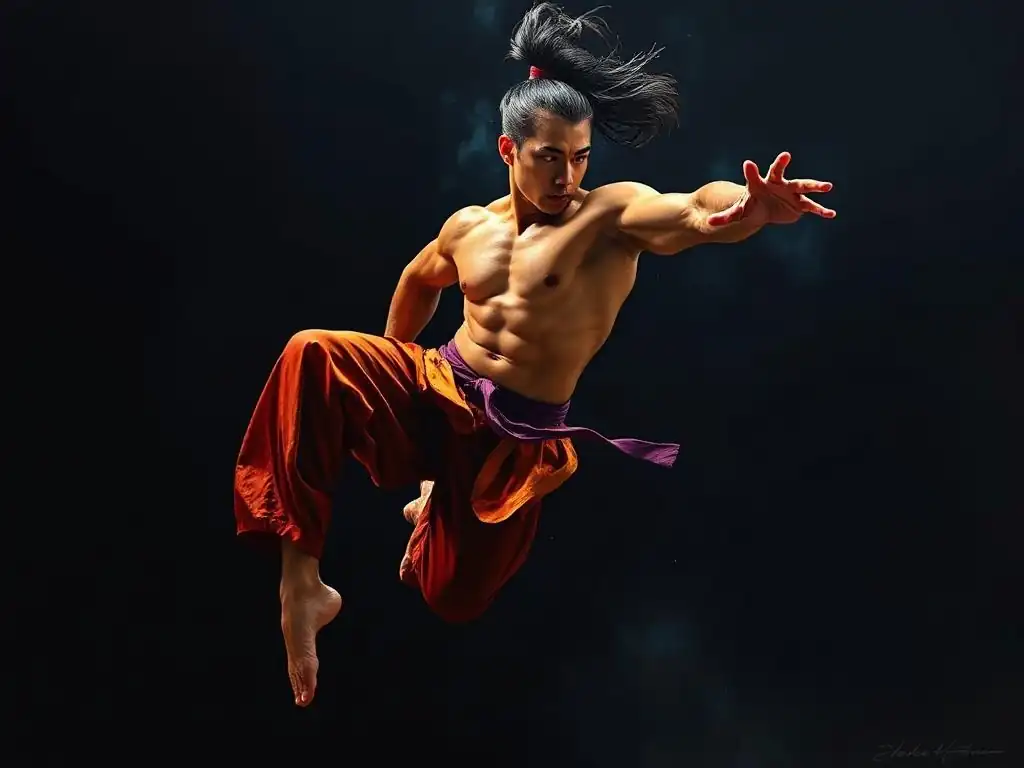
Welcome to Martial Arts Mastery, your gateway to the world's fighting arts! Ever wondered how seemingly opposing forces can unite to create unparalleled power? Dive into our exploration of the Hung Gar Crane Tiger Form, a cornerstone of this dynamic style. Discover the philosophical balance and devastating techniques hidden within this legendary sequence, and unlock secrets that will deepen your understanding of Hung Gar and martial arts principles. Ready to unravel the duality? Let's begin!
- Iron Wire and Crane Beak: Understanding the Profound Duality in Hung Gar's Signature Forms
- Introduction to Hung Gar's Iron Wire and Crane Beak Forms: Cornerstones of Southern Kung Fu
- The Iron Wire Aspect: Internal Power, Conditioning, and Health in Hung Gar
- The Crane Beak Aspect: Grace, Evasion, and Precision in Hung Gar
- The Duality of Iron Wire and Crane Beak: Balancing Internal and External in Hung Gar
- Training the Hung Gar Iron Wire and Crane Beak Forms: A Progressive Approach
- Advanced Applications of the Hung Gar Iron Wire and Crane Beak Forms
- The Legacy of the Hung Gar Iron Wire and Crane Beak Forms
- Conclusion: Embracing the Complete Warrior Through the Iron Wire and Crane Beak Forms
-
Frequently Asked Questions
- What is the significance of the Tiger & Crane form in Hung Gar?
- How does the Tiger element manifest in the form?
- What does the Crane element contribute to the Tiger & Crane form?
- Is the Tiger & Crane form suitable for beginners in Hung Gar?
- Where can I learn more about the Tiger & Crane form and Hung Gar kung fu?
- Final Reflection: Embracing the Balance of Tiger and Crane
- Embrace the Balance: Integrate Tiger & Crane Into Your Life!
Iron Wire and Crane Beak: Understanding the Profound Duality in Hung Gar's Signature Forms
Introduction to Hung Gar's Iron Wire and Crane Beak Forms: Cornerstones of Southern Kung Fu
The Significance of the Iron Wire and Crane Beak Sets in Hung Gar Kung Fu
Hung Gar, a prominent Southern Chinese martial art, is renowned for its powerful stances, strong hand techniques, and comprehensive training methodology. Among its most revered and essential training sets are the Tit Sin Kuen (鐵線拳), or Iron Wire Form, and the Hak Fu Tit Sin Kuen (鶴虎鐵線拳), which often integrates Crane principles, sometimes referred to in the context of the broader Hung Gar Crane Tiger Form concepts.
These two forms, while seemingly disparate in their focus – one emphasizing internal strength and conditioning, the other precision and evasion – represent the fundamental duality at the heart of the style. Mastering them is considered crucial for attaining proficiency in Hung Gar, as they build the practitioner's internal foundation and refine their external execution.
The Iron Wire Form, traditionally attributed to Tit Kiu Sam (Iron Bridge Three), is less a fighting form and more a complex exercise in internal cultivation ( nei gung) and isometric tension, designed to condition the body and develop resonant internal power. The Crane Beak principles, often found integrated within forms like the Tiger Crane Double Form (Fu Hok Seung Ying Kuen) or specific Crane drills, focus on agility, evasive footwork, and precise, focused strikes using the characteristic crane beak hand shape.
Together, these forms or principles instill the practitioner with both the immovable strength of a rooted tree and the elusive grace of a bird, embodying the comprehensive nature of a true martial artist.
Hung Gar's Iron Wire and Crane Beak Forms: More Than Just Movements
Beyond mere sequences of techniques, the Iron Wire and Crane Beak forms in Hung Gar serve as sophisticated training methodologies that shape the practitioner's body and mind. The Iron Wire Form, with its intricate breathing patterns ( hei gung) and isometric contractions, is a demanding physical and mental discipline.
It systematically strengthens tendons, ligaments, and muscles, particularly focusing on the forearms (the "bridge hands") and core, while simultaneously cultivating internal energy ( qi or chi) and developing a deep, rooted structure ( jaat ma). This internal focus is paramount for generating the explosive power ( ging) characteristic of Hung Gar.
Conversely, the principles derived from Crane Beak training emphasize sensitivity, balance, and precision. This aspect of Hung Gar training teaches practitioners how to evade attacks, redirect force with minimal effort, and deliver focused strikes to vulnerable points.
It develops light yet stable footwork, fluid body mechanics, and the ability to transition seamlessly between defensive and offensive actions. By mastering both the internal fortitude of Iron Wire and the external finesse of the Crane Beak, a Hung Gar practitioner develops a well-rounded skillset, capable of both absorbing impact and delivering precise, devastating counter-attacks, reflecting the comprehensive nature of the Hung Gar Crane Tiger Form ideals.
The Iron Wire Aspect: Internal Power, Conditioning, and Health in Hung Gar
Embodying Iron Wire: Developing Powerful Internal Energy and Structure
The Iron Wire Form is fundamentally an exercise in nei gung, or internal skill development. Its primary goal is to cultivate and circulate qi (vital energy) throughout the body, strengthening the internal organs and developing a resilient physical structure. The form involves a series of postures held with varying degrees of isometric tension, coordinated with specific breathing techniques – often deep, abdominal breathing synchronized with muscular contractions and releases. This process builds extraordinary internal stability and the ability to withstand and generate significant force.
Practitioners learn to "sink" their qi to the dantian (lower abdomen), establishing a strong connection to the ground and developing a deep, rooted stance. This grounding, combined with the isometric tension, creates a powerful internal framework. For instance, techniques like the "Iron Bridge" posture involve tensing the entire arm while maintaining a rooted stance and coordinating breath, building incredible forearm strength and internal connection, essential components for the hard, forceful techniques found throughout Hung Gar.
Isometric Tension Techniques: Mastering the Hard Bridge Hand
A hallmark of the Iron Wire Form is its extensive use of isometric tension, particularly in developing the "bridge hands" (Kiu Sau). Unlike dynamic movements, isometric exercises involve contracting muscles without significant joint movement. In Iron Wire, this is applied to specific postures and techniques, often held for extended periods. The practitioner learns to apply tension throughout the body, from the fingers to the toes, creating a unified structure.
This constant engagement of muscles, combined with controlled breathing, builds incredible endurance and static strength. For example, holding a simple forward punch posture with full-body tension and synchronized breath is far more demanding than a dynamic punch. This training hardens the forearms and hands, making them formidable tools for blocking and striking, and teaches the body to act as a single, cohesive unit, crucial for generating ging. The ability to maintain this tension and structure under pressure is a direct result of dedicated Iron Wire practice.
Generating Ging (勁) Through Iron Wire-Based Movements: Focused Power Emission
Ging (勁) is often translated as "fa jing" (發勁) or explosive power, but it's more accurately described as focused, elastic force generated from the whole body, not just muscular strength. The Iron Wire Form is a primary vehicle for developing this skill in Hung Gar. By training the body to unify through isometric tension and coordinated breathing, practitioners learn to store and release energy efficiently. The resonant vibrations and specific sounds associated with the form's movements are designed to facilitate this internal energy circulation and emission.
Movements that appear simple externally are internally complex, involving precise timing of tension and relaxation, breath control, and mental focus. A seemingly straightforward block or punch, after Iron Wire training, becomes a conduit for whole-body power. The force originates from the ground, travels through the rooted structure, amplified by the core and coordinated limbs, and is released explosively at the point of impact. This ability to generate ging is what distinguishes a powerful Hung Gar practitioner, allowing them to deliver devastating strikes despite relatively short movements, a key aspect of the Hung Gar Crane Tiger Form's combative efficacy.
The Crane Beak Aspect: Grace, Evasion, and Precision in Hung Gar
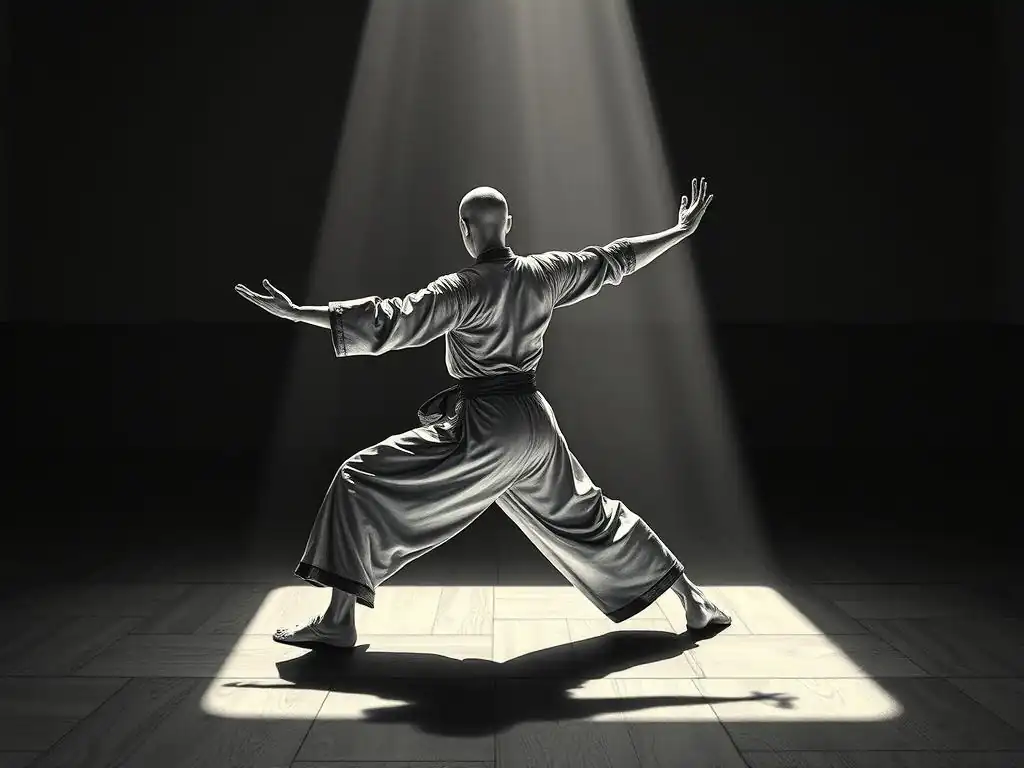
The Crane's Elegant Defense: Evasive Footwork and Blocking Techniques
While the Iron Wire Form builds an immovable structure, the Crane Beak principles emphasize fluidity and evasion. Drawing inspiration from the movements of a crane, this aspect of Hung Gar training focuses on light, agile footwork and defensive techniques that redirect or avoid incoming force rather than meeting it head-on. Evasive steps, sidesteps, and circular movements are used to create distance or angles, taking the practitioner out of the line of attack.
Blocking techniques inspired by the crane, such as wing-like deflections or soft parries, are designed to minimize impact and disrupt the opponent's balance or structure. These techniques are often executed with relaxed power, using the principle of yielding to overcome force. For instance, a soft, circular deflection with the forearm can brush away a powerful punch, allowing the practitioner to immediately counter. This emphasis on evasion and redirection complements the solid structure developed through Iron Wire, providing a dynamic defensive layer.
The Beak and Wing: Crane Hand Techniques for Precision Strikes
The characteristic "crane beak" hand shape (Hak Jui) is central to this aspect of Hung Gar. Formed by bringing the tips of the fingers and thumb together, it creates a focused point for striking. These strikes are typically aimed at vulnerable points on the opponent's body, such as pressure points or soft tissue targets. Unlike the broad, powerful strikes associated with the Tiger aspect (and often linked to Iron Wire's power generation), crane beak strikes are precise and penetrating.
Beyond the beak, crane-inspired techniques also include wing-like movements for blocking, parrying, and sometimes striking with the forearm or elbow. These techniques often involve circular or sweeping motions, utilizing the principle of leverage and body momentum. The focus is on efficiency and accuracy, enabling the practitioner to inflict damage with minimal exposure. Mastering the crane beak hand and associated wing techniques adds a layer of precision and targeting to the powerful foundation built by Iron Wire, contributing to the versatile nature of the Hung Gar Crane Tiger Form system.
Developing Shen (神) Through Crane Beak-Based Movements: Cultivating Focus and Intention
Beyond physical technique, the Crane Beak aspect of Hung Gar training cultivates Shen (神), often translated as spirit, awareness, or focused intention. The precise nature of crane beak techniques requires intense concentration and the ability to quickly assess and react to changing circumstances. The evasive footwork demands sensitivity to distance and timing. This focus on awareness and strategic positioning hones the practitioner's mental agility and presence of mind.
Training involves developing a sharp gaze, quick reflexes, and the ability to read an opponent's intentions. The lightness and fluidity of movement foster a sense of awareness of one's own body in space and in relation to the opponent.
This mental cultivation, combined with the physical skills, allows the practitioner to move with intelligence and purpose, striking decisively when openings appear. The development of Shen through Crane Beak training is crucial for applying the physical power developed through Iron Wire effectively and strategically in combat, contributing significantly to the holistic development sought in the Hung Gar Crane Tiger Form approach.
The Duality of Iron Wire and Crane Beak: Balancing Internal and External in Hung Gar
Understanding the Interplay Between Hard and Soft: Iron Wire's Strength vs. Crane Beak's Suppleness
The core philosophy behind combining the principles of Iron Wire and Crane Beak lies in the concept of duality, often expressed as the interplay between hard ( Ying) and soft ( Yau). Iron Wire embodies the hard aspect: rooted structure, internal fortitude, and direct, powerful force generation. It's about being able to withstand impact and deliver overwhelming force. This relates closely to the 'Tiger' aspect in the Hung Gar Crane Tiger Form.
Conversely, the Crane Beak principles represent the soft aspect: evasiveness, yielding, redirection, and precise, focused application of force. It's about adapting to the opponent's force, using their energy against them, and striking subtly yet effectively. This aligns with the 'Crane' aspect. A truly skilled Hung Gar practitioner does not rely solely on one or the other but seamlessly integrates both. They can be as solid as iron when blocking or generating power, yet as fluid and elusive as a crane when evading or redirecting, demonstrating the profound balance required in the Hung Gar Crane Tiger Form system.
Integrating Iron Wire and Crane Beak Principles in Combat Strategy
In a practical combat scenario, the integration of Iron Wire and Crane Beak principles is essential for effective self-defense. The solid structure and internal power developed through Iron Wire provide the foundation for absorbing attacks and launching powerful counter-strikes. For example, if an opponent attempts to push or grapple, the practitioner's Iron Wire-trained root and structure allow them to remain stable and generate force from a solid base.
Simultaneously, the evasive footwork and precise techniques from Crane Beak training enable the practitioner to navigate the fight dynamically. They can use crane-like movements to avoid initial attacks, create openings, or transition to a more advantageous position.
Once an opening is created or an attack is deflected, the practitioner can then apply the focused power developed through Iron Wire, perhaps delivering a devastating blow with a hard bridge hand or a focused crane beak strike. This dynamic interplay between hard and soft, solid and fluid, is the hallmark of advanced Hung Gar application, epitomized by the comprehensive Hung Gar Crane Tiger Form approach.
The Philosophical Underpinnings of the Iron Wire and Crane Beak Combination
The combination of Iron Wire and Crane Beak principles reflects a deeper philosophical understanding rooted in Chinese thought, particularly the concepts of Yin and Yang. Yin and Yang represent complementary opposites that are interdependent and constantly interacting. In this context, Iron Wire (hard, internal, rooted) can be seen as embodying Yang qualities, while Crane Beak (soft, external, fluid) embodies Yin qualities.
Mastering both aspects is not just about acquiring diverse physical skills; it's about achieving balance and harmony within oneself and in relation to the external world (the opponent). The ability to transition between hard and soft, internal and external, reflects a state of adaptability and completeness.
This duality is central to many traditional martial arts and is perhaps most explicitly trained in Hung Gar through the mastery of forms like Iron Wire and the principles embodied in the Crane Beak techniques and the overarching Hung Gar Crane Tiger Form philosophy. It teaches that true strength comes not from rigidity, but from the ability to be both strong and yielding, rooted and agile.
Training the Hung Gar Iron Wire and Crane Beak Forms: A Progressive Approach
Foundational Stances and Movements for the Iron Wire and Crane Beak Sets
Training in Iron Wire and Crane Beak principles begins with mastering foundational Hung Gar stances, particularly the Horse Stance ( Ma Bo), Bow and Arrow Stance ( Gung Gin Bo), and Cat Stance ( Diu Ma). These stances provide the necessary base for generating power and maintaining balance. For Iron Wire, emphasis is placed on sinking the stance deeply and establishing a strong connection to the ground, developing the "root" that is crucial for internal power generation.
Specific foundational movements for Iron Wire involve learning the intricate breathing patterns and coordinating them with isometric tension throughout the body in various postures. Initial training might focus on isolated techniques like the "Iron Bridge" or specific arm conditioning exercises. For Crane Beak, foundational training involves developing light, agile footwork, practicing evasive steps and turns, and mastering the precise formation and application of the crane beak hand shape. Basic blocking and parrying drills using crane-like movements are also introduced early on.
Drills and Exercises to Develop Iron Wire and Crane Beak Attributes
Beyond the forms themselves, various drills and exercises are used to cultivate the specific attributes of Iron Wire and Crane Beak. To develop Iron Wire's internal strength and structure, practitioners engage in static stance holding for extended periods, weighted stance training, and partner drills focusing on resisting force while maintaining structure (like push hands or bridge hand conditioning drills). Breathing exercises independent of the form are also practiced to enhance qi circulation.
For Crane Beak attributes, drills focus on improving speed, precision, and balance. This includes footwork drills practicing rapid changes in direction and distance, target practice using the crane beak hand strike, and sensitivity drills with a partner to practice yielding, redirecting, and finding openings. Shadow boxing incorporating both rooted stances and fluid, evasive movements helps integrate the two aspects. These supplementary exercises are vital for transferring the principles learned in the forms into practical application, enhancing the overall Hung Gar Crane Tiger Form skillset.
Developing Rooting and Structure Through Iron Wire Stance Training
Deep, stable stances are non-negotiable in Hung Gar, and Iron Wire training significantly enhances this fundamental aspect. The form's emphasis on sinking the qi and coordinating breath with muscular tension forces the practitioner to develop a powerful connection to the ground. Holding stances like the Horse Stance for minutes at a time, while applying the specific internal mechanics of Iron Wire, builds incredible leg strength and teaches the body how to maintain a stable, rooted structure under duress.
This rooting is not just about physical strength; it's about unifying the body from the ground up. When the practitioner is rooted, energy can flow efficiently from the legs through the core and into the limbs, allowing for the generation of true whole-body power ( ging). Iron Wire stance training ensures that the practitioner can absorb impact without being easily moved and can generate maximum force from any stable position, providing the immovable base necessary for effective Hung Gar techniques, a cornerstone of the Hung Gar Crane Tiger Form system.
Developing Sensitivity and Evasion Through Crane Beak Bridging Drills
While Iron Wire builds a "hard" bridge hand, Crane Beak training refines the "soft" aspects of bridging, focusing on sensitivity, control, and evasion. Bridging drills in the context of Crane Beak involve using the arms to "bridge" the gap with an opponent, but instead of meeting force with force, the practitioner learns to feel the opponent's energy, redirect it, and maneuver for an advantage.
These drills might involve light contact, practicing yielding to a push, circling out of a grab, or using minimal force to redirect an opponent's limb. The focus is on developing tactile sensitivity in the arms and body, allowing the practitioner to react intuitively to pressure. Coupled with agile footwork, these bridging drills teach the practitioner how to maintain contact while evading, creating opportunities for precise strikes or further manipulation, showcasing the agile side of the Hung Gar Crane Tiger Form's duality.
Advanced Applications of the Hung Gar Iron Wire and Crane Beak Forms
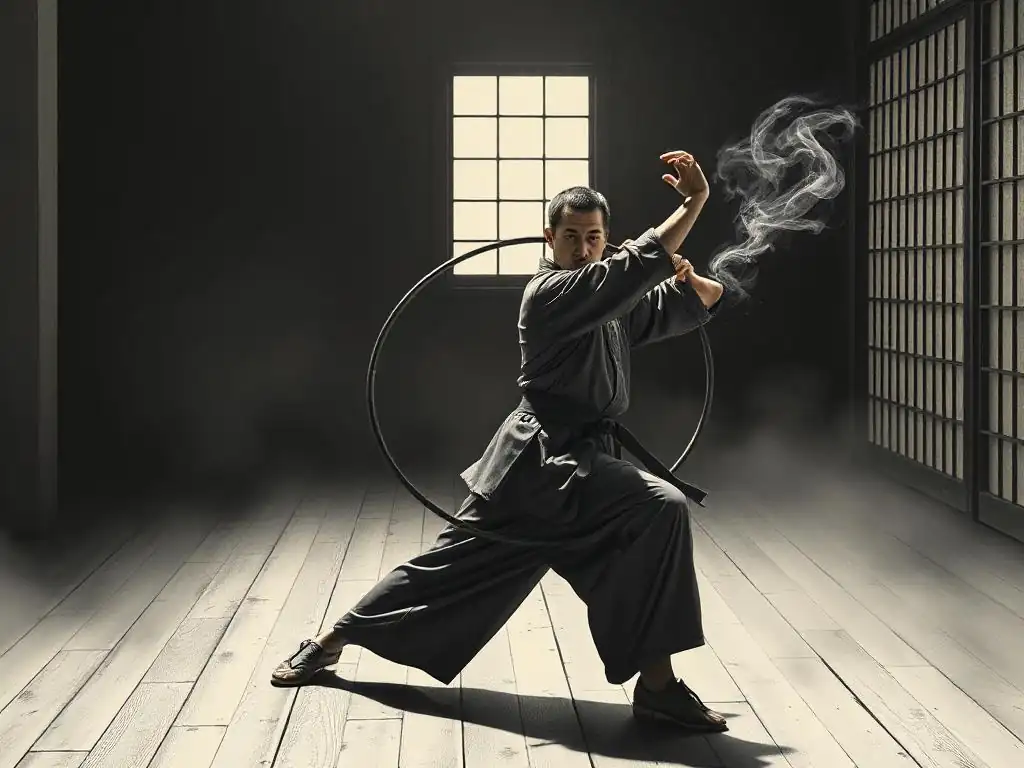
Self-Defense Applications: Integrating Iron Wire and Crane Beak in Real-World Scenarios
Applying the principles of Iron Wire and Crane Beak in self-defense requires seamless integration. In a real-world confrontation, the situation is dynamic and unpredictable, demanding the ability to instantly switch between hard and soft, rooted and mobile. The Iron Wire training provides the practitioner with the ability to absorb sudden impacts, resist pushes or grabs, and generate powerful defensive or offensive force from a stable base, even in confined spaces.
Simultaneously, the Crane Beak training provides the tools for managing distance, evading attacks, and targeting vulnerable areas. If faced with a fast strike, the practitioner might use crane-like footwork to shift out of the way while simultaneously employing a soft deflection.
If grabbed, the Iron Wire structure allows them to resist being moved, while a precise crane beak strike to a pressure point could create an opening to escape or counter. Effective self-defense using Hung Gar hinges on this fluid combination of the immovable mountain (Iron Wire/Tiger) and the elusive bird (Crane Beak/Crane), embodying the practical application of the Hung Gar Crane Tiger Form principles.
Defending Against a Grapple with Iron Wire Structure and Crane Beak Strikes
Defending against a grapple is a prime example where the duality of Iron Wire and Crane Beak shines. An opponent attempting a takedown or control often relies on disrupting balance and applying pressure. The Iron Wire-trained practitioner's strong root and unified structure make them incredibly difficult to off-balance. They can sink their weight, engage their core, and use their "heavy" bridge hands to resist the opponent's attempts to manipulate their limbs or posture.
While maintaining this solid structure, the practitioner can utilize Crane Beak principles for targeted counter-attacks. Precise, short-range strikes using the crane beak hand to vulnerable areas like the eyes, throat, or groin can create immediate pain and distraction, breaking the opponent's focus and grip. Wing-like movements with the forearms can be used to create space or break holds. This combination of unyielding structure and precise, disruptive strikes makes the Hung Gar practitioner formidable in close-quarters situations, showcasing the practical interplay within the Hung Gar Crane Tiger Form approach.
Using Crane Beak Footwork to Create Openings for Iron Wire Power Generation
Crane Beak footwork isn't just for evasion; it's a strategic tool for setting up powerful attacks. By using light, agile steps to circle, pivot, or retreat slightly, the practitioner can draw the opponent in, create angles, or shift their own position to gain a strategic advantage. These movements can disrupt the opponent's balance or leave them momentarily exposed.
Once an opening is created through this fluid movement, the practitioner can instantly transition to generating power using their Iron Wire-trained structure and ging. A quick step into a solid stance, combined with the coordinated release of internal energy through a hard bridge hand strike or a rooted punch, can deliver a devastating blow.
This dynamic shift from evasive movement to explosive power is a hallmark of skilled Hung Gar application and demonstrates how the Crane Beak's fluidity serves to enhance and enable the Iron Wire's formidable force, a key aspect of the comprehensive Hung Gar Crane Tiger Form training.
The Legacy of the Hung Gar Iron Wire and Crane Beak Forms
Historical Context: The Origins and Evolution of the Forms
Hung Gar traces its lineage back to the Southern Shaolin Temple and the turbulent period of the Qing Dynasty. While the style itself consolidated over generations, the Iron Wire Form is specifically attributed to Tit Kiu Sam (circa 1813-1886), one of the Ten Tigers of Canton. His mastery of internal conditioning and bridge hand techniques led to the development of this unique form, emphasizing internal power and physical resilience.
The Crane principles, while perhaps not codified into a single standalone "Crane Beak Form" in the same way as Iron Wire, are integral to forms like the famous Tiger-Crane Double Form (Fu Hok Seung Ying Kuen), attributed to Wong Fei Hung (1847-1924), who synthesized various Hung Gar elements. These principles evolved through observation of nature and the refinement of techniques focused on agility, evasion, and precise striking.
The combination of Tiger (representing power, rootedness, often linked to Iron Wire principles) and Crane (representing grace, evasion, precision, linked to Crane Beak principles) became a central theme in Hung Gar, culminating in the widespread recognition of the Hung Gar Crane Tiger Form concepts as embodying the style's duality.
Influential Practitioners of the Iron Wire and Crane Beak Styles
Beyond Tit Kiu Sam's foundational contribution to Iron Wire, masters like Lam Sai Wing (1861-1942), a direct student of Wong Fei Hung, were instrumental in popularizing and systematizing both the Iron Wire Form and the Tiger-Crane Double Form, which integrates many Crane Beak principles. Lam Sai Wing's detailed instructional books provided invaluable documentation of these forms and their applications, ensuring their transmission to future generations.
In more recent times, masters such as Lam Cho (1910-2012), Lam Sai Wing's nephew, and his descendants like Lam Chun Fai have continued to teach and preserve these core Hung Gar forms. Their dedication has ensured that the intricate details of Iron Wire's internal training and the refined techniques of the Crane Beak remain accessible to practitioners worldwide, maintaining the integrity of the Hung Gar Crane Tiger Form tradition. The influence of these practitioners is immeasurable in keeping the legacy of these vital training sets alive.
The Enduring Importance of the Iron Wire and Crane Beak Forms in Modern Hung Gar Training
In contemporary Hung Gar schools, the Iron Wire Form and the principles of the Crane Beak remain cornerstones of serious training. While students may begin with simpler forms, mastery of Iron Wire is often seen as a benchmark of advanced internal development, typically introduced after a solid foundation in stances and basic forms has been established. It is a physically and mentally demanding process that requires dedication and perseverance.
Similarly, the principles of the Crane Beak, whether taught through the Tiger-Crane form or specific drills, are essential for developing the necessary balance of hard and soft skills. Modern practitioners understand that relying solely on external strength is insufficient; true mastery lies in the ability to integrate internal power with fluid movement and precise application. The enduring importance of these forms lies in their ability to systematically develop the practitioner's physical capabilities, internal energy, mental focus, and strategic understanding, ensuring that the comprehensive approach embodied by the Hung Gar Crane Tiger Form remains relevant and effective.
Conclusion: Embracing the Complete Warrior Through the Iron Wire and Crane Beak Forms
The Iron Wire and Crane Beak forms, or the principles they embody, represent the profound duality that lies at the heart of Hung Gar Kung Fu. Iron Wire builds the immovable foundation, cultivating internal strength, structure, and raw power akin to the Tiger. Crane Beak refines the external application, fostering agility, precision, and evasiveness like the Crane. Together, they provide a complete training methodology that develops both the internal fortitude and the external skill necessary for effective combat.
Mastering these forms is a lifelong journey, demanding patience, discipline, and a deep understanding of the interplay between hard and soft, internal and external. It is through the dedicated practice of Iron Wire's rigorous conditioning and the Crane Beak's refined techniques that the Hung Gar practitioner truly embodies the balance and versatility required to face any challenge. The Hung Gar Crane Tiger Form concepts, deeply rooted in these principles, offer a path not just to martial prowess, but to the development of a complete and balanced individual, a warrior capable of both strength and grace.
Frequently Asked Questions
What is the significance of the Tiger & Crane form in Hung Gar?
The Tiger & Crane form is a signature component of Hung Gar kung fu, embodying the balance of hard and soft styles. It teaches practitioners to cultivate both power and flexibility in their movements.
How does the Tiger element manifest in the form?
The Tiger aspect represents strength, aggression, and direct power. It involves powerful stances and strikes, emphasizing bone conditioning and physical resilience.
What does the Crane element contribute to the Tiger & Crane form?
The Crane element embodies grace, agility, and indirect defense. It focuses on evasive movements, precision strikes to vital points, and the use of qi (internal energy).
Is the Tiger & Crane form suitable for beginners in Hung Gar?
Generally, the Tiger & Crane form is considered an intermediate to advanced form. Beginners usually learn foundational stances and techniques first, before tackling its complex sequences and principles.
Where can I learn more about the Tiger & Crane form and Hung Gar kung fu?
MartialArtsMastery.org provides resources on Hung Gar, including historical overviews, training techniques, and philosophical insights. You can also find qualified Hung Gar instructors in your local area.
Final Reflection: Embracing the Balance of Tiger and Crane
The exploration of the Hung Gar Crane Tiger Form reveals more than just a martial arts sequence; it unveils a profound philosophy of balance, adaptability, and inner strength. This duality, mirrored in the powerful tiger and the graceful crane, remains strikingly relevant today, offering a timeless framework for navigating the complexities of modern life. In a world often demanding either aggressive action or passive acceptance, the Crane Tiger Form reminds us that true mastery lies in harmonizing seemingly opposing forces.
The enduring influence of this form extends beyond the dojo, shaping our understanding of resilience and the power of strategic thinking. Personally, I've found that understanding the interplay between the tiger's direct power and the crane's evasive grace has profoundly impacted my approach to challenges, both physical and mental. Be like water making its way through cracks. Do not be assertive, but adjust to the object, and you shall find a way around or through it. If nothing within you stays rigid, outward things will disclose themselves.
- Bruce Lee. This quote encapsulates the essence of the Crane Tiger Form, highlighting the importance of adaptability and fluidity in the face of adversity.
As we conclude this journey into the heart of Hung Gar's Crane Tiger Form, I invite you to reflect on the balance within your own life. Where do you find yourself leaning too heavily on one extreme? How can you cultivate the strength of the tiger alongside the grace of the crane? Embrace the duality, find your center, and discover the profound power that lies within the harmonious integration of these seemingly opposing forces.
Embrace the Balance: Integrate Tiger & Crane Into Your Life!
Thank you for delving into the fascinating duality of the Tiger and Crane form in Hung Gar. You've unlocked a deeper understanding of its powerful symbolism and practical application. Now, let's translate that knowledge into action!
Here are some ways to further your journey:
- Commit to practicing the Tiger & Crane form at least three times a week, focusing on the integration of power and grace.
- Share your insights! Discuss the symbolism of the Tiger and Crane with fellow martial artists, sparking engaging conversations about balance and duality.
- Explore other martial arts styles that emphasize complementary principles, such as Yin and Yang in Tai Chi, to broaden your understanding.
What specific element of the Tiger & Crane form will you focus on improving in your next training session?