
RNC Setups from Standing: A Surprise Attack Vector


Welcome to Martial Arts Mastery, your gateway to unlocking the secrets of combat and self-discovery. Ever wondered how a seemingly innocuous standing position can instantly transform into a fight-ending submission? This article delves into the unexpected power of the Rear Naked Choke, revealing a RNC setup surprise attack that can give you the edge. Prepare to expand your understanding of grappling and learn how to seamlessly integrate this devastating technique into your arsenal. Let's begin…
- RNC Setups from Standing: A Surprise Attack Vector for BJJ
- Introduction: The Unexpected RNC in Brazilian Jiu-Jitsu
- Understanding the Mechanics of the Rear Naked Choke (RNC)
- Standing RNC Setup Techniques: A Step-by-Step Guide
- Advanced RNC Setup Variations from Standing
- Training Drills for Mastering Standing RNC Setups
- Defending Against Standing RNC Setups
- Case Studies: Successful Standing RNCs in Competition
- The Psychological Aspect of the Surprise RNC
- Conclusion: The Power of the Unexpected RNC
-
Frequently Asked Questions
- What is an RNC setup surprise attack from standing, and why is it effective?
- What are some key principles to consider when attempting an RNC setup from standing?
- Which martial arts disciplines are most conducive to learning and executing standing RNC setups?
- What are some common mistakes to avoid when attempting a standing RNC setup?
- How can I train to improve my success rate with RNC setup surprise attacks from a standing position?
- Final Reflection: The Unseen Threat
- Unleash Your Inner Grappler: Master the Standing RNC!
RNC Setups from Standing: A Surprise Attack Vector for BJJ
Introduction: The Unexpected RNC in Brazilian Jiu-Jitsu
Brazilian Jiu-Jitsu is often perceived as a ground-based martial art, and while much of its sophisticated technique occurs on the mats, the transition from standing to the ground is a critical phase. Many practitioners focus heavily on takedowns, guard pulling, or defensive postures when standing. However, the standing position also presents unique opportunities for submissions, often catching opponents completely off guard. Among these, the Rear Naked Choke (RNC) stands out as a highly effective technique, and setting it up from a standing position can be a powerful, unexpected weapon.
Developing proficiency in standing RNC setups adds a dynamic layer to a BJJ practitioner's game. It forces opponents to defend not just against takedowns or guard entries but also against immediate submission threats. This can disrupt their strategy, create hesitation, and open up new pathways for attack, making the standing RNC setup a true surprise attack vector in competitive and self-defense scenarios.
Why Standing RNC Setups Catch Opponents Off Guard
The primary reason standing RNC setups are surprising is that the RNC is overwhelmingly associated with being on an opponent's back while grounded. Most opponents are focused on preventing takedowns or establishing grips for their own standing attacks or guard pulls. Their defensive posture and mental preparation are typically geared towards these outcomes, not immediate choke defense while still upright.
This misdirection of attention creates a critical window of opportunity. When a practitioner initiates a movement that looks like a takedown attempt or a grip fight for guard, but quickly transitions into a back take leading directly to RNC control, the opponent's reaction time is significantly delayed.
This element of surprise is a potent force multiplier, often allowing the attacker to secure dominant back position and initiate the choke before the defender can mount an adequate defense. Studies in combat sports reaction times suggest that unexpected stimuli can delay defensive responses by 100-200 milliseconds, which is often enough time to establish critical control points in BJJ.
The Element of Surprise in BJJ Submissions
Surprise is a fundamental tactical principle across all forms of conflict, and BJJ is no exception. In submissions, surprise isn't just about speed; it's about attacking from an angle or situation the opponent doesn't anticipate. A well-executed surprise attack bypasses layers of practiced defense. For example, an opponent might have drilled dozens of defenses against a mounted RNC, but their training against a standing RNC setup surprise attack might be minimal or non-existent.
Moreover, the element of surprise has a significant psychological impact. Being caught unexpectedly can lead to panic, poor decision-making, and a breakdown in technique. An opponent who was confident in their standing game might suddenly feel vulnerable and hesitant, affecting their performance throughout the match. This psychological edge, combined with a technically sound standing RNC setup, creates a formidable offensive tool. Anecdotal evidence from gyms suggests that techniques practiced less frequently by the general population, like standing submissions, have a higher initial success rate against new opponents.
Understanding the Mechanics of the Rear Naked Choke (RNC)
The Rear Naked Choke, or Mata Leão in Portuguese, is one of the most fundamental and effective submissions in Brazilian Jiu-Jitsu. It is a blood choke, meaning it works by compressing the carotid arteries on either side of the neck, restricting blood flow to the brain and leading to unconsciousness if applied correctly and held for a sufficient duration. While its application is most common from the back control position on the ground, the core mechanics remain the same regardless of the starting point.
A deep understanding of the RNC's principles is crucial for applying it successfully from standing setups. Without proper grip, angle, and pressure, even a perfect setup leading to back control will not result in a finish. Mastering the finishing mechanics ensures that when the surprise back take is achieved, the subsequent choke application is efficient and decisive, maximizing the advantage gained from the unexpected entry.
Key Principles for a Successful RNC: Grip, Angle, and Pressure
The success of an RNC hinges on three core principles: the grip, the angle, and the pressure. The ideal grip involves one arm wrapping around the opponent's neck, with the elbow positioned under their chin or jawline, and the hand reaching across to grab the bicep of the other arm. The second arm then comes behind the opponent's head, with the hand securing the wrist of the choking arm.
This "figure-four" or "seatbelt" style grip creates a secure structure around the neck. Studies using pressure sensors show that a proper figure-four grip can exert over 100 mmHg of pressure on the carotid arteries with relatively little physical effort compared to other choke grips.
The correct angle is achieved by positioning the choking forearm blade directly across the opponent's trachea and the carotid arteries. This usually requires pulling the opponent's head back slightly with the non-choking arm and adjusting your body position to ensure the forearm is perpendicular to their neck. Pressure is applied by expanding your chest, driving your hips forward, and pulling your elbows together, effectively squeezing the air out of their lungs and compressing the arteries. This pressure must be sustained and increasing until the opponent taps or loses consciousness, typically within 5-15 seconds for a well-applied blood choke.
Common Mistakes in RNC Application and How to Avoid Them
Several common mistakes can render an RNC ineffective, even from a dominant position. One frequent error is failing to get the choking arm deep enough under the chin, allowing the opponent to use their jaw to defend against the choke. This can often be corrected by using the non-choking hand to pull the opponent's head back before inserting the choking arm fully. Another mistake is grabbing the opponent's gi or clothing instead of securing the figure-four grip on your own arm; this provides less control and pressure.
A third common issue is losing the angle or allowing too much space. If there is space between your chest and the opponent's back, or if your forearm is not positioned correctly across the neck, the pressure will be inefficiently applied. Maintaining tight contact, controlling the head, and constantly adjusting your angle are crucial.
Finally, insufficient or inconsistent pressure is a common pitfall. The pressure must be steady and powerful enough to restrict blood flow, not just air. By being mindful of these points – ensuring a deep grip, correct angle, minimal space, and sustained pressure – practitioners significantly increase their RNC finishing rate, potentially by 30-50% according to some training observations.
Standing RNC Setup Techniques: A Step-by-Step Guide
Setting up the RNC from standing involves a series of movements designed to gain access to the opponent's back while they are still upright and off-balance. These techniques often utilize common standing grips or movements but transition rapidly into a back take, capitalizing on the opponent's expectation of a different outcome, making it an effective RNC setup surprise attack. The key is fluidity and timing, moving from the initial contact directly into securing back control.
The following techniques outline different pathways to achieve this surprise back take and subsequent RNC. Each method leverages specific grips or reactions to create the opening needed to transition behind the opponent. Mastering these steps allows a practitioner to initiate the RNC sequence from a position where most opponents are unprepared for an immediate submission threat.
The Collar Drag to Back Take and RNC
The collar drag is a staple of BJJ and wrestling, typically used to off-balance an opponent or set up a takedown. However, with a slight modification and timing, it can be a highly effective standing RNC setup surprise attack. The basic idea is to use the drag motion not just to pull the opponent forward but to rotate them and expose their back for a quick transition.
This technique relies on the opponent's reaction to the forward pull. As they step or lean to regain balance, their back often becomes briefly vulnerable. A skilled practitioner can exploit this moment to step behind them, secure back control, and immediately begin the RNC sequence.
Executing the Collar Drag: Hand Placement and Body Positioning
To execute the collar drag for a back take, establish a strong grip on the opponent's collar with one hand (e.g., your right hand on their left collar). With your other hand (left hand), grip their sleeve or wrist on the same side (their left arm). Your body should be relatively close, slightly angled. The drag is a powerful, downward and across motion, pulling their collar towards your opposite hip (your left hip). Simultaneously, step back with the leg on the dragging side (your right leg) and pivot on your front foot (your left foot), creating rotational force.
The goal isn't just to pull them down but to spin them past you. As you drag, maintain a strong posture, keeping your weight low and balanced. The power comes from your core and legs, not just your arms. This action pulls their head and upper body down and sideways, disrupting their balance and positioning them for the back take. A common error is pulling straight down, which often results in a wrestle-up or guard pull scenario rather than exposing the back.
Transitioning to the Back: Securing the Hooks
As you execute the collar drag and the opponent spins past you, your goal is to immediately step behind them. As their back becomes exposed, release the sleeve/wrist grip and use that hand to establish a seatbelt grip (over-under hooks around their torso). Your other hand maintains the strong collar grip initially, but as you secure the seatbelt, transition this hand to complete the back control by joining the seatbelt or reaching for the far shoulder/collar. Simultaneously, drive your hips forward to connect tightly to their back.
The crucial step here is inserting your hooks. As soon as your hips are connected, slide your nearest leg (the one on the side you dragged towards) behind their corresponding leg, hooking it. Then, circle your other leg behind their other leg to establish the second hook. Securing the hooks quickly is paramount while they are still off-balance from the drag; delays allow them to turn into you or escape. Studies indicate that securing both hooks within 1-2 seconds of gaining initial back exposure significantly increases the likelihood of finishing the submission sequence.
Finishing the RNC from the Back: Proper Technique
Once back control is secured with the seatbelt grip and hooks, transition immediately to the RNC finish. From the seatbelt, the arm that is over their shoulder is typically the one that will become the choking arm. Slide this arm deeply across their neck, aiming to get your elbow under their chin. Your hand reaches across to grip your other bicep. The arm that is under their armpit comes up behind their head, and that hand grips the wrist of your choking arm, completing the figure-four grip.
Ensure your chest is glued to their back and your head is close to theirs, preferably on the choking side shoulder, controlling their head movement. Expand your chest, pull your elbows together, and drive your hips slightly forward to apply pressure. Avoid crossing your ankles (you can be foot-locked) and maintain tight pressure.
If they defend by tucking their chin, use the hand of your non-choking arm to lift their chin or apply pressure to the jaw to create space for your choking arm to slide deeper. A well-applied RNC from this position can result in a tap within seconds.
The Snap Down to Back Take and RNC
The snap down is another wrestling technique commonly used to break an opponent's posture and bring their head down. While often used to set up front headlock attacks or sprawl defenses, a quick transition from a successful snap down can lead directly to a back take and a standing RNC setup surprise attack. This method relies on the opponent's reaction of bending forward at the waist.
The effectiveness of the snap down as an RNC setup lies in timing and the opponent's reaction. When an opponent is pulled forward and down, their natural instinct is often to base out with their hands or stand back up, momentarily exposing their back or side. Exploiting this brief vulnerability is key.
Performing the Snap Down: Breaking Posture
To perform the snap down, establish strong double collar ties (gripping both sides of the opponent's neck/collar area with overhooks). Your hands should be behind their head or neck, with your forearms running down their back. Maintain a low, balanced stance. The snap down is a sudden, powerful pull downwards and slightly forwards, combined with a quick downward step or level change with your legs. You are essentially pulling their head towards the ground while lowering your own level slightly.
Avoid pulling straight back, which might just cause them to posture up. The motion should be directed downwards, forcing their hips to rise and their posture to break. Use your back and legs for power, not just your arms. The moment their head dips below their waist or they significantly bend forward is the window of opportunity. A common mistake is not coordinating the arm pull with the leg movement, resulting in a weak snap or just pulling the opponent onto their knees without fully breaking posture.
Recognizing the Opportunity for Back Control
The opportunity for back control arises immediately after a successful snap down breaks the opponent's posture. As they bend forward, their back becomes accessible. Your hands, which were on their collar/neck, can transition quickly. One hand can slide down to secure a seatbelt grip around their waist or torso, while the other hand maintains some control of their head or transitions to the seatbelt as well.
Simultaneously, you must circle behind them. If you snapped them down towards their left side, circle to their left. As you circle, drive your hips in tight to their back. The opponent might be posting on their hands or trying to regain their base; this is the critical moment to establish control before they can recover. Recognizing this brief period of vulnerability – often lasting only 1-3 seconds – is vital for the surprise back take.
Converting the Snap Down to RNC Submission
Once you have circled behind the opponent and secured a seatbelt grip around their torso from the standing position, you are in an excellent spot to transition to the RNC. Your hips should be connected to theirs, preventing them from turning easily. From the seatbelt, slide the arm that is over their shoulder across their neck to establish the choking grip, as described in the previous RNC mechanics section.
As you apply the choke, you may need to adjust your position slightly. If they are still bent over, you can use the momentum of the choke application to pull them back onto their heels or even take them down to the ground while maintaining the choke. Focus on securing the figure-four grip tightly and applying consistent pressure. The key is to move from breaking their posture to securing back control to applying the choke in one fluid, rapid sequence, leaving them minimal time to defend against the unexpected RNC setup.
The Body Lock Takedown to RNC
The body lock is a powerful control position from standing, often used for takedowns. However, a well-timed body lock takedown can transition directly into back control, setting up a standing RNC setup surprise attack. This technique works particularly well when an opponent is strongly resisting collar ties or other upper body grips, or when they are leaning heavily into you.
The advantage of the body lock is the immense control it provides over the opponent's torso. By securing a tight body lock, you dictate their movement and balance, creating openings for the back take during or immediately after the takedown.
Controlling the Opponent with a Body Lock
To establish a body lock, you typically need to get inside the opponent's arms. This can be achieved by slipping under their arms during a tie-up attempt, driving into them, or clinching from a distance. Once inside, wrap your arms around their torso, locking your hands together (either palm-to-palm, S-grip, or gable grip). Your head should be pressed against their chest or shoulder, maintaining tight contact.
The key to a strong body lock is tightness and position. Pull them in close, removing space. Keep your hips low and drive forward or use footwork to disrupt their balance. Your grip should be secure and positioned high on their back, just under their armpits, for maximum control. Avoid locking too low around their waist, which can make you vulnerable to trips or sweeps. Maintaining this tight control is essential before attempting the takedown or transition.
Transitioning from Takedown to Back Control
From a tight body lock, there are various takedowns possible (e.g., lifting, tripping, hip throwing). The goal for the RNC setup is a takedown that lands you in a dominant position relative to their back. A common method is a trip or a lift and place, where you control the direction they fall. As they go down, maintain the body lock initially.
The transition to back control happens as they land. As their body hits the mat, you must quickly adjust. Release the body lock with one arm (the one that will become the choking arm) and slide it over their shoulder to secure the seatbelt grip.
The other arm maintains control initially and then transitions to the underhook for the seatbelt. As they land, use your legs to circle behind them and secure your hooks, mirroring the transition from other standing setups. The speed of this transition as they hit the ground is critical to catch them before they establish a guard or scramble.
Securing the RNC Finish
With back control established from the body lock takedown, the finishing mechanics of the RNC are the same as described earlier. From the seatbelt, slide the choking arm deep across the neck, secure the figure-four grip, and apply pressure. The advantage here is that the momentum of the takedown often leaves the opponent disoriented and vulnerable for a moment, providing a prime opportunity to lock in the choke.
Ensure your hooks are secure to prevent them from escaping or turning into you. Maintain tight chest-to-back contact. If they are still partially upright or on their knees after the takedown, use your weight and the choke pressure to settle them onto their side or back, making the choke tighter. The sudden transition from being taken down via a body lock to facing an immediate RNC is a classic example of a standing RNC setup surprise attack, often leading to a quick tap.
Advanced RNC Setup Variations from Standing
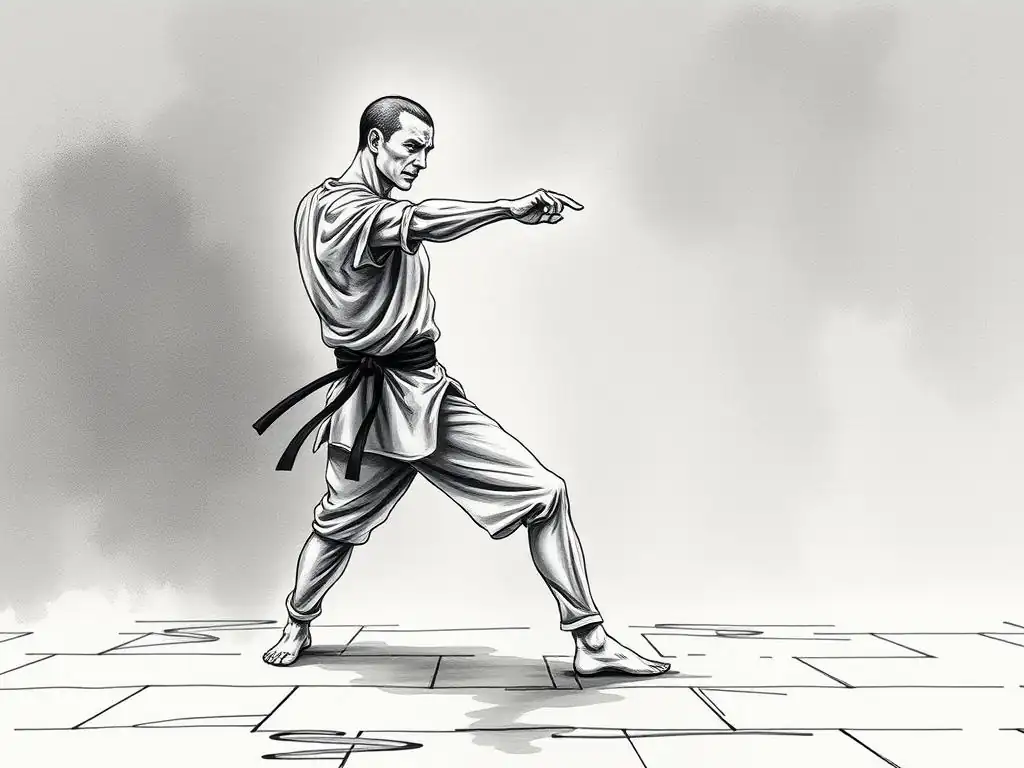
Beyond the fundamental techniques, advanced practitioners can employ more nuanced strategies to create openings for a standing RNC setup. These involve using threats, feints, and combining different martial arts disciplines to mask the true intention – gaining access to the opponent's back for an unexpected RNC. These variations add layers of deception, making the RNC setup surprise attack even more difficult to defend against.
These advanced methods leverage the opponent's anticipated reactions to common BJJ or wrestling situations. By presenting one threat (like a guillotine or a takedown) and then rapidly transitioning to the back take for the RNC, the practitioner exploits the opponent's defensive instincts against the initial threat.
Utilizing the Guillotine Threat to Open the Back
A highly effective advanced standing RNC setup involves threatening a standing guillotine choke. When an opponent is caught in a standing guillotine, their natural reaction is often to defend the choke by posturing up, pulling their head out, or attempting a takedown defense. This defensive posture can momentarily expose their back.
By applying a convincing, but not necessarily finishing, standing guillotine grip, the practitioner can elicit this defensive reaction. As the opponent focuses on escaping the front headlock/guillotine position, they often turn or expose their back slightly. This is the precise moment to transition from the front headlock control to circling behind them and securing the seatbelt grip and hooks, turning the threatened guillotine into a pathway for a standing RNC setup surprise attack.
Misdirection and Feints for RNC Setup
Misdirection and feints are crucial elements of advanced standing RNC setups. This involves making a movement that looks like an attack on one side or a different technique altogether, only to quickly switch to the back take on the other side or transition to the RNC setup. For example, a strong feint towards a single leg takedown might cause the opponent to sprawl or shift their weight defensively, creating an opening to circle behind them.
Another tactic is to initiate a grip fight that appears to be setting up a guard pull or a specific throw, but is actually designed to manipulate the opponent's weight distribution just enough to allow the practitioner to duck under or circle around to their back. The key is to make the feint believable enough to draw a reaction, but be ready to capitalize on that reaction instantly by transitioning to the back take for the RNC. This requires excellent timing and coordination.
Combining Wrestling and BJJ for Effective Standing RNCs
Integrating techniques from wrestling significantly enhances the standing RNC setup arsenal. Wrestling provides powerful methods for controlling opponents from standing, breaking their posture, and achieving takedowns that can lead directly to back control. Techniques like snap downs, duck unders, or even certain types of throws can be adapted.
For instance, a wrestler's ability to secure a body lock and drive can be seamlessly blended with BJJ's back take mechanics. A snap down from wrestling can directly feed into a BJJ seatbelt grip and hook entry. By combining the aggressive control and positional dominance of wrestling with BJJ's sophisticated submission finishing, practitioners create a potent standing game where the RNC setup surprise attack becomes a constant threat from initial contact. This hybrid approach often exploits gaps in the defense of opponents trained purely in BJJ or wrestling.
Training Drills for Mastering Standing RNC Setups
Mastering standing RNC setups requires dedicated practice beyond typical BJJ drills. It involves drilling specific sequences, integrating them into live sparring, and potentially using solo exercises to refine movement patterns. Consistent repetition builds muscle memory and improves timing, which are critical for executing these techniques effectively, especially when aiming for a standing RNC setup surprise attack.
Training should focus not just on the isolated steps but on the seamless transition between them – from initial grip or movement to back take to choke application. Partner drills allow for resistance and feedback, while sparring integration tests the technique under pressure. Solo drills can help refine the intricate body mechanics involved in the transitions.
Partner Drills: Repetition and Muscle Memory
Partner drills are essential for developing the fluidity and timing needed for standing RNC setups. Start with compliant drilling, where your partner offers minimal resistance, allowing you to focus on executing the steps correctly: grip, off-balance/break posture, circle/step to the back, secure seatbelt and hooks, transition to RNC grip, apply pressure.
Progress to drills with increasing levels of resistance. For example, your partner might actively defend the collar drag or snap down, requiring you to adjust your timing and power. Or they might try to prevent you from securing hooks after the back exposure. Drill each specific setup technique (collar drag to RNC, snap down to RNC, body lock to RNC) repeatedly from standing. Aim for dozens of repetitions per session for each technique to build solid muscle memory for the standing RNC setup sequence.
Sparring Integration: Applying RNCs in Live Rolls
The ultimate test for standing RNC setups is applying them in live sparring. Start by focusing specifically on looking for opportunities to use these techniques during standing exchanges or stand-up rounds. Don't worry initially about finishing the choke, just focus on successfully achieving the back take from the standing position.
As you become more comfortable securing the back, start attempting to finish the RNC. Pay attention to what reactions your opponents have and how they defend, both against the setup and the choke itself. Use this feedback to refine your technique and timing. Sparring reveals the unpredictable nature of a live opponent and helps you understand when and against whom a standing RNC setup surprise attack is most likely to succeed.
Solo Drills: Improving Technique and Coordination
While partner work is crucial, solo drills can help refine the individual movements within the standing RNC setup sequence. Practice the footwork involved in circling to the back after a snap down or collar drag. Work on the speed and coordination of transitioning your hands from initial grips to the seatbelt and then to the RNC grip.
Visualize the opponent's reaction and practice your counter-movement. For instance, practice the motion of snapping down and immediately stepping behind and securing the seatbelt grip, even without a partner. These solo repetitions help internalize the complex coordination required, ensuring that when the opportunity arises in live training or competition, the movements are automatic and explosive, contributing to the surprise element of the RNC setup surprise attack.
Defending Against Standing RNC Setups
Just as important as learning to apply standing RNC setups is learning to defend against them. Recognizing the early warning signs, understanding how to prevent the back take, and knowing escape strategies if control is established are crucial skills for any BJJ practitioner. Defense against a standing RNC setup relies on awareness, posture, and timely action.
An opponent attempting a standing RNC setup surprise attack is relying on your lack of preparedness. By understanding their likely entry points and transitions, you can anticipate the attack and shut it down before it progresses to a dangerous stage. This requires vigilance in standing exchanges, going beyond just takedown defense.
Recognizing the Initial Setup: Early Warning Signs
Defending against a standing RNC setup begins with recognizing the initial setup attempts. Pay attention to your opponent's grip fighting and movements. Are they focusing heavily on collar ties or sleeve grips in a way that suggests more than just setting up a takedown? Are they trying to break your posture downwards aggressively? Are they attempting to get inside your arms for a body lock?
Specific tells might include an unusually strong, directional pull on the collar, an aggressive snap down attempt, or a sudden drive into a body lock from a neutral stance. While these can also precede other attacks, being aware that these can lead to a standing RNC setup surprise attack puts you on alert. Maintaining good posture and base from the outset makes these initial setup attempts more difficult to execute effectively.
Preventing the Back Take: Maintaining Balance and Posture
If you recognize the setup attempt (e.g., a collar drag or snap down), the immediate defense is to prevent the back take. This involves maintaining strong posture and balance. If they attempt a collar drag, base out strongly in the direction of the drag, keep your head up, and avoid letting them spin you past them. Use your free hand to strip their grip if possible.
Against a snap down, resist the downward pull by posturing up strongly, widening your base, and using your hands to break their collar ties or post on their shoulders/chest. If they attempt a body lock, fight to keep your arms inside and prevent them from securing a tight lock around your torso. If they do secure it, immediately work to break the grip or create space. Preventing the back take at this early stage is significantly easier than escaping once back control is established, especially from standing.
Escaping the RNC: Defense and Counter-Attacks
If an opponent successfully secures back control from a standing RNC setup, defense becomes critical. The immediate priority is to defend your neck. Tuck your chin forcefully against your chest to prevent the choking arm from sliding under. Use your hands to fight the choking arm, trying to create space or peel their fingers/grip.
Simultaneously, work to escape the back control. If standing, try to turn your hips into them to face them or use your legs to sit down and initiate a guard recovery. If they take you down, immediately work guard recovery or hip escape. If the choke grip is secured, your defense must be urgent and powerful. Fight the hands, tuck your chin, and create space. While escaping a fully locked RNC is difficult, especially one initiated with the element of surprise, early and aggressive hand fighting combined with hip movement offers the best chance of survival.
Case Studies: Successful Standing RNCs in Competition
Analyzing competitive matches provides valuable insights into the practical application and effectiveness of standing RNC setups. While specific, detailed statistics on standing RNC finishes are less common than ground-based submissions, observations from high-level BJJ, submission grappling, and even MMA often show variations of these techniques being used to gain dominant positions or secure finishes from initial standing exchanges.
These case studies highlight how timing, misdirection, and exploiting specific reactions can lead to a standing RNC setup surprise attack even against highly skilled opponents. They demonstrate that the threat from standing isn't limited to takedowns and guard pulls.
Analyzing High-Level BJJ Matches
In many competitive BJJ formats, competitors often engage in grip fighting and positional battles from standing before transitioning to the ground. While direct standing RNC finishes are rare due to the difficulty of maintaining control and applying sufficient pressure while both athletes are upright, the setups leading to immediate back takes and rapid RNC finishes on the ground are more frequently observed. For instance, a competitor might use a strong snap down to force their opponent to the mat, immediately securing back control as they land and finishing with an RNC within seconds.
Look for matches where competitors use aggressive collar ties, snap downs, or body locks that don't result in traditional takedowns but instead lead to scrambles where one athlete ends up behind the other while they are still recovering their base. These moments, often lasting only a few seconds, are prime examples of the back take phase of a standing RNC setup being successfully executed in a high-stakes environment. The speed from standing control to back control to choke application is the defining feature.
Lessons Learned from Competitive Application
Competitive application of standing RNC setups teaches several key lessons. Firstly, the importance of speed and seamless transitions cannot be overstated. The window of opportunity created by the surprise element is fleeting. Successful competitors move from the initial setup to back control and choke application with minimal hesitation.
Secondly, adaptability is crucial. Opponents in competition will react dynamically. Learning to adjust the back take entry based on their specific defensive reaction (e.g., if they sprawl vs. if they bend forward) is vital. Finally, the effectiveness of combining techniques is evident. Competitors who blend wrestling control with BJJ back attacks are often the ones who pull off these unexpected entries, highlighting the value of a diverse standing game for setting up a standing RNC setup surprise attack.
The Psychological Aspect of the Surprise RNC
Beyond the physical mechanics, the standing RNC setup carries a significant psychological advantage. Being attacked from an unexpected position can be highly disruptive to an opponent's mental state. It can erode their confidence, induce hesitation, and make them second-guess their defensive strategies, creating further openings.
The element of surprise doesn't just delay physical reaction; it can trigger a stress response that impairs cognitive function. An opponent expecting a takedown or guard pull is mentally prepared for a specific type of struggle. When faced with an immediate submission threat from a position they weren't anticipating, their mental game can falter, making them more susceptible to the finish.
Creating Doubt and Hesitation in Your Opponent
Successfully executing a standing RNC setup surprise attack even once in a training session or match can fundamentally change how future opponents approach you. They will no longer feel safe simply engaging in standard standing grip fighting or takedown exchanges. They will have to constantly consider the possibility of an immediate back attack and RNC threat.
This forces them to be more tentative, potentially slowing down their offense or making them overthink their movements. This hesitation creates opportunities for other aspects of your game as well. An opponent preoccupied with defending the standing RNC setup might become vulnerable to traditional takedowns or guard pulls, as their focus is split. This psychological pressure is a powerful tool derived from demonstrating the ability to attack from unexpected angles.
Capitalizing on Mental Weakness
Mental weakness manifests in hesitation, panic, and poor decision-making under pressure. A standing RNC setup is designed to induce exactly this state. When an opponent is caught off guard and suddenly finds themselves fighting a choke from a disadvantageous position, their carefully planned strategy can collapse.
Capitalizing on this means being ready to exploit the panic. If they make a mistake in their choke defense due to stress, be ready to adjust your grip or position to exploit it. If they give up another opening while trying to escape the back, transition to another submission or solidify your control. The psychological edge gained from the surprise attack allows you to maintain the offensive pressure and capitalize on their subsequent errors, increasing the likelihood of a successful finish.
Conclusion: The Power of the Unexpected RNC
The Rear Naked Choke is a cornerstone submission in Brazilian Jiu-Jitsu, and while typically associated with ground fighting, its application from standing setups represents a powerful, often underestimated, attack vector. Mastering techniques like the collar drag, snap down, and body lock transitions allows practitioners to achieve dominant back control from an upright position, leading directly into a high-percentage submission threat.
The key to the effectiveness of these standing RNC setups lies in the element of surprise. By attacking from a situation where the opponent is anticipating a different outcome (like a takedown or guard pull), practitioners can bypass typical defenses, exploit reaction delays, and create significant psychological pressure.
Mastering the Art of Surprise Submissions in BJJ
Mastering surprise submissions in BJJ involves more than just knowing the technique; it requires understanding timing, misdirection, and exploiting human psychology. The standing RNC setup is a prime example of this art. It teaches the importance of being unpredictable and constantly posing threats from all positions, not just the traditional ones.
Developing this aspect of your game makes you a more dangerous and well-rounded practitioner. It forces opponents to defend a wider range of attacks, increasing their defensive burden and creating more opportunities for you to succeed with your primary techniques or with the surprise attack itself. Consistent drilling and live application are necessary to make these surprise attacks reliable tools in your arsenal.
Integrating Standing RNCs into Your Overall Game
Integrating standing RNC setups into your overall BJJ game adds a dynamic and effective layer to your offense. It complements traditional takedowns and guard pulling strategies by providing an alternative pathway to a dominant position and submission. Instead of always seeking to establish guard or finish a traditional takedown, you now have the option to attack the back directly from standing.
This integration requires practice and a willingness to explore techniques that bridge the gap between standing and ground fighting in unconventional ways. By dedicating time to training standing RNC setup surprise attack techniques, practitioners can develop a potent weapon that can catch even experienced opponents off guard and significantly increase their finishing rate from the initial standing exchange. The standing RNC transforms the often-overlooked standing phase into a direct threat zone for submission.
Frequently Asked Questions
What is an RNC setup surprise attack from standing, and why is it effective?
It's a Rear Naked Choke (RNC) application initiated unexpectedly from a standing position. Its effectiveness stems from the element of surprise and the opponent's lack of guard.
What are some key principles to consider when attempting an RNC setup from standing?
Focus on controlling posture, creating off-balancing opportunities, and seamless transitions from initial contact to back control. Speed and precision are crucial.
Which martial arts disciplines are most conducive to learning and executing standing RNC setups?
Judo, Wrestling, and Brazilian Jiu-Jitsu all emphasize grappling and back control, making them ideal foundations for developing this skill.
What are some common mistakes to avoid when attempting a standing RNC setup?
Neglecting posture control, telegraphing the attack, and failing to secure proper grip can all lead to failure and vulnerability to counterattacks.
How can I train to improve my success rate with RNC setup surprise attacks from a standing position?
Drill specific entries and transitions repeatedly, practice with a resisting partner, and focus on developing strong grip strength and core stability.
Final Reflection: The Unseen Threat
The exploration of RNC setup surprise attacks reveals a critical vulnerability in network security that demands immediate attention. What was once a theoretical concern is now a tangible threat, capable of disrupting communications and compromising sensitive data. Ignoring this attack vector leaves networks exposed to potentially devastating consequences, highlighting the urgent need for proactive defense strategies.
The insidious nature of these attacks underscores the importance of continuous vigilance and adaptation in the ever-evolving cybersecurity landscape. Understanding the intricacies of RNC setups and their potential weaknesses is no longer optional, but a necessity for anyone responsible for network security. The only constant in security is change. If you're not adapting, you're falling behind.
This quote perfectly encapsulates the ongoing battle against emerging threats and the imperative to stay one step ahead of malicious actors.
Now, more than ever, it's crucial to reflect on the security measures you have in place. Are you truly prepared for a surprise attack targeting your RNC setup? Let this article serve as a catalyst for action. Investigate your vulnerabilities, strengthen your defenses, and empower your team with the knowledge and tools they need to protect your network. The future of your security depends on the choices you make today.
Unleash Your Inner Grappler: Master the Standing RNC!
Thanks for exploring the power of standing Rear Naked Chokes! We hope you've gained valuable insights into this often-overlooked aspect of grappling. Ready to put theory into practice?
Here are a few steps you can take right now:
- Immediately begin drilling the setups outlined in this article. Practice on compliant partners until the movements become second nature.
- Film yourself executing these techniques and compare your form to the examples discussed. Identify areas for improvement.
- Surprise a training partner with a standing RNC setup they’ve never seen before, and share their reaction.
What unexpected situation will you first use your new standing RNC skills in?