
The Connection Between Capoeira Music and Acrobatic Expression

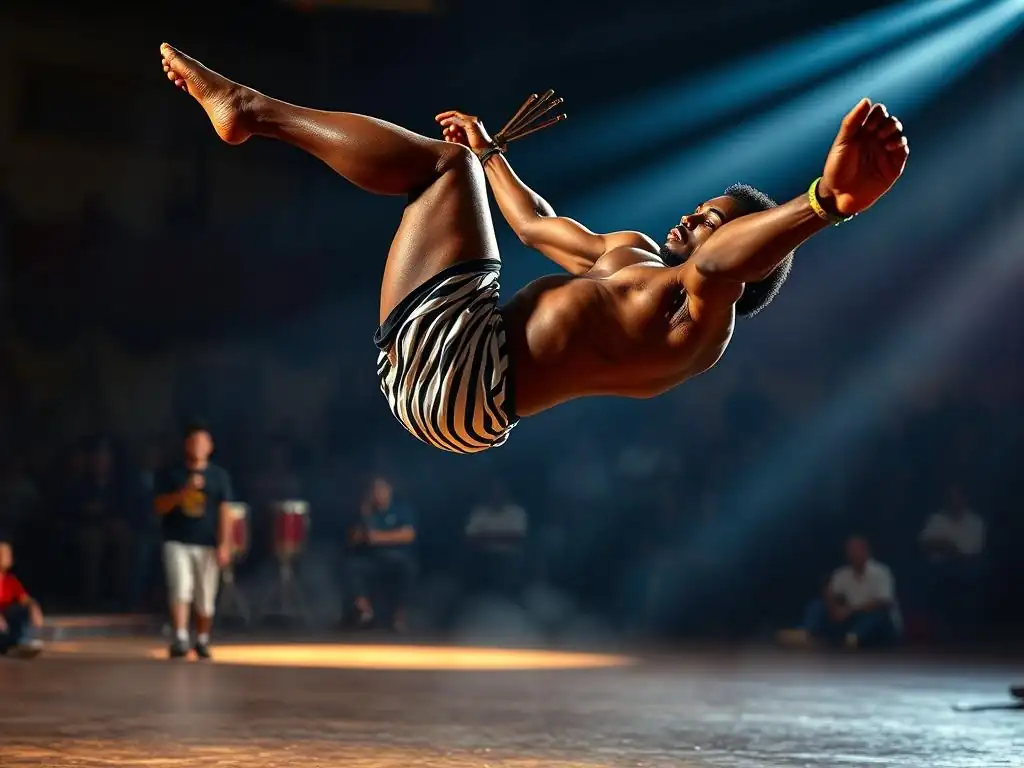
Welcome to Martial Arts Mastery, your portal to understanding the world's fighting traditions!
Delve into the captivating rhythm and dynamic movement of Capoeira, a Brazilian art form where music, acrobatic expression, and deep cultural connection intertwine. Curious about how these elements forge a powerful and unique martial art? Uncover the secrets behind this mesmerizing dance of combat and explore how the beat shapes every breathtaking move. Prepare to be inspired!
- Introduction: Unveiling the Symbiotic Relationship in Capoeira
- The Rhythmic Foundation: Understanding Capoeira Music
- Acrobatic Expression in Capoeira: A Dance of Skill and Control
- The Interplay: How Capoeira Music Shapes Acrobatic Expression
- The Mestre's Role: Preserving the Harmony
- Case Studies: Examples of the Music-Acrobatics Connection
- Benefits of Understanding the Music-Acrobatic Connection
- Conclusion: The Enduring Legacy of Capoeira's Harmonious Blend
-
Frequently Asked Questions
- What is the relationship between music and movement in Capoeira?
- How does Capoeira music influence the acrobatic elements?
- What are some key instruments used in Capoeira music, and what role do they play?
- How does understanding Capoeira music enhance one's acrobatic expression within the roda?
- Beyond acrobatics, how does music contribute to the overall "connection" aspect of Capoeira?
- Final Reflection: The Rhythmic Soul of Movement
- Ignite Your Rhythm: Unleash Your Inner Capoeirista!
Introduction: Unveiling the Symbiotic Relationship in Capoeira
The Essence of Capoeira: More Than Just a Martial Art
Capoeira transcends the simple definition of a martial art; it is a complex cultural expression that originated among enslaved Africans in Brazil. It seamlessly blends elements of fight, dance, music, and ritual into a unique art form. Unlike many combat styles focused solely on direct confrontation, Capoeira incorporates deceptive movements, acrobatics, and a deep connection to rhythm and song, making it a dynamic dialogue between players rather than just a physical battle. This rich tapestry means understanding Capoeira requires appreciating its historical context and the multifaceted roles of its components.
At its core, Capoeira served not only as a means of physical defense but also as a way for enslaved people to preserve cultural identity, build community, and practice resistance under oppressive conditions. The integration of music and dance allowed practitioners to disguise their training as innocent entertainment, enabling the art form's survival. This historical foundation underscores why the Capoeira music acrobatic expression connection is so fundamental – the music wasn't merely accompaniment; it was integral to the practice, providing cover, setting the pace, and even dictating the techniques used.
The Intertwined Roles of Music and Movement in Capoeira
In the world of Capoeira, music and movement are inextricably linked, forming a symbiotic relationship that defines the art form. The roda (the circle where Capoeira is played) is the stage where this connection is most visible, with the bateria (the musical ensemble) at its heart.
The rhythm, tempo, and melody produced by the instruments and voices directly influence the speed, style, and intensity of the game played by the capoeiristas. This isn't a static link; it's a constant, fluid exchange where the music inspires the movement, and the energy of the players can, in turn, influence the musical performance.
This deep interplay means that a skilled capoeirista must also possess strong musicality, understanding how to interpret the cues from the bateria. The music acts as the conductor for the physical dialogue taking place, signaling changes in the game's dynamics, from slow, low Angola movements to faster, more acrobatic Regional sequences. Without the music, Capoeira loses its narrative, its history, and much of its unique character. The connection between Capoeira music and acrobatic expression is the engine that drives the art, making it a living, breathing cultural phenomenon.
The Rhythmic Foundation: Understanding Capoeira Music
Instruments of Capoeira: A Deep Dive into the Orchestra
The musical foundation of Capoeira is provided by the bateria, a specific ensemble of instruments that creates the rhythmic and melodic landscape for the game. The number and configuration of instruments can vary slightly depending on the style of Capoeira (e.g., Angola vs. Regional), but the core instruments remain consistent. Each instrument plays a distinct role, contributing to the overall sound and energy of the roda. Understanding these instruments is key to grasping the Capoeira music acrobatic expression connection.
The bateria typically consists of one or more berimbaus, atabaques, and pandeiros, often supplemented by other instruments like the agogô and reco-reco. The arrangement and playing style of these instruments are highly traditional, passed down through generations of mestres. The interplay between these instruments creates a complex rhythmic texture that informs and guides the actions of the players in the roda.
The Berimbau: Guiding the Game with its Soulful Sound
The berimbau is arguably the most iconic instrument of Capoeira and serves as the central conductor of the roda. This single-string percussion instrument, made from a wooden bow ( verga), a steel string ( arame), and a resonant gourd ( cabaça), produces a unique, resonant sound. Different tones are created by striking the string with a stick ( baqueta) while pressing a stone or coin ( dobrão) against it and manipulating the cabaça against the player's stomach.
There are typically three berimbaus in a bateria, each playing a distinct role: the Gunga (lowest pitch, sets the main rhythm), the Médio (middle pitch, provides variation and counter-rhythm), and the Viola (highest pitch, improvises and embellishes). The berimbau player, often the mestre or a senior student, plays specific toques (rhythms) that dictate the style, speed, and energy of the game.
For example, the toque of Angola signals a slow, strategic game played close to the ground, while the toque of São Bento Grande de Regional calls for a faster, more acrobatic game. These specific rhythms are direct cues for the players' physical Capoeira music acrobatic expression connection.
The Atabaque: Setting the Tempo and Rhythm
The atabaque is a tall, wooden hand drum that provides the driving pulse and rhythmic backbone of the bateria. Typically, one or two atabaques are present, played with the hands. Their deep, resonant beats anchor the music and provide a steady tempo that the other instruments and the players follow. The atabaque player maintains the fundamental rhythm, ensuring the music remains consistent and provides a solid base for the more complex rhythms and melodies played by the berimbaus and pandeiros.
The power and consistency of the atabaque's rhythm are crucial for maintaining the energy and flow of the roda. A strong atabaque presence helps to energize the players and the spectators alike, reinforcing the connection between the music and the dynamic physical expression in the center. The rhythmic variations played on the atabaque, though perhaps less varied than the berimbau toques, still contribute significantly to the overall feel and intensity of the game.
The Pandeiro: Adding Complexity and Texture
The pandeiro, a type of tambourine, adds a layer of rhythmic complexity and texture to the bateria. It is played by striking the head with the hand and shaking the jingles. The pandeiro player adds syncopated rhythms, fills, and embellishments that weave through the main pulse provided by the atabaque and the guiding rhythm of the berimbau. Its bright, percussive sound adds sparkle and intricacy to the musical landscape.
A skilled pandeiro player can create a surprising variety of sounds and rhythms, adding depth and nuance to the music. The pandeiro often interacts closely with the berimbaus, mirroring or complementing their rhythms and adding a lively, dynamic element to the ensemble. The intricate patterns of the pandeiro contribute to the overall musical texture that inspires the diverse and often complex movements, including the acrobatic elements, within the Capoeira music acrobatic expression connection.
The Significance of Lyrics and Chants in Capoeira
Beyond the instruments, the human voice plays a vital role in Capoeira music through songs and call-and-response chants. The coro (chorus) responds to the lead singer ( cantador or solista), creating a powerful vocal component that adds layers of meaning, energy, and history to the roda. These songs are far more than simple melodies; they are narratives, warnings, historical records, and motivational tools.
The lyrics often tell stories of Capoeira's past, honoring legendary mestres, recounting historical events, or invoking spirits and protectors. They can also be didactic, offering lessons about life, strategy, or the philosophy of Capoeira. The call-and-response format is inherently interactive, engaging everyone in the roda, from the players to the spectators, and reinforcing the communal aspect of the art. The emotional content of the songs can dramatically shift the mood of the roda, influencing the players' mindset and thus their physical Capoeira music acrobatic expression connection.
Invoking History and Tradition Through Song
Many Capoeira songs serve as living historical archives, preserving the memory of key figures, significant events, and the art form's origins. Singing about figures like Zumbi dos Palmares, the leader of a famous quilombo (settlement of escaped slaves), or legendary mestres like Bimba and Pastinha, connects contemporary practitioners to their lineage and the struggles of their ancestors. This invocation of history instills a sense of pride, resilience, and continuity.
For example, a common song might recount the hardships faced by enslaved Africans or the ingenuity required to practice Capoeira in secret. By singing these stories, the community in the roda collectively remembers and honors its past, reinforcing the cultural significance of the art form. This historical resonance adds a profound depth to the physical practice, influencing the players' expression and understanding of their movements within the broader context of Capoeira's legacy.
Guiding the Players and Setting the Tone
The lyrics and chants also function as direct communication channels within the roda, guiding the players and setting the emotional and strategic tone of the game. Songs can offer encouragement, issue warnings (e.g., about potential trickery from an opponent), comment on the action unfolding in the center, or even explicitly instruct players on the desired style or intensity. A song might call for a faster pace, a more defensive game, or a focus on specific techniques.
The lead singer, often the mestre, has significant power to influence the roda through their choice of songs and the energy of their delivery. A fast, energetic song can push the players to move more dynamically and attempt more complex acrobatics, while a slow, mournful song might encourage a game of strategic subtlety and low movements. This direct link between the vocal performance and the physical expression highlights how deeply integrated music is into every facet of the Capoeira music acrobatic expression connection.
Acrobatic Expression in Capoeira: A Dance of Skill and Control
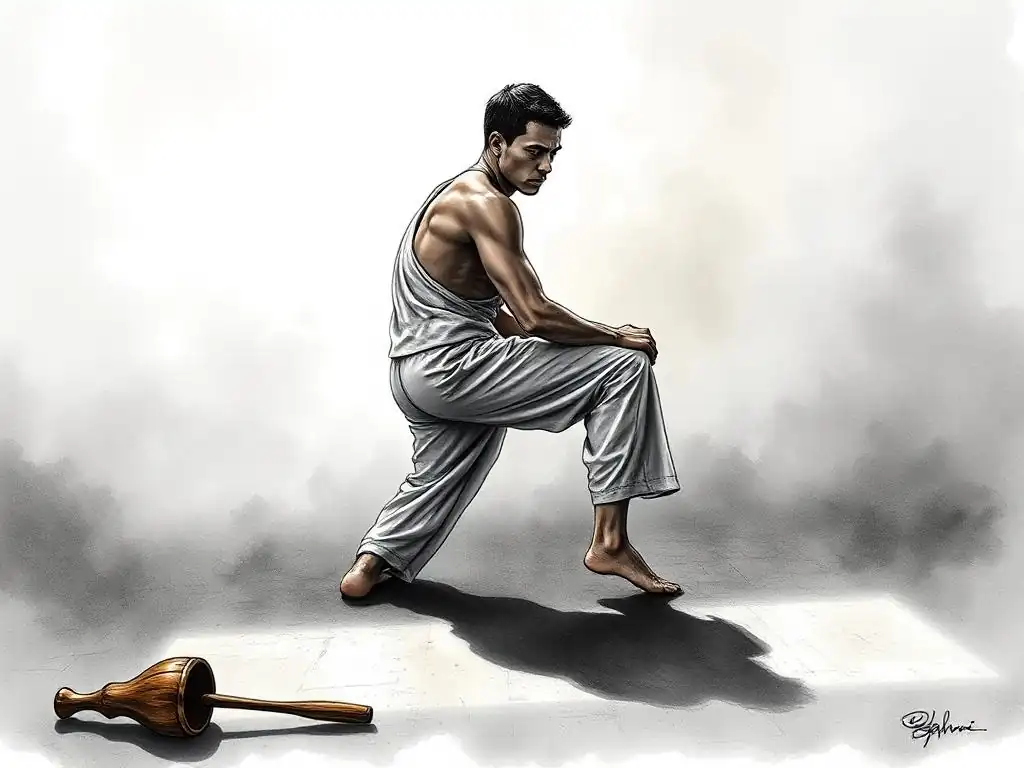
The Ginga: The Fundamental Movement and its Rhythmic Roots
The ginga is the fundamental, continuous swaying motion that defines Capoeira. It is not merely a static stance or a preparatory movement; it is the core from which all other movements originate and to which they return. The ginga is a fluid, rhythmic side-to-side step, keeping the capoeirista constantly in motion, making them a difficult target while simultaneously creating opportunities for attack and defense. Its rhythm is directly tied to the music played by the bateria.
The tempo and style of the ginga vary significantly depending on the toque of the berimbau. In Capoeira Angola, the ginga is typically slower, lower, and more deceptive, reflecting the strategic, ground-based nature of the game. In Capoeira Regional, the ginga is often faster, higher, and more open, facilitating the dynamic kicks and acrobatics characteristic of that style. The Capoeira music acrobatic expression connection is evident even in this basic movement, as the ginga's rhythm and energy are dictated by the musical cues, setting the stage for all subsequent actions.
Defining Acrobatic Movements in Capoeira
Acrobatics, known as floreios or saltos, are a prominent and visually striking element of Capoeira. While not strictly necessary for combat effectiveness, they serve multiple purposes within the roda: demonstrating skill, agility, and courage; adding flair and unpredictability to the game; and honoring the art form's aesthetic traditions. Acrobatic movements range from simple cartwheels and handstands to complex flips, spins, and aerial maneuvers.
These movements are deeply integrated into the flow of the game, often performed in response to an opening, as a defensive evasion, or purely as an expressive flourish. The decision to execute an acrobatic move is often influenced by the energy and tempo of the music. A fast rhythm from the bateria encourages dynamic, airborne techniques, while a slower rhythm might lead to more ground-based evasions or lower-level acrobatics. The Capoeira music acrobatic expression connection is particularly pronounced in these moments of elevated physical display.
Floreios: The Art of Embellishment
Floreios are acrobatic or complex movements primarily performed for aesthetic purposes or to demonstrate skill and control, rather than for direct attack or defense, although they can sometimes serve evasive functions. Examples include aú (cartwheel), aú sem mão (cartwheel without hands), parafuso (spinning kick/movement), and various handstands and headstands. These movements add beauty, creativity, and unpredictability to the game.
While seemingly decorative, floreios require significant strength, balance, and body control. They are often executed during breaks in the direct combat exchange, allowing the capoeirista to regain position, catch their breath, or simply express themselves. The timing and execution of floreios are often inspired by the musical cues; a particularly exciting rhythmic phrase might prompt a player to attempt a challenging aú sem mão or a series of rapid spins, showcasing the direct influence of the rhythm on the physical expression.
Saltos: Displays of Agility and Power
Saltos refer specifically to jumps and flips, representing some of the most dynamic and powerful acrobatic expressions in Capoeira. These include movements like salto mortal (backflip), mortal (forward flip), estrela (star, a type of aerial cartwheel), and various jumping kicks. Saltos require explosive power, precision timing, and significant courage.
Saltos are often used as spectacular evasions, surprising attacks, or simply as demonstrations of peak physical prowess. The decision to perform a salto is frequently cued by the music – a sudden acceleration in tempo or a specific toque can signal an opportunity or call for a more dynamic exchange. The energy generated by the bateria directly fuels the execution of these powerful aerial maneuvers, illustrating a clear Capoeira music acrobatic expression connection where the music literally lifts the body.
The Role of Improvisation and Creativity
Capoeira is fundamentally an improvisational art form. While practitioners learn a repertoire of movements, the actual game in the roda is a spontaneous dialogue between the two players, guided by the music and the energy of the community. This improvisational nature extends to both the physical movements and the musical performance. Players must react to their opponent's actions and the music's cues in real-time, creating unique sequences of movements.
Acrobatic expression is a prime area for improvisation and creativity. Capoeiristas might combine familiar movements in novel ways, invent new variations, or execute floreios and saltos in unexpected moments. This creativity is heavily influenced by the musical environment. A musician might introduce a new rhythmic pattern, or a singer might improvise lyrics commenting on a player's style, inspiring the player to respond with equally creative and improvisational physical expressions, further solidifying the Capoeira music acrobatic expression connection.
The Interplay: How Capoeira Music Shapes Acrobatic Expression
Music as a Cue for Movement: Responding to the Rhythm
The most direct way Capoeira music shapes acrobatic expression is through its function as a cue system. The various toques played on the berimbau signal the appropriate style and intensity of the game, directly influencing the types of movements, including acrobatics, that should be employed. A fast toque like São Bento Grande encourages a dynamic, upright game with many kicks and aerial maneuvers. A slow toque like Angola calls for a low, cunning game with ground movements and less overtly acrobatic floreios.
Beyond the specific toques, changes in tempo, volume, and the interplay between instruments also serve as cues. An acceleration in the music might signal an opportunity for a quick, deceptive salto or a rapid series of floreios. A sudden stop in the music ( chamada) brings the game to a pause or initiates a specific ritualistic interaction. Players learn to read these musical signals instinctively, allowing the music to guide their choices of when and how to utilize their acrobatic repertoire. This responsiveness is central to the Capoeira music acrobatic expression connection.
The Berimbau's Influence on the Flow of Acrobatics
As the conductor of the roda, the berimbau has a particularly profound influence on the flow and execution of acrobatics. The specific toque played sets the foundational rhythm and energy level for the entire game. For example, the rapid, complex rhythms of São Bento Grande de Regional actively encourage fast footwork, high kicks, and frequent, dynamic saltos. The rhythmic drive of the berimbau provides the energetic impetus for these explosive movements.
Furthermore, the subtle variations and improvisations played by the berimbau Viola can inspire specific acrobatic responses. A series of rapid, high notes might prompt a player to execute a quick spin or a high-flying kick that transitions into a floreio. The call-and-response dynamic between the berimbau and the player's movement is a continuous feedback loop. The energy from the music propels the acrobatics, and the spectacle of the acrobatics can, in turn, energize the musicians, intensifying the Capoeira music acrobatic expression connection.
Creating a Dialogue Between Music and Movement
The relationship between Capoeira music and movement is best understood as a dynamic dialogue. The musicians are not simply providing background sound; they are actively participating in and commenting on the game through their performance. Similarly, the players are not just executing techniques; they are responding to, interpreting, and even influencing the music through their movements and energy. This constant exchange creates a rich, layered performance.
A skilled capoeirista listens intently to the bateria, allowing the rhythm and melody to inform their ginga, their attacks, their defenses, and their acrobatic expressions. They might hold a position or execute a sequence of movements that mirrors a phrase in the music. Conversely, a particularly impressive salto or a series of complex floreios can energize the bateria, prompting the musicians to play with greater intensity or introduce new rhythmic variations. This reciprocal influence is the essence of the Capoeira music acrobatic expression connection.
Iúna and the Volta ao Mundo: A Study in Berimbau Toque and Movement
The toque of Iúna provides a clear example of how a specific rhythm dictates a particular type of movement, often involving acrobatics. Iúna is a unique toque traditionally reserved for more advanced capoeiristas and is often played during demonstrations or in moments of high skill display. It is typically slower and more melodic than combat toques, creating a space for fluid, beautiful movements.
When Iúna is played, the game shifts from direct confrontation to a display of skill, control, and often, graceful acrobatics. Players might perform elaborate floreios, balancing maneuvers, and controlled saltos that emphasize elegance and balance rather than explosive power.
The Volta ao Mundo (Around the World) is a common sequence performed during Iúna, where players circle the roda performing various acrobatic and stylistic movements, showcasing their repertoire in harmony with the distinct melody and rhythm of the Iúna toque. This direct correspondence between a specific musical phrase and a set of physical, often acrobatic, expressions perfectly illustrates the profound Capoeira music acrobatic expression connection.
The Mestre's Role: Preserving the Harmony
Passing Down the Tradition of Musical and Acrobatic Integration
The mestre (master) is the guardian of Capoeira's traditions, including the crucial integration of music and movement. Through years of training and experience, a mestre develops a deep understanding of how the bateria should sound, how the game should flow in response, and how to maintain the balance between combat, dance, and acrobatics. They are responsible for teaching students not just the physical techniques but also the songs, rhythms, and the etiquette of the roda.
A significant part of a mestre's teaching involves demonstrating and explaining the Capoeira music acrobatic expression connection. They teach students to listen to the berimbau, to recognize the different toques, and to understand how these rhythms should inform their ginga and their choice of movements, including when and how to incorporate acrobatics. This oral and practical transmission ensures that the symbiotic relationship between music and movement is preserved and passed down through generations of capoeiristas.
The Importance of Musicality in Capoeira Training
Training in Capoeira is incomplete without developing musicality. Students are encouraged, often required, to learn to play the instruments of the bateria and to sing the traditional songs. This hands-on experience provides a deeper understanding of the rhythms and melodies that drive the game from the musicians' perspective. Learning to play an instrument like the berimbau reveals the structure of the toques and how they are intended to guide the play.
- [x] Learn basic berimbau toques (Angola, São Bento Grande)
- [x] Practice singing traditional Capoeira songs
- [x] Play atabaque and pandeiro in training rodas
- [x] Develop the ability to listen and react to the bateria while playing
Developing musicality enhances a capoeirista's ability to play a more fluid, responsive, and intelligent game. It allows them to anticipate changes in the music and adjust their movements accordingly, making their Capoeira music acrobatic expression connection more refined and intuitive. Students who understand the music are better equipped to integrate complex movements, including acrobatics, seamlessly into the flow of the roda.
Understanding the Nuances of the Roda
The roda is a complex social and artistic space governed by unwritten rules and nuances. The mestre guides the roda, often playing the lead berimbau and singing the songs. Their choices of toques and songs set the overall tone and pace. Players must not only react to the music but also to their opponent and the energy of the surrounding community. Understanding these nuances is crucial for playing well.
For instance, a player might perform a series of impressive floreios or saltos not just because the music is fast, but because the mestre is singing a song that encourages expressive play, or because their opponent has just demonstrated high-level acrobatics, inviting a response. The Capoeira music acrobatic expression connection in the roda is not just about following a beat; it's about participating in a dynamic conversation that involves the entire community, guided by the experienced hand of the mestre.
Case Studies: Examples of the Music-Acrobatics Connection
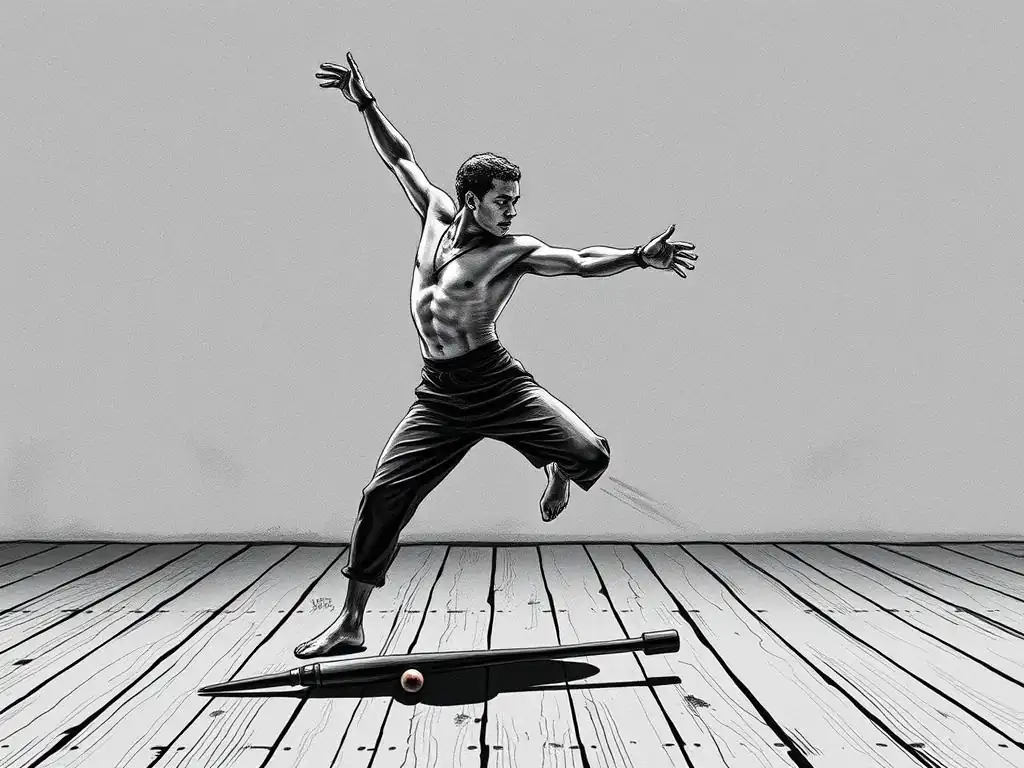
Case Study 1: Grupo Capoeira Brasil - Emphasis on Regional Rhythms
Grupo Capoeira Brasil, founded in 1989 by Mestres Boneco, Paulinho Sabiá, and Paulão Ceará, is a prominent example of a school that emphasizes the dynamic, faster-paced style heavily influenced by Capoeira Regional rhythms. Their baterias typically feature multiple berimbaus playing strong, driving São Bento Grande toques, along with powerful atabaques and energetic pandeiros. This musical emphasis directly translates into the physical game played by their students.
In a Grupo Capoeira Brasil roda, you are likely to see a high frequency of explosive movements, including powerful kicks, dynamic evasions, and a significant amount of acrobatic expression. Students are trained to utilize floreios and saltos such as mortal, parafuso, and complex aú variations as integral parts of their game, often executed at high speed.
The driving tempo set by their bateria provides the perfect environment and energy for these advanced physical displays, showcasing a strong Capoeira music acrobatic expression connection rooted in the Regional style. Their training methodology often includes specific drills designed to integrate acrobatic movements seamlessly with the rapid rhythms characteristic of their lineage.
Case Study 2: Capoeira Angola Palmares - Ground Game and Angola Rhythms
Capoeira Angola Palmares, stemming from the lineage of Mestre Pastinha, represents a style that emphasizes the strategic, deceptive, and ground-based game, guided by the slower, more melodic rhythms of Capoeira Angola. Their baterias typically feature the three berimbaus playing the classic, often melancholic, toques of Angola, São Bento Pequeno, and Iúna, supported by the traditional atabaques and pandeiros.
In a Capoeira Angola Palmares roda, the game is played lower to the ground, with greater emphasis on malícia (malice, trickery), sweeps, and strategic positioning. While overt, high-flying acrobatics are less frequent than in Regional, acrobatic expression is still present but takes a different form. Floreios are often executed close to the ground, such as low aús, handstands that flow into ground movements, and subtle evasions that utilize flexibility and balance.
When Iúna is played, the game transitions into a beautiful display of controlled, often acrobatic, flow like the Volta ao Mundo. This demonstrates that the Capoeira music acrobatic expression connection exists across different styles, with the music shaping the type and context of the acrobatic display, from explosive power to subtle grace.
Benefits of Understanding the Music-Acrobatic Connection
Enhanced Capoeira Performance and Expression
A deep understanding of how Capoeira music and acrobatics are connected is fundamental to becoming a proficient capoeirista. It allows players to move in harmony with the bateria, making their game more fluid, timely, and effective. When a player can anticipate and react to the musical cues, their movements, including the execution of floreios and saltos, become more integrated into the flow of the roda rather than appearing as isolated tricks.
This enhanced understanding leads to a more expressive performance. The player's movements become a visual interpretation of the music, creating a more compelling dialogue with their opponent and the entire roda. The ability to seamlessly weave acrobatic elements into the game in response to the rhythm elevates the player's skill level and demonstrates a mastery that goes beyond mere physical ability, highlighting the profound Capoeira music acrobatic expression connection.
Deeper Appreciation for Capoeira's Cultural Heritage
Studying the link between Capoeira music and acrobatics also provides a deeper appreciation for the art form's rich cultural heritage. It reveals how the music served historical purposes, how it evolved alongside the physical practice, and how it continues to be a vital element of community and identity. Understanding the stories told in the songs, the history embedded in the toques, and the cultural significance of the instruments connects practitioners to the roots of Capoeira.
This cultural context enriches the physical practice, transforming it from just a series of movements into a meaningful participation in a living tradition. Recognizing that the acrobatic displays are not just for show but are tied to the history, the music, and the spirit of the art form fosters a greater respect and appreciation for Capoeira as a whole. The Capoeira music acrobatic expression connection is a gateway to understanding Capoeira's soul.
Improved Timing, Coordination, and Musicality
Training with a focus on the music-acrobatics connection naturally improves several key physical and artistic attributes. Players develop better timing and coordination as they learn to synchronize their movements with complex rhythms and tempos. Reacting instinctively to musical cues sharpens reflexes and enhances body awareness in relation to external stimuli.
Furthermore, this focus cultivates musicality – the ability to perceive, interpret, and respond to music through movement. This skill is transferable and beneficial beyond Capoeira. By consistently practicing the Capoeira music acrobatic expression connection, practitioners hone their rhythmic sense, their ability to improvise within a structure, and their capacity for expressive physical communication, becoming more well-rounded movers and artists.
Conclusion: The Enduring Legacy of Capoeira's Harmonious Blend
Celebrating the Art Form's Unique Integration of Music and Acrobatics
Capoeira stands out among martial arts for its unique and profound integration of music and acrobatic expression. This harmonious blend is not an accidental fusion but a fundamental aspect of its historical development and cultural identity. The roda, with its vibrant bateria and dynamic players, is a testament to this synthesis, where fight, dance, music, and ritual converge into a powerful, expressive art form. The continuous dialogue between sound and movement is what gives Capoeira its captivating energy and distinguishes it from other disciplines.
The aesthetic beauty and strategic depth of Capoeira are inseparable from the interplay between its musical rhythms and its physical, often acrobatic, responses. Whether it's the low, strategic game of Angola guided by slow toques or the high-flying dynamism of Regional fueled by fast rhythms, the music dictates the flow and shapes the expression. Celebrating this inherent Capoeira music acrobatic expression connection is essential to appreciating the art form in its entirety.
The Future of Capoeira: Maintaining the Connection for Generations
As Capoeira continues to spread globally and evolve, maintaining the integrity of the music-acrobatics connection is crucial for preserving its essence. Modern training methods and international contexts present challenges, but the core principle remains: Capoeira is not just practiced to music; it is practiced with music. The role of mestres in teaching musicality alongside physical technique is more important than ever.
Ensuring that new practitioners understand the historical, cultural, and practical significance of the bateria and how it informs every ginga, every kick, and every floreio or salto is vital. By valuing and actively cultivating the Capoeira music acrobatic expression connection, the Capoeira community ensures that the art form retains its unique character, its cultural depth, and its ability to inspire and connect people through the powerful, harmonious blend of sound and movement for generations to come.
Frequently Asked Questions
What is the relationship between music and movement in Capoeira?
Music in Capoeira is not just background noise; it's the driving force behind the roda. The rhythm and tempo dictate the pace and style of the game, influencing the acrobatic expressions of the players.
How does Capoeira music influence the acrobatic elements?
The specific instruments and rhythms used can encourage certain movements. Faster rhythms might inspire more dynamic and acrobatic moves, while slower rhythms allow for more grounded and strategic play.
What are some key instruments used in Capoeira music, and what role do they play?
The berimbau is the primary instrument, dictating the game's speed and style. Other instruments like the atabaque and pandeiro add layers of rhythm and emotional depth to the roda.
How does understanding Capoeira music enhance one's acrobatic expression within the roda?
A deeper understanding of the music allows players to anticipate changes in tempo and rhythm. This anticipation enables them to seamlessly integrate acrobatic movements that are both creative and responsive to the musical cues.
Beyond acrobatics, how does music contribute to the overall "connection" aspect of Capoeira?
Music fosters a sense of community and shared energy within the roda. It connects the players, singers, and musicians in a collaborative and dynamic performance.
Final Reflection: The Rhythmic Soul of Movement
The exploration of the intricate connection between Capoeira music and acrobatic expression reveals more than just a performance; it unveils a profound cultural dialogue. Today, as Capoeira continues to evolve and spread globally, understanding this symbiotic relationship is crucial for preserving its authenticity and appreciating its artistic depth. The music isn't merely a backdrop; it's the very heartbeat that dictates the flow, intensity, and emotional narrative of each acrobatic movement.
The influence of Capoeira's musicality extends beyond the roda, shaping perceptions of movement, rhythm, and cultural identity. Witnessing a skilled Capoeirista respond to the berimbau's call is a testament to the power of embodied knowledge and the profound connection between body and soul. Capoeira is a fight, a dance, a game, but above all, it is expression. And the music is the language of that expression.
This quote encapsulates the essence of Capoeira, highlighting how the music serves as the conduit for conveying history, emotion, and resistance through acrobatic artistry.
Now, consider how the principles of rhythm and expression, so central to Capoeira, can be applied in your own life. How can you find the music within your own movements, whether physical or metaphorical? Embrace the rhythm of your own journey, and allow it to guide you towards a more authentic and expressive self. Let the spirit of Capoeira inspire you to find harmony and power in the interconnectedness of all things.
Ignite Your Rhythm: Unleash Your Inner Capoeirista!
Thank you for exploring the vibrant connection between Capoeira music and acrobatic expression. We hope you've gained a deeper appreciation for this dynamic art form. Now, it's time to bring that knowledge to life!
Here are a few ways to continue your journey:
- Commit to learning a Capoeira instrument like the berimbau or pandeiro. Experience firsthand how the rhythm drives the movement.
- Share this article with fellow movement enthusiasts and spark a conversation about the importance of music in martial arts.
- Explore local Capoeira schools and attend a roda (Capoeira circle) to witness the symbiotic relationship between music and movement.
Ready to infuse your practice with the soul of Capoeira? What's one rhythm or song that instantly gets you moving?