
Celtic Warrior Women: Boudica and the Martial Traditions of Ancient Britain

Welcome to Martial Arts Mastery, where we delve into the rich history and diverse techniques of combat traditions worldwide. Ever wondered if the martial arts spirit was solely the domain of men? Prepare to have your assumptions challenged! Today, we journey back in time to explore the fierce and often overlooked martial prowess of Ancient British warrior women. Discover the captivating story of Boudica and uncover the martial traditions that empowered these formidable figures. Intrigued? The secrets of their strength and battle strategies await.
- Introduction: Unveiling the Ancient British Warrior Women
- The Historical Context: Britain Before the Roman Invasion
- Boudica's Rebellion: A Case Study in Ancient Warfare
- Beyond Boudica: Other Examples of Ancient British Female Warriors
- The Martial Arts of the Ancient Celts: Reconstructing Lost Skills
- Boudica's Legacy: Inspiration for Modern Understanding
- Conclusion: Remembering the Ancient British Warrior Women
-
Frequently Asked Questions
- What evidence suggests that Celtic warrior women like Boudica existed in Ancient Britain?
- What martial arts traditions were likely practiced by Celtic warrior women?
- How did the societal role of women in Celtic Britain influence their involvement in warfare?
- Did Celtic warrior women receive formal martial arts training, or was it more practical and experience-based?
- How does the historical understanding of Celtic warrior women contribute to our broader understanding of martial arts history?
- Final Reflection: Echoes of Courage
- Unleash Your Inner Warrior: Answer the Call of Boudica!
Introduction: Unveiling the Ancient British Warrior Women
Exploring the Martial Prowess of Women in Ancient Britain
While often overlooked in traditional historical narratives, evidence suggests that women in ancient Britain may have played roles far more complex than simply domestic duties. Unlike some contemporary societies, Celtic culture, particularly in Britain, appears to have afforded women a degree of autonomy and status that could potentially extend to participation in tribal defense or even offensive warfare. Examining this facet of history challenges modern assumptions and reveals a fascinating aspect of life for ancient British warrior women.
The sources hinting at this martial capability are varied, ranging from the accounts of Roman historians who encountered them on the battlefield, to archaeological discoveries, and the rich tapestry of Celtic mythology. These disparate pieces of evidence, when considered together, paint a picture of a society where the line between genders in roles, including martial ones, was perhaps more fluid than commonly imagined. Understanding these potential roles is crucial to appreciating the full scope of ancient British warrior women.
Boudica: An Icon of Female Resistance and Warfare
Among the figures who embody the spirit of ancient British warrior women, Boudica, queen of the Iceni tribe, stands preeminent. Her name is synonymous with fierce resistance against the Roman Empire and serves as the most prominent historical example of a female leader commanding forces in ancient Britain. Her rebellion in 60 or 61 AD captured the attention of Roman historians and cemented her place in history.
Boudica's significance extends beyond a single historical event; she has become an enduring icon of courage, defiance, and national pride in Britain. Her story serves as a powerful reminder that leadership and martial capability were not exclusive domains of men in ancient times. Her actions provide a compelling case study when discussing the potential roles and impact of ancient British warrior women.
The Historical Context: Britain Before the Roman Invasion
Celtic Society and the Role of Women
Prior to the Roman conquest beginning in 43 AD, Britain was inhabited by various Celtic tribes, each with its own customs but sharing broader cultural traits. Historical accounts and archaeological findings suggest that women in these societies often held higher status and enjoyed greater freedoms compared to women in the classical world of Greece and Rome. They could own property, choose their husbands, initiate divorce, and even hold positions of authority, including chieftainships.
This relatively elevated status provided a social framework where the concept of women participating in activities outside the home, including those related to defense or warfare, was plausible. While direct evidence for widespread female warriors is debated, the societal structure did not inherently prohibit such roles, setting the stage for figures like Boudica to emerge among the ranks of ancient British warrior women.
Pre-Roman Martial Traditions in Britain: Swordsmanship and Chariot Warfare
The martial traditions of ancient Britain were deeply rooted in tribal warfare and defense. The primary weapons of the age were iron swords, spears, and shields, often complemented by javelins and slings. Skill in close-quarters combat was paramount, relying on individual prowess and the cohesion of tribal warbands. Archaeology reveals sophisticated ironworking capabilities, producing effective, if often simply designed, weaponry.
A distinctive element of ancient British warfare, particularly noted by Roman observers like Julius Caesar during his invasions in the 50s BC, was the use of chariots. These were light, two-wheeled vehicles used for rapid movement across the battlefield, allowing warriors to hurl javelins before dismounting to fight on foot. The mastery required to handle chariots in combat suggests a highly developed martial culture, one that potentially included training accessible to individuals regardless of gender who held status or tribal roles, contributing to the possibility of ancient British warrior women.
Boudica's Rebellion: A Case Study in Ancient Warfare
The Causes of Boudica's Revolt Against Roman Rule
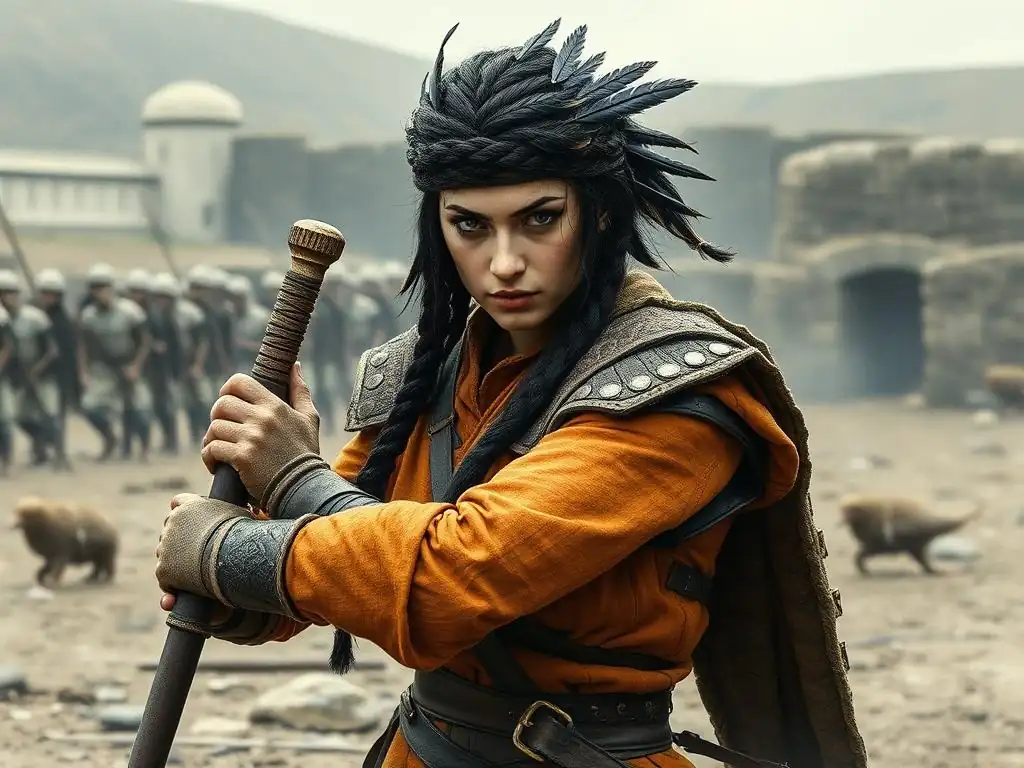
The spark that ignited Boudica's massive rebellion was the brutal treatment of the Iceni tribe following the death of their king, Prasutagus. Prasutagus had attempted to secure his kingdom's future by making the Roman emperor co-heir with his daughters. However, upon his death, the Romans disregarded his will, annexed the kingdom entirely, enslaved members of the royal family, publicly flogged Boudica, and raped her daughters.
These horrific acts were compounded by years of accumulating grievances: heavy Roman taxation, the seizure of tribal lands, the imposition of Roman law, and general contempt shown by Roman officials towards Celtic customs and leaders. This widespread resentment among various tribes, including the Iceni, Trinovantes, and others, provided fertile ground for Boudica to rally a formidable, albeit loosely organized, army against the occupying power, creating a pivotal moment for ancient British warrior women.
Boudica's Military Leadership and Strategies
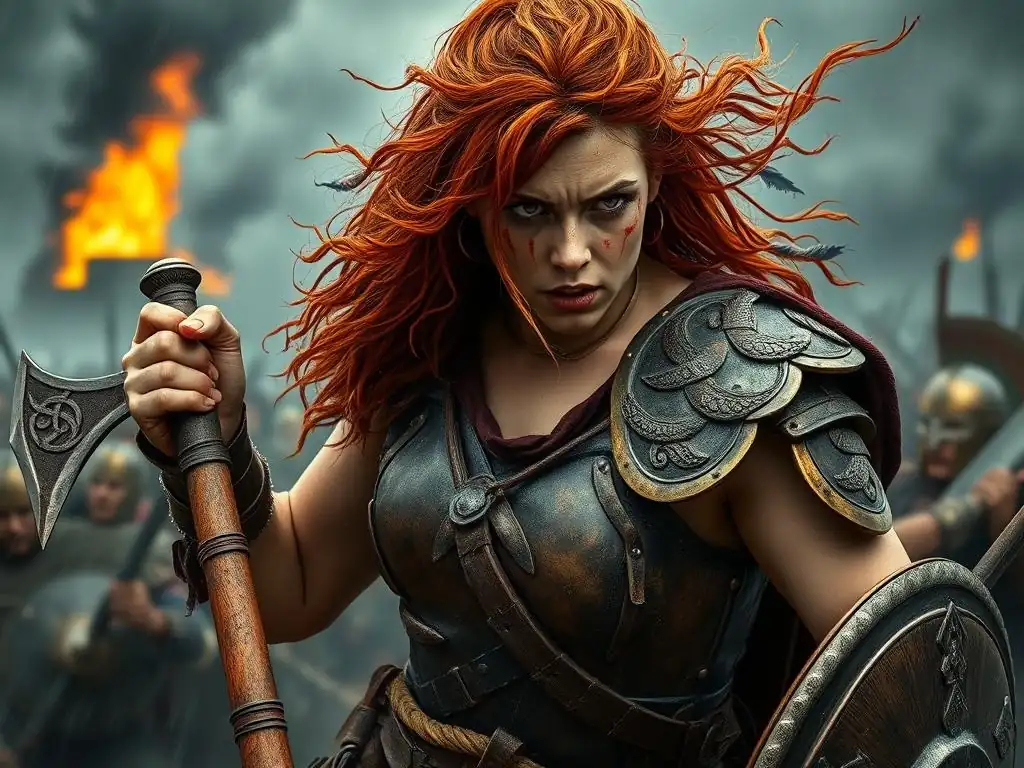
Boudica emerged as a charismatic and effective leader, capable of uniting disparate tribes under a common banner of resistance against Roman oppression. According to Roman historians like Tacitus and Cassius Dio, she was a formidable presence, described as tall, imposing, with fiery red hair, wearing a torc and a colorful tunic. She reportedly addressed her troops, invoking native gods and inspiring them with tales of Roman injustice and calls for vengeance.
Her strategy initially focused on overwhelming Roman settlements with sheer numbers. The rebels employed rapid, destructive attacks, targeting centers of Roman power and population. They leveraged their knowledge of the terrain and their fury to achieve shock and awe, overwhelming smaller Roman garrisons and civilian populations before the main Roman army, led by Governor Suetonius Paulinus, could consolidate its forces.
Key Battles and Events of Boudica's Uprising: The Sack of Camulodunum and the Battle of Watling Street
The rebellion began with stunning success. The rebels' first target was Camulodunum (modern Colchester), the Roman capital of Britain, which was poorly defended. The attackers utterly destroyed the settlement, massacring the Roman inhabitants and a small relief force sent to aid them. Estimates vary, but thousands of Romans and Roman sympathizers were likely killed in this initial onslaught, a brutal demonstration of the rebels' power and fury led by ancient British warrior women and men.
Following the destruction of Camulodunum, Boudica's forces marched on Londinium (London) and Verulamium (St Albans). Both cities were sacked and burned, with further widespread massacres. Suetonius Paulinus, returning from a campaign in North Wales, was forced to abandon Londinium due to the overwhelming rebel numbers, choosing to preserve his trained legions for a decisive battle.
The final confrontation, often referred to as the Battle of Watling Street (though the exact location is debated), saw the Roman army, though vastly outnumbered (Tacitus estimates around 10,000 Romans against perhaps 80,000 Britons), choose a narrow terrain that negated the Britons' numerical advantage and prevented their chariots from maneuvering effectively. Disciplined Roman tactics and weaponry prevailed against the charging but less organized British forces.
The Roman victory was decisive, leading to the suppression of the revolt and marking the tragic end of Boudica's stand as a prominent figure among ancient British warrior women. Roman sources claim tens of thousands of Britons were killed in the battle and subsequent pursuit.
Beyond Boudica: Other Examples of Ancient British Female Warriors
Archaeological Evidence of Female Fighters: The Wetwang Slack Burial and Associated Artifacts
While Boudica is the most famous historical example, archaeological finds provide further tantalizing clues about the potential existence of other ancient British warrior women. One notable discovery is the Wetwang Slack burial site in East Yorkshire, dating to the Iron Age (around the 3rd century BC). Here, archaeologists uncovered the grave of a woman buried with significant grave goods, including a dismantled chariot.
Crucially, the burial also contained weaponry, specifically a sword, spear, and shield. While interpretation is debated – some argue these items signify high status or association with warfare rather than direct personal combat experience – the presence of a woman buried with a full warrior panoply is highly unusual and strongly suggests that women could hold roles of significant status within a martial context. This discovery adds weight to the idea that Boudica was perhaps not a unique anomaly among ancient British warrior women.
Celtic Mythology and Female Warrior Figures: Scáthach and Macha
Beyond historical accounts and archaeology, Celtic mythology offers insights into cultural archetypes and values, including the concept of the female warrior. Figures like Scáthach (from Irish mythology, but part of the wider Celtic tradition) are prominent examples. Scáthach is portrayed as a formidable warrior-teacher who ran a martial arts school on the Isle of Skye, training heroes like the legendary Cú Chulainn in advanced combat techniques.
Another powerful mythological figure is Macha, an Irish goddess associated with sovereignty, horses, and warfare. She appears in various myths, sometimes as a vengeful figure capable of inflicting curses related to battle or as a founder figure associated with prominent sites like Emain Macha. These mythological narratives, while not historical fact, reflect a cultural acceptance or even reverence for powerful female figures deeply involved in the martial sphere, potentially mirroring or inspiring the roles of real ancient British warrior women.
The Martial Arts of the Ancient Celts: Reconstructing Lost Skills
Weapons Training and Combat Techniques in Ancient Britain
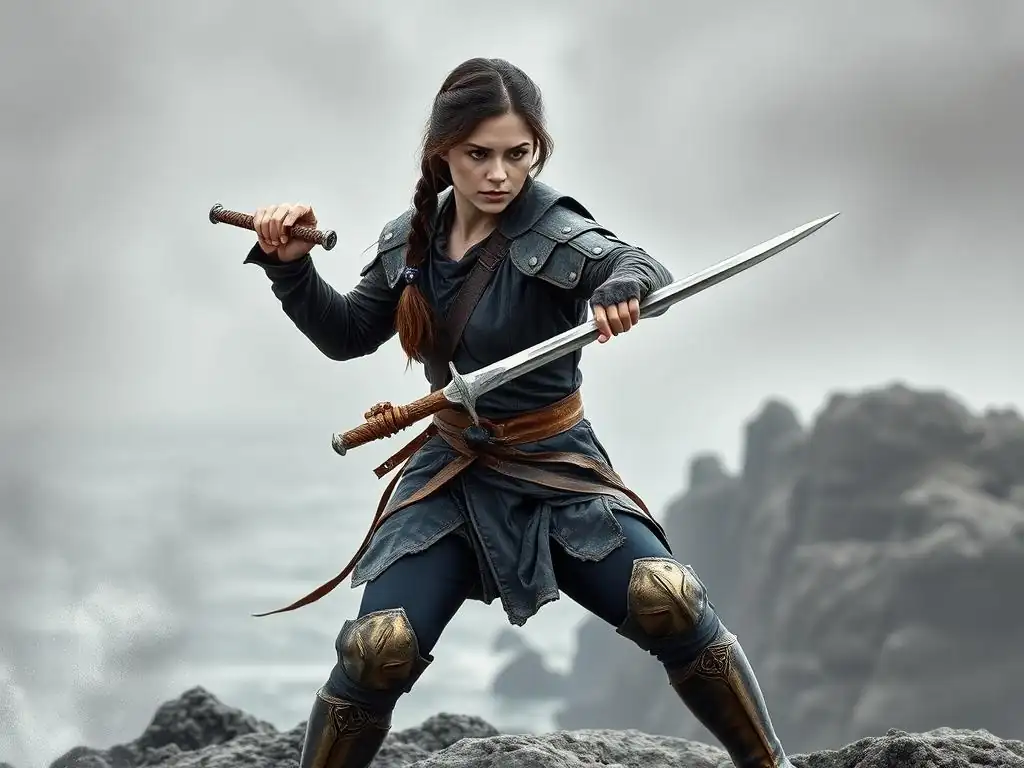
Reconstructing the specific "martial arts" or combat techniques of ancient Britain is challenging due to the lack of written manuals or detailed descriptions from the period. Our understanding is primarily inferred from archaeological finds of weaponry and armor, along with brief, often biased, accounts from Roman writers. Weapons like the long iron sword (often used for slashing), spears (for thrusting and throwing), and large oval or rectangular shields were central to combat.
Training likely involved mastering the use of these tools, focusing on shield work for defense and offense, maintaining formation (though Celtic forces were often less rigid than Roman legions), and developing individual prowess with bladed and thrusting weapons. While we cannot know the precise drills or forms practiced, survival in tribal skirmishes and larger battles would have demanded significant skill and training, applicable potentially to ancient British warrior women as well as men.
The Role of Physical Fitness and Endurance in Celtic Warfare
Ancient warfare was physically demanding. Warriors needed strength to wield heavy weapons and shields, endurance for long marches and sustained combat, and agility to maneuver on the battlefield. The lifestyle of Iron Age Britons, involving farming, raiding, hunting, and tribal conflicts, naturally fostered a degree of physical hardiness.
Participating in warfare required peak physical condition. Carrying equipment, enduring the chaos and violence of battle, and potentially fighting for extended periods demanded significant stamina and strength. For any individual, including ancient British warrior women, engaging in these activities would necessitate rigorous physical preparation and inherent resilience.
Reenactment and Experimental Archaeology of Celtic Warfare
Modern efforts to understand ancient Celtic combat include historical reenactment and experimental archaeology. Groups dedicated to accurately portraying Iron Age British warriors research historical sources, recreate period-appropriate clothing, armor (where evidence exists), and weaponry, and practice fighting based on interpretations of historical accounts and weapon capabilities.
Experimental archaeology involves testing replica weapons and techniques in controlled environments to gain practical insights into their effectiveness, the forces involved, and the physical demands placed on the combatants. This hands-on approach provides valuable, albeit speculative, data that helps historians and enthusiasts better visualize and understand the martial skills that might have been employed by ancient British warrior women and their male counterparts.
Boudica's Legacy: Inspiration for Modern Understanding
Boudica as a Symbol of Strength and Resilience
Today, Boudica remains a powerful and inspiring figure. She is widely regarded as a British national heroine, a symbol of unwavering resistance against foreign domination and oppression. Her iconic status is perhaps best represented by the bronze statue erected in her honor near Westminster Bridge in London, depicting her in her chariot, leading her people into battle.
Her story resonates because it highlights themes of courage in the face of overwhelming odds, fierce independence, and the willingness to fight for one's freedom and dignity. As a female leader who challenged the might of the Roman Empire, she serves as a potent symbol of strength and resilience, particularly significant when considering the historical narrative of ancient British warrior women.
Lessons from Boudica's Leadership
Analyzing Boudica's leadership offers insights into the dynamics of ancient warfare and rebellion. Her ability to unite disparate and often rival tribes against a common enemy was a remarkable feat of political and charismatic leadership. She successfully harnessed the widespread discontent and desire for vengeance among the Britons.
However, her rebellion also provides cautionary lessons. While the initial strategy of overwhelming Roman settlements was devastatingly effective, the final confrontation demonstrated the limitations of passion and numbers against disciplined military tactics and superior positioning. Despite the tragic outcome, her leadership showcased immense bravery and the capacity for strategic thinking among ancient British warrior women.
The Enduring Interest in Ancient British History
The period of the Iron Age and Roman Britain continues to capture the public imagination. This era is frequently explored in historical fiction, documentaries, and popular culture, drawn by the dramatic clash of cultures, the mystery of the Celtic world, and the compelling stories of figures like Boudica.
This sustained interest ensures that the history of ancient Britain remains relevant and continues to be studied and debated. It encourages ongoing archaeological research and historical analysis, helping to shed more light on all aspects of life during this time, including the roles and potential contributions of ancient British warrior women.
Conclusion: Remembering the Ancient British Warrior Women
The Importance of Preserving the History of Female Warriors
The story of Boudica and the accumulating archaeological and mythological evidence suggest that the concept of ancient British warrior women is more than just a single historical anomaly. While the extent of female participation in warfare across all tribes and periods is still a subject of scholarly debate, ignoring the evidence risks presenting an incomplete and potentially misleading picture of ancient British society.
Preserving and promoting the history of female warriors is essential for a balanced understanding of the past. It highlights the diversity of roles women could hold in different cultures and challenges simplistic narratives that confine women solely to the domestic sphere. Recognizing figures like Boudica honors their courage and contributions and provides important historical role models.
Continued Archaeological Discoveries and Historical Analysis
Our understanding of ancient Britain is constantly evolving. New archaeological discoveries continue to be made, providing fresh evidence that requires careful analysis and interpretation. Each find, whether a burial containing weaponry or a new settlement excavation, adds another piece to the complex puzzle of life in the Iron Age and Roman periods.
Ongoing historical analysis involves re-examining existing sources with new perspectives and integrating archaeological findings to refine our understanding. This continuous process is vital for uncovering more details about the martial traditions of ancient Britain and potentially revealing further evidence concerning the roles, lives, and impact of ancient British warrior women.
Frequently Asked Questions
What evidence suggests that Celtic warrior women like Boudica existed in Ancient Britain?
Historical accounts from Roman writers like Tacitus and Dio Cassius describe Boudica leading armies and other accounts of women participating in warfare. Archaeological findings, though limited, also support the idea of women being buried with weapons.
What martial arts traditions were likely practiced by Celtic warrior women?
While no specific "martial art" in the modern sense existed, they likely employed skills in weaponry (swords, spears, shields), hand-to-hand combat, and horsemanship. Their training would have focused on practical battlefield effectiveness.
How did the societal role of women in Celtic Britain influence their involvement in warfare?
Celtic society, unlike Roman society, afforded women a greater degree of autonomy and influence. Some women held positions of power, making their participation in warfare more accepted and even expected in certain situations.
Did Celtic warrior women receive formal martial arts training, or was it more practical and experience-based?
Evidence suggests training was primarily practical and experience-based, focusing on survival and effectiveness in combat. This likely involved learning from family members and participating in mock battles and raids.
How does the historical understanding of Celtic warrior women contribute to our broader understanding of martial arts history?
It expands the narrative beyond the typically Eastern focus. It highlights that martial traditions existed in various forms across different cultures, including those of ancient Europe, and challenges traditional assumptions about gender roles in warfare.
Final Reflection: Echoes of Courage
The stories of Boudica and other Ancient British warrior women resonate powerfully even today, not merely as historical anecdotes, but as potent symbols of resistance, resilience, and the enduring strength of the human spirit in the face of overwhelming odds. Their legacy transcends the battlefield, reminding us that courage and defiance can take many forms and inspire generations to challenge injustice.
The impact of these women on the cultural narrative is undeniable. Their tales, though often filtered through Roman accounts, continue to fuel our imagination and challenge conventional notions of gender roles in ancient societies. The bravest are surely those who have the clearest vision of what is before them, glory and danger alike, and yet notwithstanding, go out to meet it.
- Thucydides. This quote encapsulates the spirit of Boudica and her contemporaries, women who faced immense danger with unwavering resolve.
Let us, therefore, carry forward the torch of their courage. Reflect on the lessons of Boudica and the other Ancient British warrior women. Consider how their unwavering spirit can inform your own life, empowering you to stand firm in your convictions, to challenge the status quo, and to fight for what you believe in, even when the odds seem insurmountable. Let their legacy inspire you to find your own inner warrior and to shape a future where strength and resilience are celebrated in all their forms.
Unleash Your Inner Warrior: Answer the Call of Boudica!
Thanks for exploring the inspiring legacy of Boudica and the martial traditions of ancient Celtic women! Now, it's time to channel that powerful spirit into action in your own life.
Here are a few ways to connect with the warrior within:
- Commit to learning one new self-defense technique this week, inspired by the bravery and resourcefulness of Boudica.
- Research and share information about another female warrior from history or mythology, spreading awareness and celebrating strength.
- Reflect on your own personal battles – what challenges have you overcome, and how can you use that experience to inspire others?
What small but powerful step will you take today to embody the courageous spirit of Boudica?