
[Pioneer's Name]'s Code: Unpacking the Ethics, Values, and Principles in Western Martial Practice


Welcome to Martial Arts Mastery, your gateway to the world's fighting traditions! Explore the rich tapestry of martial arts history, techniques, and philosophies. This week, we delve into the often-overlooked yet crucial area of Western martial arts ethics. What guiding principles shaped the blade and fist of historical European martial artists? Uncover the code that governed their actions and discover how these values resonate even today. Read on to explore [Pioneer's Name]'s Code and begin your journey into the ethical heart of Western martial practice...
- Fiore dei Liberi's Code: Unpacking the Ethics, Values, and Principles in Western Martial Practice
- Introduction: Fiore dei Liberi and the Foundation of Western Martial Arts Ethics
- Defining Western Martial Arts Ethics: A Framework for Practice
- The Ethical Code of Fiore dei Liberi: A Deep Dive
- Fiore dei Liberi's Influence on Modern Western Martial Arts Training
- Comparing Fiore dei Liberi's Ethical Code with Other WMA Pioneers
- Challenges and Criticisms of Fiore dei Liberi's Ethical Framework
- Preserving and Promoting Fiore dei Liberi's Ethical Legacy in WMA
- Conclusion: The Enduring Relevance of Fiore dei Liberi's Western Martial Arts Ethics
-
Frequently Asked Questions
- What are the core ethical principles typically emphasized in Western Martial Arts (WMA) as discussed on MartialArtsMastery.org?
- How does 'Pioneer's Name]'s Code' relate to modern interpretations of Western Martial Arts Ethics?
- Does MartialArtsMastery.org offer any practical guidance on applying Western Martial Arts Ethics in self-defense situations?
- How does the study of Western Martial Arts Ethics enhance a practitioner's overall understanding of WMA?
- What resources does MartialArtsMastery.org offer for further exploration of Western Martial Arts Ethics beyond '[Pioneer's Name]'s Code'?
- Final Reflection: Forging a Legacy of Honor
- Ignite Your Inner Warrior: Rediscover Honor in Martial Arts!
Fiore dei Liberi's Code: Unpacking the Ethics, Values, and Principles in Western Martial Practice
Introduction: Fiore dei Liberi and the Foundation of Western Martial Arts Ethics
The Significance of Fiore dei Liberi's Contributions to WMA
Fiore dei Liberi, a master of arms from the late 14th and early 15th centuries, stands as a pivotal figure in the history of Western Martial Arts (WMA). His surviving manuscript, Flos Duellatorum (The Flower of Battle), compiled around 1410, is one of the most comprehensive martial arts treatises from the period. It doesn't merely catalog techniques for various weapons, including the longsword, polearms, dagger, and unarmed combat; it also implicitly and explicitly lays out a framework for the ethical conduct and mindset required of a martial artist.
This focus on character, alongside technical proficiency, distinguishes his work and provides a rich foundation for understanding Western martial arts ethics. His teachings were not just about how to fight, but how to embody the principles of a skilled and honorable combatant.
The depth and breadth of Flos Duellatorum offer invaluable insights into the martial culture of the time and the ethical considerations that underpinned it. Fiore dei Liberi's work details specific techniques suitable for different contexts, such as the judicial duel (Pas d'armes) versus battlefield combat, highlighting the situational application of force.
Furthermore, his introductory verses and commentary emphasize virtues like prudence, justice, and fortitude as essential qualities for anyone undertaking martial training. This integration of moral philosophy with physical practice makes his treatise a crucial resource for understanding not just the historical techniques, but the core Western martial arts ethics that guided practitioners centuries ago.
Setting the Stage: The Landscape of Western Martial Arts Before Fiore dei Liberi
Before Fiore dei Liberi compiled his extensive treatise, martial arts in the West were often taught through direct apprenticeship, oral tradition, and scattered, less comprehensive manuscripts. While fighting techniques certainly existed and were practiced widely for warfare, self-defense, and judicial combat, there was less emphasis on a codified, widely disseminated system that explicitly integrated ethical principles alongside technical instruction. Many earlier works focused primarily on the mechanics of combat, without the philosophical depth found in Flos Duellatorum. Knowledge was often localized and passed down within specific lineages or military units.
The martial landscape was one of necessity and practicality, driven by the demands of a society where personal combat and warfare were frequent realities. While chivalric codes existed, they were often aspirational ideals rather than integrated components of martial training manuals.
Fiore dei Liberi's contribution was to synthesize existing knowledge, add his own considerable experience gained over forty years of teaching and dueling, and present it within a structured framework that clearly linked technical mastery with essential ethical virtues. His work helped elevate martial practice from mere technique to a disciplined art form grounded in a specific set of Western martial arts ethics and values.
Defining Western Martial Arts Ethics: A Framework for Practice
Core Values in Fiore dei Liberi's Approach to Western Martial Arts
Fiore dei Liberi's approach to Western martial arts is deeply rooted in a set of core values that he deemed essential for any practitioner. These values are not merely suggestions but are presented as fundamental pillars supporting the entire structure of his martial system. Chief among these are prudence, justice, and fortitude, explicitly mentioned in the introductory verses of Flos Duellatorum. Prudence involves wisdom, foresight, and the ability to make sound judgments, particularly regarding when and how to employ martial skills. It emphasizes understanding the situation, assessing risks, and acting wisely, not recklessly.
Justice, in Fiore's context, pertains to the righteous application of force. This includes fighting for just causes, upholding oaths (especially in judicial duels), and using one's skills fairly and honorably. It implies a responsibility to use martial ability defensively or in sanctioned combat, rather than for aggression or malice.
Fortitude represents courage, resilience, and perseverance – the mental toughness required to face danger, endure hardship in training or combat, and maintain composure under pressure. These three virtues, alongside others like loyalty and temperance, form the bedrock of the ethical framework presented in Flos Duellatorum and are central to understanding Western martial arts ethics as taught by Fiore.
Differentiating Ethics, Values, and Principles in WMA Training
While often used interchangeably, ethics, values, and principles have distinct roles in shaping Western martial arts practice. Values are deeply held beliefs about what is good, desirable, or important – like courage, honor, or respect. They represent the ideals that practitioners strive to embody. Principles are fundamental truths or rules that serve as the basis for a system of belief or behavior. In WMA, a principle might be "always maintain distance" or "control the opponent's weapon." These are guidelines derived from the values and practical experience.
Ethics, on the other hand, is the system of moral principles that governs a person's behavior or the conducting of an activity. It is the application of values and principles to determine right and wrong action within the context of martial arts.
Western martial arts ethics, as seen in Fiore's work, involves the application of values like justice and prudence through specific principles (e.g., discerning the appropriate level of force) and ultimately guiding ethical conduct (e.g., fighting honorably in a duel). Understanding this distinction helps practitioners not just learn techniques, but also grasp the moral responsibilities that come with martial skill, forming a comprehensive approach to training and life.
The Ethical Code of Fiore dei Liberi: A Deep Dive
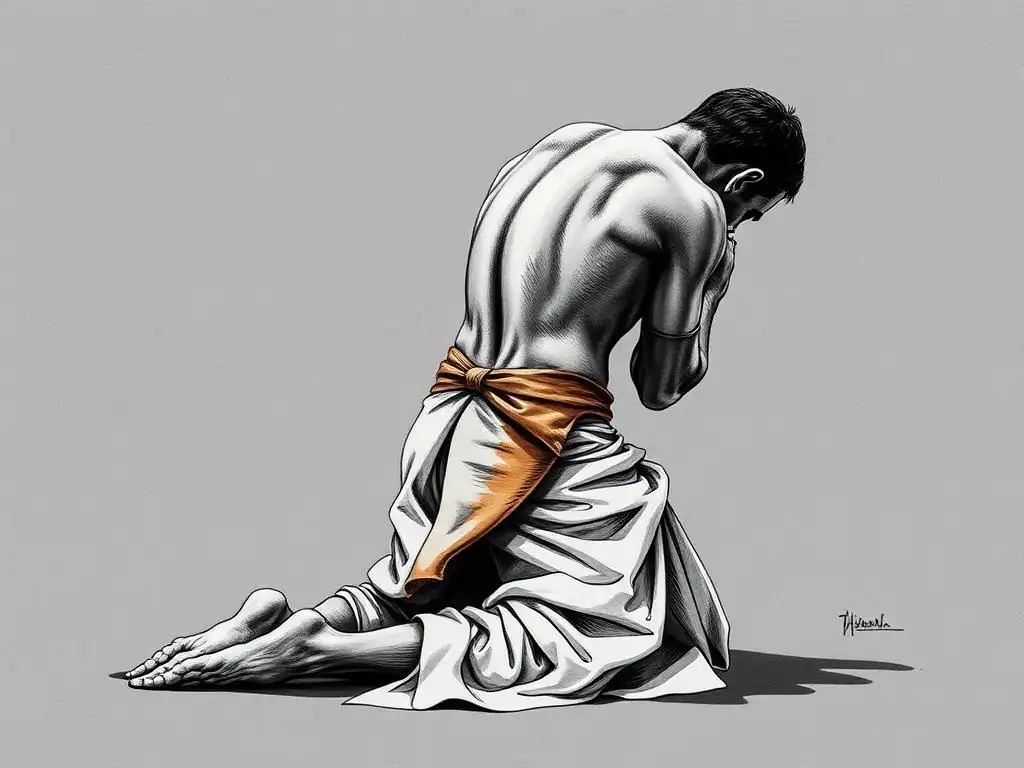
Principle 1: Prudence - Upholding Wisdom and Discernment
Prudence, or Prudencia, is presented by Fiore dei Liberi as the first and perhaps most crucial virtue for a master of arms. It is the intellectual virtue of knowing how to act rightly in any given circumstance. For a martial artist, this isn't just about tactical wisdom on the battlefield, but involves a broader discernment: knowing when not to fight, understanding the potential consequences of one's actions, and choosing the most appropriate and effective means to achieve a just end. Fiore's emphasis suggests that technical skill without prudence is dangerous and irresponsible, potentially leading to unnecessary harm or defeat.
This principle permeates Fiore's practical teachings. He presents defenses and counters that are not overly complex but efficient, reflecting a prudent use of energy and opportunity. He also describes techniques for different combat scenarios – from the unarmored dagger fight to mounted combat – implying that a prudent master understands the context and applies the appropriate skills. His instruction to "never trust a false promise" from an opponent during a grapple is a direct application of prudence, warning against naivety and emphasizing realistic assessment of threats. This focus on wise judgment is a cornerstone of Western martial arts ethics.
Practical Applications of Prudence in Fiore dei Liberi's Teachings
Fiore dei Liberi's manuscript offers numerous examples of prudence in action. Consider his advice on entering combat: he teaches guards and approaches that minimize exposure while allowing for effective action. This isn't just about technique; it's a prudent strategy to conserve energy and avoid unnecessary risk. His grappling techniques, such as the presa di spada (sword grapple), often involve controlling the opponent's weapon before attempting a disabling throw or strike. This sequence reflects prudence – neutralizing the primary threat first.
Another practical application is seen in his unarmed defenses against a dagger. Rather than meeting force with force head-on, many techniques involve deflecting, controlling the limb, and moving offline. This is a prudent approach that leverages leverage and timing over brute strength, minimizing the defender's vulnerability. Furthermore, the sheer variety of techniques for different weapons and situations presented in Flos Duellatorum underscores the need for a master to have the prudence to select the right tool and method for the specific challenge at hand, a fundamental aspect of Western martial arts ethics.
Case Study: The Master's assessment of students' readiness for certain techniques
While Flos Duellatorum doesn't explicitly detail student assessment methods, the structure of the treatise itself suggests a prudent progression. Fiore organizes techniques, often moving from simpler to more complex, and from less lethal (like grappling) to potentially deadly (like pollaxe techniques). A prudent master following Fiore's curriculum would naturally assess a student's physical capability, understanding of fundamental principles, and perhaps most importantly, their temperament and maturity before introducing techniques with higher inherent risk or requiring greater judgment.
Imagine a student who has mastered basic guards and cuts with the longsword but shows poor control or a lack of spatial awareness. A prudent instructor, guided by Fiore's implicit emphasis on safety and control, would likely delay teaching advanced winding techniques or disarms that require precise timing and close proximity to a sharp blade.
Instead, they would focus on reinforcing foundational skills and developing the student's judgment. This hypothetical scenario, grounded in the structure and spirit of Fiore's work, illustrates how a master's prudent assessment of a student's readiness is vital for safe and responsible Western martial arts training, reflecting a core tenet of Western martial arts ethics.
Principle 2: Justice - Emphasizing Fairness and Righteousness
Justice, or Iusticia, is another cardinal virtue highlighted by Fiore dei Liberi. In the context of medieval martial arts, justice had several layers. It related to the concept of the judicial duel, a legally sanctioned combat intended to settle disputes when other means failed, often seen as an appeal to divine judgment.
Fighting justly in such a context meant adhering strictly to the agreed-upon rules, using only permitted weapons, and upholding one's oath. Beyond the formal duel, justice also implied using one's martial skill righteously – for defense of self or others, or in service of a just lord or cause, rather than for aggression, robbery, or oppression.
Fiore's emphasis on justice underscores the idea that martial skill is a power that carries significant moral responsibility. His treatise was written for noblemen and knights, individuals expected to embody chivalric ideals, which included the protection of the weak and the upholding of justice.
Therefore, learning to fight was intertwined with the moral obligation to use that skill ethically. This principle served as a crucial check on the potential misuse of deadly force, framing martial ability not just as a tool for victory, but as a means to serve a higher, just purpose, which is central to the understanding of Western martial arts ethics in this period.
Historical Context of Justice within Fiore dei Liberi's School
Fiore dei Liberi taught during a period when judicial duels, though declining in some regions, were still a recognized method for resolving legal disputes, particularly among the nobility. His students included prominent figures like Niccolò III d'Este, the Marquis of Ferrara, who would have been expected to understand and potentially participate in such formal combats. The rules governing these duels were often elaborate and strictly enforced, covering everything from the size and type of weapons allowed to the specific oaths sworn.
Within this context, Fiore's teachings on techniques for the Pas d'armes (passage of arms) and judicial combat were not just about fighting effectively but fighting according to the law and custom. Mastery of these techniques, combined with the principle of justice, meant being prepared to defend one's honor or prove one's innocence within a specific, legally defined framework.
His emphasis on justice thus reflects the practical realities of martial practice for his clientele, where skill had to be applied within a system that, however flawed, aimed to achieve a form of righteousness, forming a key part of Western martial arts ethics.
Fiore dei Liberi's Interpretation of Justice
Fiore dei Liberi's interpretation of justice in martial practice appears to be multifaceted. Firstly, it involves fighting for a just cause. While his treatise is a technical manual, the implicit context for his students was service to a lord or defense of one's rights, aligning with contemporary feudal and chivalric norms. Secondly, within sanctioned combat like the judicial duel, justice meant adherence to the rules. His detailed techniques for such duels suggest a focus on achieving victory within the prescribed limits, rather than through deceit or foul play.
Furthermore, Fiore's inclusion of grappling techniques, including potentially lethal ones, alongside weapon combat might also reflect a sense of justice – providing the means to defend oneself effectively regardless of the immediate circumstances or whether one is armed. His system is presented as a complete art, equipping the practitioner to handle a wide range of threats justly and effectively. This comprehensive approach underscores his belief that true mastery involved not just technical skill but the moral compass provided by principles like justice, guiding the ethical application of Western martial arts.
Principle 3: Fortitude - Promoting Courage and Resilience
Fortitude, or Fortitudo, is the third cardinal virtue emphasized by Fiore dei Liberi. This principle speaks to the inner strength required of a martial artist – courage in the face of danger, resilience in overcoming pain or setback, and perseverance through rigorous training. Martial combat, whether in a duel, skirmish, or battle, inherently involves risk and fear. Fiore understood that even the most skilled fighter would be ineffective without the mental fortitude to stand their ground, execute techniques under pressure, and continue fighting despite injury or exhaustion.
His treatise implicitly promotes fortitude through the very nature of the techniques taught, many of which require commitment, timing, and the willingness to close distance with an armed opponent. The dedication required to master the diverse weapons and methods presented in Flos Duellatorum also demands significant perseverance. Fortitude is the virtue that enables the practitioner to translate technical knowledge into effective action when it matters most, ensuring that fear does not paralyze or reckless abandon does not lead to defeat. It is a vital component of Western martial arts ethics, linking physical training to mental and emotional discipline.
The Importance of Fortitude in Modern Western Martial Arts Practice
In modern Western Martial Arts (WMA) practice, fortitude remains as crucial as it was in Fiore dei Liberi's time, albeit in a different context. While judicial duels are a thing of the past, practitioners still require courage to participate in sparring, which involves facing a trained opponent and the potential for physical contact and discomfort. Overcoming the natural apprehension of being struck or grappling closely requires significant mental resilience. This is particularly true in disciplines focusing on realistic combat simulations.
Furthermore, the journey to mastering historical WMA systems like Fiore's is demanding. It requires consistent effort, patience, and the ability to push through frustration when techniques are difficult to grasp or execute correctly. Modern practitioners demonstrate fortitude by committing to years of study, research, and physical training, often balancing it with modern life. This perseverance in the face of challenges, both physical and intellectual, is a direct application of Fiore's principle of fortitude and essential for developing proficiency and upholding Western martial arts ethics.
Avoiding Common Pitfalls in Applying Fortitude
Applying fortitude correctly in Western martial arts training means distinguishing true courage from recklessness or stubbornness. A common pitfall is mistaking brute force or a refusal to yield in sparring for fortitude. True fortitude involves facing fear while maintaining control and applying technique, not simply absorbing punishment or charging blindly. For instance, persisting with an ineffective technique out of stubbornness, rather than adapting or yielding to learn, is not fortitude but folly.
Another pitfall is allowing pride to override prudence and fortitude. An overly proud student might push through a genuine injury in training, mistaking it for resilience, when the prudent action would be to rest and recover. Similarly, refusing to acknowledge defeat or a mistake in sparring prevents learning and growth. Fiore's principles are interconnected; fortitude must be tempered by prudence and guided by justice. Applying fortitude correctly in modern WMA involves developing mental toughness that supports skillful, safe, and ethical practice, rather than hindering it through ego or poor judgment, thereby upholding Western martial arts ethics.
Fiore dei Liberi's Influence on Modern Western Martial Arts Training
How Fiore dei Liberi's Ethics Shaped WMA Pedagogy
Fiore dei Liberi's holistic approach, integrating ethics, values, and principles with technical instruction, has profoundly shaped the pedagogy of modern Western Martial Arts (WMA). Unlike sports that might focus solely on winning within a rule set, WMA, particularly systems derived from masters like Fiore, often emphasizes the development of the whole person. Instructors drawing from Flos Duellatorum don't just teach sword cuts or grappling throws; they discuss the context, the purpose, and the mindset required.
This pedagogical approach means that discussions about prudence, justice, and fortitude are often part of the curriculum. Students are encouraged to think about the responsible use of force, the importance of control in sparring, and the development of mental discipline. While modern WMA is primarily a recreational or historical study pursuit, the underlying ethical framework from masters like Fiore provides a moral compass. This focus on character development alongside physical skill is a direct legacy of masters who saw martial arts as more than just fighting techniques, influencing how Western martial arts ethics are taught today.
The Legacy of Fiore dei Liberi's Values in Contemporary WMA Schools
The values articulated by Fiore dei Liberi – prudence, justice, and fortitude – continue to resonate within contemporary WMA schools and communities. Many schools dedicated to historical European martial arts (HEMA), which includes WMA, explicitly reference these virtues in their mission statements or training philosophy. Students are often encouraged to embody these values both within the training hall and in their daily lives.
For example, the value of justice translates into fostering a respectful training environment where partners cooperate safely rather than trying to "win" at all costs during drills. Fortitude is evident in the dedication required for consistent practice and the willingness to learn from mistakes and discomfort in sparring. Prudence is applied in the careful handling of training weapons, the control exercised during techniques, and the judgment used in applying learned skills responsibly. Fiore's articulation of these values provides a historical and philosophical depth to modern WMA practice, shaping the community's understanding of Western martial arts ethics.
Fiore dei Liberi's Influence on Safety Standards and Responsible Practice in WMA
While medieval practice involved significant risks, Fiore dei Liberi's principles indirectly support the development of safety standards and responsible practice in modern WMA. The principle of prudence, for instance, is paramount in ensuring safety. It guides instructors and practitioners in using appropriate protective gear (like masks, gloves, and padding), assessing risk during drills and sparring, and understanding their own physical limits and those of their partners.
The emphasis on control and technique over brute force, inherent in Fiore's system, also contributes to safer training. His techniques often involve precise movements and leverage, which, when practiced mindfully, reduce the likelihood of injury compared to uncontrolled force. Furthermore, the underlying ethical framework, emphasizing respect and responsible conduct (linked to justice), fosters a culture where practitioners look out for each other's safety. While modern safety protocols are a 21st-century necessity, the ethical underpinnings provided by figures like Fiore dei Liberi provide a philosophical basis for prioritizing safety and responsible application of skills within Western martial arts ethics.
Comparing Fiore dei Liberi's Ethical Code with Other WMA Pioneers
Fiore dei Liberi vs. Johannes Liechtenauer: A Comparative Analysis of Ethical Stances
Comparing Fiore dei Liberi's ethical code with that of his near-contemporary, the German master Johannes Liechtenauer, reveals both similarities and subtle differences in their approaches to Western martial arts ethics. Liechtenauer's teachings, primarily conveyed through cryptic verses ( Zettel) and later commentaries by his followers, also emphasize core principles and a certain martial ethos. His famous "common master" verse, for instance, criticizes practitioners who lack fundamental understanding or rely solely on strength, implying a value placed on skill, intelligence, and proper application – aspects aligning with Fiore's prudence.
However, while Liechtenauer's Zettel is rich in technical principles and strategic advice, it is less explicit about the broader moral virtues in the way Fiore's introductory verses are. Liechtenauer's focus seems more directly on the principles of combat themselves, like "Vorsatz, Nachsatz, Indes" (Before-stroke, After-stroke, Meanwhile), which guide effective action. While his followers' commentaries sometimes touch upon the mindset, Fiore's Flos Duellatorum presents the ethical virtues as foundational prerequisites for the martial artist before delving into techniques. Both masters contributed significantly to Western martial arts ethics, but Fiore's work offers a more overt philosophical framework alongside the technical instruction.
Similarities and Differences in the Core Values of Prominent WMA Figures
Examining the works of various prominent WMA figures from the medieval and Renaissance periods reveals common threads in their core values, alongside variations reflecting regional differences, specific contexts (e.g., military vs. civilian defense), and individual philosophies. Values like courage, skill, and determination are universally prized across different masters and traditions, as they are essential for effective combat regardless of the specific techniques. The importance of practice and dedication is also a recurring theme, emphasizing fortitude.
Differences often lie in the explicit emphasis on broader moral or social virtues. Masters writing for the knightly class, like Fiore, tend to integrate concepts of honor, justice (particularly in the context of dueling), and chivalry more prominently.
Masters focused on self-defense for commoners or urban settings might place more emphasis on practicality, deception (like concealed weapons), and survival, where the ethical considerations might shift from formal honor codes to more pragmatic self-preservation. Yet, the underlying commitment to effective mastery and a certain level of discipline and respect for the art itself forms a common ground in the landscape of Western martial arts ethics.
Challenges and Criticisms of Fiore dei Liberi's Ethical Framework
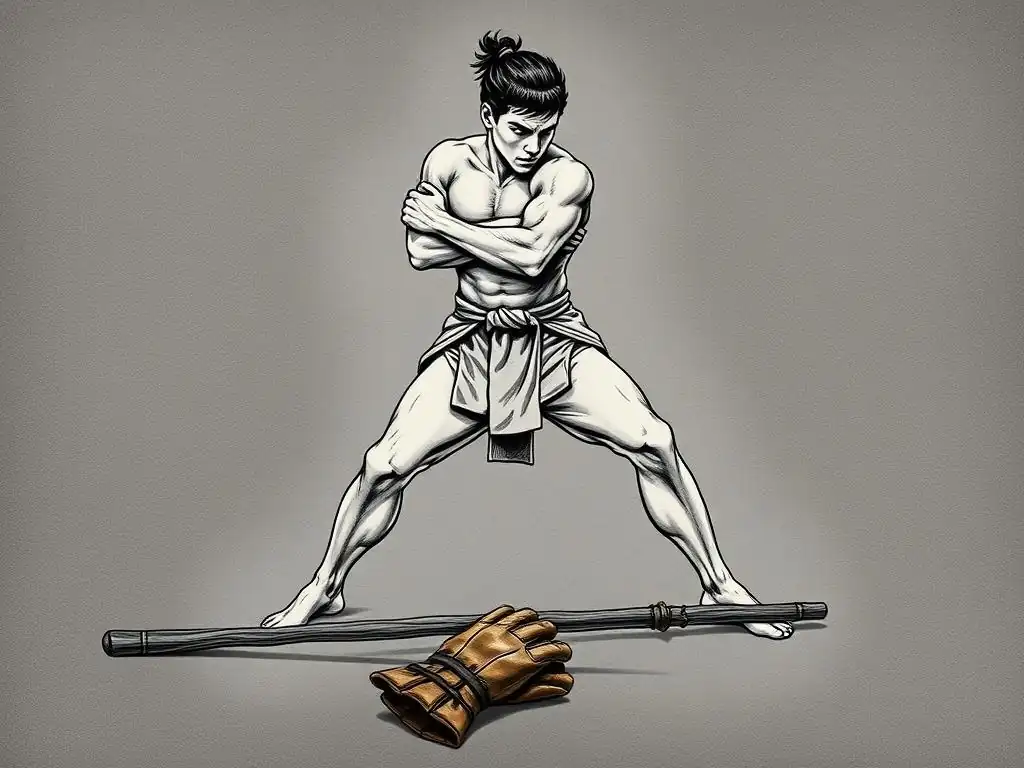
Addressing Potential Weaknesses in Fiore dei Liberi's Approach
While Fiore dei Liberi's ethical framework provides a valuable foundation for Western martial arts ethics, applying a 15th-century code directly to the 21st century presents challenges. One potential "weakness" from a modern perspective might be the framework's grounding in the specific social and legal context of medieval Italy, particularly the concept of the judicial duel and the role of the noble warrior. The principle of justice, for instance, is discussed in relation to these specific institutions, which no longer exist.
Furthermore, the ethical considerations around the use of lethal force were different in a society where personal combat was a more frequent reality. Applying the principles to modern self-defense or sport combat requires careful interpretation. Fiore's work, while comprehensive for its time, doesn't explicitly address ethical dilemmas specific to modern contexts, such as the use of martial arts in law enforcement or competitive sport rules. Modern practitioners must therefore adapt and interpret his principles prudently to fit contemporary ethical standards and legal frameworks, ensuring that Western martial arts ethics remain relevant.
Contemporary Interpretations and Adaptations of Fiore dei Liberi's Principles
Modern practitioners and scholars of Western Martial Arts actively engage in interpreting and adapting Fiore dei Liberi's principles to contemporary contexts. This involves understanding the historical meaning of virtues like prudence and justice and finding their equivalent relevance today. For example, prudence translates into responsible training practices, risk assessment, and the wise application of physical skills outside the training hall.
Justice is often interpreted as fostering fairness and respect within the training community, adhering to sparring rules, and understanding the legal and moral implications of using self-defense techniques in the modern world. Fortitude remains relatively unchanged in its essence – requiring perseverance in training and courage in challenging situations. Contemporary WMA schools often incorporate discussions on these interpretations, ensuring that Fiore's ethical legacy is not just preserved as a historical curiosity but remains a living, guiding force for practitioners navigating the complexities of modern life while embodying Western martial arts ethics.
Preserving and Promoting Fiore dei Liberi's Ethical Legacy in WMA
Strategies for Integrating Fiore dei Liberi's Ethics into Modern Training Curricula
Successfully integrating Fiore dei Liberi's ethics into modern WMA training curricula requires conscious effort from instructors and students. One strategy is to dedicate specific class time or discussions to the introductory sections of Flos Duellatorum, analyzing the verses on prudence, justice, and fortitude. This moves these principles from abstract concepts to explicit components of the study.
Another strategy is to link ethical principles directly to physical practice. For instance, during sparring, instructors can provide feedback not only on technique but also on the application of prudence (e.g., "Were you being prudent with your control there? "), justice (e.g., "Did you respect the rules and your partner's safety? "), and fortitude (e.g., "Did you show resilience after that exchange?"). Incorporating these discussions into the practical application helps students internalize the ethical framework. Assigning readings or research on the historical context of Western martial arts ethics also deepens understanding and appreciation for Fiore's code.
The Role of Instructors in Upholding Fiore dei Liberi's Values
Instructors play a paramount role in preserving and promoting Fiore dei Liberi's values and Western martial arts ethics. They are the primary conduits through which students learn not just techniques but also the underlying philosophy. By embodying prudence, justice, and fortitude in their own teaching and practice, instructors set a powerful example. This includes demonstrating control and safety in sparring, being fair and consistent in their instruction, and showing perseverance in their own ongoing study and development.
Instructors must also actively teach the ethical framework. This involves explaining the historical context of Fiore's principles, discussing their relevance today, and facilitating conversations about ethical dilemmas in martial arts. They are responsible for cultivating a training environment that values respect, safety, and responsible conduct, directly reflecting the principles espoused by Fiore. Without dedicated instructors who prioritize the ethical dimension, the rich legacy of Western martial arts ethics from masters like Fiore dei Liberi would fade into mere historical footnotes rather than remain a vibrant part of contemporary practice.
Conclusion: The Enduring Relevance of Fiore dei Liberi's Western Martial Arts Ethics
Looking Ahead: Ensuring Ethical Practice in the Future of Western Martial Arts
Ensuring ethical practice in the future of Western Martial Arts (WMA) hinges on a continued commitment to the foundational principles laid down by masters like Fiore dei Liberi. As WMA continues to grow and evolve, potentially incorporating competitive formats or reaching wider audiences, maintaining a strong ethical core is vital. This requires ongoing education about the historical context and philosophical underpinnings of the art, moving beyond mere technical execution.
The future of Western martial arts ethics involves promoting responsible scholarship, fostering respectful community interactions, and emphasizing the development of character alongside physical skill. It means encouraging practitioners to think critically about the application of their skills and the impact of their actions, both within and outside the training hall. By actively integrating prudence, justice, and fortitude into training methodologies and community standards, the WMA community can ensure that it grows responsibly and remains true to the ethical legacy of its pioneers.
Fiore dei Liberi's Contribution to a Responsible and Respectful WMA Community
Fiore dei Liberi's Flos Duellatorum offers more than just a collection of medieval fighting techniques; it provides a blueprint for a responsible and respectful martial arts community. By explicitly linking technical mastery to essential virtues, Fiore established a precedent for viewing martial arts as a discipline that shapes character. His emphasis on prudence, justice, and fortitude provides a timeless framework for ethical conduct that transcends the specific weapons or historical period.
The ongoing study and application of Fiore's ethical code contribute significantly to the positive culture found in many modern WMA schools. It encourages practitioners to approach training with seriousness and respect, to prioritize safety and control, and to understand the moral responsibilities that come with learning to fight. Fiore dei Liberi's legacy is not just in the techniques he preserved, but in the ethical foundation he provided, helping to cultivate a community dedicated to skillful, safe, and honorable Western martial arts ethics.
Frequently Asked Questions
What are the core ethical principles typically emphasized in Western Martial Arts (WMA) as discussed on MartialArtsMastery.org?
WMAs often emphasize chivalry, honor, and respect for opponents. These principles guide conduct both inside and outside the training hall, influencing how practitioners engage with the art.
How does 'Pioneer's Name]'s Code' relate to modern interpretations of Western Martial Arts Ethics?
'[Pioneer's Name]'s Code' provides a historical foundation for ethical considerations. Modern interpretations often build upon these historical values, adapting them to contemporary contexts and challenges.
Does MartialArtsMastery.org offer any practical guidance on applying Western Martial Arts Ethics in self-defense situations?
Yes, the site provides strategies for balancing self-preservation with ethical considerations. This includes understanding appropriate use of force and de-escalation techniques.
How does the study of Western Martial Arts Ethics enhance a practitioner's overall understanding of WMA?
Understanding the ethical framework adds depth and context to the physical techniques. It encourages responsible practice and fosters a more holistic understanding of the art.
What resources does MartialArtsMastery.org offer for further exploration of Western Martial Arts Ethics beyond '[Pioneer's Name]'s Code'?
The site features articles on historical figures, philosophical underpinnings, and practical applications. These resources offer a comprehensive view of ethical considerations in WMA.
Okay, here's a final reflection designed to close your article, "Pioneer's Name]'s Code: Unpacking the Ethics, Values, and Principles in Western Martial Practice," optimized for the keyword "Western martial arts ethics," and following the structure you provided.
Final Reflection: Forging a Legacy of Honor
The principles explored throughout this article, from [Pioneer's Name]'s dedication to ethical conduct to the core values underpinning Western martial arts, are not relics of the past. They are vital anchors in a modern world increasingly disconnected from tradition and honor. The resurgence of interest in Western martial arts demands a renewed focus on the ethical framework that gives these practices meaning and purpose, ensuring they are not merely techniques of combat, but pathways to personal and societal betterment.
The enduring influence of [Pioneer's Name]'s code, and the broader ethical considerations within Western martial arts, continues to shape the cultural landscape of martial arts training. It reminds us that true mastery lies not just in physical prowess, but in the cultivation of character, integrity, and respect. This is a legacy worth preserving and promoting. The ultimate aim of martial arts is not having to use them.
– Miyamoto Musashi. This quote encapsulates the profound responsibility inherent in mastering these arts, a responsibility that demands unwavering ethical consideration.
As you step back from this exploration of Western martial arts ethics, consider the role you play in shaping its future. How can you embody the principles of honor, respect, and responsibility in your own training and teaching? Let the lessons of [Pioneer's Name] and the ethical foundations of these arts guide you towards becoming not just a skilled practitioner, but a true guardian of this rich and vital tradition. Embrace the challenge, and forge your own legacy of honor.
Ignite Your Inner Warrior: Rediscover Honor in Martial Arts!
Thank you for exploring the ethical core of Western Martial Arts with us. We hope this exploration has illuminated the profound values that underpin this rich tradition and inspired you. Now, let's translate this knowledge into action!
- Embrace the Code: Actively integrate the principles of honor, discipline, and respect into your training and everyday life.
- Explore historical texts: Dive into original manuals and treatises to deepen your understanding of the ethics and values within historical combat.
- Share and discuss: Talk about these principles with your training partners and instructors to foster a stronger ethical foundation within your martial arts community.
How will you embody the spirit of these martial traditions in your next training session?