
Muay Thai's Golden Age: Profiling the Titans of a Legendary Era

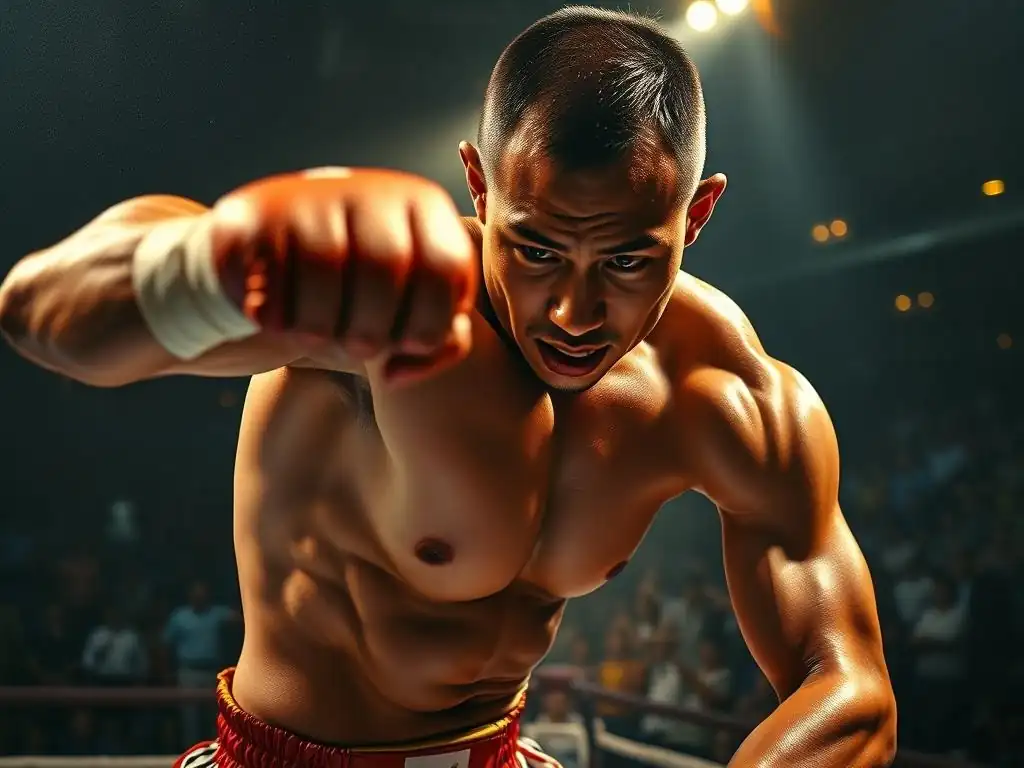
Welcome to Martial Arts Mastery, your gateway to the world's fighting traditions!
Dive into the heart of combat brilliance and explore the captivating stories behind the world's most formidable martial arts. Ever wondered about the legends that forged the fiery spirit of "Muay Thai"?
Prepare to be inspired as we unveil Muay Thai's Golden Age and profile the titans who defined a legendary era. Uncover their secrets, their struggles, and the enduring legacy they left behind. Are you ready to meet the masters?
- Introduction: Exploring the Golden Age of Muay Thai
-
Muay Thai Legendary Fighter Profiles: Icons of the Golden Era
- Apidej Sit-Hirun: The "Human Punching Bag" and Muay Thai Legend
- Dieselnoi Chor Thanasukarn: The "Sky Piercing Knee" and Muay Thai Mastery
- Samart Payakaroon: The "Baby-Faced Tiger" and Multiple Division Champion
- Sagat Petchyindee: The Ferocious Power of the "Deadly Knee"
- Pudpadnoi Worawut: The Cerebral Stylist
- Saenchai Sor. Kingstar: The Epitome of Muay Thai Artistry
- Training Regimens of Golden Era Muay Thai Fighters
- The Impact and Influence of Muay Thai's Golden Age
- Conclusion: Remembering the Titans of Muay Thai's Golden Age
-
Frequently Asked Questions
- What defines Muay Thai's "Golden Age" and why is it considered legendary?
- Where can I find more in-depth profiles of these Muay Thai legends?
- What kind of training and philosophical approach did these Muay Thai titans typically follow?
- What made these fighters stand out from contemporary Muay Thai competitors?
- Can the techniques and strategies used by these legendary Muay Thai fighters still be applied today?
- Final Reflection: Echoes of the Ring
- Ignite Your Inner Warrior: Step into Muay Thai's Legacy!
Introduction: Exploring the Golden Age of Muay Thai
What Defined Muay Thai's Golden Era?
Muay Thai's Golden Era, generally considered to span from the early 1980s to the late 1990s, was a period of unprecedented brilliance and popularity for the sport. This era saw an explosion of talent, with fighters possessing incredible skill, power, and tactical acumen. Stadiums in Bangkok, particularly Lumpinee and Rajadamnern, were packed night after night, witnessing bouts of extraordinary intensity and technical mastery.
The level of competition was incredibly high, pushing fighters to their absolute limits and fostering an environment where only the truly exceptional could rise to the top. It was a time when the artistry and brutal effectiveness of Muay Thai were showcased on a global stage, capturing the imagination of martial arts enthusiasts worldwide.
This period was characterized by a confluence of factors: increased media coverage, the rise of powerful promoters, and a deep talent pool stemming from traditional training camps across Thailand. The stakes were high, with significant purses and prestigious titles from the major stadiums on the line. Fighters from different camps constantly challenged each other, creating intense rivalries that fueled the sport's popularity.
The strategic depth evolved significantly, with fighters mastering specific weapons like devastating low kicks, piercing knee strikes, powerful elbows, and sophisticated clinch work. The fighters from this era set benchmarks for technique, durability, and ring intelligence that continue to inspire generations of nak muay (Muay Thai practitioners).
The Enduring Legacy of Muay Thai's Golden Age Fighters
The fighters who emerged during the Golden Age didn't just win titles; they became legends whose names are still spoken with reverence today. Their impact extends far beyond their win-loss records. They refined techniques, popularized styles, and demonstrated the peak potential of human performance within the demanding framework of Muay Thai. Their fights are studied by trainers and fighters globally, offering timeless lessons in strategy, technique, and mental fortitude. These Muay Thai legendary fighter profiles serve as a historical record and a practical guide for those seeking to understand the highest levels of the sport.
The influence of these icons is evident in modern training methodologies and fighting styles. Techniques they perfected, such as Dieselnoi's knee strikes or Apidej's powerful kicks, are still fundamental elements taught in gyms worldwide. Moreover, their stories of discipline, perseverance, and triumph against formidable opponents provide powerful motivation for aspiring fighters. The legacy of the Golden Age is not just in the history books; it lives on in the training halls, in the ring, and in the collective memory of the Muay Thai community, cementing their status as true titans.
Muay Thai Legendary Fighter Profiles: Icons of the Golden Era
Apidej Sit-Hirun: The "Human Punching Bag" and Muay Thai Legend
Apidej Sit-Hirun is often cited as one of the most powerful kickers in Muay Thai history, earning him the moniker "The Human Punching Bag" due to the sheer force of his strikes. Competing primarily in the 1960s, slightly preceding the generally accepted Golden Age but serving as a foundational figure for many later fighters, Apidej held multiple stadium titles across different weight divisions.
His power was legendary; it is said that opponents sometimes retired from the sport or required significant recovery time after enduring his kicks. His record stands as a testament to his dominance, with a reported 350+ wins out of over 400 fights, a staggering number reflecting the high frequency of bouts in that era.
His training regimen was famously rigorous, involving countless repetitions of powerful kicks against heavy bags, banana trees, and even sparring partners. This relentless dedication built legs of incredible strength and conditioning. Apidej's fighting style was straightforward yet devastatingly effective: pressure, powerful offense, and an iron chin. He didn't necessarily rely on elaborate feints or evasive footwork; instead, he walked forward, absorbed blows, and returned them with crippling force, particularly his signature roundhouse kick. His ability to withstand punishment while delivering fight-ending power made him a terrifying opponent.
Dominance and Fighting Style of Apidej Sit-Hirun
Apidej's dominance was rooted in his extraordinary physical conditioning and his ability to generate immense power, especially in his kicks. While exact statistics from his era are hard to verify compared to modern records, contemporary accounts frequently highlight his numerous knockout victories achieved solely through leg kicks. He held titles simultaneously at Lumpinee and Rajadamnern stadiums, a rare feat demonstrating his supremacy across the sport's most prestigious venues. His style was less about evasion and more about overwhelming force; he would absorb blows, using his incredible toughness, to get into position to unleash his own devastating attacks.
His training involved kicking heavy bags so hard they would reportedly lift off the ground, and sparring partners often wore multiple pads to try and mitigate the impact of his kicks. This focus on raw power and durability made him a relentless force in the ring. Opponents knew they were in for a brutal fight where simply surviving his kicks was a victory in itself. This focus on fundamental, powerful techniques laid a foundation that many Golden Age fighters would build upon, albeit with added layers of technical complexity.
Apidej Sit-Hirun's Impact on Muay Thai
Apidej's impact on Muay Thai is profound, particularly in establishing the benchmark for kicking power and toughness. He became an archetype of the powerful, aggressive fighter that many aspired to be. His legendary status helped elevate the profile of Muay Thai both within Thailand and internationally, inspiring interest in the sport's formidable striking techniques. The stories of his fights and the damage his kicks inflicted became part of the sport's folklore, emphasizing the importance of developing powerful weapons.
Beyond his fighting career, Apidej transitioned into coaching, passing on his knowledge and methods to subsequent generations. His influence can be seen in the emphasis placed on conditioning the legs and developing powerful kicks in training camps across Thailand. He demonstrated that raw power, combined with unwavering determination, could overcome highly technical opponents. His legacy is a reminder of the brutal effectiveness that lies at the heart of traditional Muay Thai.
Dieselnoi Chor Thanasukarn: The "Sky Piercing Knee" and Muay Thai Mastery
Dieselnoi Chor Thanasukarn is arguably the most dominant knee fighter in Muay Thai history, earning the nickname "Sky Piercing Knee" for his seemingly unstoppable clinch and knee attacks. He held the Lumpinee Stadium lightweight title for four years, from 1982 to 1986, a reign that ended only because he ran out of opponents willing to challenge him. His height, approximately 6'3" (191 cm), was a significant advantage in a division where most fighters were considerably shorter, allowing him to dominate the clinch like no one before or since.
His record during his championship reign was immaculate; he was undefeated as the Lumpinee champion. His style was predicated on closing the distance, securing the clinch, and unleashing a relentless barrage of knee strikes. Opponents struggled immensely to counter his height and strength in the clinch, often being worn down and overwhelmed by the sheer volume and power of his knees. Dieselnoi's mastery of this specific range and technique made him a truly unique and legendary figure.
Dieselnoi's Unique Technique and Unmatched Reign
Dieselnoi's unique technique centered entirely around his devastating clinch game and powerful knee strikes. While other fighters used the clinch, Dieselnoi elevated it to an art form and a primary offensive weapon. He would use his reach to secure dominant grips, control his opponent's posture, and then deliver powerful knees to the body and legs, often lifting his opponents off the ground. His stamina was legendary, allowing him to maintain a high pace of kneeing throughout the championship rounds.
His reign as Lumpinee champion is unmatched in its nature – he retired undefeated as champion because no credible challengers remained. Promoters struggled to find opponents who could even survive his onslaught, let alone pose a serious threat. This unprecedented situation forced his retirement from the title, a testament to his absolute supremacy in his weight class during his peak. His dominance in a specific area highlights the specialization that characterized some of the greatest Muay Thai legendary fighter profiles.
Dieselnoi Chor Thanasukarn: A Tactical Genius in the Ring
While often seen as solely a physical force due to his height and strength, Dieselnoi was also a tactical genius within his specific game plan. He expertly used footwork and timing to close the distance safely and secure the clinch. Once there, he employed subtle techniques to unbalance opponents and maintain control, preventing them from escaping or generating their own offense. He understood angles and leverage in the clinch intuitively, maximizing the impact of his knees while minimizing the opponent's ability to counter.
His genius lay in his unwavering commitment to his strength and his ability to force the fight into his domain. He didn't try to outbox or outkick opponents on the outside; he focused relentlessly on getting into the clinch where he was virtually unbeatable. This strategic simplicity, executed with unparalleled physical attributes and technique, made him one of the most feared and respected fighters of his era. His career is a masterclass in leveraging one's unique strengths to achieve dominance.
Samart Payakaroon: The "Baby-Faced Tiger" and Multiple Division Champion
Samart Payakaroon is widely considered one of the greatest, if not the greatest, Muay Thai fighter of all time. Known as the "Baby-Faced Tiger," Samart possessed unparalleled technique, ring intelligence, and evasiveness. He was a four-time Lumpinee Stadium champion across four different weight divisions – an extraordinary achievement. What sets Samart apart is not just his Muay Thai accolades but also his successful transition to professional boxing, where he became a WBC Super Bantamweight World Champion in 1986.
Samart's style was the epitome of 'Muay Fimeu' or technical fighting. He was a master counter-striker, using exquisite timing and footwork to evade attacks and punish opponents with precision. His defense was legendary; opponents often missed him entirely, hitting only air. He possessed a powerful jab, sharp straight punches (honed from his boxing career), accurate kicks, and a sophisticated understanding of distance management. His ability to switch seamlessly between attacking and defending, often in the blink of an eye, made him incredibly difficult to fight.
Samart Payakaroon's Versatility and Boxing Prowess
Samart's versatility is unmatched among Muay Thai legends. His success in both Muay Thai and professional boxing demonstrates an exceptional level of adaptability and technical skill. He won Lumpinee titles at 105 lbs, 115 lbs, 126 lbs, and 130 lbs, showcasing his ability to compete and dominate across a range of weight classes. His transition to boxing was not just a novelty; he defeated undefeated Mexican champion Lupe Pintor via knockout in the fifth round to claim the WBC world title, a feat few, if any, other Muay Thai fighters have replicated at that level.
His boxing training significantly enhanced his already superb hand techniques, giving him a powerful and accurate jab and straight right. He integrated these seamlessly into his Muay Thai style, making him even more unpredictable. This cross-training highlights the potential for synergy between different combat sports and underscores Samart's unique talent for mastering multiple disciplines at the highest level. His boxing success added another layer to the incredible legacy of this Muay Thai legendary fighter profile.
Samart Payakaroon: A Cultural Icon Beyond Muay Thai
Samart Payakaroon's fame transcended the sport of Muay Thai in Thailand. His good looks, charisma, and success both in the ring and the boxing world led him to become a popular singer and actor. He released several successful albums and starred in films, becoming a national celebrity. This crossover appeal further cemented his status as an icon, bringing Muay Thai into the mainstream consciousness for many Thais.
His career serves as an inspiration for aspiring fighters, showing that dedication to martial arts can open doors to other opportunities. He is not just remembered for his incredible fighting skills but also for his contribution to popular culture. Samart remains a revered figure, embodying the potential for both athletic greatness and broader cultural influence, making his story a significant part of the history of Muay Thai legendary fighter profiles.
Sagat Petchyindee: The Ferocious Power of the "Deadly Knee"
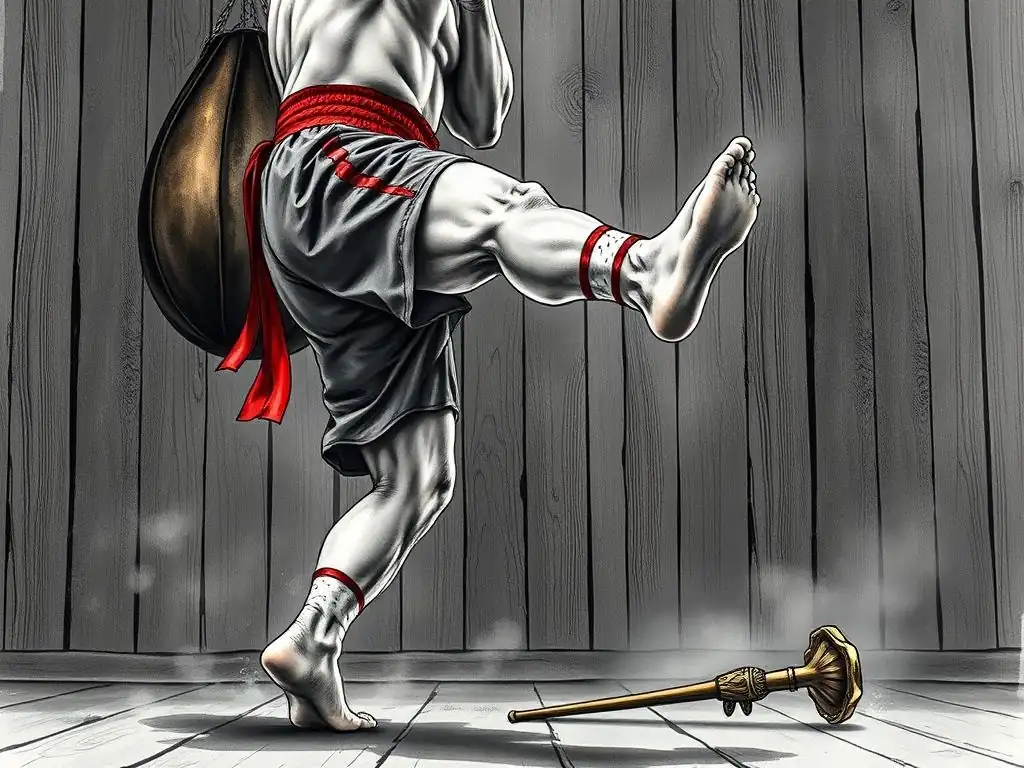
Sagat Petchyindee was a feared knockout artist known for his aggressive style and devastating power, particularly his knee strikes, earning him the moniker "Deadly Knee." While perhaps best known internationally as the inspiration for the character Sagat in the Street Fighter video game series, his real-life ring achievements are equally legendary. Sagat held multiple Lumpinee and Rajadamnern stadium titles across several weight classes in the 1970s and 1980s.
His fights were often spectacles of raw power and aggression. Sagat would relentlessly pressure opponents, using powerful punches and kicks to set up his signature knee attacks. He possessed incredible knockout power in both his hands and knees, ending many fights early. His durability and willingness to engage in brutal exchanges made him a fan favorite and a formidable challenge for anyone in his weight class. His career embodies the 'Muay Khao' or knee-fighting style perfected during the Golden Age.
Sagat Petchyindee's Explosive Style and Knockout Power
Sagat's fighting style was characterized by explosive power and relentless forward pressure. He didn't rely on elaborate feints or defensive maneuvers as much as some of his contemporaries; his strategy was often to overwhelm opponents with sheer force. He possessed a powerful right hand and a devastating right knee, which he delivered with incredible speed and power, often in combination. Many of his victories came via knockout, a testament to the concussive force of his strikes.
His training focused heavily on developing this explosive power and stamina. He would spend hours hitting pads and sparring, simulating fight scenarios where he could unleash his full arsenal. Opponents knew that facing Sagat meant enduring a storm of powerful strikes from the opening bell. His ability to generate fight-ending power consistently made him one of the most dangerous fighters of his generation and a key figure among notable Muay Thai legendary fighter profiles.
Sagat Petchyindee: A Symbol of Muay Thai's Raw Strength
Sagat Petchyindee represents the raw, uncompromising strength and aggression inherent in traditional Muay Thai. While the Golden Age featured many technical masters, Sagat stood out as a fighter who could simply overpower opponents through sheer force and determination. His willingness to absorb punishment to deliver his own devastating blows showcased the warrior spirit that is highly valued in the sport.
His portrayal in popular culture, even if exaggerated, introduced the power and intensity of Muay Thai to a global audience. While the Street Fighter character is fictional, it drew heavily on Sagat's real-life reputation as a powerful knee fighter. This unexpected cultural footprint further cemented his place as a memorable figure from the Golden Age, highlighting the impact these athletes had even outside the ring.
Pudpadnoi Worawut: The Cerebral Stylist
Pudpadnoi Worawut, known for his technical brilliance and ring generalship, was a dominant force in the lightweight division during the 1970s and early 1980s, bridging the gap into the Golden Age. He was a multiple-time Lumpinee and Rajadamnern champion and is often ranked among the top few fighters of all time. Pudpadnoi was a master of the 'Muay Fimeu' (technical fighter) style, known for his exceptional defense, timing, and counter-striking.
His fights were characterized by strategic brilliance and technical precision. Pudpadnoi rarely took unnecessary damage, using superb footwork and head movement to evade incoming strikes. He would patiently analyze his opponents, identify openings, and then capitalize with swift, accurate attacks, particularly his sharp left kick and precise punches. He was a master of controlling the distance and tempo of the fight, frustrating opponents and forcing them into mistakes.
Pudpadnoi's Technical Brilliance and Ring Generalship
Pudpadnoi's technical brilliance was evident in every aspect of his game. His defensive skills were exceptional; he could slip punches, block kicks effectively, and use subtle movements to avoid powerful blows. He had a deep understanding of ring strategy, using angles and positioning to his advantage. He was particularly known for his devastating left kick, which he could deliver with incredible speed and accuracy to the body and arms, often breaking opponents down over the course of a fight.
His ring generalship allowed him to dictate where the fight took place and at what pace. He could lure opponents into traps or keep them at bay with his long-range weapons. This strategic depth made him incredibly difficult to defeat, as opponents had to not only contend with his technical skill but also overcome his tactical control of the bout. His approach demonstrated that victory in Muay Thai could be achieved through intelligence and technique as much as raw power.
Pudpadnoi Worawut: A Master of Evasion and Counter-Striking
Pudpadnoi was a prime example of a fighter who won through superior defense and counter-offense. He wasn't known for overwhelming power like Apidej or Sagat, or a singular dominant weapon like Dieselnoi's knees. Instead, his strength lay in his ability to make opponents miss and then punish them for it. His counter-strikes were perfectly timed and placed, often catching opponents off guard as they recovered from their own missed attacks.
His mastery of evasion and counter-striking highlights the multifaceted nature of Muay Thai. It shows that while aggression and power are important, defensive skill and tactical intelligence can be equally, if not more, effective at the highest levels. Pudpadnoi's legacy is that of a true technician, a fighter who won through skill and smarts, solidifying his place among the premier Muay Thai legendary fighter profiles.
Saenchai Sor. Kingstar: The Epitome of Muay Thai Artistry
While Saenchai's prime extends well beyond the traditional Golden Age (he is still actively fighting and performing demonstrations), his roots are firmly planted in the training methodologies and competitive environment forged during that era. Saenchai is widely regarded as the greatest pound-for-pound Muay Thai fighter of the modern era, known for his dazzling technique, incredible agility, and innovative moves. He is a multiple-time Lumpinee champion across different weight classes and has defeated numerous top-ranked opponents globally.
Saenchai embodies the evolution of the 'Muay Fimeu' style, taking technical fighting to an artistic level. His fights are characterized by incredible balance, creative footwork, unorthodox attacks (like the cartwheel kick), and seemingly effortless defense. He makes highly complex techniques look simple and often toys with opponents in the ring, showcasing a level of mastery that is both effective and entertaining. His longevity and consistent performance against larger opponents are legendary.
Saenchai's Unorthodox Techniques and Agility
Saenchai's fighting style is a unique blend of traditional technique and innovative flair. He possesses exceptional balance and agility, allowing him to execute techniques that few others can, such as his famous cartwheel kick or his rapid-fire left kicks delivered while hopping. His defense is dynamic, incorporating evasive movements, parries, and blocks with fluid transitions into offense. He constantly surprises opponents with unexpected angles and strikes.
His mastery of the left kick is legendary; he can land it with incredible speed and power from multiple angles. He also utilizes effective punches, elbows, and a highly technical clinch game. Saenchai's ability to adapt and innovate, even late in his career, is a testament to his deep understanding of the sport and his physical gifts. He is a living example of the potential for artistic expression within the brutal framework of Muay Thai.
Saenchai Sor. Kingstar: A Modern Legend with Golden Era Roots
Saenchai represents the continuation and evolution of the standards set by Golden Age fighters. While he came of age slightly later, his early training and competitive career were shaped by the camps and opponents who were active during or immediately following the Golden Age. His technical foundation is built upon the principles perfected by fighters like Samart and Pudpadnoi, but he has added his own unique innovations, pushing the boundaries of what is possible in the ring.
His career serves as a bridge between the legendary past and the present state of Muay Thai. He demonstrates that the high level of technical skill and tactical intelligence characteristic of the Golden Age remains essential for success today. Saenchai's ongoing career and global popularity ensure that the legacy of elite Thai boxing continues to inspire new generations worldwide, adding a significant chapter to the history of Muay Thai legendary fighter profiles.
Training Regimens of Golden Era Muay Thai Fighters
The Rigorous Training Camps: Forging Legends
Training camps during Muay Thai's Golden Age were notoriously rigorous, demanding extreme discipline, physical endurance, and mental toughness. Fighters, often starting at a young age (sometimes as young as 8-10 years old), lived and trained full-time at the camps. Days typically began before sunrise with a long run, often covering many kilometers. This was followed by multiple sessions of training throughout the day, punctuated by short breaks for meals and rest. The environment was highly competitive, as fighters within the same camp would push each other and vie for opportunities to fight in the major stadiums.
A typical day might involve 10+ kilometers of running, hundreds of rounds on the pads and heavy bags, extensive clinching practice, sparring, skipping rope, and body conditioning exercises like sit-ups and push-ups. The emphasis was on building incredible aerobic capacity, muscular endurance, power, and toughness. Training partners would hold pads with immense force, simulate fight scenarios during sparring, and engage in prolonged clinch battles. The intensity and volume of training were designed to prepare fighters for the grueling five-round professional fights, where stamina was paramount.
Traditional Muay Thai Training Techniques of the Golden Age
Traditional training techniques during the Golden Age focused on repetition, conditioning, and sparring. Pad work was central, with trainers calling out combinations and pushing fighters to maintain high intensity for rounds on end. Heavy bag training was used to develop power in kicks, punches, knees, and elbows, often involving hundreds of repetitions of each technique. Clinch work was a major component, with fighters spending significant time practicing techniques for control, off-balancing, and delivering knees and elbows in close quarters.
Sparring was frequent and often hard, simulating the pressures and demands of a real fight. This helped fighters develop timing, distance management, defensive reflexes, and the ability to perform under duress. Body conditioning was also crucial, involving exercises like kicking banana trees (to harden the shins), repetitive sit-ups for core strength, and drills to toughen the abdominal muscles against body shots. These traditional methods, honed over generations, were instrumental in producing the incredibly tough and skilled fighters of the Golden Age.
Diet and Conditioning: Fueling the Muay Thai Warriors
The diet of Golden Age Muay Thai fighters was relatively simple but focused on providing the necessary energy and nutrients for their demanding training. Meals typically consisted of rice, lean protein (often chicken or fish), and vegetables. Sugary drinks and processed foods were generally avoided. The emphasis was on clean, simple food to fuel performance and aid recovery. Hydration was also crucial, especially in the hot Thai climate.
Conditioning went beyond just the physical exercises; it encompassed mental toughness and discipline. Fighters learned to push through pain and fatigue, managing their weight carefully to compete in specific divisions. Weight cutting was often done through traditional methods like sweating it out in saunas or wearing sweat suits during runs, a challenging aspect of the sport. The combination of rigorous physical training, disciplined diet, and mental fortitude created athletes capable of performing at the highest levels for extended periods.
The Impact and Influence of Muay Thai's Golden Age
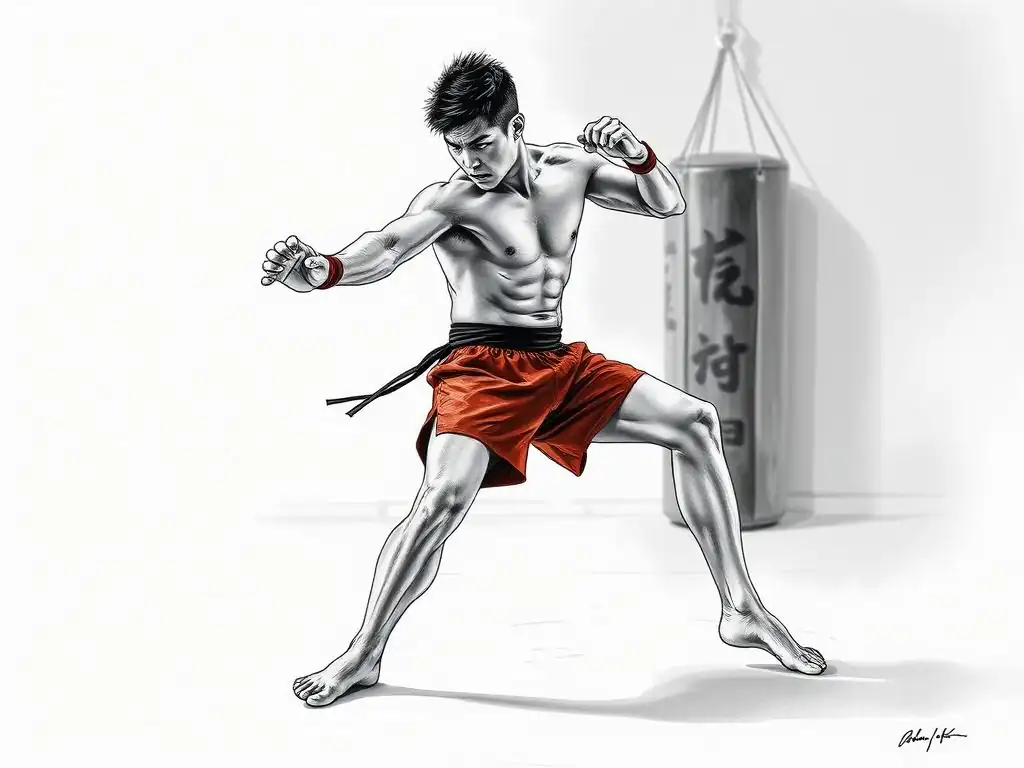
How Golden Era Fighters Shaped Modern Muay Thai
The fighters of the Golden Age fundamentally shaped modern Muay Thai by setting new standards for technical skill, physical conditioning, and competitive intensity. Their innovations in specific areas, such as Dieselnoi's clinch, Samart's evasiveness, or Apidej's power, expanded the technical repertoire of the sport. Trainers studied their fights and incorporated their techniques into training regimens, influencing how subsequent generations of fighters were taught.
The high level of competition during this era also raised the bar for performance. Fighters had to be incredibly well-rounded or possess a truly dominant weapon to succeed. This forced an evolution in training methods and strategic approaches. Modern fighters still aspire to reach the level of skill and dominance displayed by these legends. Their careers provide a blueprint for excellence and continue to influence fight strategies and training philosophies globally.
The Enduring Appeal of Classic Muay Thai Techniques
Many of the classic techniques perfected during the Golden Age remain cornerstones of modern Muay Thai. The powerful low kick, the sharp elbow strike, the devastating knee from the clinch, and the technical counter-striking game are all techniques that were honed and popularized by Golden Age masters. While modern Muay Thai has seen some adaptations influenced by other combat sports, the core techniques from this era are still essential for any fighter aiming for the top.
Watching footage of Golden Age fights reveals a purity and focus on traditional weapons that is still highly effective. The emphasis on strong fundamentals, powerful strikes, and grueling clinch battles showcases the essence of Muay Thai. Students and practitioners today continue to study these classic techniques, recognizing their timeless effectiveness and the depth of skill required to execute them at the level of the Golden Age masters. These techniques are integral to understanding and performing the art form.
Golden Age Muay Thai: A Source of Inspiration for Future Generations
The stories and performances of the Golden Age titans serve as a powerful source of inspiration for future generations of martial artists. Their journeys from humble beginnings in training camps to becoming national heroes and international legends are compelling narratives of dedication, sacrifice, and triumph. Fighters today look up to these icons, aspiring to emulate their skill, toughness, and success.
The legacy of the Golden Age is not just in the techniques, but in the spirit of the fighters – their resilience, sportsmanship, and unwavering commitment to their craft. By profiling these Muay Thai legendary fighter profiles, we highlight the values that underpin the sport. Their achievements demonstrate the potential rewards of hard work and dedication, encouraging new practitioners to pursue excellence in Muay Thai. The Golden Age provides a rich history and a high standard for everyone involved in the sport.
Conclusion: Remembering the Titans of Muay Thai's Golden Age
The Unforgettable Contribution of Muay Thai Legends
The contributions of the fighters from Muay Thai's Golden Age are unforgettable. They elevated the sport to new heights of technicality, athleticism, and popularity. Fighters like Apidej, Dieselnoi, Samart, Sagat, and Pudpadnoi, among many others, didn't just win fights; they defined an era through their unique skills, dominant performances, and enduring impact. Their rivalries filled stadiums and captivated a nation, showcasing the drama and excitement inherent in the sport.
Their influence extended beyond the ring, shaping training methodologies, inspiring future generations, and contributing to the cultural fabric of Thailand. They demonstrated the peak potential of the human body and spirit within the demanding discipline of Muay Thai. These Muay Thai legendary fighter profiles offer a glimpse into a time when the sport produced an unparalleled concentration of talent, leaving a legacy that continues to resonate globally.
Preserving the Legacy of the Golden Era for Future Martial Artists
Preserving the legacy of Muay Thai's Golden Era is crucial for the continued growth and understanding of the sport. This involves documenting the history, studying the techniques, and sharing the stories of these legendary fighters. Access to fight footage (where available), historical accounts, and profiles helps ensure that the knowledge and inspiration from this period are not lost.
By highlighting the achievements and training philosophies of these titans, we provide valuable resources for aspiring fighters and enthusiasts. Understanding the standards set during the Golden Age helps contextualize modern achievements and provides a benchmark for excellence. The dedication to profiling these Muay Thai legendary fighter profiles ensures that their contributions are recognized and celebrated, keeping the spirit of this incredible era alive for generations to come.
Frequently Asked Questions
What defines Muay Thai's "Golden Age" and why is it considered legendary?
The Golden Age of Muay Thai is generally considered to be the 1980s and 1990s. It's legendary due to the incredibly high skill level, ferocity, and dedication of the fighters during that period.
Where can I find more in-depth profiles of these Muay Thai legends?
MartialArtsMastery.org offers detailed Muay Thai legendary fighter profiles. Look under the "Muay Thai" and "History" sections for extensive information.
What kind of training and philosophical approach did these Muay Thai titans typically follow?
Their training was incredibly rigorous, focusing on conditioning, technique, and mental fortitude. The philosophical approach often emphasized discipline, respect, and a deep understanding of Muay Thai principles.
What made these fighters stand out from contemporary Muay Thai competitors?
Their dedication to the art, coupled with a relentless fighting spirit and often a deep-rooted connection to the traditions of Muay Thai, set them apart. The competition during that era was also incredibly fierce.
Can the techniques and strategies used by these legendary Muay Thai fighters still be applied today?
Absolutely! Their techniques are fundamental to Muay Thai and remain highly effective. Studying their strategies can offer valuable insights into effective fighting techniques and tactics in modern Muay Thai.
Final Reflection: Echoes of the Ring
The roar of the crowd may have faded, and the legends of Muay Thai's Golden Age may now exist primarily in grainy footage and whispered stories, but their impact on the sport and its practitioners remains undeniably potent. The spirit of these legendary fighters continues to inspire a new generation, reminding us that true greatness is forged in the crucible of relentless training, unwavering discipline, and unyielding heart.
The influence of these titans transcends mere athletic achievement; they shaped the very cultural understanding of Muay Thai, transforming it from a combat sport into a powerful symbol of Thai identity and resilience. Their dedication and artistry continue to resonate deeply within the Muay Thai community, influencing training methodologies and inspiring a profound respect for the traditions of the art. The greatest fighter is never someone who was simply lucky. It is someone who has dedicated their life to perfecting their craft.
This quote encapsulates the essence of the Golden Age fighters, whose unwavering commitment elevated them to legendary status.
As we reflect on the profiles of these Muay Thai legends, let us not only admire their accomplishments but also internalize the lessons they embody. What can we learn from their unwavering dedication, their resilience in the face of adversity, and their profound respect for the art of Muay Thai? Let their stories ignite a fire within you, pushing you to strive for excellence in your own endeavors, whether in the ring or in life. Embrace the spirit of the Golden Age, and let it guide you towards your own personal triumphs.
Ignite Your Inner Warrior: Step into Muay Thai's Legacy!
Thank you for exploring the legendary era of Muay Thai with us. Now that you've journeyed through the lives of these incredible titans, it's time to channel that inspiration into action.
Here's how you can further connect with the art of Muay Thai:
- Find a local Muay Thai gym and try an introductory class. Experience the power and discipline firsthand!
- Dive deeper into the history by researching the specific techniques and fighting styles of the featured legends. What can their strategies teach you about your own life?
- Share this article with fellow martial arts enthusiasts and spark a conversation about the enduring impact of Muay Thai’s golden age.
Which legendary Muay Thai fighter's story resonated most with you, and how will you incorporate their spirit into your own training or life?