
The Mechanics of a Perfect O Uchi Gari: Drive, Hook, and Finish

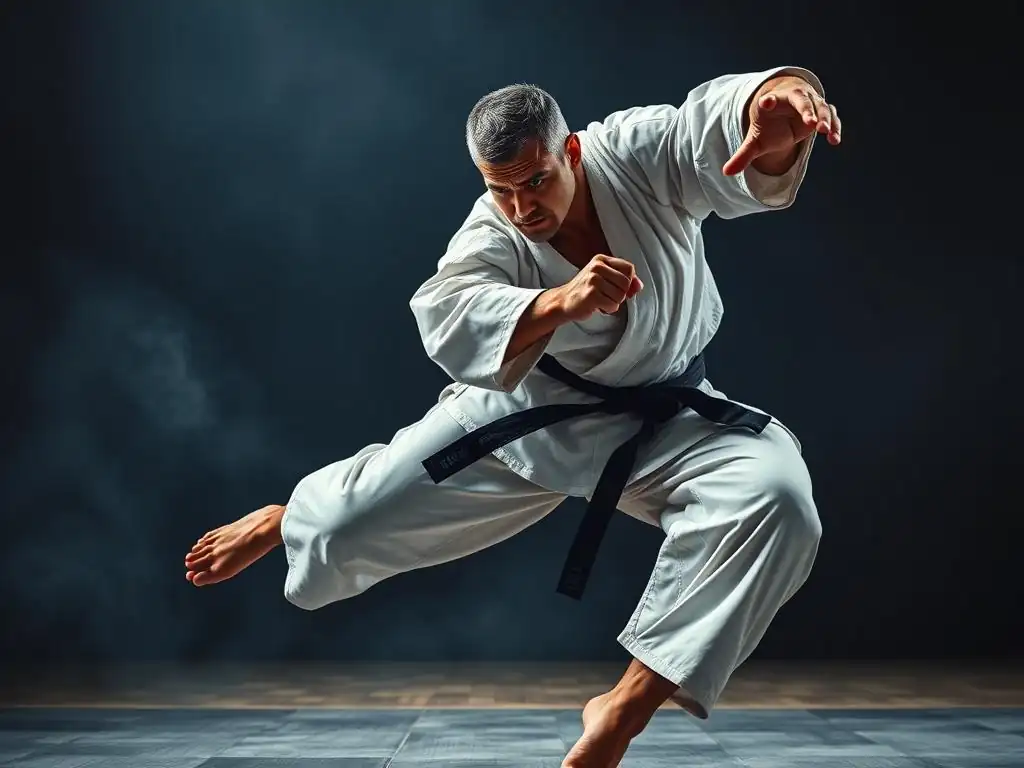
Welcome to Martial Arts Mastery, where we delve into the intricacies of combat arts from around the world. Ever wondered what separates a good O Uchi Gari from a truly devastating one? This article unlocks the secrets to achieving perfect O Uchi Gari technique, exploring the critical mechanics of drive, hook, and finish. Prepare to refine your Judo, improve your understanding, and elevate your throws. Let's begin!
- Mastering O Uchi Gari: A Deep Dive into Technique
- The Three Key Elements of a Flawless O Uchi Gari
- Breaking Down the O Uchi Gari Technique: A Step-by-Step Guide
- Common Mistakes to Avoid in O Uchi Gari
- Drills and Training Exercises to Improve Your O Uchi Gari
- Advanced O Uchi Gari Variations and Combinations
- O Uchi Gari in Competition: Tactical Applications
- Conclusion: Achieving Mastery of the O Uchi Gari Technique
-
Frequently Asked Questions
- How important is driving the opponent's posture when executing O Uchi Gari?
- What role does the hook play in the O Uchi Gari technique?
- Why is finishing the O Uchi Gari considered a distinct phase?
- How does understanding the historical context of O Uchi Gari improve its application?
- What are some common mistakes that prevent practitioners from achieving a "perfect" O Uchi Gari?
- Final Reflection: Mastering the Art of O Uchi Gari
- Unlock Your O Uchi Gari Potential Now!
Mastering O Uchi Gari: A Deep Dive into Technique
Understanding the Fundamentals of O Uchi Gari
O Uchi Gari, often translated as "major inner reaping," is a foundational technique in Judo and a critical component of any Judoka's repertoire. It belongs to the Ashi-waza (foot techniques) category of Nage-waza (throwing techniques). At its core, O Uchi Gari involves attacking one of the opponent's legs (typically the front leg, but can be the back leg) by sweeping or reaping it inwards while simultaneously disrupting their balance and applying forward pressure. Executing a perfect O Uchi Gari technique requires not just physical strength, but precise timing, balance, and a deep understanding of body mechanics.
The objective is to remove the opponent's supporting base, causing them to fall backward or diagonally backward. While seemingly simple, the effectiveness of O Uchi Gari lies in the subtle coordination of grip, body movement (Tai Sabaki), and leg action. Beginners often learn this technique early in their training due to its relative simplicity compared to complex throws, yet achieving a perfect O Uchi Gari technique takes years of dedicated practice and refinement. It is a high-percentage technique in competition when executed correctly against an opponent with compromised balance or posture.
O Uchi Gari in Judo: Nage-waza Ashi-waza Explained
In the Judo classification system, O Uchi Gari is firmly placed within Nage-waza, the category encompassing all throwing techniques. More specifically, it is a prime example of Ashi-waza, techniques that primarily utilize the legs and feet to disrupt the opponent's balance and execute the throw. Ashi-waza techniques are distinct from hand techniques ( Te-waza) or hip techniques ( Koshi-waza) and often rely on timing and movement rather than brute force. O Uchi Gari exemplifies the principles of Ashi-waza by targeting the opponent's lower body support structure.
The study of O Uchi Gari within the Ashi-waza framework highlights the interconnectedness of techniques. Proficiency in O Uchi Gari often complements skills in other Ashi-waza like De Ashi Harai (forward foot sweep) or Ko Uchi Gari (minor inner reaping). Masters of Ashi-waza understand how to chain these techniques together, reacting to an opponent's defensive reactions to one attack by immediately launching another. A perfect O Uchi Gari technique isn't just about the single motion; it's about setting it up and integrating it into a dynamic exchange of movement and balance manipulation typical of high-level Judo randori and competition.
The Three Key Elements of a Flawless O Uchi Gari
The Drive: Generating Momentum for O Uchi Gari
The "Drive" is the initial phase of the perfect O Uchi Gari technique, focusing on generating forward momentum and breaking the opponent's balance (Kuzushi). This isn't just stepping forward; it involves a committed, powerful movement from your legs and hips, propelling both yourself and your opponent in the direction of the throw. Imagine pushing a heavy object – your entire body weight and force must be behind the movement. The drive starts from the feet, transferring energy up through the legs, hips, and torso, coordinated with your gripping hands (Tori's grip, or Kumi Kata).
Effective driving requires you to step deep into the opponent's space, often placing your lead foot beside or slightly behind their targeted leg. This penetration disrupts their posture and forces weight onto the non-targeted leg, making the targeted leg easier to reap. A common error is a tentative step; the drive must be assertive and powerful, aimed at creating significant forward motion or diagonal disruption. Without a strong, committed drive, the subsequent leg hook will lack the necessary force and balance disruption to execute a perfect O Uchi Gari technique.
The Hook: Precise Leg Placement in O Uchi Gari
The "Hook" is perhaps the most recognizable part of the O Uchi Gari technique, involving the action of Tori's leg against Uke's (the opponent's) leg. After the drive has initiated momentum and Kuzushi, Tori's reaping leg sweeps inwards, targeting the back of Uke's knee or lower thigh. The action is not just a simple sweep across; it's a deep, scooping or reaping motion that pulls Uke's leg upwards and inwards, removing their base of support. The angle and timing of this hook are critical for a perfect O Uchi Gari technique.
The hook is executed with the sole or inner edge of Tori's foot and leg, sweeping along the inside of Uke's leg. The reaping leg should be bent slightly at the knee, allowing for a powerful, dynamic action. Crucially, Tori must maintain their own balance while executing the hook. The non-reaping leg acts as a pivot and support, while the upper body continues the driving motion and maintains control through the grip. A poorly timed or shallow hook will allow Uke to maintain balance or step out, preventing the successful execution of the perfect O Uchi Gari technique.
The Finish: Completing the Throw with Power and Control
The "Finish" is the culmination of the O Uchi Gari technique, where the combined forces of the drive, hook, and Kuzushi bring Uke down. This phase requires continued forward pressure and control through the grips, ensuring Uke falls cleanly and safely onto their back or side, resulting in a potential score (Waza-ari or Ippon). As Uke's balance is broken and their leg is reaped, Tori must continue driving forward and slightly downwards, using their upper body to guide Uke's fall.
Maintaining control throughout the finish is paramount, both for scoring and for safety. Tori should not stop their movement once the hook is applied; the forward momentum initiated by the drive must continue until Uke is fully down. The grips play a vital role here, preventing Uke from escaping or countering at the last moment. A common mistake is stopping the drive or releasing the grips too early, allowing Uke to recover. A perfect O Uchi Gari technique ends with Tori maintaining a strong, balanced posture over a fallen Uke, ready to transition into groundwork if necessary.
Breaking Down the O Uchi Gari Technique: A Step-by-Step Guide
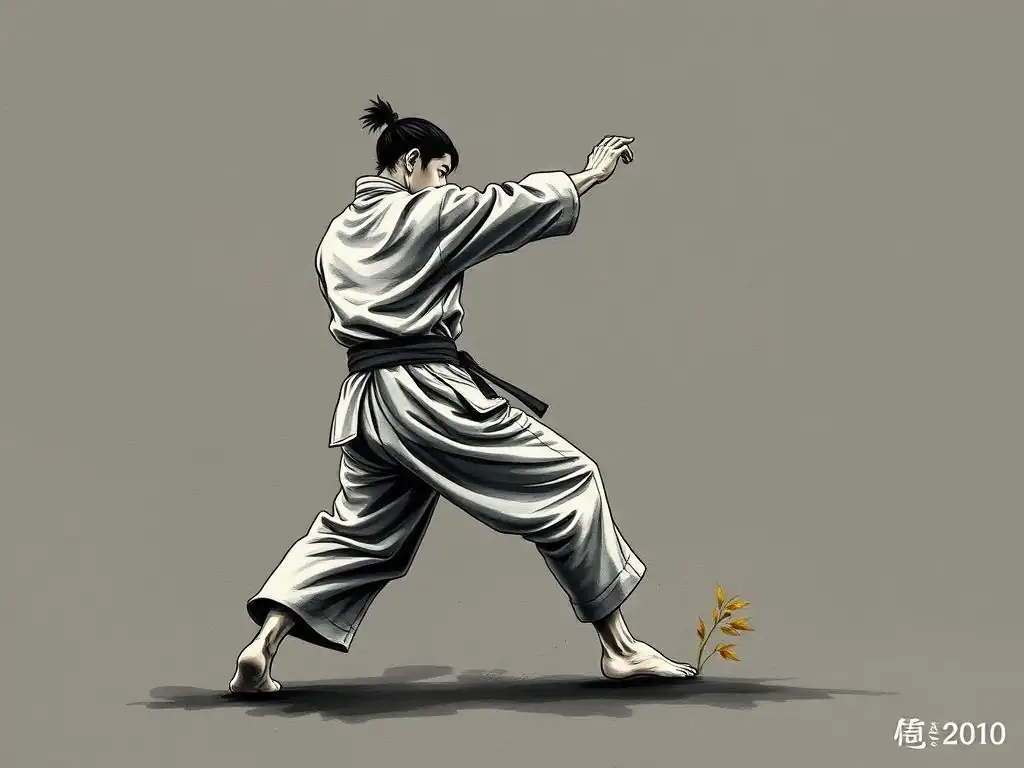
Step 1: Establishing Kuzushi (Breaking Balance) for O Uchi Gari
Establishing Kuzushi, or breaking the opponent's balance, is the indispensable first step for any throwing technique in Judo, including the O Uchi Gari. Without effective Kuzushi, attempting the throw becomes a struggle against a stable opponent, significantly reducing the chances of success and increasing the risk of being countered. For O Uchi Gari, the primary direction of Kuzushi is typically backward or diagonally backward, pulling or driving the opponent onto their heels or forcing their weight onto the non-targeted leg.
This is achieved through a combination of grip action (Tsukuri) and body movement (Tai Sabaki). Tori might use their lapel grip to pull upwards and backwards while simultaneously using their sleeve grip to pull or push, depending on Uke's reaction and stance. Stepping aggressively into Uke's space can also naturally create this backward imbalance. A key indicator of effective Kuzushi for a perfect O Uchi Gari technique is when Uke's targeted leg becomes light or their posture is compromised, making them vulnerable to the reap.
Step 2: Entry and Positioning for the Perfect O Uchi Gari
Once Kuzushi is initiated, the next crucial step is the entry and positioning for the O Uchi Gari. This involves Tori's movement to get into the correct proximity and angle relative to Uke to execute the leg hook effectively. The entry is often a large, committed step forward with Tori's lead leg, penetrating deep into Uke's personal space. The goal is to align Tori's body parallel or slightly angled towards Uke, positioning Tori's reaping leg on the inside of Uke's targeted leg.
Correct positioning ensures that Tori can apply maximum force with the reaping leg and maintain strong control with the grips. If Tori enters too far away, the hook will be weak; too close, and the movement becomes cramped. The ideal position allows Tori's hips to be close to Uke's, facilitating the transfer of power from the drive and enabling a deep, effective hook. Mastering this entry step is vital for setting up a perfect O Uchi Gari technique.
Step 3: Executing the Leg Hook and Sweep in O Uchi Gari
With Kuzushi established and positioning secured, Step 3 is the execution of the leg hook and sweep – the core reaping action of O Uchi Gari. This involves Tori's reaping leg swinging in a powerful arc from the outside inwards, targeting the back of Uke's knee or thigh. The sweeping motion isn't just a gentle brush; it's a dynamic, powerful reaping action using the sole or inner edge of the foot and leg.
As the leg sweeps, Tori's upper body continues the forward drive, pulling Uke's weight onto the targeted leg just as it's being removed. The timing between the upper body drive and the lower body sweep is critical. They must work in concert to maximize the disruption of Uke's balance and lift their targeted leg off the mat. Executing this hook with precision and power is what distinguishes a good O Uchi Gari from a perfect O Uchi Gari technique.
Step 4: Maintaining Balance and Control During the O Uchi Gari Throw
The final step in the O Uchi Gari sequence is maintaining balance and control as Uke is falling, ensuring a clean throw and preventing counters. As Uke goes down, Tori must remain stable on their supporting leg and continue applying pressure through the grips. The forward drive initiated earlier continues, guiding Uke's fall. Tori's posture remains upright, chest forward, maintaining connection with Uke.
Control is maintained through the Kumi Kata, preventing Uke from twisting out or grabbing Tori to pull them down. Tori's supporting leg should be firmly planted, acting as a stable base. As Uke hits the mat, Tori follows through with their movement, ensuring they finish in a strong, balanced position, ready to transition to Ne-waza if the throw didn't score Ippon. This final phase of control and follow-through is essential for completing a perfect O Uchi Gari technique safely and effectively.
Common Mistakes to Avoid in O Uchi Gari
Incorrect Foot Placement During O Uchi Gari
One of the most frequent errors in attempting O Uchi Gari is incorrect foot placement, both for the supporting leg and the reaping leg. Tori's supporting foot must be placed in a stable position that allows for forward drive and balance. If it's too far away or too close, it compromises Tori's base and power generation. For the reaping leg, sweeping too wide, too narrow, or not deep enough are common issues. A sweep that is too shallow or aimed too low (e.g., at the ankle) is easily defended by Uke simply stepping back or lifting their leg.
Furthermore, the angle of the reaping leg is crucial. Sweeping straight across Uke's leg without the inward scooping motion often results in a weak attack. The reaping leg needs to wrap slightly around the back of Uke's leg, lifting it as it sweeps. Correct foot placement is fundamental to generating power and achieving the necessary disruption for a perfect O Uchi Gari technique. Practicing footwork drills extensively is key to overcoming these common errors.
Insufficient Kuzushi Leading to Failed O Uchi Gari
A lack of sufficient Kuzushi is arguably the most common reason why O Uchi Gari attempts fail. If Uke is standing firmly on both feet with good posture, attempting to reap their leg will likely result in minimal movement or a complete stall. Uke will simply absorb the impact or shift their weight, remaining stable. Insufficient Kuzushi means Tori is trying to apply a reaping action against a stable base, which requires significantly more force and is highly inefficient.
Effective Kuzushi for O Uchi Gari requires pulling or driving Uke onto their heels or shifting their weight predominantly onto one leg. This makes the targeted leg "light" and vulnerable to the reaping action. Beginners often rush the throw without first properly breaking Uke's balance. Dedicating time to understanding and practicing Kuzushi principles is essential for setting up a perfect O Uchi Gari technique. Drill combinations that lead into O Uchi Gari, focusing on the initial pull or push, can greatly improve this aspect.
Lack of Drive and Momentum in O Uchi Gari
The "Drive" element, discussed earlier, is often neglected, leading to a weak and ineffective O Uchi Gari. Some practitioners focus solely on the leg sweep, forgetting that the technique is a whole-body action. Without a committed forward drive from Tori's supporting leg and hips, the reaping leg action lacks power and the ability to truly disrupt Uke's balance and propel them backwards. The throw becomes merely a leg sweep attempt against a potentially stable opponent.
The drive generates the necessary momentum and forward pressure that works in conjunction with the leg hook. It pushes Uke onto their heels or shifts their weight backward, making the reaping action much more effective. A hesitant or weak drive allows Uke to maintain their center of gravity and easily defend. To execute a perfect O Uchi Gari technique, the drive must be strong, committed, and coordinated with the timing of the leg hook.
Poor Follow-Through and Finishing Technique in O Uchi Gari
Another common mistake is failing to follow through with the throw after the initial hook. Some Judoka stop driving or release their grips prematurely as Uke begins to fall. This can allow Uke to regain balance, twist out of the throw, or even counter. The finish requires continued forward pressure and control until Uke is clearly down on the mat. The throw isn't complete until Uke has landed and Tori is in a stable, controlling position.
Poor follow-through also compromises the potential score. A throw that lacks control through the finish might only score a Waza-ari or even less, rather than the desired Ippon which signifies a clean, powerful technique landing Uke squarely on their back. Practicing the full range of motion, including staying connected and driving through the fall, is crucial for completing a perfect O Uchi Gari technique effectively and safely.
Drills and Training Exercises to Improve Your O Uchi Gari
Solo Practice Drills for O Uchi Gari Footwork
Improving the footwork for a perfect O Uchi Gari technique can be effectively done through solo practice. One key drill involves practicing the entry step and the reaping motion repeatedly without a partner. Start from a natural stance, take the deep step into the imaginary opponent's space, and then execute the reaping action with the other leg, focusing on the angle, depth, and power of the sweep. Pay attention to maintaining your own balance throughout the motion.
Another useful solo drill is combining forward movement with the reaping action. Walk forward, simulating gripping an opponent, and practice the entry step and sweep on both the left and right sides. This helps build muscle memory for the coordination required during dynamic movement. Focus on keeping your torso upright and your supporting leg stable as you swing the reaping leg. Aim for precision in targeting the imaginary back of the knee or thigh with the correct part of your foot.
Partner Drills for O Uchi Gari Timing and Coordination
Partner drills are essential for developing the timing and coordination needed for a perfect O Uchi Gari technique. A basic drill involves practicing the entry and Kuzushi with a partner who provides slight resistance. Uke stands in a natural stance, and Tori practices taking the deep entry step while applying the appropriate pull/push with the grips to create Kuzushi. Uke provides feedback on whether their balance was genuinely broken.
A more advanced drill involves Uke moving slightly, simulating realistic randori movement. Tori must then time their entry and reaping action to Uke's movement, targeting the moment Uke shifts weight or steps. This helps develop the critical timing necessary to attack when Uke is vulnerable. Another drill is to practice the full throw but with Uke cushioning their fall, allowing for multiple repetitions focusing on the entire sequence from Kuzushi to finish. This repetition builds the smooth, coordinated action required.
Resistance Training for O Uchi Gari Power and Stability
While O Uchi Gari is primarily about timing and technique, developing power in the drive and stability in the supporting leg enhances its effectiveness. Resistance training can contribute to this. Squats and lunges build leg strength necessary for the powerful drive and stable base. Incorporating exercises that mimic the reaping motion against resistance, such as using resistance bands tied to a stationary object, can help build power in the sweeping leg.
Core strength exercises like planks and twists are also crucial for maintaining posture and control during the throw and finish. A strong core allows Tori to transfer power efficiently from the lower body through the torso and into the grips. While not a substitute for technical practice, supplementary resistance training can provide the physical foundation to execute a more powerful and stable perfect O Uchi Gari technique.
Advanced O Uchi Gari Variations and Combinations
Combining O Uchi Gari with Other Judo Techniques
A perfect O Uchi Gari technique is rarely used in isolation at higher levels of Judo; it's often part of a combination attack. O Uchi Gari is frequently used as a primary attack to set up other throws, or as a secondary attack following a failed initial attempt. For example, attacking with O Uchi Gari can cause Uke to shift their weight back defensively, making them vulnerable to forward throws like Ippon Seoi Nage (one-arm shoulder throw) or O Soto Gari (major outer reaping).
Conversely, a failed forward attack, such as Uchi Mata (inner thigh throw), can sometimes lead Uke to step back or shift weight in a way that opens them up for an immediate O Uchi Gari counter-attack. Learning common combinations like O Uchi Gari to Seoi Nage, or Uchi Mata to O Uchi Gari, significantly increases a Judoka's attacking options and makes their O Uchi Gari attempts more successful by creating openings or capitalizing on Uke's reactions. Mastery involves understanding these strategic links between techniques.
Adapting O Uchi Gari for Different Opponent Stances
Opponents rarely stand in a perfectly square stance; they typically adopt a left-forward (Hidari-Jigo-Tai) or right-forward (Migi-Jigo-Tai) posture. Adapting the O Uchi Gari technique to these stances is essential for a perfect O Uchi Gari technique. Against a same-stance opponent (e.g., Tori and Uke are both right-forward), Tori typically targets Uke's front leg. The entry and angle of attack are relatively straightforward in this scenario.
However, against an opposite-stance opponent (e.g., Tori is right-forward, Uke is left-forward), Tori might target Uke's lead leg or even their back leg, requiring different entry footwork and grip control. Attacking the lead leg in opposite stance often involves stepping deeper and adjusting the angle of the reap. Attacking the back leg (often called O Uchi Gari on the back leg) requires different timing and setup. Proficiency involves being able to apply the core principles of O Uchi Gari regardless of Uke's stance.
Countering Common Defenses to O Uchi Gari
Opponents will naturally try to defend against O Uchi Gari. Common defenses include pulling the targeted leg back, stiffening the leg, shifting weight to the non-targeted leg, or pushing back against Tori. Learning to recognize and counter these defenses is crucial for landing a perfect O Uchi Gari technique. If Uke pulls their leg back, Tori might transition to a different attack like O Soto Gari or Harai Goshi (sweeping hip throw).
If Uke stiffens their leg, Tori might need to apply stronger Kuzushi or switch to a technique that targets their upper body balance. If Uke pushes back, Tori might use this forward momentum against them with a pull-based throw like Seoi Nage or Tomoe Nage (circle throw). Understanding these defensive reactions allows the Judoka to either adjust their O Uchi Gari attempt mid-execution or transition smoothly into a follow-up technique, ensuring their attack chain remains effective.
O Uchi Gari in Competition: Tactical Applications
Using O Uchi Gari to Score Ippon
O Uchi Gari is a legitimate Ippon-scoring technique in Judo competition when executed with sufficient force, speed, and control, landing the opponent clearly on their back. While sometimes seen as a setup throw, a well-timed and powerful perfect O Uchi Gari technique against an opponent with compromised balance can certainly result in an immediate Ippon. The key is to commit fully to the throw, driving through Uke's resistance and ensuring they land cleanly.
Analyzing competition data shows that while less frequent for Ippon compared to throws like Uchi Mata or Seoi Nage, O Uchi Gari still accounts for a notable percentage of full points scored, especially in weight categories where opponents have similar builds. The element of surprise, coupled with precise timing against a momentarily unstable opponent, is often the recipe for an O Uchi Gari Ippon. Judoka aiming for Ippon with this technique focus on maximizing Kuzushi and the power of the drive and reaping action.
Setting Up O Uchi Gari for Maximum Effectiveness
Strategically setting up O Uchi Gari is paramount for its success in competition. Rarely does an opponent simply stand still and allow you to execute it. Effective setups involve manipulating Uke's posture and balance. This can be done through feints of other attacks (e.g., pretending to attack with a forward throw to elicit a backward reaction) or through aggressive grip fighting (Kumi Kata) to force Uke into an unstable position or stance.
Walking Uke backward or in a circle can also help set up O Uchi Gari by disrupting their base. Forcing Uke to step onto their lead leg under pressure is a classic setup. The goal is to create a momentary vulnerability where one of Uke's legs is either bearing too much weight or is too light, making it susceptible to the reap. Masters of the perfect O Uchi Gari technique are often masters of setup and Kuzushi, creating the perfect conditions before attempting the throw.
Analyzing Successful O Uchi Gari Throws in Judo Matches
Watching high-level Judo matches provides invaluable insight into the tactical application of O Uchi Gari. Analysis reveals patterns: successful O Uchi Gari throws often occur during transitions, when one or both competitors are moving, rather than from a static position. They frequently follow a period of intense grip fighting or a failed attack by either player. The thrower (Tori) typically capitalizes on a moment when the opponent (Uke) is off-balance, stepping, or reacting to a previous action.
Commentary on matches often highlights the setup – how Tori managed to force Uke into a specific stance or shift their weight. Data points from match analysis might include the typical duration of exchanges leading to an O Uchi Gari, the common preceding movements, or the percentage of times it's used as a counter. Studying these real-world examples demonstrates that executing a perfect O Uchi Gari technique in competition is a dynamic process requiring strategic thinking and adaptability.
Conclusion: Achieving Mastery of the O Uchi Gari Technique
Achieving mastery of the O Uchi Gari technique is a significant milestone for any Judoka. It requires moving beyond merely understanding the basic steps to internalizing the fundamental principles of Kuzushi, Tsukuri, and Kake – breaking balance, fitting in, and execution. The journey involves countless repetitions of solo drills to perfect the footwork and reaping motion, and partner drills to refine timing and coordination against a resisting opponent. It also necessitates understanding how O Uchi Gari fits into the broader landscape of Judo techniques, both as a standalone throw and as part of complex combinations.
A perfect O Uchi Gari technique is characterized by seamless integration of the "Drive," "Hook," and "Finish." The powerful drive creates the initial momentum and Kuzushi, the precise hook removes the opponent's base of support at the critical moment, and the controlled finish ensures a clean throw. By diligently working on each of these elements, constantly analyzing common mistakes, and strategically applying the technique in randori and competition, Judoka can elevate their O Uchi Gari to a truly masterful level, making it a reliable and high-scoring weapon in their arsenal.
Frequently Asked Questions
How important is driving the opponent's posture when executing O Uchi Gari?
Driving the opponent's posture is critical for successful execution. It creates instability and sets them up for the hook. Without it, the technique is unlikely to work.
What role does the hook play in the O Uchi Gari technique?
The hook is what actually sweeps the opponent's leg. It needs to be applied with precise timing and force to unbalance them effectively.
Why is finishing the O Uchi Gari considered a distinct phase?
Finishing ensures the opponent is brought down with maximum control and impact. It involves following through with the throw and maintaining a dominant position afterwards.
How does understanding the historical context of O Uchi Gari improve its application?
Understanding the history provides insight into its original purpose and intent. This can lead to a deeper appreciation and more effective use of the technique.
What are some common mistakes that prevent practitioners from achieving a "perfect" O Uchi Gari?
Common errors include a lack of proper driving force, a weak or mistimed hook, and failure to follow through to the finish. Addressing these improves the execution.
Final Reflection: Mastering the Art of O Uchi Gari
The journey to perfecting the O Uchi Gari, as explored in this article, transcends mere technical execution; it's about understanding the interplay of balance, momentum, and precision that defines effective Judo. In a world increasingly focused on instant gratification, the dedication required to master this technique serves as a powerful reminder of the value of persistent effort and meticulous attention to detail, principles applicable far beyond the dojo.
The O Uchi Gari, in its elegance and effectiveness, has profoundly influenced Judo strategy and continues to inspire practitioners worldwide. My own journey with this technique has taught me the importance of patience and the constant refinement of fundamentals. The essence of Judo is nothing but the attainment of perfection in the body and spirit.
- Jigoro Kano. This quote encapsulates the spirit of continuous improvement that the O Uchi Gari embodies, a spirit that resonates deeply within the martial arts community and beyond.
Now, consider how the principles of drive, hook, and finish, so crucial to a perfect O Uchi Gari, can be applied to your own endeavors. Are you approaching your goals with the same dedication to detail and relentless pursuit of improvement? Embrace the challenge, refine your technique, and discover the power of mastering the fundamentals in all aspects of your life.
Unlock Your O Uchi Gari Potential Now!
Thanks for diving deep into the mechanics of a perfect O Uchi Gari! You've now got the knowledge to significantly boost your Judo or BJJ game. Ready to translate theory into knockout technique?
Here's how you can take action right away:
- Drill the entry footwork for 15 minutes, 3 times a week, focusing on speed and precision. This is your primary action for immediate improvement!
- Film yourself performing the O Uchi Gari. Compare your technique to the principles we discussed and identify areas for refinement.
- Share this article with your training partners and challenge them to a friendly O Uchi Gari competition to see who can land the cleanest throw.
What single adjustment to your footwork will have the biggest impact on your O Uchi Gari? Share your insights in the comments!