
Zazen for Warriors: How Zen Meditation Elevates Martial Arts Performance

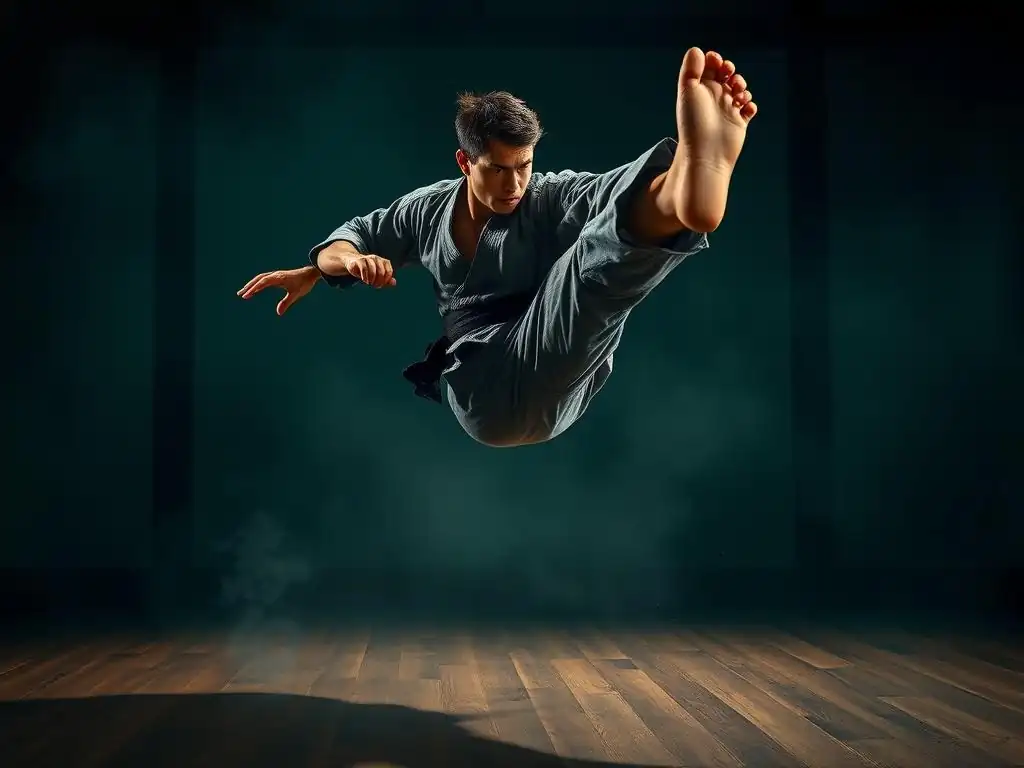
Welcome to Martial Arts Mastery, your gateway to unlocking the secrets of combat, discipline, and inner strength. Ever wondered how true masters achieve such unwavering focus and precision? Our latest exploration dives deep into the profound impact of Zen meditation on martial arts performance. Discover how integrating Zazen, or seated meditation, can sharpen your mind, enhance your reflexes, and elevate your training beyond the physical. Prepare to unlock a new dimension of martial arts mastery – the journey begins now!
- Introduction: Unleashing the Warrior's Potential Through Zen
- Understanding Zazen: The Core of Zen Meditation
- How Zen Meditation Improves Martial Arts Performance: Specific Advantages
- Integrating Zazen into Your Martial Arts Training Regimen
- Zazen and the Warrior's Mindset: Beyond Technique
- Notable Martial Artists Who Practice Zen
- Conclusion: Zen Meditation - A Path to Martial Arts Mastery
-
Frequently Asked Questions
- How does Zen meditation, specifically Zazen, enhance martial arts performance?
- What are the primary benefits of incorporating Zen meditation into a martial arts training regimen?
- Is prior experience with meditation necessary to begin using Zen meditation to improve martial arts skills?
- How often should a martial artist practice Zen meditation to experience noticeable improvements?
- What are some common misconceptions about Zen meditation that might deter martial artists from trying it?
- Final Reflection: Cultivating Inner Peace for Outer Strength
- Deepen Your Focus: Embrace the Warrior Within!
Introduction: Unleashing the Warrior's Potential Through Zen
The Intersection of Martial Arts and Zen Philosophy
The paths of martial arts and Zen Buddhism have been intertwined for centuries, particularly in East Asian traditions like those found in Japan. Many historical martial arts disciplines, such as Jujutsu, Kendo, and Aikido, developed alongside or within monastic environments where Zen was practiced. This close relationship stems from a shared emphasis on discipline, mental fortitude, and achieving a state of focused, present awareness. Zen, with its focus on direct experience and letting go of conceptual thought, offers a powerful framework for the martial artist seeking mastery not just over physical techniques but over their own mind and reactions.
The concept of Mushin (無心), often translated as "no mind" or "empty mind," is a prime example of this intersection. It refers to a state where the mind is free from thoughts of fear, anger, or anxiety during combat or practice. This state allows for spontaneous, effective action unhindered by conscious deliberation – a state highly valued in both Zen meditation and high-level martial arts execution.
Achieving Mushin is often seen as a direct result of disciplined practice, mirroring the goal of deep meditative states. Thus, integrating Zen meditation improves martial arts performance by cultivating this essential mental clarity and responsiveness.
Why Zen Meditation is Crucial for Martial Artists
While physical training builds strength, flexibility, and technique, the mental aspect is equally, if not more, critical for martial arts mastery. Zen meditation, especially Zazen (seated meditation), provides a systematic method for training the mind. It teaches practitioners to observe their thoughts and feelings without judgment, to return their focus to the present moment (often the breath), and to develop mental stillness amidst internal and external distractions. This mental discipline translates directly into the dojo.
A martial artist who practices Zen meditation improves martial arts performance by gaining greater control over their focus during sparring, kata, or self-defense situations. They are less likely to be paralyzed by fear, distracted by opponent's movements, or overwhelmed by their own internal chatter. Anecdotal evidence from countless practitioners over generations suggests that regular meditation practice leads to enhanced composure, sharper reflexes, and a deeper understanding of timing and distance. The mental resilience built through Zazen allows the warrior to face challenges with a calm yet alert mind.
Understanding Zazen: The Core of Zen Meditation
What is Zazen? A Beginner's Guide
Zazen, literally meaning "seated meditation," is the primary form of practice in Zen Buddhism. It is not about thinking, contemplating, or trying to achieve a specific state, but rather about simply sitting and being present. The core instruction is often just 'sit' – facing a wall (Soto Zen) or facing inwards (Rinzai Zen), with a straight spine, hands in a specific mudra (like the cosmic mudra), and eyes slightly open, gaze resting downwards. The practice typically involves focusing attention on the breath entering and leaving the body, specifically at the nostrils or abdomen.
When thoughts, feelings, or sensations arise (which they inevitably do), the practitioner acknowledges them without engaging or following them, and gently returns their attention to the breath. This process of noticing distraction and returning to focus is the essence of Zazen training. It builds mental muscle, improving concentration and cultivating the ability to remain present. For the martial artist, this ability to let go of distracting thoughts and return to the immediate reality of the present moment is invaluable for effective training and application.
Key Principles of Zazen Practice
Several key principles underpin effective Zazen practice. Shikantaza, or "just sitting," is a central tenet, emphasizing non-striving and simply being present without pursuing any particular goal or outcome. The posture is crucial: a stable, upright, and relaxed posture facilitates alertness while preventing tension. The breath is the primary anchor, providing a constant point of focus.
Another key principle is non-judgmental observation. Thoughts will arise – this is natural. The practice is not to stop thinking, but to observe thoughts without getting caught up in them, labeling them as good or bad, or analyzing them. This detachment from internal narrative is particularly beneficial for martial artists, helping them avoid getting stuck in fear-based thinking or self-criticism during intense situations. Consistency is also vital; even short, regular sessions of Zazen are more beneficial than infrequent long ones. A common recommendation is to start with 10-20 minutes daily.
The Benefits of Zazen Beyond the Dojo
While this article focuses on how Zen meditation improves martial arts, the benefits of Zazen extend far beyond physical performance. Regular practice has been shown to have significant positive impacts on overall well-being. Studies suggest Zazen can reduce stress, lower blood pressure, and improve sleep quality. For instance, a review of studies on mindfulness meditation (closely related to Zazen) published in JAMA Internal Medicine in 2014 found moderate evidence of reduced anxiety and depression symptoms.
Furthermore, Zazen cultivates patience, resilience, and emotional regulation in daily life. It enhances self-awareness, leading to better understanding of one's emotional triggers and behavioral patterns. This broader impact on mental and emotional health contributes indirectly yet significantly to a martial artist's journey, fostering discipline outside of training and bringing a sense of calm composure to all aspects of life, which in turn supports a more focused and dedicated training approach.
How Zen Meditation Improves Martial Arts Performance: Specific Advantages
Enhanced Focus and Concentration for Martial Arts Training
Sharpening Mental Clarity Through Zazen
One of the most immediate and tangible ways Zen meditation improves martial arts is by dramatically enhancing focus and concentration. Zazen is, at its core, a training in attention. By repeatedly bringing the mind back to the breath when it wanders, practitioners strengthen their ability to direct and sustain focus. This mental discipline is directly transferable to the dojo floor. During complex technique drills, sparring sessions, or kata performance, a sharp, unwavering focus is essential for absorbing instruction, executing movements precisely, and reacting effectively to stimuli.
Consider the difference between a student whose mind is racing with concerns about work or dinner while practicing a kata, and one whose mind is fully present, attending to each movement, breath, and internal sensation. The latter will learn faster, execute with greater precision, and develop a deeper understanding of the form. Research, such as studies on the effects of mindfulness training on cognitive functions, consistently shows improvements in sustained attention and executive control, faculties critical for high-level martial arts practice.
Reducing Distractions and Improving Presence
Distractions, both internal (thoughts, emotions) and external (noise, opponent's feints), are constant challenges in martial arts. Zazen trains the mind to acknowledge these distractions without being consumed by them. Instead of getting lost in a thought loop or reacting impulsively to every external cue, the meditator learns to observe the distraction and gently return their attention to the task at hand – be it maintaining guard, executing a throw, or focusing on an instructor's words.
This cultivated presence allows the martial artist to be fully in the moment, observing the situation clearly without the fog of anticipation or regret. In sparring, this means reacting to what is actually happening, rather than what one fears might happen. In training, it means absorbing feedback more effectively and practicing with greater intensity and awareness. This ability to remain present and undistracted is a key aspect of how Zen meditation improves martial arts effectiveness and learning speed.
Improved Reaction Time and Reflexes in Combat
Developing Intuitive Responses Through Meditation
While physical drills build muscle memory, Zen meditation helps cultivate a state of mind conducive to rapid, intuitive responses, often referred to as Mushin. When the mind is free from hesitation, fear, or overthinking, the body can react instantly based on ingrained training. Meditation helps quiet the analytical, conscious mind that can second-guess or delay action. This allows the trained reflexes to emerge unimpeded. It's not about thinking faster, but about removing the mental obstacles to immediate action.
Think of a seasoned martial artist in a dynamic situation. They don't consciously calculate trajectories or angles; their body moves almost automatically in response to the opponent's actions. This level of intuitive response is facilitated by a calm, clear mind. Zazen trains the ability to observe without immediate judgment or conceptualization, which translates into the capacity to perceive a stimulus (like an incoming strike) and respond without the lag introduced by internal dialogue ("Is that real? What should I do?"). This non-reactive observation cultivated in meditation supports faster, more fluid physical reactions.
The Science Behind Meditation and Reaction Speed
Scientific research provides some insights into how meditation might influence reaction speed. Studies using neuroimaging techniques have shown that regular meditation practice can lead to structural and functional changes in the brain, particularly in areas associated with attention, sensory processing, and emotional regulation. For example, research indicates increased grey matter density in areas like the insula and prefrontal cortex, regions involved in self-awareness, decision-making, and response inhibition.
While direct studies specifically linking Zen meditation practice to faster physical reaction times in martial artists might be limited, the established effects of meditation on attention and information processing speed are relevant. Improved attentional control allows for quicker detection of stimuli. Reduced emotional reactivity prevents the 'freeze' response or impulsive, uncoordinated reactions driven by fear or anger. Essentially, by calming the mental noise and sharpening focus, meditation creates a clearer pathway for trained physical responses to manifest quickly and effectively, demonstrating how Zen meditation improves martial arts reaction capabilities.
Emotional Regulation and Stress Management in Martial Arts
Cultivating Calmness Under Pressure
Martial arts, especially in sparring or self-defense contexts, can be incredibly stressful. Fear, anxiety, frustration, and anger are common emotions that can impair judgment and performance. Zen meditation offers powerful tools for managing these intense feelings. By practicing observing thoughts and emotions without getting swept away by them, the martial artist develops emotional resilience. They learn that emotions are transient states, not permanent identities, and that they can choose how to respond to them rather than being controlled by them.
This ability to remain calm under pressure is paramount. A calm mind can assess a situation clearly, remember techniques, and execute them effectively. Conversely, a mind overwhelmed by fear or anger is prone to panic, tunnel vision, and mistakes. Zazen trains the capacity to return to a state of centeredness even when internal or external conditions are turbulent. This cultivation of inner peace directly contributes to performance, showing how Zen meditation improves martial arts practitioners' ability to handle high-stress situations.
Managing Fear and Anxiety in Combat Situations
Fear and anxiety are perhaps the most significant mental hurdles in martial arts combat. They can cause hesitation, muscle tension, and a loss of strategic thinking. Zen meditation, through its emphasis on present moment awareness and non-attachment to outcomes, helps dismantle the power of future-oriented fear. By focusing on the immediate reality – the opponent's stance, the feeling of one's own body – the mind is less likely to spiral into hypothetical worst-case scenarios.
Moreover, the practice of simply sitting with discomfort during Zazen (physical pain, restless thoughts) builds tolerance for uncomfortable sensations and emotional states. This translates into the ability to endure the physical and psychological stress of combat without collapsing internally. Learning to observe fear without being consumed by it allows the martial artist to act despite feeling afraid, which is the true meaning of courage. This capacity to face fear with a degree of equanimity is a profound way Zen meditation improves martial arts efficacy.
Increased Self-Awareness and Body Awareness
Understanding Your Strengths and Weaknesses
Zazen encourages deep introspection and self-observation. By sitting quietly and paying attention to internal states, the practitioner gains a clearer understanding of their own mental patterns, emotional triggers, and physical sensations. This heightened self-awareness is invaluable for a martial artist. It allows them to recognize when they are becoming tense, losing focus, or reacting based on ego rather than skill.
Understanding one's mental landscape helps identify weaknesses, such as a tendency to panic under pressure or get frustrated easily, which can then be addressed both on and off the mat. Similarly, recognizing physical limitations or areas of tension allows for more targeted training and injury prevention. This honest self-assessment, fostered by meditative practice, is a crucial step towards genuine improvement and mastery, illustrating how Zen meditation improves martial arts development through introspection.
Developing Proprioception and Kinesthetic Awareness
Proprioception is the sense of the relative position of one's own parts of the body and strength of effort being employed in movement. Kinesthetic awareness is the awareness of the position and movement of the body through muscular sensations. Both are critical for executing techniques correctly, maintaining balance, generating power efficiently, and understanding distance and timing. Zazen, by directing attention to the physical body – the posture, the breath, subtle sensations – cultivates a heightened awareness of one's physical form in space.
During meditation, one becomes acutely aware of posture alignment, muscle tension, and the flow of breath, developing a refined internal body map. This translates into better body control and coordination in martial arts. A practitioner with strong kinesthetic awareness can adjust their stance instinctively, feel when a technique is misaligned, or sense their center of gravity during dynamic movement. This intimate connection with the body, nurtured through mindful sitting, significantly enhances physical performance and is another powerful way Zen meditation improves martial arts execution.
Integrating Zazen into Your Martial Arts Training Regimen
Creating a Consistent Zazen Practice
Finding the Right Time and Place for Meditation
Integrating Zazen into a busy life requires consistency, not necessarily long hours initially. Finding a dedicated time and place is key. For many, the early morning before the day's demands begin is ideal, offering a quiet environment and a fresh mind. Others prefer the evening to unwind. Even 10-15 minutes daily can yield significant benefits. The space doesn't need to be elaborate – a clean, quiet corner where you won't be disturbed is sufficient. The key is regularity; practicing at the same time and place each day helps establish the habit.
Consider your existing schedule and identify a slot that is realistic and sustainable. It's better to commit to a short, daily practice than aim for long, infrequent sessions that are hard to maintain. Setting up a small meditation cushion (zafu) or bench (seiza bench) in your chosen spot makes it easier to just sit down and begin without preparation. This consistent commitment to the practice is foundational for experiencing how Zen meditation improves martial arts capabilities over time.
Setting Realistic Goals for Your Meditation Practice
When starting Zazen, it's important to set realistic expectations. The goal is not to empty the mind or achieve blissful states, but simply to sit and practice returning to the breath. Expect your mind to wander – this is normal. The practice is in noticing the wandering and gently returning. Don't get discouraged by a "busy" mind; every time you notice a distraction and return to the breath, you are strengthening your focus muscle.
Initial goals might be simply sitting for 5-10 minutes each day without getting up. As you become more comfortable, you can gradually increase the duration. Avoid setting goals related to the quality of the meditation (e.g., "I must not have any thoughts"), as this creates striving and frustration, counter to the spirit of Zazen. Focus on the discipline of sitting itself. Over time, this consistent effort is how Zen meditation improves martial arts mental resilience and focus indirectly.
Combining Zazen with Specific Martial Arts Drills
Meditation Before and After Training Sessions
Incorporating short periods of Zazen directly around training sessions can amplify its benefits for martial arts. A few minutes of meditation before training can help transition from daily life concerns to the present moment, sharpening focus and setting a calm, centered mindset for practice. This prepares the mind to be receptive to instruction and fully engaged in the physical activity.
Meditating for a few minutes after training can aid in processing the session, releasing tension, and integrating the physical and mental experience. It allows for reflection on performance without self-criticism, helping to solidify learning. This post-training calm can also improve recovery and reduce stress. This direct application around practice times is a potent method for experiencing how Zen meditation improves martial arts performance in a practical way.
Using Mindfulness During Sparring and Kata
Beyond formal sitting, the principles of Zazen can be applied during martial arts practice itself. This is often referred to as mindfulness. During kata, focus intently on each movement, the breath coordinating with the motion, and the feeling of the body. Avoid letting the mind rush ahead or dwell on past mistakes. In sparring, practice Shikantaza in action – observing the opponent's movements and your own reactions without getting lost in fear or aggressive thoughts. Stay present with the physical sensations and the immediate reality of the exchange.
This integration of mindfulness within the activity helps cultivate the Mushin state. It allows techniques to flow naturally and responses to be intuitive. While challenging, practicing presence during dynamic movement is a high level of integration and demonstrates the profound depth of how Zen meditation improves martial arts performance beyond simply sitting on a cushion. It turns the martial art itself into a form of moving meditation.
Zazen and the Warrior's Mindset: Beyond Technique
Cultivating Discipline and Perseverance
Zen meditation is inherently a practice of discipline and perseverance. It requires committing to sit regularly, even when tired, restless, or resistant. This consistent effort, often in the face of internal discomfort or boredom, builds mental toughness and willpower. This discipline directly translates to martial arts training, which also demands consistent effort, pushing past physical fatigue, and repeating techniques thousands of times.
The ability to show up for practice, whether on the cushion or on the mat, even when motivation is low, is a hallmark of a dedicated practitioner. Zazen strengthens this inner resolve, making it easier to stick to training goals and overcome challenges. The subtle but persistent effort required in Zazen cultivates a deep well of perseverance that fuels progress in martial arts, showcasing how Zen meditation improves martial arts journey through sheer dedication.
Embracing Impermanence and Non-Attachment
A core teaching in Zen is the concept of impermanence – the understanding that all things, including thoughts, feelings, physical states, and even life itself, are constantly changing. Zazen trains the mind to observe this flow without clinging to pleasant experiences or resisting unpleasant ones. This understanding helps the martial artist deal with the transient nature of success and failure. A victory is not a permanent state; a defeat is not a permanent identity.
Non-attachment extends to outcomes, techniques, and even one's own ego. The warrior who is attached to winning may become fearful of losing. The one attached to a specific technique may fail to adapt when it doesn't work. Zazen helps cultivate a mindset of letting go, allowing the practitioner to flow with change, adapt spontaneously, and train with less concern for outcomes and more focus on the process. This detachment, paradoxically, often leads to better results, demonstrating how Zen meditation improves martial arts by freeing the mind from limiting attachments.
Developing Compassion and Ethical Conduct
While seemingly separate from combat, compassion and ethical conduct are deeply embedded in traditional martial arts philosophy and Zen. Zen practice often emphasizes the interconnectedness of all beings. For the martial artist, this can translate into a deeper respect for training partners, instructors, and even opponents. True mastery is not just about defeating others, but about self-improvement and fostering a positive environment.
Ethical conduct (often guided by principles like the Five Precepts in Buddhism) provides a moral compass. For a warrior, this means understanding when and how to use their skills responsibly, avoiding unnecessary harm, and acting with integrity. While Zazen itself doesn't directly teach specific ethical rules, the self-awareness and emotional regulation it fosters can lead to more mindful and compassionate interactions, both inside and outside the dojo. This holistic development is part of the path to true martial arts mastery, showing how Zen meditation improves martial arts practitioners not just technically, but morally.
Notable Martial Artists Who Practice Zen
Aikido Founder Morihei Ueshiba and His Spiritual Practice
Morihei Ueshiba (1883-1969), the founder of Aikido, is a prime example of a martial artist whose practice was deeply intertwined with spiritual and philosophical development, heavily influenced by Zen and Shinto. Ueshiba did not see Aikido merely as a collection of techniques but as a path ( Do) to harmonize with the universe and achieve personal enlightenment. His later life and teachings were imbued with mystical and religious concepts, reflecting a journey that went far beyond physical combat.
Ueshiba's emphasis on blending with an opponent's energy rather than clashing head-on, the circular movements, and the goal of resolving conflict peacefully all resonate with principles found in Zen, such as non-resistance and the interconnectedness of all things. While not a Zen monk in the traditional sense, his intense spiritual practice and pursuit of Aiki (harmony with ki or universal energy) mirrored the dedication and transformative goals of Zen meditation, demonstrating how a spiritual path akin to Zen meditation improves martial arts at the foundational level.
Bruce Lee's Philosophical Influences: Zen and the Art of Jeet Kune Do
Bruce Lee (1940-1973), the iconic martial artist and philosopher, was a voracious reader and synthesist of ideas from various disciplines, including Zen Buddhism. While his creation, Jeet Kune Do (JKD), is known for its practical, non-classical approach ("Using no way as way, having no limitation as limitation"), the underlying philosophy was heavily shaped by Zen principles. Lee's famous quote, "Be Water, My Friend," is a direct reflection of Zen's emphasis on adaptability, formlessness, and flowing naturally – concepts explored through meditation and mindfulness.
Lee's rejection of rigid styles and his focus on direct experience and efficiency align with Zen's practicality and emphasis on direct insight over dogma. His writings often touch upon concepts like emptiness ( sunyata in Buddhism), mindfulness, and the importance of self-knowledge, all central to Zen. Although he didn't adhere to a single school of Zen, his philosophical framework for JKD clearly drew inspiration from Zen teachings, illustrating how the principles learned through practices like Zen meditation improves martial arts innovation and personal expression.
Conclusion: Zen Meditation - A Path to Martial Arts Mastery
The Enduring Power of Zen for Warriors
The connection between Zen meditation and martial arts is not a historical relic but a living tradition that continues to empower practitioners today. The mental discipline, emotional resilience, heightened awareness, and philosophical depth cultivated through Zazen provide a powerful complement to physical training. While the physical techniques prepare the body for combat, Zen prepares the mind and spirit for the challenges of the dojo and life itself.
The benefits are clear: improved focus, faster reactions, better stress management, and increased self-awareness. These aren't just abstract concepts; they translate into tangible improvements in performance, learning ability, and the capacity to handle pressure. The enduring power of Zen for warriors lies in its ability to forge not just a skilled fighter, but a composed, aware, and resilient individual. Zen meditation improves martial arts by transforming the practitioner from the inside out.
Embracing the Journey of Self-Discovery Through Meditation
Both martial arts and Zen meditation are paths of self-discovery. Martial arts challenge physical and mental limits, revealing strengths and weaknesses. Zazen provides the internal space to observe these aspects of the self without judgment, fostering deeper understanding and acceptance. The journey in both disciplines is not linear; it involves effort, setbacks, and gradual progress.
Through consistent practice of Zazen, the martial artist embarks on an inner exploration that parallels their external training. They learn to confront discomfort, quiet the ego, and connect with a deeper sense of presence and clarity. This integrated approach, combining rigorous physical training with dedicated mental cultivation, is the essence of the warrior's path and how Zen meditation improves martial arts mastery at its highest level – a journey toward not just fighting skill, but profound self-knowledge.
Start Your Zazen Journey Today
If you are a martial artist looking to deepen your practice and unlock new levels of potential, consider integrating Zazen into your routine. Start small, perhaps with 5-10 minutes of seated meditation each day. Find a quiet space, maintain a stable posture, and simply focus on your breath. Don't strive for perfect stillness or profound insights; just practice showing up and returning your attention gently when it wanders.
Like martial arts, consistency is key. Over time, you will likely notice subtle but significant shifts in your focus, composure, and overall presence, both on and off the mat. Embracing Zazen is embracing a powerful tool that has served warriors for centuries. It is a practical method for training the mind, and through that training, Zen meditation improves martial arts performance in ways that physical practice alone cannot achieve. Begin your Zazen journey and experience its transformative power firsthand.
Frequently Asked Questions
How does Zen meditation, specifically Zazen, enhance martial arts performance?
Zazen cultivates mental clarity and focus, allowing martial artists to react more effectively in combat. It also fosters emotional regulation, preventing rash decisions under pressure.
What are the primary benefits of incorporating Zen meditation into a martial arts training regimen?
The main benefits include improved concentration, reduced stress and anxiety, and enhanced self-awareness, all crucial for martial arts mastery.
Is prior experience with meditation necessary to begin using Zen meditation to improve martial arts skills?
No, prior experience is not required. Beginners can start with guided meditations and gradually progress to unguided Zazen.
How often should a martial artist practice Zen meditation to experience noticeable improvements?
Consistent practice is key. Aim for at least 15-30 minutes daily to see noticeable improvements in focus, calmness, and reaction time.
What are some common misconceptions about Zen meditation that might deter martial artists from trying it?
A common misconception is that it's purely passive. In reality, Zazen is an active practice of mindful observation that significantly enhances mental resilience and physical coordination.
Final Reflection: Cultivating Inner Peace for Outer Strength
The journey through the principles of Zazen and its profound impact on martial arts performance reveals a truth that resonates far beyond the dojo: inner stillness fuels outer power. The techniques explored, from breath control to mindful movement, are not merely tools for combat, but pathways to a deeper understanding of self and a more effective engagement with the world around us. This connection between mental discipline and physical prowess is increasingly relevant in our fast-paced, demanding society, where the ability to remain centered under pressure is a vital asset.
The integration of Zen meditation into martial arts training has not only enhanced athletic capabilities but has also fostered a culture of respect, discipline, and self-awareness. This holistic approach, emphasizing the interconnectedness of mind, body, and spirit, has profoundly influenced my own understanding of personal growth and the pursuit of excellence. The mind is everything. What you think you become.
- Buddha. This quote encapsulates the transformative potential of Zazen, reminding us that our thoughts shape our reality and that cultivating inner peace is the foundation for achieving our goals.
As we conclude this exploration, I invite you to consider the lessons of Zazen in your own life. Whether you are a martial artist, an athlete, or simply someone seeking greater clarity and focus, embrace the power of stillness. Dedicate a few moments each day to quiet your mind, observe your breath, and connect with your inner self. By cultivating inner peace, you can unlock your full potential and navigate the challenges of life with greater strength, resilience, and wisdom.
Deepen Your Focus: Embrace the Warrior Within!
Thank you for exploring how Zazen meditation can unlock a new level of performance in your martial arts practice. Now that you understand the power of mental clarity, let's translate that knowledge into action.
- Prioritize just 10 minutes each day to cultivate inner peace through guided Zazen meditation – feel the difference in your next sparring session!
- Explore different meditation techniques to find the perfect fit for your practice; perhaps try mindful breathing or walking meditation.
- Share this article with your fellow martial artists and start a discussion about incorporating meditation into your dojo's training regimen.
What subtle improvements have you noticed in your martial arts practice since incorporating mindfulness techniques?