
The 18 Traditional Weapons of Togakure Ryu Ninjutsu: An Overview

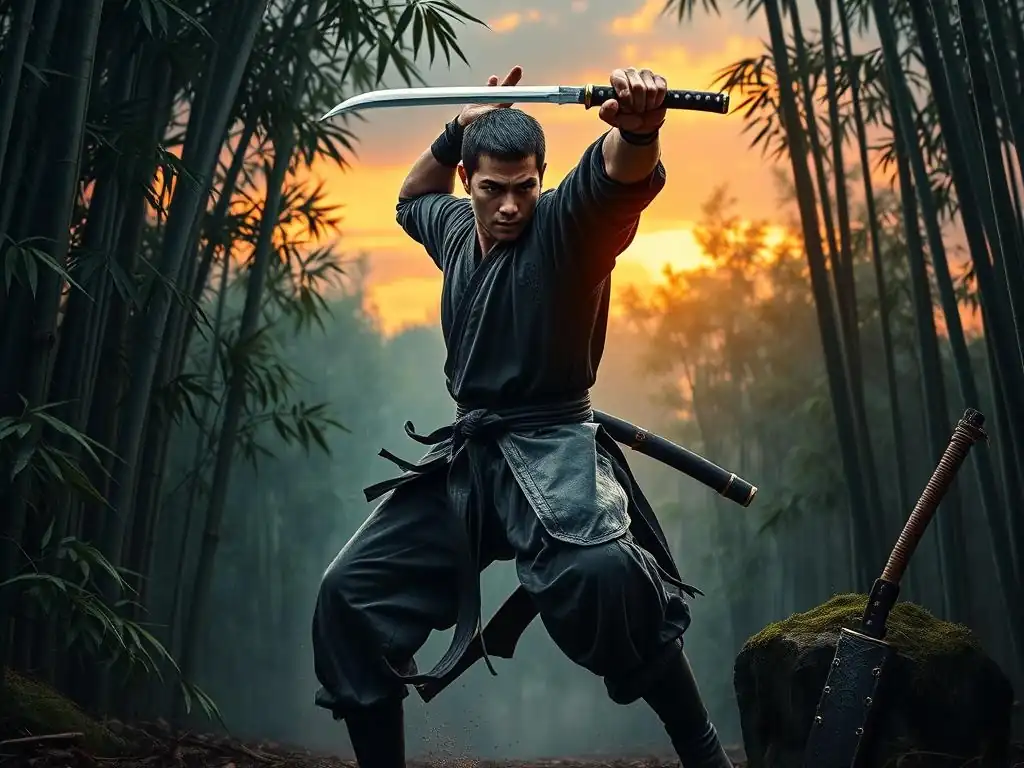
Welcome to Martial Arts Mastery, your gateway to understanding the profound world of combat traditions! Delve into the shadows and uncover the secrets surrounding the ancient and often misunderstood art of Ninjutsu. This article sheds light on a critical aspect of this discipline – specifically, the Togakure Ryu Ninjutsu weapons. But are these tools truly weapons of war, or are they something far more intricate? Explore the fascinating origins and practical applications of these 18 legendary instruments, and prepare to challenge your understanding of this enigmatic martial art.
- Introduction to Togakure Ryu Ninjutsu and its Weaponry
- Overview of the 18 Togakure Ryu Ninjutsu Weapons
- Bladed Weapons of Togakure Ryu Ninjutsu
- Polearms and Staff Weapons in Togakure Ryu
- Projectile Weapons of Togakure Ryu Ninjutsu
- Specialized and Concealed Weapons in Togakure Ryu
- Improvised Weapons in Togakure Ryu Ninjutsu
- Training with Togakure Ryu Ninjutsu Weapons
- The Philosophy Behind Togakure Ryu Weaponry
- Conclusion: The Enduring Legacy of Togakure Ryu Ninjutsu Weapons
-
Frequently Asked Questions
- What is Togakure Ryu Ninjutsu and what makes its weapon selection unique?
- How many weapons are traditionally associated with Togakure Ryu Ninjutsu?
- Can you name a few examples of Togakure Ryu Ninjutsu weapons and their intended uses?
- Does MartialArtsMastery.org offer detailed instruction on using Togakure Ryu Ninjutsu weapons?
- Where can someone find more information about the history and philosophy behind Togakure Ryu Ninjutsu weapon usage?
- Final Reflection: The Enduring Legacy of Togakure Ryu
- Unleash Your Inner Ninja: Take the Next Step!
Introduction to Togakure Ryu Ninjutsu and its Weaponry
The Historical Significance of Togakure Ryu Ninjutsu
Togakure Ryu Ninjutsu holds a unique and often debated place in the history of Japanese martial arts and espionage. Tracing its lineage back to the 12th century, specifically to Daisuke Togakure, the school is said to have developed in the mountainous regions of Iga and Koga provinces. These areas were known havens for individuals seeking refuge from political turmoil and those who developed specialized skills in unconventional warfare, intelligence gathering, and survival.
The historical context of feudal Japan, marked by constant conflict between warring clans, created a fertile ground for the development of such practical and often clandestine methods. The skills taught within Togakure Ryu were not merely for open combat but encompassed a holistic approach to survival, including strategy, disguise, escape, and the use of the environment.
The techniques and philosophy of Togakure Ryu were passed down through generations, evolving to meet the changing demands of the samurai era. Unlike the more formalized and codified martial arts focused on dueling or battlefield combat, Togakure Ryu Ninjutsu prioritized effectiveness and adaptability. Its practitioners, often operating in the shadows, needed tools and methods that could be used discreetly, defensively, or offensively depending on the mission.
This necessity directly influenced the diverse array of weapons that became associated with the Ryu, many of which were adaptations of common tools or designed for concealment and surprise. Understanding the historical pressures and operational requirements placed upon the ninja of Togakure Ryu is crucial to appreciating the ingenuity and practicality behind their chosen arsenal, including the various Togakure Ryu Ninjutsu weapons.
The Importance of Weapons Training in Togakure Ryu
Weapons training was not just an adjunct but a fundamental pillar of the comprehensive curriculum within Togakure Ryu Ninjutsu. While unarmed combat (Taijutsu) formed the core physical foundation, the practical realities of the ninja's role often necessitated the use of tools and weapons. The ninja were not expected to engage in prolonged, honorable duels but rather to achieve their objectives through efficiency, surprise, and minimal risk.
Therefore, proficiency with a variety of Togakure Ryu Ninjutsu weapons was essential for tasks such as infiltration, defense, distraction, and even assassination. The training emphasized not just the mechanics of using a weapon, but also its strategic application within a specific scenario, often involving concealment and deception.
The diverse nature of the 18 traditional Togakure Ryu Ninjutsu weapons meant that a practitioner needed to be adaptable and versatile. Training went beyond simply mastering one or two tools; it involved understanding the strengths and weaknesses of each weapon and how it could be used in combination with other skills or even the environment. For example, a weapon might be used for climbing, breaching, or creating a diversion, in addition to its primary function.
This integrated approach ensured that the ninja was never solely reliant on one method and could leverage whatever tool was available or most suitable for the situation at hand. The emphasis was always on practical effectiveness and survival, making weapon proficiency a critical component of the Togakure Ryu practitioner's skillset.
Overview of the 18 Togakure Ryu Ninjutsu Weapons
Categorizing Togakure Ryu Weapons: A Functional Approach
While tradition speaks of 18 distinct Togakure Ryu Ninjutsu weapons, it's important to understand that this number isn't always a rigid list of 18 unique items but rather an enumeration of weapon types or categories, sometimes including variations or even the use of the body itself. A helpful way to understand this diverse arsenal is by categorizing them based on their primary function or design principle.
Such categorization reveals the strategic thinking behind the selection – weapons for close combat, for range, for concealment, for utility, or for defense. This functional approach helps to demystify the list and highlight the practical needs the ninja sought to address.
Common functional categories for the Togakure Ryu Ninjutsu weapons include bladed weapons (cutting, piercing, throwing), polearms/staff weapons (reach, leverage), projectile weapons (distance, distraction), specialized/concealed weapons (surprise, specific tasks), and even improvised weapons (adaptability). Looking at the weapons through this lens shows how they covered a spectrum of combat and operational needs.
For instance, while the Ninjato is a primary close-quarters weapon, the Fukiya serves a completely different purpose involving stealth and ranged incapacitation. This functional classification underscores the principle of using the right tool for the right job, a hallmark of effective Ninjutsu strategy and a key aspect of understanding the Togakure Ryu Ninjutsu weapons.
Bladed Weapons of Togakure Ryu Ninjutsu
Ninjato: The Ninja Sword Explained
The Ninjato, often portrayed in popular culture as the definitive ninja sword, is a straight, relatively short sword that differs significantly from the curved Katana of the samurai. While its historical existence as a standardized weapon is debated by some scholars, it is commonly listed among the traditional Togakure Ryu Ninjutsu weapons. Its design is said to have favored practicality over artistry, potentially being easier and quicker to forge than a Katana.
The straight blade was purportedly useful for thrusting in tight spaces or for breaking, and the square tsuba (handguard) could potentially be used as a step or a climbing aid. The saya (scabbard) was often slightly longer than the blade, allowing for the concealment of small items or providing a hidden space for blinding powders (metsubushi).
Training with the Ninjato in Togakure Ryu focused on pragmatic combat applications rather than formal sword duels. Techniques emphasized quick draws, thrusts, cuts optimized for soft targets, and using the sword in conjunction with body movement (Taijutsu) for evasion and surprise. The scabbard itself was also a tool, used for blocking, striking, or even as a short staff.
While perhaps not as iconic or historically verifiable as the samurai's Katana, the concept of a practical, versatile sword designed for the ninja's specific needs aligns with the overall philosophy of Togakure Ryu Ninjutsu weapons. Its presence in the traditional list highlights the need for a primary bladed weapon adaptable to covert operations.
Shuriken: Throwing Blades in Togakure Ryu
Shuriken, the generic term for various forms of Japanese throwing weapons, are iconic Togakure Ryu Ninjutsu weapons, though their primary purpose was rarely lethal force. Rather, they were typically used for distraction, harassment, creating an opening for attack or escape, or sometimes as a means of pinning clothing or delivering a message.
Togakure Ryu is particularly associated with two main types: Bo-Shuriken and Hira-Shuriken. Mastering the art of throwing shuriken involved not just accuracy but also understanding trajectory, distance, and the specific effect desired – whether to simply startle a guard or to temporarily incapacitate an opponent by striking a vulnerable point like the eyes or hands.
The training involved developing control over different throwing methods, such as overhand, underhand, or sidearm throws, and learning how to release the shuriken smoothly for consistent flight. Practice often involved hitting targets at varying distances and from different stances, including while moving.
The sheer variety of shuriken designs meant that practitioners had to understand the flight characteristics of each type. While perhaps less emphasized for lethal application compared to other weapons, the shuriken's utility as a tool for creating opportunities and controlling distance made it an indispensable part of the Togakure Ryu Ninjutsu weapons arsenal, embodying the principle of using minimal force for maximum strategic effect.
Bo-Shuriken: Details and Throwing Techniques
Bo-Shuriken are straight, pointed throwing weapons, typically made of metal, varying in length from around 15 to 25 centimeters and weighing between 20 and 150 grams. Unlike the star-shaped Hira-Shuriken, the Bo-Shuriken is thrown with the aim of having the point strike the target.
This requires a different throwing technique, often involving holding the shuriken by the non-pointed end and releasing it with a wrist flick or a full arm motion, controlling its rotation so that the point arrives first. Different schools and practitioners developed various throwing styles, some favoring non-spinning throws over short distances and others utilizing spinning throws for greater range or impact.
Mastering the Bo-Shuriken requires significant practice to achieve accuracy and consistency. Training drills often involve repetitive throws at static targets, gradually increasing the distance and introducing movement or different throwing angles. The weight and balance of the individual Bo-Shuriken are critical factors influencing its flight path, and practitioners often developed a preference for certain types. While seemingly simple, the Bo-Shuriken is a versatile throwing weapon within the Togakure Ryu Ninjutsu weapons repertoire, useful for discreetly targeting vulnerable points or creating sharp, localized distractions that could momentarily stun or disorient an opponent.
Hira-Shuriken: Mastering the Flat Blade
Hira-Shuriken, also known as shaken, are the more commonly recognized star-shaped or multi-pointed flat metal plates. These range in size, typically with a diameter between 6 and 12 centimeters, and can have anywhere from three to eight points, sometimes more. Unlike Bo-Shuriken, Hira-Shuriken are designed to cut or slash upon impact, regardless of which point strikes the target, as they are thrown to spin horizontally.
This makes them potentially easier to hit a target with, though perhaps less precise in targeting a specific small area with a point. Their flat profile also makes them easier to conceal in certain ways.
Throwing Hira-Shuriken involves holding the blade between the fingers and releasing it with a snap of the wrist or a circular arm motion to impart rapid spin. The spin stabilizes the blade's flight and ensures that a point or edge will make contact. Training involves developing a smooth release and understanding how wind resistance affects the flight of the flat blade.
While their penetration power is generally limited compared to a Bo-Shuriken, their ability to cause shallow cuts or simply create a loud, metallic whizz as they fly makes them effective for distraction and psychological impact. The Hira-Shuriken's role as a versatile, easily concealed throwing weapon solidified its place among the traditional Togakure Ryu Ninjutsu weapons.
Kunai: The Versatile Tool and Weapon
The Kunai is a Japanese tool originally used for farming or masonry, essentially a pointed dagger-like implement with a large handle, often featuring a ring at the pommel. Its inclusion among the Togakure Ryu Ninjutsu weapons highlights the ninja's ingenuity in adapting everyday items for combat and utility.
The Kunai's primary function was not necessarily as a direct fighting knife, although it could certainly be used for stabbing or slashing at close range. Its robust construction and pointed tip made it excellent for digging holes, prying open locks, climbing walls (by embedding it into cracks or using the ring to attach ropes), or even as an anchor point.
As a weapon, the Kunai could be used for thrusting attacks, blocking, or even thrown, utilizing the ring for balance or attachment of a cord. The ring also allowed it to be tied to a belt or wrist for easy access. Its unassuming appearance made it an ideal concealed weapon, easily mistaken for a simple tool.
The emphasis in Togakure Ryu training would have been on the Kunai's multi-functional nature – not just how to fight with it, but how to use it in conjunction with infiltration techniques or survival skills. This adaptability is a key characteristic of many traditional Togakure Ryu Ninjutsu weapons, reflecting the ninja's need for practical, multi-purpose gear.
Kama: The Sickle as a Weapon
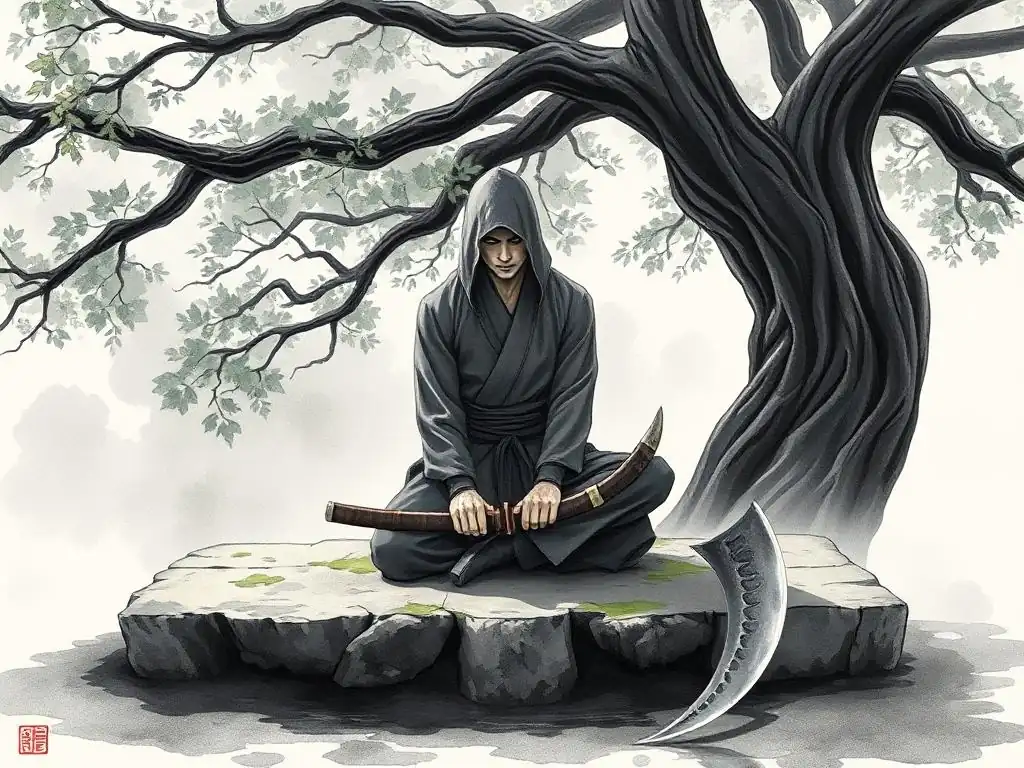
The Kama is another example of a farming tool adapted into a formidable weapon within Togakure Ryu Ninjutsu. Originally used for reaping crops, the Kama is a sickle with a sharp blade attached at a right angle to a handle, typically around 30-60 centimeters long. While seemingly simple, the Kama is surprisingly versatile in skilled hands. It can be used for slashing, hooking, trapping an opponent's weapon, or blocking. The pointed tip can also be used for thrusting. The relatively short handle allows for rapid, close-quarters movements.
Training with the Kama in Togakure Ryu involved learning dynamic, circular motions and combinations. Techniques often involved using a single Kama or a pair (Niten Kama). The curved blade is particularly effective for hooking limbs or weapons, allowing the practitioner to control or disarm an opponent. Its origin as a common farm tool also meant it could be carried relatively openly without arousing suspicion, making it an excellent concealed weapon. The Kama's transformation from a tool of agriculture to one of the effective Togakure Ryu Ninjutsu weapons exemplifies the ninja's ability to find utility and danger in the mundane.
The Shikomizue is a classic example of a concealed weapon, appearing outwardly as an ordinary walking stick or cane but containing a hidden blade, typically a sword or dagger, within its shaft. This weapon perfectly embodies the ninja's principle of deception and surprise. It allowed a practitioner to carry a bladed weapon discreetly in situations where openly carrying a sword would be impossible or attract unwanted attention. The element of surprise upon drawing the hidden blade could be a decisive advantage in an unexpected confrontation.
The design of the Shikomizue varied, with some housing short daggers and others concealing full-length sword blades, though often straighter and narrower than a standard Katana for easier concealment. Training would involve practicing a smooth, rapid draw of the blade from the cane, transitioning immediately into combat techniques.
The cane itself could also be used defensively for blocking or striking before the blade was revealed. The Shikomizue is a prime illustration of how Togakure Ryu Ninjutsu weapons were designed not just for fighting, but for the specific context of covert operations and the necessity of maintaining a low profile until the moment of action.
Polearms and Staff Weapons in Togakure Ryu
Bo: The Long Staff in Ninjutsu Combat
The Bo, a long staff typically made of hardwood and measuring around 180 centimeters (approximately six feet) in length, is one of the fundamental and most versatile Togakure Ryu Ninjutsu weapons. Its simplicity belies its effectiveness. The Bo can be used for striking, thrusting, blocking, sweeping, and joint locks. Its length provides significant reach advantage over shorter weapons like swords or knives, allowing the practitioner to engage or control an opponent from a safer distance.
Training with the Bo in Togakure Ryu emphasizes fluid, dynamic movements and understanding leverage. Techniques involve using both ends of the staff, striking with the middle section, and manipulating the staff for defense and offense. The Bo is effective against multiple opponents and can be used to control space or create distance. Its unassuming nature – a staff could be seen as a walking aid or carrying pole – also offered a degree of plausible deniability. The Bo's inclusion among the core Togakure Ryu Ninjutsu weapons highlights the importance of reach and adaptability in combat situations.
Hanbo: The Half Staff Techniques
The Hanbo, or "half staff," is a shorter version of the Bo, typically measuring around 90-100 centimeters (approximately three feet) in length. While it lacks the reach of the full-sized Bo, the Hanbo is more maneuverable and better suited for close-quarters combat and defense. Its compact size also makes it easier to conceal or carry discreetly. The Hanbo is primarily used for striking, blocking, joint manipulation, and trapping techniques.
Hanbo training in Togakure Ryu focuses on rapid transitions between offense and defense, utilizing the staff to target vulnerable points such as joints, hands, or the head. Techniques often involve using the ends of the Hanbo for thrusts or strikes and the shaft for blocks or sweeps. Its size makes it particularly effective in confined spaces or against opponents armed with shorter weapons. The Hanbo's balance between reach and maneuverability makes it a practical and versatile tool among the Togakure Ryu Ninjutsu weapons, emphasizing control and rapid response in close proximity.
Naginata: The Glave in Togakure Ryu
The Naginata is a polearm consisting of a long wooden shaft topped with a curved blade, similar in appearance to a European glaive or halberd, though typically lighter and faster. While often associated with female warriors (Onna-bugeisha) or monks (Sohei), the Naginata was also utilized within certain martial traditions, including potentially as one of the Togakure Ryu Ninjutsu weapons. Its primary advantage is its considerable reach, allowing the wielder to keep opponents at a distance while delivering powerful cutting and thrusting attacks.
Training with the Naginata involves mastering fluid movements to control the long weapon, using the shaft for blocking and leverage, and the blade for sweeping cuts and precise thrusts. The weight distribution requires strength and coordination. While perhaps less common for covert operations due to its size, the Naginata could be effective in open confrontation or defense. Its potential inclusion in the list of Togakure Ryu Ninjutsu weapons suggests its utility in specific scenarios where reach and power were paramount, or possibly as a weapon captured or adapted from other warrior traditions.
Projectile Weapons of Togakure Ryu Ninjutsu
Fukiya: The Blowgun and its Poison Darts
The Fukiya, or Japanese blowgun, is a simple tube used to propel small darts by exhaling sharply. As one of the Togakure Ryu Ninjutsu weapons, its primary utility lay in its stealth and potential to deliver incapacitating or lethal substances via poisoned darts. The blowgun is virtually silent when fired, making it ideal for covert attacks, distractions, or eliminating threats without revealing the user's position. The darts themselves were lightweight and often tipped with fast-acting poisons derived from plants or animals.
Training with the Fukiya focused on breath control, accuracy over varying distances, and the preparation and application of different dart tips and poisons. The range and power of a Fukiya are limited compared to projectile weapons like bows or firearms, typically effective only over short to medium distances (perhaps up to 10-20 meters for accuracy). However, its silence and ease of concealment in natural environments made it a valuable tool for assassination or sabotage. The Fukiya exemplifies the ninja's preference for subtle, effective methods over brute force, fitting perfectly within the arsenal of Togakure Ryu Ninjutsu weapons.
Shuko and Tekko-Kagi: Hand Claws and Their Use
Shuko and Tekko-Kagi are types of metal claws worn on the hands, often considered among the more distinctive Togakure Ryu Ninjutsu weapons. Shuko are typically smaller and worn on the palms, sometimes with rings for the fingers, featuring spikes or blades protruding from the palm. Tekko-Kagi are larger, more substantial claws designed to cover the back of the hand and extend over the knuckles or fingers. Both served multiple purposes beyond direct combat.
Their primary use was as climbing aids, allowing the ninja to scale walls, trees, or other surfaces by digging the metal claws into the material. In combat, they could be used for ripping, tearing, blocking bladed attacks (especially with the Tekko-Kagi's reinforced structure), or raking an opponent's face or limbs.
Training involved using the claws in conjunction with body weight and leverage for climbing, as well as incorporating clawing and blocking techniques into unarmed combat. While perhaps less frequently used for direct engagement than swords or staffs, the Shuko and Tekko-Kagi's multi-functional utility for both infiltration and close-quarters defense secured their place among the specialized Togakure Ryu Ninjutsu weapons.
Specialized and Concealed Weapons in Togakure Ryu
Metsubushi: Blinding Agents and Tactics
Metsubushi is not a physical weapon in the traditional sense but rather a category of blinding agents used to disorient or incapacitate an opponent by temporarily impairing their vision. These agents could include powders made from ash, sand, finely ground pepper, or even glass shards, often mixed with irritants. Metsubushi was typically carried in small containers, such as eggshells, hollowed-out gourds, or paper packets, designed to be easily broken or thrown to release the contents into an opponent's face.
The tactic involved using Metsubushi as a surprise attack, thrown directly into an opponent's eyes at close range to cause immediate irritation and temporary blindness. This created a crucial window of opportunity for the ninja to escape, gain a tactical advantage, or deliver a decisive blow with another weapon.
Training involved practicing the rapid deployment of the Metsubushi while simultaneously moving or attacking. This non-lethal or less-than-lethal method of control and escape highlights the Togakure Ryu philosophy of prioritizing objective completion and survival over direct confrontation, making Metsubushi a key element among the strategic Togakure Ryu Ninjutsu weapons (or anti-weapons).
Kakute: The Finger Ring Weapon
The Kakute is a small, inconspicuous weapon worn on the finger, typically a ring with one or more small, sharp points or spikes protruding from it. Made of metal, the Kakute was easily concealed and could be used for striking, scratching, or applying pressure to vulnerable points during close-quarters grappling or defense. Its small size made it ideal for surprise attacks or for inflicting pain to escape a hold.
Training with the Kakute focused on integrating its use into unarmed combat techniques (Taijutsu). The spikes could be used to rake across the face, eyes, or hands, or to apply pressure to nerve points or pressure points during joint locks or throws. While not designed for delivering deep wounds, the pain inflicted by the Kakute could be significant enough to distract or deter an attacker, providing the ninja with the opportunity needed to escape or counterattack. The Kakute exemplifies the principle of using small, easily concealed items as effective tools within the Togakure Ryu Ninjutsu weapons repertoire.
Neko-Te: The Cat's Hand
Neko-Te, or "Cat's Hand," refers to finger caps or thimbles made of metal or hardened material, often with sharp points or claws attached. These were worn on the fingertips, creating a set of sharp claws that could be used for scratching, tearing, or raking. Like the Kakute, the Neko-Te was a concealed weapon designed for close-quarters combat and defense.
Training with the Neko-Te involved using the sharpened fingertips for rapid, stinging attacks against vulnerable areas such as the face, eyes, throat, or arms. They could also be used for gripping or tearing clothing. While not providing significant reach or power, the Neko-Te offered a way to inflict painful, distracting injuries during grappling or when caught in a confined space. Their ability to be easily hidden and quickly deployed made them a practical addition to the array of Togakure Ryu Ninjutsu weapons, embodying the ninja's preference for subtle, effective tools.
Kyoketsu-Shoge: The Rope Dart Weapon
The Kyoketsu-Shoge is one of the more complex and unique Togakure Ryu Ninjutsu weapons. It consists of a rope or chain, typically around 3-5 meters (10-16 feet) long, with a sharp, double-edged blade attached to one end and a weighted ring or metal ball attached to the other. The blade end could be used for cutting or stabbing, while the weighted end could be used for striking, throwing, or entangling. The rope connecting the two allowed for a wide range of techniques involving swinging, throwing, and manipulating both ends simultaneously.
Mastering the Kyoketsu-Shoge required significant practice to control the rope and the two ends independently or in combination. Techniques involved swinging the weighted ring to strike or entangle an opponent or their weapon, using the blade for slashing attacks at range or up close, and utilizing the rope itself for trapping, binding, or climbing. The weapon's versatility made it effective against multiple opponents or for navigating difficult terrain. While demanding to learn, the Kyoketsu-Shoge's unique capabilities for both ranged and close combat, entanglement, and utility cemented its status as a sophisticated tool among the Togakure Ryu Ninjutsu weapons.
Improvised Weapons in Togakure Ryu Ninjutsu
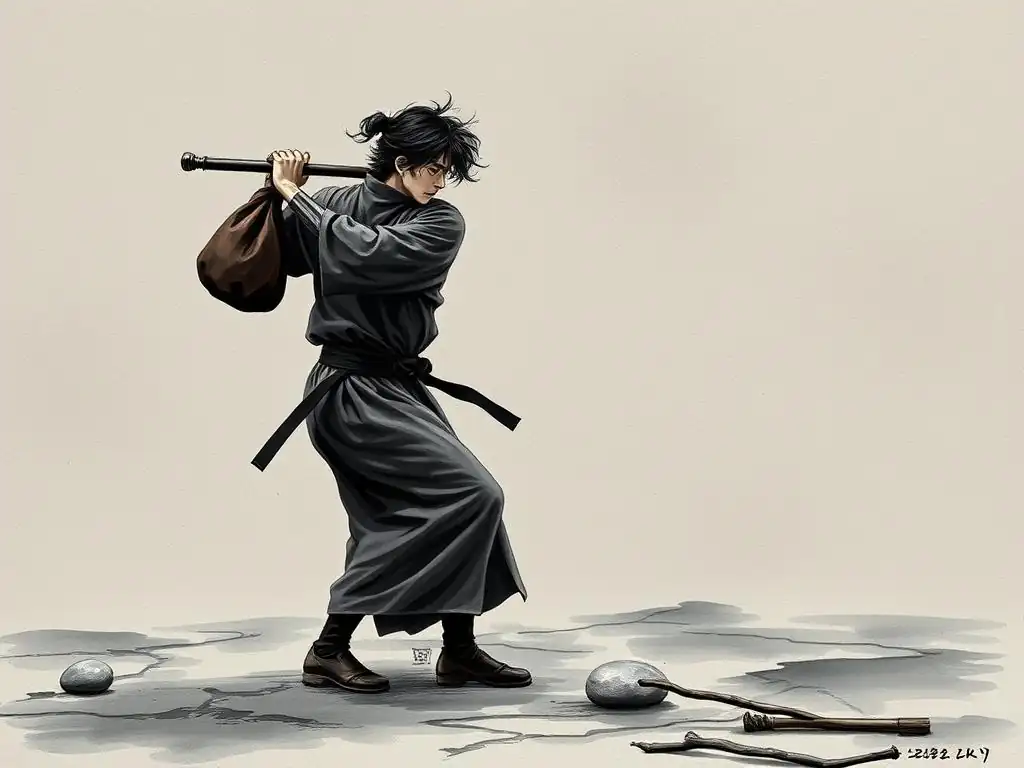
The Art of Using Everyday Objects as Weapons
Beyond the list of traditional Togakure Ryu Ninjutsu weapons, a crucial aspect of ninja training was the ability to adapt and utilize whatever was at hand as a weapon. This principle of improvisation stemmed from the unpredictable nature of covert operations; a ninja might be stripped of their gear or find themselves in a situation where their traditional tools were unavailable or inappropriate. Therefore, the ability to see potential weapons in everyday objects – from farming tools to household items to natural materials – was a vital survival skill.
Training in improvised weaponry focused on understanding the fundamental principles of physics and leverage and applying them to mundane objects. This involved recognizing how an object's weight, shape, density, and texture could be leveraged for striking, blocking, throwing, or defense. A simple rock could become a projectile, a sturdy stick a staff, and a piece of cloth a binding or strangling tool. This mindset of constant readiness and adaptability is arguably one of the most powerful "weapons" in the Togakure Ryu arsenal, complementing the use of the more formal Togakure Ryu Ninjutsu weapons.
Rocks, Sticks, and Clothing as Improvised Weapons
Examples of commonly available items repurposed as weapons in Togakure Ryu included rocks, sticks, and even clothing. A hand-sized rock could be thrown with considerable force or used as a striking implement in close combat. Different sizes and shapes of rocks offered varying weights and points of impact. Sticks, readily found in nature, could serve as short staffs, clubs, or striking tools, depending on their length and thickness. A sturdy branch could provide reach and power similar to a Hanbo or even a shorter Bo.
Clothing, such as a belt, sash, or even a jacket, could be used for a variety of defensive and offensive purposes. A belt could be swung as a flail, used for binding, or as a garrote. A jacket could be wrapped around an arm for improvised blocking or thrown over an opponent's head for momentary disorientation. The ability to see the potential for a weapon in these seemingly harmless items was a testament to the ninja's resourcefulness and training in practical survival techniques, making the art of improvisation a fundamental part of the Togakure Ryu Ninjutsu weapons philosophy.
Training with Togakure Ryu Ninjutsu Weapons
Foundational Drills and Exercises
Training with Togakure Ryu Ninjutsu weapons begins with foundational drills designed to build proficiency, control, and safety. Regardless of the specific weapon, initial exercises often focus on basic stances, grip, movement, and striking or blocking motions. For staff weapons like the Bo or Hanbo, this includes learning how to handle the weapon smoothly, transition between different guards, and execute fundamental strikes and blocks. With bladed weapons like the Ninjato or Kama, drills focus on cutting angles, thrusting techniques, and safe handling.
Repetition is key in these foundational stages. Practitioners spend countless hours practicing basic movements, developing muscle memory and coordination. For projectile weapons like Shuriken or Fukiya, training involves mastering the release mechanism and developing accuracy at varying distances. These initial drills are not about complex combat scenarios but about developing a deep familiarity and control over the weapon itself. This solid foundation is essential before moving on to more advanced techniques and integrating the Togakure Ryu Ninjutsu weapons into dynamic combat applications.
Weapon Handling and Maintenance
Proper weapon handling and maintenance were critical aspects of training within Togakure Ryu. A well-maintained weapon is reliable and safe to use, while a neglected one can fail at a critical moment. Training included learning how to inspect weapons for damage, clean and sharpen bladed weapons (like the Ninjato or Kama), and care for wooden staffs or ropes (like the Bo or Kyoketsu-Shoge). Understanding the materials and construction of each of the Togakure Ryu Ninjutsu weapons was part of becoming a proficient user.
Beyond physical maintenance, handling also involved the safe carrying and concealment of weapons. Ninja needed to know how to carry their tools discreetly, draw them quickly when needed, and re-conceal them just as efficiently. This included techniques for securing weapons during climbing or movement and ensuring they did not impede other actions. The emphasis on meticulous handling and maintenance reflects the practical, survival-oriented nature of Togakure Ryu Ninjutsu – a ninja's life could depend on the reliability of their tools.
Integrating Weapons into Ninjutsu Combat Strategy
The ultimate goal of Togakure Ryu Ninjutsu weapons training was not isolated proficiency with individual tools but the ability to seamlessly integrate weapon use into overall combat and infiltration strategies. This involved understanding how to transition between unarmed techniques (Taijutsu) and weapon use, how to use weapons in combination with environmental factors, and how to employ them for objectives beyond direct combat, such as creating diversions or facilitating escape.
Training included sparring drills that incorporated weapons, allowing practitioners to develop timing, distance, and strategic decision-making under simulated pressure. Emphasis was placed on using the weapon most effectively for the situation – sometimes a quick shuriken throw was better than drawing a sword, or using a Hanbo for joint control was preferable to striking. This strategic integration transformed the individual Togakure Ryu Ninjutsu weapons from mere tools into extensions of the practitioner's body and will, used intelligently and adaptably to achieve the mission's goals.
The Philosophy Behind Togakure Ryu Weaponry
The Mindset of the Ninja Warrior
The use of Togakure Ryu Ninjutsu weapons was deeply intertwined with the unique mindset of the ninja warrior. Unlike the samurai's focus on honorable, open combat and loyalty to a lord, the ninja's primary allegiance was often to their clan or mission, prioritizing survival and objective completion above all else. This necessitated a pragmatic, adaptable, and often unconventional approach to conflict. The ninja mindset embraced deception, stealth, and surprise, viewing these not as dishonorable tactics but as essential tools for success against often superior numbers or resources.
This philosophy is clearly reflected in the design and use of Togakure Ryu Ninjutsu weapons. Many were designed for concealment (Shikomizue, Kakute), surprise (Metsubushi, Fukiya), or were adapted from everyday tools (Kama, Kunai), allowing the ninja to blend in and strike unexpectedly. The emphasis was on efficiency – using the minimal force necessary to achieve the desired outcome, whether that was disabling a guard, gathering information, or escaping unseen. The weapons were tools to facilitate the mission, not symbols of status or honor, reflecting the ninja's focus on practical results over martial glory.
Understanding Deception and Infiltration with Weapons
Deception and infiltration were core competencies of the ninja, and Togakure Ryu Ninjutsu weapons were often selected and used with these principles in mind. Weapons were not just for fighting; they were tools for facilitating covert entry, gathering intelligence, and ensuring a safe exfiltration. The ability to appear unarmed while carrying concealed blades (Shikomizue), or to use tools like the Kunai or Shuko for climbing and bypassing defenses, was crucial for successful infiltration.
Furthermore, weapons could be used to create diversions or sow confusion, allowing the ninja to move unnoticed or escape detection. A well-aimed Shuriken or a burst of Metsubushi could draw attention away from the ninja's true position or actions. The Kyoketsu-Shoge, with its rope, could be used for scaling walls or crossing obstacles silently. This strategic use of Togakure Ryu Ninjutsu weapons for purposes beyond direct combat underscores the unique role of the ninja as masters of clandestine operations, where the weapon was an integral part of the overall strategy of deception and infiltration.
Conclusion: The Enduring Legacy of Togakure Ryu Ninjutsu Weapons
The Relevance of Traditional Weapons in Modern Ninjutsu Training
While the age of feudal Japan and the historical role of the ninja have passed, the study of Togakure Ryu Ninjutsu, including its traditional weapons, continues today within various martial arts organizations. In a modern context, the relevance of training with these historical tools extends beyond practical self-defense applications, although some techniques remain applicable. The true value lies in understanding the principles and strategies that underpinned their use.
Training with Togakure Ryu Ninjutsu weapons teaches practitioners about distance management, leverage, adaptability, and the importance of using the environment. It cultivates resourcefulness and the ability to see potential in everyday objects. Moreover, studying these weapons provides insight into the history, philosophy, and mindset of the ninja, offering a deeper appreciation for their unique approach to conflict and survival.
While a modern practitioner may never need to use a Fukiya or a Kyoketsu-Shoge in daily life, the lessons learned about strategy, awareness, and versatility through their study remain profoundly relevant to martial arts and self-protection in the 21st century. The legacy of the Togakure Ryu Ninjutsu weapons endures as a testament to practical ingenuity and strategic thinking.
Frequently Asked Questions
What is Togakure Ryu Ninjutsu and what makes its weapon selection unique?
Togakure Ryu Ninjutsu is a historical Japanese martial art focused on covert warfare. Its weapons are unique for their emphasis on practicality and concealment.
How many weapons are traditionally associated with Togakure Ryu Ninjutsu?
There are 18 traditional weapons associated with Togakure Ryu Ninjutsu. This arsenal is designed for versatility in various combat scenarios.
Can you name a few examples of Togakure Ryu Ninjutsu weapons and their intended uses?
Examples include the shuriken (throwing stars) for distraction and attack, the shinobi-gatana (ninja sword) for close-quarters combat, and the kusari-fundo (weighted chain) for entanglement and striking.
Does MartialArtsMastery.org offer detailed instruction on using Togakure Ryu Ninjutsu weapons?
MartialArtsMastery.org offers historical overviews and descriptions of these weapons. However, practical instruction requires qualified instructors and is not provided online.
Where can someone find more information about the history and philosophy behind Togakure Ryu Ninjutsu weapon usage?
MartialArtsMastery.org provides information on the historical context and philosophical underpinnings of Togakure Ryu Ninjutsu. You can explore sections on history and martial arts disciplines for more details.
Final Reflection: The Enduring Legacy of Togakure Ryu
The preceding exploration of the Togakure Ryu Ninjutsu weapons illuminates more than just historical artifacts; it reveals a philosophy of adaptability and resourcefulness that resonates profoundly in our modern world. In a time of rapid technological advancement, the principles of leveraging available tools and understanding one's environment, core to the Togakure Ryu, offer invaluable lessons in problem-solving and resilience.
The influence of Togakure Ryu extends beyond the martial arts community, shaping our understanding of stealth, strategy, and the power of unconventional thinking. My own fascination with these weapons stems from a deep appreciation for the ingenuity and discipline they represent, a testament to human potential. The true warrior understands that victory is not solely achieved through strength, but through wisdom, adaptability, and the mastery of one's surroundings.
This quote encapsulates the essence of Togakure Ryu, reminding us that true power lies in holistic understanding and strategic application.
As you reflect on the diverse arsenal of Togakure Ryu Ninjutsu, consider how its principles of resourcefulness and adaptability can be applied to your own life. Embrace the challenge of finding creative solutions, honing your awareness, and mastering the tools at your disposal, both tangible and intangible. The spirit of the ninja, the unwavering pursuit of mastery, resides within us all, waiting to be awakened.
Unleash Your Inner Ninja: Take the Next Step!
Thank you for delving into the fascinating world of Togakure Ryu Ninjutsu's traditional weapons! We hope you've gained valuable insights into the history and purpose behind these incredible tools. Ready to put that knowledge into action?
Here are a few ways to continue your journey:
- Consider exploring a local martial arts dojo that offers Ninjutsu training. Immerse yourself in the art and discover the practical applications of these weapons under expert guidance.
- Dive deeper! Research the history and cultural significance of ONE specific Togakure Ryu weapon that resonated with you most. Share your findings with fellow martial arts enthusiasts online.
- Create a piece of art (drawing, painting, digital art) inspired by one of the weapons. Express your interpretation and appreciation for its design and purpose.
Which of these weapons intrigues you the most, and why? Share your thoughts in the comments below!