
Sculpted Warriors: Temple Carvings Revealing Ancient Indian Combat Techniques

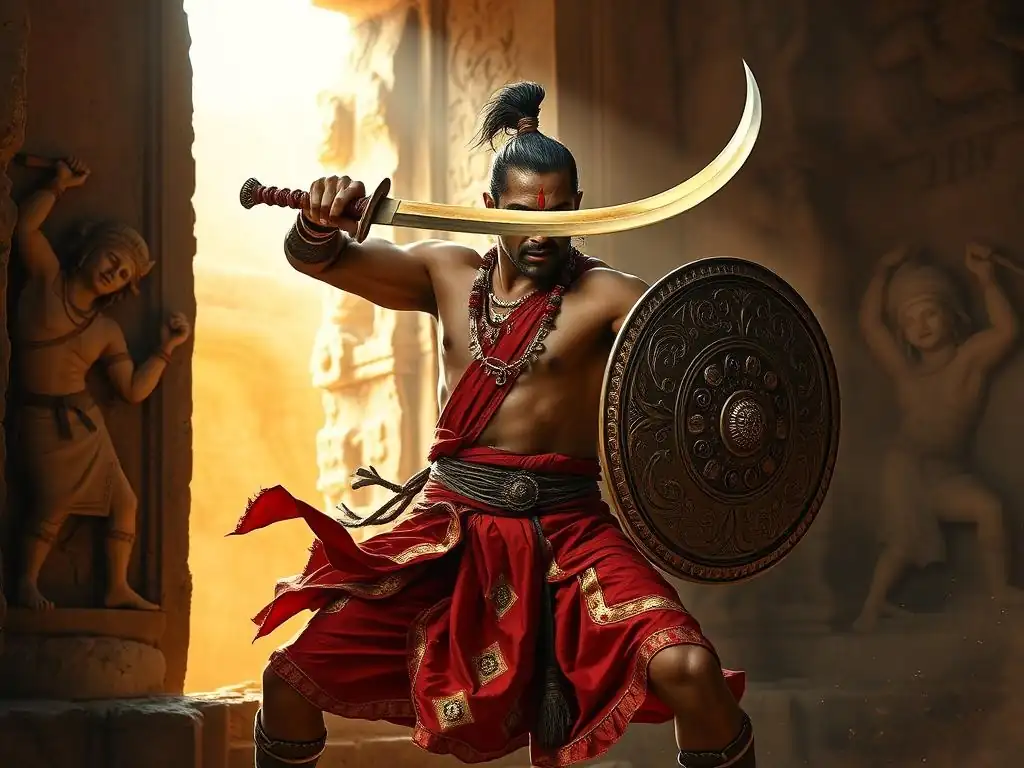
Welcome to Martial Arts Mastery, where the spirit of combat meets the wisdom of centuries.
Delve into the rich tapestry of martial arts history and culture, starting with a fascinating journey into the heart of India. Have you ever wondered how ancient warriors honed their skills? Our in-depth exploration of Ancient Indian martial arts techniques, as revealed in breathtaking temple carvings, promises to unlock secrets of a forgotten era. Prepare to be captivated by the artistry and lethal efficiency of these time-honored traditions – the story unfolds just ahead...
- Introduction: Unveiling Ancient Indian Martial Arts Through Temple Art
- Deciphering the Depictions: Key Ancient Indian Combat Techniques Illustrated
- Analyzing Specific Temple Carvings: Case Studies of Combat Depiction
- The Evolution of Ancient Indian Martial Arts: From Temples to Practice
- Conclusion: The Enduring Relevance of Ancient Indian Combat Techniques
-
Frequently Asked Questions
- What evidence suggests the existence of ancient Indian martial arts techniques?
- Where can I find these temple carvings showcasing ancient Indian martial arts?
- What types of weapons were typically used in these ancient Indian martial arts techniques?
- How did the philosophical underpinnings influence the development of ancient Indian martial arts?
- Are there any modern-day martial arts that are believed to have descended from these ancient Indian techniques?
- Final Reflection: Echoes of Ancient Valor
- Ignite Your Inner Warrior: Decode the Temple's Secrets!
Introduction: Unveiling Ancient Indian Martial Arts Through Temple Art
The Significance of Temple Carvings in Understanding Ancient Warfare
Ancient Indian temple carvings are far more than mere religious or decorative art; they serve as invaluable visual records of life, culture, and conflict from bygone eras. These intricate sculptures, adorning temple walls, pillars, and gateways across the subcontinent, provide a unique window into the practical application and forms of Ancient Indian martial arts techniques.
Unlike purely textual sources like the Arthashastra or Dhanurveda which describe warfare and combat theory, the carvings offer tangible, visual representations of stances, movements, weapons, and even grappling techniques employed by warriors and commoners alike. They capture dynamic moments of combat, training, and procession, offering insights into the physical culture of ancient India that written records often abstract or omit.
The study of these temple depictions allows historians and martial arts practitioners to reconstruct or better understand historical combat systems. By analyzing the posture of figures, the grip on weapons, the interaction between combatants, and the types of armor or attire worn, researchers can gain a deeper appreciation for the sophistication and variety of Ancient Indian martial arts techniques.
For instance, a carving might show a specific lock in wrestling ( Malla-yuddha), a particular defensive block with a sword, or the precise way an archer draws a bow. These visual details complement and sometimes challenge interpretations derived solely from ancient texts, providing a more holistic view of how these martial skills were practiced and integrated into society, from royal armies to local defense and athletic pursuits.
Deciphering the Depictions: Key Ancient Indian Combat Techniques Illustrated
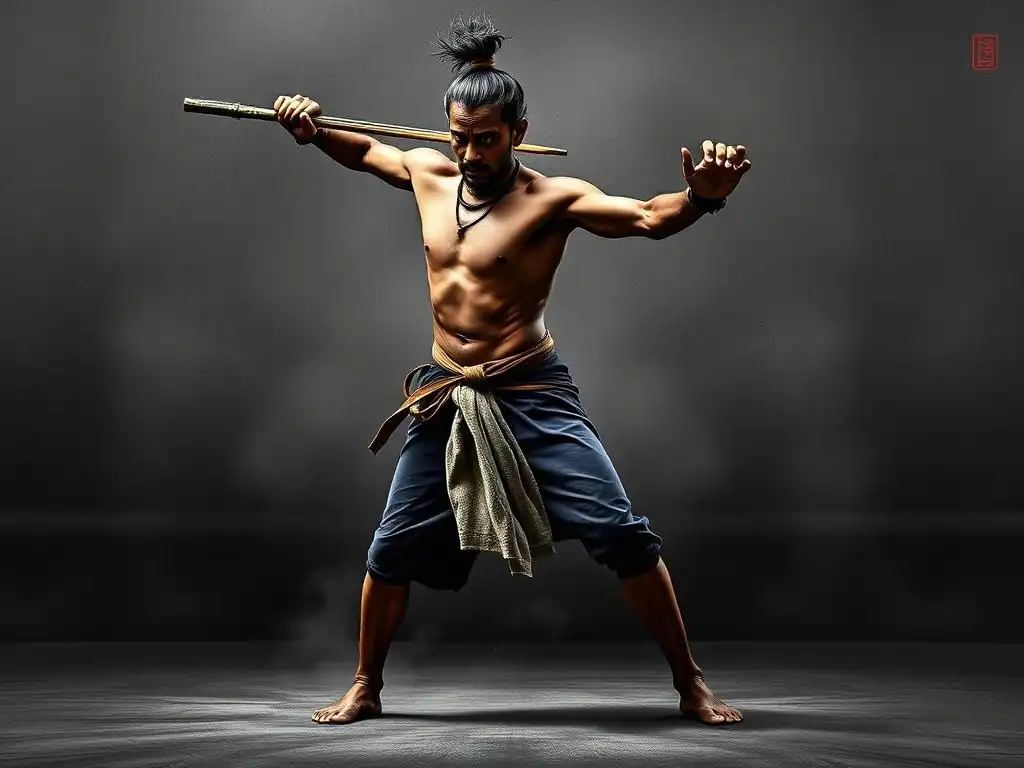
Dhanurveda: Archery Techniques in Ancient Indian Sculptures
Archery, or Dhanurveda, was considered one of the foremost martial disciplines in ancient India, vital for both warfare and hunting. Temple carvings frequently depict archers in various dynamic poses, illustrating the techniques described in ancient treatises. These sculptures show different drawing methods, such as drawing the bowstring to the ear ( karnanta) or even to the mouth ( mukhyanta), indicating variations in force and arrow trajectory. We see depictions of archers using various types of bows, including the large, composite bows favoured by cavalry and charioteers, and the simpler bamboo bows used by infantry.
The detailed carvings often reveal specific stances and footwork employed by archers for stability and power. For example, the alidha stance (right leg forward, bent; left leg back, extended) and the pratyalidha stance (reverse of alidha) are frequently recognizable in temple art, mirroring descriptions found in Dhanurveda texts.
Figures are shown nocking arrows, aiming, and releasing, sometimes even depicting multiple arrows being held in the bow hand for rapid firing. These visual records from sites like the caves of Ajanta and Ellora, or the temples of Orissa, provide concrete evidence of the practical application of Ancient Indian martial arts techniques focused on projectile weapons, demonstrating the importance of precision, posture, and power generation in ancient archery.
Vajra-mushti: The Art of Fist Fighting and Knuckle Dusters in Temple Carvings
Vajra-mushti, meaning "thunder fist," was a unique and formidable form of unarmed combat that often incorporated a vajra – a knuckle-duster-like weapon, sometimes made of horn or metal, featuring sharp points or studs. Temple carvings provide fascinating glimpses into this brutal fighting style. Depictions show fighters engaged in close-quarters combat, striking with closed fists, often with the vajra clearly visible on their knuckles. These carvings reveal aggressive stances and striking techniques, emphasizing the use of powerful punches aimed at vital points.
The sculptures at sites like the temples of Gujarat (e.g., Modhera) or Karnataka sometimes illustrate bouts resembling formalized contests of Vajra-mushti, suggesting it was practiced as both a martial art for self-defense/warfare and as a competitive sport. The detail in the carvings can show the grip on the vajra, the angle of the fist strike, and the defensive postures used against such attacks.
These visual records are particularly valuable because Vajra-mushti, while mentioned in texts, is most vividly understood through these dynamic, albeit static, representations of its application. They underscore the raw intensity and specialized techniques involved in this particular branch of Ancient Indian martial arts techniques.
Malla-yuddha: Wrestling Styles and Grappling Arts as Depicted in Ancient Indian Art
Malla-yuddha, or wrestling, was a highly respected and widely practiced martial art across ancient India, featured in epics like the Mahabharata and depicted extensively in temple art. Carvings showcase a wide variety of wrestling techniques, including throws, locks, holds, and joint manipulations. Figures are often shown locked in combat, illustrating specific grips like the waist hold, leg grabs, and neck ties. The dynamic nature of wrestling is captured through depictions of fighters in mid-throw or executing takedowns.
These sculptures offer insights into the different styles of Malla-yuddha that might have existed, though distinguishing between them purely visually can be challenging. However, the sheer variety of holds and positions suggests a sophisticated understanding of leverage, balance, and body mechanics. For instance, carvings might show techniques resembling those still practiced in traditional Indian wrestling forms today, highlighting a continuity of Ancient Indian martial arts techniques through the ages. The temples of Orissa, Madhya Pradesh, and South India are particularly rich in Malla-yuddha depictions, providing a visual encyclopedia of ancient grappling arts.
The Use of Weapons: Swords, Spears, and Daggers in Ancient Indian Warfare
Beyond unarmed combat, temple carvings provide a comprehensive visual record of the use of various weapons integral to Ancient Indian martial arts techniques. Swords of different shapes and sizes – from the curved talwar to the straight khanda – are frequently depicted, shown in guards, parries, and striking positions. Figures are often shown in dynamic lunges or defensive stances, illustrating the footwork and body alignment used in sword fighting. The grip on the hilt, the angle of the blade, and the interaction with shields are often rendered with considerable detail.
Spears ( shula, barcha) and lances are also prominent, depicted in thrusting actions, bracing against charges, or being wielded from horseback. Carvings might show formations of spearmen or individual warriors using spears in close combat. Daggers, such as the unique katar (punch dagger) or various types of knives, are shown in grappling situations or as secondary weapons. These depictions provide valuable information about the practical application of these weapons, complementing textual descriptions and offering a visual guide to the diverse Ancient Indian martial arts techniques employed with different arms in battle and personal combat.
Analyzing Specific Temple Carvings: Case Studies of Combat Depiction
Khajuraho Temples: A Detailed Look at its Martial Arts Sculptures
The Khajuraho group of monuments in Madhya Pradesh, built primarily between the 9th and 11th centuries CE by the Chandela dynasty, is renowned for its elaborate and often sensuous carvings. However, interspersed among the famous erotic sculptures are numerous depictions of warriors, ascetics, and commoners engaged in various forms of combat and physical training, offering significant insights into Ancient Indian martial arts techniques of the period. These carvings are found on the outer walls, pillars, and friezes of temples like the Lakshmana Temple and the Kandariya Mahadeva Temple.
The martial sculptures at Khajuraho depict a wide range of activities, including wrestling bouts, weapon drills, and scenes of battle. The detail in these carvings allows for close analysis of stances, grips, and techniques. For instance, multiple panels showcase wrestling (Malla-yuddha) with various holds and throws clearly illustrated.
Other carvings show individuals practicing with swords, shields, and daggers, demonstrating specific guards and strikes. These depictions are not static poses but capture moments of dynamic action, providing a vivid portrayal of the physical prowess and combat skills valued during the Chandela period. The sheer number of these martial depictions underscores the importance of combat training and proficiency as part of societal life.
Specific Combat Techniques Depicted in Khajuraho Temples
The carvings at Khajuraho offer specific examples of Ancient Indian martial arts techniques. In the wrestling panels, we see figures executing throws like the pat, where one wrestler lifts and slams the opponent. Leg sweeps, arm locks, and neck holds are also frequently depicted, showing a sophisticated understanding of grappling mechanics. With weapons, carvings illustrate sword-and-shield techniques, including high guards, low guards, and various striking angles. One might observe a figure delivering an overhead cut while another attempts a block with a shield.
Furthermore, some carvings show individuals practicing unarmed striking techniques, possibly related to Vajra-mushti or other empty-hand forms. The postures often involve balanced stances and focused strikes. These detailed visual records provide tangible evidence of the practical application of Ancient Indian martial arts techniques, allowing researchers to compare them with descriptions in texts and with techniques found in living traditions. The Khajuraho carvings are a key resource for understanding the specific methods of combat practiced in Central India during the early medieval period.
Brihadeeswarar Temple: Uncovering Unique Fighting Styles in Ancient Carvings
The Brihadeeswarar Temple in Thanjavur, Tamil Nadu, built by the Chola king Rajaraja I around 1010 CE, is a masterpiece of Dravidian architecture and a testament to the power of the Chola empire. While known for its massive scale and intricate mythological narratives, the temple also contains carvings that shed light on the martial culture of the Cholas and their Ancient Indian martial arts techniques. These depictions are often found on the vimana, gateways ( gopurams), and surrounding structures.
The carvings at Brihadeeswarar Temple reflect the military might of the Chola dynasty. They depict warriors, soldiers, and kings in martial contexts, sometimes showing processions or battle preparations. While perhaps less focused on individual combat techniques than Khajuraho, they offer insights into the types of weapons favored by the Cholas and the overall military aesthetic.
Depictions of soldiers carrying spears, swords, and shields are common, often shown in disciplined rows or formations, hinting at organized military practices. The sheer scale of the temple itself can be seen as a reflection of the power and resources that underpinned the Chola military, trained in effective Ancient Indian martial arts techniques.
Insights into Weaponry and Tactics from Brihadeeswarar Temple
The carvings at Brihadeeswarar Temple are particularly valuable for understanding the weaponry employed by the Chola army. They frequently depict soldiers armed with long spears, large shields (often circular or rectangular), and various types of swords. Figures wielding bows and arrows are also present, indicating the importance of archery in Chola warfare. The style of these weapons and the way they are held by the sculpted figures provide clues about their design and intended use, complementing textual descriptions from the period.
Beyond individual weapons, some panels may hint at tactical elements. While not explicit battle plans, the depiction of soldiers in formation or procession suggests organized military units. The emphasis on heavily armed infantry is evident. These visual details contribute to our understanding of how Ancient Indian martial arts techniques were integrated into large-scale military operations during the Chola period, highlighting the practical application of these skills in a structured military context rather than solely in duels or sports.
Modhera Sun Temple: Exploring Complex Battle Scenes and Military Formations
The Modhera Sun Temple in Gujarat, built around 1026-27 CE during the reign of the Solanki dynasty, features a remarkable stepwell ( Surya Kund) and intricate temple architecture adorned with numerous carvings. Among these sculptures are panels depicting scenes of warfare, processions, and mythological battles that offer insights into the Ancient Indian martial arts techniques and military organization of the period. These carvings are found on the temple walls, pillars, and within the stepwell.
The Modhera carvings are noteworthy for their depiction of more complex scenes compared to individual combat. They show groups of warriors engaged in skirmishes, cavalry charges, and possibly elements of military formations. The variety of combatants, including infantry, cavalry, and possibly chariots (though less prominent by this era), provides a broader picture of ancient armies.
The dynamic nature of these scenes, though frozen in stone, conveys the intensity and chaos of battle, while also hinting at underlying structures and strategies. The carvings often show interaction between multiple figures, demonstrating how Ancient Indian martial arts techniques were applied in group combat scenarios.
The Significance of Modhera Sun Temple in Understanding Ancient Indian Military Strategy
The Modhera Sun Temple carvings are significant because they move beyond illustrating individual combat techniques to provide glimpses into ancient Indian military strategy and organization. Panels depicting armies on the march or engaged in large-scale clashes suggest the use of formations and coordinated movements. The presence of different troop types (infantry, cavalry) working together indicates a level of tactical planning. While not detailed military manuals, these visual records offer contextual information about how Ancient Indian martial arts techniques were employed within the framework of a larger army.
For example, one might observe panels showing lines of spearmen facing off against cavalry, or groups of swordsmen engaging in close combat. These depictions provide visual reinforcement for descriptions of military tactics found in texts like the Arthashastra or Nitishastra. The Modhera carvings thus serve as valuable primary sources, offering a visual dimension to our understanding of ancient Indian warfare and the role of skilled practitioners of Ancient Indian martial arts techniques within these military structures.
The Evolution of Ancient Indian Martial Arts: From Temples to Practice
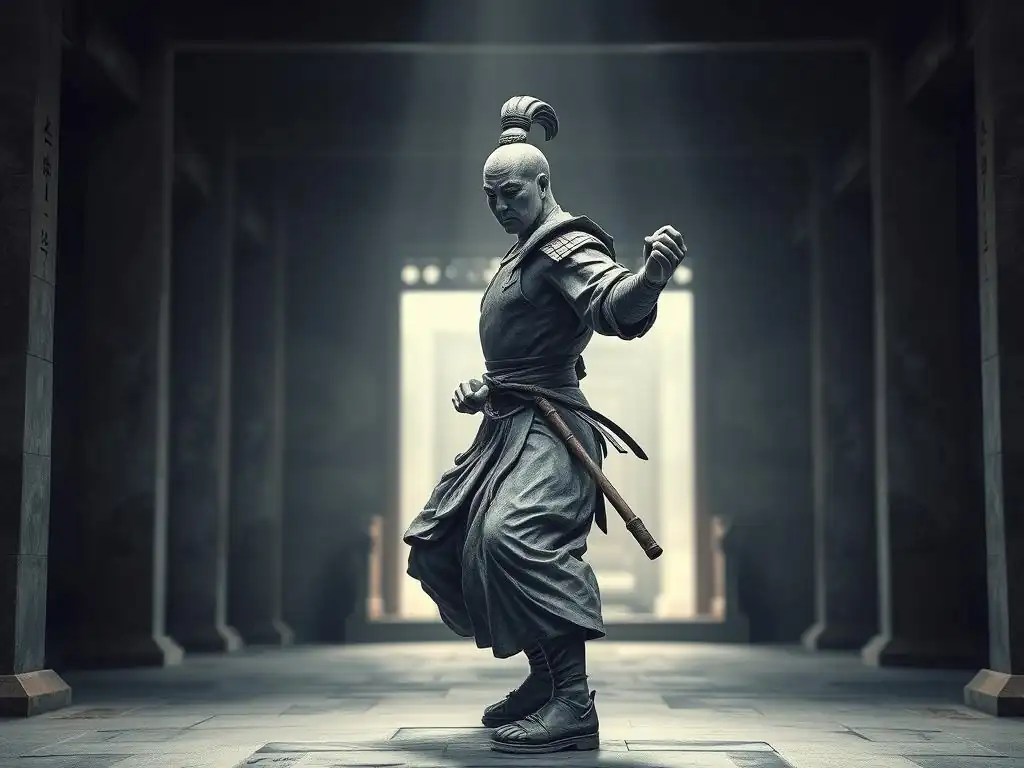
The Link Between Temple Carvings and Traditional Martial Arts Forms
The detailed depictions of Ancient Indian martial arts techniques found in temple carvings provide a tangible link to the living traditions of Indian martial arts practiced today. While direct, unbroken lineages are often difficult to prove over centuries, the visual evidence in the carvings shows striking similarities to techniques found in classical and folk martial arts forms across India. For instance, the wrestling holds and stances depicted in temples resonate with techniques in Pehlwani or Malla-yuddha as practiced in parts of India today.
Similarly, the weapon stances and techniques shown in carvings bear resemblance to forms found in Kalaripayattu (Kerala), Silambam (Tamil Nadu), Gatka (Punjab), and other regional martial arts. The way a sword is held, a shield is used, or a spear is thrust in a 10th-century carving might look remarkably similar to how it is taught in a traditional akhara or kalari today. This visual correspondence suggests that the fundamental principles and practical applications of many Ancient Indian martial arts techniques have been preserved, adapted, and passed down through generations, even if the exact historical path is complex.
Surviving Ancient Indian Combat Techniques: Modern Interpretations and Training
Several traditional Indian martial arts forms actively interpret and draw inspiration from ancient texts and, implicitly, from the visual record found in temple carvings. Kalaripayattu, often considered one of the oldest surviving martial arts, includes empty-hand techniques, grappling, and extensive weapon training (swords, spears, daggers, staves) that show parallels with temple depictions. Silambam, a staff-fighting art from Tamil Nadu, also incorporates other weapons and empty-hand techniques with potential ancient roots.
Modern practitioners and scholars often study these carvings to gain insights into the historical context and potential origins of their techniques. While modern forms have evolved and adapted over time, the core principles of leverage, movement, striking, and defense evident in the carvings remain fundamental. Training in these surviving Ancient Indian martial arts techniques provides a living connection to the skills depicted by ancient sculptors, offering a dynamic interpretation of the static art. Efforts are ongoing to research and revive lesser-known techniques based on both textual and visual evidence.
Influences and Legacy: How Ancient Indian Martial Arts Shaped Global Combat Systems
The legacy of Ancient Indian martial arts techniques extends beyond the subcontinent. Historically, India was a major center of trade and cultural exchange, and it is plausible that Indian combat systems influenced, or were influenced by, martial arts in neighboring regions. The spread of Indian philosophy, religion, and art through Central Asia, Southeast Asia, and beyond likely carried with it knowledge and practices related to martial arts.
While direct lines of influence are often debated and difficult to definitively prove, similarities in weapon design, combat stances, and even training methodologies can be observed between Indian martial arts and systems in countries like Sri Lanka (Angampora), Thailand (Krabi-Krabong), Malaysia (Silat), and Indonesia. The depiction of Indian warriors and combat techniques in temple carvings, some of which are found in regions historically influenced by India, serves as a visual reminder of this potential diffusion and interaction.
The study of these carvings contributes to a broader understanding of the interconnectedness of historical combat systems across Asia, highlighting the significant contribution of Ancient Indian martial arts techniques to the global landscape of martial arts.
Conclusion: The Enduring Relevance of Ancient Indian Combat Techniques
Preserving and Studying Ancient Indian Martial Arts Heritage
The preservation and study of ancient Indian temple carvings are crucial for understanding the rich heritage of Ancient Indian martial arts techniques. These sculptures are fragile historical documents, vulnerable to decay and damage. Efforts by archaeological surveys, cultural organizations, and local communities to protect and conserve these sites are paramount. Alongside preservation, scholarly study is essential. Art historians, archaeologists, martial arts practitioners, and cultural historians collaborate to decipher the meaning behind the carvings, compare them with textual sources, and piece together a more complete picture of ancient Indian combat.
Further research is needed to systematically catalogue and analyze martial depictions across different regions and time periods. Digital documentation, including 3D scanning, can help preserve details and facilitate study without physically stressing the carvings. By investing in preservation and fostering interdisciplinary research, we can ensure that these invaluable visual records continue to inform us about the sophisticated Ancient Indian martial arts techniques that were once a vital part of India's cultural and military landscape.
The Importance of Temple Carvings as a Primary Source for Martial Arts History
Temple carvings hold unique importance as primary sources for the history of Ancient Indian martial arts techniques. While texts provide theory, philosophy, and descriptions, carvings offer a direct, visual representation of techniques in practice. They show the human form in motion, the interaction between bodies and weapons, and the context in which these skills were applied – whether in ritual combat, duels, training, or large-scale warfare. This visual evidence allows us to move beyond abstract descriptions to see how stances were held, how grips were applied, and how movements might have flowed.
For instance, a carving depicting a wrestling throw provides anatomical detail and leverage points that a textual description might miss. A sculpture of a swordsman's guard reveals the alignment of the body and weapon in a way that words cannot fully capture. Therefore, temple carvings are indispensable for anyone seeking a comprehensive understanding of Ancient Indian martial arts techniques. They stand as silent, sculpted witnesses to the skills, discipline, and physical culture of ancient Indian warriors, providing invaluable insights that continue to enrich our knowledge of martial history.
Frequently Asked Questions
What evidence suggests the existence of ancient Indian martial arts techniques?
Temple carvings, particularly those depicting combat stances and weapon handling, provide visual evidence of sophisticated martial arts practices in ancient India. These carvings offer insights into techniques no longer widely practiced.
Where can I find these temple carvings showcasing ancient Indian martial arts?
Many temples across India, especially in the south, contain these carvings. Look for depictions of warriors engaging in combat, often integrated into the temple's sculptural narratives or friezes.
What types of weapons were typically used in these ancient Indian martial arts techniques?
Based on temple carvings and historical texts, weapons included swords, daggers, spears, and bows and arrows. Some techniques also involved the use of staffs and specialized weaponry.
How did the philosophical underpinnings influence the development of ancient Indian martial arts?
The philosophical systems of Hinduism, Buddhism, and Jainism contributed to the emphasis on discipline, mindfulness, and ethical conduct within these martial arts. Yoga and meditation were often integral to training.
Are there any modern-day martial arts that are believed to have descended from these ancient Indian techniques?
While direct lineages are difficult to trace definitively, some martial arts like Kalaripayattu are considered to be descendants or influenced by ancient Indian combat traditions, although they have evolved over time.
Final Reflection: Echoes of Ancient Valor
The intricate carvings of temple warriors, detailed throughout this article, are not just relics of a bygone era; they are living textbooks of ancient Indian martial arts techniques, resonating even now with those seeking to understand the depth and sophistication of this lost art. The dedication and skill etched into stone centuries ago continue to inspire awe and offer invaluable insights into the physical and spiritual discipline that defined these combat traditions.
The enduring power of these sculpted warriors lies in their ability to connect us to a lineage of strength, strategy, and self-mastery. Witnessing these depictions, one cannot help but feel a profound connection to the past, a reminder that the pursuit of excellence, both physical and mental, is a timeless human endeavor. The art of war is of vital importance to the State. It is a matter of life and death, a road either to safety or to ruin. Hence it is a subject of inquiry which can on no account be neglected.
- Sun Tzu (though not Indian, the sentiment perfectly captures the gravity with which martial arts were regarded).
Let the lessons gleaned from these "Sculpted Warriors" ignite a spark within you. Consider how the principles of discipline, focus, and strategic thinking, so vividly portrayed in these ancient carvings, can be applied to your own life. Embrace the spirit of continuous learning and self-improvement, and allow the echoes of ancient valor to guide you on your own path to mastery.
Ignite Your Inner Warrior: Decode the Temple's Secrets!
Thank you for journeying with us through the captivating world of ancient Indian combat as revealed in temple carvings. Now, it's time to transform that inspiration into action. What secrets will you uncover within yourself?
- Begin your exploration: Attempt to replicate one of the stances or movements depicted in the carvings. Feel the connection to the warriors of the past within your own body.
- Delve deeper: Research the specific dynasty or region associated with the carvings that resonated most with you. Expand your understanding of their martial culture.
- Share your discoveries: Discuss the article and its insights with fellow martial arts enthusiasts. What hidden techniques do they see within the stone?
What forgotten martial art philosophy, rediscovered through these carvings, will you integrate into your training today?