
Espada Contra Espada: Tactics for SwordonSword Engagements

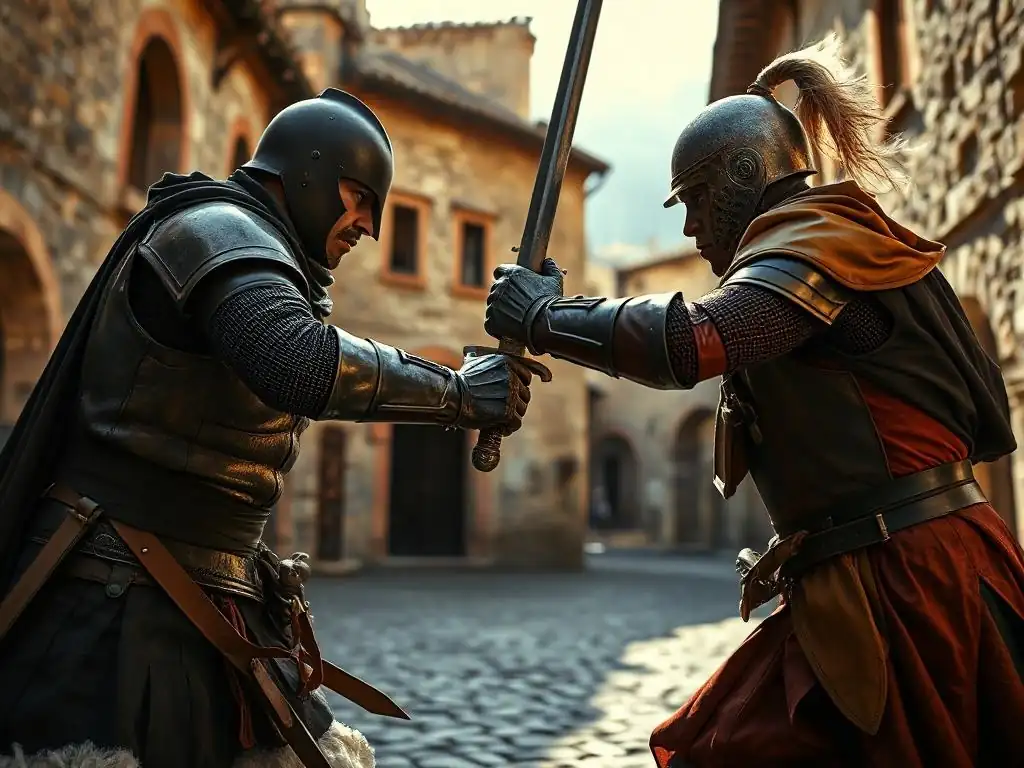
Welcome to Martial Arts Mastery, where we delve into the rich tapestry of combat traditions! Ever wondered how ancient warriors faced off in deadly sword duels? In this article, we're unlocking the secrets of Spanish swordplay tactics duel, exploring the intricate strategies and techniques that defined engagements with Espada y Daga. Discover the art of the blade and prepare to be captivated by the deadly dance of steel - the journey to mastery starts now!
- Introduction to Spanish Swordplay Tactics in Filipino Martial Arts
- Core Principles of Espada Contra Espada
- Offensive Tactics for Sword-on-Sword Combat
- Defensive Strategies for Sword Fights
- Advanced Sword Fighting Techniques
- Training Drills for Mastering Sword-on-Sword Engagements
- Analyzing Famous Sword Duels in History
- The Mental Game of Sword Fighting
- Conclusion: Mastering the Art of Espada Contra Espada
-
Frequently Asked Questions
- What are some key tactical considerations when engaging in Espada Contra Espada (Sword-on-Sword) engagements, specifically focusing on Spanish swordplay tactics?
- How does the historical context of Spanish swordplay influence modern training and application of these duel tactics?
- What are some specific Spanish swordplay tactics that can provide an advantage in a duel setting?
- How does MartialArtsMastery.org approach teaching the philosophical underpinnings of Spanish swordplay in relation to its duel tactics?
- What types of self-defense strategies are derived from Spanish swordplay tactics and how are they applicable in modern duel scenarios?
- Final Reflection: The Enduring Dance of Steel
- Unleash Your Inner Swordsman!
Introduction to Spanish Swordplay Tactics in Filipino Martial Arts
The Legacy of Espada y Daga in the Philippines
The martial arts of the Philippines, collectively known as Kali, Arnis, or Eskrima, are renowned for their sophisticated weapon-based systems. Among these, Espada y Daga, meaning "sword and dagger," stands out as a highly effective and historically significant discipline. While often taught as a combined system, the principles of Espada (sword) combat within this framework draw heavily from historical Spanish swordplay tactics, adapted and integrated with indigenous Filipino fighting methodologies.
This fusion created a unique and formidable approach to armed combat, applicable not only with the traditional Barong or Kris alongside a dagger but also offering profound insights into pure sword-on-sword engagements, or Espada Contra Espada. The influence is evident in the footwork, angles of attack, and defensive structures that mirror European rapier and cut-and-thrust sword styles, yet executed with the fluid, dynamic motion characteristic of Filipino martial arts.
Historically, the Spanish introduced their fencing systems during their centuries-long presence in the Philippines, beginning in the 16th century. Filipino warriors and martial artists, known for their adaptability and effectiveness, quickly assimilated aspects of Spanish swordsmanship, particularly the geometry and linear movements of Destreza and other contemporary styles, merging them with their existing blade traditions.
This cross-pollination wasn't a simple adoption but a complex evolution, resulting in a combat system that was both sophisticated and brutally effective for the battlefield and personal defense. Understanding the foundation of Spanish swordplay tactics duel principles as they were absorbed and transformed in the archipelago is crucial for appreciating the depth of Espada y Daga and its application in sword-on-sword combat scenarios.
Understanding the Historical Context of Sword Duels
Sword duels, while perhaps most famously associated with European nobility and the age of the rapier, were a reality across various cultures and time periods, including the Spanish colonial era in the Philippines. These encounters, often arising from matters of honor, political dispute, or personal grievance, demanded a mastery of offensive and defensive sword fighting tactics under extreme pressure.
Unlike the large-scale chaos of battle, a duel was a focused, one-on-one confrontation where individual skill, tactical acumen, and psychological fortitude were paramount. The weapons used varied, from longswords and rapiers to sabers and the indigenous blades of the Philippines like the Kris or Kampilan, but the fundamental principles of positioning, timing, and targeting remained critical.
Analyzing historical accounts, even fragmented ones, provides valuable context for modern practitioners studying Spanish swordplay tactics duel scenarios. For instance, records from the 17th and 18th centuries might describe duels fought with swords and daggers, or purely with swords, highlighting the high stakes and the lethality of such encounters.
While precise blow-by-blow records are rare, accounts often emphasize the importance of a good parry, a swift counter-attack, or the ability to exploit an opponent's momentary lapse. These narratives underscore that mastering Espada Contra Espada is not just about technique but also about understanding the dynamics of single combat, where every movement carries significant risk and potential reward.
Core Principles of Espada Contra Espada
Distance Management in Spanish Swordplay
Effective distance management, or medida, is arguably the single most critical element in any sword fight, especially when applying Spanish swordplay tactics duel strategies. It dictates whether you can strike your opponent, whether they can strike you, and the timing available for both offense and defense.
In Espada Contra Espada, understanding the optimal fighting distance involves recognizing several ranges: the larga (long range), where neither fencer can reach the other without significant movement; the media (middle range), where a single step or lunge allows for an attack; and the corta (close range), where grappling, pommel strikes, or the use of a secondary weapon (if applicable) become possibilities. Mastery involves constantly assessing and controlling this distance, moving in and out fluidly to create opportunities or deny the opponent theirs.
Spanish fencing, particularly the Destreza school, placed great emphasis on geometric principles and precise footwork to maintain advantageous distance. Concepts like the paso de avance (forward step) and paso de retroceso (backward step), executed with specific body mechanics, were designed to close or open distance safely and efficiently.
The goal was often to enter the media distance only when prepared to attack or counter-attack, minimizing time spent within the opponent's striking zone without a clear intention. For practitioners of Spanish swordplay tactics duel or combat, this means developing a keen spatial awareness and the ability to judge distances accurately, often down to mere inches, which can mean the difference between a successful strike and a fatal error.
Footwork and Agility for Sword Fighting
Footwork is the engine of Espada Contra Espada, providing the power, speed, and positional advantage necessary for effective sword fighting tactics. Spanish swordplay emphasizes controlled, deliberate steps rather than large, wasted movements. Key footwork patterns include the fundamental paso (step), where one foot moves followed by the other maintaining the guard; the avance and retroceso (forward and backward steps); and the desplazamiento (displacement), involving lateral movement or stepping offline to change the angle of attack or evade. The stability and balance provided by proper footwork are essential for delivering powerful strikes and recovering quickly after an action. Agility is also paramount, allowing for rapid changes in direction, sudden advances or retreats, and the ability to pivot and angle the body effectively.
In the context of Espada Contra Espada, agility allows a practitioner to exploit openings created by the opponent's movement or lack thereof. A swift side step ( paso lateral) can turn a linear attack into a glancing blow or a miss, simultaneously setting up a counter-attack from a safer angle. The ability to execute a rapid lunge ( fondo) allows for closing distance quickly to deliver a thrust or cut. Filipino martial arts often add a dynamic element to this, incorporating lower stances and more fluid, circular movements compared to the more linear paths of classical Spanish fencing, further enhancing agility and evasiveness. Developing precise and agile footwork through dedicated drills is non-negotiable for anyone seeking mastery in Spanish swordplay tactics duel scenarios.
Blade Awareness and Control: Essential Skills
Beyond footwork and distance, profound blade awareness and control are foundational skills in Espada Contra Espada. This involves not only knowing where your own blade is relative to your body and the opponent but also understanding the opponent's blade position, intention, and potential lines of attack. Blade control ( control de la hoja) refers to the ability to manipulate one's own weapon precisely, delivering strikes with power and accuracy, executing parries effectively, and maintaining a strong guard. It also encompasses the ability to feel the opponent's blade when in contact, a skill known as sentir el acero (feeling the steel), which provides crucial information about their strength, direction of force, and potential next move.
Developing this sensitivity allows a practitioner of Spanish swordplay tactics duel methods to react instinctively to pressure or subtle shifts in the opponent's blade. For example, feeling a strong downward pressure might indicate an impending cut, prompting a specific parry or evasion. Feeling a withdrawal might signal a preparation for a thrust. Mastery of blade control also includes the ability to execute complex maneuvers like disarms, binds, and traps, which require precise timing and manipulation of both blades. Constant practice with partner drills focusing on blade contact and reaction is vital for honing this essential skill.
Offensive Tactics for Sword-on-Sword Combat
Angling and Redirecting Attacks in a Duel
In Espada Contra Espada, simply attacking head-on is rarely the most effective strategy. Experienced practitioners utilize angling and redirection to bypass defenses and create openings. Angling involves attacking from unexpected lines or moving the body and feet to create a non-linear approach. Instead of a direct thrust down the center line, an attack might come from a high diagonal angle ( cortes diagonales) or a low horizontal line ( cortes horizontales). Redirecting an opponent's blade, often through a parry or a bind, is immediately followed by an attack that exploits the new opening created by the deflection. This requires excellent timing and the ability to transition seamlessly from defense to offense.
A common application of angling in Spanish swordplay tactics duel situations is to attack the opponent's weak side or target limbs that are less protected or exposed during their movements. For instance, as an opponent steps forward, a low horizontal cut to the leading leg might be initiated. Redirecting their blade during their attack allows you to momentarily control their weapon, clearing a path for your own strike to a now-open target area like the head or torso. This constant interplay of angle, deflection, and counter-attack is a hallmark of sophisticated sword fighting tactics.
Disarms and Traps: Offensive Swordplay Techniques
Beyond direct strikes, disarms and traps are advanced offensive techniques in Espada Contra Espada aimed at neutralizing the opponent's primary weapon or restricting their movement. Disarming techniques ( desarmes) seek to forcibly remove the sword from the opponent's hand. This can involve striking the hand or wrist directly, trapping the blade between one's own blade and body, or using leverage to twist the weapon away. These techniques are high-risk, high-reward, requiring precise timing and execution, often during or immediately after an opponent's attack or parry.
Trapping ( trampas) involves using one's own blade or body to control the opponent's weapon or limb, limiting their ability to attack or defend effectively. A common trap might involve pinning the opponent's blade against their arm or body with your own, leaving them open for a strike with your free hand (if using Espada y Daga) or a pommel strike, or allowing you to deliver a cut or thrust to an exposed area while their weapon is neutralized. Executing disarms and traps successfully in a Spanish swordplay tactics duel requires not only technical skill but also the ability to read the opponent's balance and intent, predicting moments of vulnerability.
Utilizing the Espada's Reach and Power
The sword, or Espada, is a weapon designed for both reach and power. Effective offensive Spanish swordplay tactics duel strategies leverage these characteristics. The reach of the sword allows a skilled practitioner to attack from a distance where the opponent cannot easily counter or reach them. This is particularly true for thrusts ( estocadas), which can extend the effective range significantly. Cuts ( cortes), delivered with proper body mechanics and edge alignment, generate considerable power, capable of inflicting severe injury. Understanding the optimal range for different types of strikes is crucial.
For example, a lunge with a thrust is most effective at the edge of the media distance, exploiting the full reach of the weapon and body extension. Cuts are often delivered when slightly closer, allowing for the full arc and weight of the blade to be brought to bear.
Generating power comes not just from the arm but from coordinating the entire body – the legs driving the movement, the core providing stability, and the hips and shoulders rotating to whip the blade through the air. Mastering these mechanics allows the practitioner to deliver devastating strikes while maintaining balance and control, essential elements of effective sword fighting tactics.
Defensive Strategies for Sword Fights
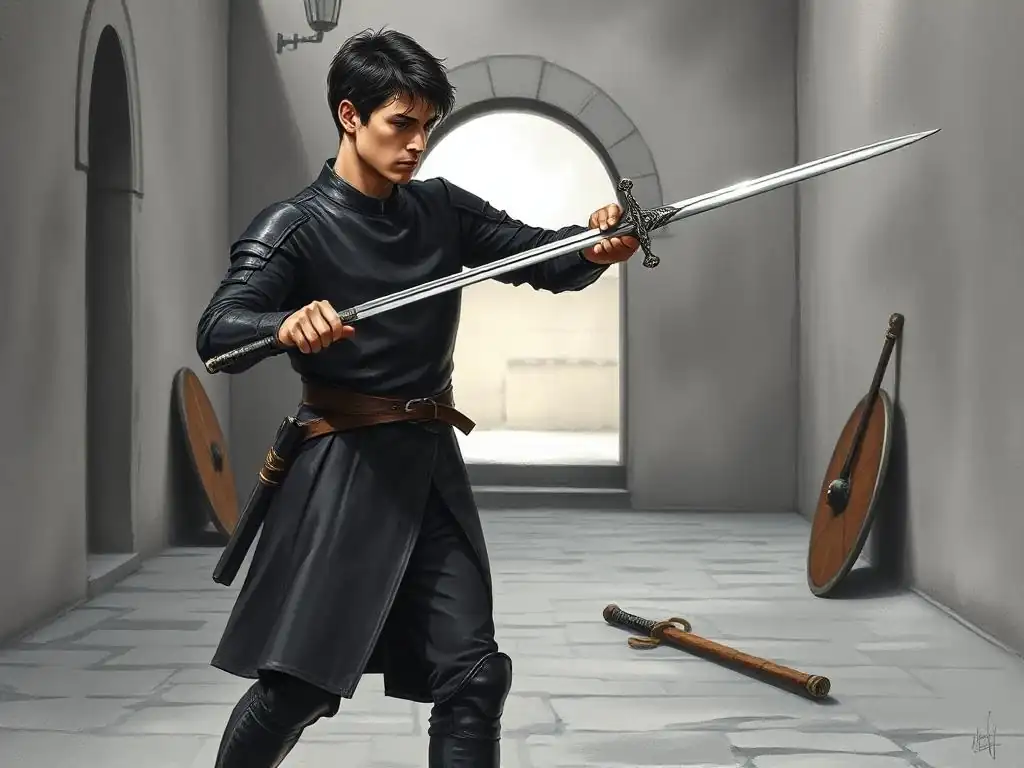
Parrying and Blocking Techniques: Minimizing Damage
Parrying and blocking are the primary means of defense in Espada Contra Espada, designed to deflect or stop incoming attacks and minimize the risk of being struck. Parries ( paradas) typically involve using one's own blade to meet the incoming attack and redirect it away from the body. Spanish swordplay tactics duel systems often categorize parries based on the line of attack they defend against (e.g., high outside, low inside) and the position of the hand and blade (e.g., primera, segunda, tercera, cuarta). Effective parrying requires precise timing, minimal movement, and maintaining a strong guard position to avoid being overwhelmed.
Blocking, while sometimes used interchangeably with parrying, can also refer to using the flat or strong part of the blade to absorb or redirect an attack, though this is generally less favored against powerful cuts due to the risk of damage to the blade or hand. The goal of a successful parry is not just to stop the attack but to do so in a way that leaves the defender in a strong position to counter-attack immediately.
Overly large or committed parries can leave the defender vulnerable. Therefore, Spanish swordplay tactics duel defense emphasizes economical and effective parries that transition smoothly into offensive actions.
Evasion and Counter-Attacking: Turning Defense into Offense
While parrying stops an attack, evasion ( evasión) avoids it entirely, often by moving the body or feet out of the line of the incoming strike. This can involve stepping offline ( desplazamiento), ducking, or withdrawing the target area. Evasion is a highly effective defensive strategy in Espada Contra Espada as it not only prevents the strike but also often leaves the opponent overextended or off-balance, creating an immediate opportunity for a counter-attack ( contra-ataque). Combining evasion with a simultaneous counter-attack is a hallmark of advanced sword fighting tactics.
For instance, as an opponent lunges with a thrust, a skilled practitioner might step slightly offline ( paso lateral) while simultaneously delivering a cut to the opponent's exposed arm or flank. This simultaneous action is known as a tiempo attack, striking during the opponent's own time or movement. Mastering evasion and counter-attacking requires acute awareness of the opponent's timing and intentions, as well as the agility and balance to move quickly and strike effectively from an unconventional position. This dynamic defense-into-offense approach is crucial for survival and victory in a Spanish swordplay tactics duel.
Reading Your Opponent's Intentions in a Sword Duel
A critical defensive and offensive skill in Espada Contra Espada is the ability to read your opponent's intentions ( leer las intenciones). This involves observing their body language, stance, grip on the sword, eye movements, and subtle shifts in weight or balance. Experienced practitioners can often anticipate the type of attack (thrust or cut), the general line of attack (high, low, inside, outside), and even the commitment level of the strike before it is fully launched. This allows for quicker and more effective defensive reactions, whether parrying, evading, or initiating a preemptive counter-attack.
For example, a tightening of the grip might signal an imminent powerful cut. A slight forward lean could indicate preparation for a lunge. Watching the opponent's eyes can sometimes reveal their intended target, although experienced fencers often try to mask this. Developing this intuitive understanding requires countless hours of sparring and observation. In a Spanish swordplay tactics duel, the ability to read the opponent provides a significant advantage, allowing one to fight proactively rather than merely reacting to incoming threats.
Advanced Sword Fighting Techniques
Feinting and Deception in Espada y Daga
Feinting ( fintas) and deception are psychological and tactical tools used to manipulate the opponent's guard or provoke a premature reaction in Espada Contra Espada. A feint is a false attack delivered with the intention of drawing a specific parry or defensive movement, thereby creating an opening elsewhere. For instance, a practitioner might make a convincing motion towards the opponent's head to elicit a high parry, only to immediately redirect the true attack to the lower body. Effective feints must be believable enough to draw a reaction but controlled enough to be quickly withdrawn or changed.
Deception can also involve variations in timing, rhythm, or intensity. Suddenly changing from a slow, probing pace to a lightning-fast attack, or using unusual angles, can confuse the opponent and disrupt their defensive timing. The goal of these advanced Spanish swordplay tactics duel techniques is to make the opponent uncertain, forcing them to guess and potentially exposing themselves in the process. Mastery of feinting requires not only technical skill but also an understanding of opponent psychology and the ability to mask one's true intentions.
Binding and Controlling the Opponent's Blade
Binding ( atadura) involves using one's own blade to gain control over the opponent's blade, typically by pressing against it or trapping it against their body or arm. This technique is used to restrict their movement, create openings, or set up disarms. A strong bind can temporarily neutralize the opponent's weapon, allowing the practitioner to strike with relative safety. The ability to maintain a bind requires significant strength, control, and sensitivity ( sentir el acero) to feel the opponent's efforts to break free.
Controlling the opponent's blade is a more general concept that includes binding but also encompasses guiding their blade away from you after a parry, or using pressure to force them into an unfavorable position. For example, after a successful parry of an incoming thrust, instead of simply withdrawing, the practitioner might maintain contact and use leverage to push the opponent's blade further offline, disrupting their balance and opening their center line for a counter-attack. These sword fighting tactics emphasize blade interaction and control as a means of dominating the engagement.
Redonda and Herrada Combinations
Advanced practitioners of Spanish swordplay tactics duel styles often employ complex combinations of strikes and movements. The Redonda is a powerful circular cut, often delivered to targets like the head or limbs. Its power comes from the rotational movement of the body. The Herrada is a specific type of thrust or cut often delivered with a particular angle or body position. Combining these techniques creates dynamic sequences. For example, a feint with a thrust ( estocada) might be followed immediately by a Redonda cut if the thrust is parried or evaded.
Another example of combination play involves using a parry ( parada) that transitions directly into an attack from a new angle, perhaps combining a defensive deflection with a quick offensive Herrada. These combinations are trained extensively to be executed seamlessly and with speed, preventing the opponent from recovering or setting their defense between actions. Mastering such sequences is key to overwhelming an opponent in a Spanish swordplay tactics duel and requires high levels of technical proficiency, physical conditioning, and tactical timing.
Training Drills for Mastering Sword-on-Sword Engagements
Partner Drills for Developing Reflexes
Partner drills are indispensable for developing the reflexes, timing, and distance judgment necessary for Espada Contra Espada. Simple drills involve one partner executing a basic attack (e.g., a specific thrust or cut), and the other practicing the appropriate defense (parry or evasion), followed by a predetermined counter-attack. More complex drills can involve sequences of attacks and defenses, or reactive drilling where the attacker varies their targets or types of strikes, forcing the defender to react appropriately without prior knowledge.
- Basic Parry-Counter: Partner A delivers a forehand cut to the head. Partner B executes a high outside parry and immediately counters with a thrust to the body. Repeat, switching roles.
- Attack Recognition: Partner A delivers one of three pre-agreed attacks (e.g., high cut, low cut, central thrust). Partner B must identify the attack and execute the correct defense. Start slow, gradually increase speed.
- Flow Drill: Partners engage in light, continuous exchange, focusing on maintaining proper distance, executing smooth transitions between offense and defense, and feeling the blade contact (
sentir el acero). Emphasis is on control and learning, not winning.
These drills, when performed regularly and with increasing intensity, build the muscle memory and reactive capability essential for the unpredictable nature of a Spanish swordplay tactics duel.
Solo Training for Improving Blade Control
While partner work is crucial, solo training allows practitioners to focus purely on their own mechanics, body movement, and blade control. This includes practicing stances, footwork patterns, and the execution of individual strikes and defensive movements with precision and power. Shadow fencing, where a practitioner visualizes an opponent and practices techniques against an imaginary foe, is a fundamental solo drill.
- Practice basic stances (
guardia) and transitions. - Execute the fundamental footwork patterns (
paso,avance,retroceso,desplazamiento) smoothly and maintaining balance. - Perform all primary strikes (cuts and thrusts) focusing on proper edge alignment, power generation from the body, and recovery to a guard position.
- Practice defensive movements (parries, evasions) in isolation, ensuring minimal, efficient motion.
- Combine footwork and strikes, practicing lunges (
fondo) and advances with simultaneous attacks.
Using training tools like a macho (padded post) or a tire provides a target for practicing power generation and impact. Solo drills refine the individual components of Spanish swordplay tactics duel skills, ensuring technical proficiency before applying them against a live opponent.
Sparring Simulations: Applying Tactics in a Live Duel
Sparring is the closest a practitioner can get to a live Spanish swordplay tactics duel without actual danger. Using protective gear (masks, gloves, padding) and training weapons (padded sticks, blunt swords), practitioners engage in simulated combat. Sparring allows for the application of learned techniques and tactics against a resisting, unpredictable opponent. It reveals strengths and weaknesses, tests decision-making under pressure, and develops tactical awareness.
- Limited Sparring: Focus on specific aspects, e.g., only practice defending thrusts, or only use techniques targeting the legs. This helps isolate and improve specific skills.
- Tactical Sparring: Set specific goals, e.g., land three hits to the torso, or successfully execute a disarm. This encourages the application of learned Spanish swordplay tactics duel strategies.
- Free Sparring: Engage with minimal restrictions, allowing practitioners to integrate all their skills and tactics in a fluid, dynamic exchange. This is the ultimate test of readiness.
Sparring provides invaluable experience in reading the opponent, managing distance in real-time, and adapting strategies on the fly. It is an essential step in truly mastering Espada Contra Espada.
Analyzing Famous Sword Duels in History
Case Study 1: The Death of Lapu-Lapu - Tactical Breakdown (Hypothetical)
While the historical accounts of the Battle of Mactan (1521) describe a battle rather than a strict one-on-one duel between Lapu-Lapu and Ferdinand Magellan, the narrative often portrays Lapu-Lapu's forces using superior tactics against the technologically advanced Spanish invaders. Lapu-Lapu himself is often depicted in later popular culture as engaging in personal combat.
Hypothetically, if we were to analyze a potential sword-on-sword encounter based on the historical context and weaponry, several tactical principles would be relevant. Magellan's forces likely used European swords and armor, while Lapu-Lapu's warriors employed indigenous blades like the Kampilan (a large, single-edged sword) and shields, alongside spears and other weapons.
In this hypothetical Spanish swordplay tactics duel scenario, Lapu-Lapu, potentially wielding a Kampilan, would likely prioritize powerful cuts and evasive footwork suited to the jungle terrain and the limitations of the Europeans' heavy armor and perhaps unfamiliarity with the environment. Against a European sword (like a cut-and-thrust sword), which might favor thrusts and more linear movement, Lapu-Lapu's tactics could involve closing distance rapidly under cover of a shield, using the Kampilan's weight for devastating chopping attacks aimed at exposed limbs or joints, or employing evasive maneuvers to avoid the European blade's reach.
The terrain itself, potentially soft mud or uneven ground, would heavily influence footwork, perhaps negating some of the more rigid European steps and favoring the more adaptable, lower stances often found in Filipino martial arts. This hypothetical analysis highlights how environment and weapon differences dramatically shape sword fighting tactics.
Case Study 2: Duel of Don Juan Austria and Ali Pasha - Lessons Learned
The historical engagement between Don Juan de Austria and Ali Pasha was not a personal sword duel but a clash of fleets and commanders at the Battle of Lepanto (1571), a pivotal naval battle where Christian forces of the Holy League defeated the Ottoman Empire. Don Juan commanded the Holy League fleet from his galley, the Real, while Ali Pasha commanded the Ottoman flagship, the Sultana.
Their "duel" was the struggle between their respective flagships, which grappled and became the center of an intense, close-quarters battle involving soldiers, sailors, and marines fighting hand-to-hand with swords, pikes, axes, and firearms. Ali Pasha was eventually killed during this shipboard melee.
Lessons applicable to Spanish swordplay tactics duel principles can be drawn from the nature of the combat aboard these galleys. It was chaotic, confined, and involved fighting on an unstable platform. This scenario emphasizes the importance of:
- Fighting effectively in close quarters (
cortadistance). - Adapting techniques to limited space and uneven footing.
- Using secondary weapons (dagger, shield, even grappling) when the primary weapon's effectiveness is limited by proximity.
- Maintaining situational awareness amidst chaos.
- The psychological impact of intense, close-range combat.
While not a classical duel, the Battle of Lepanto's shipboard fighting provides a real-world example of the brutal practicality required when sword fighting tactics are applied in constrained, high-stakes environments, underscoring the need for adaptability beyond idealized duel scenarios.
The Mental Game of Sword Fighting
Maintaining Focus and Composure Under Pressure
Technical skill is only one part of mastering Espada Contra Espada; the mental game is equally critical, especially in a Spanish swordplay tactics duel. A duel is an incredibly high-pressure situation where split-second decisions can have fatal consequences. Maintaining focus ( concentración) means shutting out distractions, whether internal (fear, anxiety) or external (the environment, spectators, the opponent's attempts at intimidation). Composure ( compostura) is the ability to remain calm, think clearly, and execute techniques correctly despite the adrenaline surge and the inherent danger.
Losing focus can lead to missed opportunities, defensive gaps, or predictable attacks. Losing composure can result in rushed movements, poor judgment, and a breakdown of technique. Training under simulated stress (e.g., sparring with consequences, pressure drills) helps build mental resilience. Techniques like controlled breathing and mindfulness practiced during training can be invaluable in maintaining a centered state of mind when facing an opponent in a sword-on-sword encounter.
Developing a Winning Mindset for Sword Duels
A winning mindset ( mentalidad ganadora) in Espada Contra Espada is not about arrogance, but about confidence, determination, and a proactive approach. It involves believing in one's training and ability, being decisive in action, and viewing challenges as opportunities. Instead of being overwhelmed by the opponent's skill or reputation, a winning mindset focuses on executing one's own strategy and exploiting the opponent's weaknesses. It acknowledges the danger but refuses to be paralyzed by fear.
This mindset is cultivated through rigorous training, successful sparring experiences, and a deep understanding of the sword fighting tactics being employed. It includes the willingness to take calculated risks when necessary and the resilience to recover mentally from setbacks or mistakes during the engagement. Approaching a Spanish swordplay tactics duel with a positive, aggressive, yet controlled mindset significantly increases the chances of success.
Visualization Techniques for Combat Scenarios
Visualization ( visualización) is a powerful mental training technique used by athletes and martial artists to prepare for performance. In the context of Espada Contra Espada, this involves mentally rehearsing combat scenarios, picturing oneself executing techniques flawlessly, reacting effectively to different attacks, maintaining composure, and achieving tactical objectives. This can be done quietly before training or a potential confrontation.
Practitioners might visualize specific Spanish swordplay tactics duel situations: defending against a fast thrust, counter-attacking after a parry, executing a complex disarm, or maintaining distance against an aggressive opponent. By mentally running through these scenarios, the mind and body become more prepared to react effectively in real-time. Visualization helps reinforce technique, build confidence, and improve decision-making speed under pressure, making it a valuable addition to physical training for mastering sword fighting tactics.
Conclusion: Mastering the Art of Espada Contra Espada
Integrating Spanish Swordplay Tactics into Your Martial Arts Practice
Mastering Espada Contra Espada requires dedicated study and practice, integrating the historical Spanish swordplay tactics duel principles with the dynamic realities of sword-on-sword combat. For practitioners of Filipino martial arts, this means delving deeply into the Espada component of Espada y Daga, understanding its roots, and refining the techniques specific to single-sword application. For those from other weapon arts backgrounds, it offers a rich system of footwork, distance management, angling, and blade control to incorporate. The key is not just learning techniques but understanding the underlying principles and adapting them to various situations and opponents.
Integration involves:
- Dedicated training time for single-sword drills.
- Analyzing the similarities and differences between Spanish and indigenous Filipino sword methods.
- Sparring specifically focused on sword-on-sword scenarios.
- Studying historical accounts and technical treatises where available (understanding their context).
By consciously integrating these Spanish swordplay tactics duel concepts, practitioners can gain a more complete understanding of blade combat and enhance their overall martial prowess.
The Enduring Relevance of Sword-on-Sword Skills
While modern conflict rarely involves formal sword duels, the skills and principles learned in Espada Contra Espada retain significant relevance. The emphasis on distance management, timing, footwork, reading intentions, and fighting under pressure are universal combat principles applicable to various weapon systems and even empty-hand situations. Training with a sword hones attributes like precision, control, respect for distance, and the ability to react decisively, which translate to other martial disciplines.
Furthermore, the historical and cultural study inherent in learning Spanish swordplay tactics duel methods connects practitioners to a rich legacy of martial tradition. It offers insights into the combat realities faced by past generations and the ingenuity required to survive armed conflict. Thus, the art of Espada Contra Espada is not merely an antiquated curiosity but a living system of sophisticated sword fighting tactics that continues to educate, challenge, and empower martial artists today.
Frequently Asked Questions
What are some key tactical considerations when engaging in Espada Contra Espada (Sword-on-Sword) engagements, specifically focusing on Spanish swordplay tactics?
Distance management is crucial, utilizing footwork to control the engagement range. Also, focusing on blade control to deflect and bind the opponent's weapon.
How does the historical context of Spanish swordplay influence modern training and application of these duel tactics?
The historical context, particularly the emphasis on agility and precision, shapes the training. Modern application focuses on adapting these skills for self-defense and sport fencing.
What are some specific Spanish swordplay tactics that can provide an advantage in a duel setting?
Using engaños (deceptive movements) to create openings is vital, along with employing a strong ataque (attack) combined with a quick retirada (retreat) to maintain distance.
How does MartialArtsMastery.org approach teaching the philosophical underpinnings of Spanish swordplay in relation to its duel tactics?
MartialArtsMastery.org emphasizes the importance of mental discipline and respect for the opponent. This is integrated with teaching the physical techniques.
What types of self-defense strategies are derived from Spanish swordplay tactics and how are they applicable in modern duel scenarios?
The emphasis on blade manipulation and footwork translates to effective self-defense. These techniques can be applied to various weapon-based or empty-hand scenarios.
Final Reflection: The Enduring Dance of Steel
The clash of steel, once a defining sound of conflict and honor, may seem relegated to history books and theatrical performances. However, the principles of Spanish swordplay tactics duel remain surprisingly relevant today. They offer a profound understanding of strategy, discipline, and the importance of anticipating an opponent's moves – lessons applicable far beyond the dueling ground. The echoes of espada contra espada resonate even now, reminding us of the timeless value of skill, precision, and mental fortitude in any competitive endeavor.
The legacy of Spanish swordplay extends beyond mere combat techniques; it has deeply influenced our understanding of respect, courage, and the art of calculated risk. Witnessing the dedication and artistry involved in mastering these techniques inspires a profound appreciation for the pursuit of excellence in any field. The art of fencing is simply the art of avoiding being touched.
This quote, though simple, encapsulates the core of strategic thinking: understanding your opponent, anticipating their actions, and minimizing your vulnerabilities. The principles of distance, timing, and deception, honed through centuries of practice, continue to inform our approach to challenges, both personal and professional.
As we close this exploration of Espada Contra Espada, I invite you to consider how these timeless principles can enrich your own life. Embrace the discipline of focused practice, cultivate the ability to anticipate challenges, and approach every endeavor with the courage and precision of a master swordsman. Let the enduring dance of steel inspire you to strive for excellence, not just in combat, but in every aspect of your journey.
Unleash Your Inner Swordsman!
Thank you for exploring the dynamic world of SwordonSword combat with us! We hope this article has sharpened your understanding and ignited your passion. Now, it's time to translate that knowledge into action.
- Practice the suggested drills from the article regularly to refine your technique and build muscle memory.
- Share this article with fellow martial arts enthusiasts to spark discussion and collaboration.
- Consider researching historical sword fighting manuals to deepen your understanding of the art.
What specific drill from this article are you most excited to incorporate into your training?