The Interplay of Virtues: How Respect and Humility Build a Moral Warrior
💪 Discover how the fusion of respect and humility forges true martial prowess. Respectful humility builds warrior character, unlocking peak performance and…
Read article
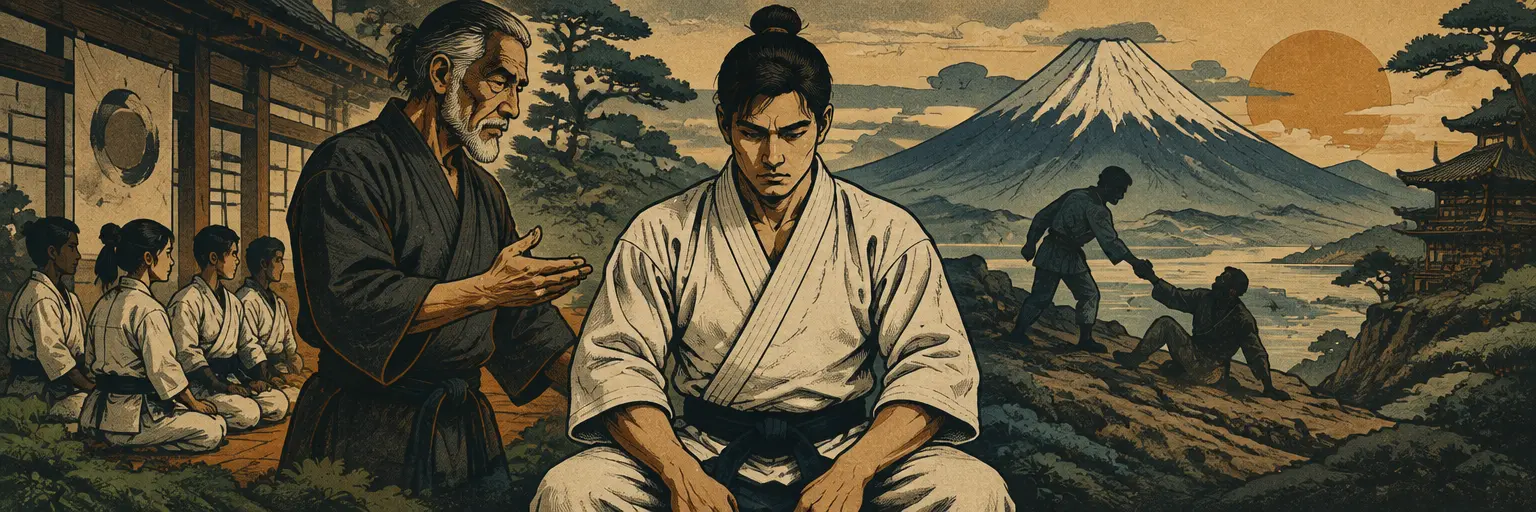
Unlock the deeper meaning of the dojo with our exploration of the warrior’s code—where every strike is balanced by honor and every defense reflects your inner character. In the world of martial arts, true mastery extends far beyond physical prowess; it is a profound journey into ethics, morality, and personal integrity. This section delves into the timeless principles that govern the disciplined path: from bushido and chivalry to modern interpretations of respect, humility, and restraint. Discover how legendary masters integrated ethical decision-making into combat training, transforming their art into a tool for peace and self-improvement. Whether you practice karate, taekwondo, judo, or kung fu, understanding the philosophical foundation of right action elevates your technique and sharpens your mental resilience. We explore real-world applications—how to react under pressure without losing your moral compass, the importance of protecting the vulnerable, and why true victory sometimes means walking away. By embracing the warrior’s ethical framework, you cultivate a reputation built not on aggression but on unwavering principle.
💪 Discover how the fusion of respect and humility forges true martial prowess. Respectful humility builds warrior character, unlocking peak performance and…
Read article
🥋 Journey beyond technique as MartialArtsMastery.org explores the profound evolution of martial arts black belt ethics, demonstrating how true mastery demands unwavering…
Read article
🚨 Master your personal safety with our "Awareness, Avoidance, Action" framework. Explore vital personal safety awareness techniques, rooted in martial arts wisdom,…
Read article
🥋 Mastering martial arts means embracing profound ethical responsibility. Prudence guides the skilled warrior, ensuring power is wielded with wisdom and restraint,…
Read article
💪 Discover ethical self-defense training methods that empower individuals without fostering aggression. MartialArtsMastery.org explores responsible techniques for real-world safety, blending ancient wisdom…
Read article
✨ True martial arts mastery transcends mere technique, demanding unwavering ethical considerations. Discover how principles like respect, discipline, and integrity forge not…
Read articleWelcome to the heart of what transforms a fighter into a guardian—the ethical compass that guides every punch, block, and bow. In this subcategory, we explore how the warrior’s code shapes discipline, respect, and responsibility both on and off the mat. Whether you’re a beginner or a seasoned black belt, understanding the moral principles behind martial arts deepens your practice and elevates your character. Here, we dissect the ancient virtues, modern dilemmas, and practical applications of ethics in combat sports, ensuring your journey is as honorable as it is skilled.
Every martial art carries a legacy of ethical guidelines, from Bushidō in Japanese samurai culture to the chivalric ideals of European knights. These codes—honor, loyalty, courage, and benevolence—were not mere decorations but survival strategies that kept warriors accountable in chaotic times. Understanding these origins helps practitioners appreciate why respect for opponents and community service are non-negotiable in training. For instance, the ancient Shaolin monks viewed martial arts as a path to enlightenment, not aggression, integrating meditation with combat. By studying these roots, you’ll see that the warrior’s code is timeless, adapting to modern self-defense while retaining its core of moral integrity.
Diving deeper, the code also dictated how warriors treated civilians, prisoners, and even enemies. Miyamoto Musashi, the legendary swordsman, emphasized strategy over brute force, teaching that a true warrior wins without unnecessary bloodshed. This historical context is vital for SEO-rich content because it connects ethical principles to actionable training habits. When you bow to your partner or assist a fallen student, you’re practicing centuries-old rituals designed to build trust and humility. Expect to find practical examples from different cultures, such as the Korean Hwarang’s five commandments, which advocated for justice and filial piety. These lessons are not dusty relics but living guidelines that reduce ego-driven conflicts and foster a supportive dojo environment.
At the core of every martial art lies a triad of virtues: respect, discipline, and humility. Respect is demonstrated through formal bows, attentive listening, and never using skills to bully others. Discipline extends beyond physical repetition to controlling impulses, such as walking away from a street fight when possible. Humility reminds you that rank is a responsibility, not a privilege, encouraging constant learning from juniors and seniors alike. These principles are not abstract; they are tested every class when you face a training partner who outweighs you or endure a loss in sparring. Expect practical drills and scenario-based discussions that challenge you to apply these virtues under pressure.
Moreover, these principles create a safe training space where injury and ego are minimized. A practitioner who lacks humility may overextend during a drill, risking harm to themselves and others. In contrast, a respectful fighter listens to their body and their partner’s limits, making practice sustainable. This subcategory will offer checklists and self-assessment tools to help you measure your adherence to these values. For example, after a heated session, ask yourself: Did I thank my partner? Did I apologize for accidental strikes? Such reflections turn every class into a moral workshop, enhancing your reputation as a martial artist who embodies the code, not just performs it.
Sparring and tournaments are where your ethics face their greatest test. Winning at all costs contradicts the warrior’s code, which values fair play, controlled power, and respect for referees. Unethical behaviors like targeting an injured opponent, trash-talking, or using banned techniques not only tarnish your name but also damage the martial arts community. This section provides guidelines on etiquette: acknowledge your opponent’s skill, avoid excessive force, and accept defeat gracefully. You’ll learn how to channel competitive aggression into constructive energy, focusing on technique improvement rather than medal count.
Furthermore, ethical competition extends to coaching and spectating. Supporting your teammates without denigrating rivals upholds the spirit of sportsmanship. This subcategory will share stories of famous bouts where honor triumphed over victory, such as a judoka helping an injured opponent stand. Expect tactical advice on managing emotions during matches—breathing techniques, visualization, and positive self-talk—so you maintain clarity and compassion under stress. By internalizing these ethics, you’ll not only become a tougher competitor but also someone others respect, win or lose. This holistic approach ensures that your trophies are symbols of integrity, not merely physical prowess.
One of the most debated topics in martial arts ethics is when and how to use your skills outside the dojo. The warrior’s code dictates that self-defense is justified only when there is an imminent, unavoidable threat, and even then, you must use the minimum force necessary. This subcategory explores real-world scenarios: a street robbery, an aggressive drunk, or a domestic dispute. You’ll learn legal and moral frameworks—like the "reasonable person" standard—that help you assess whether to engage, escape, or de-escalate. Expect role-playing exercises that simulate high-pressure choices, reinforcing that your primary weapon is avoidance, not striking.
Moreover, ethical self-defense requires training your mind to recognize ego-driven provocations versus genuine danger. Many altercations stem from pride, not survival, and a true warrior knows how to walk away without losing face. This section offers conflict resolution techniques, including verbal de-escalation and body language cues, that prevent physical escalation. You’ll also confront the aftermath: legal consequences, psychological impact, and community perception. By making ethical decisions, you protect not only your body but also your reputation and freedom. The goal is to transform every martial artist into a peacekeeper, not a vigilante, using skills only as a last resort for yourself and others.
Ethics are not just rules; they are cultivated through conscious mental practice. Mindfulness meditation helps you observe your thoughts and impulses, reducing reactive aggression and increasing empathy for training partners. This subcategory integrates mental drills—like breathing exercises before class and gratitude journaling after—that strengthen your moral muscles. You’ll explore how intention setting before each session (e.g., "I will learn, not win") shapes your behavior and outcomes. Expect guided audio transcripts and step-by-step routines that make ethical reflection as routine as stretching.
Furthermore, mindfulness exposes the gap between your values and actions, prompting honest self-correction. For instance, if you feel anger during sparring, you can name it and let it pass without acting. This practice aligns with the warrior’s code of emotional mastery, where calmness becomes your shield. This section will introduce concepts from Zen Buddhism and Stoicism, adapted for martial artists, to help you maintain equilibrium in and out of the dojo. By integrating mindfulness, you develop a moral intuition that guides split-second decisions, ensuring your body responds with control and compassion. This is the ultimate synthesis of philosophy and technique, making you a martial artist of depth and reliability.
The most important rule is to avoid unnecessary harm, both physically and emotionally. This means using your skills only in self-defense, treating others with respect, and never showing off or intimidating. The warrior’s code prioritizes protection over aggression, so your primary goal is to de-escalate or escape, using force only when absolutely necessary.
No, proper training actually reduces aggression by teaching self-control and emotional regulation. Ethical dojos emphasize that martial arts build discipline and humility, lowering the urge to fight. However, if an instructor neglects moral teachings, students might misuse skills. Always choose a school that integrates ethical discussions and mindfulness to counterbalance the physical techniques.
First, remain calm and stop the round immediately. Politely communicate that their actions exceed safe and fair rules, and ask the instructor to clarify expectations. Avoid retaliating, as that escalates conflict. If the behavior continues, refuse to spar with that partner and speak privately with your sensei. This upholds your integrity while protecting your safety.
Yes, but only if the threat is immediate and you can intervene without excessive force, while staying legally responsible. In most cases, your best help is to call authorities or create noise to distract the aggressor. The ethical approach is to prioritize everyone’s safety, including your own, and avoid heroics that could worsen the situation.
Bowing acknowledges that your opponent is a valuable training partner who helps you improve, not an enemy. It fosters mutual trust and reduces the risk of injury by setting a cooperative tone. This ritual also reminds you of the warrior’s code—that skill is a tool for growth, not ego. Such respect carries into daily life, making you a more compassionate person.