If Bruce Lee Managed Your Schedule: Applying Martial Arts Focus to Time Mastery
🥋 Unlock peak productivity with "If Bruce Lee Managed Your Schedule." Discover potent Bruce Lee time management tips and martial arts focus…
Read article

Unlock the transformative power of the dojo beyond the mat by applying martial arts philosophy to your everyday routine. 🌟 Discover how ancient principles like discipline, respect, and focused intention can elevate your career, relationships, and personal growth. This isn’t just about punches or kicks—it’s about cultivating a warrior’s mindset that thrives under pressure, embraces continuous improvement, and fosters calm clarity in chaos. Learn to turn daily challenges into training opportunities, build unshakable self-control, and honor every interaction with dignity. Whether you’re a seasoned practitioner or a curious beginner, these timeless teachings bridge the gap between physical art and mental mastery, helping you live with purpose, resilience, and balance. Embrace the way of the martial artist, and watch every aspect of your life become a reflection of your inner strength. 🥋✨
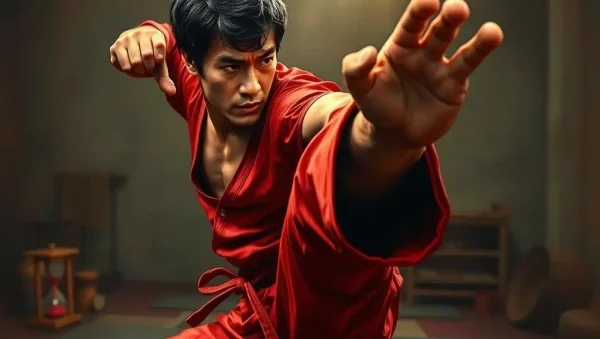
🥋 Unlock peak productivity with "If Bruce Lee Managed Your Schedule." Discover potent Bruce Lee time management tips and martial arts focus…
Read article
🥋 Discover how the Dojo Kun, martial arts' ethical core, can transform your life. Learn to integrate these timeless principles into your…
Read article
✨ Discover how martial arts discipline transcends the dojo, profoundly enriching your life. Explore the holistic benefits that extend far beyond physical…
Read article
💪 Discover how martial arts training cultivates profound career resilience. Learn timeless principles of discipline, adaptability, and unwavering perseverance that will empower…
Read article
🌟 In a world that often tests our resolve, "Maintaining Your Principles" guides you to uphold martial arts ethical integrity. Discover how…
Read article
🥋 Unlock your potential through **martial arts goal setting**. Discover how the discipline, focus, and strategic approach inherent in global martial arts…
Read article
🥋 Transform mundane chores into focused efforts. Discover how a martial arts mindset enhances productivity, turning frustration into efficient execution and achieving…
Read articleMartial arts are far more than kicks, punches, and forms. At their core, they are transformative systems designed to forge character as much as physique. This subcategory explores how the timeless principles of discipline, respect, and focus—honed on the training floor—can be seamlessly woven into your everyday routine. Whether you are a seasoned black belt or a curious beginner, you will discover actionable insights to elevate your career, relationships, and personal growth, turning every challenge into a stepping stone for mastery.
Discipline in martial arts isn’t about punishment; it’s about consistent, purposeful action. In daily life, this translates to building habits that align with your long-term goals, from waking up early to completing projects without procrastination. By adopting the repetition principle used in kata or drilling, you train your brain to automate positive behaviors, reducing reliance on fleeting motivation.
Expect practical strategies like the "one-more-rep" mindset for work tasks, creating a morning routine inspired by dojo etiquette, and using mushin (empty mind) to overcome resistance. We’ll show you how to break daunting responsibilities into small, manageable “techniques” that you can master daily, fostering a sense of accomplishment that fuels further progress. This section is your blueprint for turning discipline from a struggle into a natural reflex.
Respect in martial arts is non-negotiable—bowing to partners, instructors, and even the training space itself. This practice cultivates humility and active listening, which are invaluable in the modern world. Applying this philosophy means honoring others’ time, opinions, and boundaries, even in high-stress situations like disagreements or workplace negotiations. It starts with self-respect, acknowledging your own worth without ego.
Here, you’ll learn to translate the bow into digital communication, the attentive stance into effective listening, and the pre-fight etiquette into conflict de-escalation. We cover how to offer constructive feedback like a sensei, create a respectful home environment, and earn trust by consistently treating colleagues and loved ones with the same courtesy you’d show a master. Expect real-world scenarios and simple mindset shifts that make you not just a better fighter, but a better human.
In a world of constant notifications and distractions, focus is a superpower. Martial arts teach you to anchor your attention on a single target, whether it’s an opponent’s movement or your own breath. This skill, known as zanshin (remaining mind), can be adapted to improve productivity and reduce anxiety. You’ll learn how to enter a “flow state” on demand, just as you would before a sparring match or a challenging form.
This segment provides guided techniques for single-tasking, managing digital interruptions, and using meditation to strengthen your “mental muscle.” We’ll explore breathing exercises that calm the nervous system before meetings or exams, and visualization methods used by champions to rehearse success. By treating your daily schedule as a series of focused rounds, you can dramatically boost efficiency and enjoy deeper satisfaction in every activity, from reading a book to having a conversation.
Conflict is inevitable, but how you respond is a choice. Martial arts philosophy emphasizes avoiding confrontation when possible and remaining composed when it’s necessary. The principle of aiki—blending with an opponent’s energy—teaches you to defuse tension without aggression. In daily life, this becomes a powerful tool for handling difficult people, navigating office politics, or resolving family disputes with grace.
Expect to learn a step-by-step framework for staying detached from emotional triggers, using verbal “blocks and parries” to redirect criticism, and knowing when to walk away versus stand your ground. We’ll cover negotiation tactics inspired by jutsu, de-escalation strategies from aikido, and the importance of emotional control as your greatest self-defense. This section will empower you to turn confrontations into opportunities for mutual understanding, reducing stress and preserving your inner peace.
The concept of kokoro (heart/mind) represents the spirit of resilience. In martial arts, you fail hundreds of times in practice to succeed once in combat. This builds a growth mindset where setbacks are simply data, not defeat. Applying this to daily life means embracing challenges, learning from failures, and constantly seeking improvement rather than perfection. It’s about reframing “I can’t” into “I can’t yet.”
This section focuses on practical ways to build mental toughness: setting incremental goals like belt promotions, keeping a training journal for personal habits, and celebrating small wins. You’ll explore the power of affirmations rooted in martial slogans and how to use kaizen (continuous improvement) in your career and hobbies. With these tools, you can bounce back from setbacks with renewed vigor, viewing every obstacle as a hidden teacher, and ultimately living a more courageous and fulfilling life.
Start tiny—like a beginner’s stance. Choose one 5-minute habit (e.g., making your bed) and do it daily. Use the martial principle of “beginner’s mind” to avoid overthinking. Pair your new habit with an existing routine cue, like brushing your teeth. This small win builds momentum, training your neural pathways for consistency, which is the essence of discipline.
Yes, absolutely. The key is to separate the person from the behavior, just as you respect an opponent while fighting their techniques. Use active listening (like the attentive stance before sparring) to hear their perspective without judgment. Reply with calm, respectful language, even if you disagree. This disarms hostility and often opens doors to collaboration instead of conflict.
Try the “breath-anchor” method: pause for 60 seconds, inhale deeply for a count of four, hold for four, exhale for six. Picture your breath as a sword cutting through mental clutter. Then, choose one single task and dedicate your full attention to it for 25 minutes, ignoring all interruptions. This mimics a training round and sharpens your concentration.
It replaces your “fight-or-flight” response with a “stay-and-observe” state. When you practice calm in martial arts, you train your body to relax even under pressure. In an argument, this calm lets you listen without adrenaline spikes, think clearly, and choose your words deliberately. This prevents escalation and allows you to address the root issue creatively.
Yes, because it’s a skill, not a trait. Start by replacing negative self-talk with “not yet” language. For example, say “I haven’t mastered this skill yet” instead of “I’m terrible.” Treat every mistake as a sparring session—analyze what went wrong, adjust, and try again. Over time, your brain rewires to see challenges as exciting opportunities, just like a new form to learn.