
The Art of Shaolin Forms: Mastering Movement, Mind, and Spirit

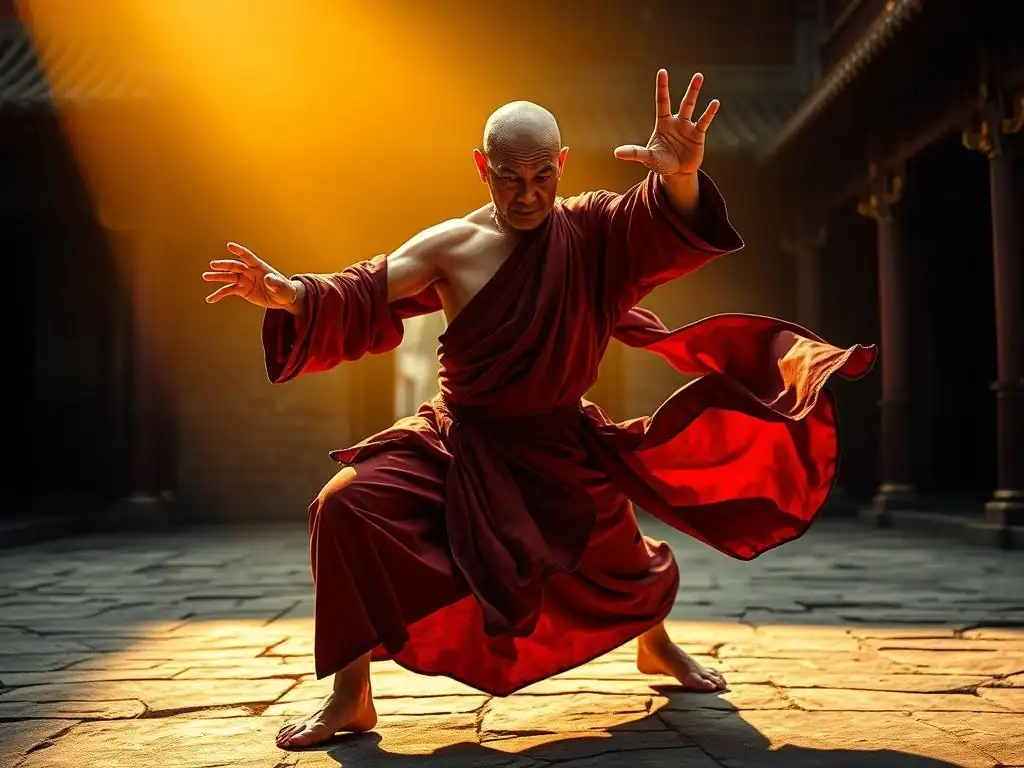
Welcome to Martial Arts Mastery, your gateway to the world's fighting arts!
Delve into the profound depths of martial traditions, beginning with a journey into the heart of one of the most iconic systems: Shaolin. This isn't just about physical prowess; it's about cultivating discipline, focus, and a deep connection between mind and body. Curious about the secrets behind Shaolin forms movement techniques? We'll unlock the fundamental principles that transform simple steps into a powerful expression of martial artistry. Prepare to explore, learn, and evolve as we unravel the mysteries of Shaolin and beyond.
- Introduction to Shaolin Forms: A Path to Martial Arts Mastery
- Decoding Shaolin Forms Movement Techniques: Foundational Principles
-
Exploring Key Shaolin Kung Fu Forms (Taolu)
- Lohan Quan: The Foundation of Shaolin Movement
- Xiao Hong Quan: Developing Coordination and Power
- Da Hong Quan: Advanced Striking and Kicking Techniques
- Tong Bei Quan: Utilizing Whipping Power and Long-Range Techniques
- Meihua Quan: Integrating Acrobatics and Unpredictable Movement
- Qixing Quan: Emphasizing Speed, Agility, and Close-Range Combat
- Baxian Quan: Imitating the Movement and Characteristics of the Eight Immortals
- The Mental and Spiritual Dimensions of Shaolin Forms Practice
- Training Methodology for Mastering Shaolin Forms Movement Techniques
-
The Application of Shaolin Forms in Combat and Self-Defense
- Bridging the Gap Between Forms and Fighting
- Adapting Shaolin Form Techniques for Real-World Scenarios
- Utilizing Lohan Quan's Solid Stance for Grounding and Stability in Defense
- Employing Xiao Hong Quan's Quick Strikes to Disrupt an Opponent's Balance
- Applying Da Hong Quan's Powerful Kicks for Distance Control and Offense
- The Legacy of Shaolin Forms: Preserving Tradition and Adapting to the Modern World
- Conclusion: Embracing the Journey of Shaolin Forms Mastery
-
Frequently Asked Questions
- What are Shaolin forms, and why are they important?
- How do Shaolin forms contribute to self-defense?
- What are some of the key movement techniques emphasized in Shaolin forms?
- How does the practice of Shaolin forms affect the mind and spirit?
- Where can I learn more about mastering Shaolin forms movement techniques?
- Final Reflection: Embracing the Shaolin Path
- Unlock Your Inner Shaolin Warrior: Begin Your Transformation Now!
Introduction to Shaolin Forms: A Path to Martial Arts Mastery
What are Shaolin Forms (Taolu) and Why are They Important?
Shaolin forms, known as Taolu in Chinese, are pre-arranged sequences of movements that simulate combat scenarios. These forms are not merely performance pieces; they are the cornerstone of traditional Shaolin Kung Fu training, serving as a living library of techniques, strategies, and conditioning methods developed over centuries at the Shaolin Monastery in China. Practicing these forms systematically builds fundamental physical attributes such as strength, flexibility, balance, and coordination, which are essential for martial proficiency.
Beyond physical conditioning, Shaolin forms embody philosophical principles and combat applications, acting as a repository of knowledge passed down through generations of monks and practitioners. They allow a student to internalize complex movement patterns and understand the underlying principles of attack and defense without needing a partner initially.
The importance of Shaolin forms lies in their multifaceted role in developing a complete martial artist. Historically, masters used forms to transmit their accumulated knowledge efficiently. Each movement, stance, and transition within a form holds practical application, often disguised or combined in ways that require deep study to decipher. For instance, a seemingly simple block might transition into a joint lock or a strike.
Mastering the intricate Shaolin forms movement techniques is crucial because they teach correct body alignment, power generation, and timing. They cultivate muscle memory, allowing techniques to be executed instinctively in a real-world situation. Furthermore, the dedicated practice of these forms instills discipline, patience, and perseverance, qualities vital for achieving mastery in any endeavor, especially the demanding path of martial arts.
The Triad of Shaolin Training: Movement, Mind, and Spirit
Shaolin training is fundamentally holistic, emphasizing the interconnectedness of the physical, mental, and spiritual aspects of a practitioner. The "movement" aspect is the most visible, encompassing the myriad of dynamic techniques, stances, and transitions found in Shaolin forms movement techniques. This includes developing explosive power, lightning speed, fluid agility, and unwavering balance through rigorous physical drills and the repeated execution of forms. The body becomes a finely tuned instrument capable of executing complex actions efficiently and effectively. However, this physical prowess is seen as merely the foundation upon which the other two pillars are built.
The "mind" in Shaolin training refers to the cultivation of mental discipline, focus, strategic thinking, and emotional control. Practicing Shaolin forms requires intense concentration, demanding that the practitioner remain present and aware of every detail – from fingertip placement to the timing of a breath. This process hones the ability to focus under pressure, a critical skill in combat and daily life. The "spirit" encompasses the deeper philosophical and ethical dimensions of Shaolin Kung Fu.
It involves cultivating virtues such as humility, compassion, courage, and resilience. The spiritual aspect is nurtured through practices like meditation, Qi Gong, and adhering to the ethical code of martial arts. Ultimately, true Shaolin mastery is achieved when movement, mind, and spirit are harmoniously integrated, creating a practitioner who is not only physically formidable but also mentally sharp and spiritually grounded.
Decoding Shaolin Forms Movement Techniques: Foundational Principles
Basic Stances in Shaolin Forms: Establishing a Solid Foundation
Basic stances are the bedrock of all Shaolin forms movement techniques, providing stability, balance, and the ability to generate power. Without a strong stance, any subsequent movement or technique will lack effectiveness and leave the practitioner vulnerable.
Key stances include the Horse Stance ( Mabu), characterized by legs spread wide and knees bent deeply, like riding a horse; the Bow-and-Arrow Stance ( Gongbu), a forward-leaning stance with one leg bent and the other straight; the Empty Stance ( Xubu), where most weight is on the back leg, leaving the front leg light and ready to move; and the Cross Stance ( Xingbu), a compact stance often used for transitions or low techniques. Each stance has specific structural requirements regarding foot placement, knee angle, hip position, and back alignment, all designed to maximize stability and potential energy.
Mastering these foundational stances is not just about holding a static position; it's about understanding how to transition between them smoothly and powerfully. The transition from a high stance to a low stance, or from an Empty Stance to a Bow-and-Arrow Stance, is a Shaolin forms movement technique in itself, requiring precise coordination and control. For example, a deep Horse Stance builds powerful leg muscles and a low center of gravity, crucial for absorbing impacts and generating upward force.
Consistent practice of holding these stances for extended periods, often starting with minutes and gradually increasing duration, develops incredible lower body strength and endurance. This foundational strength is then translated into dynamic power when executing strikes, kicks, and evasive maneuvers within the forms.
Hand Techniques in Shaolin Forms: Strikes, Blocks, and Grapples
Shaolin forms are replete with a vast array of hand techniques, encompassing strikes, blocks, and elements of grappling. Striking techniques include powerful punches like the straight punch ( Chuan), palm strikes ( Zhang), and various chopping ( Kan) and hooking ( Gou) motions. These strikes utilize the whole body's power, generated from the ground up through the core and channeled through the arm, a key aspect of effective Shaolin forms movement techniques.
Blocks are not merely passive deflections but active techniques designed to redirect, absorb, or even injure an opponent's attacking limb. Examples include rising blocks ( Shang Ge), falling blocks ( Xia Ge), and various parries and deflections using different parts of the hand and forearm.
Beyond strikes and blocks, Shaolin forms also incorporate elements of grappling, such as joint locks ( Qin Na), throws ( Shuai Jiao), and controls, although these are often embedded subtly within the forms. A sequence might show a block followed by a quick hand movement that could be interpreted as a joint lock or a setup for a throw. For instance, a movement resembling a palm strike might actually be setting up a wrist lock.
The intricate interplay between these techniques within the forms trains practitioners to fluidly transition between striking range, blocking defense, and close-quarters control. The constant repetition of these Shaolin forms movement techniques builds precise muscle memory, allowing for rapid and accurate execution in dynamic situations.
Footwork Drills for Shaolin Forms: Agility, Speed, and Precision
Effective footwork is paramount in Shaolin Kung Fu, enabling practitioners to move quickly, maintain balance, create angles of attack or defense, and control distance. Shaolin forms movement techniques heavily rely on dynamic footwork patterns. Drills often focus on developing agility, speed, and precision in steps like the shuffle step ( Xing Bu), cross step ( Cha Bu), and various jumping and turning movements.
The ability to quickly shift weight, pivot, and change direction is essential for evading attacks and positioning oneself advantageously. For example, a rapid cross step can be used to close distance for a strike or to quickly move offline to avoid a linear attack.
Training footwork involves not only learning the steps but also developing the necessary leg strength and coordination. Drills might include practicing stepping patterns repeatedly, often combined with hand techniques, to integrate the upper and lower body movements. Running, jumping, and various conditioning exercises are also crucial for building the explosive power and endurance needed for sustained movement.
The fluidity and speed seen in advanced Shaolin forms are a direct result of years of dedicated footwork training. Precise foot placement is also critical; a step that is even slightly off can compromise balance or reduce the power of an ensuing technique. Mastering these intricate Shaolin forms movement techniques related to footwork allows the practitioner to navigate space effectively and dynamically during combat.
Body Mechanics and Power Generation in Shaolin Forms
Understanding and applying proper body mechanics is fundamental to generating significant power in Shaolin Kung Fu, particularly within the context of Shaolin forms movement techniques. Power in Shaolin is not solely derived from muscular strength but from coordinating the entire body to act as a single unit. This involves utilizing the ground force, twisting the waist and hips, and transferring that momentum through the limbs to deliver strikes or execute techniques. The concept of "whole body power" ( Zheng Ti Jin) is central; even a simple punch involves the coordinated effort of the legs, hips, torso, and shoulder.
Proper body alignment is crucial for efficient power generation and injury prevention. Maintaining a straight back, relaxed shoulders, and engaged core allows for the smooth transmission of force. For instance, in a powerful punch from a Bow-and-Arrow stance, the power originates from the back leg, travels up through the hip rotation, twists the waist, and is finally expressed through the fist.
Shaolin forms systematically train these complex kinetic chains through repetition and detailed instruction. Students learn to sink their weight, coil and release energy, and utilize leverage. Mastering these internal mechanisms of power generation within the framework of Shaolin forms movement techniques transforms simple movements into devastatingly effective martial actions.
Exploring Key Shaolin Kung Fu Forms (Taolu)
Lohan Quan: The Foundation of Shaolin Movement
Lohan Quan, also known as Arhat Fist, is one of the oldest and most foundational forms in the Shaolin system. It is traditionally attributed to the enlightened disciples of the Buddha and is characterized by its stable stances, straightforward yet powerful techniques, and emphasis on developing internal strength and proper body structure. The form is relatively short compared to some advanced forms but is packed with essential Shaolin forms movement techniques. It focuses on fundamental strikes, blocks, and stances, teaching the practitioner how to root themselves and generate power from a solid base.
Practicing Lohan Quan diligently builds a robust physical foundation. The deep stances, like the Horse Stance and Bow-and-Arrow Stance, are held for significant portions of the form, developing leg strength and endurance. The hand techniques, such as powerful straight punches and solid blocks, teach correct body alignment and force generation.
The form's movements are often direct and linear, emphasizing efficiency and practicality. It is considered a prerequisite for learning many other Shaolin forms, providing the essential vocabulary of movement upon which more complex sequences are built. Mastery of Lohan Quan signifies a strong grasp of fundamental Shaolin forms movement techniques and principles.
Xiao Hong Quan: Developing Coordination and Power
Xiao Hong Quan, or Small Red Fist, is another fundamental Shaolin form that builds upon the principles introduced in Lohan Quan. It is slightly longer and more dynamic, introducing more complex transitions between stances and incorporating techniques that require greater coordination between the upper and lower body. The form is known for its relatively compact movements and explosive power, often generated through quick shifts in weight and rapid rotations of the waist. It emphasizes developing speed and fluidity in execution while maintaining structural integrity.
This form introduces more circular and evasive movements than Lohan Quan, enhancing the practitioner's agility. Techniques include quick combinations of strikes and blocks, sweeps, and low stances. The transitions between stances become faster and more intricate, demanding better balance and coordination. Xiao Hong Quan is crucial for developing the ability to generate 'short power' – explosive force over a short distance – which is a hallmark of many Shaolin forms movement techniques. It teaches the student to link movements together seamlessly, creating a flowing sequence of attack and defense that is both efficient and powerful.
Da Hong Quan: Advanced Striking and Kicking Techniques
Da Hong Quan, or Big Red Fist, is a more advanced Shaolin form that expands upon the techniques and principles of Xiao Hong Quan. It is significantly longer and more complex, featuring broader movements, higher kicks, and more intricate combinations. Da Hong Quan is characterized by its powerful, extended techniques, utilizing longer range strikes and dynamic kicking strategies. It requires a higher level of strength, flexibility, and coordination than the foundational forms.
This form introduces a wider variety of kicking techniques, including side kicks ( Ce Ti), front kicks ( Zheng Ti), and roundhouse kicks ( Sao Ti), often executed with significant power and height. Hand techniques become more elaborate, incorporating simultaneous blocks and strikes, joint locks, and more advanced palm strikes. The transitions between movements are often larger and more athletic, requiring greater explosive power and balance. Mastering Da Hong Quan demonstrates a significant advancement in a practitioner's ability to execute complex Shaolin forms movement techniques, particularly those involving powerful long-range attacks and dynamic body mechanics.
Tong Bei Quan: Utilizing Whipping Power and Long-Range Techniques
Tong Bei Quan, or Through the Back Fist, is a distinctive Shaolin form characterized by its emphasis on utilizing the back and shoulders to generate whipping power and extend reach. Unlike forms that primarily rely on waist rotation, Tong Bei Quan focuses on opening the back and shoulders to create long, flowing, and powerful movements. Techniques often involve striking with the fingertips, palms, or forearms from extended ranges, utilizing the entire arm as a whip.
The Shaolin forms movement techniques in Tong Bei Quan are often linear and powerful, focusing on penetrating strikes and extended blocks. The form trains practitioners to relax their shoulders and back, allowing energy to flow freely through the limbs. This creates a unique kind of power that is both penetrating and difficult to block.
It also emphasizes footwork that allows for rapid forward and backward movement, controlling the distance to utilize its long-range techniques effectively. Mastering Tong Bei Quan requires a deep understanding of body mechanics beyond simple rotational power, focusing on the coordinated extension and contraction of the upper back and shoulders.
Meihua Quan: Integrating Acrobatics and Unpredictable Movement
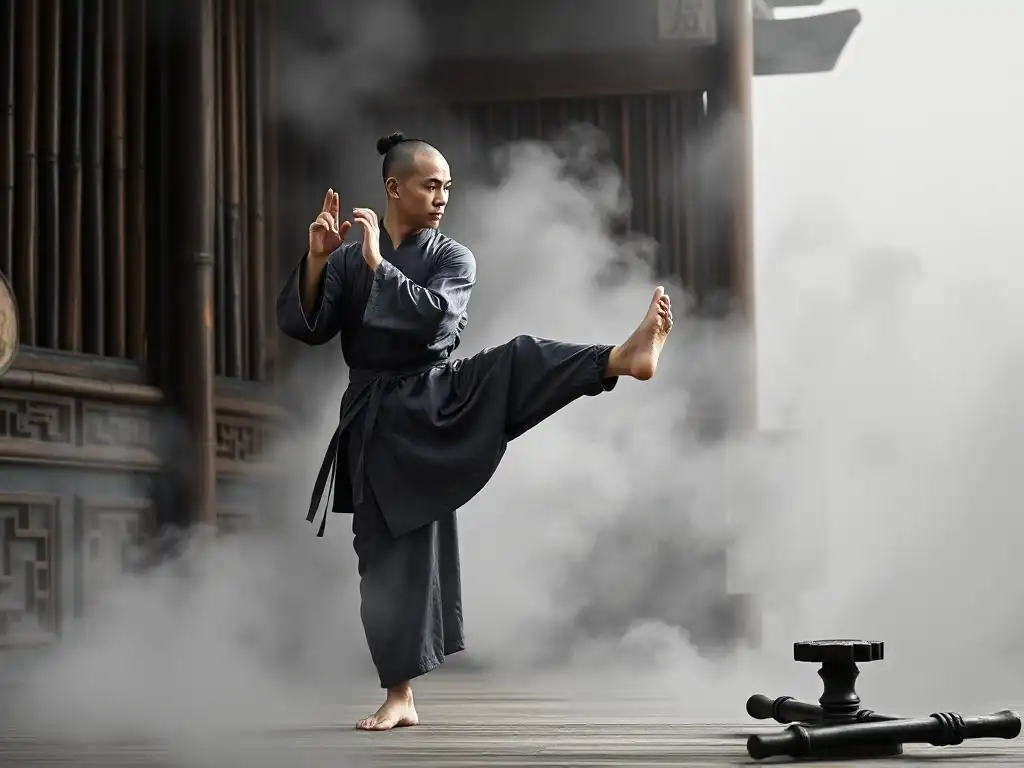
Meihua Quan, or Plum Blossom Fist, is a dynamic and visually striking Shaolin form that integrates acrobatic movements and unpredictable changes in rhythm and direction. Named after the plum blossom, which blooms beautifully even in harsh winter conditions, the form embodies resilience, agility, and adaptability. It features a wide range of techniques, including low sweeps, high jumps, rolls, and rapid changes in level.
The Shaolin forms movement techniques in Meihua Quan are characterized by their fluidity, speed, and deceptive nature. The form incorporates numerous feints, sudden changes in tempo, and movements from unusual angles, making it difficult for an opponent to predict. Acrobatics are integrated not for showmanship but for practical application, such as using a roll to evade an attack or a jump to cover distance or strike from above. Mastering Meihua Quan requires exceptional agility, balance, flexibility, and the ability to transition seamlessly between ground techniques and aerial movements, embodying the unpredictable spirit of the plum blossom.
Qixing Quan: Emphasizing Speed, Agility, and Close-Range Combat
Qixing Quan, or Seven Star Fist, is a Shaolin form known for its emphasis on speed, agility, and close-range combat techniques. The "Seven Stars" refer to key points on the body (head, hands, shoulders, elbows, waist, hips, and feet) that are used to strike or defend, or perhaps represent the Big Dipper constellation, symbolizing constant movement and change. The form is characterized by rapid, compact movements, quick footwork, and techniques designed for fighting in confined spaces.
The Shaolin forms movement techniques in Qixing Quan prioritize efficiency and speed. Techniques often involve rapid-fire punches, elbow strikes, knee strikes, and close-range grappling maneuvers. Footwork is quick and nimble, allowing for rapid adjustments in position and angle. The form teaches practitioners to utilize every part of their body as a weapon and to exploit openings in an opponent's defense at close quarters. Mastering Qixing Quan develops explosive speed, tactical thinking in tight situations, and the ability to generate significant power from short distances using precise body mechanics.
Baxian Quan: Imitating the Movement and Characteristics of the Eight Immortals
Baxian Quan, or Eight Immortals Fist, is a unique Shaolin form that draws inspiration from the legendary Eight Immortals of Chinese mythology. Each section of the form imitates the distinct characteristics and movements associated with a specific Immortal, such as the drunken stumbles of Li Tieguai or the elegant sword movements of Lu Dongbin (though often adapted for empty hand). This results in a form with varied rhythms, postures, and techniques that can appear unconventional or even erratic.
The Shaolin forms movement techniques in Baxian Quan are characterized by their unpredictability and adaptability. The form teaches practitioners to utilize a wide range of body mechanics and strategies, from powerful, direct attacks to evasive and deceptive movements. For instance, imitating the drunken Immortal involves using unbalanced postures and seemingly clumsy movements to create openings and strike from unexpected angles. Mastering Baxian Quan cultivates versatility, creativity, and the ability to fight effectively using a variety of approaches, reflecting the diverse personalities and skills attributed to the Eight Immortals.
The Mental and Spiritual Dimensions of Shaolin Forms Practice
Developing Focus and Concentration through Shaolin Forms
The practice of Shaolin forms is a rigorous exercise in developing mental focus and concentration. Executing a long and complex form requires sustained attention to detail – remembering the sequence of hundreds of movements, ensuring correct body alignment, coordinating breath with movement, and maintaining proper power generation. This intense mental engagement trains the mind to remain present and focused for extended periods, filtering out distractions. When practicing Shaolin forms movement techniques, even a momentary lapse in concentration can lead to an error in execution or a loss of balance.
This constant demand for mental presence builds a powerful capacity for concentration that extends beyond the training hall. The ability to focus intensely on a task, block out external noise, and maintain mental clarity is invaluable in academic pursuits, professional life, and certainly in a self-defense situation. The repetitive yet intricate nature of form practice creates a meditative state where the mind becomes absorbed in the physical action, sharpening mental acuity and discipline. This mental fortitude is considered as important as physical strength in the Shaolin tradition.
Cultivating Mindfulness and Presence in Shaolin Movement
Mindfulness, the practice of being fully present and aware of the current moment, is intrinsically woven into the practice of Shaolin forms. While executing Shaolin forms movement techniques, practitioners are encouraged to pay close attention to their body – the feeling of the feet on the ground, the tension and relaxation in the muscles, the flow of breath, and the coordination of each limb. This internal awareness is cultivated alongside external awareness of space and potential threats (even when practicing alone).
This heightened state of presence allows for a deeper understanding of one's own body mechanics and limitations. It also fosters a calm and centered state of mind, even amidst dynamic and physically demanding movements. Being fully present in the moment while performing a complex form helps to quiet the internal monologue of worries or distractions, leading to a more authentic and powerful execution. This cultivation of mindfulness through movement is a key aspect of the Shaolin path, linking physical practice with mental well-being.
Shaolin Forms as a Form of Moving Meditation
Shaolin forms are often described as a form of moving meditation. While static meditation involves sitting still to quiet the mind, practicing forms achieves a similar state through dynamic movement. The repetitive, focused execution of Shaolin forms movement techniques allows the practitioner to enter a flow state where the mind is fully absorbed in the activity, leading to a sense of calm and mental clarity. The physical effort and the demand for precise execution occupy the conscious mind, allowing deeper levels of awareness to emerge.
The rhythmic nature of many forms, combined with coordinated breathing, further enhances this meditative quality. The physical exertion releases tension, while the mental focus clears the mind. This practice integrates the body and mind, promoting a state of holistic well-being. Like traditional meditation, consistent practice of forms can reduce stress, improve emotional regulation, and enhance overall mental resilience. It is a powerful method for integrating the physical discipline of Kung Fu with the mental and spiritual goals of mindfulness and inner peace.
The Philosophical Underpinnings of Shaolin Kung Fu and its Expression in Forms
Shaolin Kung Fu is deeply rooted in Buddhist philosophy, particularly Zen Buddhism (Chan Buddhism in China), and integrates elements of Taoism. These philosophical underpinnings are not separate from the physical practice but are expressed and reinforced through the execution of Shaolin forms movement techniques. Concepts like impermanence, emptiness (Sunyata), and the interconnectedness of all things influence the fluidity, adaptability, and holistic nature of the movements. The principle of using an opponent's force against them, for instance, reflects the Taoist concept of yielding to overcome.
The forms themselves can be seen as metaphors for life's challenges and the path to enlightenment. The demanding physical training builds discipline and resilience, mirroring the perseverance required to overcome obstacles. The emphasis on harmonious movement reflects the ideal of living in harmony with oneself and the environment. The focus on internal cultivation alongside external technique embodies the Buddhist path of inner transformation. Studying the philosophy behind the movements adds depth and meaning to the physical practice, transforming it from mere exercise into a profound journey of self-discovery and mastery.
Training Methodology for Mastering Shaolin Forms Movement Techniques
Warming Up and Stretching for Shaolin Forms Practice
Proper preparation is crucial before engaging in the demanding practice of Shaolin forms movement techniques. A thorough warm-up elevates the heart rate, increases blood flow to the muscles, and prepares the cardiovascular system for exertion. This typically involves light aerobic activities like jogging in place, jumping jacks, or dynamic movements that loosen the joints. A good warm-up might last 10-15 minutes and should leave the practitioner feeling warm and slightly out of breath but not fatigued.
Following the warm-up, stretching is essential to improve flexibility and prevent injuries. Shaolin forms require a significant range of motion, especially in the hips, legs, shoulders, and spine. Static stretches, held for 20-30 seconds, target major muscle groups. Dynamic stretches, involving controlled movements through a range of motion, further prepare the body for the specific demands of the forms. Examples include leg swings, arm circles, torso twists, and neck rotations. Prioritizing flexibility allows for deeper stances, higher kicks, and more fluid transitions, enhancing the effectiveness and safety of practicing Shaolin forms movement techniques.
Breaking Down Complex Movements: A Step-by-Step Approach
Mastering the intricate Shaolin forms movement techniques requires breaking down complex sequences into smaller, manageable steps. Attempting to learn an entire form all at once is overwhelming and often leads to poor execution and frustration. A common training methodology involves learning a form section by section. An instructor or experienced practitioner first demonstrates a small sequence, perhaps 5-10 movements. Students then practice these movements slowly, focusing on correct body alignment, stance, and hand position.
Each movement is practiced individually until proficiency is achieved before linking it with the previous and subsequent movements. This step-by-step approach allows the student to internalize the details of each technique and the transitions between them. Video recording oneself practicing can also be immensely helpful for identifying and correcting errors in posture or timing. Once a section is learned, it is practiced repeatedly until it flows smoothly and powerfully, before moving on to the next section. This meticulous process, though time-consuming, is vital for building a solid foundation in Shaolin forms movement techniques.
Correcting Common Mistakes in Shaolin Form Execution
Identifying and correcting common mistakes is an ongoing process in mastering Shaolin forms movement techniques. Some frequent errors include:
- Incorrect Stances: Not sinking low enough, improper foot placement, or poor knee alignment compromises stability and power.
- Lack of Hip and Waist Power: Relying solely on arm strength for strikes instead of generating power from the core.
- Stiffness or Tension: Holding tension in the shoulders, arms, or legs restricts fluidity and speed.
- Incorrect Breathing: Holding breath during strenuous movements or failing to coordinate breath with strikes and blocks.
- Poor Transitions: Jerky or unbalanced movements when changing between stances or techniques.
- Lack of Focus: Allowing the mind to wander, leading to sloppy execution and missed details.
Correction involves careful observation (ideally by an instructor or through self-recording), detailed feedback, and focused repetition of the problematic sections. For instance, if a student is not sinking low enough in a Horse Stance, the correction involves verbal cues, physical adjustments by the instructor, and specific drills focused solely on holding the deep stance correctly for increasing durations. Addressing these common pitfalls systematically is crucial for developing true proficiency and power in Shaolin forms movement techniques.
Integrating Qi Gong and Meditation into Shaolin Forms Training
Integrating Qi Gong and meditation practices significantly enhances the effectiveness of Shaolin forms training by cultivating internal energy ( Qi), promoting relaxation, and sharpening mental focus. Qi Gong, or energy work, involves gentle movements, breathing exercises, and visualization to improve circulation, build internal strength, and harmonize the body's energy flow. Practicing specific Shaolin Qi Gong sets like the Eight Brocades ( Ba Duan Jin) or Muscle/Tendon Changing Classic ( Yi Jin Jing) can improve flexibility, strength, and overall vitality, directly supporting the physical demands of form practice.
Meditation, particularly Chan (Zen) meditation, complements the mental and spiritual aspects. Sitting meditation cultivates the focus and mindfulness necessary for executing forms with presence and intention. It also helps to calm the mind, reduce stress, and develop inner peace, which contributes to the fluid and powerful execution of Shaolin forms movement techniques. By integrating these practices, practitioners build not just external physical strength but also internal vitality and mental clarity, leading to a more profound and holistic mastery of Shaolin Kung Fu.
The Application of Shaolin Forms in Combat and Self-Defense
Bridging the Gap Between Forms and Fighting
While Shaolin forms are pre-arranged sequences, their ultimate purpose is to provide a framework for practical self-defense. The challenge lies in bridging the gap between the stylized movements of the form and their spontaneous application in a real-world combat scenario. This requires dedicated training that goes beyond simply memorizing the sequence. Practitioners must understand the underlying principles and combat applications embedded within each movement and combination.
Training methods to bridge this gap include:
- Application Drills: Practicing individual techniques from the form against a partner or training equipment (like a heavy bag or focus mitts) to understand their practical use.
- Two-Person Drills: Working with a partner through pre-arranged or semi-free drills that simulate combat exchanges derived from specific form sequences.
- Sparring: Engaging in controlled sparring (ranging from light contact to full contact with protective gear) to develop timing, distance management, and the ability to apply techniques spontaneously under pressure.
By actively exploring the combat applications of Shaolin forms movement techniques, practitioners learn to adapt the techniques to different situations, opponents, and ranges, transforming the theoretical knowledge of the form into practical fighting skill.
Adapting Shaolin Form Techniques for Real-World Scenarios
Adapting techniques learned in the structured environment of Shaolin forms to the unpredictable nature of real-world self-defense is a critical skill. Real confrontations are rarely clean exchanges of single techniques. They are often messy, fast-paced, and involve unexpected angles of attack. Therefore, practitioners must learn to modify and combine techniques from their forms based on the specific circumstances.
For example, a high, elaborate kick from a form might be impractical in a narrow hallway or against multiple attackers. The practitioner must be able to adapt it into a lower, more direct kick or transition to a knee strike or sweep. Similarly, a complex joint lock might need to be simplified or combined with a strike to be effective quickly.
This adaptability comes from a deep understanding of the principles behind the Shaolin forms movement techniques, not just the rote memorization of the movements. Training scenarios that mimic common self-defense situations (e.g., dealing with grabs, pushes, or attacks in confined spaces) are crucial for developing this adaptive capability.
Utilizing Lohan Quan's Solid Stance for Grounding and Stability in Defense
Lohan Quan, with its emphasis on deep, stable stances like the Horse Stance and Bow-and-Arrow Stance, provides practitioners with exceptional grounding and stability, which is invaluable in self-defense. A solid stance makes it difficult for an opponent to unbalance or push you off your feet. In a defensive situation, maintaining a strong base allows you to absorb impact, resist being moved, and launch powerful counter-attacks.
For example, if an attacker attempts to push you, dropping into a low Horse Stance utilizes your lower body strength and low center of gravity to resist their force effectively. Similarly, a strong Bow-and-Arrow Stance provides a stable platform for delivering powerful strikes or absorbing an incoming blow. The leg strength and rootedness developed through consistent Lohan Quan practice directly translate into the ability to remain stable and balanced under pressure, a foundational element of effective self-defense using Shaolin forms movement techniques.
Employing Xiao Hong Quan's Quick Strikes to Disrupt an Opponent's Balance
Xiao Hong Quan, with its focus on compact, explosive movements and quick transitions, offers practical applications for disrupting an opponent's balance and creating openings. The form's rapid-fire hand techniques and swift changes in angle allow practitioners to strike quickly and repeatedly, overwhelming an attacker's defense or exploiting momentary weaknesses.
For instance, a rapid combination of punches and palm strikes, executed with the speed and fluidity developed in Xiao Hong Quan, can disrupt an opponent's guard and force them to react defensively, potentially exposing them to follow-up techniques. The quick shifts in weight and subtle evasive movements embedded in the form enable the practitioner to move just enough to avoid an attack while simultaneously positioning themselves for a counter-strike. These quick, disruptive Shaolin forms movement techniques are highly effective in close to medium range confrontations.
Applying Da Hong Quan's Powerful Kicks for Distance Control and Offense
Da Hong Quan, known for its powerful and dynamic kicking techniques, provides practitioners with effective tools for distance control and offensive strikes from a longer range. The high and powerful kicks practiced in this form, such as the side kick or roundhouse kick, can be used to keep an opponent at bay, interrupt their advance, or deliver significant force from a distance.
In a self-defense scenario, utilizing a powerful kick from Da Hong Quan can be a decisive technique. A well-executed side kick to the leg or body can stop an attacker's forward momentum. A high roundhouse kick, if appropriate for the situation, can target vulnerable areas. The practice of Da Hong Quan develops the flexibility, balance, and explosive power necessary to deliver these kicks effectively and recover quickly. Mastering these powerful Shaolin forms movement techniques allows the practitioner to engage or disengage from an opponent at different ranges, adding a versatile dimension to their self-defense capabilities.
The Legacy of Shaolin Forms: Preserving Tradition and Adapting to the Modern World
The Evolution of Shaolin Forms Throughout History
The history of Shaolin forms is long and complex, reflecting centuries of development, adaptation, and preservation. While the legendary origins trace back to figures like Bodhidharma, the forms as we know them today are the result of continuous evolution. Over the centuries, forms were created, modified, lost, and rediscovered. Monks and lay practitioners added their own insights and techniques, influenced by various fighting styles and historical events. The forms served not only as training methods but also as ways to preserve techniques in times when written records were scarce or destroyed.
Periods of political turmoil, such as the destruction of the Shaolin Monastery on multiple occasions, led to the dispersal of monks and the spread of Shaolin Kung Fu to different regions and communities. This dispersion contributed to variations in forms and techniques as they were taught and adapted outside the monastery walls. For example, some forms might have been influenced by local martial arts styles encountered by traveling monks. Despite these changes, the core principles and many fundamental Shaolin forms movement techniques have been passed down, demonstrating remarkable resilience and continuity through oral tradition and dedicated practice.
The Role of Shaolin Forms in Contemporary Martial Arts
In the contemporary martial arts landscape, Shaolin forms continue to play a significant role, though their emphasis can vary. In traditional Shaolin Kung Fu schools, forms remain the central pillar of training, seen as the repository of the system's knowledge and the primary method for developing fundamental skills and understanding applications. Students dedicate years to mastering multiple forms, delving into the intricate Shaolin forms movement techniques and their underlying principles.
Beyond traditional schools, elements of Shaolin forms have influenced various modern martial arts styles. Many contemporary Kung Fu systems trace their lineage back to Shaolin and incorporate modified forms or techniques derived from Shaolin forms movement techniques. Furthermore, forms are increasingly recognized for their benefits in physical fitness, flexibility, balance, and mental discipline, attracting practitioners seeking these advantages even if they are not pursuing traditional combat applications. While the emphasis might shift, the legacy of Shaolin forms as a powerful training tool persists.
Finding a Qualified Shaolin Forms Instructor
Finding a qualified instructor is paramount for anyone serious about learning Shaolin forms movement techniques correctly and safely. An authentic instructor possesses not only deep knowledge of the forms themselves but also a thorough understanding of the underlying principles, applications, and the history and philosophy of Shaolin Kung Fu. They should be able to demonstrate the forms proficiently, break down complex movements, identify and correct errors, and explain the practical application of techniques.
Signs of a qualified instructor include:
- Clear Lineage: The instructor can trace their training back to a recognized Shaolin master or institution.
- Demonstrated Proficiency: They can perform the forms with power, fluidity, and precision.
- Focus on Fundamentals: They emphasize basic stances, body mechanics, and conditioning before teaching complex forms.
- Detailed Instruction: They explain the "why" behind the movements and their applications, not just the "how."
- Safe Training Environment: They prioritize safety and provide corrections to prevent injury.
- Ethical Conduct: They embody the principles and discipline of martial arts.
Researching the instructor's background, visiting their school, and observing classes are crucial steps in finding a mentor who can guide you effectively on the path to mastering Shaolin forms movement techniques.
Conclusion: Embracing the Journey of Shaolin Forms Mastery
Frequently Asked Questions
What are Shaolin forms, and why are they important?
Shaolin forms, also known as taolu, are choreographed sequences of movements that combine striking, kicking, stances, and blocks. They are crucial for developing fundamental techniques, coordination, and mental discipline in Shaolin Kung Fu.
How do Shaolin forms contribute to self-defense?
While not direct combat simulations, Shaolin forms build muscle memory, spatial awareness, and reaction time, all of which are essential for effective self-defense. They also teach principles of movement and power generation.
What are some of the key movement techniques emphasized in Shaolin forms?
Key techniques include stances (like horse stance and bow stance), hand techniques (punches, palms, and claws), and leg techniques (kicks, sweeps, and stomps). Proper body mechanics and efficient energy transfer are also vital.
How does the practice of Shaolin forms affect the mind and spirit?
The repetition and focus required in learning Shaolin forms cultivate concentration, mindfulness, and perseverance. The practice instills a sense of discipline and respect, fostering mental and spiritual growth.
Where can I learn more about mastering Shaolin forms movement techniques?
MartialArtsMastery.org offers detailed articles, videos, and resources on Shaolin Kung Fu. Look for content under the Shaolin discipline section for specific training tips and historical context.
Final Reflection: Embracing the Shaolin Path
The journey through the art of Shaolin forms, as explored in this article, reveals a profound connection between movement, mind, and spirit. This holistic approach, far from being a relic of the past, offers a powerful antidote to the fragmented nature of modern life. In a world often prioritizing speed and superficiality, the deliberate practice of Shaolin forms provides a pathway to cultivate inner peace, physical strength, and mental clarity – qualities increasingly vital for navigating the complexities of our time.
The influence of Shaolin principles extends far beyond the walls of the monastery, shaping martial arts traditions and inspiring countless individuals to seek self-improvement. Personally, witnessing the dedication and discipline required to master these forms has instilled in me a deep respect for the power of focused intention. The journey of a thousand miles begins with a single step.
This ancient proverb resonates deeply with the Shaolin philosophy, reminding us that even the most daunting goals can be achieved through consistent effort and unwavering commitment.
Now, dear reader, I invite you to consider how the principles of Shaolin movement can enrich your own life. Whether you choose to explore the physical practice of the forms themselves, or simply embrace the underlying philosophy of mindful movement and focused intention, the path to self-mastery is open to all. Take a moment to reflect on your own movements, your own intentions, and discover the inner strength and peace that lies within. Embrace the Shaolin path, and unlock your full potential.
Unlock Your Inner Shaolin Warrior: Begin Your Transformation Now!
Thank you for diving into the world of Shaolin forms! We hope you’ve gained a deeper understanding of their power to cultivate not just physical prowess, but also mental clarity and spiritual growth. Now, take the next step and integrate these principles into your life.
Here's how you can start:
- Embark on your Shaolin journey: Find a qualified instructor and begin learning a basic Shaolin form like Lian Bu Quan!: This is the most direct path to experiencing the art firsthand.
- Deepen your practice: Incorporate mindfulness techniques such as meditation into your daily routine to enhance focus and cultivate inner peace, essential complements to any martial art.
- Share the Wisdom: Discuss your insights on Shaolin forms with fellow martial arts enthusiasts in our community forums to build connections and deepen your understanding.
What form will you choose to begin your Shaolin adventure, and what mental discipline will you incorporate into your daily life alongside it?